Documentary Evidence 2016 Top 10 Albums: The Departed Ones

We lost some incredible musical luminaries in 2016, chief among which were David Bowie back in January and Leonard Cohen in November. Both artists released powerfully creative albums this year, underlining talents that seemed to have been snuffed out far too early, yet both records seemed to contain clues – in coded form (Bowie’s Black Star) and more obvious form (Cohen’s You Want It Darker) – that death was just around the corner.

I wrote a piece for Clash about David Bowie that was published just two days before he was announced to have passed away. It was written from the point of view of someone who was enjoying a new phase of life whereas in fact it was already over. For Cohen, moved though I was to write the piece below, I never placed it anywhere.

youwantitdarker

In was in Toronto when the news broke that Leonard Cohen had passed away. My first reaction, upon reading the news was somewhere between surprise, anger and sadness.
It was a little like the passing of a distant relative – someone who had always been there in the background, who you’d spent some time with but not enough, and who you just figured would always be there.

The front cover of Friday’s Globe & Mail was turned over to Montréal’s renegade troubadour, and it felt like the whole of Canada was undergoing a day of national mourning. Flags were flying at half-mast and there was a general feeling of glumness about the place; this was, of course, little more than optics and coincidence, since Friday was the 11th November and Canada was set for its annual remembrance of those who had lost their lives in the two World Wars of the twentieth century, but it felt like it could have been – should have been – all for Cohen’s benefit.

I never thought I’d get into Leonard Cohen. Growing up, immersing yourself in music magazines, you alighted upon Cohen’s legacy and legendary status, but he just didn’t seem like an artist I’d ever fully understand or whose music I’d ever be able to appreciate. This was mere narrow mindedness on my part, but such is the opinionated arrogance of youth.

Cohen’s ‘Avalanche’ was covered by Nick Cave on his debut album in 1984, but it was never my favourite track on that LP and, besides, at that point (I bought that album in around 1997) it was hard enough for me just to have made the switch the Mute electronic acts to Cave, let alone try to wrap my head around the music of Leonard Cohen as well.

It would take the purchase of Rufus Wainwright’s Want almost a decade later to fully start my appreciation. Wainwright, also coincidentally Canadian, covered Cohen’s ‘Chelsea Hotel No. 2’ at a tribute concert assembled by Hal Wilner, at which Nick Cave also performed. Wainwright’s live version of the song was included on the second part of his Want opus, and completely floored me when I first heard it. It helped that it was about New York, which will always get my attention, but it was the nakedness, the bluntness if you will, of Cohen’s lyrics that truly grabbed me. The Songs Of Leonard Cohen quickly came into my possession, and I’ve been collecting sporadically ever since.

Maybe I still haven’t completely ‘got’ him, but I’ve gotten a lot closer. What you start to appreciate as you spend quality time in the company of his music is that the stereotype of Cohen as this abject, depressed miseryguts is woefully misplaced. Upon announcing his passing, Cohen’s son drew attention to his father’s incredible sense of humour. It’s the only way to explain the song ‘Don’t Go Home With Your Hard-On’ and some of the verses in ‘Hallelujah’ (a song that is both spiritual and utterly out-there, something lost on the multitude of pop acts that have covered it). Sure, it’s dark humour, but it’s humour nonetheless.

There’s also this theory that Cohen was just a hapless, thwarted romantic, but that’s also incorrect. A lot of Cohen’s lyrics were unashamedly, nay eyewateringly, frank and open about sex, so one could assume he wasn’t as unlucky as his wistful balladeering would have you believe. Let’s hope the smooth-talking, gravel-voiced, romantic is having the same fun he had in his corporeal existence up there in the heavens.

The untimely death of a perpetual ladies man.

(c) 2016 Mat Smith / Documentary Evidence

Documentary Evidence 2016 Top 10 Albums: 8. Yeasayer ‘Amen & Goodbye’

“At its best when it stops trying to be overly clever and instead rushes shamelessly into the slick pop that has run throughout Yeasayer’s career.” – Electronic Sound

Album number four from Yeasayer had a title that suggested some sort of full stop, but whose music suggested the trio were finding new ways of writing music and exciting experimental angles to exploit. In spite of that foray into slightly odder areas, opening track ‘I Am Chemistry’ and the stand-out ‘Silly Me’ are among this Brooklyn band’s finest moments.

I found myself listening to this album a lot over the summer, and kicked myself for not responding to an opportunity to interview Chris Keating from the band for a second time.

I reviewed this for Electronic Sound. Back issues are available from http://www.electronicsound.co.uk

(c) 2016 Mat Smith / Documentary Evidence

Documentary Evidence 2016 Top 10 Albums: 9. The Seshen ‘Flames & Figures’

“Modern pop music’s ongoing homage to the sounds and rhythms of 80s music has produced some outstanding songs, but also some absolute stinkers.” – Electronic Sound 23

The Seshen hail from San Francisco’s Bay Area and make shiny, soulful and infectious pop music. Their second album found the band delivering a high gloss electronic album full of heartache, heartbreak, angst, abuse and many more deeply personal emotional cues from Lalin St. Juste and the rest of The Seshen.

I covered this album for Electronic Sound 23, whereupon I described it as containing some of the best pop songs you’ll hear today. High praise indeed.

One of the weirdest and most unexpected things that’s happened to me this year has been rediscovering a love of pop music, something that outside of the likes of Erasure I’d pretty much actively stopped looking for. That’s allowed me to appreciate acts like The Seshen in a way that I’d never have been prepared to before. More on my rekindled appreciation of pop later on.

Back issues of Electronic Sound can be found at electronicsound.co.uk

(c) 2016 Mat Smith / Documentary Evidence
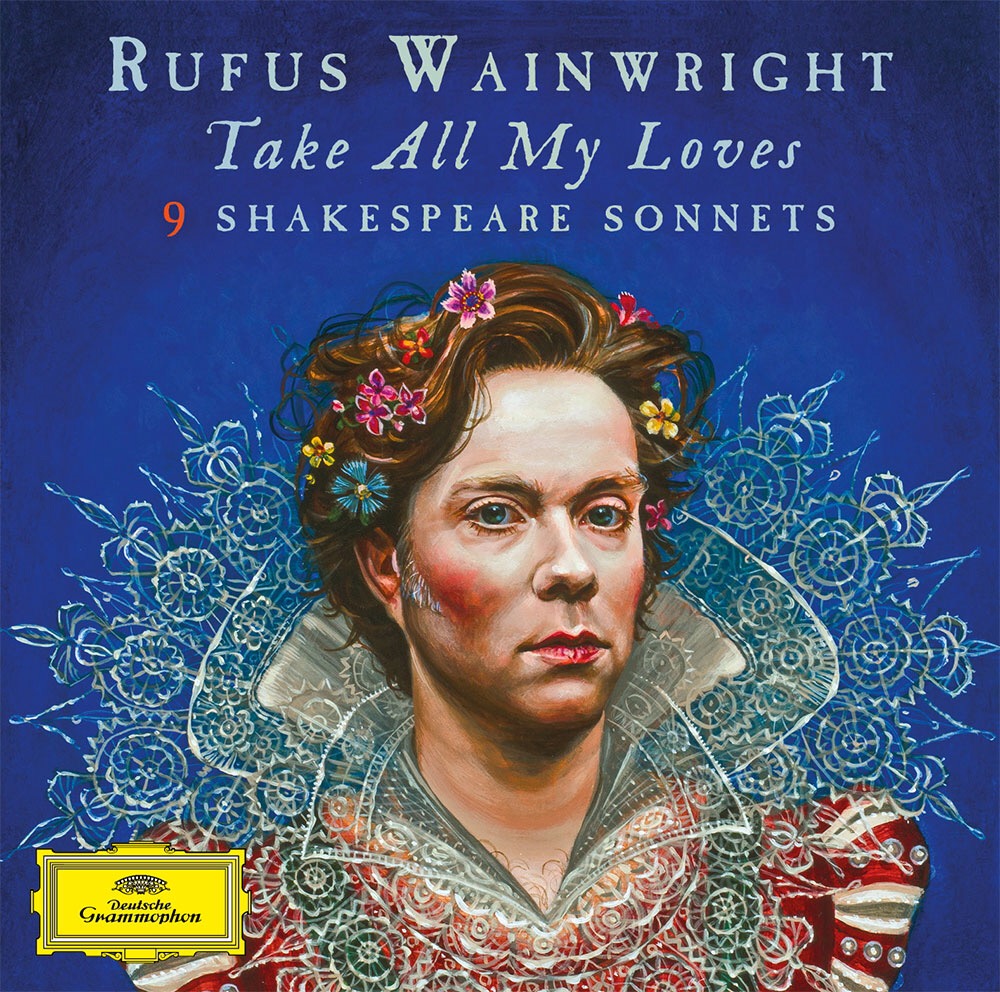
Documentary Evidence 2016 Top 10 Albums: 10. Rufus Wainwright ‘Take All My Loves’

I’m not normally one to embrace the whole end of year countdown thing, but I’ve been asked for my choices a couple of times now and so I thought I’d jump on the journalistic bandwagon also. Over the next few days I will post my top ten albums of the year, as well as a few other bits and pieces about my year in music.

“I wouldn’t say it’s an affliction necessarily, but I definitely have some sort of condition where I am ruled by a kind of duality. On the one hand I want to be on the cover of ‘Rolling Stone’, but on the other hand, there’s my high reach towards that which is completely unpopular, and un-current and unusual.” – Rufus Wainwright, March 2016

First up is Rufus Wainwright’s Take All My Loves, an album that saw the Canadian singer, songwriter and opera composer tackle a batch of Shakespeare’s sonnets with the help of singers like Florence Welch and sister Martha, as well as thespy luminaries Siân Phillips, Peter Eyre and, er, William Shatner.

Your appreciation of this record largely depends on whether a) you’re a fan of Shakespeare and b) you’re a fan of Rufus Wainwright, both of which I happen to be. It is nevertheless a complex and challenging – but ultimately rewarding – album that underlines how talented Mr. Wainwright is; the split between classical and more accesibble fare on the album suggests a return to pop music from the rarefied world of opera that Wainwright has been hanging out in these past few years might well be on the cards.

I fulfilled a longstanding career ambition and interviewed Wainwright about the project for Clash, wherein he explained how gatecrashing parties, hanging out on movie sets and generally being an all-round celebrity pest allowed him to build out the little black book of contacts necessary for the creation of Take All My Loves, as well as how masturbation improbably led to a love of the Bard.

My interview can be read here.

(c) 2016 Mat Smith / Documentary Evidence

Body/Head – No Waves (Matador album, 2016)

The duo of ex-Sonic Youth bassist / guitarist Kim Gordon and improv musician Bill Nace continue their Body/Head collaboration with the release of a live album recorded in Tennessee in 2014. Titled No Waves, this is more than just your typical live album, being a headlong journey into the outer edges of music’s malleable core.

I reviewed the album for Clash and you can read the review here.

(c) 2016 Mat Smith / Documentary Evidence for Clash

John Foxx – The Complete Cathedral Oceans (Demon / Metamatic album, 2016)

John Foxx’s Metamatic imprint, in conjunction with Demon, will issue the three volumes of the Ultravox! founder’s Cathedral Oceans opus as a deluxe limited vinyl set on September 30. I wrote a short piece about The Complete Cathedral Oceans for This Is Not Retro. Read it here.

(c) 2016 Mat Smith for This Is Not Retro

Barry Adamson – I Will Set You Free (Central Control International album, 2012)


album // I Will Set You Free
central control international | lp+cd/cd/dl cci019 | 30/01/2012

Barry Adamson released the confidently-titled I Will Set You Free, his ninth solo album, on his own Central Control International label at the tail end of January 2012. The release followed an intense three years of shifting directions for Adamson, including writing his first piece of fiction (Maida Hell, included in the London Noir collection, for which he won the Best Short Story prize at Italy’s Piemonte Noir festival), releasing the highly lauded Back To The Cat album, returning to the stage with his first band, Howard Devoto‘s Magazine and releasing his first short film, the disturbing Therapist. During the interview accompanying Therapist, Adamson described feeling like he was treading water in the studio ahead of shifting his attention to the film project, creating music that was more or less Barry Adamson-by-numbers, inadvertently leading to a sense of nervousness about his latest album.

While it would actually be quite nice to hear a cinematic Adamson on record again, it’s evident from I Will Set You Free that recreating the dark mood of his earlier solo self is just not where his head is right now. The album only contains one piece that remotely evokes that forgotten vibe in the clever sound design of ‘The Trigger City Blues’, which includes sampled rainfall and gunshots interspersed with electronic pulses and squirming synth tones. Those poignant, dark alley whispered vocals of yesteryear Adamson usher in bluesy guitar riffs and opening-credit-sequence industrial hip hop beats. ‘The Trigger City Blues’ makes you think of the music to the scene in a heist movie where the bad guys and getting prepped for the big bank job, donning masks and sticking the guns in the unmarked van.

I Will Set You Free was crafted by Adamson (bass, vocals, programming) with Ian Ross (drums), long-standing collaborator Nick Plytas (organ) and Bobby Williams (guitar). Horns come from Sid George (trumpet), Steve Hamilton (tenor sax) and Harry Brown (trombone), a trio capable of turning out pretty much any jazz mood required by their band leader. In the main, I Will Set You Free continues the mood of albums such as Stranger On The Sofa, where Adamson as a front man and vocalist really came to fruition, here striking a balance between the outright acid rock of tracks like ‘Destination’ (released ahead of the album as a free download) with more emotionally sentimental pieces like ‘If You Love Her’. The contrast between the stately croon of the latter with the motorik-meets-white-hot punk of ‘Destination’ provides a neat overview of an album that finds Adamson operating at both extremes, between the loverman and the serpentine voodoo priest perched atop the dangerous, nihilistic bloodymindedness that characterises ‘Destination’.

Further explorations into dark rock come with the opener, ‘Get Your Mind Right’, which finds Adamson pitching in with a vocal somewhere between David Bowie’s archness and the stream-of-consciousness lurching of Shaun Ryder, augmented by typically frazzled organ from Plytas and glam drumming from Ross. In a nice stylistic shift, ‘Stand In’ is a wide-eyed Eighties-referencing towering pop track, replete with a nice elongated synth section that feels like Yazoo covering Kraftwerk; okay, so it feels nearly twenty years too late for a John Hughes movie, but it has a big sound and a catchy chorus that will stick in your head long after the track has finished its emotional motions.

Of the ballads, ‘Turnaround’ is probably the highlight, being an ephemeral, lysergic ballad shimmering with emotional outpourings. Adamson as a crooner is one of the most surprisingly confident aspects to his still comparatively recent development as a singer, finding his honey vocal enveloped with serene acoustic guitar and washes of dreamy synth strings.

Some of I Will Set You Free‘s best moments come in the form of two downright fonky tracks, ‘Black Holes In My Brain’ and ‘The Power Of Suggestion’. The former is delivered in a relaxed, jazzy vibe that for some reason reminds me of George Michael (don’t ask why, but for once it’s not a bad association) and a stretched-out bassline which could have been lifted wholesale from Marvin Gaye’s ‘Inner-City Blues’. ‘Black Holes In My Brain’ feels like a more organic Soul II Soul or another of those eclectic soul-jazz-hip-hop collectives from around the same time, all lumpy beats and soulful breeziness. ‘The Power Of Suggestion’, meanwhile, is sexy and upbeat, imbued with a summery warmth and sublime jazz piano lines. The track shuffles out over thick, chunky beats and and contains a theatrical swing that feels like it would suit a remake of Bugsy Malone.

I Will Set You Free has an embedded self-assuredness that suggests Adamson can turn out a leftfield rock album pretty much in his sleep these days. Whilst irritating reviewers like this one may well pine for those noir days of cinematic classics like Moss Side Story, there’s no denying that the path that Barry Adamson is singularly marking out for himself right now will continue to be littered with obfuscations, contradictions and further questing within his future projects, whatever they may prove to be. The press release talks of Adamson being released from shackles, and that is exactly how this album sounds; free, effortless and typically idiosyncratic.

First published 2012; edited 2016

(c) 2016 Mat Smith / Documentary Evidence

Paul Kendall – From The Penman Press (Cat Werk Imprint album, 2016)

from the penman press: cat werk imprint | box+cd cw010 | 07/2016
angleterror original digital release: cat werk imprint | dl cw002 | 01/11/2011

From The Penman Press by Paul Kendall is nothing short of beautiful. Housed in a minimalist brown cardboard box with simple lettering, this is a work of art – a statement – even before you’ve prised off the lid.

Inside, you’ll find unique hand printed A5 images, all monochrome and appealingly spartan, each representing a painstaking letterpress experiment by Kendall. It’s like looking at what Bridget Riley might have delivered had she focussed on designs for abstract architecture instead of headache-inducing artistic mindfuckery.

What’s all the more appealing about the starkly minimal prints is how at odds they are with Angleterror, the Paul Kendall album included within the box in a newly sparkling remastered form by AGF (Antye Greie / Antye Greie-Fuchs / Antye Greie-Ripatti). Angleterror was originally released in 2011 as a Bandcamp download, and has never been issued in a physical form. It would be somewhat disingenuous to describe Angleterror as a sprawl, but in its dense layers and skipping tendency to veer with jump-cut precision from one idea to the next – inventively, never restlessly – it is the maximalist antithesis of the artwork; the yin to its yang, even.

From The Penman Press was issued in a run of just 100 copies, most of which should have now been sold given how captivating it is. Check here to see if you can still get one.

Promotional videos for ‘Glass Eye’ and ‘Aspirateur’ can be found below. Below those you’ll find my own, newly remastered, review of Angleterror from 2011.

Thanks to Felix.

‘Glass Eye’ Paul Kendall from Cat Werk Imprint on Vimeo.

‘Aspirateur’ Paul Kendall from Cat Werk Imprint on Vimeo.

Angleterror review (Originally published 2011)


Paul Kendall will be a familiar name to any Mute fan thanks to his credit as an engineer, producer and mixer on many releases over a thirteen year period that stretched from 1984 to 1997. PK, as he was known, seemed to work with most artists on the label in one capacity or another across Mute’s electronic and non-electronic roster, and those initials on a release always seemed to mark it out as very special indeed.

Kendall as a musician, rather than studio guy, was something that wasn’t really heard in earnest until he started the Parallel Series label as an off-shoot of Mute, releasing four compelling collaborations with Andrei Samsonov, Simon Fisher Turner, Bruce Gilbert / Robert Hampson and also The Faulty Caress (under the alias Piquet), before splitting the sub-label off for one post-Mute release (a collaboration between Kendall and Olivia Louvel, Capture, as The Digital Intervention in 2003). Kendall then headed off to work with ex-Depeche Mode man Alan Wilder‘s long-running Recoil project.

Angleterror was originally released as a digital download in 2011 on the Cat Werk Imprint run by Olivia Louvel. The seven tracks presented here were mostly recorded between 2002 and 2007 when Kendall was living in Paris and find him exploring some pretty harrowing soundscape and contemporary concrète works that are every bit as un-nerving as the picture of the indeterminate creature on the sleeve.

Central to the album are four pieces – ‘Glass Eye’, ‘Betricht’, ‘Wheel’ and ‘Call Of Wild – that feature David Husser’s guitar. Husser completed the Shotgun mix of Recoil’s ‘Prey’ which was released as a download in 2008, and also recorded a version of Depeche’s ‘Enjoy The Silence’ with the band Y Front. For these pieces, Kendall provided Husser with a series of pre-existing soundscapes and drone templates, over which the guitarist improvised; Kendall then treated the contributions as source inputs, re-editing and re-processing the outputs into the forms presented here. What’s interesting about this approach is the fact that Kendall’s final versions exist only because they were responses to Husser’s work, which in turn only arose as a response to Kendall’s original frameworks. It’s presumably the case that the pair could keep referring the responses back to one another indefinitely, creating works that would presumably be a huge distance from the original composed source.

‘Glass Eye’ has an almost Manuel Göttsching sense of melodic repetitiveness; raw electricity bursts pass over bass clusters and almost bluesy chord changes; tense, strangled guitar sounds leap upwards and are sucked back into the noise bed that’s developed. There’s a rough beauty about ‘Glass Eye’ particularly when it coalesces into a kind of mesmerising, beatless motorik rock just after the halfway mark. In complete contrast, ‘Wheel’ starts with pockets of whining sound before veering unexpectedly into a dirty blues with a nagging, simple beat and layers of low-slung axe wrangling punctured by randomised sonic events and abrasive noise interludes. It sounds like nothing else here, and as it fades back into the drone cycles that opened the piece, you can’t help but wonder if that extended blues section wasn’t just a slightly unsettling dream.

A different approach was taken on ‘Starvation’ and ‘Aspirateur’, which Kendall describes as being built from ‘first principles with guitar gestures as their source’. The guitar on ‘Starvation’ was provided by Guy Parker, while the identity of the guitarist on ‘Aspirateur’ isn’t identified, but its scratchy cut and thrust was inspired by sorely missed improv titan Derek Bailey. ‘Starvation’ is a stately waltz-paced piece built up from clattering IDM glitch-beats that develops rapidly into a punishing bass-heavy industrial electronica with lots of distorted bass noises and fast-paced switches between channels. Even though it probably never existed outside a computer there’s a sense of patches being forced into complicity, the segments where mere tracery is left and Guy Parker’s dark, cinematic guitar shines through suggesting the software couldn’t quite cope. The final dark ambient segment is how I expect Trent Reznor might attempt a soundtrack for a new noir version of Blade Runner directed by David Lynch. Sticking with cinematic imagery, ‘Aspirateur’ opens with what feels like a transmission from an abandoned spaceship drifting aimlessly through the galaxy, possibly harbouring some sort of terrifying alien lifeform – certainly the chilling processed breathing sounds and general sense of chaos in the intrusion of various sounds do much to enforce that sonic vision. It’s very dark, in a spine-chilling sense. You know what’s about to happen; it’s more a case of when.

The final track on the album, ‘Route 1 + 2’, was produced using a piece of software called Thonk which appears to have been a program that could process source inputs using complex algorithmic functions, often taking very long periods to deliver its outputs. Kendall believes that the source material for this may also have been a guitar, allowing us to contrast a parameterised software-based improvisor’s response to source material alongside that of David Husser on the four tracks he worked on here, at least in theory – if ‘Route 1+2’ began life with a guitar, there’s little evidence of that apart from a feint hint way off in the distance. The track is a series of scrapes, juddering noises and fractured sounds that skip and squiggle evasively around your ears, a maddening inner-body soundscape laced with a dose of lurking dread.

Kendall has engineered both of Olivia Louvel’s releases on Cat Werk Imprint – 2011’s award-winning Doll Divider and 2012’s o, music for haiku – both of which are highly collectible physical releases. With Angleterror PK proves once again that his inquisitive ear for sonic exploration remains undiminished. An almost-Burroughsian sliced-up video of Kendall talking about the album can be viewed below, complete with sagely spectacles, roll-ups and swanky coffee machines.

(c) 2016 Mat Smith / Documentary Evidence

Barry Adamson – Dreams Of A Life (Central Control International album, 2012)

  
central control international | dl unknown cat ref | 10/12/2012

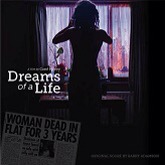
Perhaps it was intentional that Barry Adamson‘s music for Carol Morley’s film Dreams Of A Life went relatively unnoticed. After all, Morley’s film is a drama-documentary about Joyce Carol Vincent, a beautiful woman with a successful career in finance and early aspirations toward a pop career; someone who was well networked with lots of friends and a surprising number of interactions with celebrities like Ben E. King, Stevie Wonder and Gil Scott-Heron, even shaking hands with Nelson Mandela backstage at his tribute concert at Wembley in 1990.

The tragic conclusion to Vincent’s life is, sadly, what she will be remembered for – found in 2006 not just dead, but decomposed, on a sofa in her bedsit in Wood Green, TV still playing BBC1 and rotten food in the fridge dating her death back to 2003. Unpaid utility bills were stacked behind her door; neighbours complained about a smell, but attributed it to the bins from the shops below. That someone could have slipped completely off radar and totally out of the system – effectively disappearing – in today’s hyper-networked times seems all the more shocking, the sense that someone with a wide circle of friends like Vincent could vanish without trace improbable somehow. The cause of Vincent’s death was never ascertained; never a huge drinker and not known to take drugs, the only link to any form of foul play was that she had stayed in a women’s refuge for domestic violence in Haringay in 2001, something that friends suggested was possible given how intense some of her City boyfriends could be.

Adamson’s soundtrack appeared on iTunes in December 2012 but I only found out about it in February when I received an email from Adamson’s mailing list advising that the film would be shown on TV that evening, with a separate link to his soundtrack. Those familiar with Adamson’s work will find few surprises here. There’s the usual rich gumbo of funky basslines, glitches, dub, ice-cold electronica, gospel outpourings (‘Tell Me’), jazzy riffing (‘Profile Of Martin’), organ grooves and noir themes that sound like something from a Seventies blaxploitation flick. Opener ‘The Investigation’ has all the grim urgency of a police drama while simultaneously evoking the mournful, pained observations of Marvin Gaye’s ‘Inner-City Blues (Make Me Wanna Holler)’ from What’s Going On; that track’s main motifs crop up elsewhere on the soundtrack in various different arrangements, giving the whole album a strong sense of coherence, the guitar plucking in particular giving things a folksy, introverted quality. The grandiose ‘Mystery’, complete with ghostly tones and ominous strings, perfectly matches its title’s promise, even if the counterpart ‘Mystery Atmos’ – with far-off rhythms and atmospheric textures – has the greater air of mystique, despite only dealing in semi-audible subtleties.

‘Noir (ish)’, with a chunky, phasing beat, melancholy synths and dirty funk guitars, is the closest Adamson has probably ever got to the sound of early Portishead, a band who claimed to be influenced heavily by the noirmeister, even though there was very little similarity between his music and theirs aside from a whiff of sullen mystery; ‘Noir (ish)’ squares that circle in many ways, and is one of Adamson’s most quietly assured works to date. The moving ‘Joyce Alone’, composed for piano, has a stirring poignancy, the absence of any other accompaniment other than the instrument’s natural reverb prompting you to reflect on Vincent’s three year wait to be discovered; it’s a beautiful, but deeply saddening piece. In contrast, ‘Electro Dreams’ manages to sound like a perfect distillation of Kraftwerk’s every move, albeit covered in a murky sheen of darkness, its inclusion having an urgent car-chase quality which doesn’t necessary fit with the other pieces here, even if it does highlight Adamson’s alarming musical dexterity.

While there are some really excellent pieces of soundtrack composition here, part of me thinks that it occasionally lacks a sense of seriousness and sympathy toward the subject matter. I admit freely that this might be because I’m looking at this solely as a musical response to what I’ve read of Vincent’s life; I haven’t seen the film and so it is often hard to imagine some of these pieces in context, but they just feel a little too playful at times; Adamson has a very prominent sense of humour and I sort of hoped that the challenging subject matter of the film might have curtailed that, but it’s still there, albeit in a relatively muted fashion. There’s also something about some of the pieces here, a dry quality perhaps, that reminds me of a low-budget TV movie.

A detailed piece written by Carol Morley for The Observer on her quest to find out more about Joyce Carol Vincent’s life and death can be found here. A video trailer for Morley’s movie can be found below; Part 10 of Morley’s video diary about the film, an interview with Adamson, can be seen below that.

First published 2013; re-posted 2016

(c) 2016 Mat Smith / Documentary Evidence

Richie Hawtin – DE9 Closer To The Edit (NovaMute album, 2002)

novamute | nomu90cd | 2002
Richie Hawtin, outside his Plastikman guise, is a consistently engaging and exciting DJ, and has been responsible for breathing new life into techno. His individual and pioneering approach to DJing is captured perfectly here.

DE9 is ostensibly a mix album, but it could also be described as a solo Hawtin album released under his own name. Except that it is both and neither simultaneously. Like a regular mix CD, the album rolls forward with no breaks, as if it were one very long and varied track, utilising builds and breakdowns, sharp fades, EQ tweaking and edits to control the pace and keep the sound interesting and fresh. There are 31 tracks here, all in little over an hour, each running for around two minutes. This in itself would stand out as a feat of considerable DJ dexterity, except that there are in fact over 70 tracks here, and it is at this point that Hawtin’s album diverges entirely from the genre.

Hawtin has long been an advocate of bringing ‘live’ elements to his DJ sets, using drum machines and Roland TB-303s over decks to avoid being like many other DJs who simply mix tracks together; hence Hawtin comfortably straddles the DJ / live performance divide. Many others have tried this, but Hawtin’s continuing focus on techno exclusively has seen him retain a focused set of underground credentials. DE9 is the logical, yet painstaking next step for Hawtin’s unique DJing approach (‘DE’ stands for ‘Decks and Effects’).

The seventy tracks, by Basic Channel and Carl Craig among others also include a number by Hawtin himself, culled from his Minus and Plastikman / NovaMute releases. Except don’t go trying to spot them – according to his liner notes (how jazz is that?), Hawtin took extracts from tracks (‘Ranging from 1 note to 4 bars’) and created around 700 loops, which were then reassembled as new tracks, representing the 31 chapters here. Another artist may have seized the opportunity, given the heavy disguising of the source material, to pass this off as his own work. But Hawtin, the innovator, is proud of his process, and readily lists which tracks make up each chapter.

I hadn’t listened to techno for several years before listening to this, but this gives me incredible faith in the genre, and I don’t think I’ve heard such a sonically-pleasing compilation of robotic electronic music before. This is one hell of an impressive futuristic journey.

Originally posted 2004; edited 2016.

(c) 2016 Mat Smith / Documentary Evidence