Tuff Love – Resort (Lost Map Records album, 2016)


album // Resort

Tuff Love – a duo of Julie Eisenstein and Suse Bear – hail from Glasgow and have caused a bit of a stir with their three EP releases, garnering praise from your usual dictators of all things hip and cool. The duo’s EPs have now been compiled into one tidy package, which possibly feels a little like a cheat’s way of releasing a debut album, but on the strength of the songs, we’ll forgive them for that.

This is guitar pop first and foremost, delivered with sweetly harmonising vocals and lyrics that carry a lighthearted, diaristic style. There also a delicately wry humour and a penchant for naming tracks after birds and animals. Songs like ‘Flamingo’, ‘Crocodile’ and ‘Slammer’ are curt, immediate and a lot of fun, while also carrying a deft, shoegazery shimmer. But listen closer, and what emerges is a much rougher, fuzzy quality that slices right through the pop exterior. Guitars whine and buzz with grunged-up angst and elegant restraint, recalling axe-wielding forebears like Dinosaur Jr., while Suse Bear’s bass playing on songs like ‘Sebastian’ brings to mind the melodic ominousness of Pixies. And while those vocals might suggest sweetness, there’s also a flat, detached sensibility direct descended from Glasgow’s finest, Jesus And Mary Chain. Melody and harmony ultimately triumph here, but it’s not necessarily a smooth ride to get there.

Though lining up mostly previously-available material for a debut is a bit of a cop-out for such a lauded outfit, ‘Resort’ also illustrates the impressive growth of Eisenstein and Bear across three releases. By the time closing track ‘Carbon’ wraps up, the earlier material feels positively naïve in comparison. These songs were all recorded in Bear’s apartment; we have to hope they stay there in the front room rather than moving to a studio proper and embracing a cleaner, more polished sound.

This non-Mute review was originally intended for publication elsewhere. Thanks to Frankie. 

(c) 2016 Mat Smith / Documentary Evidence


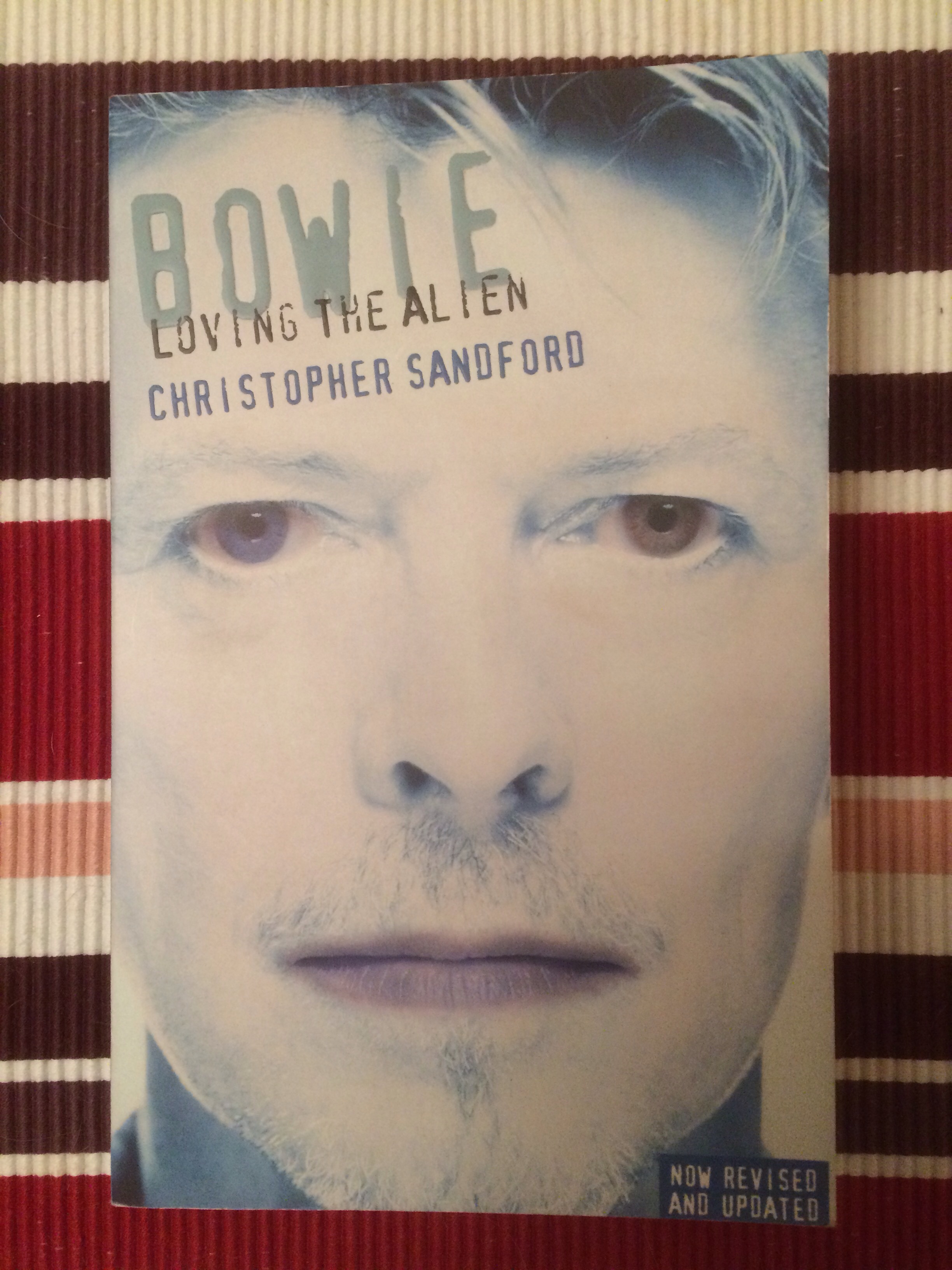
David Bowie: Loving The Alien by Christopher Sandford (Warner book, 1997)

  
Everything I learned to love about David Bowie came from this book.

Growing up, a child of the mid-Seventies first exposed properly to music in the early Eighties, Bowie was clearly always there but he didn’t register with me. I still don’t know why. Music was always on in our family home but I don’t remember ever hearing one of his songs; I don’t recall watching Live Aid, though I can well imagine I did. I suspect my entire view of Bowie was informed by his ‘Dancing In The Street’ duet with Mick Jagger, and that view was that this was an artist for an older generation, and therefore not for me.

Like a lot of things – girls, guitars, passing my driving test – my appreciation of Bowie came very late. 1997 to be exact. By that time I’d had it drummed into my that Bowie was important, but I still figured he wasn’t an artist I’d ever fall in love with.

I was in my university bookshop one day when the arresting image of Sandford’s book caught my eye. Rather than looking at the words on the back, I instantly looked at the index to see who the book mentioned, and when I saw Erasure, I immediately flicked to that page it mentioned to find out why. In among various sentences I read that Bowie had influenced my favourite band. I don’t know whether that’s true or not, but the notion that this artist who I couldn’t fathom of bring myself to appreciate had played a part in shaping either the music or imagery of Andy Bell in particular was compelling enough to make me buy the book.

In my quest to broaden my musical horizons it’s often been through academically studying texts or writings on the music before ever listening to it. If I look at my current passion, jazz, I know that this has come around twenty years after I first began reading about it, and I’d conservatively say it was ten years before I ever owned a jazz record. So it was also with Bowie, though not over such a long period.

I read ‘Loving The Alien’ avidly, fell head over heels in love with this man’s music, but never thought to go out and buy any music by him. Slightly ahead of him was the music of The Velvet Underground, another band who I had bout a book about before going out and buying The Velvet Underground And Nico. I thought it somewhat serendipitous that Lou Reed from The Velvets kept cropping up in the story of Bowie, either as a figure that inspired Bowie to create Ziggy Stardust, or on to when Bowie’s Belay Brothers pseudonym produced Reed’s Transformer. That convinced me, probably more than anything else, that I was going to go all out for Bowie further down the line.

I already knew I was going to head for Bowie’s Berlin period first. To someone schooled in electronic music, and who had already fallen for Brian Eno, and who already knew of the influence that this period had on Joy Division, that seemed like an obvious starting point. It also helped that I’d ready a great book about Berlin around the same time, and I thought that was another reasonable serendipitous matter, given how much I was interested in Berlin (I’ve still never been).

While I was reading the book, at my ex-girlfriend’s house, the BBC randomly broadcast a repeat of the Cracked Actor documentary. It seemed like too much of a coincidence. I’d built up a healthy interest in and knowledge of William S. Burroughs, though – typically – I’d never read anything by him, but I could appreciate the cut-up approach that Bowie was employing. To say I was by then enthralled by the man, his methods and his demeanour was an understatement. To my girlfriend’s father, the documentary was enough to make him leave the room in bigoted disgust. I sensed he wasn’t a fan. Too straight.

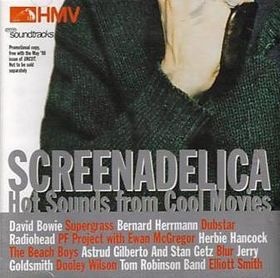
Rather than the Berlin period, it would turn out to be the song ‘Suffragette City’ that would provide the gateway to my Bowie collecting, specifically a live version from an Uncut cover-mount CD called Screenadelica, taken from the D.A. Pennebaker-directed final performance as Ziggy Stardust, a song delivered with punk-esque energy and sheer unbridled, antagonistic fun. That was May 1998 according to the date of the magazine, well over a year on from when I first started ‘researching’ Bowie. It hit my right between the eyes like Ziggy’s famous lightning bolt, and I was hooked. I played that track so many times, and at such severely loud volumes, that I’m surprised I can ever hear anything objectively today.

  
Since then, Bowie’s music has been a constant source of inspiration for me, and I find my youthful disdain for his music as somewhat risible now. My two daughters have grown up with his music, and Labyrinth of course, and, unlike I was at their age, are both well aware of just how monumentally important this man was, is, and always will be. I like to think that this has partially righted the wrong of me looking on him as too removed from my generation for me to like him.

Today ‘The Prettiest Star’ became the Black(est)star and music won’t feel quite the same again. I can only hope, as some surmised in the Sixties and Seventies, that he really was an alien after all, and has merely returned to his home planet now that his work here on Earth is done. I’d like to believe that.

David Bowie 1947 – 2016.

(c) 2016 Mat Smith / Documentary Evidence

Elevation – Can You Feel It / Spiral Trance (NovaMute single, 1992)


single // Can You Feel It / Spiral Trance

novamute | 12″/cd nomu3 | 1992

Ask any dance music fanatic what word they would associate with the year 1992 and the chances are they will reply, without hesitation, ‘hardcore’. Hardcore dance music was a fusion of sped-up breakbeats, thudding drums, speaker-wrecking dub bass, crowd noise, whistles and a synth effect that could only ever be described as sounding like a hoover; the effect was a sort of bludgeoning euphoria. Hardcore was, at times, ridiculous and the genre was ultimately short-lived, mutating quickly into a multitude of other genres, not least of which was the even more breakbeat-heavy jungle.

Elevation, a pseudonym of producer Shaun Imrei, has all the trademark hardcore traits listed above, plus housey piano and some gutsy, euphoric vocals courtesy of an unnamed contributor (she sounds a little like Sylvia Tella, who guested on Pop Will Eat Itself’s 92ºF) which rescues ‘Can You Feel It’ from the nihilistic quality of some other hardcore tunes, and also ensuring the track could work in a variety of DJ boxes. Okay, so the piano sounds a little weak and the whistles, bells and crowd noise may feel a bit contrived twenty odd years later, but there’s no denying the uplifting energy that ‘Can You Feel It’ possesses, marking the track out as a major highlight in a dance music style that rapidly went off the boil. And that manic ‘hoover’ sound still sounds as thrilling today, even if its potential as a rival to the TB303 was limited. The 12″ and CD released by NovaMute contains mixes taken from the tune’s original release on Creative Rhythm earlier in 1992, as well as a previously unreleased version (the Mutation Mix) which contains a breakdown filled with an excellent King Tubby-style dub passage.

For its NovaMute release, ‘Can You Feel It’ was backed by ‘Spiral Trance’ which was produced by Imrei and John O’Halloran. Starting with some ethereal vocals that sound like they belong on a Clannad record, ‘Spiral Trance’ retains only the barest trace elements of a hardcore aesthetic in some of its sounds, instead offering a deep, entrancing cut which doesn’t sound dissimilar to early Orbital or Juno Reactor. There’s not a heavy breakbeat in sight, Imrei and O’Halloran opting instead for a carefully-constructed 4/4 beat and a bass sound that could spill over into acid madness, but doesn’t, and for once this song is all the better for it.

12″/cd:
A1. / 1. Can You Feel It (Mutation Mix)
A2. / 2. Can You Feel It (Extended Mix)
B1. / 3. Spiral Trance (Into The Light Mix)
B2. / 4. Can You Feel It (Remix)

Originally posted 2012; re-posted 2015.

(c) 2015 Mat Smith / Documentary Evidence

Dinger – Sunsets Pink (Moulin Blanc download, 2011)

  
ep // Sunsets Pink

le moulin blanc records | download | 11/03/2011

Sometimes iTunes has a wonderful way of completely justifying its existence and its impact on the music industry. The relative efficiency with which bands / artists without a record label can just get music out there for people to buy with a few clicks is part of its universal appeal, especially where releasing rare or hard to find material that would be costly to press up for a relatively small audience remains the preserve of the short-run musical underground – The Wire is filled with small-run releases on tiny labels, mostly on CD-R or cassette. iTunes therefore is perfectly suited to efficiently releasing out-of-print items, especially where they are heavily bootlegged.

Still, even with iTunes’ utilitarian dimension, I never expected to be able to download five tracks from Dinger, the duo of Andy Bell and Pierre Cope that existed before Bell’s fateful audition with Vince Clarke that led to the formation of Erasure; the duo’s moniker came from Bell’s nickname, presumably a play on his surname. Previously I’d only managed to download ‘I Love To Love’ and ‘Air Of Mystery’ from some dodgy Erasure fansites, and presumed that the two tracks (which I seem to recall formed the only official 7″ release by the band) were the only songs they recorded. So three additional tracks is a bit of a bonus.

The principal curiosity value of this EP is being able to hear a young Andy Bell making his first foray into the world of pop music, ahead of that audition, audio evidence of which has also come available thanks to the Erasure Information Service. It was often said, by Bell and others, that it took pretty much the whole of Wonderland before Andy found his ‘own’ voice, claiming that the voice he adopted as his ‘own’ was modelled on Alison Moyet‘s. On the strength of the tracks compiled on Sunsets Pink, I’m not so sure. It is different, certainly, but not unrecognisably so. If anything, Bell sounds like a cross between David Bowie, David Sylvian and the guy from Our Daughter’s Wedding that sang that ‘Lawn Chairs’ track, very melodramatic and engaging, especially on the slinky and dangerous ‘Air Of Mystery’. It’s very of it’s time, unlike the voice that brought Vince’s songs to life on Wonderland.

The point about sounding of its time is most enforced by the sound of Cope’s backing; the whole thing has a very 1984 / 85 vibe, particularly in the use of funky slap bass, a sound that hasn’t aged well. When used in a controlled manner it sounds sublime – ‘I Love To Love’ still sounds to me like an early, shimmering OMD cut, though the middle eight – with a slap bass solo – is a bit much. Erasure could have easily recorded this for Wonderland – the one note synth melodies are right up Vince’s street and I swear he has actually co-opted that descending hook since. ‘The China Song’ (about, er, going to China) sounds like an attempt to distill the sound of the (Expanded) Talking Heads of Remain In Light, and has that cute sense of awe that the early Eighties had for all things foreign and ‘exotic’ (and that presumably explains the palm trees and holiday sunset on the sleeve image). That same funk vibe propels ‘Kettle Of Fish’ whilst also referencing the stuttered S’Express beat that Bell’s future collaborator Pascal Gabriel would develop for ‘Theme From S’Express’.

‘Dance’ is a seedy number with a Non-Stop Erotic Cabaret feel, Bell imploring us to ‘dance, dance, dance‘ while far-off chatter and voices mutter away in the background. It’s the least straightforward pop song here, the most uncompromising, and probably my personal favourite, even if I did wish the low end of the beat was more prominent.

A single track download of ‘I Love To Love’ was released on iTunes on 4 March 2011.

‘Air Of Mystery’ and ‘I Love To Love’ were originally issued as a 7″ single by SRT / Face Value Records in 1985. a quick glance at Discogs suggests that getting your mits on an original of the single will set you back around GBP55.

  
download:
1. Kettle Of Fish
2. Dance
3. Air Of Mystery
4. I Love To Love
5. The China Song

Originally posted 2011; edited 2015

(c) 2015 Mat Smith / Documentary Evidence
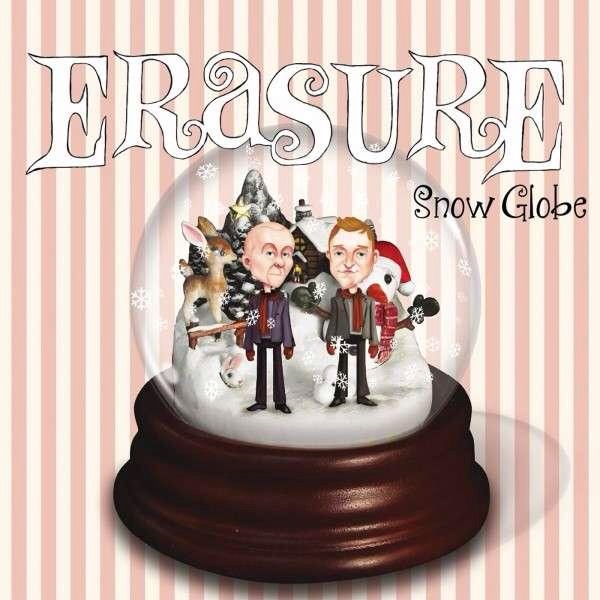
Erasure – Snow Globe (Mute album, 2013)

  
As its Christmas, I’ve found myself listening to Erasure‘s 2013 seasonal collection Snow Globe more than anything else over the last few weeks. I truly think it is one of the best Christmas albums ever made.

Here is the small review of the album that I wrote for Clash upon its release.

(c) 2015 Mat Smith / Documentary Evidence

The 7th Plain – Wishbone


The 7th Plain was an alias that future NovaMute / Mute artist Luke Slater used for a brief time, the first album issued under the name being the brilliant My Wise Yellow Rug released in 1994 by General Production Recordings (GPR). The 7th Plain found Slater operating in a firmly ambient mode, complementing the more dancefloor-friendly tracks he issued under his Planetary Assault Systems alias.

‘Wishbone’ doesn’t appear on My Wise Yellow Rug, but it sounds like it should have been included there. Here Slater lays down a rich, slowly-developing tapestry of mostly pleasant sounds underpinned by a hissing rhythm that sits somewhere between skeletal electro and the factory-like drum pattern from Depeche Mode’s ‘Ice Machine’. Toward the end Slater introduces a bassline constructed from a somewhat darker synth sound while a repetitive arpeggio sequence takes on a queasy insistence as the track concludes.

Throughout, even as Slater drops in what feels like a organic, jazzy looseness at the very beginning via vaguely piano riffs, there’s an underlying mechanistic, robotic quality to ‘Wishbone’; that reminds me of a review of one of the tracks on My Wise Yellow Rug which compared the track in question to Vince Clarke covering Vangelis’s theme to Blade Runner. In the interests of full disclosure, I actually bought the album on the strength of that line alone. At the time it wasn’t apparent that Slater would go on to become a Mute artist, but I was pleased he ultimately signed to the label, though I can honestly say that his work as The 7th Plain was always more interesting to me than the output under his own name.

Equanimity was released as a double compilation by the GPR label in 1995 and features some really good tracks from Max 404, D:Fuse, Beaumont Hannant, Russ Gabriel and other artists from the imprint’s roster. It sits squarely alongside the Warp series of Artificial Intelligence / listening electronica albums but at times seems to have much more of a concrete, robust edge compared to some of the ambient noodling that Warp’s series tended towards. With Max 404 and a crunchy Bari-speed rave track from the absurdly-named Radioactive Lamb being two possible exceptions, it would have been slightly inconceivable to find any of the tracks here finding themselves sitting comfortably in a techno set of the time, but an adventurous DJ could have probably found a way. They usually could.

(c) 2015 Mat Smith / Documentary Evidence

Richard Hawley – Down In The Woods @ 33rpm (Mute / Parlophone single, 2012)

  
single // Down In The Woods

One of the many loveable things about John Peel was his tendency, with alarming regularity, to play records at the wrong speed. For the masterful Peel, this was a natural consequence of packing his late-night shows with so much adventurous music that the odd RPM gaffe here and there was to be expected.

Somewhat less excusably, I did exactly the same with the 10” copy of this Richard Hawley single from his Singles Club series which left my music collection forever last week courtesy of a Discogs buyer. Long gone are the days of me sitting down and sticking on an LP in my lounge; in these time-pressed parental days, I often record the vinyl into my laptop with the volume set to mute (pun intended) and then listen to it back on the train to work the next day on my iPod. I know, I know; and to think I call myself a music writer. Don’t trust anything I say.

That’s exactly what I did with ‘Down In The Woods’ when I first received it three years ago, except that I either misread the label or the label didn’t say what the speed was, or I just figured the turntable was set to 45 when it was actually still set to 33, and I never went and recorded it again. As a result, this review is of ‘Down In The Woods’ and its B-side ‘Kindly Rain’ – at the Peel-friendly wrong speed. Read it faster if you want to guess what it really sounds like.

‘Down In The Woods’ is a long, sludgy piece of psychedelic blues wherein a gravel-voiced Hawley does his best impression of a robotic heavy metal vocalist whacked out on tranquillisers. The guitars fizz with astral aspirations and feedback drones reminiscent of something the Jesus And Mary Chain might have developed in a vague homage to The Velvet Underground. The whole thing has an epic, heavy density; a cloying, foggy, slightly threatening stew that Hawley’s demonic vocal does little to dispel, especially on his echoey delivery across the sparse and slowly rebuilding middle eight. This is possibly what it sounds like when you listen to ‘The End’ by The Doors within a lab-controlled LSD experiment.

‘Kindly Rain’ is pure angelic, ethereal texture, with lots of shimmering, mellow grandeur and atmospheric touches, at least until it tries, abortively, to push upwards into another lysergic jam; it just happens to be fronted by someone who sounds a lot like Iggy Pop does these days. Even at the wrong speed I can tell this is Hawley at his ballad-toting best.

(c) 2015 Mat Smith / Documentary Evidence

Electronic Sound – December 2015

  
Four of my reviews appeared in the latest issue of Electronic Sound.

Yokan System is a Japanese pop duo who make some of the classiest electronic music you’ll ever hear, so much so that it all feels rather effortless for the pair. Their debut album Whispering is released by Ample Play and is probably one of my favourite pop releases of the year.

Lilies On Mars are another duo, originally from Sardinia but now based in Hackney. Their second album  is released by Lady Sometimes and finds the pair dabbling with dreampop without surrendering themselves fully to drab shoegazery dullness. 

Shape Worship is the alias of Ed Gillett, and his debut album A City Remembrancer was released by the fantastic Front & Follow imprint. The album concerns itself with the constant mutability of London, from the windows to the past revealed in the mudbanks of the Thames to social disruption from the demolition of Corbusier-inspired housing, which we might be used to thinking of now as a failed social experiment. A complex album, for me writing this review allowed me to indulge two of my other passions – the history of London and architecture. I often say that I’d love to have become an architect if my actual career hadn’t gotten in the way.

‘Tppr’ by Laica is also a social experiment, though arguably more successful. For his latest release on his own Arell imprint, Dave Fleet sent a raft of friends and collaborators a small rhythm he’d tapped out on his desk while setting up his equipment. He asked them to mess with the sequence and send it back to him for further tweaking and re-assembly into a single track album. The result is, as I say in the review, proof that “mighty oaks from little acorns grow”. Fleet was a massive guiding presence in my MuteResponse compilation project and contributed a cover of Depeche Mode’s ‘See You’ to the album under his MO75 alias. Some of the artists he sent his inchoate rhythm to also appeared on MuteResponse – Thee Balancer, Joe Ahmed of Security and Simplicity Is Beauty.

I was delighted to get the chance to review Fleet’s album for Electronic Sound. I’ve championed his work for a while, and we featurd him in the 50 artists to watch in 2015. Both my piece on the album and ‘Tppr’ itself are among my favourite things I’ve written about / heard this year. In keeping with the original theme of the album, here is a picture of my writing environment for the review of ‘Tppr’ – a desk in my room in the funky Chambers hotel in New York in November. 

Electronic Sound is available from the iTunes Store or electronicsound.co.uk. The latest issue also includes a lengthy extract from Kris Needs’s new book about legendary New York synth punks Suicide. 
(c) 2015 Mat Smith / Documentary Evidence

Kid Congo Powers & The Pink Monkey Birds – Conjure Man (In The Red single, 2012)

  
single // Conjure Man / Lose Your Mind

in the red | 7″/dl itr239 | 2012

Kid Congo Powers, as well as being Nick Cave‘s guitarist in the Bad Seeds and a founder member of The Gun Club, used to be in The Cramps. If you ever needed validation of his involvement in the band formed by the late, great Lux Interior and Poison Ivy, ‘Conjure Man’ is probably it, albeit what The Cramps might have become if they’d studied Morricone. Powers, or Brian Tristan to immigration, has a particularly distinctive tremolo guitar style which manifests itself here as a sort of desert-washed, dramatic blues, with all the insistent bleakness of a spaghetti western soundtrack in ‘Conjure Man’s spacious tumbleweeds-in-dystopia arrangement. His vocal may lack the stuttering jerkiness of Lux and the music some of the obtuse angles that made The Cramps such a compelling unit, but his echo-drenched Californian drawl has the same appealing blank weirdness, whilst lyrically here also recalling the wonderful anarchic mysticism of Screaming Jay Hawkins’ ‘I Put A Spell On You’.

The B-side is a cover of The Seeds’ ‘Lose Your Mind’ (misspelled, perhaps deliberately, as ‘Loose Your Mind’ on the 7″ label). That’s right, an ex-Bad Seed covering The Seeds. Powers captures the garagey rock ‘n’ roll blues of the original with ease, adding a lysergic, psychedelic quality to the arrangement via some sky-scouring synths and captivatingly frazzled, whining guitar trickery. It’s effortlessly cool, much like Kid Congo Powers himself.

The single was released in both red and black vinyl editions (100 and 400 copy editions), with both editions enclosed in a screen-printed sleeve printed onto cardboard cut from a Pabst Blue Ribbon box. If that doesn’t scream ‘carefully-produced lo-fi’ then I don’t know what else does.

First posted 2013; re-edited 2015

(c) 2015 Mat Smith / Documentary Evidence
Various Artists – Junior Boy’s Own Collection (JBO compilation, 1994)

  
compilation // Junior Boy’s Own Collection

Including this compilation on this blog is highly tenuous, and as I shipped it off to the guy who bought it off me this weekend, I really couldn’t find a reason to write about it at all. I then opened up the CD sleeve and found a brief message of thanks to ‘Darren Price and Centuras’, and bearing in mind that Price became a celebrated NovaMute artist a few years later, that gave me the highly tenuous reason to document this here.

Centuras were a trio of Price, Eric Chiverton and Gary Lindop, and the unit dropped a few 12” singles on various labels before finally settling at Junior Boy’s Own, the dance label established in 1991 as a subsidiary of the UK’s Boy’s Own Productions. Price’s early group don’t feature on this compilation, predominantly because Junior Boy’s Own Collection was designed to showcase the label’s bigger acts – Terry Farley and Pete Heller’s house project Fire Island, Underworld, Ashley Beedle’s X-Press 2 and a unit then known as The Dust Brothers, who would of course go on to become The Chemical Brothers.

Underworld were poster boys for UK dance music around 1994, having transitioned from a singles band operating squarely in the club genre to the front cover of the NME and Melody Maker upon the release of Dubnobasswithmyheadman, probably because Karl Hyde played guitar and that made it acceptable to the indie masses. Two Underworld tracks (‘Dirty Guitar’ and ‘Rez) are included here, along with the upbeat ‘Bigmouth’ under their Lemon Interrupt alias. That JBO had both Underworld and the other highly lauded crossover act The Dust Brothers (their rare early cut ‘Song To The Siren’ appears here) was quite remarkable for a small indie label, and probably the catalyst for Virgin’s V2 subsidiary taking them over.

As a survey of the disparate forms that dance music was already coalescing into in the pivotal year of 1994, Junior Boy’s Own Collection is near-definitive, given that it covers two flavours of house, nascent trip-hop and cross-over electronica. The only thing missing is pure techno, something that JBO had never really specialised in, the mantle for which was already being picked up by other, more specialist small labels.

I recall buying this from an HMV in Birmingham in 1994, for no apparent reason whatsoever. I already had the Underworld and Dust Brothers tracks and had no real interest in Farley / Heller, X-Press 2 or any of the other acts included here. It’s the kind of needless spending that I did as a kid, and one of the reasons I now feel the need to trim back my record collection.

(c) 2015 Mat Smith / Documentary Evidence