Tycho – Epoch (Ghostly International album, 2016)

“At its best, Epoch has a delicate, introspective fragility via overlapping waves of sound and crisp, dependable beats.” – Clash

As I’ve said a few times here, I’ve become something of a fan of the music issued by the Ghostly International label. One of their recent big releases was Tycho’s impressive Epoch album, representing the fourth record from Bay Area sonic prodigy Scott Hansen and his musical accomplices.

My review for Clash can be found here.

(c) 2016 Mat Smith / Documentary Evidence for Clash

Documentary Evidence 2016 Top 10 Albums: 3. LNZNDRF ‘LNZNDRF’

lnzndrf

“In thrall to the methods of Can, if not their actual sound.” – Electronic Sound

I heralded the trio of Scott and Bryan Devendorf (from The National) and Bryan Lanz (from Beirut) as my new favourite band upon the release of their self-titled album for 4AD earlier this year. It would the first of three such occasions where I made that claim.

This was a frighteningly inventive LP, formed out of the same sort of long-form improvised jams that Can used nearly fifty years before in the creation of their seminal early records, only then treated and manipulated to take on a relatively ‘composed’ form. The output was a sort of Krautrock / electronic hybrid whose details reveal themselves over repeated listens.

I reviewed the album for Electronic Sound and interviewed Scott Devendorf for Clash. Back issues of Electronic Sound are available at http://www.electronicsound.co.uk while my interview can be read here.

(c) 2016 Mat Smith / Documentary Evidence

Documentary Evidence 2016 Top 10 Albums: The Departed Ones

We lost some incredible musical luminaries in 2016, chief among which were David Bowie back in January and Leonard Cohen in November. Both artists released powerfully creative albums this year, underlining talents that seemed to have been snuffed out far too early, yet both records seemed to contain clues – in coded form (Bowie’s Black Star) and more obvious form (Cohen’s You Want It Darker) – that death was just around the corner.

I wrote a piece for Clash about David Bowie that was published just two days before he was announced to have passed away. It was written from the point of view of someone who was enjoying a new phase of life whereas in fact it was already over. For Cohen, moved though I was to write the piece below, I never placed it anywhere.

youwantitdarker

In was in Toronto when the news broke that Leonard Cohen had passed away. My first reaction, upon reading the news was somewhere between surprise, anger and sadness.
It was a little like the passing of a distant relative – someone who had always been there in the background, who you’d spent some time with but not enough, and who you just figured would always be there.

The front cover of Friday’s Globe & Mail was turned over to Montréal’s renegade troubadour, and it felt like the whole of Canada was undergoing a day of national mourning. Flags were flying at half-mast and there was a general feeling of glumness about the place; this was, of course, little more than optics and coincidence, since Friday was the 11th November and Canada was set for its annual remembrance of those who had lost their lives in the two World Wars of the twentieth century, but it felt like it could have been – should have been – all for Cohen’s benefit.

I never thought I’d get into Leonard Cohen. Growing up, immersing yourself in music magazines, you alighted upon Cohen’s legacy and legendary status, but he just didn’t seem like an artist I’d ever fully understand or whose music I’d ever be able to appreciate. This was mere narrow mindedness on my part, but such is the opinionated arrogance of youth.

Cohen’s ‘Avalanche’ was covered by Nick Cave on his debut album in 1984, but it was never my favourite track on that LP and, besides, at that point (I bought that album in around 1997) it was hard enough for me just to have made the switch the Mute electronic acts to Cave, let alone try to wrap my head around the music of Leonard Cohen as well.

It would take the purchase of Rufus Wainwright’s Want almost a decade later to fully start my appreciation. Wainwright, also coincidentally Canadian, covered Cohen’s ‘Chelsea Hotel No. 2’ at a tribute concert assembled by Hal Wilner, at which Nick Cave also performed. Wainwright’s live version of the song was included on the second part of his Want opus, and completely floored me when I first heard it. It helped that it was about New York, which will always get my attention, but it was the nakedness, the bluntness if you will, of Cohen’s lyrics that truly grabbed me. The Songs Of Leonard Cohen quickly came into my possession, and I’ve been collecting sporadically ever since.

Maybe I still haven’t completely ‘got’ him, but I’ve gotten a lot closer. What you start to appreciate as you spend quality time in the company of his music is that the stereotype of Cohen as this abject, depressed miseryguts is woefully misplaced. Upon announcing his passing, Cohen’s son drew attention to his father’s incredible sense of humour. It’s the only way to explain the song ‘Don’t Go Home With Your Hard-On’ and some of the verses in ‘Hallelujah’ (a song that is both spiritual and utterly out-there, something lost on the multitude of pop acts that have covered it). Sure, it’s dark humour, but it’s humour nonetheless.

There’s also this theory that Cohen was just a hapless, thwarted romantic, but that’s also incorrect. A lot of Cohen’s lyrics were unashamedly, nay eyewateringly, frank and open about sex, so one could assume he wasn’t as unlucky as his wistful balladeering would have you believe. Let’s hope the smooth-talking, gravel-voiced, romantic is having the same fun he had in his corporeal existence up there in the heavens.

The untimely death of a perpetual ladies man.

(c) 2016 Mat Smith / Documentary Evidence

Documentary Evidence 2016 Top 10 Albums: 10. Rufus Wainwright ‘Take All My Loves’

I’m not normally one to embrace the whole end of year countdown thing, but I’ve been asked for my choices a couple of times now and so I thought I’d jump on the journalistic bandwagon also. Over the next few days I will post my top ten albums of the year, as well as a few other bits and pieces about my year in music.

“I wouldn’t say it’s an affliction necessarily, but I definitely have some sort of condition where I am ruled by a kind of duality. On the one hand I want to be on the cover of ‘Rolling Stone’, but on the other hand, there’s my high reach towards that which is completely unpopular, and un-current and unusual.” – Rufus Wainwright, March 2016

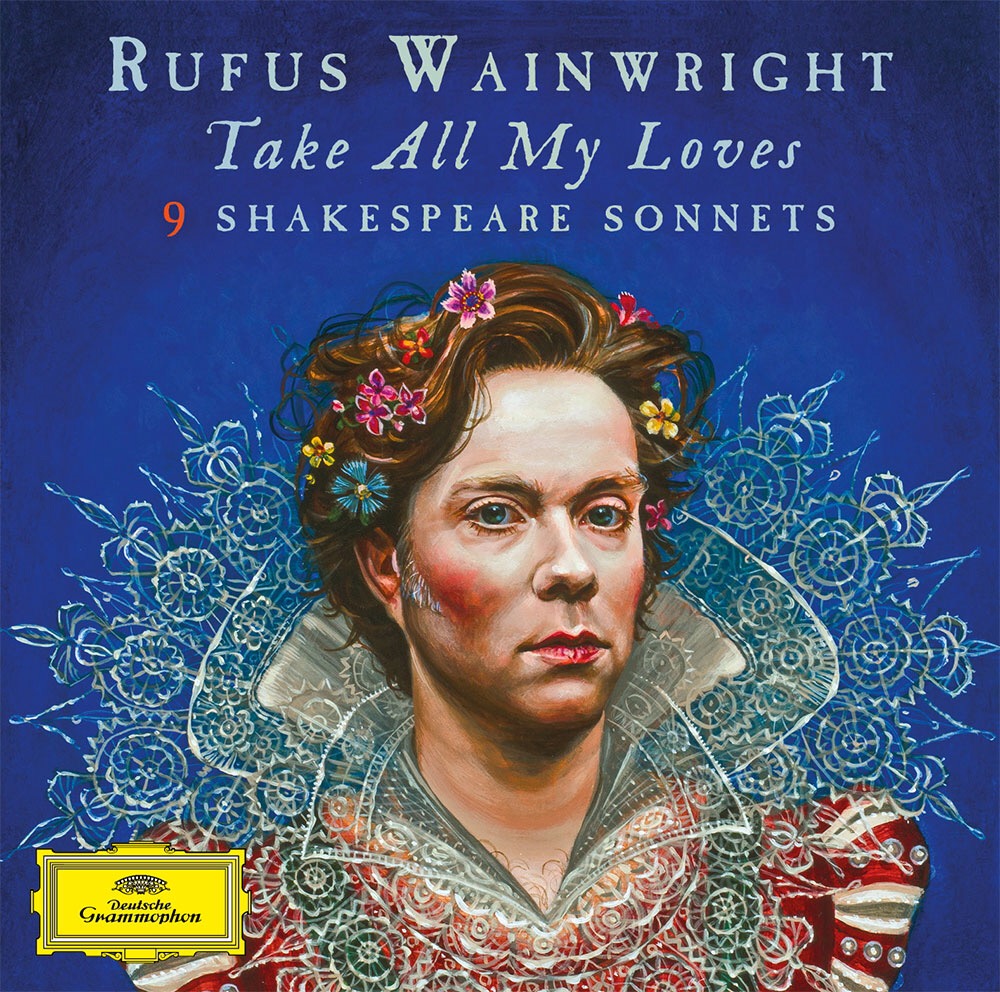
First up is Rufus Wainwright’s Take All My Loves, an album that saw the Canadian singer, songwriter and opera composer tackle a batch of Shakespeare’s sonnets with the help of singers like Florence Welch and sister Martha, as well as thespy luminaries Siân Phillips, Peter Eyre and, er, William Shatner.

Your appreciation of this record largely depends on whether a) you’re a fan of Shakespeare and b) you’re a fan of Rufus Wainwright, both of which I happen to be. It is nevertheless a complex and challenging – but ultimately rewarding – album that underlines how talented Mr. Wainwright is; the split between classical and more accesibble fare on the album suggests a return to pop music from the rarefied world of opera that Wainwright has been hanging out in these past few years might well be on the cards.

I fulfilled a longstanding career ambition and interviewed Wainwright about the project for Clash, wherein he explained how gatecrashing parties, hanging out on movie sets and generally being an all-round celebrity pest allowed him to build out the little black book of contacts necessary for the creation of Take All My Loves, as well as how masturbation improbably led to a love of the Bard.

My interview can be read here.

(c) 2016 Mat Smith / Documentary Evidence

Body/Head – No Waves (Matador album, 2016)

The duo of ex-Sonic Youth bassist / guitarist Kim Gordon and improv musician Bill Nace continue their Body/Head collaboration with the release of a live album recorded in Tennessee in 2014. Titled No Waves, this is more than just your typical live album, being a headlong journey into the outer edges of music’s malleable core.

I reviewed the album for Clash and you can read the review here.

(c) 2016 Mat Smith / Documentary Evidence for Clash

Inspiral Carpets: Craig Gill RIP


Today brought the tragic news that Craig Gill, drummer with Inspiral Carpets since he was a mere 14 years old, has passed away at just 44. Gill is one of those understated heroes, delivering the definitive beat that the rest of the Madchester scene grooved along to.

Photographer Andy Sturmey and I covered an absolutely superb Carpets gig for Clash in 2012, from which the band photo above was taken. Gill was incredible to watch, a real powerhouse drummer with a furious, compelling energy that you couldn’t take your eyes off.

To truly celebrate Gill’s legacy I suggest you stick on the intensely funky ‘Dragging Me Down’ from the overlooked Revenge Of The Goldfish LP extremely loudly. Rest in peace Craig. Forever cool as fuck.

Photo (c) 2012 Andy Sturmey // Post (c) 2016 Mat Smith / Documentary Evidence
Larry Levan – Genius Of Time (Universal compilation, 2016)

  
Larry Levan was a major figure in the New York club scene of the Eighties, and The Paradise Garage on NYC’s King Street where he had his residency was the day-glo decade’s answer to Studio 54. As a DJ Levan was legendary; as a remixer he applied his dancefloor nous to his work in the studio, developing mixes that focussed on the groove but emphasised soulfulness over alien electronics and overly-regimented 4/4 beats. 

Universal have released a compilation of 22 mixes, edits and extended versions by Levan. I reviewed the album for Clash. You can read my review here.

(c) 2016 Mat Smith / Documentary Evidence

Yeasayer – Chris Keating (Clash interview, 2012)

  
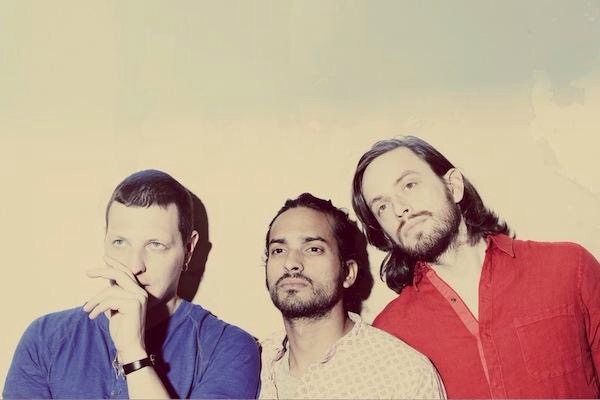
This past week I’ve been listening to Amen & Goodbye, the fourth Yeasayer album due for release by Mute on April 1st, which I’ve reviewed for Electronic Sound.

Way back in 2012, I had the great privilege of getting to interview the band’s Chris Keating (above right) ahead of a second intimate show at Islington’s The Lexington to promote the upcoming release of their third album, Fragrant World.
My Clash interview can be found here. I still think of it as one of my favourites.

(c) 2016 Mat Smith / Documentary Evidence  

Matthew Bourne – moogmemory (Leaf album, 2016)

  
I reviewed this really intriguing synth album for Clash. Matthew Bourne is an improvising pianist with a penchant for analogue synths, and moogmemory was created entirely using a customised Memory Moog.

My review can be found here.

A video for ‘On Rivock Edge’ from the album can be watched below.

(c) 2016 Mat Smith / Documentary Evidence

Brood Ma – DAZE (Tri-Angle album, 2016)

  
I reviewed this wonky electronic album from James B Stringer, aka Brood Ma, for Clash. My review is here.

(c) 2016 Mat Smith / Documentary Evidence