Barry Adamson: Documentary Evidence Interview (2004)

That Old Jazz Devil Called Love: The Barry Adamson interview

Barry Adamson

I completed this email interview with Barry Adamson back in 2004, just after he’d left Mute, released a new rough track called ‘Harlem’ as a free download, performed with Russell Maliphant at The Barbican and was experimenting with making music on Macs. It was only just over ten years ago, but releasing music as a download was still something pretty new, hence his comments on the ‘political’ nature of releasing music this way. Back in 2004 I was still pretty new to conducting interviews, hence why this appears as a question and answer-style feature.

Former Magazine bassist Barry Adamson was for over ten years the very essence of the quintessential Mute Records artist – eclectic, prolific and highly popular, just thankfully never a chart act. His work traversed many, many musical boundaries and genres from soul to hip-hop through to noir film scores. Parallel work as a remixer saw him reconfigure tracks by Recoil, The Wolfgang Press and Nitzer Ebb, drawing on his considerable skills as a sound designer. His work has received plaudits from the likes of Portishead and Nine Inch NailsTrent Reznor, who picked Adamson to provide tracks for his Natural Born Killers soundtrack. Barry left Mute in 2003, and Mat Smith caught up with him the following year for a few questions.

MAT SMITH: I’ve just visited Manchester for the first time. I imagine that the city’s changed quite considerably, and now looks to be a carbon copy of the trendiest parts of London. Does the city still provide you with as much inspiration as it did for Moss-Side Story? What does inspire you?

BARRY ADAMSON: Well. I left Manchester some time ago, before the Happy Mondays and all of that era, but the city as I knew it then provided me with a historical noir backdrop of crime and decay, which I was completely drawn to. I guess my youth was impressed like a thumb into clay by the spirit of people living the way they did, when they did and how. How they relieved poverty through a whole myriad of entertainment; how the influence of black culture affected this and how movies might mirror these events. This model dominated my work for some time and perhaps other versions in other towns offer me similar yet different interest. I’m writing a screenplay which is clothed by London, Paris, Berlin, Sydney, and New York. So this kind of inspiration continues.

MS: Manchester is an important part of the history of the UK music scene – like London and Liverpool – and you were a player in that nascent scene with Howard Devoto in Magazine. Are you able to look back on those times now happily, or are you glad they’re behind you?

BA: Magazine was an incredibly happy time for me. It was like going to a school where you had a laugh all the time and the girls fancied you and the boys thought you were cool as a fuck. A bit like the juniors where it’s OK to fall over and cry at the blood spilling down your leg and then to get running again, laughing your ass of. None of which could have ever prepared me for the psychological, physical and spiritual slaughter of Nick Cave & The Bad Seeds!

MS: Mute Records was your UK home for many years, and I was somewhat surprised that you have jumped ship. What prompted the move from the label? Your (presumably tongue-in-cheek) press release on the website states that you were given a gold watch, and I kind of got the impression that you were glad to be free?

BA : Well. There comes a point in everyone’s life… This was my point. I’d been here before: a kind of giddiness at the possible betrayal but knowing that the car you’re driving needs to go and a newer model (plus the fear of the possible cost) has to become the next avenue to walk/run down. As Joy Division once said – ‘A change of scene / A change of style / With no regrets.

MS: The new track, ‘Harlem’, is absolutely superb – obviously Adamson in an instantly-recognisable way, but a progession of sorts. Does the fact that this was made available as a download indicate a shift in the way that your music will be marketed? Are you in favour of downloads, or do you fall into the camp that would be against the widespread development of this?

BA: Without getting into this question too much from a political standing, yes absolutely on the idea that BA will now be a download purchase affair with ideas about having a specific photo info section available for each project. I guess for a while some hard copies will be available but it won’t be long before you can download your whole day! ‘Harlem’ was a tiny experiment. the standards were just above demo as far as I was concerned. I did it in a day but thought it good enough to give away I wanted to give something to the people who bother to sign up and they say such incredibly supportive things. In the future the songs and music will be mastered and obsessively detailed as usual.

MS: Many of your songs have an improvised tone to them, but you are credited as the sole author. How do your songs come about – what’s the process of getting them from an idea to being fully recorded? How do you decide which instruments / players will be used?

BA: Wow. The secrets of the BA? Let me see. Starts in the head. That fool was me was in a dream I had in Australia. The lot. Words, music, melody. Boom. I woke up and copied it up in 15 mins. That’s rare. Normally? You hear it and then the job is to arrange it so folk can dig it. Starts with me. Do I dig it? Do I get off on you diggin’ it? Instruments are tried and tested. Some come without effort, others you must wait for further inspiration. There are players who are so connected to themselves that they understand even my crudest of languages that rely on feeling and movie image. Those are the cats you keep in your book. It’s all a process.

MS: At the Barbican Only Connect concert in April, I noticed you were making use of a Mac. How has this changed the way you compose / perform?

BA: It’s amazing to sit with that thing and make very colourful sketches of ideas, some of which remain in the final mix. I remember recording Real Life with Magazine and after everybody went to bed, getting up again and making tracks into a cassette of sequences and stuff, using the keyboards and effects units. The G4 is kinda the same theory to me. I love the modern world of technology for the G4 alone!

MS: And finally, what’s next for Barry Adamson? New album? Tour? A totally different way of presenting your music? More soundtracks?

BA: I’m writing music everyday. Some for projects and some for myself. I’m gagging to make film. I’m preparing the way for this to happen. I would like to bring out some work online and then play live. The world is mine. Plus three weeks ago I had another son. Edmondo Lucas George Adamson. That’s my latest release!

First published 2004; re-edited 2015.

(c) 2015 Mat Smith / Documentary Evidence
Barry Adamson, Anita Lane & The Thought System Of Love – These Boots Were Made For Walking (Mute Records single, 1991)

Barry Adamsn, Anita Lane and The Thought System Of Love 'These Boots Were Made For Walking' artwork

mute records | mute119 | 1991

This version of Lee Hazlewood’s hit – made famous by Nancy Sinatra – is an absolute stone cold classic, as they may have said in the 1970s. On Terry Donovan’s 7″ mix, those immediately-recognisable descending bass notes that herald the original are here complimented by piano and a deep dub-inflected hip hop beat. Barry Adamson adds a string section and a funk guitar where the Sinatra version quickened the pace with a rather cheesy horn section. Anita Lane‘s vocal is typically excellent, archly naïve and seductive all at once, somehow colouring the sparse arrangement perfectly.

On the other remix front, Renegade Soundwave departee Karl Bonnie‘s ‘Bonnie Floats On Airwair’ mix – aided superbly by Holger Hiller with additional noises from then-Orb member and onetime Fortran 5 accomplice Kris ‘Thrash’ Weston – ratchets up the bass levels and adds some pulsating electro percussion, pushing this into heavy digital dub territory, with all the aplomb expected from the assembled trio. The mix also makes full use of some sterling slide guitar work from ex-Birthday Party man Rowland S. Howard. John Waddell adds all manner of new elements – a fragile synth melody and soulful sax – and in so doing turns the track into a blissed out groove somewhat reminiscent of The Beloved, recalling the chilled-out Balearic vibe of the time.

Adamson’s own ‘Go Johnny’ blends two strands of his distinctive style – spiralling orchestration and jazzy bop laced through with samples and abrasive noises. The track kicks off with some meditative organ lines before diving headlong into a Bernard Herrmann-esque chase theme with a beat that doesn’t know if it’s bop or rockers reggae. Both ‘Go Johnny’ and the original cover of ‘These Boots…’ feature on the celebrated Fine Line soundtrack to Delusion.

First published 2004; re-edited 2015.

(c) 2015 Mat Smith / Documentary Evidence
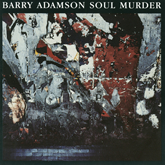
Barry Adamson – Soul Murder (Mute Records album, 1992)

Barry Adamson 'Soul Murder' artwork

mute records | stumm105 | 1992

Released in 1992, Barry Adamson‘s second Mute Records album proper is also perhaps his darkest, most cinematic to date. Beginning as all stories should with a ‘Preface’, Adamson sets the scene of murder and crime with a sample of a convicted brother detailing his list of crimes and misdemeanours, before Adamson kicks in a short burst of dramatic strings; the track concludes with either a vintage movie sample, or a heavily-aged new one – ‘Sorry to disturb you Mr Adamson.’

The album begins in earnest with a classic Adamson spoken word monologue on ‘Split’, referring to himself as El Deludo, Mr Moss Side Gory and Harry Pendulum, all over a lush jazz backdrop dripping with pianos, brshed cymbals and rousing horns. ‘There’s a light at the end of the tunnel,’ concludes Pendle. ‘When you see it that means that you’re dead.’ ‘The Violation Of Expectation’ is mysterious and beautiful – simple piano clusters over synth chords and a characteristic pallette of juxtaposed sounds. The introduction of a watery, distorted voice humming away to some unrecognisable tune runs a chill through this track that is partially leavened by the isolated sounds of crashing waves that conclude the track. ‘Suspicion’ features some solid Public Enemy-style gritty, industrial hip-hop beats, over which high octave keyboard melodies are layered.

‘A Gentle Man Of Colour’ is a truly disturbing story of prejudice in the vein of Harper Lee’s To Kill A Mockingbird – a black man is wrongly accused of a crime against a white woman, leading a mob of men to torture and ultimately burn him to death. The story is delivered as a news report by Marcia Schofield, while Adamson provides the narrative with a backdrop of incidental sounds. This is followed by ‘Trance Of Hatred’, an outwardly gentle piece for vibes and strings, counterweighted by a sample of what could be an armed gang robbery scene from a movie.

The frantic pace of the six minute ‘Checkpoint Charlie’, with its layers of keyboards and swirling, tense melodies reminds me very much of the opening music by Ennio Morricone for Oliver Stones The Untouchables. ‘Reverie’, in contrast, is a piano and xylophone work of melancholy beauty rendered in waltz time. The addition of some serene synth pads give this a soaring, moving quality, and it is hard not to to be touched by its serenity. ‘Un Petit Miracle’ in contrast is throwaway twee Gallic pop, featuring innumerable Casio presets, whistling and a innocent vocal from Pascale Fuillée-Kendall.

‘007, A Fantasy Bond Theme’, in contrast, is one of Adamson’s most humour-filled pieces. Setting the scene, Adamson drops in a narration by Arthur Nicholls detailing a Jamaican – James Bond – who believes he is Ian Fleming’s spy hero; ‘Bond…is black!‘ he tells us, in a stroke of genius wordplay. Monty Norman’s famous theme is here delivered with a skanking rockers beat and ska vibe – ludicrous and marvellous in the same breath. ‘The Adamson Family’ features vibes and some very sixties organ, the jazzy tones and cinematic strings, while ‘Cool Green World’ – with its MOR keyboards – could have been lifted from the soundtrack to an Eighties romantic comedy; it has a wholesome, family feel – imagine tree-lined wide pavements in some US suburb, immaculate front gardens, the leaves collecting in the gutter as summer turns to autumn – until the final minute and a half, where the key changes subtly, casting a darkening shadow over the track.

‘On The Edge Of Atonement’, a slowed-down pairing of jazz and gentle strings to the same theme as ‘Reverie’, with gospel vocals from Sarah Bower, Deloray Campbell, Peter Francis, Patricia Knight and Caron Richards, has a drifting, romantic tone and a capacity to uplift. ‘Epilogue’ closes with the same angry brother and strings as ‘Preface’, closing off a dark and mysterious addition to Barry Adamson’s catalogue.

First published 2004; re-edited 2014.

(c) 2014 Mat Smith / Documentary Evidence

Barry Adamson & Russell Maliphant – Only Connect, The Barbican, London 08/04/2004

Barry Adamson & Russell Maliphant - Only Connect ticket

The orchestra assemble themselves on a platform to the right of the stage; Barry Adamson casually walks to a podium of laptops and keyboards on the left of the platform – the glow of the Apple logo, with the house lights still on and the audience still finding their seats, glints every bit as brightly as the glare from his wraparound shades. He settles himself to the left of the stage, flanked by Tom Robinson Band keyboardist and veteran Adamson collaborator Nick Plytas and drummer Simon Pearson. He rocks back and forth, seemingly testing the hip injury that has plagued him in recent times. His head is clean-shaven, his suit tailored to perfection, offset by a red shirt and matching pocket handkerchief; he simply exudes cool.

But, at least for the show’s first thirty minute segment, Adamson is just one of the talented players here, and as the lights dim and the Russell Maliphant dance troupe – Maliphant himself, plus Flora Bourderon, Maria Goudot, Miquel de Jong, Michael Pomero and Anna Williams – he begins to conjure noises, loops and speech samples from his Mac on the opening piece (Moss Side Story‘s ‘On The Wrong Side Of Relaxation’. After five minutes, the BBC Concert Orchestra (conducted by Robert Ziegler) kick in with some initially soft orchestration. The dancers are formed in pairs, looking something like an alt.Gap commercial, angular movements seeming to evoke the agony and violence of love, twisting and contorting with seemingly impossible ease. For the second track – ‘Dance With A Stranger’ – Adamson switches to bass, sitting in a chair among his musicians. He provides a mellow bass counterpart to a moody version of ‘Mr Eddie’s Theme’ from his soundtrack for The Lost Highway, before frantically working the frets as the momentum of the song, and the jerky dance movements, gather pace.

For the middle section, Adamson gathers his band down on the lower part of the stage (‘We’ve come down from our soul food kitchen,’) and urges us to ‘feel free’. The band then rip into a soul-jazz jam session (‘Space Spiritual’) which Adamson dedicates to the recently-deceased Magazine guitarist John McGeoch, with solos from Pearson, Plytas, Pete Whyman (sax and clarinet), Mike Kearsey (trombone) and Ben Edwards (trumpet), with some stunning wah-wah bass from Adamson himself. He hangs up his bass for a faithful rendition of ‘Jazz Devil’, refering to himself as Barry Hellafonte and Telly Savalas during the track. He stalks and prowls the stage like a wolf, grooving along with the jazzy vibes, supported by Dudley Phillips on double bass. For ‘The Vibes Ain’t Nothin’ But The Vibes’, Adamson takes a seat among the musicians, tapping his foot in time to Anthony Kerr’s vibes, lazily recounting the story’s tale ‘of lives and lovers, while toward the end of the piece the BBC Concert Orchestra soak the track with serene strings. A totally different variant of ‘Cinematic Soul’ (entitled ‘Cinematic (California) Soul’) closes this section, with Adamson losing power to his earphone just before starting. He grooves off the stage toward the end of the number, leaving the musicians to earnestly play out the song to rapturous applause.

After another interval, Adamson and the band once again move to the upper deck, and the dancers – now reduced to five – return to the centre stage. The band play a stunning version of ‘Le Matin Des Noire’ from The King Of Nothing Hill, with Adamson gesticulating and motioning as he half sings, half speaks the lines in French and English. The elongated version allows the mood to be teased out further compared to its recorded sibling, with the string section applying the Parisian atmosphere perfectly. They play two more tracks (‘Holy Thursday’ and The Taming Of The Shrewd‘s ‘From Rusholme With Love’) the latter featuring a solitary dancer bouncing, rolling and creating shapes in the centre of the dimly-lit lower stage. Adamson remains seated for these tracks, again coaxing sultry lines from his bass, while the gloriously atmospheric orchestra swells up around him.

It’s two hours, with breaks, but it feels so much shorter, all too brief. There’s an abundance of soul, atmosphere and emotion here – it’s moving, maudlin and murky all at once. But overall, like the man Adamson himself, it’s impossibly cool.

Thanks to Clem Buckmiester for the set list.

First published 2004; re-edited 2014.

(c) 2014 Mat Smith / Documentary Evidence

Barry Adamson – Black Amour (Mute Records single, 2002)

Barry Adamson 'Black Amour' artwork

mute records | mute223 | 19/08/2002

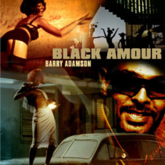
If Marvin Gaye was still alive and collaborating with Massive Attack, this dark and sensual track could well be the outcome. ‘The deeper you go, the funkier it gets’ intones a honey-throated Barry Adamson, over a fantastically dark soul backdrop which deploys some extremely stirring strings and a bunch of What’s Going On-style female vocal harmonies.

Adamson’s own ‘Trojan Extended Pleasure’ remix (credited to The Pimp Floyd just to increase the Carry On vibe) kicks out the soul groove in favour of a dub-style makeover, seeing elements faded in and out sharply, echoes and all manner of King Tubby homages riding over a thick and filthy reggae beat. CD B-side ‘First Light’ is a fast-paced rock meets jazz surprise – fuzzy guitars, saxophone and horns that wouldn’t have been out of place on a Bruce Forsyth Saturday evening show theme. It’s a joyous, uplifting track featuring a spoken word sample from The Foundation For Inner Peace and Foundation for a Course in Miracles.

First published 2003 / re-edited 2014.

(c) 2014 Mat Smith / Documentary Evidence
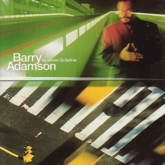
Barry Adamson – Whispering Streets (Mute Records single, 2002)

Barry Adamson 'Whispering Streets' artwork

mute records | mute283 | 04/11/2002

Oddly enough, this was the first thing I ever bought from eBay. What’s more, just like I always used to at record fairs, I paid well over the odds. Still, despite feeling out of pocket, I have to say it was well worth it.

Isolated from their position within an album, Barry Adamson‘s early singles felt a bit lost. Not so with this track, which works well on its own despite being an integral part of The King Of Nothing Hill‘s narrative. It’s sleazy, funky in a maudlin seventies soundtrack stylee, features a stunning Cypress Hill sample and guitars which could have been culled from Portishead’s Dummy. Here Adamson is a unwilling assassin driven to kill by love, deploying some decent word-play on the chorus – ‘five bullets, five names / and a contract worth five hundred grand‘. With some soaring strings and chilling organ lines from Adamson collaborator stalwart Nick Plytas, this is among Adamson’s most atmospheric work, while his vocal was his most assured to date.

Mixes come from AIM, who strip out some of the soul and atmosphere to create a spindly groove, and Funkstörung. The latter is a electronic cut-up, deploying small vocal snippets over a quirky beat; it also teatures an organ groove reminiscent of Stevie Wonder’s ‘Superstition’.

First published 2003; re-edited 2014.

(c) 2014 Mat Smith / Documentary Evidence

Barry Adamson – The King Of Nothing Hill (Mute Records album, 2002)

Barry Adamson 'The King Of Nothing Hill' artwork

mute records | stumm176 | 02/09/2002

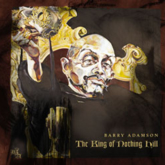
The King Of Nothing Hill comes with a title bearing Barry Adamson‘s hallmark sense of humour, and was his most accomplished and complete work by this point. Draped regally in a red, black and gold digipack robe, Adamson is here cast as the king of an absent kingdom, although the photo on the inside of the sleeve seems to be more Isaac Hayes than anything else.

In fact, Isaac Hayes is not a bad initial reference point for this album, which finds Adamson more soulful than before while still drawing together the beloved subjects of his soundworld kingdom – jazz, spooky soundtrack melodrama and electronic textures, and overall the sound is more dense and deep than on previous albums.

The King Of Nothing Hill is an impressive ten-track album that perfectly complements its creator’s earlier works, but somehow takes things further. If an artist working with electronic composition tools can have their influences identified by the samples he chooses, the Adamson’s preferences are crystal clear – a sample of jazz legends John Coltrane and Archie Shepp appears on ‘Le Matin Des Noire’, while a clever Cypress Hill section is to be found on ‘Whispering Streets’.

Tracks like the opener, ‘Cinematic Soul’ are good examples of how Adamson is able to draw together disparate musical strands without appearing crass or creating some sort of kitsch, disposable fusion; ‘Cinematic Soul’ begins with a developing bed of electronic sounds, bleeps, beats and wah-wah guitar before launching into a loud, Stax-inspired funk soul anthem that reinforces the Hayes comparison. ‘Can I sing along to ‘Cinematic Soul’?‘ his young heir Theo asks. ‘Of course you can, son…What is a song if you can’t sing along?‘ the King replies, and the two duet humorously on the final chorus. ‘This is the stone groove I’ve been dying to rock with all my life,‘ sings the King, and his decree may well be right – it really does sound like the work of a musical monarch at the height of his supremacy.

Skipping past the singles ‘Whispering Streets’ and ‘Black Amour’, the divinely-appointed Ruler of Moss-side, that most impossible of kingdoms, leads us to ‘When Darkness Calls’, which begins with some heavy dub beats and double-tracked vocals; sludgy guitar riffs and intense atmospheres create a dark sub-rock take on Nitzer Ebb‘s final utterances. ‘Down, down, down…‘ our leader intones, taking us to whichever black hinterland he chooses. ‘The Second Stain’ is a carefully-honed and programmed avant-jazz epic, built upon subtle layers of electronic percussion, droning basstones, piano and organ. Constantly-shifting atmospheres move this instrumental work into desolate sonic wastelands, evoking the dream sequences of Brad Pitt in Tom di Cillo’s Johnny Suede.

The Pimp King’s vocal abilities are most prevalent on ‘Twisted Smile’, with a sixties-style chorus nearly whispered over an incredibly-detailed musical accompaniment that is almost not there at all, coming as it does from the distance. Woeful regret and longing themes show our ruler to be weary, deposed, forgotten; his empire shrinking like the departing echoes of the final chorus; becoming transparent, making his way to the top of Nothing Hill.

‘Le Matin Des Noire’ finds Adamson wandering the sodden streets of Paris at three in the morning, the memories of vibes and brushed cymbals playing around his head. At over ten minutes, the track is the most soundtrack-esque of this collection, and if you think hard enough you can almost see the rain, the raincoats and the trilby hats of a Len Deighton novel as conceived by Alfred Hitchcock.

Euphoric horns and lazy beats herald ‘That Fool Was Me’, for all intents and purposes a classic love song dealing with regret and loss. The strolling brass section sounds like a New Orleans funeral procession, while Adamson reveals a hidden, treacly warmth to his vocals. ‘The Crime Scene’ lifts the pace, throwing together spiralling Bernard Herrmann-esque discordant improvised strings and a rolling drum and bass rhythm, to which Adamson’s brand of sub-bass is surprisingly well-suited; some John Barry guitar and a palette of sirens, gunshots and a general clamorous sonic bed gives this an air of criminal menace. An instrumental, our King – now less than a figurehead – rides around the streets of his shrinking kingdom and watches the disarray the democracy that deposed him has created.

The album closes with ‘Cold Comfort’, an acoustic ballad over tinkly keys and subtle metronomic percussion, that shows Adamson’s tender side, returning once again to themes of loss and longing. Memories of earlier glories, the mistakes that contributed to his downfall, the track closes with some horn lines that are truly uplifting.

The King is dead. Long live the King.

First published 2003; re-edited 2014.

(c) 2014 Mat Smith / Documentary Evidence

Barry Adamson – What It Means (Mute Records single, 1998)

Barry Adamson 'What It Means' artwork

mute records | mute219 | 10/08/1998

‘What It Means’ is a perfect Barry Adamson track, and certainly one of the most complete of his tracks to have been released in the single format. It’s quite a thrilling ride, a suite of electronically-enhanced high-speed verses over which Adamson delivers a harsh and harmonious vocal, backed by springy synth noises and a bold, stalking bassline. The vibe is cast in a jazz mould, and on the chorus the track opens out into a horn and organ groove blessed by a great drum section from Andrew Crisp, with some ebulliant, Andy Williams crooning by Barry.

Skylab exploit the jazzy vibe and create a loose arrangement across their two mixes. They break the track apart to create what could pass as a live improv jam, introducing Adamson’s vocal on their second, amusingly-titled ‘Skylab A Smokin’ Japanese We’re Chicken in Moss Side’ mix. Renegade Soundwave survivor Danny Briottet returns to the fold to team up with stalwart Mute producer Paul ‘PK’ Kendall on his ‘Subsonic Legacy Master’ mix. A jazzy two-step variant, Briottet adds some dub echoes and a killer sub-bassline to create a superb electro-dub counterweight to the bebop sounds elsewhere on the disc.

First published 2004; re-edited 2014

(c) 2014 Mat Smith / Documentary Evidence

2014: End of Year Wrap-up

First Aid Kit 'Stay Gold' album artwork

2014 was a year where I probably wrote more than any other year, but hardly any of it was for the Documentary Evidence site that began my journey into music writing over a decade ago. The year saw me start what turned out to be a slow and not exactly fun process of moving content from my original site to a new WordPress home, a process which will have to accelerate soon given that all of my archive writing for DocEv is now offline.

Most of my writing this year was for Clash, where I continue to contribute three of four short album reviews each month. This year I made a conscious effort to diversify who I write for, and lucked out when Electronic Sound gave me a last-minute opportunity to cover Jonteknik‘s debut Apt album for the innovative iPad magazine (I know Jon hates end of year round-ups, but Jon, I owe you a beer for that album and the door it opened for me with Electronic Sound – thanks.)

Since then I’ve delivered a number of pieces for the magazine, culminating in a major feature on Simian Mobile Disco in the summer. It’s an absolute honour and privilege to be working for Electronic Sound. The magazine’s team includes two people who undoubtedly shaped my interest in music writing back when I read Muzik as a teenager, back when I had no aspirations toward writing at all. Through their guidance I’ve become a better writer. I’ve also learned the value of full stops again.

I also started going to concerts and writing live reviews again this year. I reviewed Laibach, Nik Kershaw and Erasure for This is Not Retro (all with typically brilliant photos by Andy Sturmey), as well as a clutch of gigs at my closest music venue, The Stables, for a local Milton Keynes site (TotalMK) – Dylan Howe (my first jazz piece), Tom Baxter and Martha Wainwright.

2014 saw me write the least I ever have in the last five years about Mute releases. I covered the latest Cabaret Voltaire compilation, Erasure’s The Violet Flame and the Plastikman live album for Electronic Sound, Liars‘ Mess for Feeder and a couple of albums for my own Documentary Evidence site, but on the whole I’ve largely ignored Mute releases this year. Partly this is because I’ve been busy with other music writing, and partly it’s because I have struggled to keep up with the sheer volume of albums that the label have issued this year.

Critics are afforded the opportunity at the year end to come up with their favourite album of the year and so I feel justified in doing the same. Head and shoulders above everything else, for this writer it was Stay Gold by First Aid Kit. As is so often the case with the albums that capture your imagination the most, this was an album that I was hardly interested in when I read the press release.

I came back from a three and a half week vacation in New York and Florida in May and immediately found myself being asked to review a clutch of new albums by bands I’d mostly never really heard of before with hardly any time between them being commissioned and the print deadline. One of those records was Stay Gold. First Aid Kit are two sisters from Sweden and the press release seemed to lump them in with a folk scene that I am not always comfortable with, so I wasn’t exactly excited about covering this one.

Sitting on the train on a sunny, May morning, still feeling jet lagged and wondering why I ever signed up to write the reviews when I was so jaded and missing America, I decided to start with the First Aid Kit album and within seconds – the slide guitar sweep that quickly ushers in the opening track, ‘My Silver Lining’ – I was hooked and alert. Something about the music just talked to me in a way that lots of music never has before and I still can’t put my finger on precisely why; it’s possibly the combination of youthful innocence mixed with a sort of mature worldliness with which First Aid Kit approach their songs that got me, possibly the close harmonies of the two sisters, possibly the stirring quality of the title track ‘Stay Gold’ – I still don’t know, really.

What I do know is that a pair of lines on ‘Master Pretender’ – ‘Oh the streets of New York City / Look so pretty from way up here‘ – seemed to capture everything that I missed about New York and tapped into the way I was feeling as I closed the door on an incredible family holiday and went back into an uncertain work life.

Toward the end of the year I found myself listening to a lot more female singers – Martha Wainwright, Addie Brownlee and a singer called Natalie Prass, who I was introduced to by the same PR chap that sent me First Aid Kit (thanks Nathan), and whose debut album is really, really impressive; the sort of sound that might see this young singer scale the same heights as one Amy Winehouse did, all soulful sensuality of a style that has – criminally – more or less fallen out of favour. Check out ‘Why Don’t You Believe In Me’ below.

Oh, and in the last few days I’ve been playing a Canadian band called Viet Cong whose self-titled debut (out January) made me get all nostalgic for classic Interpol again, even if their debut knocks spots off my beloved New York band’s 2014 El Pintor effort.

Wishing all the readers of this blog a very Happy Christmas and a prosperous New Year.

Favourite sounds: First Aid Kit Stay Gold, Conor Oberst Upside-down Mountain, Ryan Adams Ryan Adams, Fats Waller, jazz, ‘Rhapsody In Blue’ by Gershwin, soundtracks to Woody Allen films, The Residents ‘Santa Dog’, Ghostly International, Front and Follow, my eldest daughter playing Latin guitar, my youngest daughter whistling or practicing her keyboard

Least favourite sounds: the announcer on X Factor, ‘What Does The Fox Say?’, arguments and shouting, alarm clocks

Record shops visited: Resident (Brighton), Rough Trade (New York)

Barry Adamson – As Above So Below (Mute Records album, 1998)

Barry Adamson 'As Above So Below' artwork

mute records | stumm161 | 1998

Two years on from Oedipus Schmoedipus, As Above So Below added two further, intriguing, twists to Barry Adamson‘s palette of sounds.

The first found him using abrasive effects on the saxes and guitars, providing some tracks such as ‘Still I Rise’ and ‘The Monkey Speaks His Mind’ with an aggression that we weren’t hitherto used to hearing from this master of aural emotion. The twist gives the tracks a concise, straight-ahead atmosphere, delivering a short, sharp sonic punch to the senses. Take the opener ‘Can’t Get Loose’ which on some bizarre sounds like Andy Williams’ ‘Music To Watch Girls By’, commencing with some loud, boisterous guitars before moving into a rich easy-listening array of vibes and beats.

The second twist was perhaps the most surprising. After all, as the years went by we became used to Adamson reaching out into new musical areas in order to add greater depth to his textural sound design. The latest facet found Adamson actually singing on the majority of the tracks on As Above So Below, rather than using spoken word monologues or employing the skills of vocal collaborators.

Presented with the concept of Adamson as singer-songwriter, you may be forgiven for expecting the worst; I know I was – the first track I’d heard was ‘Jazz Devil’ on a Vox magazine promo CD, and I expected the whole album to be filled with variations on ‘Jazz Devil’ – namely humorous but kitsch story-telling. As a first foray, Adamson proves himself to be a talented singer, his voice capable of soaring impressively with a controlled emotion (as on the emphatic ‘Come Hell Or High Water’) or dropping down to a warm and confiding whisper. His time spent with Nick Cave obviously paid dividends.

The shift toward less instrumental sound design is borne out by the number of vocal tracks, which make up the majority of the album. However, the move toward the singer-songwriter genre has not prompted a move away from the luscious sounds Adamson is renowned for. We still get the jazz, the vibes, the perfect counterpoint string arrangements, the cunning deployment of stoned hip-hop beats, and we still get the wandering basslines and electronic experiments (check out the elongated effects on the intro to ‘Jesus Wept’). His cover of Suicide‘s ‘Girl’ is outstanding, more akin to his remix work with its intricate synth clusters and cracked metronomic drum machine rhythm, pushing his sound design into glitch-electronica territory.

An interesting and impressive move forward, As Above So Below had one major problem – its completeness and tightness actually casts a long shadow over its predecessor, Oedipus Schmoedipus. That’s not to take away the earlier album’s achievements, however that album now sounds somewhat ramshackle and inconsistent when heard immediately before this.

First published 2004; re-edited 2014.

(c) 2014 Mat Smith / Documentary Evidence