V/A ‘MuteResponse’ – review by Almost Predictable. Almost

V/A 'MuteResponse #1'

The very fine Glasgow-based blog Almost Predictable. Almost posted a nice piece about the Documentary Evidence-compiled Mute Records tribute albums we released in November 2013, MuteResponse. You can read their piece here.

Both volumes of MuteResponse can be found at the NominalMusics Bandcamp page.

(c) 2014 Mat Smith / Documentary Evidence


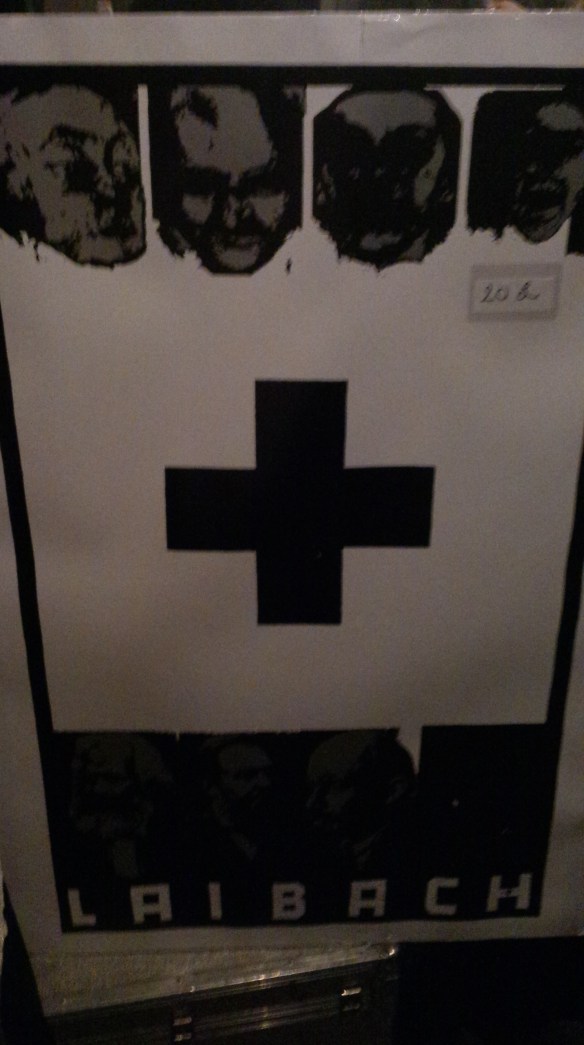
Laibach, Village Underground 12/03/2014

Image

Laibach, Village Underground 12/03/2014

Reviewing this for This Is Not Retro with photographs by Andy Sturmey.

(c) 2014 Mat Smith / Documentary Evidence

Homework

Image

Homework

Reviews to be written eventually.

(c) 2014 Mat Smith / Documentary Evidence

Depeche Mode badge

Image

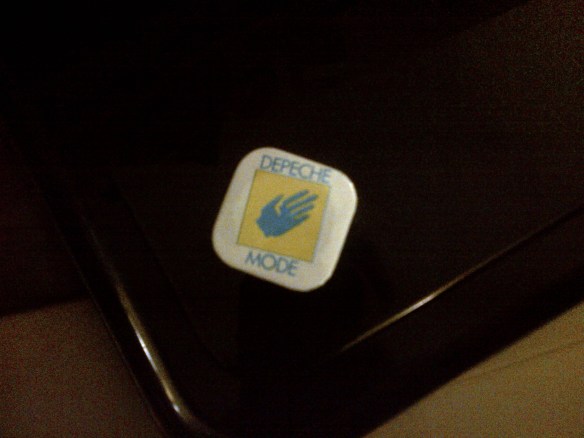
Depeche Mode badge

My sister found me this old Depeche Mode badge a few years ago. I’m guessing it’s from the mid-Eighties.

Link

Liars – Mess (Mute Records album, 2014)

A review of the new Liars album, Mess, for the Feeder website. Words by me.

(c) 2014 Feeder

A.C. Marias – One Of Our Girls (Mute Records album, 1989)

A.C. Marias 'One Of Our Girls' LP artwork
mute records | lp/cd/c stumm68 | 29/08/1989

A.C. Marias was the alter ego of Angela Conway, long-time Wire collaborator, artist and now video director. Although her only album for Mute, Conway previously released records on Bruce Gilbert and (Edvard) Graham Lewis‘ sadly defunct Dome imprint. This 1989 album was recorded at the ubiquitous Blackwing Studios, the location of many great Mute recording sessions, with a veritable supergroup of Mute producers – John Fryer, Paul Kendall, Gareth Jones and Bruce Gilbert.

The album is characterised by a number of distinctive elements – Conway’s echoing, haunting and ethereal vocals, Gilbert’s deft yet subtle textural guitar, and liberal helpings of electronic accompaniment. It’s one of my favourite Mute albums ever, certainly a collection of songs that I return to time after time. In truth, it is also an extremely different proposition than one would initially expect from a Gilbert collaboration, as this is often a very different proposition to the noise-scapes that Bruce has perfected on his solo releases.

The album kicks off with very atmospheric track, the quirky ‘Trilby’s Couch’, a jazz-referencing melange of walking bass, highly spare percussion and flute / pipe sounds framed by occasional, fleeting flurries of analogue-esque synths. All the while, Conway delivers a mysterious lyric that seems to suggest bizarre hypnosis and psychiatric discussions in a Freudian analysis session. The lyrics are strewn with word pictures, bizarre events and nonsensical actions. ‘Just Talk’ is an outstanding minimalist sonic adventure, with repeated, processed stereo-spanning guitars providing the rythmic undertow over which Conway delivers a floating vocal which manages to sound more textural than the guitar layers. A two-note guitar melody and an echoing, icy percussion sound offer a counterpoint, with held synth chords urging this song to an eerie close.

The mystery quota continues on ‘There’s A Scent Of Rain In The Air’, which is built around a slow rhythm constructed of nothing more than either a deeply-processed cymbal or piston; a deep bass drone dominates the low end while Conway’s reedy voice phases in and out in the high end, and Gilbert provides a seasick, scratchy guitar scribble with what sounds like meditative ease. What sounds like a distorted handclap loop comes in at around the halfway mark, just as Conway’s voice begins to loop and echo upon itself. ‘Our Dust’ predates some of the beat-driven near-‘pop’ on Aphex Twin’s Selected Ambient Works, evoking the same reverb-laden bass and beat, and similar icy cool melodies. Conway’s vocal is offhand, casual, the repeated vocal of ‘I don’t care’ sounding like she couldn’t care less. The taped sound of a noisy restaurant or bar concludes the song. The sub-two minute ‘So Soon’ is driven by a quiet, tapped beat and swathes of analogue filtered guitar layers, and leads straight into the strident pop of ‘Give Me’. I first heard the track on the International compilation (and even sampled a section of Conway’s deeply processed vocal from the fading seconds of the song for one my own compositions). It’s got a heavy On-U esque beat (presumably Fryer’s creation) and an edgy Gilbert guitar loop, but it’s the randomised, processed vocal snatches – wrapped around Conway’s pretty lyric – that are the most captivating, and the stereo swirls require this to be listened to on ‘phones.

‘To Sleep’ is just a beautiful song, a carefully-crafted piece of moving electronica and euphoric guitar drifts which is mesmerising; it’s a suitably pastoral accompaniment to Conway’s poetry, which comes and goes like waves onto the shore. Entrancing and enchanting – you get the idea. ‘Looks Like’ is delivered in warped waltz time and, with its simple melodic synth pad swells could be a Vince Clarke composition were it not for the occasional intrusion of rippling guitar sounds. ‘Sometime’ is dark and edgy, a throbbing bass pulse and a ratchety sound culled straight from Wire’s ‘Advantage In Height’ offset by a pleasant strummed melody and a divine layered chorus of Conway’s voice(s). ‘One Of Our Girls Has Gone Missing’, released as a single, concludes the cassette and vinyl editions, while the CD includes the warped cover of Canned Heat’s ‘Time Was’, also released as a single.

Track listing:

lp/cd/c:
A1. / 1. Trilby’s Couch
A2. / 2. Just Talk
A3. / 3. There’s A Scent Of Rain In The Air
A4. / 4. Our Dust
A5. / 5. So Soon
B1. / 6. Give Me
B2. / 7. To Sleep
B3.  / 8. Looks Like
B4. / 9. Sometime
B5. / 10. One Of Our Girls Has Gone Missing
11. Time Was

First published 2004; edited 2014

(c) 2004 – 2014 Mat Smith / Documentary Evidence

Erasure – Chorus (Mute Records single, 1991)

Image
mute records | 7″/12″/cd/c mute125 | 17/06/1991

‘Chorus’ was Erasure‘s first single since ‘Star’, the final single from the Wild! project. The difference between those two songs couldn’t be more stark, since ‘Chorus’ heralded a period of completely analogue focus for Vince Clarke, returning in many senses to the sounds and synths he had first used ten over years previously during his brief period with Depeche Mode. The intro to ‘Chorus’ is every bit as thrilling as the opening section of ‘Sometimes’, except here it’s a sound like an synth air-raid siren that kicks off the song, followed by some sonar sounds and an impassioned cry from Andy Bell before thudding, crisp metallic beats and a hypnotic, modulating bass melody and counterpoint bass pads drive the whole thing forward with a malevolent urgency. Andy Bell sings a cautionary tale that has post-nuclear overtones, appeasing the Body Shop doom-mongers of the day with a chorus that describes the sun dying, birds disappearing and fishes going to sleep; analogue intricacy in abundance, and a very deep message of impending environmental disaster (a la ‘Drama!’). ‘Chorus’ charted well and topped the indie charts. To me this still sounds perfect, unique and timeless and it will always have a place in my heart (to read more about this song’s influence on me, and the reason it is responsible for the idea of this site, click here).

The 7″ and cassette single feature the blissful pop of ‘Over The Rainbow’ (not the song from The Wizard Of Oz), which starts with a muffled German speaking clock, and whose line in the chorus ‘The boys are back in town / They’ll never let you down‘ always makes me smile, as Erasure have indeed never let me down. Andy sings about listening to ABBA – a clue to the later ABBA-esque EP? – and paints a beautiful picture of summering in Oslo. It has one of the best Vince Clarke synth riffs too, and all in all is one of my personal favourite Erasure b-sides. ‘Snappy’ is mostly an instrumental, featuring a nagging bassline, robotic sounds, a scary voice intoning ‘welcome to the world’, Nineties dancefloor-friendly beats and snatches of an Andy Bell vocal that has almost Indian spiritual overtones. Like a lot of dance music at the time, it moves around from idea to idea, but that bassline remains a constant force. (The US Maxi-CD labels this a 12″ remix, which it may be; I dimly remember having a shorter version of ‘Snappy’ as a bootleg, but I can’t find it now.)

Remixes come from Youth and Justin Robertson. Youth turns in two mixes, both having a leaning toward an early version of trance music, namely the entrancing vibe that emerged from the crossing-over of ambient and house which producer and Killing Joke bassist Youth was involved in via The Orb, Blue Pearl and others. His Transdental Trance mix (either the faded or unfaded versions which are on the CD and 12″) is a shifting, barely-there mix which takes recognisable sections from the Erasure original but gives the version a layered, dark, noxious ambient edge. The Pure Trance mix does the same but adds urgent breaks and beats and a sense of mysterious euphoria. Even Andy’s chorus shifts into view at one point.

Justin Robertson is a Manchester DJ / producer / remixer who has been spinning tunes since the early, hazy Balearic days of UK club music. His Spice Is Risen mix of ‘Snappy’ is a world away from his later trip-hop work as Lionrock, blending that track’s spiritual dimension with a more pronounced percussive beat and a dose of dancefloor kudos, making this a Leftfield / Spooky-esque slice of early progressive house.

The US vinyl and CD maxi-single releases retitled the song ‘Chorus (Fishes In The Sea)’ and included an additional mix by Youth (the Aggressive Trance Mix, which is a longer and harder extended take on the Pure Trance mix, and includes Andy’s full vocal).

Track listing:

7″/c:
A. Chorus
B. Over The Rainbow

12″:
A1. Chorus (Pure Trance Mix)
A2. Chorus
B1. Snappy (The Spice Has Risen Mix)
B2. Chorus (Transdental Trance Mix (Fade))

cd:
1. Chorus
2. Chorus (Transdental Trance Mix)
3. Snappy
4. Over The Rainbow

First published 2013; edited 2014.

(c) 2003 -2014 Mat Smith / Documentary Evidence

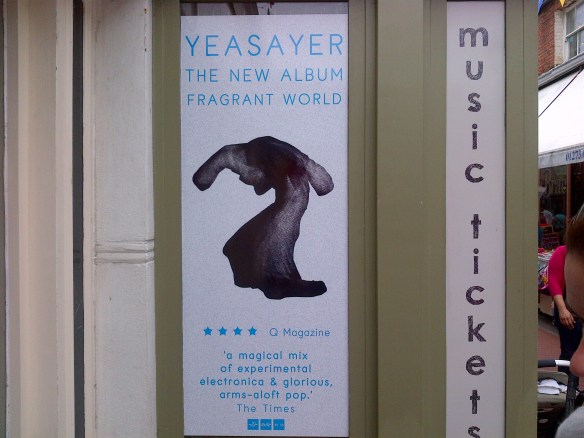
Yeasayer – Fragrant World poster

Image

Yeasayer - Fragrant World poster

Resident Records, Brighton August 2012

(c) 2012 Mat Smith / Documentary Evidence

Daniel Miller

Image

Daniel Miller

Daniel Miller DJing at Rough Trade East in London. 6th December 2012 as part of Mute’s evening of sets with Bowers & Wilkins.

(c) 2012 Mat Smith / Documentary Evidence
Barry Adamson – Oedipus Schmoedipus (Mute Records album, 1996)

Image
mute records | lp/cd stumm134 | 1996

The title could be a New York slang dismissal of the famous Freudian concept while its cover seems strangely maudlin and serious for an artist not normally renowned for being so. The diversity of contextualisations available between the concepts in the title and on the sleeve – the throwaway and the earnest – is a fairly good guide to the typically disparate themes and shapes that populate this 1996 Barry Adamson album.

Featuring collaborations with Pulp’s Jarvis Cocker (‘Set The Controls For The Heart Of The Pelvis’), Nick Cave (‘The Sweetest Embrace’) and Billy Mackenzie (‘Achieved In The Valley Of Dolls’), here we find Adamson traversing fluidly across genres – turbulent electronic compositions, be-bop, Memphis disco rock, spoken word and big band themes – all in little over an hour. It has always amazed me as to how an artist can competently have his finger in so many stylistic pies at once, but Adamson (uniquely) proves how to pull it off, time after time after time.

Over a pounding rock-disco groove (built, it seems, around a sampled snare beat from Primal Scream’s seminal ‘Rocks’), Jarvis Cocker squirms, shakes and squeals his way through ‘Set The Controls For The Heart Of The Pelvis’; buoyed by folkish violins and gospel vocals urging to be saved from one’s own wandering hands, Jarvis is here cast as some sort of desperate, sex-hungry voyeur. ‘Something Wicked This Way Comes’ gives a writing credit to Massive Attack (presumably for a sample, although it is not detailed), and sees Adamson cutting a soulful, downtempo groove.

Starting with some polite audience applause, ‘The Vibes Ain’t Nothin’ But The Vibes’ is a sparse vibes, percussion and bass laidback jazz outing that benefits from a slow percussion break and some synthetic-sounding drums. In a close-mic’d whisper, Adamson describes a sort of humorous frisson between two lovers, although I don’t recall when it became fashionable to namedrop Dunkin’ Donuts as a ‘cool’ place to head for dates. Some heavy phasing creates a spatial, otherworldly atmosphere toward the end, appropriately setting the tone for ‘It’s Business As Usual’, an electronically-processed composition that is claustrophobic and threatening. A relentless bassloop and eerie noises offset distorted, manic answerphone messages, from what appears to be a female stalker.

In comparison, the cover of Miles Davis’ hardbop-era ‘Miles’ is light and airy, deploying vibes where Davis’ trumpet once stalked so effervescently; piano and what appears to be a simply-programmed drum beat offset the traditional brushed cymbals and trumpet, offering a reverential take on the Davis classic. In a yet greater contrast, ‘Dirty Barry’ is built totally around echoing loops and textures with watery, processed horns and ghostly atmospherics invoking a dusty Clive Barker horror soundtrack atmosphere, its tribal bass drums merely reinforcing the cavernous edge. ‘In A Moment Of Clarity’ pushes back into downtempo jazz territory, a Parisian melodramatic piece with so much cymbal-brushing that it sounds like an old 78. No extreme improv here, thank God, just well-studied and careful mood jazz.

‘Achieved In The Valley Of The Dolls’ recalls the sound of Soul II Soul, with scratches, hip-hop beats and soulful vocals from the late Billy Mackenzie. With Adamson’s vocal collaborations, one gets the impression that the smaller canvas of pop music-esque songs actually encourages Adamson to be more precise and layered in his musical accompaniment. ‘Achieved…’ and the later track ‘Sweetest Embrace’ both contain a certain textural completeness, full of mood and imbued with emotion that simply provides the vocals with the respectful setting these excellent vocalists have always deserved.

Arriving at a time when Cave’s curiosity was piqued more by pastoral balladry than the wretched devil gospel of some of his earlier works ‘The Sweetest Embrace’ is a perfect example of sensual, emotional songwriting. In contrast to the verses which are delivered in a warm, confiding whisper, the chorus soars with a Scott Walker or Tony Bennett quality, while Adamson’s rich accompaniment is full of organs, synths and harpsichords over a slow, skipping rhythm, appropriately loaded with the same intimate atmosphere.

The Jackanory-esque ‘Vermillion Kisses’, a twisted fairy tale read with customary over the top inflection above Adamson’s theatrical accompaniment, segues perfectly into ‘The Big Bamboozle’, a big band track recalling the larg-scale ensembles of, say, Glenn Miller. Except, unlike Miller’s boogie-woogie feel-good songs, this exciting track is dark and menacing, like the incidental music to a Twenties gangster movie laced with some very British Sixties harpsichord and guitar. ‘State Of Contraction’ is a simple piano song, filled with beautiful harmonies and melodies, quiet strings giving this a regretful atmosphere.

Oedipus Schmoedipus ends with a reprise of the raucous ‘Set The Controls For The Heart Of The Sun’, which in a way is a shame, particularly since it follows ‘The Sweetest Embrace’. ‘Set The Controls…’ while upbeat and fun, is not Adamson’s finest hour, and its not the best track here. The album could have easily closed without it.

Track listing:

lp/cd:
A1. / 1. Set The Controls For The Heart Of The Pelvis
A2. / 2. Something Wicked This Way Comes
A3. / 3. The Vibes Ain’t Nothin’ But The Vibes
A4. / 4. It’s Business As Usual
A5. / 5. Miles
—- / 6. Dirty Barry [CD bonus track]
B1. / 7. In A Moment Of Clarity
B2. / 8. Achieved In The Valley Of Dolls
B3. / 9. Vermillion Kisses
B4. / 10. The Big Bamboozle
B5. / 11. State Of Contraction
B6. / 12. The Sweetest Embrace
B7. / 13. Set The Controls Again

First published 2003; edited 2014.

(c) 2003 -2014 Mat Smith / Documentary Evidence