Throbbing Gristle – Very Friendly / The First Annual Report (recorded 1975)

  
The material on what has been variously described as Very Friendly and The First Annual Report represent the first recordings that Throbbing Gristle made under that name in 1975, in the midst of their transition from the COUM Transmissions moniker in a concerted effort toward making music rather than more eclectic arty initiatives.

These so-called “wreckers of civilisation” – Genesis P-Orridge, Cosey Fanni Tutti, Chris Carter and the late Peter ‘Sleazy’ Christopherson – were no strangers to controversy when they decided to focus on what became Throbbing Gristle. COUM, while including an element of sonic exploration, was fundamentally a multi-disciplinary project, with imagery and ideologies that were often challenging, even for the liberal approach often taken toward the arts during the Seventies. Throbbing Gristle extracted the confrontational artsy angle but focussed that around sound, developing an aesthetic that was contemporary with the genesis of punk but which split itself off in a uniquely devastating counterweight to the Transatlantic feedback loop between The Ramones and The Sex Pistols.

This so-called first annual report begins with an almost twenty minute dirge of sound that recounts, in blunt, detached detail, the Moors Murders of Ian Brady and Myra Hindley. Gen’s narrative on ‘Very Friendly’ spares no detail, taking on the dispassionate delivery that Patrick Bateman would deploy over a decade later in Bret Easton Ellis’s American Psycho; no detail is spared, whether that be the detailing of various proclivities on the part of the victims or the brutal violence that Brady / Hindley wrought upon those individuals. Gen’s voice takes on a manic, almost excitable and aroused quality as the sonic backdrop begins to pick up the pace to reflect the executions, with jarring synths and fuzzed-up guitars delivering the requisite nightmarish atmosphere for the story.

By the conclusion of TG’s opening gambit, the group are dealing in mere atmospheres, Gen’s voice stuttering the words ‘there’s been a m-m-m-m-murder’ with layers of echo that almost suggests a dreamy, sedated otherworldliness, as if what just played out couldn’t possibly be true. For a lot of people the serial killer antics of Brady and Hindley were something that couldn’t be rationalised, while for others they were a numbing tragedy that cast a pall over the North of England.

The rest of the album takes the same sonic foundations – the same grainy texture and noisy, clamorous atmospheres – and skews them, sometimes finding Gen vocalising some weird lament (’10 Pence’), adding TV news reportage while guitars and freeform noise structures push the TG sound closer to The Velvet Underground’s ‘Black Angel Death Song’ (‘Whorls Of Sound’), or into intriguing synth shapes (‘Dead Bait’) that belong on a Clive Barker soundtrack.

Though nowhere near as devastatingly confrontational as the opener, the most interesting piece here is ‘Final Muzak’, which propels itself forth on a dense, churning, sub-motorik metallic groove that’s part rhythm and part bass sequence. Noises whine and drone continually over that jarring rhythm, cycling round in queasy loops that suggest this early attempt toward the disciplinarian approach that would become one of Throbbing Gristle’s signature motifs could have run on far longer than the mere five and a half minutes presented here.

Very Friendly / The First Annual Report has never officially been released, but it has been bootlegged plenty of times over the years, with the name varying according to the release. I bought a CD copy of this released by the Genetic Terrorists label, with the above sleeve image and the name Very Friendly from an HMV on Oxford Street in 1997, which lead me to believe it was perhaps more official than it actually was. The most recent release was in 2001 on the Yeaah! label. Quite why the band never saw fit to release the record officially via their own Industrial imprint is something of a mystery, but just another strange decision in the history of this most uncompromising of British groups.

(c) 2016 Mat Smith / Documentary Evidence

Howes – 3.5 Degrees (Melodic album, 2016)


3.5 Degrees is the debut album from Manchester-based electronic musician John Howes, and it title says a lot about the approach taken on this compelling album. That implied measurement is opaque, divorced from context, an in-between angle, just left-of-centre, and it neatly encapsulates the amorphous quality of the music that Howes has assembled here.

This is an album constructed of layers, often overlapping and – as on the opener, ‘Concangis’ – running out of sync with one another. The effect is to create hidden warrens and alleyways of never-repeating sonic events, like a mash-up intentionally gone wrong, and those events are intriguing for their slightly disjointed, randomised quality. Unlike Brood Ma’s DAZE, which shares some of 3.5 Degrees‘s skewness, Howes’s album sounds calculated and focussed, as if any randomness was actually a composed act rather than mere consequence.

Although 3.5 Degrees is an album that relies on the depth and originality of its sounds, rhythm is an important contributor to the overall presentation. ‘Zeroset’ and ‘DVR 16’ are delivered through locked, unswerving but subtle beats, slowly evolving but broadly constant, while wandering synths and springy effects give this a wayward, malfunctioning quality. You can imagine this being the kind of self-generating electronic music made by circuit-bent artificial intelligence-led computers as they bide their time on some lengthy inter-galactic trip through space. That ‘Zeroset’ also takes in a deep, swelling euphoric quality toward the middle of the track might link back to Howes’s earlier house experiments, but it’s cracked and chipped enough to sound perfectly imperfect.

It’s not all warped – by which I mean misshapen as well as sharing characteristics with the fabled mid-Nineties roster of a certain Sheffield-based label. ‘OYC’, with its pretty melodic cluster and droning synth texture could have easily found itself on a Kraftwerk album like Ralf & Florian, where classical-esque tonality was then a more important frame of reference than roboticism for the group. It represents another angle altogether in Howes’s music and one that suggests he’s immersed himself in a whole array of detailed electronic research to assemble this album.

Above all else, it’s the jagged angles and blooming textures of 3.5 Degrees make for such an intriguing album. Nothing sounds the same twice, and the inner universe of each track continually reveals itself with each listen. I’m not prone to hyperbole, but I’ve not felt this drawn to the elusive, infinite possibilities and fractured beauty of ‘listening electronica’ since I bought Aphex Twin’s ‘On’ single way back in the mid-Nineties. This is a truly impressive debut.

Howes at Bandcamp: here

(c) 2016 Mat Smith / Documentary Evidence

Diamanda Galás with John Paul Jones – The Sporting Life (Mute album, 1994)

  
I’ve maintained a healthy interest in Diamanda Galás since hearing her vocal contributions to Erasure’s Erasure album in 1995, but I’ve always found her music a little too impenetrable. I fully appreciate her dexterity and range as a vocalist, but I’ve never really ‘got’ her, though not through lack of trying.

The Sporting Life, Galás’s 1994 collaboration with Led Zeppelin’s John Paul Jones was my first real concerted effort to get to grips with her music, and as an entry point to an artist that Daniel Miller signed to Mute precisely because she was ‘challenging’, it’s not a bad place to start.

A lot of what makes The Sporting Life relatively accessible is the multi-instrumentalist Jones’s arrangements. This is a a form of blues, accented with the kind of aggressively brutal funk shapes that draw parallels with the likes of Rage Against The Machine, particularly on tracks like ‘Do You Take This Man?’ and ‘Devil’s Rodeo’, where his low-slung bass anchors the whole track in rigid, unswerving time. Rooting the music in the blues seems to encourage Galás to play down some of the histrionics for which she is known, finding her instead singing relatively ‘straight’, especially on stirring numbers like the soulful ‘Dark End Of The Street’ or ‘Tony’ which are just about the most plaintive and troubled, almost theatrically soulful, moments in Diamanda’s catalogue.

The organ-led ‘You’re Mine’, with its Louisiana gumbo of reference points is where wildness starts to creep in, descending into a cacophony of tongues that render the tail end of the track a swampy mess, with the music feeling like it constantly wants to wrap up but where Galás just wants to keep going. It’s a definitive example of why less is more.

And that again is what I have a problem with. I could listen to Galás doing gravelly blues songs like ‘Dark End Of The Street’ all day, but I run out of patience when the vocal histrionics – irrespective of how technically accomplished her range and technique might be – reach the point of complete and noisy surrender. Even the masterful Jones seems to give up somewhere on this album, and the music begins to play a very clear second fiddle to the dominance of Galás’s voice. The only time I can really get on board with it is during the closing track, ‘Hex’, and that’s mostly because of the Nitzer Ebb-esque riff that runs through most of the track.

I’m honestly not sure what it is about her voice that troubles me so much; perhaps it’s that it carries a level of base anguish and emotional openness that I’m not prepared to give in to, or perhaps it’s a specific aversion that I have to vocal improvisation. I get jazz improv, but I’ve never developed a taste for either scat singing or the wordless vocalisations of people like Phil Minton, and I’m not sure I ever will. Whatever the reason, my relatively modest Galás collection is now up for sale via Discogs.

(c) 2016 Mat Smith / Documentary Evidence
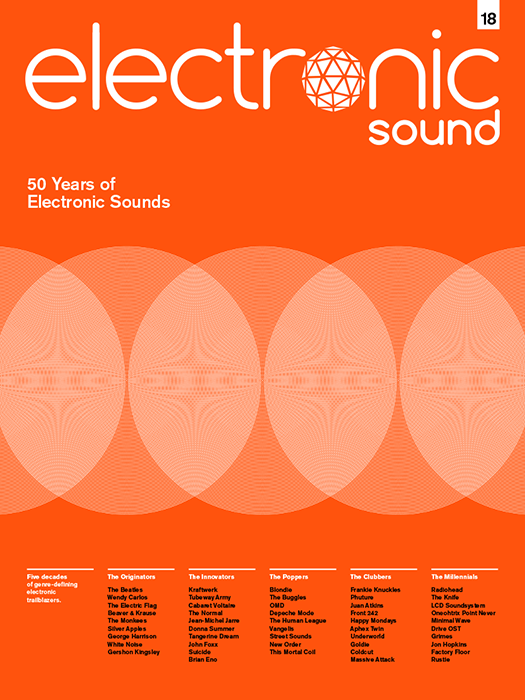
Electronic Sound – Issue 18


Electronic Sound Issue 18 is now available, with a major focus on fifty years of electronic music, and as ever its delivered with the magazine’s usual depth of focus.

For the latest issue I reviewed albums by Africaine 808 (a crazy musical gumbo drawing from a whole world of sonic soundclashes), Duke St Workshop (a truly terrifying setting of horror writing by HP Lovecraft to electronics), Deux Filles (the long-awaited return of Simon Fisher Turner and Colin Lloyd Tucker), Wild Style Lion (dirty electronics with contributions from Sonic Youth‘s Kim Gordon and Dinosaur Jr.‘s J Mascis) and an improv set from Klaus Filip and Leonel Kaplan for trumpet and sinewaves.

Also in the magazine is a short feature I wrote on the acid- and Salinger-influenced duo The Caulfield Beats, and the third of my 2015 interviews with Erasure‘s Andy Bell, where he explains three of his foremost influences. Prepare to be somewhat surprised by what Bell was inspired by. I know I was pretty taken back.

Electronic Sound is available at the iTunes App Store or at electronicsound.co.uk

(c) 2016 Mat Smith / Electronic Sound

Beacon – Escapements (Ghostly International album, 2016)

  
I reviewed the second album from New York production duo Beacon for Clash. ‘Escapements’ is a fragile, brilliant example of electronic pop subjected to brutal levels of reductionism. ‘Escapements’ is released on Ghostly International, an imprint that is fast becoming my new favourite record label.

You can read my review here.

(c) 2016 Mat Smith / Clash

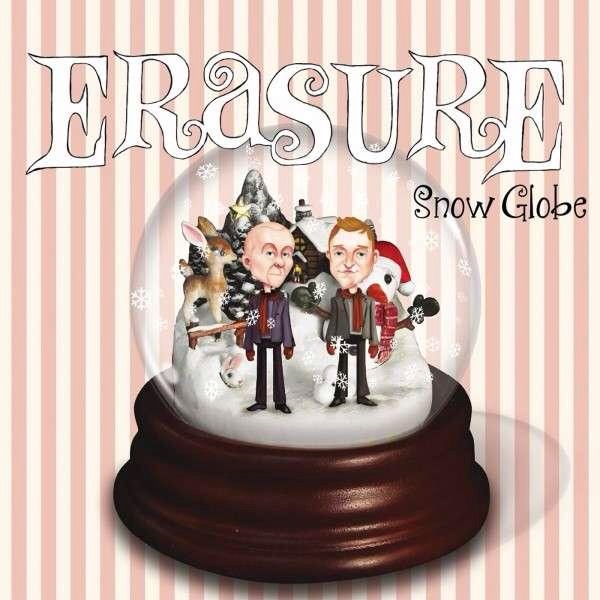
Erasure – Snow Globe (Mute album, 2013)

  
As its Christmas, I’ve found myself listening to Erasure‘s 2013 seasonal collection Snow Globe more than anything else over the last few weeks. I truly think it is one of the best Christmas albums ever made.

Here is the small review of the album that I wrote for Clash upon its release.

(c) 2015 Mat Smith / Documentary Evidence
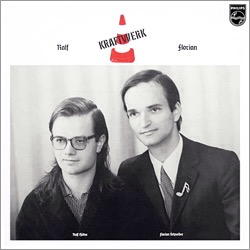
Kraftwerk – Ralf & Florian (Philips album, 1973)

  
album // Ralf & Florian

Sometimes I look around at band names and think it’s a tragedy that some of the best names have ended up attached to some of the worst groups, bands that maybe produce one dodgy single and are then forgotten about; yet the name – often the most inspired thing about said failing group – is then taken, unavailable for use by anyone else unless you’re prepared to expend major legal effort to prise the name from the corpse of that band.

Anyone in the early Seventies may have been forgiven for thinking that Ralf Hütter and Florian Schneider had nabbed a really powerful name – Kraftwerk – that really didn’t match their music. The name has connotations of a powerful source of energy, and yet their lightweight music, with flutes and guitar sat alongside primitive synths, sounded like it was stranded in among a weird hints and between formal classical music, jazz improvisation and weed-shrouded Haight-Ashbury hippyishness. It was certainly not immediately obvious that the duo would go on to become the influential unit they would ultimately be.

1973’s abysmally unimaginatively named Ralf & Florian continued the theme of their previous two albums but at least moved the duo into a proper studio, which may have had the effect of making their sound a little more structured. With the guidance of engineer Konrad ‘Conny’ Plank, Ralf & Florian was a more polished affair, utilising nascent rhythm generators alongside EMS and Moog synths, yet still retaining the jazzy oddness of previous records. The rear sleeve of the album showed the pair working in an early version of their as-yet-unnamed Kling-Klang studio, smiling and obviously having a laugh amidst an unholy mess of a workspace; part of me thinks that this period shows the pair to have an undisciplined approach, something that feels like it was eliminated when Kraftwerk really became Kraftwerk.

Ralf & Florian, for all its oddness, does at least garner a hint of what would emerge with 1975’s Autobahn. The attempt at greater synchronicity between the instruments – something of a challenge in the early Seventies – is a direct precursor to the more solid rhythms that would coalesce on that album thanks to the recruitment of Wolfgang Flür (he joined Hütter and Schneider for a German TV performance to promote Ralf & Florian). The languid and beautiful ‘Ananas Symphonie’ has sounds and textures that would appear again on that album’s ‘Kometenmelodie’, though here those sounds are augmented by guitarwork that is somewhere between a slowed-down Neu! and a Hawaiian beach performer.

On the whole, Ralf & Florian still sounds a little twee compared to where Kraftwerk would ultimately settle. However, if you try to listen to the album without any sort of reference to their future greatness, this remains an interesting hybrid album full of organic, carefully-composed moments and early synth sounds that remind you of how unearthly and exciting it must have been to hear such noises at the time. Opening track ‘Elektrisches Roulette’ might sound playful, but with its proggy lead synth line, rapidly played piano line and ricocheting drums, it bears a striking similarity to the first few bars of Roxy Music’s ‘Virginia Plain’, rising out of messy beginnings into a solid piece of infectious music. ‘Kristallo’ fizzes with dark energy, with jagged arpeggios cutting through the haphazard harpsichord riffing (though the high-speed conclusion is a bit daft), while ‘Heimatklänge’ bears a striking resemblance to the Eno track that was used as the title music to Arena (just without the droney guitar). ‘Tanzmusik’ is infectiously bouncy primitive synth pop mixed with classical motifs but still sounds like a world apart from, say, ‘Europe Endlos’; it’s the kind of piece you could imagine Mike Oldfield coming up with along the way to Tubular Bells. On the whole it’s an interesting collection of songs, and one that requires a degree of deep listening and immersion to appreciate.

Despite achieving some critical and commercial acclaim in Germany – presumably not because of the college yearbook-esque sleeve used in that country – the album has been out of print for many years. Kraftwerk indicated it might emerge in remastered form following the re-release of their classic albums in the late 2000s, but so far nothing has seen the light of day. I bought a bootleg CD copy in the pre-Internet mid-Nineties, from a record stall that used to set up shop in the central courtyard at my university campus, and at that time I didn’t even know if it was an album proper or just a collection of random old Kraftwerk songs compiled together. I roundly hated it the first time I heard it, but in my defence, at that time in my musical education I needed music that was squarely attached to a grid, whether that was synth pop, techno or punk, and had no appreciation whatsoever of looseness or space in music.

Various different bootleg versions have emerged over the years; mine was not on a label at all and bears a buried ‘WERK3’ catalogue reference. The original LP came with a comic from collaborator Emil Schult, but that was not reproduced with my CD. The CD came with a bonus track of a live version of ‘Autobahn’ from Cologne in 1975; though terribly recorded, the addition of the track does go to some lengths to bridge the gap between Ralf & Florian and Autobahn since it shows that their sound may have become more robust by that time, but the playing was still just loose enough to sound human.

(c) 2015 Mat Smith / Documentary Evidence 

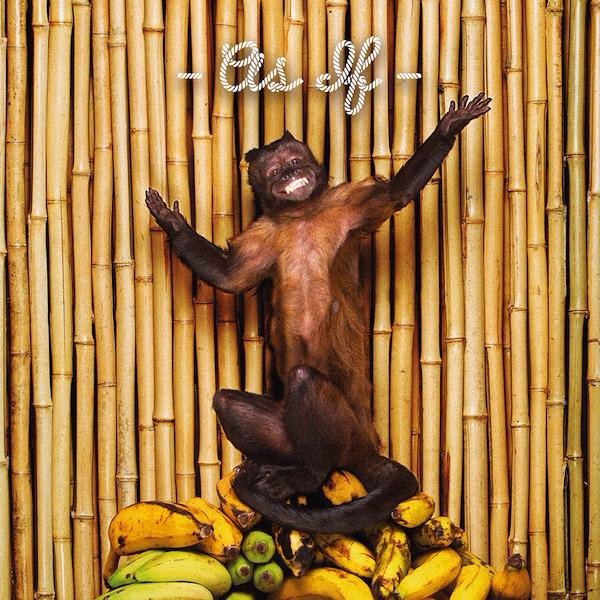
!!! – As If (Warp album, 2015)


!!!, undoubtedly the finest bunch of New York disco-punk-funks terms you’ll ever come across, released their new album As If in Ocober. I reviewed the album for Clash and you can read my review here. Somewhat appropriately for an album that evokes the spirit of Studio 54, my review was written on a flight to NYC.
Sometime Mute act Modey Lemon drummer Paul Quattrone plays in !!!.

(c) 2015 Mat Smith / Documentary Evidence

New Order – Music Complete (Mute Artists album, 2015)

  
New Order release their tenth studio album – their first for Mute Records – on 25 September.

I reviewed the album for This Is Not Retro. You can read my review here.

(c) 2015 Mat Smith / Documentary Evidence

Nitzer Ebb – NE + HH Live At The Markthalle (Major Records DVD, 2012)

dvd / 2 x lp // NE + HH Live At The Markthalle

  
major records | dvd 1nepdvd2012 | 02/12/2012
2 x lp edition: emmo.biz/kompuphonic | 2 x lp ezr011 | 02/02/2013

NE + HH Live At The Markthalle is Nitzer Ebb‘s first live concert DVD and was released by Major Records, a German imprint, in late 2012. The film captures the trio of Doug McCarthy, Bon Harris and Jason Payne at the Markthalle in Hamburg (Hamburg’s city code on car registration plates being HH, hence the title) on 30 December 2011 as part of a worldwide tour to promote Industrial Complex, the band’s first album since 1994’s Big Hit. The DVD was released as a limited, numbered edition of 500 (mine was #479) swathed in a black sleeve with bold, This Total Age packaging and a booklet of photos and credits.

Nitzer Ebb have always had a very definite image, mostly through their sleeve designs and use of simple but bold logos, and there’s something about the way the trio are dressed on stage that doesn’t quite seem to fit with that. Doug is dressed in a suit and tie, slim-fit white shirt and sunglasses, looking youthful and effortlessly cool, like he’d walked into the Markthalle straight from a Ferrari parked on the curbside after a long day of directing a movie in LA; Bon and Jason on the other hand are both wearing baggy slacks and braces, for all intents and purposes looking a little like extras from The Untouchables. What’s most remarkable is that Doug manages to keep his tie and shades on for the whole show – I have to loosen my tie just from the exertion of sitting at a desk writing emails all day, let alone leaping about a stage for nearly ninety minutes.

Throughout, Doug stalks the stage menacingly, every word delivered with an aggressive confrontational air; Jason casually bashes out percussion and percussion like he’s not really concentrating; Bon smacks pads and various percussion instruments with the same rude grace that a kid would approach a toy drum, waving his sticks aloft and generally looking like he’s having a lot of fun.

‘Let Your Body Learn’ is all aggressive, faithful urgency while ‘Shame’ has a real sense of the emphatic, even if it seems a bit lightweight delivered straight after the set’s opener. ‘Hearts And Minds’ becomes a minimal electro funk track, with Doug pointing a finger at the crowd every time he he shouts the word ‘you‘. Industrial Complex‘s ‘Once You Say’ includes synths that sound like pure electricity, blended with a tight rhythmic strictness, Doug and Bon commanding the crowd with the lyric ‘move that body‘ like they needed any more encouragement.

Alongside a particularly energetic ‘Control I’m Here’, two of the set’s highlights are the classics ‘Lightning Man’ and ‘Blood Money’. ‘Lightning Man’ sounds as noir as ever, the jazz / latin fusion and aggressive chorus at the centre still sounding unexpected after the muttered prose of the verses. ‘Blood Money’ is approached with a much harder edge than the album original, with Doug appearing to be taken over by the sampled religious talk of spirits toward the end, body jerking manically, just as it does on the cynical ‘Payroll’, only here interspersed with lewd gestures when he sings ‘you better suck it‘. The same sense of sexuality appears on ‘For Fun’ with Doug emphasising the point with some dubious hand gestures and by holding his crotch for most of the song.

‘Ascend’ is given a plaintive, emotional reading but the dense build of the music seems a bit lost as Doug’s vocal is just a little too loud. Most of ‘Join In The Chant’ is true to form – a series of shouted motifs over a thudding drum track, metallic percussion and a sluggish, funky bassline – but it’s spoiled by some percussion sounds at the start and end that make it sound like a PWL pop track; I genuinely thought it was going to open out into ‘The Locomotion’ by Kylie. Perhaps it was intended as a tongue in cheek reference to PWL mixmaster Phil Harding having worked with the band on This Total Age, but despite my reservations, the crowd clearly love it.

After a very long wait for an encore, we’re rewarded with a storming version of ‘Getting Closer’, Doug and Bon prowling the stage and flinging their lines out into the audience like cluster bombs, followed by ‘I Give To You’, which sounds as majestically sinister and harrowing as ever.

My only criticism of what is an otherwise good film is the over-emphasis on crowd footage. There are so many shots of the tall blonde woman in the front row that I’m starting to think she’s actually part of the band. Overall though, it’s a small gripe for what is a good, if not lavishly-produced, document of Nitzer Ebb on stage.

The DVD also includes murky versions of ‘Let Your Body Learn’, ‘Shame’, ‘Hearts And Minds’ (sounding a little like a proto acid house track) and ‘Lightning Man’ recorded at the Blackfield Festival in 2008. Doug – complete with military jackboots – appears to have been in a bad mood that day, and only really seems switched on when delivering a particularly emphatic version of the last track (though he also seems to miss some of his cues to start singing). Also included is an interview with Bon, Doug and Jason sitting on the end of a bed in someone’s very basic hotel room. Bon and Doug do most of the talking, and subjects vary from stuff about how demoralising it can be to go out on tour, to how chilled out it is to live and work in LA, and to Bon and Jason’s then-current work developing characters for stop-motion animation. The most interesting chat comes when they discuss how various tracks on Industrial Complex came about, including an amusing deadpan comment from Doug about roping Depeche Mode’s Martin Gore in to do backing vocals on ‘Once You Say’ because they wanted ‘a big, busty black woman sound’. There’s also a frank acknowledgment that trying to write a song like ‘Down On Your Knees’ in the style of ‘Let Your Body Learn’ is really difficult and that it’s ‘hard to regain that naïvete again in the studio’. Bon goes on to admit resignedly that it took two months to come up with a simple bassline for the track.

Since I started writing this, it’s been announced that Emmo.biz/Kompuphonik will release a limited-edition audio version of the Markthalle gig as a double LP in February 2012. According to the press release the album will be released as a limited edition of 500 copies in a gatefold sleeve, 400 of which will be pressed on transparent vinyl while the remaining copies will be issued on red vinyl inside a box containing a t-shirt, flag, badge and poster. Undoubtedly one for the Nitzer Ebb completist only.

Thanks to Hayo at Major Artists for the review copy of the DVD, and also to Jürgen for the vinyl press release and for reminding me about German number-plates.

dvd:
1. Intro
2. Let Your Body Learn
3. Shame
4. Hearts And Minds
5. Once You Say
6. Lightning Man
7. For Fun
8. Hit You Back
9. Blood Money
10. Payroll
11. Godhead
12. Ascend
13. Down On Your Knees
14. Murderous
15. Control I’m Here
17. Join In The Chant
18. Getting Closer
19. I Give To You

Blackfield Festival:
1. Let Your Body Learn
2. Shame
3. Hearts And Minds
4. Lightning Man

Interview:
1. Jason Payne, Doug McCarthy and Bon Harris interview

2xlp:
A1. Intro
A2. Let Your Body Learn
A3. Shame
A4. Hearts And Minds
A5. Once You Say
B1. Lightning Man
B2. For Fun
B3. Hit You Back
B4. Blood Money
B5. Payroll
C1. Godhead
C2. Ascend
C3. Down On Your Knees
C4. Murderous
C5. Control I’m Here
D1. Join In The Chant
D2. Getting Closer
D3. I Give To You

First published 2012; re-edited 2015

(c) 2015 Mat Smith / Documentary Evidence