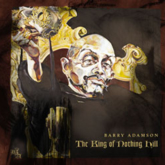
Barry Adamson – The King Of Nothing Hill (Mute Records album, 2002)

Barry Adamson 'The King Of Nothing Hill' artwork

mute records | stumm176 | 02/09/2002

The King Of Nothing Hill comes with a title bearing Barry Adamson‘s hallmark sense of humour, and was his most accomplished and complete work by this point. Draped regally in a red, black and gold digipack robe, Adamson is here cast as the king of an absent kingdom, although the photo on the inside of the sleeve seems to be more Isaac Hayes than anything else.

In fact, Isaac Hayes is not a bad initial reference point for this album, which finds Adamson more soulful than before while still drawing together the beloved subjects of his soundworld kingdom – jazz, spooky soundtrack melodrama and electronic textures, and overall the sound is more dense and deep than on previous albums.

The King Of Nothing Hill is an impressive ten-track album that perfectly complements its creator’s earlier works, but somehow takes things further. If an artist working with electronic composition tools can have their influences identified by the samples he chooses, the Adamson’s preferences are crystal clear – a sample of jazz legends John Coltrane and Archie Shepp appears on ‘Le Matin Des Noire’, while a clever Cypress Hill section is to be found on ‘Whispering Streets’.

Tracks like the opener, ‘Cinematic Soul’ are good examples of how Adamson is able to draw together disparate musical strands without appearing crass or creating some sort of kitsch, disposable fusion; ‘Cinematic Soul’ begins with a developing bed of electronic sounds, bleeps, beats and wah-wah guitar before launching into a loud, Stax-inspired funk soul anthem that reinforces the Hayes comparison. ‘Can I sing along to ‘Cinematic Soul’?‘ his young heir Theo asks. ‘Of course you can, son…What is a song if you can’t sing along?‘ the King replies, and the two duet humorously on the final chorus. ‘This is the stone groove I’ve been dying to rock with all my life,‘ sings the King, and his decree may well be right – it really does sound like the work of a musical monarch at the height of his supremacy.

Skipping past the singles ‘Whispering Streets’ and ‘Black Amour’, the divinely-appointed Ruler of Moss-side, that most impossible of kingdoms, leads us to ‘When Darkness Calls’, which begins with some heavy dub beats and double-tracked vocals; sludgy guitar riffs and intense atmospheres create a dark sub-rock take on Nitzer Ebb‘s final utterances. ‘Down, down, down…‘ our leader intones, taking us to whichever black hinterland he chooses. ‘The Second Stain’ is a carefully-honed and programmed avant-jazz epic, built upon subtle layers of electronic percussion, droning basstones, piano and organ. Constantly-shifting atmospheres move this instrumental work into desolate sonic wastelands, evoking the dream sequences of Brad Pitt in Tom di Cillo’s Johnny Suede.

The Pimp King’s vocal abilities are most prevalent on ‘Twisted Smile’, with a sixties-style chorus nearly whispered over an incredibly-detailed musical accompaniment that is almost not there at all, coming as it does from the distance. Woeful regret and longing themes show our ruler to be weary, deposed, forgotten; his empire shrinking like the departing echoes of the final chorus; becoming transparent, making his way to the top of Nothing Hill.

‘Le Matin Des Noire’ finds Adamson wandering the sodden streets of Paris at three in the morning, the memories of vibes and brushed cymbals playing around his head. At over ten minutes, the track is the most soundtrack-esque of this collection, and if you think hard enough you can almost see the rain, the raincoats and the trilby hats of a Len Deighton novel as conceived by Alfred Hitchcock.

Euphoric horns and lazy beats herald ‘That Fool Was Me’, for all intents and purposes a classic love song dealing with regret and loss. The strolling brass section sounds like a New Orleans funeral procession, while Adamson reveals a hidden, treacly warmth to his vocals. ‘The Crime Scene’ lifts the pace, throwing together spiralling Bernard Herrmann-esque discordant improvised strings and a rolling drum and bass rhythm, to which Adamson’s brand of sub-bass is surprisingly well-suited; some John Barry guitar and a palette of sirens, gunshots and a general clamorous sonic bed gives this an air of criminal menace. An instrumental, our King – now less than a figurehead – rides around the streets of his shrinking kingdom and watches the disarray the democracy that deposed him has created.

The album closes with ‘Cold Comfort’, an acoustic ballad over tinkly keys and subtle metronomic percussion, that shows Adamson’s tender side, returning once again to themes of loss and longing. Memories of earlier glories, the mistakes that contributed to his downfall, the track closes with some horn lines that are truly uplifting.

The King is dead. Long live the King.

First published 2003; re-edited 2014.

(c) 2014 Mat Smith / Documentary Evidence
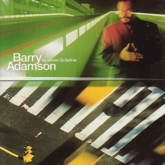
Barry Adamson – As Above So Below (Mute Records album, 1998)

Barry Adamson 'As Above So Below' artwork

mute records | stumm161 | 1998

Two years on from Oedipus Schmoedipus, As Above So Below added two further, intriguing, twists to Barry Adamson‘s palette of sounds.

The first found him using abrasive effects on the saxes and guitars, providing some tracks such as ‘Still I Rise’ and ‘The Monkey Speaks His Mind’ with an aggression that we weren’t hitherto used to hearing from this master of aural emotion. The twist gives the tracks a concise, straight-ahead atmosphere, delivering a short, sharp sonic punch to the senses. Take the opener ‘Can’t Get Loose’ which on some bizarre sounds like Andy Williams’ ‘Music To Watch Girls By’, commencing with some loud, boisterous guitars before moving into a rich easy-listening array of vibes and beats.

The second twist was perhaps the most surprising. After all, as the years went by we became used to Adamson reaching out into new musical areas in order to add greater depth to his textural sound design. The latest facet found Adamson actually singing on the majority of the tracks on As Above So Below, rather than using spoken word monologues or employing the skills of vocal collaborators.

Presented with the concept of Adamson as singer-songwriter, you may be forgiven for expecting the worst; I know I was – the first track I’d heard was ‘Jazz Devil’ on a Vox magazine promo CD, and I expected the whole album to be filled with variations on ‘Jazz Devil’ – namely humorous but kitsch story-telling. As a first foray, Adamson proves himself to be a talented singer, his voice capable of soaring impressively with a controlled emotion (as on the emphatic ‘Come Hell Or High Water’) or dropping down to a warm and confiding whisper. His time spent with Nick Cave obviously paid dividends.

The shift toward less instrumental sound design is borne out by the number of vocal tracks, which make up the majority of the album. However, the move toward the singer-songwriter genre has not prompted a move away from the luscious sounds Adamson is renowned for. We still get the jazz, the vibes, the perfect counterpoint string arrangements, the cunning deployment of stoned hip-hop beats, and we still get the wandering basslines and electronic experiments (check out the elongated effects on the intro to ‘Jesus Wept’). His cover of Suicide‘s ‘Girl’ is outstanding, more akin to his remix work with its intricate synth clusters and cracked metronomic drum machine rhythm, pushing his sound design into glitch-electronica territory.

An interesting and impressive move forward, As Above So Below had one major problem – its completeness and tightness actually casts a long shadow over its predecessor, Oedipus Schmoedipus. That’s not to take away the earlier album’s achievements, however that album now sounds somewhat ramshackle and inconsistent when heard immediately before this.

First published 2004; re-edited 2014.

(c) 2014 Mat Smith / Documentary Evidence

Electronic Sound: Issue 8 Reviews & Other Recent Writings

Electronic Sound - Issue 8

I haven’t updated Documentary Evidence for a while but that’s not because I haven’t been busy with other writings.

The latest edition of Electronic Sound for iPad is now available. This issue features my reviews of Erasure‘s excellent album The Violet Flame, Olivia Louvel‘s mesmerising Beauty Sleep (featuring one track based around a sample of Recoil‘s ‘Stone’) and a major interview with Simian Mobile Disco about their new ambient album Whorl.

Issue 8 also includes a feature on the fortieth anniversary of Kraftwerk‘s ‘Autobahn’, which includes input from Mute‘s own Daniel Miller.

To read more go to the Electronic Sound website.

Just lately I’ve found myself spending some time at the Milton Keynes concert venue that’s literally on the doorstep of the village in which I live (The Stables) and in the last month I’ve reviewed three gigs at the venue. This marks something of a tentative return to reviewing gigs after a long break. The first was something pretty special for me – Nik Kershaw, whose solo acoustic show I reviewed for This Is Not Retro. Kershaw’s music was what I grew up with and Human Racing, his first album, was the first album I ever owned. My review for that concert, with photos from the Worthing gig on the same tour by my good friend and talented photographer Andy Sturmey can be found here.

I’ve also written two pieces for a local Milton Keynes site – TotalMK – of my other two recent Stables gigs. Dylan Howe’s Subterraneans found the jazz drummer performing pieces from Subterraneans, which sees his band work through jazz versions of tracks from David Bowie’s Berlin period. Howe is a hugely talented drummer who has worked with many different acts in the jazz and rock world, including Nick Cave, for whom he drummed on songs to the soundtrack for I Am Sam with The Blockheads. The other Stables gig was Tom Baxter, well known for getting picked by movie and TV producers when a stirring song is ever required for a soundtrack.

As well as that little lot, you’ll continue to find my reviews in Clash each month – the latest issue includes a piece of mine on the latest Thurston Moore album, which is more than likely the closest we’re going to get to a classic Sonic Youth LP anytime soon.

(c) 2014 Mat Smith / Documentary Evidence

Paul Kendall – Family Value Pack (Ant-Zen album, 2014)

Paul Kendall 'Family Value Pack' CD artwork

ant-zen | cd/dl act315 | 12/09/2014

Family Value Pack is the follow-up to 2011’s Angleterror (CatWerk Imprint) and finds Paul ‘PK’ Kendall on typically inventive form. Kendall has always been capable of manipulating technology, whether that be as an engineer, on his own recordings or through his countless remixes for the Mute roster and other artists, and Family Value Pack is no different: this is a super-sized audio trip filled with complex twists and turns and strange juxtapositions.

At the heart of this album is a thoroughly plunderphonic vibe, a series of controlled explosions of sound sources set off against one another and the results carefully documented and presented across the seven tracks presented here. Some may argue that the result is a sprawl, a messy stew of grating rhythms, uncomfortable phrases and harsh dissonance, and that isn’t a million miles from what it really sounds like. But what makes Family Value Pack an album worth persevering with is the depth of vision.

Tracks like the buzzing, hyperactive opener ‘Scuba Dis Dat’ take a familiar rhythm notion – on that track the beloved 4/4 beat-grid of techno – and thoroughly twist it into new shapes, creating a sonic gumbo of seemingly incompatible elements, in ‘Scuba Dis Dat’ those being fuzzy guitar riffs, skronking sax solos, dubby happenings and snatches of Kendall reading what sounds like some sort of heavy, expressive poetry. It is restless, certainly, but that’s no bad thing. Elsewhere the vibe is one of muted ambience or beds of glitchy electronica, all tied together by Kendall’s evocative and imaginative word pictures and his accomplished sense of space and texture. Every sound feels like it was created or delicately positioned within a mix so as to maximise its emotional and sonic impact, feeling more like a soundtrack composer’s work in intricate sound design than an electronic music album. ‘Family Value’ is a clautrosphobic piece of electronic musique concrete, all hissing and clanking noises, underpinned by a harrowing sound that sounds like breathing – if that sounds like an Eraserhead-esque exercise in industrial terror, a segue into a small child singing is a careful gesture that heightens the dark mood perfectly.

The amount of detail here requires repeated listens and patience to fully appreciate. ‘It’s OK’ is a lot like watching a time-stretched film of a high rise tower ascending upwards; in the first few minutes it’s all about deep excavations or putting in foundations, all of which is necessary for the building to take its final shape but not as attention-grabbing as the building rising up vertically floor by floor. In the case of ‘It’s OK’ the first half is all about individual sounds and tentative structures, those foundations finally leading to the rhythm and atmosphere that takes the track through to its final ascendant form. Without patience you’d miss the conceit completely, and it’s a trick that Kendall pulls off repeatedly on this album.

Thanks to PK.

Track listing:

cd/dl:
1. Scuba Dis Dat
2. Water. It Must Be
3. It’s OK
4. Family Value
5. Ex.Posed
6. There Min Major
7. Uninterrupted Monday

(c) 2014 Mat Smith / Documentary Evidence

Sonic Youth – Hits Are For Squares (Geffen / Starbucks album, 2008)

Sonic Youth 'Hits Are For Squares' CD artwork

geffen / starbucks | cd 0602527781778 | 10/06/2008 | track listing

Hits Are For Squares is an almost career-spanning sixteen-track Sonic Youth compilation album. The album was released initially only in US Starbucks stores in 2008 in conjunction with Geffen, Sonic Youth’s home since leaving SST / Enigma (in the States) and Blast First (in the UK) following the release of Daydream Nation. Ignoring the obvious charges of ‘selling out’ by letting the mighty Starbucks put out a compilation album, what’s relatively unique about Hits Are For Squares is that the tracks themselves were all chosen by various celebrity fans (rubber-limbed Chili Pepper Flea, actress Catherine Keener, Pearl Jam’s Eddie Vedder and so on) or collaborators (Minutemen’s Mike Watt). Those choices, plus their reasons for choosing a particular track are explained in the liner notes alongside brief notes on the tracks and where they fit into the Sonic Youth back catalogue. And hey, the self-deprecating album title isn’t dissimilar to Hip To Be Square, the 1986 album from Huey Lewis & The News beloved by Patrick Bateman in Bret Easton Ellis’s American Psycho, and that’s always cool with me. Meanwhile, the sleeve looks like it’s trying to be an Edward Hopper portrait, the suit drinking his Starbucks coffee shamelessly reinforcing the commercial nature of this album. A ‘caffeine-free’ vinyl edition was released by the band later in 2010.

What’s immediately evident from the selections is that there are way more choices from the Geffen ‘commercial’ Sonic Youth period rather than their earlier independent label period, aside from firm fan favourites like ‘Teen Age Riot’ (from Daydream Nation), ‘Tuff Gnarl’ (from Sister), ‘Shadow Of A Doubt’, ‘Expressway To Yr. Skull’ (aka ‘Madonna, Sean And Me’) and ‘Tom Violence’ (all from Evol) and the earliest track here, the raw ‘The World Looks Red’ (from the Confusion Is Sex EP with Grinderman / Nick Cave And The Bad Seeds / Silver Alert drummer Jim Sclavunos on the skins and lyrics by SwansMichael Gira). In general the tracks lean toward the accessible side of the Sonic Youth back catalogue rather than the more experimental, but that’s what you get when you try and shift your album in outlets of the ubiquitous Seattle coffee chain (Seattle resident Eddie Vedder, incidentally, has a bit of a rant about not liking coffee in his notes to ‘Teen Age Riot’, which is rather like biting the hand that feeds if you ask me, but it’s still funny). Also, most of the tracks are those sung by Thurston Moore; Kim Gordon gets a couple of her lead vocal tracks included (including the annoying ‘duet’ with Chuck D, ‘Kool Thing’ and the beguiling ‘Shadow Of A Doubt’) and poor Lee Ranaldo doesn’t have any of his sung / spoken tracks included at all. Diablo Cody chooses the cover of ‘Superstar’ from a tribute album to The Carpenters which, while pretty, still feels uncharacteristically kitsch for Sonic Youth; far better would have been something from the more radical Ciccone Youth album.

Personally, I’d liken this compilation to the type of coffee you get from Starbucks – in other words a bit watered down, vaguely inauthentic but nevertheless addictive all the same, precisely because it is so accessible. I approached this album having not listened to most of the Sonic Youth back catalogue for some time and it felt like I was hearing these tracks for the first time all over again, ‘Teen Age Riot’ (still one of my favourites from their entire body of work) and ‘Bull In The Heather’ (from Experimental Jet Set, Trash And No Star) in particular sounding really fresh and unfamiliar, just like I was listening to them for the first time again.

The album also includes a previously unreleased track, ‘Slow Revolution’, which mines a similar vein to Washing Machine‘s long-form ‘Diamond Sea’ (a track I’d definitely have included, though at twenty minutes it was clearly never going to make the grade while the single edit lacks the very expansiveness that makes the song so impressive); like ‘Diamond Sea’, ‘Slow Revolution’ is a languidly-paced number, all Jaki Liebezeit-style drums from Steve Shelley and layers of hazy guitar riffs and Kim Gordon wailing away somewhere in the middle ground like she’s singing in tongues. It’s a far cry from this band’s more blistering white hot punk tracks, but it’s quite beautiful nonetheless; think the Velvets’ ‘Pale Blue Eyes’ passed through a Krautrock filter. ‘Slow Revolution’ is worth buying this compilation for in itself.

Gripes aside, Hits Are For Squares provides a great overview for anyone unfamiliar with Sonic Youth. It’s not as good as my own Sonic Youth compilation tapes that I made at the start of the last decade, but that’s personal choices for you.

I decided to re-post this because I’ve been listening to The Best Day, the new solo album from Thurston Moore which I’m reviewing this month for Clash.

Track listing:

cd:
1. Bull In The Heather
2. 100%
3. Sugar Kane
4. Kool Thing
5. Disappearer
6. Superstar
7. Stones
8. Tuff Gnarl
9. Teenage Riot
10. Shadow Of A Doubt
11. Rain On Tin
12. Tom Violence
13. Mary-Christ
14. The World Looks Red
15. Expressway To Yr. Skull
16. Slow Revolution

First published 2010 / re-posted 2014

(c) 2014 Mat Smith / Documentary Evidence

Gwen Stefani – Wonderful World (Interscope, 2006)

Gwen Stefani 'The Sweet Escape' CD artwork

The Sweet Escape album | Interscope | 2006

Mute alumni Martin Gore and Richard Hawley appeared on this upbeat closer to Gwen Stefani’s The Sweet Escape, both adding their guitar talents to a song which sounds suspiciously like Stefani trying to cover Depeche Mode‘s ‘Enjoy The Silence’ via Black’s song of the same name. Hawley and Gore’s contributions are quiet and not exactly distinctive: Hawley seems to offer ruminative slide guitar wheras Gore’s playing seems to be the kind of simple but devastating melodies he’s made his own. Unfortunately, they’re both just drowned out by the garish high energy pop of this Linda Perry-penned tune.

First posted 2013; re-posted 2014.

(c) 2014 Mat Smith / Documentary Evidence

Nick Cave & The Bad Seeds – The Boatman’s Call (Mute Records album, 1997)

Nick Cave & The Bad Seeds 'The Boatman's Call' LP artwork

mute records | lp/cd/c stumm142 | 03/03/1997

I was tempted to write this review with just one word. That word is ‘beautiful’. Allegedly written by Nick Cave at exactly the same time as Murder Ballads, these songs were written with simplicity in mind, and as such the majority of these superior compositions feature a stripped back Bad Seeds, and a heavy dose of piano. The contrast with Murder Ballads could not be greater, taking a deeply intimate, romantic and often spiritual tone. No-one dies here, one may be relieved to know.

But maybe a little part of Nick Cave died in order to make a collection of songs; that part of him was the preacher, the aggressor, the dervish spirit howling and caterwauling over a maelstrom of sensational music, and that character wouldn’t emerge again until the later Grinderman project. It genuinely isn’t a criticism – I happen to think that The Boatman’s Call is among Cave’s finest work. Everything about album is black and white – the Johnny Cash-esque Anton Cobijn photo of a particularly troubled Nick Cave on the front cover, through the predominance of the piano keys across the LP, through to the downright clarity of Cave’s songwriting. What’s most clear about The Boatman’s Call is the often obvious theme of these songs, for this is Nick Cave’s most directly personal collection of ideas, from the post-PJ Harvey reflectiveness of the quirky folk leanings of ‘West Country Girl’ and ‘Black Hair’, through to his ruminations on his failed marriage on ‘People Just Ain’t No Good’ or ‘Where Do We Go Now But Nowhere’.

However, aside from a fair amount of openness from our tortured songsmith, The Boatman’s Call also features two genuinely beautiful love songs – ‘Lime Tree Arbour’ and ‘Brompton Oratory’. Like much of the album, these have a musical accompaniment from The Bad Seeds that is directly informed by subtle jazz but the latter also features a perfectly twee Casio rhythm that sounds like it survived from Cave’s original demo. The latter describes a trip made by Cave to Kensington’s famous, and imposing, landmark, and finds Cave wishing he were one of the stone apostles therein, just so that he wouldn’t have to deal with his muse’s intense beauty. It perfectly captures the intensity of romance’s first flourishes, that feeling of not being able to cope anymore. ‘Lime Tree Arbour’ is just mystical and beautiful, its waterside setting making me think of Murder Ballads’ ‘Where The Wild Roses Grow’, with all the same romantic longings, just none of the death; an alternative ending, perhaps?

The album features the full Bad Seeds line-up (Mick Harvey, Blixa Bargeld, Thomas Wydler, Conway Savage, Martyn P. Casey, Jim Sclavunos and Warren Ellis), albeit in controlled doses, and benefits from an unusually restrained production job from Flood, who also produced the oft-slated U2 album Pop the same year. The style of production is subtle and delicate, and Cave’s vocal is dominant in the mix, casting a personal, intimate shadow over proceedings, making this the closest Cave has yet come to the introspection of Leonard Cohen. It feels like a one-to-one connection between the narrator and sympathetic listener. Warren Ellis’ violin is also an important element here, receiving greater space in the mix than previously, bestowing the gypsy folk of ‘West Country Girl’ with a rabidly maudlin edge. His work on ‘Idiot Prayer’, perhaps the track closest to a classic Bad Seeds ballad sees his violin overtaking Blixa’s fuzzy guitar as lead instrument, a sign of the sea change that was to come.

I have my own, highly personal reasons, for counting this among my favourite albums of all time. Suffice it to say, seven years on, it’s the more miserable tracks here – like the personally chord-resounding ‘Far From Me’ – that I find myself reflecting on of that period in my life. ‘Can’t you find somebody else / That you can ring and tell?‘, Cave sings on that penultimate, delicately poignant song. Those would become wise words for my younger self.


I was minded to re-post this review after hearing the lead single from this album, the delicate ‘Into My Arms’ at the end of Richard Curtis’s About Time movie. It’s been a long time since I heard this album and for the personal reasons alluded to above, it’s one that I now find relatively hard to contemplate listening to. In the movie, Cave’s track is chosen by the dying Bill Nighy as the soundtrack for his own wake, lending the track a greater poignancy than perhaps Cave ever even intended.

A couple of years ago someone at Mute sent me a link to a YouTube rip of some songs that were recorded for The Boatman’s Call sessions but which have never surfaced except for on an expensive bootleg CD. The tracks that didn’t make it to the final album were every bit as perfect as the ones that were on the final release, a telling testament to the furious level of output that Cave was enjoying in this period of his life. The twin albums of Murder Ballads and The Boatman’s Call thus stand as one of the most pivotal periods in Cave’s career as a songwriter, marking a crossing place, a transition and the start of his wider public acceptance as one of the finest lyricists of our generation.

Track list:

lp/c/cd:

A1. / 1. Into My Arms
A2. / 2. Lime-Tree Arbour
A3. / 3. People Ain’t No Good
A4. / 4. Brompton Oratory
A5. / 5. There Is A Kingdom
A6. / 6. Where Do We Go Now But Nowhere?
B1. / 7. (Are You) The One That I’ve Been Waiting For?
B2. / 8. West Country Girl
B3. / 9. Black Hair
B4. / 10. Idiot Prayer
B5. / 11. Far From Me
B6. / 12. Green Eyes

For information on other formats go to: http://www.discogs.com/master/view/18393

First published 2004; re-edited 2014. This review focusses on the 1997 original release, not the remastered, expanded 2011 edition.

(c) 2014 Mat Smith / Documentary Evidence

Richard X – Into You (Virgin, 2003)

Richard X 'Richard X Presents His X-Factor Vol. 1' CD artwork

Richard X Presents His X-Factor Vol. 1 album | Virgin | 2003

Richard Hawley added subtle, discrete slide guitar and backing vocals to this pretty ballad from Richard X’s solitary album, with his old Pulp bandmate Jarvis Cocker on strangely maudlin lead vocals. ‘Into U’ has the disctinction of being one of the only tracks on X-Factor that doesn’t feature X cheekily sampling and mashing up bits of other pop songs, but the chiming melody sounds like it’s copying the sound of well-known bells peeling. Richard X thanks Daniel Miller in the liner notes. The track was co-written with Mazzy Star’s Hope Sandoval.

Richard X produced the new Erasure album The Violet Flame which will be released in September 2014.

First published 2013; re-posted 2014

(c) 2014 Mat Smith / Documentary Evidence
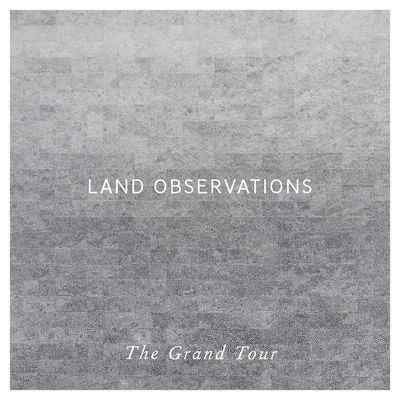
Land Observations – The Grand Tour (Mute Records album, 2014)

Land Observations 'The Grand Tour' LP artwork

mute records | lp/cd/i stumm369 | 28/07/2014

2012’s Roman Roads IV – XI by Land Observations (aka James Brooks) was among this reviewer’s favourite albums of that year. Having spent a pleasant hour or so wandering round James Brooks’s exhibition The Information Exchange at the Domo Baal gallery in London that same year, Brooks’s compositional approach, like his approach to his artworks, was much clearer to me than if I’d just listened to the album; the works on display at his show were intricately layered, imaginatively conceptual and yet somehow deceptively simple, precisely the same as the music offered up for scrutiny on Roman Roads IV – XI. Later still, at an intimate show at London’s Rough Trade East, I was able to see the artist at work as he faithfully reproduced the album’s layers and textures live on the venue’s tiny stage using only a guitar and a bank of pedals. To suggest he was focused would be an understatement.

For this follow up, Brooks once again returns to the layered networks of melody, rhythm and rich textures of the first album, only this time the conceptual departure point is rather more, well, grand.

At EPCOT’s Spaceship Earth attraction, the narrative from Dame Judi Dench describes the original, pioneering roads built across their empire by the Romans as ‘the first information superhighway’, a web of interconnecting routes that revolutionised the transportation of troops, cargo and messages. Just as with today’s internet, it wasn’t long before the application of those roads became something that allowed for altogether more leisurely pursuits – namely travel for recreational purposes, usually by the wealthier citizens who could afford to do so.

Brooks’s second Land Observations album takes its inspiration from the Grand Tour, which saw rich 18th Century university graduates schlepping off to Africa and Europe to experience Old World culture and broaden their horizons. (Quite how this changed from being a wealthy pursuit to the pre-university ‘gap year’ beloved of impoverished students heading out to Thailand with nothing but a few baht, a rucksack and a supply of Rizlas is beyond me.) Thus The Grand Tour, taking in everything from the streets of Vienna and the mountains of Switzerland, is a generally more austere album than its predecessor, less urgent perhaps, more languid, evoking the lazy, unhurried passage of the environment from a carriage window rather than the firm, resolute industrious progress suggested by Roman Roads.

Though his raw materials are of the stringed variety, there is something distinctly ‘electronic’ about James Brooks’s music, a Kraftwerkian simplicity and starkness perhaps. On the faster tracks, the ghost of Neu! and sundry other German bands can be heard in his long-form, repetitious guitar melodies, while the textures evoke the ideas of Robert Fripp only with more structure and less inherent Progishness. The opening bars of ‘The Brenner Pass’ even have an almost bluesy, early rock ‘n’ roll dimension, and for a brief moment you expect a jazzy beat to creep in; but Brooks is far too clever for that. Through the continual layering, these tracks are adept at giving the impression of height and depth, as well as the wide-screen expanse of open landscapes. That’s a significant sleight of hand on the part of Brooks, and one that would be easy to overlook.

In context, Brooks calling himself Land Observations for what is hopefully becoming a series of such albums, is utterly appropriate, all told.

Track listing:

lp/cd/i:
1. On Leaving The Kingdom For The Well-Tempered Continent
2. Flatlands And The Flemish Roads
3. From The Heights Of The Simplon Pass
4. Nice To Turin
5. Ode To Viennese Streets
6. The Brenner Pass
7. Walking The Warm Colonnades
8. Return To Ravenna

(c) 2014 Mat Smith / Documentary Evidence

Various Artists – The Tyranny Of The Beat (The Grey Area Of Mute album, 1991)

Various Artists 'The Tyranny Of The Beat - Original Soundtracks From The Grey Area' CD artwork

the grey area of mute | cd agrey1 | 1991

The Tyranny Of The Beat – Original Soundtracks From The Grey Area was a 1991 compilation issued by Mute to showcase releases from its Grey Area sub-label. The Grey Area specialised in reissuing the back catalogues of Cabaret Voltaire (their Rough Trade releases), Can, Throbbing Gristle (plus various Industrial Records acolytes), Graeme Revell‘s SPK and many others. The label also became home to early albums by artists that had been signed to Mute, such as Nick Cave‘s pre-Birthday Party band The Boys Next Door, D.A.F., Wire and Einstürzende Neubauten.

The reissue programme conducted by Mute through The Grey Area inevitably produced a varied counterpoint to the releases issued through the main Mute imprint, through Paul Smith‘s hugely diverse Blast First (which itself, at times, also reissued plenty of older material) and NovaMute. Alongside The Fine Line, specialising predominantly in soundtracks for TV, film and theatre, The Grey Area represented a hugely interesting opportunity to hear some out-of-print releases on CD for the first time.

There days, at least nominally, The Grey Area no longer exists. Can reissues have never officially carried the logo, and whilst Mute remains the custodian of the seminal Cologne unit’s back catalogue, it is done in partnership with Can’s own Spoon imprint; Cabaret Voltaire’s latest reissue programme through Mute is done through the main label and consequently all releases now carry stumm catalogue codes, and Throbbing Gristle effectively bought back their work to reopen the doors of Industrial Records. The opportunity to reinvigorate The Grey Area upon securing the opportunity to reissue the Swans back catalogue in 2014, alongside the Cabs programme, feels like something of a missed opportunity.

The Tyranny Of The Beat then serves as a useful overview of what The Grey Area were up to at this point in the early Nineties. A small four-page flyer inside the sleeve highlighted just how comprehensive the reissue programme undertaken by Mute was through the sub-label – after all, they were effectively re-releasing whole or sizeable elements of back catalogues, not sporadic releases. The flyer also included some items that were planned for releases but which have never materialised – chief among these was the Robert Rental / The Normal live album recorded at West Runton, which Rough Trade had released in 1980 as a one-sided LP.

The sleeve also features liner notes from Biba Kopf, famed NME journalist and currently (under his real name Chris Bohn) the editor of The Wire. Kopf also wrote the copy for the Documentary Evidence brochure which inspired this site.

The breadth of music included in sampler form on The Tyranny Of The Beat is impressive, taking in the grubby pulse of TG’s live track ‘See You Are’, their Industrial signees Monte Cazazza with the truly horrible ‘Candyman’, a bit of early electro from the Cabs, the detached punk of Swell Maps‘ brilliant ‘Midget Submarines’, the similarly aquatic ‘Our Swimmer’ by Wire (still one of their best Seventies pieces), a truly ethereal piece by Wire’s Bruce Gilbert / Graham Lewis as Dome with A.C. Marias and the still-devastating Rowland S. Howard-penned ‘Shivers’ by The Boys Next Door. Can’s ‘Oh Yeah’ – one of Daniel Miller‘s personal favourite tracks – provides a rhythmic counterweight to the urgent mechanical production-line beats of Neubauten’s ‘Tanz Debil’ and Die Krupps‘s ‘Wahre Arbeit, Whare Lohn’. Dark relief comes in the form of SPK’s ‘In Flagrante Delicto’, a track which suggests Graeme Revell was always destined to compose the scores for spooky, suspense-filled films like The Craft.

Like a lot of sampler albums, The Tyranny Of The Beat can sound a little uneven, and whilst a lot of these bands were part of common scenes – industrial, punk, the terribly-named Krautrock – it would have been a pretty weird festival if this was the line-up.

Kopf’s liner notes deserve a mention, if only for the way that he positions the concept of a grey area as a place that people run to for escape or as a means of consciously assaulting musical norms, a place that both acted as a reaction against the regimentation of beats and simultaneously gave birth to the repetitive rhythms of techno. ‘In The Grey Area you get the sense of limits being pushed up against and breached,’ he says, and even now, listening to Genesis P. Orridge deliver a maniacal vocal over corruscating waves of sinister noise from a distance of thirty-five years, or Monte Cazazza’s detached multi-channel reportage of a serial killer’s victims and the nauseatingly vivid listing of the savagery he put those victims through, you can see exactly where Kopf was coming from.

Track listing:

cd:
1. SPK ‘In Flagrante Delicto’
2. Throbbing Gristle ‘See You Are (Live, The Factory July 1979)’
3. Cabaret Voltaire ‘Automotivation’
4. Chris Carter ‘Solidit (Edit)’
5. Die Krupps ‘Wahre Arbeit, Wahre Lohn’
6. D.A.F. ‘Co Co Pina’
7. Einstürzende Neubauten ‘Tanz Debil’
8. NON ‘Cruenta Voluptas’
9. Can ‘Oh Yeah’
10. Wire ‘Our Swimmer (Live, Notre Dame Hall July 1979)’
11. Swell Maps ‘Midget Submarines’
12. The Boys Next Door ‘Shivers’
13. Dome ‘Cruel When Complete’
14. Monte Cazazza ‘Candyman’
15. The Hafler Trio ‘A Thirsty Fish / The Dirty Fire’

(c) 2014 Mat Smith / Documentary Evidence