
During my conversation with Gary Asquith there are moments when I get the distinct impression that he’s actually interviewing me. Within minutes of picking up the phone to him I’m on the back foot, answering questions about just why it is that I run a website focussed on Mute, the label that his Renegade Soundwave band were signed to from the late Eighties up to their break-up in the mid-Nineties. Asquith tells me he finds the whole thing bizarre and challenges the notion that I could like everything the label has put out over the course of its history.
When I admit that he’s right, and that there are Mute artists whose music I have never tried to get my head around, he has me back on the ropes again, and it’s clear that I’m not going to be able to ask him any questions unless I respond to this one about those artists I’ve never really warmed to. So I give him the name of a particular female artist that I’ve struggled to enjoy, which, typically I will find when talking to Asquith, prompts a casual anecdote that’s to be expected from someone who was part of the punk and post-punk scenes in London and, briefly, Berlin. ‘Hmmm,’ he muses. ‘She used to live in my ex-girlfriend’s flat. She trashed it, completely trashed it. Braithwaite House, over Old Street way. Near Bunhill Row. There’s some interesting characters in that cemetery – isn’t William Blake buried there? So who else don’t you like?’ We spend the first five minutes like this, him interviewing me and me staring at the questions I’d prepared wondering how I’m going to gain enough control of the call to ask any of them.
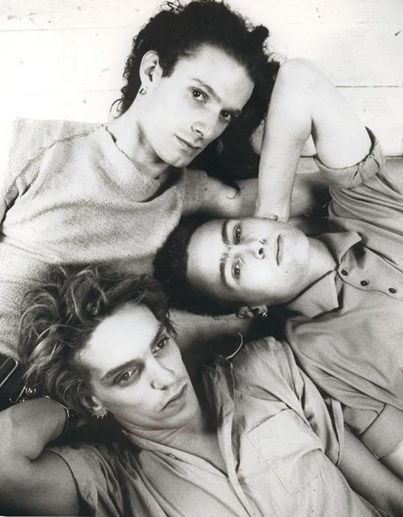
I’m just at the point of throwing the questions away when the opportunity to get stuck into Asquith’s time with Renegade Soundwave presents itself, during a conversation about alighting upon old cassettes. ‘I’ve got tons of cassettes,’ he says. ‘Tons of live recordings. Not so much from the Soundwave days. They’re mostly from Rema-Rema and Mass.’ Rema-Rema was the cult post-punk unit he formed with future Ant Marco Pirroni, Mark Cox, Dorothy Prior and Michael Allen, releasing their seminal Wheel In The Roses EP on the nascent 4AD label in 1980, by which time Pirroni had already left to join Adam Ant and Rema-Rema had already morphed into Mass; drummer Dorothy ‘Max’ Prior had also departed, replaced on the skins in Mass by Asquith’s future Soundwave accomplice, one Danny Briottet. After Mass had also separated, Cox and Allen went on to form The Wolfgang Press while Asquith and Briottet formed Renegade Soundwave with the warped genius Karl Bonnie, first releasing tracks on Rhythm King before getting absorbed into the roster of Rhythm King’s parent, Mute.
‘The religious pearls are coming now Mat,’ laughs Gary, an indication that we’re now getting down to business.
One of the cassettes Asquith has in his personal collection includes an early collaboration with Bonnie. ‘I did a little thing with Karl in New York in the early Eighties,’ he recalls. ‘We were in this really nice space. I don’t know whose space it was, but there was a live kit set up and a bass and amp. I’m not the world’s greatest bass player but I must have had a good day and we just started jamming together, just the two of us, and it was completely fantastic. It was a really nice experience. No vocals, just making up basslines and like, you know, simple stuff, but effective. Very effective. I played that a few years ago and remember I thinking there’s only two of us so that must be me playing the bass. I was quite impressed with myself because I’m not a very good bass player, but I must have been spurred on by the intensity of the moment. It was interesting, very, very interesting and I love Karl Bonnie’s drumming, an unknown quantity in the drumming fraternity. When we originally started we were a live band and that’s how we set about writing tunes, more like a punk rock outfit than a dubbed-out focus group.’
At this point I have no choice but to interrupt his flow of recollections. Whilst Soundclash, the much-lauded debut Renegade Soundwave album, might have been delivered with a punk attitude of sorts, the idea of them being a punk band would never have occurred to me. ‘To me it was definitely more like a punk rock band,’ he says. ‘We used to jam, and so that’s how I’ve always thought of it, before the birth of sampling.’
If that seems impossible to conceive of, you only have to look at Asquith’s involvement in units like Mutabor! with the girls from Malaria! (he was dating Bettina Köster in the early Eighties and Susanne Kuhnke later in the decade), Mass and Rema-Rema to hear a punkish dimension, of the artsy, eclectic and inclusive style that endured after punk’s first flourishes. ‘Mass was quite a dark period, and the recordings were quite dark,’ Asquith recalls, with what sounds like a shudder, ‘but there’s something about it that I still quite like. I guess it’s a place that you go and you realise you’ll probably never revisit, and I quite like my guitar work. The sort of guitar I was playing, you’d look at it and go “How’s he getting anything out of that?” It was difficult to tune and it ripped the arse out of my fingers.’ In spite of playing guitar in Rema-Rema, Mutabor! and Mass, in Soundwave, his axework, in spite of his insistence that the trio’s tracks evolved out of jam sessions, was distinctive by its absence.
Given how Danny Briottet had come into Asquith’s orbit, another element first heard in Mass – Briottet’s drumming – was also missing in Renegade Soundwave. Asquith thinks that was probably a good thing. He rather uncharitably describes it as being a bit ‘meat and potatoes’ and blames that for ruining the solitary Mass album. Briottet’s arrival in Mass followed the departure of Rema-Rema’s drummer, future Psychic TV accomplice Dorothy ‘Max’ Prior, who didn’t gel with Mark Cox. Asquith admits that even though it would have likely altered the course of his own personal history, Max’s ejection still riles him as an unfair event. Danny had been a fan of Rema-Rema and found his way into Mass through a friend of a friend. Later in the interview, Asquith says more about his relationship with Briottet, but suffice to say that it is remarkable that two people who seemed diametrically different could work together so well, with Karl Bonnie, in Renegade Soundwave.
Soundclash, the Renegade trio’s debut album was the point where it all came together perfectly. Asquith attributes some of this to the album’s producer and engineer tag-team of Flood and Paul ‘PK’ Kendall. ‘Those people were probably as important, or even maybe more so in a lot of ways, because they kept the time bombs ticking,’ Asquith says, ‘Especially Flood, because he’s probably on a tight schedule – he’s probably going to go off to do a Nick Cave album or whatever project he’s on after this one, and whatever the date his calendar’s going to be full. So he doesn’t like any meandering, and consequently he nails things down on your behalf.’
Kendall recalls that each track on Soundclash could have ended up sounding very differently, as Soundwave’s three members each had individual visions of how each song should be mixed and presented. In the end it was down to Flood and PK to reign in the competing voices. Asquith recalls one such moment during the realisation of ‘Pocket Porn’, Soundclash’s slightly surreal journey through a seedy world of erotica which was written around an experience with Karl Bonnie, in which dub and tribal sounds reverberate around Asquith’s dirty monologue; Flood and Kendall’s roles on that track became almost like book editors. ‘I was like, “I like that line, but it’s a bit, er, I don’t know if I should be saying stuff like that,” and they said “I think you should drop that, it sounds a bit better without it, and I don’t think you lose the emphasis of the track”. Consequently I did, I edited these two lines out and it sounded alright. That’s the sort of influence good judgment has.’
One of the most prominent contributions Asquith made to the distinctive sound that Renegade Soundwave presented at the tail end of the Eighties was his lyrical flow. ‘Pocket Porn’ dealt with gritty taboos that tapped into a seedy underworld sex industry that had the capacity to shock the conservative British public, with or without the edits that the producers suggested. Elsewhere, both with Soundclash and the earlier Rhythm King singles of ‘Kray Twins’ and ‘Cocaine Sex’, Asquith traded in streetwise nous, not dissimilar to the urban delivery of early New York hip-hop but with a curiously British skew, replete with a distinctly British sense of humour: whereas ‘Kray Twins’ offers an homage to the East End’s most celebrated gangland pair, the wry ‘Probably A Robbery’ has all the madcap humour and sarcasm of an Ealing Comedy. Several months after the interview took place, I came upon an album by the comic Terry Thomas; something about this British funnyman reminded me of Gary Asquith. He wasn’t remotely offended by the comparison. ‘I like Terry Thomas’s quintessential Englishness. Being English and from working class roots is a prerequisite for being in a good band.’
Those lyrics represent a sort of urban poetry, which Asquith explains came from exposure to the dark realities of drug abuse and also his former job. ‘I was a Covent Garden Market porter when I started Renegade Soundwave,’ he explains. ‘My dad was a Covent Garden Market porter, my granddad was a Covent Garden Market porter, and my brother was a Covent Garden Market porter. And I think if you’d have asked my mother she’d would have wanted to be a Covent Garden Market porter too. There was a lot of money to be made at Covent Garden and that’s where I got my street education. I was working the gutters of the old Covent Garden markets from the age of twelve when my father first took me to work beside him. Several of my best friends are from families who’ve worked at Covent Garden Market. These are the people I love and trust and tell it the way it is. My elder brother is a Brussels sprout [Cockney rhyming slang for a tout] who’d always bring a certain eloquent vernacular to conversation, and I grew up with a Cockney father and a mother from aristocratic stock. That made my upbringing well balanced.’
Drugs and drug culture provided another dimension to Asquith’s subject matter, most obviously on ‘Cocaine Sex’ but again on the heavyweight dub cut ‘Blast ‘Em Out’ from Soundclash‘s sequel, Howyoudoin’?. By the time that Renegade Soundwave had formed, Asquith had kicked the drug he describes as ‘the heaviest one’ in favour of the likes of ecstacy around the time of dance music really taking off – and sticking with that topic, let’s not forget that Soundwave’s speaker-shaking ‘Phantom’ / ‘Ozone Breakdown’ 12″ was a hugely significant record in early British club and rave music. ‘I just changed my hand, I guess,’ says Gary, referring to moving on from hard drugs. ‘It feels like a sort of different world to me now to be honest. I was doing all the right things at that time, I was reading William Burroughs and listening to the Velvet Underground, all the things you should be doing while you’re operating in those circles.’ The darker side of drug use is something that Asquith saw at close quarters, through the death of his flatmate John Herlihy (part of European Cowards with former Ant Kevin Mooney) and Clifford Harris from The Models, but also through the paranoid, close-knit, closed community in which addicts co-exist. ‘Death seemed to be lurking in every corner and I didn’t want to become another bad drug statistic. That said, I do believe that drugs play a big part in the inner sanctum of being an interesting writer or musician.’
‘It’s such a heavy thing to get caught with, so everyone’s extra vigilant about who’s about, who they talk to, what they talk about and so on. You’re all in the same boat together. Once you’ve decided to break free of it, you’ve got to break free of the web, and that web represents all of your friendships. By then everyone else has forgotten who you are. It becomes very structured in its own masonic kind of way. When you’re a part of that they’re your supporters, and you have to give them maximum respect. Say for instance you turn up with someone they don’t know, they’d ask “Who is he? Where’s he from? I don’t want him in my house.” You’re trying to introduce somebody else because everybody wants to score, but potentially they’re running a risk by allowing somebody that they don’t know into their confidence.’
Themes and lyrics to one side, the other immediately arresting thing about early Soundwave was the trio’s approach to sampling. Paul Kendall recalled Asquith, Bonnie and Briottet arriving at the studio with bags of vinyl that they wanted to sample from. ‘It was an expensive thing to do,’ Asquith admits. ‘We did clear a lot of those samples – it wasn’t blatant theft. There was some expenditure on quite an extensive list of samples we’d used. I remember having to hand Mute an extensive list of the samples used on Soundclash and being asked what we’d used on specific tracks. Sometimes people ask about certain samples on certain tracks and it’s impossible to know them all. There’s all sorts on ‘Biting My Nails’, for example.’
When I suggest that part of Soundclash’s appeal is that it’s clever compared to other sampler records from around the same time by not being too cluttered, Asquith tells me he sees it differently. ‘I think it was the naivete of it as well as the ideas. I think there’s probably too many ideas on that album actually. Everyone just got their favourite records out and it became a sort of collage of different people’s musical ideas, and some of them were very abstract. The concept of sampling became a bit abstract for me in the end. For example, I’d say “Can’t we just bring in a bass player to recreate the bass in that tune?””‘
In the wake of Soundclash, the trio released a dub counterpart to the album; dub versions had been commonplace in reggae for going on twenty-five years, but no-one was doing it with leftfield electronic albums or sampleadelic collages like Soundclash. When I mention how much I like it, Asquith makes a noise that suggests he isn’t totally enamoured with In Dub. ‘I’ve always thought that following up our song-based albums with dub versions was a really clever and creative idea where you could potentially have fun deconstructing songs and working off the rhythm sections. That was an idea brought to the table by Danny and Karl, but I can’t bring myself to listen to ‘Bacteria’, ‘Recognise And Respond’ or ‘Deadly’ from In Dub. Danny and myself wrote ‘Deadly’, which has some good moments, but ultimately it’s a mess. I’ll hold my hands up to my mistakes as well as to others. ‘Thunder’, ‘Women Respond To Bass’, ‘Pocket Porn’, ‘Black Eyed Boy’, ‘Transworld Siren’ and ‘Transition’ are all fantastic in my opinion.’
In Dub would also be the last Soundwave album with Karl Bonnie. ‘It was a shame actually,’ says Asquith with a mournful sigh. ‘But it all got a bit selfish. The ideals, that is. This is my opinion, and I don’t care what anyone else thinks, because my opinion’s my opinion. We all had different intentions as to what we should be doing and where things should be going, so to speak. There were people just turning up to things, especially with Karl, and I just wasn’t really getting it really. It was getting a bit world music for me. It was the sort of thing people do in their bedrooms.’

Part of Asquith’s disenchantment stemmed from where his role as vocalist seemed to be going in the wake of the largely instrumental In Dub. ‘I was into songwriting. There’s no use throwing me ethnic chants or samples of people beating up their wives or whatever. I was getting a lot of that thrown at me. It wouldn’t be in my key or it was just some retuned-sounding sample. I’m not Barry White! I mean, nothing like that’s ever going to sound good with a vocal on top of it. When we originally started, the reason those songs were so good was because they were written around real instruments.’
‘It was really hard trying to write songs around samples and trying to be a vocalist around samples,’ he continues. ‘The sampling thing became a detachment from my creative reality in the end. Karl could transform moments with musical prowess, whereas Danny and myself couldn’t. It got to a point where I was thinking maybe I should start playing the guitar again. So it just got a little bit like that, it got very selfish.’
It took a further four years after In Dub‘s release for the Bonnie-less duo to release a proper second album. Mute released Howyoudoin’? in 1994, and despite containing some outstanding, mature moments in the eponymous lead track, the stand-out first single ‘Renegade Soundwave’, ‘Positive ID’ and the claustrophobic closer ‘Blast ‘Em Out’, the album seemed to lack some of the pioneering spirit that made Soundclash so essential. As with In Dub, a dub counterpart to Howyoudoin’? was issued (The Next Chapter Of Dub), and then Renegade Soundwave were no more. ‘In my opinion Howyoudoin’? lacks cohesion,’ offers Asquith. ‘It has sone great moments, but as a complete thing it meanders and could have benefited from the presence of Flood and PK. There were too many clowns working at that circus with no authoritative figure pushing things forward. When people see weakness they exploit it. Thankfully none of those people have ever played a part in my life since that album and they never will. I do, however like ‘Bubbaluba’ very much.
‘In the Crossfire Hurricane documentary, Keith Richards said “somebody’s got to wear the black hat” about his role in The Rolling Stones. In Renegade Soundwave I was the guy who wore the black hat. Danny was very much the guy with the handshakes and goodwill gestures. I never did much of that, and consequently that’s probably the way I am and that’s the way he is I guess. So the fact that Karl Bonnie wasn’t around didn’t help on Howyoudoin’?. He was the Brian Jones of the outfit, he was always throwing in different things, like a sitar. If it was lying around he’d pick it up and play it. That’s the sort of character that he was.’ Bonnie’s slightly leftfield point of view does leave Howyoudoin’? feeling like it’s missing the vital ingredient that would have turned it from an okay album to something worthy of the standard displayed on Soundclash. According to Asquith, Karl is alive and well and living in Manchester, though musically he seems to have become an almost mythical name.
‘I don’t think anything happened, to be honest with you,’ sighs Asquith when I ask him why he and Briottet called it quits. ‘Me and Danny never really got on very well so we weren’t talking, and that was quite obvious. We were very difficult to deal with, I think, unpredictable and hazardous. Danny and myself were living in two parallel universes but coexisting in Soundwave. So, you know, it wasn’t a particular thing that happened.’
Dissatisfaction weighs heavily on Asquith when he looks back on what Soundwave achieved. ‘I think there was a lot of disappointment. I think Daniel Miller was disappointed. There’s just this seam of disappointment running through the whole thing. Musically it wasn’t really going anywhere with Howyoudoin’? We started morphing into something nobody particularly liked, including ourselves. When I look back on the tracks we recorded as Renegade Soundwave, I’m very disappointed. Whatever differences of opinion Danny, Karl and myself had, it can’t be denied that when we were on top of our game we made some groundbreaking tracks. That’s our truth and I’m thankful for being part of those creative partnerships, and it’s possible that when Karl was present our averages were higher with regard to writing top tunes than when he wasn’t. I’m just disappointed that there ultimately isn’t more and ultimately I’m disappointed with myself. I’ll have to take that disappointment to my grave. Hindsight can be enlightening and also painful. We had a cavalier approach to the music industry and external pleasures, and that is reflected in our music.’
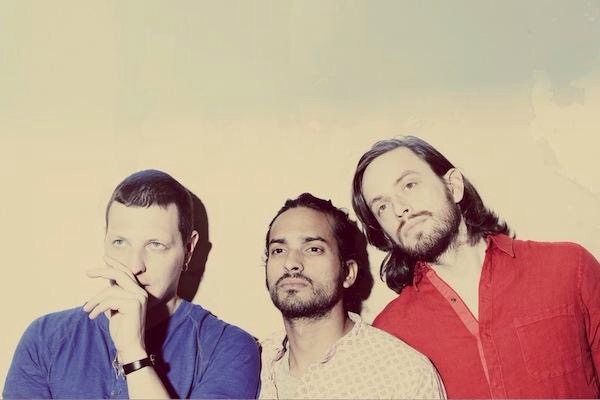
‘Having spent nine years of my life on the RSW project I know I prefer to work as quickly as my powers allow me. Writing a song a day isn’t unrealistic providing the circumstances are right. This approach has been working well on the Lavender Pill Mob, Takatsuna Mukai, Renegade Connection and Renegade Soundmachine projects in recent years. It must be the glue I’m using.’ Mikkim is a Prague DJ with whom Asquith has collaborated on two albums – Offbeat Rhapsody and Crossroads. Adding his distinctive vocals to Mikkim’s dark club sound, his work with the DJ has seen him dusting off old Soundwave tunes like ‘Probably A Robbery’ and the unreleased ‘Air Hostess’ and penning a few more. ‘I think he’s got this inane ability to breathe some new life into things,’ says Asquith of working with Mikkim. ‘When he said to me he wanted to do ‘Robbery’ I thought “Really? What a fucking naff thing to do.” It wasn’t that it’s precious or anything like that. I’m not a particular fan of the song to be honest; out of all the things that I’ve done it wouldn’t be the one that I’d personally choose to play ever again.’ I point out that the track, a surprise early chart-bothering single for the early Renegade Soundwave, was probably the most pop track in their canon. Asquith agrees. ‘Yeah, it sort of rang some bells at the time. It was good for what it was and it was a bit cheeky-chirpy-chappie, a bit savvy, and it’s a bit cheesy as well.’
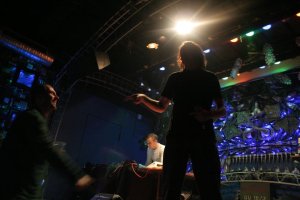
‘Air Hostess’ was recorded around the time of Soundclash but never released. ‘I’d consistently had reflections about that track since it was conceived in the mid-Eighties, which were often ignited when I was travelling through airport terminals or boarding flights or sitting on planes. In the mid- to late Eighties I remember travelling alone and being drunk in the lobby of Munich airport while I was waiting for a flight. I was listening to the RSW version of ‘Air Hostess’ on my cassette Walkman when I got chatting with a group of three fellow travellers and one of the guys asked to listen to my track, and it seemed a perfect place for its public airing, and it went down so well that I’d always thought it a winner from that moment onwards. I didn’t at that time know how long it would take before it was released, and Mikkim was probably still in short trousers at this point. There was another gem on that cassette called ‘How To Be Hard’ that never made it to plastic that I hope will see the light of day sometime in the future.’ With BMG’s purchase of the Mute back catalogue, there’s some talk of them remastering the Soundwave albums with additional tracks that never made it the first time around.
*****
It was around 2011 that I first approached Gary about doing a possible interview with him. He was initially quite frosty, and in his first Facebook message to me he made the point quite emphatically. ‘Don’t think I’m part of any sort of Mute family, because I’m not,’ he wrote. It took a review I wrote of the ‘Byronic’ single as Renegade Soundmachine for him to finally acquiesce. Since then Asquith has made a number of disparaging comments about Mute Records. ‘Let me just say it this way,’ he begins. ‘I was always happy to be a Mute artist and having signed a deal with Mute Records I was deeply troubled to find that Daniel had sold the company to EMI. My reason for signing to Mute was primarily because Daniel Miller was at the helm and it seemed like a perfect marriage for Renegade Soundwave. I never in my wildest dreams ever thought I’d have to go cap in hand to EMI regarding the gross mistreatment of Renegade Soundwave’s catalogue. What did EMI do when I queried certain subjects? They blanked me and never returned my calls for year after year. I’d been scumbagged by the scumbags. I’m pretty sure you’d find a queue of disgruntled Mute artists standing beside me, relating to this particular issue if you’d care to ask around. I don’t speak to many Mute people, but even I could give you the names of three people. I rest my case. “When the bass stops I wanna get paid.”‘
Asquith recounts times where he’d march into Mute’s offices or those of a label that had included a Soundwave track without his permission, waving a copy of an offending compilation and demanding to know how it had been approved and why the members of the group weren’t seeing any comeback for it. ‘Daniel had some articulate staff when he was independent of EMI. John McGrath, who was responsible for the licencing of Mute tracks, would cut me deals on compilation albums that Soundwave appeared on. If it didn’t show on the group’s accounts John would always try to be fair to the group and give RSW some justice and payment and I respected him for that. It wasn’t perfect but it was moving the boulder further down the road towards Renegade Towers. I’d do my research and he’d check it out and recompense the band for any loss of earnings.’
His former label boss however did go to lengths to position Soundwave as a band that should have received greater acclaim in his liner notes to Electricity, a 2012 Mojo covermount CD of tracks personally selected by Miller, which included ‘Probably A Robbery’. ‘I do think he thinks that,’ concedes Asquith. ‘I know that he’s got some disappointments with the history and then what happened to the group, just like I have. I also know that he had our welfare at heart and he acted in what was the best interest for his label, and RSW were just a small piece of cheese that rolled off the side of the dining table. I like Daniel Miller, I really do.’


Since Soundwave ended, Asquith has busied himself with a number of projects focussed around his own label Le Coq Musique. Asquith launched the label with an updated version of the Soundwave track ‘Cocaine Sex’ and collaborated with Dif Juz’s Dave Curtis on a solitary 12″ under the alias Tranquil Trucking Company. His most enduring project for his label is his Lavender Pill Mob collective – echoes of Alec Guinness Ealing Comedy movies and streetsmart narc references once again – loosely centred on himself and long-term friend Kevin Mooney.
‘Working with Kevin is blissful in comparison to working in RSW,’ Gary enthuses. ‘It’s fun and light-humoured and tinged with lunacy. Kevin can sing like a lark. Having someone to work off with vocals is something that I’d really enjoyed doing with Michael Allen in Rema-Rema and having Kevin around has reminded me how important the spoken word is. It’s the last bastion of creative pursuit in my opinion. Thank the lord for King K. If my house was burning down and I could rescue one of the records I’ve made, I’d make sure it was the first Lavender Pill Mob CD. That’s the God’s honest truth.
Lavender Pill Mob feels like a logical follow-up to Renegade Soundwave, in many ways. Here you find Asquith and Mooney, across two albums, offering up a resistant-to-classification suite of diverse sounds, everything from hip-hop to punk to acid-splashed techno, featuring collaborations with Adam Ant, Rammellzee and loads of others. The project takes the anything-goes approach presented on Soundclash and launches it off into a myriad number of possible dimensions. Perhaps a reflection of his disenchantment with the Renegade Soundwave years, Asquith tells me that it’s Lavender Pill Mob and Rema-Rema – his most recent concern and his first, respectively – that he’s most proud of. Elsewhere, he’s collaborated with Takatsuna Mukai on his Sunya album and recorded a bunch of tracks as Renegade Soundmachine, only one of which – ‘Byronic’, a collaboration with Film 2 where Asquith reads Lord Byron’s Lines Written Beneath An Elm In The Churchyard Of Harrow – has thus far seen the light of day. Asquith spent a lot of summer 2013 trawling his Rema-Rema archives for a future release.
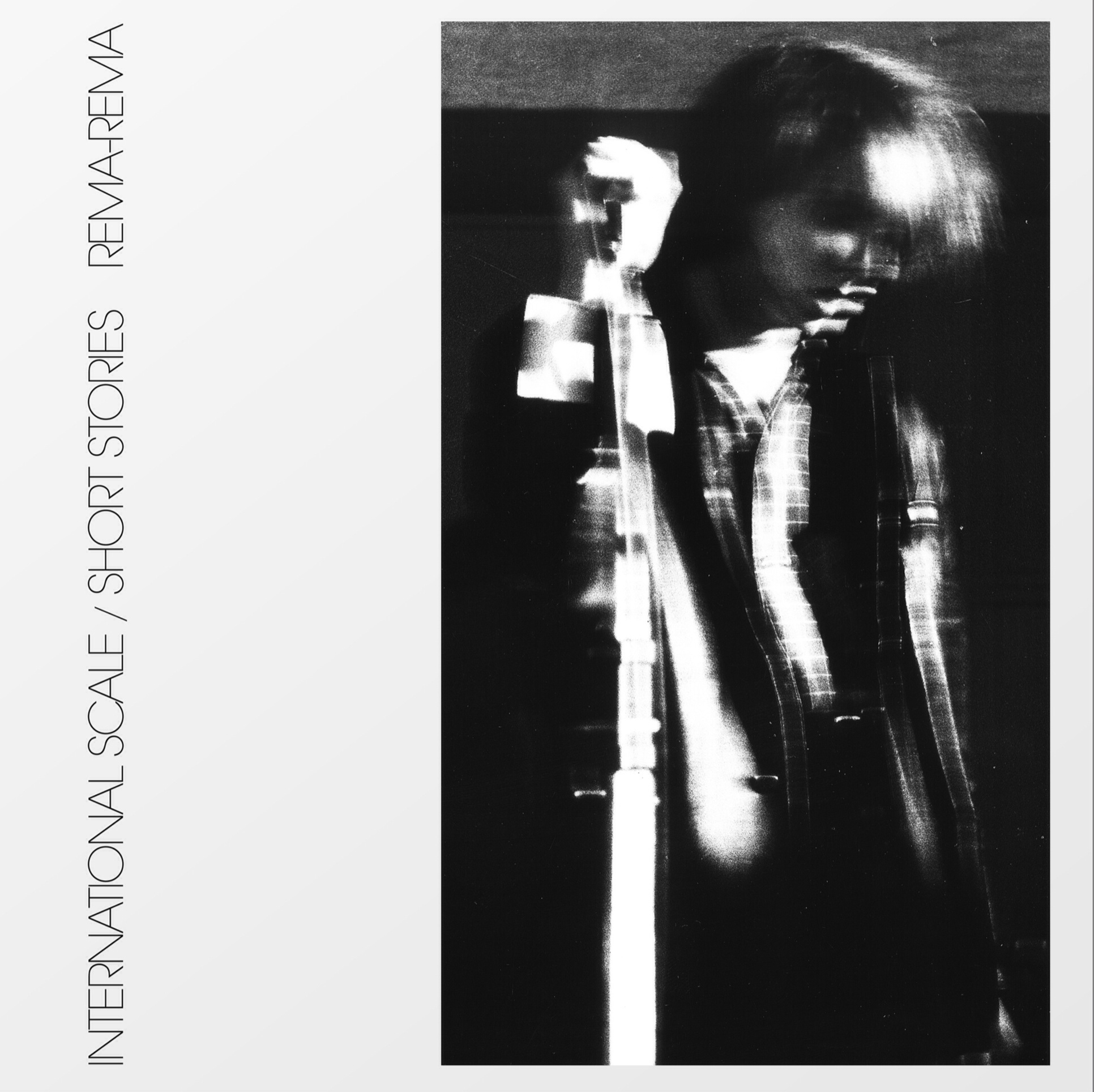
April will see the first release for 34 years of a Rema-Rema record. This will be released within a magazine with an interview with Michael Allen, Mark Cox and Gary. ‘It’s a 45 with two demos from 1979 and 1978 respectively,’ Gary explains. ‘Towards May I shall be releasing some remixes of the original Rema-Rema recordings along with a track that was recorded at the time but never released because it was considered blasphemous, which I might add it is. I’ve got several talented people working on the project including John Gosling from Mekon, Fritz Catlin from 23 Skidoo, Taka Mukai and myself. There will also be a first release from Renegade Connection around June. It’s a 45 that I’ve recorded and mixed with Lee Curtis from Lee Curtis Connection and Flavournauts fame. We recently DJ’d and played our track from a dubplate. It’s called ‘I’ll Surrender’ and it was so good that we played it twice. It’s an old school dub vibed track and I love it.’

Independent, distrustful and far from sanguine, Asquith is currently producing some of the best things in a career that spans most of the pivotal music scenes that have emerged since punk’s last gob was spat. In context, Renegade Soundwave feels like a long and complicated intermission bookended by the dizzyingly creative gestures of Rema-Rema and his post-Soundwave collaborations. It may never pay the bills, but Gary Asquith’s streetsmart poetry has rarely sounded better than it does today, definitive proof that he who wears the black hat always produces the best music.
Major thanks to Gary for his enduring patience and honesty.
(c) 2014 Mat Smith / Documentary Evidence
All images used with permission of Gary Asquith.






 Documentary Evidence