Paul Kendall – From The Penman Press (Cat Werk Imprint album, 2016)

from the penman press: cat werk imprint | box+cd cw010 | 07/2016
angleterror original digital release: cat werk imprint | dl cw002 | 01/11/2011

From The Penman Press by Paul Kendall is nothing short of beautiful. Housed in a minimalist brown cardboard box with simple lettering, this is a work of art – a statement – even before you’ve prised off the lid.

Inside, you’ll find unique hand printed A5 images, all monochrome and appealingly spartan, each representing a painstaking letterpress experiment by Kendall. It’s like looking at what Bridget Riley might have delivered had she focussed on designs for abstract architecture instead of headache-inducing artistic mindfuckery.

What’s all the more appealing about the starkly minimal prints is how at odds they are with Angleterror, the Paul Kendall album included within the box in a newly sparkling remastered form by AGF (Antye Greie / Antye Greie-Fuchs / Antye Greie-Ripatti). Angleterror was originally released in 2011 as a Bandcamp download, and has never been issued in a physical form. It would be somewhat disingenuous to describe Angleterror as a sprawl, but in its dense layers and skipping tendency to veer with jump-cut precision from one idea to the next – inventively, never restlessly – it is the maximalist antithesis of the artwork; the yin to its yang, even.

From The Penman Press was issued in a run of just 100 copies, most of which should have now been sold given how captivating it is. Check here to see if you can still get one.

Promotional videos for ‘Glass Eye’ and ‘Aspirateur’ can be found below. Below those you’ll find my own, newly remastered, review of Angleterror from 2011.

Thanks to Felix.

‘Glass Eye’ Paul Kendall from Cat Werk Imprint on Vimeo.

‘Aspirateur’ Paul Kendall from Cat Werk Imprint on Vimeo.

Angleterror review (Originally published 2011)


Paul Kendall will be a familiar name to any Mute fan thanks to his credit as an engineer, producer and mixer on many releases over a thirteen year period that stretched from 1984 to 1997. PK, as he was known, seemed to work with most artists on the label in one capacity or another across Mute’s electronic and non-electronic roster, and those initials on a release always seemed to mark it out as very special indeed.

Kendall as a musician, rather than studio guy, was something that wasn’t really heard in earnest until he started the Parallel Series label as an off-shoot of Mute, releasing four compelling collaborations with Andrei Samsonov, Simon Fisher Turner, Bruce Gilbert / Robert Hampson and also The Faulty Caress (under the alias Piquet), before splitting the sub-label off for one post-Mute release (a collaboration between Kendall and Olivia Louvel, Capture, as The Digital Intervention in 2003). Kendall then headed off to work with ex-Depeche Mode man Alan Wilder‘s long-running Recoil project.

Angleterror was originally released as a digital download in 2011 on the Cat Werk Imprint run by Olivia Louvel. The seven tracks presented here were mostly recorded between 2002 and 2007 when Kendall was living in Paris and find him exploring some pretty harrowing soundscape and contemporary concrète works that are every bit as un-nerving as the picture of the indeterminate creature on the sleeve.

Central to the album are four pieces – ‘Glass Eye’, ‘Betricht’, ‘Wheel’ and ‘Call Of Wild – that feature David Husser’s guitar. Husser completed the Shotgun mix of Recoil’s ‘Prey’ which was released as a download in 2008, and also recorded a version of Depeche’s ‘Enjoy The Silence’ with the band Y Front. For these pieces, Kendall provided Husser with a series of pre-existing soundscapes and drone templates, over which the guitarist improvised; Kendall then treated the contributions as source inputs, re-editing and re-processing the outputs into the forms presented here. What’s interesting about this approach is the fact that Kendall’s final versions exist only because they were responses to Husser’s work, which in turn only arose as a response to Kendall’s original frameworks. It’s presumably the case that the pair could keep referring the responses back to one another indefinitely, creating works that would presumably be a huge distance from the original composed source.

‘Glass Eye’ has an almost Manuel Göttsching sense of melodic repetitiveness; raw electricity bursts pass over bass clusters and almost bluesy chord changes; tense, strangled guitar sounds leap upwards and are sucked back into the noise bed that’s developed. There’s a rough beauty about ‘Glass Eye’ particularly when it coalesces into a kind of mesmerising, beatless motorik rock just after the halfway mark. In complete contrast, ‘Wheel’ starts with pockets of whining sound before veering unexpectedly into a dirty blues with a nagging, simple beat and layers of low-slung axe wrangling punctured by randomised sonic events and abrasive noise interludes. It sounds like nothing else here, and as it fades back into the drone cycles that opened the piece, you can’t help but wonder if that extended blues section wasn’t just a slightly unsettling dream.

A different approach was taken on ‘Starvation’ and ‘Aspirateur’, which Kendall describes as being built from ‘first principles with guitar gestures as their source’. The guitar on ‘Starvation’ was provided by Guy Parker, while the identity of the guitarist on ‘Aspirateur’ isn’t identified, but its scratchy cut and thrust was inspired by sorely missed improv titan Derek Bailey. ‘Starvation’ is a stately waltz-paced piece built up from clattering IDM glitch-beats that develops rapidly into a punishing bass-heavy industrial electronica with lots of distorted bass noises and fast-paced switches between channels. Even though it probably never existed outside a computer there’s a sense of patches being forced into complicity, the segments where mere tracery is left and Guy Parker’s dark, cinematic guitar shines through suggesting the software couldn’t quite cope. The final dark ambient segment is how I expect Trent Reznor might attempt a soundtrack for a new noir version of Blade Runner directed by David Lynch. Sticking with cinematic imagery, ‘Aspirateur’ opens with what feels like a transmission from an abandoned spaceship drifting aimlessly through the galaxy, possibly harbouring some sort of terrifying alien lifeform – certainly the chilling processed breathing sounds and general sense of chaos in the intrusion of various sounds do much to enforce that sonic vision. It’s very dark, in a spine-chilling sense. You know what’s about to happen; it’s more a case of when.

The final track on the album, ‘Route 1 + 2’, was produced using a piece of software called Thonk which appears to have been a program that could process source inputs using complex algorithmic functions, often taking very long periods to deliver its outputs. Kendall believes that the source material for this may also have been a guitar, allowing us to contrast a parameterised software-based improvisor’s response to source material alongside that of David Husser on the four tracks he worked on here, at least in theory – if ‘Route 1+2’ began life with a guitar, there’s little evidence of that apart from a feint hint way off in the distance. The track is a series of scrapes, juddering noises and fractured sounds that skip and squiggle evasively around your ears, a maddening inner-body soundscape laced with a dose of lurking dread.

Kendall has engineered both of Olivia Louvel’s releases on Cat Werk Imprint – 2011’s award-winning Doll Divider and 2012’s o, music for haiku – both of which are highly collectible physical releases. With Angleterror PK proves once again that his inquisitive ear for sonic exploration remains undiminished. An almost-Burroughsian sliced-up video of Kendall talking about the album can be viewed below, complete with sagely spectacles, roll-ups and swanky coffee machines.

(c) 2016 Mat Smith / Documentary Evidence
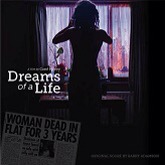
Barry Adamson – Dreams Of A Life (Central Control International album, 2012)

  
central control international | dl unknown cat ref | 10/12/2012

Perhaps it was intentional that Barry Adamson‘s music for Carol Morley’s film Dreams Of A Life went relatively unnoticed. After all, Morley’s film is a drama-documentary about Joyce Carol Vincent, a beautiful woman with a successful career in finance and early aspirations toward a pop career; someone who was well networked with lots of friends and a surprising number of interactions with celebrities like Ben E. King, Stevie Wonder and Gil Scott-Heron, even shaking hands with Nelson Mandela backstage at his tribute concert at Wembley in 1990.

The tragic conclusion to Vincent’s life is, sadly, what she will be remembered for – found in 2006 not just dead, but decomposed, on a sofa in her bedsit in Wood Green, TV still playing BBC1 and rotten food in the fridge dating her death back to 2003. Unpaid utility bills were stacked behind her door; neighbours complained about a smell, but attributed it to the bins from the shops below. That someone could have slipped completely off radar and totally out of the system – effectively disappearing – in today’s hyper-networked times seems all the more shocking, the sense that someone with a wide circle of friends like Vincent could vanish without trace improbable somehow. The cause of Vincent’s death was never ascertained; never a huge drinker and not known to take drugs, the only link to any form of foul play was that she had stayed in a women’s refuge for domestic violence in Haringay in 2001, something that friends suggested was possible given how intense some of her City boyfriends could be.

Adamson’s soundtrack appeared on iTunes in December 2012 but I only found out about it in February when I received an email from Adamson’s mailing list advising that the film would be shown on TV that evening, with a separate link to his soundtrack. Those familiar with Adamson’s work will find few surprises here. There’s the usual rich gumbo of funky basslines, glitches, dub, ice-cold electronica, gospel outpourings (‘Tell Me’), jazzy riffing (‘Profile Of Martin’), organ grooves and noir themes that sound like something from a Seventies blaxploitation flick. Opener ‘The Investigation’ has all the grim urgency of a police drama while simultaneously evoking the mournful, pained observations of Marvin Gaye’s ‘Inner-City Blues (Make Me Wanna Holler)’ from What’s Going On; that track’s main motifs crop up elsewhere on the soundtrack in various different arrangements, giving the whole album a strong sense of coherence, the guitar plucking in particular giving things a folksy, introverted quality. The grandiose ‘Mystery’, complete with ghostly tones and ominous strings, perfectly matches its title’s promise, even if the counterpart ‘Mystery Atmos’ – with far-off rhythms and atmospheric textures – has the greater air of mystique, despite only dealing in semi-audible subtleties.

‘Noir (ish)’, with a chunky, phasing beat, melancholy synths and dirty funk guitars, is the closest Adamson has probably ever got to the sound of early Portishead, a band who claimed to be influenced heavily by the noirmeister, even though there was very little similarity between his music and theirs aside from a whiff of sullen mystery; ‘Noir (ish)’ squares that circle in many ways, and is one of Adamson’s most quietly assured works to date. The moving ‘Joyce Alone’, composed for piano, has a stirring poignancy, the absence of any other accompaniment other than the instrument’s natural reverb prompting you to reflect on Vincent’s three year wait to be discovered; it’s a beautiful, but deeply saddening piece. In contrast, ‘Electro Dreams’ manages to sound like a perfect distillation of Kraftwerk’s every move, albeit covered in a murky sheen of darkness, its inclusion having an urgent car-chase quality which doesn’t necessary fit with the other pieces here, even if it does highlight Adamson’s alarming musical dexterity.

While there are some really excellent pieces of soundtrack composition here, part of me thinks that it occasionally lacks a sense of seriousness and sympathy toward the subject matter. I admit freely that this might be because I’m looking at this solely as a musical response to what I’ve read of Vincent’s life; I haven’t seen the film and so it is often hard to imagine some of these pieces in context, but they just feel a little too playful at times; Adamson has a very prominent sense of humour and I sort of hoped that the challenging subject matter of the film might have curtailed that, but it’s still there, albeit in a relatively muted fashion. There’s also something about some of the pieces here, a dry quality perhaps, that reminds me of a low-budget TV movie.

A detailed piece written by Carol Morley for The Observer on her quest to find out more about Joyce Carol Vincent’s life and death can be found here. A video trailer for Morley’s movie can be found below; Part 10 of Morley’s video diary about the film, an interview with Adamson, can be seen below that.

First published 2013; re-posted 2016

(c) 2016 Mat Smith / Documentary Evidence

Shelter – Ascend (Ministry Of Pop album, 2016)

Shelter are a familiar name to anyone with a passing interest in the solo work of Erasure’s Andy Bell given his collaboration with the duo on 2014’s iPop album, another in a series of extra-curricular projects from the Erasure frontman that have started to emerge in the past few years.

The team of Mark Bebb and Rob Bradley describe Ascend as a more mature offering, and while that might be true in the sense of its slightly more emotional, slowed-up moments, the album is also 100% true to the Shelter sound – namely slick, polished, generally upbeat electronic pop songs that lean heavily toward modern hi-NRG club-friendly structures (see the vaguely ‘Jump’-referencing ‘This Must Be Love’) – but also finds the collaborations that have coloured their previous releases consciously absent.

Judging by the lyrics and phrasing on tracks like the opener ‘Breathless’ or ‘Do You Remember’, Shelter’s time in the company of Andy Bell has evidently rubbed off on them. Mark Bebb’s vocal on these songs has the same thwarted, disappointed, defenceless quality – they’re love songs, for sure, but they seem to be delivered from a unrequited vantage point. Bell has made a career out of that bruised, fragile quality, amplified by Vince Clarke’s sympathetic synth melodies, and what you have here is a decent emulation of that latter-day Erasure style. It’s a formula that Shelter revisit throughout the album, but without ever making them sound like one trick ponies or like they’re just trying to rip off their mates.

Elsewhere, there are moments of rapturous surrender, pitched perfectly for the secret corners of nightclubs; tracks like ‘In The Dark’ might have the rhythm and pace demanded by clubland, but the tone is sullen, dangerous, edgy. Some of the best moments on Ascend happen when Shelter slow things right down and eschew the politics of the dancing for the type of pop music that seemed to wither and die about thirty years ago. ‘Figaro’, for example, is all Latin-inflected rhythms and sun-baked summery heartbreak. The track has that whole ‘La Isla Bonita’ mystery thing down to a fine art, with the juxtaposition of jangly guitars and melodramatic, shimmering melodies more than enough to get a jaded pop music fan like me properly wistful.

It may be a simple product of my general disdain for a pop music landscape which feels duty-bound to use collaborations as the only way to keep things vaguely interesting, but the most compelling moments on Ascend are undoubtedly those that find Shelter operating as a self-contained unit. When they lock the doors to the studio and leave the collaborators outside, Ascend is a smart, well-crafted, confident electronic pop album with plenty of fine songs that suggests a duo finding their own voice.

(c) 2016 Mat Smith / Documentary Evidence
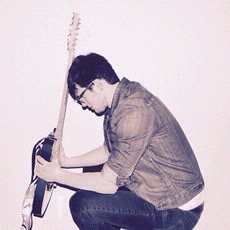
Harrison Bond – Honey (single, 2016)

On this blog, whether covering Mute acts or the various other things that I find myself writing about, it’s not often that I get to write about artists that are local to where I live near Milton Keynes. And so it’s refreshing for me to write about ‘Honey’, the debut proper single from Harrison Bond, a young, bespectacled singer / songwriter based round these parts who has been quietly building himself a reputation on the local gig circuit and who has now also started playing shows in London.
‘Honey’ serves as a stop-gap before a longer release later in the year, and showcases the style that Bond expects to permeate that record – namely sedate, gently drifting electronics blending seamlessly with guitar lines that betray a schooling in blues traditions. The instrumental intro to ‘Fingers’ is almost horizontal in its laidback outlook, shimmering synth patterns and summery guitar sounding somewhere between inclusive old-school Balearic chill and The KLF’s American road-trip on Chill Out.

The main track on the single, ‘Honey’, takes the same vibe but flattens the mood down into something more ephemeral, more opaque, balanced on that intriguing fault line between optimism and pessimism that writers like me get universally excited about. Bond’s restrained vocal here has the air of a confessional, combining quiet anguish and lovesick desperation in one tidy package.

Expect great things.

‘Honey’ is available at the iTunes Store.

(c) 2016 Mat Smith / Documentary Evidence
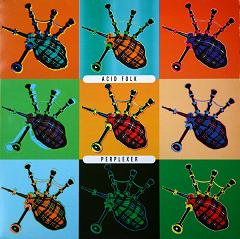
Perplexer – Acid Folk (DEF single, 1994)

perplexer_acidfolk

def | 12″/l12″/cd eef100 | 1994

A while ago a friend told me that every London map designer includes a fake road somewhere in their maps, the purpose being that it allows them to tell if anyone has copied their version illegally. One can only imagine how much of a wild goose chase you’d find yourself on if you actually tried to find that road or asked a cabbie to take you there.

I found myself thinking about that when a copy of Perplexer‘s ‘Acid Folk’ arrived through my letterbox in 2011. ‘Acid Folk’ is listed in my copy of Mute‘s Statement 2 2001 catalogue, but nothing about the CD tells you it’s a Mute release at all. No mention on the label, it doesn’t appear to be licenced, and the address for the record label is a completely different part of London from where Mute were based at the time. So I don’t know. Perhaps it’s just the version I bought, or maybe it was issued by Mute on behalf of the label (Deutsch-Englische-Fruendschaft, or DEF) without wishing to draw any attention to the Mute connection. Not much is known generally about DEF, but as they seemed principally to have been a home to Eskimos & Egypt prior to them releasing stuff on other labels, perhaps it was their own label; I’m pretty sure it was in no way connected to the management company, also known as DEF, that Moby was part of for most of his career.

But enough of the mystery. Perplexer’s public face was ‘enacted’ by Marc Olbertz. ‘Acid Folk’ was written and produced by Alexander Breuer, Andreas Schneider and Ramon Zengler; Zengler is most familiar to me as one half of the seminal Hardfloor, whose ‘Acperience’ EP was responsible for stimulating acid house’s second, enduring renaissance on dancefloors. Unsurprisingly, then, that ‘Acid Folk’ should have a lovely set of 303s running through it. However, it plays second fiddle to the bagpipe drone that dominates the track; that’s right, acid house meets traditional Scottish folk music. Just when it seemed that every possible novelty permutation of dance music had been exploited, along comes a track which mixes the sort of happy hardcore beats that used to get skinhead Dutch ravers very excited, bagpipes and acid house grooves. I used to think that you could add a 303 to anything and it would make it sound superb (see acid head Ege Bam Yasi’s How To Acid An Egg for evidence of that); that’s evidently not the case with bagpipes, or at least it doesn’t feel that way to me. I’ll be relatively upfront and say that I don’t really like ‘Acid Folk’.

The vocal mix is too fast for my liking, plus – despite some Scottish roots – I don’t really like the sound of the bagpipes anyway, so it’s sort of difficult to listen to; the Low-Speed mix is slightly slower and I would really love this mix were it not for the bagpipes, since it would just be a constant acid rush. I’m also not a fan of hardcore DJ Ellis Dee’s breakbeat-and-drone version although the rave stabs and 1992 ‘ardcore vibes are quite good.

The House mix starts with some nice sounds, a deep house beat / bassline and processes the bagpipe riff into the equivalent of the euphoric clipped sax samples that used to be a favourite of house producers back in the day. It’s my favourite mix overall, mostly because the bagpipes are treated and not too irritating; I was never a huge house fan back in the day and yet I really like this. The Pro-Gress mix is a bit all over the place for my liking, blending some ear-friendly aesthetics with some deeper sounds to create a hybrid that would probably appeal to fans of trance. Once again it’s the bagpipe drone that stops this from being better than it should be. I do find it quite strange – in 1994 remixers usually went out of their way to dispense with most of the original elements of a track yet here all the mixers keep the bagpipes in. There are other mixes available on the 12″ and limited remix 12″; I’m not that much of a Mute completist to bother with those for this release.

Perhaps I’m starting to understand why Mute didn’t properly affix their name to this after all…

My version of the CD single is now up for sale on Discogs.com under the username nominalmusics. If you’re desperate to own it, head here.

12″:
A1. Acid Folk (Low Speed Mix)
A2. Acid Folk (House Remix)
B1. Acid Folk (Vocal Mix)
B2. Acid Folk (DJ Tom & Norman Remix)

remix 12″:
A1. Acid Folk (Ellis D. Remix Edit 2)
A2. Acid Folk (Cream & Candy Remix)
B1. Acid Folk (Exit EEE Remix)
B2. Acid Folk (Pro-Gress Remix)

cd:
1. Acid Folk (Vocal Mix)
2. Acid Folk (Low Speed Mix)
3. Acid Folk (Ellis D. Remix Edit 2)
4. Acid Folk (House Remix)
5. Acid Folk (Pro-Gress Remix)

First posted 2011; edited 2016

(c) 206 Mat Smith / Documentary Evidence

The Killer Robots! Crash And Burn (Leomark Studios film, 2016)


This post has moved. You can now find it at Further. here.

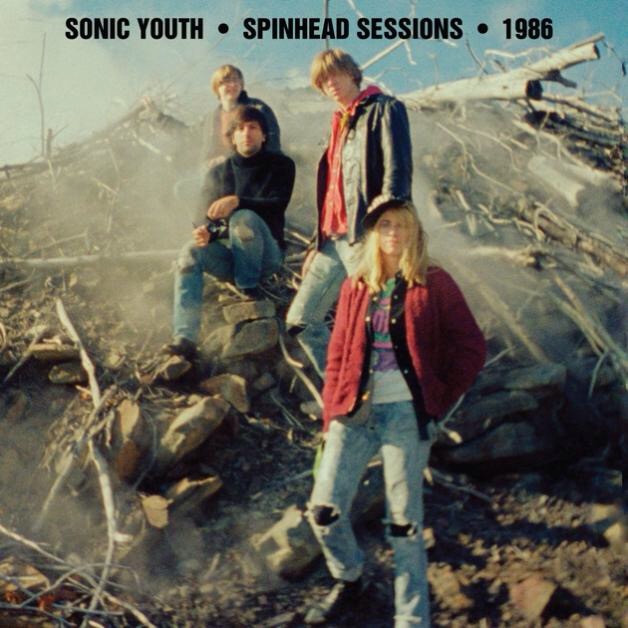
Sonic Youth – Spinhead Sessions (Goofin’ album, 2016)


The full sessions for Sonic Youth‘s unused soundtrack to Ken Friedman’s movie Made In The USA have finally seen the light of day, some thirty years after they were recorded. In the UK the band had recently signed to Paul Smith‘s Blast First imprint and were about to release their seminal Sister LP after replacing Bob Bert on drums with Steve Shelley.

Despite the transition they were just about to make, Spinhead Sessions – named for the studio where these instrumental tracks were recorded – has more in common with the spooky atmospheres of their Blast First debut Bad Moon Rising.
I reviewed this for Clash. The review can be found here.

(c) 2016 Mat Smith / Documentary Evidence for Clash

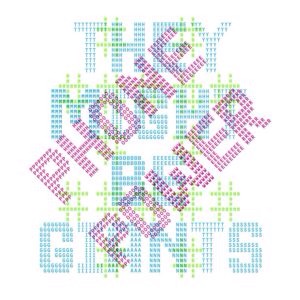
They Might Be Giants – Phone Power (LOJINX album, 2016)

Brooklyn’s They Might Be Giants can probably lay claim to being the first hipsters, back when their idiosyncratic take on pop was just branded ‘kooky’. Phone Power is the third in a series of albums released in the past year, racking up over fifty tracks across those releases.

I reviewed the album for This Is Not Retro. Read the review here.

(c) 2016 Mat Smith / Documentary Evidence for This Is Not Retro
Vince Clarke & Paul Hartnoll – 2Square (Very Records album, 2016)


Erasure‘s Vince Clarke has set up a record label, Very Records. His inaugural release is a collaboration with Paul Hartnoll from Orbital, an eight track album called 2Square. I reviewed the album for This Is Not Retro and my review can be read here.

While in New York a couple of weeks ago I had the great privilege of getting to interview Vince in his studio, with Paul joining us from Brighton by Skype. That interview will be included in the next issue of Electronic Sound, available through all decent UK newsagents in July.

(c) 2016 Mat Smith / Documentary Evidence for This Is Not Retro
Various – The Boston Creative Jazz Scene 1970 – 1983 (Cultures Of Soul book + album, 2016)

Just lately, I’ve found myself delving further and further into jazz music of all forms. I haven’t fully worked out yet how I came to persue this genre so avidly, but it’s become a major musical passion for me over the last five years. Caitlin Moran wrote recently in The Times about how your music taste atrophies in your thirties; in my case, as I race toward the conclusion of my thirties, the burning quest to still find new things to get excited about hasn’t diminished at all, but whereas at the start of this last decade of my life I was listening primarily to Mute, now I find myself more and more playing and buying jazz records.

One of the reasons it’s become so important for me is because I rarely ever write about it. Instead it’s become music I can just listen to without feeling compelled to document it in some way. Opportunities to review jazz records only come up at Electronic Sound if they stray into adventurous synth territory, and Clash never covers jazz – so I jumped at the chance to cover this book and album when it appeared on the monthly reviews list for the latter. 

This album covers the under-surveyed Boston avant-garde jazz scene of the Seventies and early Eighties via an authoritative book written by one of the scene’s central figures, accompanied by a CD featuring some of the artists whose careers the book highlights. For anyone who thinks that developments in jazz were confined to New York and Chicago, it’s an illuminating proposition.

My review can be found here.

(c) 2016 Mat Smith / Documentary Evidence for Clash