Mute 4.0: A Certain Ratio – The Graveyard And The Ballroom (Factory album, 1980)

As part of Mute‘s fortieth ‘anti-versary’, the label is making available very special limited edition vinyl versions of selected releases from their four decades of releasing and curating incredible music. Full details on the releases can be found here.

“All the energy of Joy Division but better clothes,” is how Steve Coogan, playing Factory Records founder Tony Wilson, described A Certain Ratio in the 24 Hour Party People movie. Whether Wilson said it or not is obviously debatable – though it sounds like the kind of thing he would say – but it rather did the band something of a disservice. Joy Division may have been poster boys for Wilson’s experiment in running a label (badly), but aside from both hailing from around Manchester, arising out of punk, sharing producer Martin Hannett and being signed to Factory, there’s very little that ACR and Joy Division had in common; but then again, Wilson was never one to let the facts get in the way of a decent quote.

ACR were formed in either Flixton or Wythenshawe in 1977, taking their name from a Brian Eno song. The Graveyard And The Ballroom was rush-released by Factory on cassette in January 1980, and consists of a side’s worth of Hannett-recorded demos from Graveyard Studios in Prestwich and a handful of live tracks recorded at Camden’s Electric Ballroom when ACR were supporting Ian Curtis and crew. As was the case with most Factory releases, Peter Saville designed the sleeve, though on this occasion he wasn’t credited. As a debut LP release, hitching together demos – presumably of tracks ACR had been gigging for a while – with live tracks is a curious one, and the band would only record their first album proper – To Each… – in 1981. The curiosity of its release aside, it nevertheless perfectly captured that energy that Wilson may or may not have spoken about.

In 1979, ACR were a five-piece group of Martin Moscrop (guitar / trumpet), Jez Kerr (bass / vocals), Donald Johnson (drums), Simon Topping (keyboards) and Peter Terrell (guitar). As evidenced on the seven live tracks that made up the B-side of the tape, ACR might have come out of punk, but their music was much more honed than might have been expected. Together, as heard on tracks like ‘Oceans’, they made a tight, very precise sound, genuinely worthy of the often-used punk-funk tag. During that track’s extended instrumental sections you can hear a sense of refined musicianship coming through, each player fluidly interacting with one another in a manner best observed among jazz groups. In Jez Kerr the band had a singer who eschewed the nasal, I’m-not-really-a-singer traits of most post-punk vocalists, possessing a soulful streak on the looser, more open-ended, jazzier tracks like ‘The Fox’ as opposed to a period snarl. The side opens with the sinewy ‘All Night Party’, ACR’s first single, with its manic, intensely irrepressible rhythm section, being all the more remarkable as a live track for originally not having a drummer on it at all when Factory issued it earlier in 1979.

The Electric Ballroom tracks were recorded from the mixing desk by Tony Wilson in October 1979, just over a month after Hannett oversaw the Graveyard sessions. If it’s possible for a band to develop and grow into their sound in a mere month, A Certain Ratio did that, and some. The demos are raw and sludgy, bereft of Hannett’s mystic prowess behind the mixing desk.

What they have though is a latent quality, something itching to get out, as exemplified by the controlled sound of ‘Flight’ compared to its longer, more flexible live rendition. It’s the only track from the studio sessions to make it to the Ballroom set, suggesting that either ACR had jettisoned most of these tracks in favour of an entirely fresh new batch of much better material, most of which would end up on To Each… Nevertheless, amid the seven studio tracks are some real gems, such as the edgy, wistful ‘Crippled Child’ or opener ‘Do The Du (Casse)’ and ‘Choir’, both of which seem to owe as much of a debt to Stax soul or Motown as they do the Sex Pistols.

In the years after Factory’s sloppy collapse, several labels – chiefly Creation and Soul Jazz – have had a crack at reissuing The Graveyard And The Ballroom. Mute began working with ACR in 2017, becoming custodians of the band’s entire catalogue across the several labels they’d found themselves on over the years, as well as presenting brand new material. It found the label doing precisely what they’d done for the likes of Throbbing Gristle and Cabaret Voltaire before, drawing a band’s entire body of work together under the careful jurisdiction of a genuinely artist-first imprint. For this album, Mute created a vinyl edition that linked back to the 1979 release, lovingly packaging the LP in a green PVC sleeve reminiscent of one of the versions of the the pouch that held the original cassette.
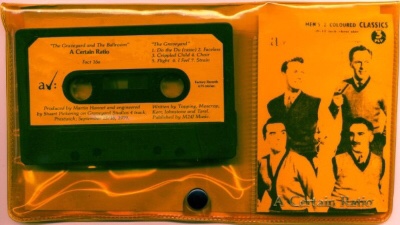
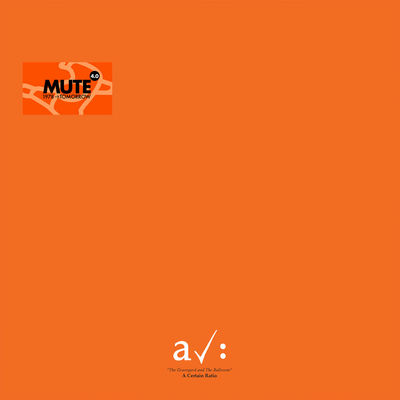
For Mute 4.0, The Graveyard And The Ballroom is being reissued as an orange LP edition in an orange PVC pouch, just like the original Factory cassette.

(c) 2018 Mat Smith / Documentary Evidence

Mute 4.0: Silicon Teens – Music For Parties (Mute album, 1980)

siliconteens_musicforparties2

As part of Mute‘s fortieth ‘anti-versary’, the label is making available very special limited edition vinyl versions of selected releases from their four decades of releasing and curating incredible music. To celebrate this element of Mute 4.0, we’re re-posting reviews of those special albums from the depths of the Documentary Evidence archives. Full details on the releases can be found here.

After launching Mute Records with his single ‘TVOD / Warm Leatherette’ as The Normal, few would have expected Daniel Miller‘s next musical move to be an album of (mostly) covers of old rock ‘n’ roll songs. But, then again, if you believed the liner notes Music For Parties by Silicon Teens wasn’t by Daniel Miller at all. Rather, the album was made by Paul (percussion), Diane (synthesizer), Jacki (synthesizer) and Daryl (vocals) and produced by Larry Least (a pseudonym Miller would use again as a producer for Missing Scientists and Alex Fergusson). Eric Hine and Eric Radcliffe provided engineering duties for the LP, half of which was recorded at Radcliffe’s Blackwing studio in London, the location for many early Mute recording sessions.

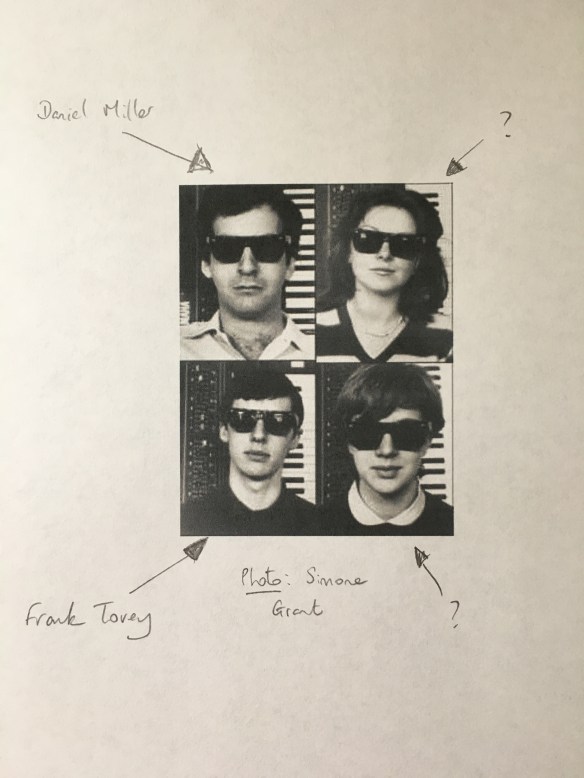
Not having been aware of Daniel Miller, Mute or anything much when this was released (I was four years old), I’m not sure if anyone was suckered in by the ruse at the time – by the time I fell in love with Mute in 1991, the secret (if it ever was one) was already out; Biba Kopf’s Documentary Evidence pamphlet made it completely clear that Silicon Teens was the work of one man and one man alone: Daniel Miller. Apparently, at the time, actors playing the fake quartet would be deployed for interviews. A promotional photo for the group, taken by Simone Grant, included two people whose names are now lost to the mists of time standing in for Diane and Jackie, with Miller and Fad Gadget’s Frank Tovey taking the roles of Daryl and Paul, all four sporting some very Velvet Underground shades.

2018-10-07 13.55.43

Anyone familiar with ‘Daryl’s particular brand of singing (nasal, a definite punk-informed delivery) would detect that this was a Miller project from the first lines of opener ‘Memphis Tennessee’; anyone familiar with his electronics work before and after would spot his unique synth work in the chirpy sounds and harsh dissonant interruptions. Anyone who didn’t, but was listening closely to the lyrics of one of the four Miller compositions here, ‘TV Playtime’, may have finally got the connection with the line ‘TV OD, video breakdown‘ delivered in a wobbly voice during one section of that track, while behind the watery voice malfunctioning synths not dissimilar to those deployed on Fad Gadget’s ‘Ricky’s Hand’ flutter and bleep.

To my shame, I only bought this in 2011, though I had bought the album’s three main 7″ singles years before that. I picked up a CD copy of the album from Rough Trade East and happened upon it in the ‘punk’ section; I scoffed at first, until I remembered that when I’d played the version of ‘Memphis Tennessee’ to my dad – an avowed Chuck Berry fan – he screwed his face up in disgust, as if the generally polite sounds of Miller’s version were somehow abrasive on the ears or that making an electronic facsimile copy of a rock ‘n’ roll track was like sacrificing a holy cow; it’s how I’d seen footage of people in punk documentaries reacting to the Sex Pistols, so perhaps Music For Parties was punk after all. Certainly, in ‘TV Playtime’ there is a dimension which evokes the uncompromising sound of Suicide and in turn the pre-Dare sound of Human League at their most uncompromising.

One of my favourite tracks here is Miller’s take on The Kinks’ ‘You Really Got Me’, where the proto-punk / garage rock central riff is replaced with a buzzing synth delivered over a simple motorik beat. If this had been released as a single it could potentially have been chart-bothering, compared with the slightly more bouncy ‘Just Like Eddie’ which apparently did reasonably well as a single. ‘Do Wah Diddy’ and ‘Do You Love Me’ again are brilliant; these were two tracks that I absolutely detested as a child when they cropped up on radio. The latter is frankly among the most manically joyous songs I own, even if it doesn’t start out that way. The album version of ‘Let’s Dance’ sounds like Depeche Mode‘s ‘Photographic’ in its Some Bizarre Album incarnation; like Soft Cell did with their 12″ version of ‘Tainted Love’ mixed with ‘Where Did Our Love Go?’, you almost long for someone to hitch the Teens and Mode tracks together. Irrespective, it’s very danceable, with some quite tasty big fat synth notes as well. The Ramones also covered ‘Let’s Dance’ for their début; when rendered on Ramones as amphetamine-fuelled speed-punk it made complete sense alongside their own ‘Beat On The Brat’, ‘Sheena Is A Punk Rocker’ and ‘Now I Wanna Sniff Some Glue’; here too, as a piece of high-energy synthpop, it likewise makes complete sense and the link to The Ramones’ version comes in as Miller snarls the ‘1, 2, 3, 4‘ intro.

Aside from the abrasive ‘TV Playtime’, Miller also contributes three other compositions to Music For Parties. ‘Chip ‘n Roll’ is an insanely upbeat synth pop gem, lots of handclaps and hissing hi-hats, as well as a gloriously twee main riff. It’s like Martin Gore‘s ‘Big Muff’ only way more poppy. ‘State Of Shock (Part Two)’ begs the question as to whether the Mute archives will ever turn up, or indeed if there ever was, a part one; this is a clanking, vaguely dark instrumental track with a stuttering rhythm and some squelchy sounds muttering away in the background. I’m not entirely what party you’d play this at; probably some dark, moody place where you’d be as likely to hear Kraftwerk nestled up alongside Throbbing Gristle and Cabaret Voltaire. Miller’s ‘Sun Flight’, originally a B-side to the ‘Just Like Eddie’ 7” and included here as a bonus track, is again reasonably dark and mysterious, the distorted chorus intonation of ‘Come to the sun‘ and some snatched radio conversation sounding like a course of action filled will danger, even if the main keyboard riff is singularly both captivating and entirely of its time.

Would an album like this ever get released today? Hardly likely. Music For Parties taps into a sense of kitsch excitement surrounding the relatively (then) untapped potential of the synth in a pop context. Prior to this, and other albums released at around the same time, the synth was mostly deployed by po-faced Progsters with lavish budgets to spend on huge modular synth behemoths. Music For Parties‘ most punk achievement was to take these songs from yesteryear, remodel them as cheeky pop tunes and inject some tradition-baiting lightheartedness.

For Mute 4.0, Music For Parties is being reissued as a vinyl LP.

First posted 2011; edited 2018. With thanks to Simone Grant.

MUTE4.0_V3

(c) 2018 Mat Smith / Documentary Evidence

Mute 4.0: VCMG – Ssss (Mute Artists album, 2012)

vcmg_ssss2

As part of Mute‘s fortieth ‘anti-versary’, the label is making available very special limited edition vinyl versions of selected releases from their four decades of releasing and curating incredible music. To celebrate this element of Mute 4.0, we’re re-posting reviews of those special albums from the depths of the Documentary Evidence archives. Full details on the releases can be found here.

Ssss is the minimal techno album collaboration devised by Depeche Mode‘s Martin L. Gore with original Depeche songwriter Vince Clarke, arriving over thirty years since the pair last worked together.

Vince was, at that time, one of the founding members of Depeche Mode who, in 1981, released Speak & Spell, one of that defining year’s great synthpop albums. Clarke’s departure from the band left Gore in charge of songwriting duties, a role that would allow him to move the band into far darker territory toward the dark electro-rock they are purveyors of today, while Vince has produced – with Alison Moyet as Yazoo and Andy Bell as Erasure – some of the best pop music of the last thirty years.

The idea of Clarke and Gore working together again seemed remote until Vince started mentioning their collaboration on Twitter. That project stemmed from Clarke listening to a lot of minimal techno – which itself seems remote until you consider the remixes of other artists Vince has submitted recently – and asking Gore if he’d like to work with him on a project in that style; he wanted it to be something casual, with no deadlines and no major expectations. Gore himself is a fan of the genre, as anyone who has heard his DJ mixes or heard the tracks he selects to be played just before Depeche Mode take the stage at one of their huge arena shows (always a strange thing to hear barely-there techno over the speakers at somewhere like the O2). Vince went out to his Twitter fanbase and asked what they should call the project and whilst I don’t know if the moniker VCMG was a tweeter’s suggestion, it nevertheless fits the project perfectly (personally, I liked my suggestion of calling themselves Speak & Spell in reference to the last time they worked together, but I’m not bitter).

Ssss was produced by Gore and Clarke and mixed by California’s Timothy Wilkes who goes under the moniker Überzone / Q. Wilkes’s involvement – and Stefan ‘Pole’ Betke’s mastering – adds a certain credibility to what could be seen as two long-in-the-tooth veterans dabbling in a genre that neither have a particular pedigree in.

Opener ‘Lowly’ starts with some chords that feel like they were borrowed from ‘Enjoy The Silence’ or ‘Never Let Me Down Again’ before a dark energy takes over, all buzzing, clamouring synths, solid beats and crunchy percussion. Some nice synth pads heighten the bleak, almost symphonic mood while some very Kraftwerkian pulses and squalls pop up in the background. ‘Lowly’ feels like one of the few tracks on Ssss where Gore slips into the pensive negativity that often creeps into his songwriting. ‘Windup Robot’ starts as one of the strongest tracks here, a shiny, sleek bass-heavy monster although it would have benefited from a touch of 303-style madness somewhere along the way.

‘Bendy Bass’, as its name suggests, has a bendy bass sound, crisp beats and some spinning, elastic synth sounds. The droning synths and wonky, hollow lead riff may be a bit overbearing for this to work on the dancefloor, but it’s engaging enough. The second half introduces a partial riff which reminds me of one of the 12″ remixes of Erasure’s ‘Chains Of Love’. ‘Recycle’ has a slowed-down, subtle sensuality to it, a throbbing bass sound and some neat synths that sound like Kraftwerk’s vision of what pure of electricity might sound like. The vaguely orchestral stabs and the dramatic section at the centre are a bit unnecessary, but ‘Recycle’ is nevertheless one of Ssss‘s best moments. Closing track ‘Flux’ features some nice, emotional riffs that wouldn’t go amiss on some of Depeche Mode’s more poignant moments, offset by percolating synths and hissing percussion.

As a purely ‘listening’ album, Ssss is not a disappointment; whether it would work in a Richie Hawtin club set is debatable, but as a collaboration between two electronic music stalwarts it is interesting and engaging stuff, and there’s no denying the quality of the synth design at work here. At times you do long for a more song-based collaboration, a chance to hear how Clarke would have wrapped his synths around Gore’s mournful lyrics, a Depeche Mode that never was, but that was clearly never the premise here (particularly as Gore is hardly the most prolific lyricist in the world). Nevertheless, there is a distinct sense of two musicians challenging each other by operating outside of their comfort zone, with very fine results indeed.

For Mute 4.0, Ssss is being reissued as an orange double LP edition.

First posted 2012; edited 2018.

MUTE4.0_V3

(c) 2018 Mat Smith / Documentary Evidence
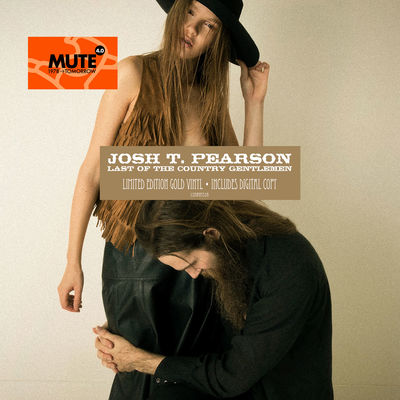
Mute 4.0: Josh T. Pearson – Last Of The Country Gentlemen (Mute Artists album, 2011)

joshtpearson_lastofthecountrygentlemen2

As part of Mute‘s fortieth ‘anti-versary’, the label is making available very special limited edition vinyl versions of selected releases from their four decades of releasing and curating incredible music. To celebrate this element of Mute 4.0, we’re re-posting reviews of those special albums from the depths of the Documentary Evidence archives. Full details on the releases can be found here.

Last Of The Country Gentlemen, Josh T. Pearson‘s much-anticipated début album, garnered all manner of positive reviews in the run up to its release. In a climate where everyone seemed to be focussed on the retro punk stylings of The Vaccines, it was pleasing to see that an album consisting mostly of heart-wrenching confessionals delivered by a singer over simple accompaniment (mostly guitar, some strings) could get so much positive praise. The album was preceded by a piano version of the track ‘Country Dumb’, the album version resplendent with guitars and violin instead of piano, a towering yet fragile ballad that stirs something deep within.

On a personal level, Last Of The Country Gentlemen‘s gentle, emotional grace is deeply affecting. I listened to this over a weekend where we had sold or given away some clothes, toys and other ephemera belonging to our two girls, in itself a moving experience, and Pearson’s songs of transition seemed to heighten the fragile mood I was in over the weekend.

Pearson’s voice is a beautiful thing to listen to. Occasionally whispered, occasionally rising with clarion quality, the consistent aspect is that he makes every single syllable, every word and every line count; everything that comes from his mouth is freighted with depth and sentiment. Though his Texan twang is a million miles away from Antony Heggarty’s vocal gymnastics, the two singers share the same talent for soaking their most basic utterances in something indefinable which can leave you feeling affirmed, tearful and empty after listening to their music; you will need to invest almost everything you have into listening to these songs, and you will feel utterly spent at the conclusion. One song is hard enough; eight songs is nigh on torturous.

Last Of The Country Gentlemen was, according to The Times review, written during a period of heartbreak, and there is a definite theme of separation running through the eight songs here (three of which are well over ten minutes in length). However, with the exception of the bitter (yet controlled) statement of intent ‘Woman, When I’ve Raised Hell’, soaked in strings arranged by Dirty Three and Bad Seeds / Grinderman violinist Warren Ellis that amplify the mood palpably, the theme does not appear to be one of regret at his loss; more, there is a resigned air of Pearson almost forcing a separation, for the benefit of his lover. The twelve minute ‘Sweeheart I Ain’t Your Christ’ is a case in point – throughout this song, Pearson is effectively advising his lover that she’d be better off without him. That sense of setting someone free, for their benefit, especially if they don’t realise it, is just about the hardest damn thing to do, a selflessness that is gut-wrenchingly moving.

That theme is somewhat at odds with the sleeve, which appears to show Pearson trying to prevent his lover – whose face is blank, emotionless, detached – from leaving. He is grasping her legs, eyes closed, as if he would rather be dragged across the gravel rather than let her go, but it fits with the heartbreak and torment evident in the songs here. The track ‘Honeymoon’s Great! Wish You Were Her’, is a song about marrying someone but still being in love with someone else; this is the closest Pearson gets to being frustrated with his lot (albeit, it seems, of his own doing), and there is a section where the strings come up in great big swells that make you sympathetic toward his conflict, not angry at his infidelity. ‘Sorry With A Song’ is Pearson’s apology, of sorts.

Something about these songs encourage you to believe that Pearson is telling you his story here; like a début novel, the roman a clef tends to be written mostly from personal experience and emotions, containing thinly-disguised autobiographical aspirations more than pure fiction. These songs seem so honest, so genuine, that you want to believe that this is Pearson’s own story being articulated across these eight songs in spite of the desperation, frustration and sorrow contained here. We would be faintly disappointed if this songwriting was found to be fictional.

Last Of The Country Gentlemen was recorded in Berlin, and mixed in London by Gareth Jones (although a couple of tracks were mixed by David ‘Saxon’ Greenep). There is a sense of hands-off production on these tracks, a sense of respect for the songs themselves and the outpourings contained within them. Presenting the songs ‘just so’ is a brave, yet powerful thing to do; the album thus has a stark innocence that leaves me well and truly floored whenever I listen to it.

Special edition: Rough Trade Christmas Bonus

Mute released Last Of The Country Gentlemen again in November 2011 with a second disc of Josh T. Pearson performing a selection of Christmas songs, the occasion being Rough Trade Shops placing his album at the top of their 2011 album chart. The expanded version was only available from Rough Trade. To celebrate the release of Pearson’s Rough Trade Christmas Bonus, Rough Trade East printed up a special rubber curtain containing the picture from the Christmas EP’s sleeve to cover their front entrance.

The thing with Christmas carols is that they can often have an air of sadness about them; few have an obvious joyousness, though all have an inherent beauty. As such, Josh T. Pearson is well-suited to delivering the five songs he intimately performs here. Last Of The Country Gentlemen had few naturally uplifting moments, though – as evidenced by the live LP (again, only released through Rough Trade Shops) The King Is Dead – Pearson himself is actually pretty light-hearted and self-deprecating. Here we find him struggling while trying to pluck the notes to a lovely rendition of ‘Silent Night’, unaware that his musings are being recorded, cocking up the introduction to ‘Angels We Have Heard On High’ and delivering a faultless accapella rendition of ‘Away In A Manger’, which masterfully rescues the carol from thousands of painful school nativities. Likewise, his bluesy rendition of ‘O Little Town Of Bethlehem’ moves the song away from the tuneless butchering of this carol by assembled toddlers and into masterful, graceful territory. In defiance of his image as a humourless misanthrope, he even adds a wee coda of ‘Jingle Bells’ at the very end.

‘O Holy Night’ is testament to how Pearson can take a song that’s not his own and add his own distinctive style to create something utterly original. Here his reading sits somewhere between the melancholy grandeur of Last Of The Country Gentlemen and the more introspective aspects of the Rufus Wainwright back catalogue. In a burst of seasonal goodwill, an alternative version of of ‘O Holy Night’ was made available for free from Pearson’s own website.

For Mute 4.0, Last Of The Country Gentlemen is being reissued as a gold double LP edition.

First posted 2011; re-edited 2015; re-posted 2018

MUTE4.0_V3

(c) 2018 Mat Smith / Documentary Evidence

Mute 4.0: Apparat – The Devil’s Walk (Mute Artists album, 2011)

apparat_thedevilswalk2

As part of Mute‘s fortieth ‘anti-versary’, the label is making available very special limited edition vinyl versions of selected releases from their four decades of releasing and curating incredible music. To celebrate this element of Mute 4.0, we’re re-posting reviews of those special albums from the depths of the Documentary Evidence archives. Full details on the releases can be found here.

The Devil’s Walk, Sascha Ring‘s first Apparat album for Mute Artists is perhaps one of the most absorbing and moving pieces of music I’ve ever had the privilege of listening to. I write this like I’m surprised somehow, but I shouldn’t have been. I bought all three singles before the album was released (‘Ash / Black Veil’, ‘Black Water’ and ‘Song Of Los’) and with each one found myself deeply affected by the way those songs played subtly with my emotions. Thus expectations were raised fairly high from the beginning for The Devil’s Walk, though with that came the fear that the mood of those three tracks couldn’t be sustained across a whole LP. That fear was unfounded; it can.

That said, I’ve not finding it especially straightforward to write about The Devil’s Walk, since the exact word that I’m looking for to describe this album fails me. What I do know is that there is a sense of unifying sadness, making the album less about individual tracks and more about the overall sound. Uplifting moments are frequent, but fleeting and unexpected. Tracks will be progressing along a introspective, reflective path and then, out of nowhere, a subtle chord change will allow the light to seep in ever so slightly and just briefly, lifting the mood somehow; yet that inward-looking feeling is still there, underneath, meaning that those bursts of comparative euphoria, when listened to more closely, are never actually that uplifting after all.

iTunes and Mute Bank‘s website classifies The Devil’s Walk as an ‘electronic’ album, which to me creates a totally incorrect perspective on this album. Sure, it has electronic elements and I dare say a lot of this LP came about after tinkering with recorded sounds and vocals in some software package on a shiny Macbook, but in terms of instrumentation that tag doesn’t come close to describing this album. There are guitars – looped, acoustic passages; electric guitar patterns; what sounds like Stars Of The Lid / Labradford drones and distortion overtones; possible plucked ukulele riffs – reeds, harmonium sounds, strings and percussion that sounds like Photek dismantling an alarm clock or Matt Herbert recording breaks made entirely from the contents of his kitchen drawer. And everything comes with layer upon layer of slowly-evolving sound.

Sometimes those layers produce something like the opener ‘Sweet Unrest’, wherein the final layer to be added is some dreamy choral vocals, giving this an icy spirituality. Sometimes it’s the dark reverb of ‘Goodbye’, where that Labradford connection manifests itself with some clanging Spaghetti Western guitar sounds in the vein of that band’s E Luxo So, only with a constant bass drum rhythm that is felt more than heard. Those subtle chord changes and hypnotic vocals (from Anja Franziska Plascha) give this an exquisite poignancy and a heart-wrenching quality. Sometimes those layers produce the strained, almost Massive Attack stasis of ‘Candil De La Calle’ where shimmering vocals play alongside a multi-channel percussion restlessness of amazing intricacy.

‘The Soft Voices’ blends layers of piano, possibly a dulcimer and a murmuring guitar sound in a way that I read about Brian Wilson perfecting on Pet Sounds, whereupon he took Phil Spector’s methodology of layering sounds to a new level, leaving the listener questing to know what this strange instrument they were hearing actually was, when it was in fact many instruments layered atop one another. Perhaps the knackered short wave radio sound in the background is Sascha Ring’s homage to ‘Good Vibrations’; strings arrive unexpectedly; drums that wouldn’t have sounded out of place on Tubular Bells kick in; a sense of euphoria is reached, only to dissipate suddenly, leaving a wobbly bass noise and a fractured vocal from Ring. ‘Escape’ is delicate balladry, an emotive vocal and lots of constantly-shifting, constantly-evolving loops; it’s the type of song that requires concentration to identify the fact that it is indeed constantly developing, while the addition of strings and ethereal harmonies gives this a filmic quality.

Referencing Tubular Bells above, perhaps ‘A Bang In The Void’ is some sort of cross-generational electronica-weaned response to Mike Oldfield’s proggy opus, via Terry Riley’s In C. It takes a while to scale up via goodness-knows how many layers of pretty melodic sounds – I can’t work out what the instrument is or isn’t – and reaches a midpoint whereupon a broken trumpet pattern kicks in. I’m also reminded of Erasure‘s ’91 Steps’, as it shares some of the muted drama of that B-side.

Closer ‘Your House Is My World’ feels like it’s been lifted straight from a soundtrack to an indie flick that hasn’t been made yet, or maybe Grizzly Bear’s soundtrack to Dedication; very Yann Tiersen; very subtle; very processed; very dramatic; I have run out of superlatives. I am frankly exhausted from over-thinking about what that one word, that one crucial word is that describes this album.

The album was released in a gorgeous limited edition book CD format which includes lots of Gothic imagery, including a child-scaring etching on the front cover straight from an M.R. James ghost story. It also contains all the lyrics, and a read of those reveals the word I was looking for all along in this review – ephemeral. The atmosphere on The Devil’s Walk is one of ephemerality. Phew, I’m glad we resolved that. The limited CD format also includes the bonus track ‘The World Around You’ which is how Tears For Fears would have sounded if they’d been fed a diet of glitchy drone electronica.

For Mute 4.0, The Devil’s Walk is being reissued as a violet LP edition.

MUTE4.0_V3

First posted 2011; edited 2018.

(c) 2018 Mat Smith / Documentary Evidence

Bruce Gilbert – Monad (Touch single, 2011)

brucegilbert_monad

I was really looking forward to this release, I have to say. There is something about deeply experimental music being released on a 7” single that for some reason really appeals. I think it’s because the 7″ is so ordinarily suited to the ‘pop’ track that to hear anything other than pop music on a 7″ is quite exciting. Touch‘s Sevens series has included short releases by the likes of ex-Cabaret Voltaire sound recordist Chris Watson and Pan Sonic‘s sorely missed Mika Vainio. Bruce Gilbert‘s association with the label goes back many years, with albums like The Haring getting released on Touch (it was subsequently re-released by WMO). More recently the ex-Wire guitarist – as part of the group Souls On Board – took the B-side of a live split album with Savage Pencil, released on Touch sub-label Ash International. Monad is housed in a sleeve designed by Jon Wozencroft (as are most Touch releases) and lists out the instruments and tools Gilbert used boldly on the front (Korg Monotron Analogue Ribbon synth, Zoom RFX-200, Korg Kaos Pad 2, Apple GarageBand); there’s also a diagram by Gilbert himself on the back.

I looked up the definition of the word ‘monad’ and its meanings vary from being a small, single-celled organism, to – according to Leibniz’s metaphysics no less – an indestructible entity that is the ultimate fabric of the universe. This confusing word has little bearing on the two tracks included on the single, unless they refer to the songs as being solid and reasonably impenetrable soundscapes or their short duration (at 45rpm both are around two-and-a-half minutes long apiece).

‘Ingress’ is a dense drone whose layers are not immediately obvious unless you really concentrate; if you listen deeply you will pick out the various shifts in sound across the piece’s length, the changes in tone and the rich tug of the bass drone. The best way to describe ‘Ingress’ would be as an approximation of what loading tapes into a ZX Spectrum used to sound like, only this is more measured, more deliberate and more ostensibly ‘composed’ than that noise.

Over on the B-side, ‘Re-Exit’ is less constant, consisting of a throbbing, echoing bass loop offset by buzzing noises and a phasing, quiet drone out in the background. The bass loop provides a rhythm of sorts, but in essence its more of a thick pulse. It’s a style that Gilbert has deployed a number of times, both in his solo work and also with Graham Lewis as Dome. In it’s own, pretty sinister way, it’s beautiful.

First posted 2011; edited 2018.

(c) 2018 Mat Smith / Documentary Evidence

Nick Cave & The Bad Seeds – The Boatman’s Call (Mute album, 1997)

nctbs_boatmans

I was tempted to write this review with just one word. That word is ‘beautiful’. Written by Nick Cave at exactly the same time as Murder Ballads, these songs were written with simplicity in mind, and as such the majority of these superior compositions feature a stripped back Bad Seeds, and a heavy dose of piano. The contrast with Murder Ballads could not be greater, taking a deeply intimate, romantic and often spiritual tone. No one dies here, one may be relieved to know.

But maybe a little part of Nick Cave died in order to make a collection of songs; that part of him would be the preacher, the aggressor, the dervish spirit howling and caterwauling over a maelstrom of sensational music. It genuinely isn’t a criticism – I happen to think that this is among Cave’s finest work. Everything about The Boatman’s Call is black and white – the Johnny Cash-esque Anton Cobijn photo of a particularly harrowed Nick Cave on the front cover, through the predominance of the piano keys across the LP, through to the downright clarity of Cave’s songwriting. What’s most clear about The Boatman’s Call is the often obvious theme of these songs, for this is Nick Cave’s most directly personal collection of songs, from the post-PJ Harvey reflectiveness of the quirky folk leanings of ‘West Country Girl’ and ‘Black Hair’, through to his ruminations on his failed marriage on ‘People Just Ain’t No Good’ or ‘Where Do We Go Now But Nowhere’.

However, aside from a fair amount of openness from our tortured songsmith, The Boatman’s Call also features two generally beautiful love songs – ‘Lime Tree Arbour’ and ‘Brompton Oratory’. Like much of the album, these have a musical accompaniment from The Bad Seeds that is directly informed by subtle jazz but the latter also features a perfectly twee Casio rhythm that sounds like it survived from Cave’s original demo. The latter describes a trip made by Cave to Kensington’s famous, and imposing, landmark, and finds Cave wishing he were one of the stone apostles therein, just so that he wouldn’t have to deal with his muse’s intense beauty. It perfectly captures the intensity of romance’s first flourishes, that feeling of not being able to cope anymore. ‘Lime Tree Arbour’ is just mystical and beautiful, its waterside setting making me think of Murder Ballads‘ ‘Where The Wild Roses Grow’, with all the same romantic longings, just none of the death; an alternative ending, perhaps?

The album features the full Bad Seeds line-up (Mick Harvey, Blixa Bargeld, Thomas Wydler, the late Conway Savage, Martyn P. Casey, Jim Sclavunos and Warren Ellis), albeit in controlled doses, and benefits from an unusually restrained production job from Flood, who also produced the oft-slated U2 album Pop the same year. The style of production is subtle and delicate, and Cave’s vocal is dominant in the mix, casting a personal, intimate shadow over proceedings. It feels like a one-to-one connection between the narrator and sympathetic listener. Warren Ellis’ violin is also an important element here, receiving greater space in the mix than it had been given previously, bestowing the gypsy folk of ‘West Country Girl’ with a rabidly maudlin edge. His work on ‘Idiot Prayer’, perhaps the track closest to a classic Bad Seeds ballad sees his violin overtaking Blix’s fuzzy guitar as lead instrument, a sign of the sea change that was to come.

I have my own, highly personal reasons, for counting this among my favourite albums of all time. Suffice it to say, many years on, it’s the more miserable tracks here – like ‘Far From Me’ – that I find myself reflecting on when I think of that period in my life. ‘Can’t you find somebody else / That you can ring and tell?’, Cave sings on that penultimate, delicately poignant song. Wise words that I wish my younger self had heeded.

First published 2004; edited 2018.

(c) 2018 Mat Smith / Documentary Evidence

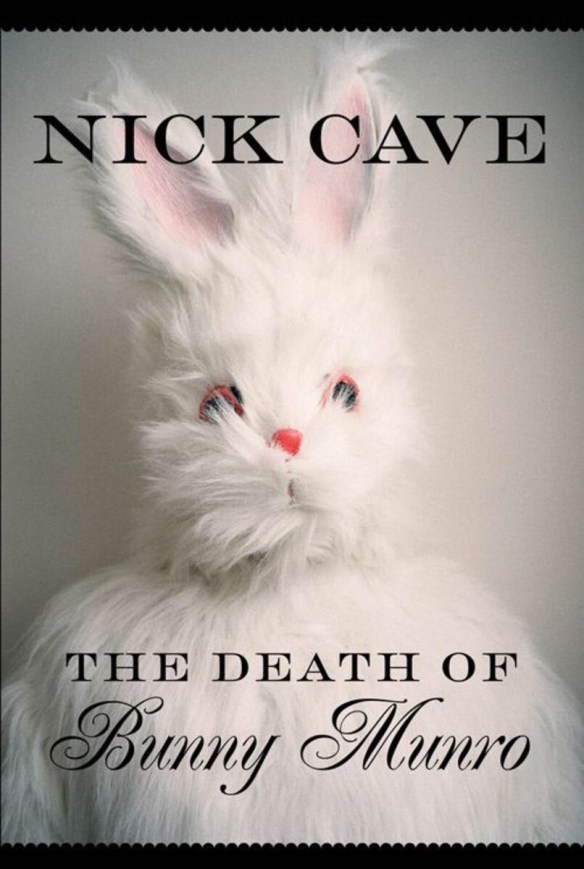
Nick Cave – The Death Of Bunny Munro (Canongate book, 2009)

There are lots of questions that I ask myself while reading Nick Cave’s second novel.

The first is that I wonder what Cave’s wife must think of it. It is to her that this book is dedicated, and yet its lead character – the Bunny Munro of the title – is an adulterous, volatile and decidedly nasty piece of work; lewd, crude and morally corrupt, whose first marital indiscretion is to grope his sister-in-law on the very day that he brings his son home from the hospital. This sets in motion Munro’s wanton and unquenchable infidelity, all of which is only exacerbated by his wife’s early suicide. I think, if I wrote something like this, and even if I claimed it as art, I’d find myself taking up new residence at a family solicitor’s office, but maybe my wife is less tolerant than Cave’s.

The second is that I wonder what Nick Cave’s friend Kylie Minogue would think of this. Her ‘Spinning Around’, and the attendant gold hot pants from the song’s video, are recurrent objects of Munro’s attention throughout this book. Alongside friends and collaborators John Hillcoat and Warren Ellis, Cave offers thanks and apologies to Minogue – and Avril Lavigne, who is the subject of yet worse and morally reprehensible narrative – but it still feels a bit, well, icky. They clearly still get on, but even if the defence is that this is fiction, the voice of a character etc, it’s still written by one of her friends.

Finally, I wonder whether you could even write a book like this today. The world seems today spins on a different axis, one focussed ever more acutely on equality and where sexual abuse is no longer trivialised. Munro is not precisely misogynistic; I think he would argue that he simply loves women (a lot, frequently), and sex with women even more so, albeit even he recognises that it is like an addiction.

Nevertheless, he’s patently abusive toward his long-suffering and doomed, tolerant wife, Libby, and as the book progresses you begin to view Munro as less of a wild 2000s laddish and opportunistic Casanova and more of a dangerous sexual predator, underscoring your initial impression that Munro is a unlikeable, horrible character; the worst type of man, and the type of man that today’s society would not tolerate. Even the act of reading it left me feeling strangely complicit with anyone turning a blind eye to the whole #metoo thing, as if I was listening to a 1970s comedian ripping through a repertoire of racist and sexist ‘jokes’. And I’m not sure that passing this off as ‘art’ really washes its face on that basis.

Given the title, it’s no giveaway that Munro doesn’t make it through to the end of the book; he meets a particularly messy demise on the front end of a cement mixer, and then his lot worsens when up jumps the devil himself and decides to do unto Bunny what he has done to many women. Strangely, for all his terrible ways, you feel briefly sorry for the man; there is moment where he realises how bad he has been, how he tortured his wife, how he has been less than solid as a father to his son, and not a remotely good son to his equally despicable father. But that feeling is brief, fleeting, and in the end you’re just glad he met his maker, momentary pause for forgiveness and redemption aside.

Like Cave’s first novel And The Ass Saw The Angel – written during his drug-ravaged Berlin years – The Death Of Bunny Munro is a difficult read; And The Ass… required patience and undivided attention because of its deployment of a complicated Southern dialect, and I recall spending what felt like my entire early twenties wading through the book when I read it at university twenty odd years ago (I still haven’t re-read it). The Death Of Bunny Munro is different; shorter, but no less easy to read. In the place of tricky dialogue is the almost constant focus on sex, every page seeming to contain some sort of overt reference to coitus that never once feels sexy.

Perhaps Cave conceived this book as a statement of sorts. I don’t know. I haven’t bothered to look up any interviews he might have done around its publication, and I don’t particularly want to be forced to re-evaluate my repulsion for the sake of art. Nevertheless, for all its intensely nauseating detail, Cave remains a master of vivid prose, and the book is imbued with the same richness of language that his songs are. Amid the maelstrom of ugly detail, Cave somehow finds the space to draw out the powerful unconditional love Munro’s young, troubled and gifted son has for his father, even as he leaves him sat alone in a car in an unpleasant Sussex neighbourhood while his father tends to his despicable business.

Despite receiving this as a Christmas present from my parents in 2009 – I only hope they didn’t decide to read further than the frontispiece when they were writing their note to me in the front – I only just got around to reading this as part of an effort to get through many books, like this, that have sat unread on my shelves. Just like with And The Ass Saw The Angel, I won’t be rushing back to read it.

(c) 2018 Mat Smith / Documentary Evidence
The Residents – I Am A Resident (Cherry Red album, 2018)

I am not the best writer for this piece.

I know, conservatively, less than half a percent of The Residents’ songs, own a diminutive fraction of their 60-odd album releases and would struggle to identify some of their purportedly best-loved songs in a line-up, much as I – or indeed anyone – would struggle to identify an umasked Resident member in a line-up. Accordingly, given that I Am A Resident is almost entirely constructed from songs from The Residents’ extensive back catalogue, I hereby submit, once again, that I am not the best writer for this piece.

I am also the best writer for this piece for precisely the same reason.

I Am A Resident is both by The Residents, and not by The Residents. Its songs are constructed from cover versions of Residents songs, performed by a bunch of underground artists whose names read like they belong on Nurse With Wound’s infamous list, signifying just how prevalent the still semi-mythical San Francisco unit are as influences on what we might define as musical outsiderism. The tracks were then dissected, rebuilt, layered, and augmented with new sounds by The Residents themselves, thus creating something new out of other people making new stuff out of old stuff that you might or might not know. A Residents ‘best of’, both by The Residents, and not by The Residents. New, old, and new-old.

Got it? Good.

If you’re remotely interested in art history, think of this as sitting somewhere on the Warhol-Rauschenberg axis – Warholian because it involves enlisting the support of other people to make the art for you in your name, Rauschenbergian because it’s a collage of repurposed material that Bob would’ve approved of.

Bookended by two faux radio idents presented by DJ Denver Dolittle that sound like they belong on Welcome To Night Vale, the five long tracks here don’t feel like anything other than complete pieces, even though they are stitched together with a turntablist’s frenetic, magpie-like zeal. It’s messy, for sure, but done in a way that implies lots of painstaking studio polish. Like The Residents’ own material, what you get here are lots of musical ideas reflecting back their own relatively borderless and unconstrained approach to sound – wonky, crunchy electronica colliding with scratchy rock colliding with freaky jazz colliding with vaudevillian humour colliding with over-amped rawk colliding with a quintessentially Bay Area take on musique concrète. I’ve now listened to it countless times, and the material is no less familiar ten plays in than the first time I played it, and lots of new details seem to emerge with each and every play.

A special edition two-CD version came with 24 tracks of what is presumably the source material for the collage pieces. At some point when I have more time I’ll listen to each of those tracks alongside the original versions to compare them, but in my head – at least – they’re a mixture of faithful renditions and highly original takes on what would, in other circumstances, be considered uncoverable songs – not because they’re sacred, per se, but because they’re not necessarily the easiest of songs to cover. There’s a reason why The Residents aren’t natural Karaoke artists, although, on the recorded evidence, lots of these guys would pitch up at that weird Karaoke bar night after night.

“In true Residents form, we don’t always follow the rules,” says Dolittle on the concluding radio segment, which is stating the obvious, of course. “Just as it’s always been – the eye is on you,” he concludes. The inference is thus: I am a Resident, she/he is a Resident, you are a Resident and, heck, we can all be Residents, if we so wish… or, in the case of this wonderfully odd LP, if your cover version happened to be among those picked for the source material for this album.

(c) 2018 Mat Smith / Documentary Evidence

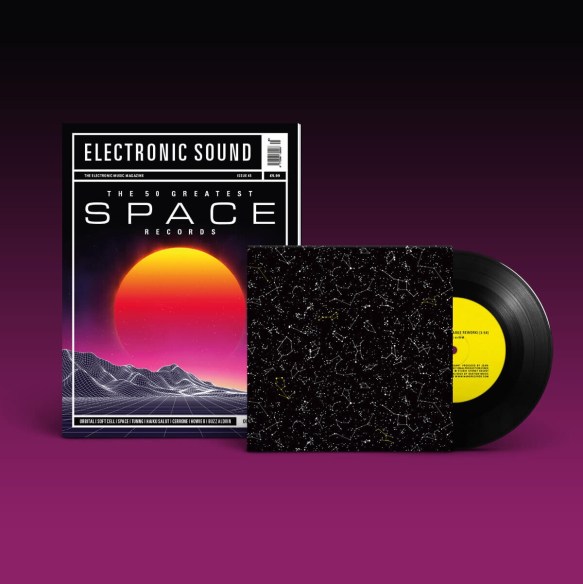
Electronic Sound Issue 45

The ‘bundle’ edition of Electronic Sound 45 has already sold out, which means that if you didn’t buy it already, you’ve missed out on the opportunity to hear the exclusive Vince Clarke remix of ‘Magic Fly’ by Space that formed the A-side of the accompanying 7″ single. And believe me, that’s a pity – it ranks among Mr Clarke’s finest remixes and you’ll now probably never get to hear it. The B-side was the wonderful and moving ‘Before’ by Vince’s VeryRecords signing Reed & Caroline, marking the duo’s first time on a vinyl record.

For this issue I interviewed Didier Marouani, the classically-schooled musician behind the mysterious space helmet-wearing Space, marking one of those privileged opportunities that this magazine often gives me to write a story that hasn’t really ever been told before. My mum was dead proud too, because she bought ‘Magic Fly’ when it first came out in 1977 (I was a mere year old), and I think she believes that this had a major influence on my later interest in electronic music – and she’s probably right.

Elsewhere, for this issue I wrote reviews of albums by Julia Kent & Jean DL, Ghostly signings Helios, the marvellous Dutch group Go March, and Welsh non-pop artists HMS Morris. I also got the chance to review two absolutely stonking records – a jazz opus by Bugge Wesseltoft & Prins Thomas, and O.Y. In Hi-Fi by Optiganally Yours, fast becoming the record I’ve played more than any this year. The record was constructed principally from the original master tapes of sounds that would be used in Mattel’s Optigan, meaning it was made with sounds from the Optigan but in a high resolution form that the Optigan itself could never deliver.

And linking that back around to the 7″ you sadly can’t listen to – Pea Hicks from Optiganally Yours is the custodian of the only equipment in existence to manufacture optical discs for the Vako Orchestron, the zany professional version of the Optigan which Reed Hays used on Reed & Caroline’s Hello Science, turning Caroline Schutz’s vocal into lo-fi textural loops.

The non-bundle version of issue 45 is available at www.electronicsound.co.uk

(c) 2018 Mat Smith / Documentary Evidence for Electronic Sound