The Residents – I Am A Resident (Cherry Red album, 2018)

I am not the best writer for this piece.

I know, conservatively, less than half a percent of The Residents’ songs, own a diminutive fraction of their 60-odd album releases and would struggle to identify some of their purportedly best-loved songs in a line-up, much as I – or indeed anyone – would struggle to identify an umasked Resident member in a line-up. Accordingly, given that I Am A Resident is almost entirely constructed from songs from The Residents’ extensive back catalogue, I hereby submit, once again, that I am not the best writer for this piece.

I am also the best writer for this piece for precisely the same reason.

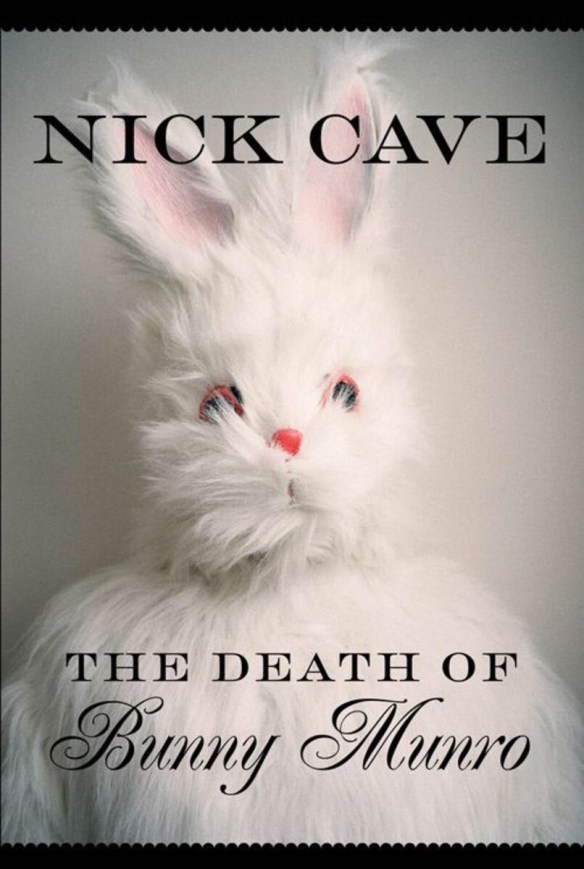
I Am A Resident is both by The Residents, and not by The Residents. Its songs are constructed from cover versions of Residents songs, performed by a bunch of underground artists whose names read like they belong on Nurse With Wound’s infamous list, signifying just how prevalent the still semi-mythical San Francisco unit are as influences on what we might define as musical outsiderism. The tracks were then dissected, rebuilt, layered, and augmented with new sounds by The Residents themselves, thus creating something new out of other people making new stuff out of old stuff that you might or might not know. A Residents ‘best of’, both by The Residents, and not by The Residents. New, old, and new-old.

Got it? Good.

If you’re remotely interested in art history, think of this as sitting somewhere on the Warhol-Rauschenberg axis – Warholian because it involves enlisting the support of other people to make the art for you in your name, Rauschenbergian because it’s a collage of repurposed material that Bob would’ve approved of.

Bookended by two faux radio idents presented by DJ Denver Dolittle that sound like they belong on Welcome To Night Vale, the five long tracks here don’t feel like anything other than complete pieces, even though they are stitched together with a turntablist’s frenetic, magpie-like zeal. It’s messy, for sure, but done in a way that implies lots of painstaking studio polish. Like The Residents’ own material, what you get here are lots of musical ideas reflecting back their own relatively borderless and unconstrained approach to sound – wonky, crunchy electronica colliding with scratchy rock colliding with freaky jazz colliding with vaudevillian humour colliding with over-amped rawk colliding with a quintessentially Bay Area take on musique concrète. I’ve now listened to it countless times, and the material is no less familiar ten plays in than the first time I played it, and lots of new details seem to emerge with each and every play.

A special edition two-CD version came with 24 tracks of what is presumably the source material for the collage pieces. At some point when I have more time I’ll listen to each of those tracks alongside the original versions to compare them, but in my head – at least – they’re a mixture of faithful renditions and highly original takes on what would, in other circumstances, be considered uncoverable songs – not because they’re sacred, per se, but because they’re not necessarily the easiest of songs to cover. There’s a reason why The Residents aren’t natural Karaoke artists, although, on the recorded evidence, lots of these guys would pitch up at that weird Karaoke bar night after night.

“In true Residents form, we don’t always follow the rules,” says Dolittle on the concluding radio segment, which is stating the obvious, of course. “Just as it’s always been – the eye is on you,” he concludes. The inference is thus: I am a Resident, she/he is a Resident, you are a Resident and, heck, we can all be Residents, if we so wish… or, in the case of this wonderfully odd LP, if your cover version happened to be among those picked for the source material for this album.

(c) 2018 Mat Smith / Documentary Evidence

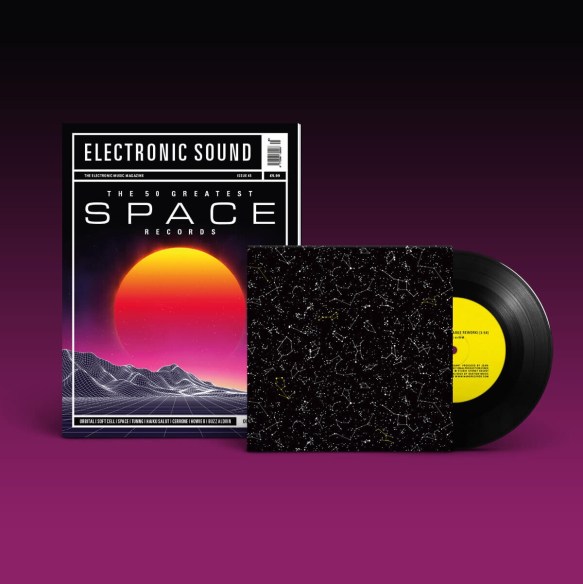
Electronic Sound Issue 45

The ‘bundle’ edition of Electronic Sound 45 has already sold out, which means that if you didn’t buy it already, you’ve missed out on the opportunity to hear the exclusive Vince Clarke remix of ‘Magic Fly’ by Space that formed the A-side of the accompanying 7″ single. And believe me, that’s a pity – it ranks among Mr Clarke’s finest remixes and you’ll now probably never get to hear it. The B-side was the wonderful and moving ‘Before’ by Vince’s VeryRecords signing Reed & Caroline, marking the duo’s first time on a vinyl record.

For this issue I interviewed Didier Marouani, the classically-schooled musician behind the mysterious space helmet-wearing Space, marking one of those privileged opportunities that this magazine often gives me to write a story that hasn’t really ever been told before. My mum was dead proud too, because she bought ‘Magic Fly’ when it first came out in 1977 (I was a mere year old), and I think she believes that this had a major influence on my later interest in electronic music – and she’s probably right.

Elsewhere, for this issue I wrote reviews of albums by Julia Kent & Jean DL, Ghostly signings Helios, the marvellous Dutch group Go March, and Welsh non-pop artists HMS Morris. I also got the chance to review two absolutely stonking records – a jazz opus by Bugge Wesseltoft & Prins Thomas, and O.Y. In Hi-Fi by Optiganally Yours, fast becoming the record I’ve played more than any this year. The record was constructed principally from the original master tapes of sounds that would be used in Mattel’s Optigan, meaning it was made with sounds from the Optigan but in a high resolution form that the Optigan itself could never deliver.

And linking that back around to the 7″ you sadly can’t listen to – Pea Hicks from Optiganally Yours is the custodian of the only equipment in existence to manufacture optical discs for the Vako Orchestron, the zany professional version of the Optigan which Reed Hays used on Reed & Caroline’s Hello Science, turning Caroline Schutz’s vocal into lo-fi textural loops.

The non-bundle version of issue 45 is available at www.electronicsound.co.uk

(c) 2018 Mat Smith / Documentary Evidence for Electronic Sound
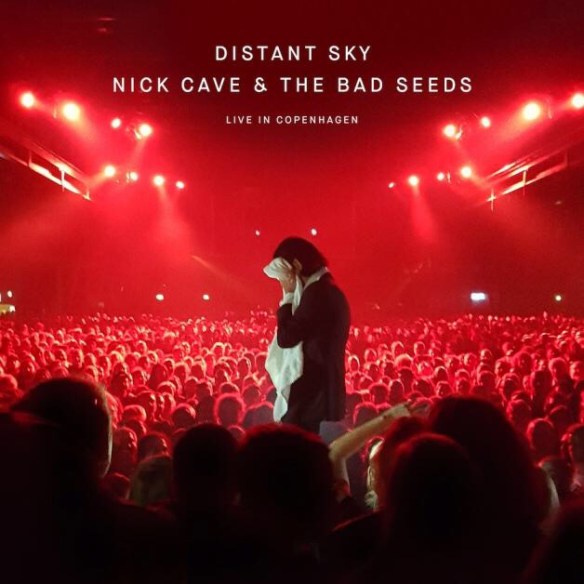
Nick Cave & The Bad Seeds – Distant Sky (Live In Copenhagen) (Bad Seed EP, 2018)

It’s been a while since I wrote about Nick Cave & The Bad Seeds – I think the last thing I put online was a not especially positive review of Push The Sky Away, and Skeleton Tree consequently just passed me by. I feel that I’ve rectified that with this review of the new Distant Sky (Live In Copenhagen) EP that was released last Friday.

You can read my review for the Clash website here.

I also reviewed the new Marianne Faithful album for the latest print issue of Clash, which features a wonderful new composition – ‘The Gypsy Fairie Queen’ – co-written with Cave; Marianne’s new LP was co-produced by Bad Seed stalwart Warren Ellis.

(c) 2018 Mat Smith / Documentary Evidence for Clash
Daniel Blumberg (Clash interview, 2018)

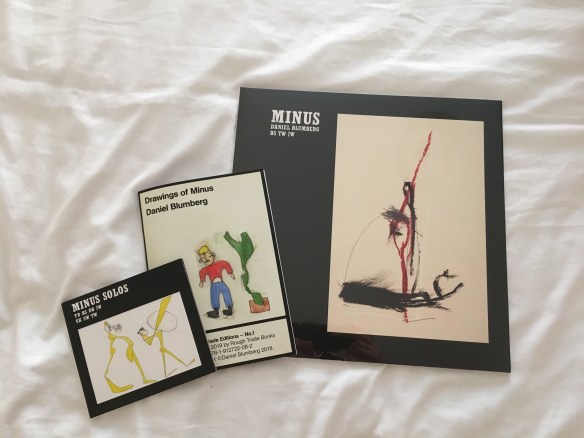
I have concluded that Daniel Blumberg is probably one of the most important signings to join the Mute roster in its entire forty years of releasing records. His debut solo album, Minus, written after immersing himself in London’s improvised music scene, towers above just about everything else around it, capturing a visionary songwriter and musician tearing up his own rule book for the sake of furthering his art.

To coincide with the release of ‘Family’, an unreleased song from Minus sessions, Clash have today published an interview that I did with Daniel Blumberg in July, wherein he explains the genesis of the album and the impulses that drive him.

In my humble opinion, it tells a story that needed to be told, and provides an insight into the mind of a prodigious talent; I am enormously proud of this feature.

Read the interview here.

Watch the video for ‘Family’ here.

(c) 2018 Mat Smith / Documentary Evidence for Clash
Complex Industrialist: Douglas J. McCarthy (interview, 2012)

I interviewed Nitzer Ebb’s Douglas McCarthy in 2012. At that time, Doug was prepping his first solo LP, at that time intended to be called Life Is Sucking The Life Out Of Me, but which eventually emerged as Kill Your Friends on Pylon later that year. My interview was originally accompanied by a promotional photo that Doug had supplied, but which the photographer insisted I removed. I’ve no idea now if this photo is the one she asked me to remove – if it is, I will happily remove (again).

One of the two most important electronic acts to emerge from Essex in the Eighties, Nitzer Ebb surprised a lot of fans by reforming in the 2000s, not just for shows as is the current money-spinning way for the record industry machine to milk a band’s back catalogue, but also to record new material. The trio of Bon Harris, Douglas McCarthy and Jason Payne that had recorded 1994’s supposed swansong, Big Hit, almost ten years earlier, came back together to record Industrial Complex (also abbreviated to ICP), an album which managed to complete the circle that Nitzer Ebb had started but never quite finished, returning them to the punishing electronic body music of their earliest Power Of Voice and Mute releases. With Nitzer Ebb now on downtime after a couple of intense years of touring, including a powerful slot at Mute’s Short Circuit festival at The Roundhouse in London last year, Douglas McCarthy has recorded his first solo album, Life Is Sucking The Life Out Of Me. The album is due for release in April 2012.

‘Last year proved to be a bit frustrating for me with a few projects and tours being stymied by situations, events or people beyond my control,’ explains McCarthy by email from Los Angeles on the origins of Life Is Sucking The Life Out Of Me, ‘so I decided to take matters into my own hands. As it has turned out it was a fortuitous judgement call as, about six months after I started writing, we decided that we would take a year out from Nitzer Ebb. I also wanted to make music that was much more club based than Nitzer Ebb have ever done.’

McCarthy first moved to LA in the early Nineties, then spent some time moving round the country before heading back to England toward the end of the decade. ‘I initially came back to LA in 2005 to work with Bon on the reunion tour and then as the tour progressed and we started to work on new tracks it seemed sensible to relocate from London and work on the album that eventually was released as Industrial Complex.’ Life Is Sucking The Life Out Of Me, however, was begun back in the UK. ‘My father was in the last stages of a very grim terminal illness,’ says McCarthy, ‘and so my wife and I spent a lot of time in the UK. Going out to various nights and parties like my dear friend Richard Clouston’s Cosey Club really reminded me of a lot of things from years gone by and played a big part in the approach to the album. After my dad died, my wife and I came back to LA where the rest of the album was written and recorded in a relatively short space of time. We worked in an amazingly relaxed way, which is a direct response to being out here I think. I actually achieved much more taking that approach.’

While details of McCarthy’s solo record are starting to emerge, ears are still ringing from the breathtaking, urgent fast-paced beats and classic syncopated basslines of 2009’s Industrial Complex, the release of which was promoted by two hard years of touring and almost 150 live shows. ‘It came about after I had recorded an album as Fixmer/McCarthy with Terence Fixmer,’ says McCarthy of Industrial Complex‘s origins. ‘We toured extensively and would always drop in one or two classic Nitzer Ebb tracks. Inevitably it lead those cunning promoters to start asking if Nitzer Ebb could actually do shows again. I emailed Bon and as we were both going to be in the Midwest we agreed to meet up in Chicago for a chat. All went well and we agreed to play a smattering of festivals in Europe. Then, so as not to just be sitting on our arses between events, we added club shows in between. As it turned out we play something like 75 shows in Europe, Japan, Australia, New Zealand, North America and South America. I had already moved from London to LA to rehearse and prepare for the tour so when we had breaks from touring, that was our home. We decided to fill the time with trying out some new ideas and, remarkably given our long break from the studio, it was fun, so we carried on in our own sweet time until we thought we had an album.’

‘In a lot of ways it was very similar to making Big Hit,’ continues McCarthy. ‘We would often start with a blank piece of paper, just evolving ideas in the simplest form as the mood took us – a bass part, a keyboard part, a percussion part, a guitar part, whatever was easiest to start an idea rolling. After that we would work on it for usually no more than a day, put it to bed and start the whole process again on something new. We carried on like that until we had over thirty tracks and then thought we better stop and pick the ones that would be a good collection for ICP. That’s the main difference, with Big Hit we really wrung the living hell out of the tracks before moving on to the next.’

The brittle Big Hit was preceded by Ebbhead, the 1991 album produced by Alan Wilder, recently of Recoil fame, with whom the trio of McCarthy, Harris and Payne performed on stage at The Roundhouse last year. In 1991 Wilder was the musical backbone of Depeche Mode, the other important electronic band to emerge from Essex in case you were wondering. ‘We toured with the Mode for the second time on the Violator album tour in North America in 1990, which was a life changing experience for all and sundry. On the tour we discussed working with Alan upon our return to the studio. The plan was for him to co-produce with Flood, which worked out perfectly. We approached Ebbhead this way because we saw how well these two could work together on Violator and wanted a more ‘musical’ approach to the songs, which is really at the core of someone like Alan as he is classically trained. The combination of that with Flood and Bon’s fantastic knob-twiddling, and my desire to ‘sing’ more, were all part of the evolution of that album.’ Ebbhead showcased a new, tortured emotional depth for Nitzer Ebb, even if it was obscured by the lurid dayglo colours of the album’s bright yellow sleeve.

‘We started as school friends who enjoyed skateboarding, music and drinking cider,’ recalls McCarthy of the halcyon youthful days from which Nitzer Ebb would eventually emerge. ‘Musically, we took our influences from a fairly eclectic array of artists and styles – Forties jazz, Fifties rock ‘n’ roll, glam, disco, punk and the post-punk scene that was emerging as we were starting to go out. Bands like The Banshees, Bauhaus, Killing Joke, Theatre of Hate, The Birthday Party, Neubauten and Malaria! were all playing live shows that we would go to. We were also listening to Cabaret Voltaire, DAF, Fad Gadget, The Human League, Abwärts, Virgin Prunes, Soft Cell and The Normal among many more.’

Nitzer Ebb signed to Mute in time for the release of their first album, 1987’s insistent That Total Age, which was produced by Daniel Miller. ‘We were very aware of Mute and Daniel Miller of course; growing up in Essex with Depeche down the road in Basildon meant it was a no-brainer. Once we had signed Dan took me and Bon over to Hansa Tonstudio in Berlin to remix ‘Let Your Body Learn’ with Gareth Jones. It was our first trip to Berlin and at the airport we ran into Diamanda Galás, who was in the process of moving there so we all took pieces of her luggage as she had a mountain of stuff and had a very amusing flight getting told off by the flight attendants. It was like being Daniel’s naughty nephews on a weekend cultural break.’ Of their former label head, McCarthy has nothing but high praise. ‘Daniel has always been full of fantastic ideas, some more fantastic than others, but he never shows any diminished excitement about a project even, as it often does, when it gets tough.’

As the interview began to wind up, it seemed appropriate to ask McCarthy about the pronunciation of Nitzer Ebb, a debate which has seen fans take two sides, those who call the band Night-zer Ebb and those who prefer Nitt-zer Ebb. McCarthy is ambiguous as ever. ‘To be honest it started off as Night-zer but after decades of Nitt-zer I slip between the two.’

Originally posted; re-posted 2018.

(c) 2012 MJA Smith / Documentary Evidence

Rupert Lally – This Is An Adventure (album, 2018)

cover

Long-term readers of my blog will know I’ve often championed the work of Switzerland-based electronic musician Rupert Lally, who has a string of solo albums to his name, as well as a number of collaborations with Mute alumnus Espen J. Jörgensen.

I reviewed Lally’s superb new album This Is An Adventure for the Cold War Night Life website. My review can be found here.

(c) 2018 Mat Smith / Documentary Evidence

Cold War Night Life presents Non-Stop Electronic Cabaret (The Islington, London 29.09.2018)

If you’re remotely interested in electronic music you must have been asleep under a rock to have missed the Soft Cell activities that have been happening this year – a huge box set, a singles collection and a tour.

Ahead of Marc Almond and Dave Ball’s final London date, Simon Helm’s Cold War Night Life website have curated a very special event in Islington under the wonderful title Non-Stop Electronic Cabaret on September 29, 2018.

The event brings together all-too-easily overlooked Canadian synth duo Rational Youth (whose debut album begat Helm’s site its name), fellow Canadian moody electronic act Psyche and Sweden’s Page – to the best of my knowledge the only synth group to openly claim to be directly influenced by Daniel Miller’s cheeky short-lived fake group Silicon Teens.

Discerning electronic music fans can get tickets via Billetto.

Venue: The Islington, Tolpuddle Street, N1 (Angel Tube)
Date: Saturday, 29 September 2018
Times: doors at 7:00 pm, first band on stage at 7:30 pm, ends at 11:00 pm
Tickets: £15 plus agency fee through Billetto
Ages: 18+

(c) 2018 Mat Smith / Documentary Evidence

Nitzer Ebb – 1982-2010: The Box Set (Pylon Records, 2018)

Nitzer Ebb is a band whose music dominated my teenage years. My happiest moments may have been soundtracked by Erasure and my uncertain adolescence by Depeche Mode, but it was Nitzer Ebb that I turned to when I was angry and full of rage. Had I been less scared of guitars I might have found that rage vented through Nirvana’s Nevermind like all of my friends instead of the lurid Ebbhead in 1991, but I remain forever thankful that it was Douglas McCarthy and Bon Harris that I trusted with my bitterness.

More or less all of Nitzer Ebb’s output – from their self-released Basic Pain Procedure collection to 1994’s anguished-but-brilliant Big Hit – are now the beneficiaries of a deluxe vinyl reissue boxset courtesy of Pylon Records. Over expanded double LP editions, Pylon have added rare and forgotten mixes to the albums, lovingly restored the original artwork and put back into circulation five important records from the Mute back catalogue that have been out of print for years.

Head to www.pylonrecords.com to pre-order one of two available editions of the boxsets. 1982-2010: The Box Set will be released on October 5, 2018.

Postscript: after a link to this post appeared on Twitter, the official Mute account responded “Mute Ebb catalogue release news coming soon!” I don’t any more than that, but it tantalisingly hints at a separate reissue programme from the label that the band called home for most of their career. Further details will be announced soon, I hope.

(c) 2018 Mat Smith / Documentary Evidence

Reed & Caroline – Before (Aylesbury High School Chamber Choir performance, 27 June 2018)

The Aylesbury High School Chamber Choir performed ‘Before’ by Reed & Caroline at their Music, Muses and Movement concert on Wednesday 27 June. The performance was the culmination of almost three months of planning and rehearsal by the choir.

When working on the promotional support for Reed & Caroline’s second VeryRecords album Hello Science, Reed Hays, Caroline Schutz, Vince Clarke and I kept coming back to the notion that ‘Before’ sounded a lot like a hymn because of its philosophical and spiritual quality. Caroline in particular said that performing that piece reminded her of the Christian hymns she sang at school, despite growing up Jewish. That got us thinking about asking a choir to perform the song, so I asked the music teacher at the girls’ high school in Aylesbury as to whether they’d be willing to support the promotion of Hello Science with a performance of the song, and they graciously consented.

‘Before’ is already a beautiful, moving, poignant piece of music. In the hands of the Aylesbury High School Chamber Choir the song takes on an entirely new level of poignancy, something which has reduced more than one of us who worked on this record to tears.

You can watch this very special, unique performance of ‘Before’ at the VeryRecords YouTube channel here.

Reed, Caroline, Vince and I are all incredibly grateful to Ms Raven, the Aylesbury High School Chamber Choir and the school’s headteacher Mr Rosen for giving us the loan of the choir for this wonderful performance.

Credits:
Arranged and conducted by Olivia Raven
Filming by Mat Smith and Seren Smith
Video editing by Vince Clarke
Sound mixing by Reed Hays
Performed at the Aylesbury High School Music, Muses and Movement evening performance, 27 June 2018

Hello Science can be ordered from the VeryRecords website.

(c) 2018 VeryRecords

VeryRecords: Reed & Caroline – Hello Science Interview (2018)

Ahead of the release of Hello Science, I caught up with Caroline Schutz and Reed Hays to talk about identity crises, science (duh, obviously) and dealing with demands for royalties from daughters. The interview was published today on the VeryRecords website here.

Hello Science is available to purchase at the VeryRecords website, or from the merchandise stall if you happen to be Stateside and watching Erasure on tour

(c) 2018 Mat Smith / Documentary Evidence for VeryRecords