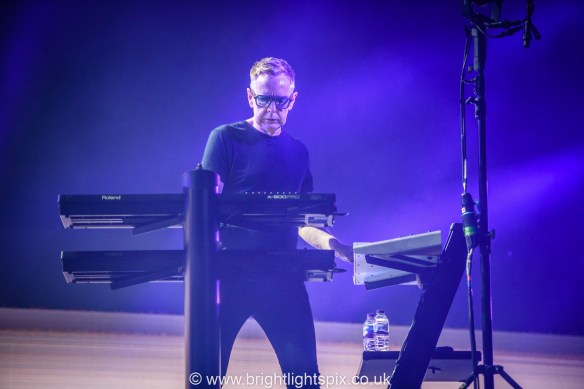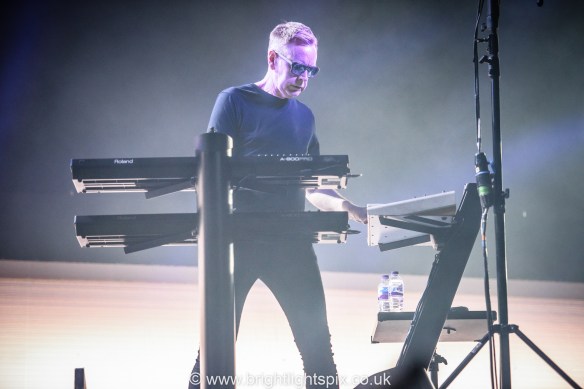
Documentary Evidence 2017 Top 10 Albums: 6. Depeche Mode ‘Spirit’

“Not an album to listen to if you are remotely worried about the state of the world right now… The kind of album that is necessary for shining a light on our basest traits and for encouraging us to think differently all over again; in that sense, for the first time in a long time, Depeche Mode have judged this just right.”
– Clash

Honestly, I couldn’t bring myself to get excited about Depeche Mode‘s Spirit album. Partly it was because it was billed as being political, and I’m not an outwardly political person and nor do I especially gravitate toward albums with obvious political content. I was asked by Clash to write a piece explaining that Depeche Mode had always been political on some level, which seemed like utter nonsense until I started writing it. That piece can be found here; I won’t rehash it again but it’s a piece of mature analysis that I am particularly proud of.

‘Where’s The Revolution?’ did nothing for me when it was released, and I didn’t hold out much hope for the album. Being political had become trendy, with bands using music as a platform to make a political point, and I couldn’t get on board with it at all. But spending time with the album to write a review, also for Clash, unlocked something that I hadn’t especially expected to find.

My earliest drafts for the review were uniformly negative. I couldn’t reconcile lyrics about impoverished members of society with a band whose members variously live in Manhattan apartments and Californian mansions; it somehow seemed hypocritical on a very obvious level. But as I spent time time with Spirit I began to hear parallels with a very different album – Marvin Gaye’s What’s Going On – and a certain similarity of poise began to emerge, especially in Martin Gore‘s lyrics for ‘Fail’ at the very end of the album.

Spirit did much to allow me to reconcile issues that I didn’t even know I harboured toward Depeche Mode, a band that have been part of my life since my teens. Consequently, I’m convinced that when, in decades to come, writers like me are asked to assess Depeche Mode’s legacy, Spirit will stand out as the band’s surprising yet defining late period statement.

Listen to Spirithere.

My review for Clash can be found here.

(c) 2017 Mat Smith / Documentary Evidence

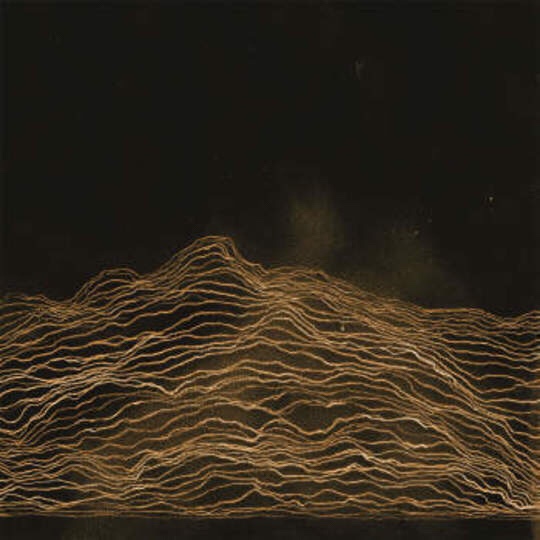
Documentary Evidence 2017 Top 10 Albums: 7. Floating Points ‘Reflections – Mojave Desert’

“Sam Shepherd seems set to become one of his generation’s musicians to watch, and a potential legend in the making.”
Electronic Sound

Floating Points‘s Elaenia was my favourite album of 2015 by far, and was responsible for me beginning to realise that fusing electronics with jazz wasn’t quite as naff as everyone had told me it was. Consequently I was ridiculously excited to get the chance to review Sam Shepherd’s latest album for Electronic Sound, an album where he had moved from solo artist to de facto band leader.

Reflections – Mojave Desert is a major progression on from Elaenia, where the addition of extra musicians has allowed Shepherd to more precisely express what he was clearly to do back in 2015 but couldn’t when his only tools were samples and electronics. To fully understand the exacting process Shepherd went through to create the five tracks on the album, an accompanying film showed the group performing and collecting sounds amid the breathtaking backdrop of the Joshua Tree National Park.

The result is an album full of finely-wrought atmospherics and complex arrangements that showcases Shepherd’s strong appreciation of jazz music history and his ability to push things in a thoroughly modern direction.

Listen to Reflections – Mojave Desert here.

Electronic Sound can be purchased at www.electronicsound.co.uk.

(c) 2017 Mat Smith / Documentary Evidence

Documentary Evidence 2017 Top 10 Albums: 8. The National ‘Sleep Well Beast’

The National are a band that I only listen to when I feel like life is piling up, even if I don’t necessarily recognise it at the time. It usually requires some distance from the problem at hand to see that you even had a problem. So it is now as I listen back to Sleep Well Beast some six months on from playing it near constantly, where I can only listen to this and decipher details and depth whereas at the time I was only really focussed on the gloomy texture of the music.

Despite its inevitably maudlin overtones – you wouldn’t want a National album to be any other way, after all – Sleep Well Beast is an accomplished album that takes the band’s framework and fleshes it out, much more so that ever before, with electronics and clever processing. I like to attribute some of this newfound, widescreen expansiveness to the work of members Scott and Bryan Devendorf’s separate work in LNZNDRF, whose self-titled album was among my favourites of last year.

These are songs that carry a particularly transcendent quality, having a considered, introspective quality that makes for a perfect soundtrack to a world wrecked by disbelief and despair, where there is beauty and levity if only you care to look for it. Consequently, they are perhaps the best songs this band have ever written.

Listen to Sleep Well Beast here.

(c) 2017 Mat Smith / Documentary Evidence

Documentary Evidence 2017 Top 10 Albums: 9. RAC ‘Ego’

“Pop music really shouldn’t be this clever.”
Clash

There will be more on this topic later on in this countdown of my favourite albums of 2017, but these past few years have found me migrating back toward pop music, while at the same time maintaining a continual push toward music’s outer edges.

I reviewed producer and songwriter André Allen Anjos’s second album as RAC for Clash and found myself listening to it over, and over, and over for a decent chunk of the summer. In a world where countless producers co-opt guest vocalists to provide the vocals for songs they can’t sing themselves, Anjos stands out not through his black book – Rivers Cuomo from Weezer, Rostam from Vampire Weekend, St. Lucia – but his approach to a brand of smart pop that has a mature, enduring sensitivity as well as some very fine melodic credentials.

Listen to Ego here.

My full Clash review can be found here.

(c) 2017 Mat Smith / Documentary Evidence

Documentary Evidence 2017 Top 10 Albums: 10. BRZZVLL ‘Waiho’

“An album of genuinely memorable riffs on jazz’s essential spirit.”
Electronic Sound

I’ve had another year of getting to write about incredible music, and choosing my seasonal top ten albums this year was especially difficult.

To kick things off, I’ve selected BRZZVLL‘s stunning Waiho, the new album from a Belgian seven-piece group who take the infinitely flexible template of jazz and infuse that with everything from hip-hop to the edgy big-band funk espoused by Talking Heads when they’d more or less doubled their line-up.

I reviewed Waiho for Electronic Sound.

Listen to Waiho here.

Buy Electronic Sound at www.electronicsound.co.uk.

(c) 2017 Mat Smith / Documentary Evidence

Electronic Sound 35

Issue 35 of Electronic Sound has been out for a while, and this month features a major in-depth look at the work of much-missed German producer Conny Plank.

This issue features the last part of my feature on Alison Moyet, here focussing in on her influences. Such pieces are often really illuminating, particularly – as here – were they cover non-musical influences, and it was no different on this occasion. The interview was conducted in a bar in Chelsea back in May, and is the companion piece to a feature about Moyet’s latest album, Other.

My other major feature for this month was about the weird world of the Welcome To Night Vale podcast, something’s that been running for years but which totally passed me by. My interview with Jeffrey Cranor, co-author of the podcast, was definitely one of the most fun things I’ve done this year.

On the reviews front, I covered Gregg Kowalsky‘s ambient delight L’Orange, L’Orange, the very Night Vale-friendly strangeness of Snapped Ankles‘s Come Play The Trees, a reissue of an overlooked album by Twins Natalia, an absolutely fantastic electronic jazz crossover in the form of Brzzvll‘s Waiho, a more subtle jazz-with-synths hybrid in the form of Chet Doxas‘s Rich In Symbols, the fantastically raw No Luscious Life by Glasgow’s Golden Teacher, and a career-spanning piece on Simian Mobile Disco‘s ADSR reissue and Anthology collection.

My final contribution this month was among the most personally rewarding. For the magazine’s Buried Treasure section, I wrote a piece on Vic Twenty‘s Electrostalinist, an album which sadly seemed to pass everyone by when it was released in 2005. Vic Twenty was originally a duo of Adrian Morris and Angela Penhaligon (Piney Gir), they supported Erasure in 2003, and Mute‘s Daniel Miller set up a new independent label called Credible Sexy Units just to release one solitary single by the duo. Piney left to follow a successful solo career and Morris carried on alone. I drafted a review of the album for Documentary Evidence when it was released but never finished it, much to my regret, and so it was a pleasure to finally give Electrostalinist the coverage it deserved.

Electronic Sound can be purchaed at www.electronicsound.co.uk.

(c) 2017 Mat Smith / Documentary Evidence for Electronic Sound

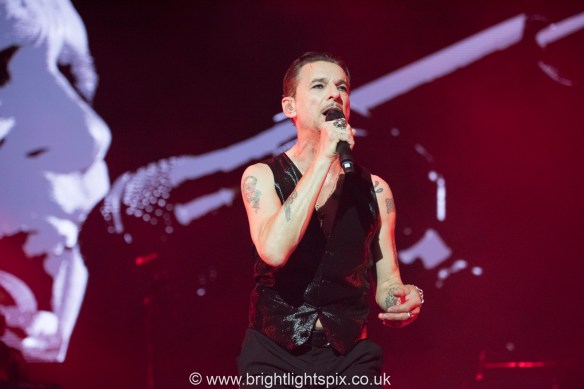
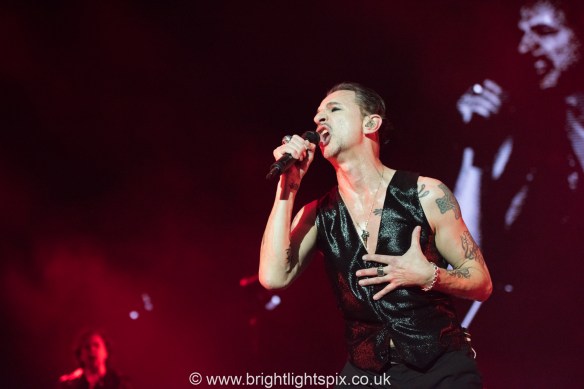
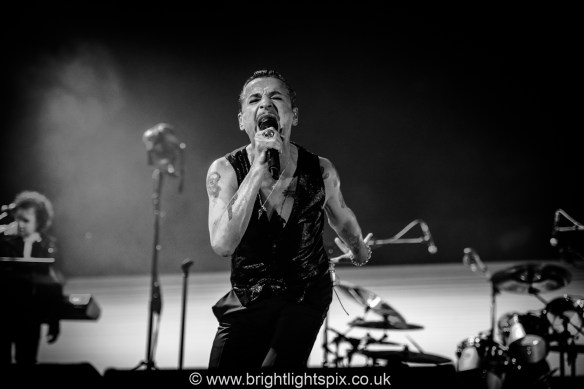
Depeche Mode – The O2 Arena, London 22.11.2017 – photos by Andy Sturmey

810_0071810_0224810_0228810_0229810_0242810_0272810_0280810_0392810_0498810_0507810_0510810_0513810_0514810_0562810_9922810_9927810_9941810_9966DSC_5450DSC_5477

(c) 2017 Andy Sturmey for Documentary Evidence & This Is Not Retro

Electronic Sound 34

Issue 34 of Electronic Sound is now available. Focussing in on the world of soundtracks to coincide with the release of Blade Runner 2049, the latest issue includes an exclusive 7″ containing extracts from Louis and Bebe Barron’s genre-defining soundtrack to the sci-fi landmark Forbidden Planet.

My major contribution to the latest issue was an interview with Clint Mansell. Mansell was formerly a member of Pop Will Eat Itself, a band I got into in the mid-90s thanks to a friend at the after-school office jobs we both had, whereupon he plied me with each and every one of their releases up to that point. So smitten by PWEI was I that I did that very 90s thing of buying a t-shirt to show my allegiance, a lovely navy blue Designers Republic thing containing the cartoon band mascot. I was wearing that t-shirt the day I started university, which attracted the attention of another freshman who recognised the logo; we’ve been lifelong friends ever since.

This is a longwinded way of saying that Mansell’s music really matters to me, and so getting the chance to speak to him was a real privilege. Mansell’s inclusion in the Electronic Sound soundtrack issue arises because of his post-PWEI work as a composer for the films of Darren Aronofsky and Duncan Jones’s, developing scores for the harrowing Requiem For A Dream, Moon and the upcoming Mute. And speaking of Mute, which I often do of course, Mansell is pictured in a Mute ‘walking man’ logo in the photos accompanying my feature, and this issue includes a new interview with Mute founder Daniel Miller.

Elsewhere in this issue I wrote a short piece introducing the work of Lithuanian electronic producer Brokenchord, whose new album Endless Transmission is a robust, trip-hop embracing work of great weight. I also wrote short reviews of albums by livesampled piano duo Grandbrothers, the sexually-charged Blade Runner-inspired debut album from Parisian François X, a slinky 80s-inspired R&B album by Submerse, a thoughtful new LP from Aris Kindt and a grainy industrial / minimal release by Vanity Productions issued through Posh Isolation, one of my favourite small labels. To round the issue out, I reviewed the Front & Follow label’s fantastic ten year anniversary compilation Lessons, and surveyed the varied career of Auteurs founder Luke Haines through a new 4-disc box set. Having written the press release and an interview to support the release of Alka‘s The Colour Of Terrible Crystal on Vince Clarke‘s Very Records, it was pleasing to see the album get a deservedly positive review in the latest issue.

You can pick up a copy of the new issue at www.electronicsound.co.uk

(c) 2017 Mat Smith / Documentary Evidence for Electronic Sound

Alka – The Colour Of Terrible Crystal – Interview (Very Records, 2017)

Earlier this year I spoke to, and then subsequently met up with, Bryan Michael to talk about the Alka release that is being released next week by Vince Clarke‘s Very Records.

The original intention was to have a brief telephone conversation to inform the press release, but the conversation ended up yielding so much detail and colour that I offered to put together a full interview to support the release. Over a couple of beers a month or so later at a nice, old-fashioned English-style pub in Philadelphia, Michael offered yet more detail that told a more complete story about how the album had come together, the presence of angels and his love of books. (We also spoke about the differences between American and UK traffic systems and the merits or otherwise of any project undertaken by the sundry members of New Order, but that’s not relevant for this.)

The full interview can be found over at the Very Records website. The Colour Of Terrible Crystal will be released on 13 October.

(c) 2017 Mat Smith / Documentary Evidence for Very Records

Electronic Sound 33

Issue 33 of Electronic Sound is now available, complete with an extensive cover feature on Gary Numan and an interview with the inimitable Sparks. The special print edition with 7″ includes a two-part Meat Beat Manifesto remix of Gary Numan’s ‘My Name Is Ruin’.

I wrote two features for this issue. The first was an interview with Sanaya ‘Sandunes’ Ardeshir about her Different Trains 1947 live collaboration with Liverpool’s METAL, Jack Barnett from These New Puritans and Darren ‘Actress’ Cunningham; Different Trains 1947 takes Steve Reich’s 1988 composition Different Trains but changes its context from being about American and European train journeys during World War II to being about the thorny topic of Indian independence and partition from Pakistan. You can catch Different Trains 1947 at the Barbican in London on 1st October.

The second feature was an interview with Graham Sutton about his band Bark Psychosis and their landmark post-rock album Hex. I love features like this and the Different Trains piece above, mostly because they cover topic areas I knew very little about before picking up the phone to speak to both Ardeshir and Sutton. Bark Psychosis were a band I was aware of from reading The Wire in the 1990s but who had never quite made it from my Long List – of bands I’ve read about, know I must listen to, but never have – to the Short List. The objective of the Bark Psychosis feature was to lift the lid on a band and tell its story, which I humbly think we did rather well.

Elsewhere in issue 33, you’ll find my reviews of new albums from Mary Epworth, Mute alumnus Zola Jesus, a remix compilation on Sheffield’s wonderful CPU imprint, Khalil and a lovely new record from Jaws Of Love, the solo debut of Kelcey Ayer from Local Natives.

Electronic Sound can be ordered here.

(c) 2017 Mat Smith / Documentary Evidence for Electronic Sound