Documentary Evidence 2016 Top 10 Albums: 3. LNZNDRF ‘LNZNDRF’

lnzndrf

“In thrall to the methods of Can, if not their actual sound.” – Electronic Sound

I heralded the trio of Scott and Bryan Devendorf (from The National) and Bryan Lanz (from Beirut) as my new favourite band upon the release of their self-titled album for 4AD earlier this year. It would the first of three such occasions where I made that claim.

This was a frighteningly inventive LP, formed out of the same sort of long-form improvised jams that Can used nearly fifty years before in the creation of their seminal early records, only then treated and manipulated to take on a relatively ‘composed’ form. The output was a sort of Krautrock / electronic hybrid whose details reveal themselves over repeated listens.

I reviewed the album for Electronic Sound and interviewed Scott Devendorf for Clash. Back issues of Electronic Sound are available at http://www.electronicsound.co.uk while my interview can be read here.

(c) 2016 Mat Smith / Documentary Evidence

Documentary Evidence 2016 Top 10 Albums: 4. Reed & Caroline ‘Buchla & Singing’ // Erasure ‘From Moscow To Mars’

I felt a little conflicted about including these two on my list, for reasons which I will attempt somewhat clumsily to explain. I then reasoned that this is my list, I’m kind of really proud of what I’ve done to support both these releases, and so on the list they shall remain. I’ve also linked them together for the purposes of convenience.

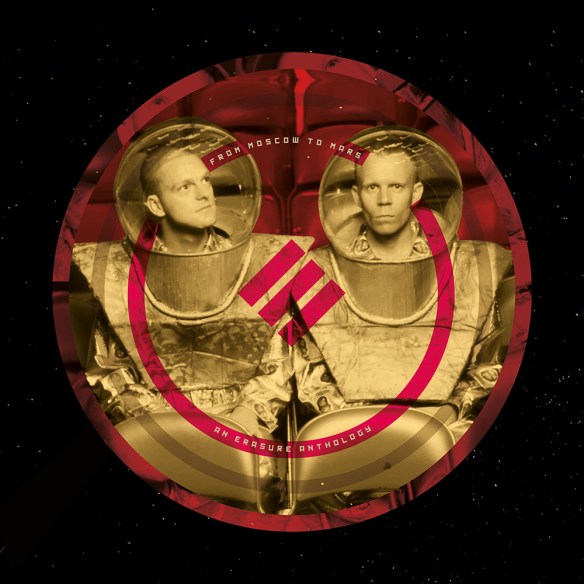
erasure_moscow_to_mars_1000
“It might have the look and feel of a futuristic tombstone, but From Moscow To Mars, as its title from the oft-forgotten single ‘Star’ indicates, represents a thirty year journey – a journey that the duo are very firmly still on with a new album in the works and plenty more rocket fuel left in the tanks.” – This Is Not Retro

“What emerges here is a distinct sense of loyalty – from Vince Clarke and Andy Bell to one another, and to the enduring art of writing emotional pop music.” – Electronic Sound

First up, the mammoth and some would definitely argue long overdue Erasure box. This was finally released in December after production delays and I reviewed this – atypically for me – for two places: Electronic Sound and then a slightly more personal piece for This Is Not Retro. I am, and forever will be, a massive Erasure fan first and foremost, so my ability to be objective about From Moscow To Mars is one possible conflict of interest. Personally, I think I pulled it off, but you can judge for yourself. The review for This Is Not Retro can be found here. Back issues of Electronic Sound are over at www.electronicsound.co.uk

The second reason for feeling slightly conflicted came in November when I found myself in Birmingham as a guest of the Erasure fan club at the official launch party for the boxset. I was there nominally as a guest but found myself helping out in a couple of ways – blowing up some very sorry balloons (I apologise to anyone who attended and laughed at those) while listening to Vince Clarke and Andy Bell soundcheck their set (including a new song) and then helping out with three hours of meet and greets. It was a special, and slightly surreal experience.

img_0419

Second, Buchla & Singing by Reed & Caroline, a charming album of compositions for the Buchla by Reed Hays with beautiful singing by Caroline Schutz. The album was released on Vince Clarke’s Very Records back in October to universal acclaim. I didn’t get to review this one, but trust me, had I done so I would have called it out as very special indeed.

I wrote the press release for Very Records for this album and enjoyed a very pleasant Skype chat with Hays in order to prepare that. Of all the things I have done this year, getting handed that job and helping support the release of Buchla & Singing – in a way somewhat different from just scribing a review – was right up there as a major career highlight, and I’m eternally grateful for the opportunity.

One of the best tracks on the album is ‘Henry The Worm’. Reed and I spoke about that track at length but I just couldn’t find a way of fitting it into the press release, so here is that little off-cut. I thought it was a nice story. Music sometimes needs to take itself less seriously.

“Around the time my son was born, I wrote a song that’s on the record called ‘Henry The Worm’,” explained Reed. “We named Henry, my son, after a little caterpillar that was crawling around a Mexican restaurant. When we saw the first sonogram I thought he looked like a little caterpillar.”

(c) 2016 Mat Smith / Documentary Evidence

Documentary Evidence 2016 Top 10 Albums: 5. Savoir Adore ‘The Love That Remains’

“The best thing to come out of Brooklyn since the last thing.” – Electronic Sound

This one snuck in right at the very end of the year, and caught me totally unawares. I’ve become accustomed, like most people have, to great music coming flooding out of Brooklyn, but Savoir Adore‘s new album was something else. The album was released earlier in the year in the US but only got its UK release in December.

The best reference point I have for this synth-heavy opus – which its creator Paul Hammer explains was influenced by the dominant romantic input to Fado music, the elusive concept of saudade – would probably be Bleachers’ debut LP. Except that where Bleachers seemed to really have to work hard at writing big choruses and infectious synth melodies, Hammer and Savoir Adore never sound like they’re having to try too hard. This gives The Love That Remains a certain polish and sheen that far bigger productions would die for, without ever once sounding completely like a chart pop album.

My review of this will appear in the next issue of Electronic Sound.

(c) 2016 Mat Smith / Documentary Evidence

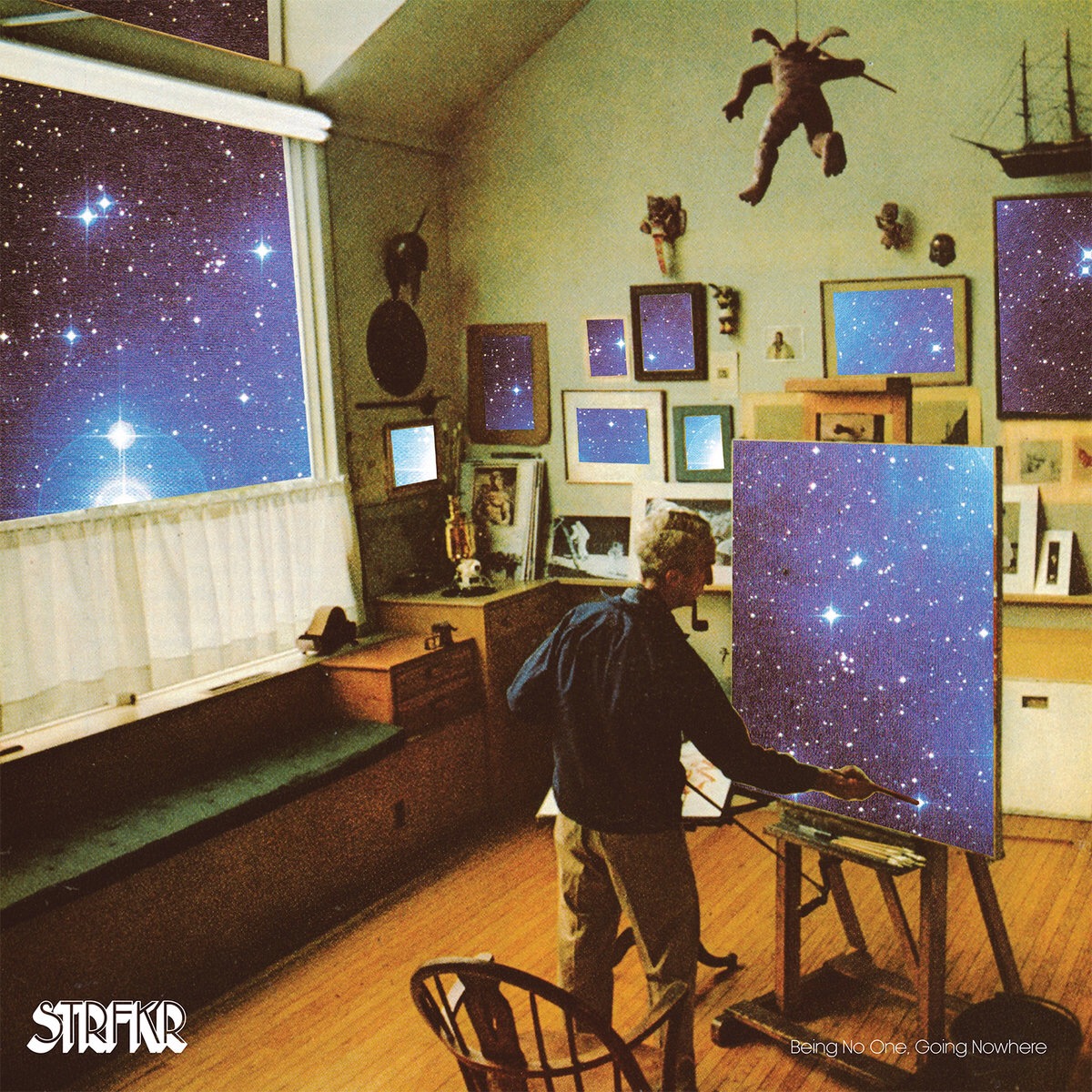
Documentary Evidence 2016 Top 10 Albums: 6. STRFKR ‘Being No One, Going Nowhere’


Sometimes you alight upon what becomes your favourite music when you least expect it. That was the case with the fifth album by Portland, Oregon’s STRFKR, a band whose name I’d vaguely heard of but whose music I’d never heard, at least not to the best of my knowledge.

I was in Montréal with work and was in a fantastic little café I’d discovered on my travels the year before called Melk, eating a courgette muffin and drinking an espresso for breakfast while marvelling at my ability to mangle French and English while ordering something so simple.

Melk is one of those funky, Scandi places that are all bleached woods, white walls and friendly hipster staff, and on the few times that I’ve been here, are usually playing achingly hip music that I’ve never heard of before. Such was the case on this day, where it turned out – thanks to the wonder of Shazam – that they were playing the new album (Being No One, Going Nowhere) from STRFKR. I was hooked straight away, absolutely loved the pop tones and big songs and spent the remainder of my Canadian trip listening to the album whenever I could, as well as castigating myself for not having gotten into them before. It made the ten minute walk to Melk instead of just dropping into the Starbucks in my aparthotel much more worthwhile than just getting exercise.

The album reinforces what I’ve been thinking a lot this year, which is that we seem to be in a golden period for electronic pop music. We’ve said this before when bands like MGMT first emerged, but it always seemed a bit tongue in cheek to me; today, bands like STRFKR seem to have a genuine respect for the electronic music of yesteryear and a capacity to make what sounds, to youthful ears, truly original, while still appealing to those of us who remember the first flushes of synthpop all too clearly.

(c) 2016 Mat Smith / Documentary Evidence

Documentary Evidence 2016 Top 10 Albums: The Departed Ones

We lost some incredible musical luminaries in 2016, chief among which were David Bowie back in January and Leonard Cohen in November. Both artists released powerfully creative albums this year, underlining talents that seemed to have been snuffed out far too early, yet both records seemed to contain clues – in coded form (Bowie’s Black Star) and more obvious form (Cohen’s You Want It Darker) – that death was just around the corner.

I wrote a piece for Clash about David Bowie that was published just two days before he was announced to have passed away. It was written from the point of view of someone who was enjoying a new phase of life whereas in fact it was already over. For Cohen, moved though I was to write the piece below, I never placed it anywhere.

youwantitdarker

In was in Toronto when the news broke that Leonard Cohen had passed away. My first reaction, upon reading the news was somewhere between surprise, anger and sadness.
It was a little like the passing of a distant relative – someone who had always been there in the background, who you’d spent some time with but not enough, and who you just figured would always be there.

The front cover of Friday’s Globe & Mail was turned over to Montréal’s renegade troubadour, and it felt like the whole of Canada was undergoing a day of national mourning. Flags were flying at half-mast and there was a general feeling of glumness about the place; this was, of course, little more than optics and coincidence, since Friday was the 11th November and Canada was set for its annual remembrance of those who had lost their lives in the two World Wars of the twentieth century, but it felt like it could have been – should have been – all for Cohen’s benefit.

I never thought I’d get into Leonard Cohen. Growing up, immersing yourself in music magazines, you alighted upon Cohen’s legacy and legendary status, but he just didn’t seem like an artist I’d ever fully understand or whose music I’d ever be able to appreciate. This was mere narrow mindedness on my part, but such is the opinionated arrogance of youth.

Cohen’s ‘Avalanche’ was covered by Nick Cave on his debut album in 1984, but it was never my favourite track on that LP and, besides, at that point (I bought that album in around 1997) it was hard enough for me just to have made the switch the Mute electronic acts to Cave, let alone try to wrap my head around the music of Leonard Cohen as well.

It would take the purchase of Rufus Wainwright’s Want almost a decade later to fully start my appreciation. Wainwright, also coincidentally Canadian, covered Cohen’s ‘Chelsea Hotel No. 2’ at a tribute concert assembled by Hal Wilner, at which Nick Cave also performed. Wainwright’s live version of the song was included on the second part of his Want opus, and completely floored me when I first heard it. It helped that it was about New York, which will always get my attention, but it was the nakedness, the bluntness if you will, of Cohen’s lyrics that truly grabbed me. The Songs Of Leonard Cohen quickly came into my possession, and I’ve been collecting sporadically ever since.

Maybe I still haven’t completely ‘got’ him, but I’ve gotten a lot closer. What you start to appreciate as you spend quality time in the company of his music is that the stereotype of Cohen as this abject, depressed miseryguts is woefully misplaced. Upon announcing his passing, Cohen’s son drew attention to his father’s incredible sense of humour. It’s the only way to explain the song ‘Don’t Go Home With Your Hard-On’ and some of the verses in ‘Hallelujah’ (a song that is both spiritual and utterly out-there, something lost on the multitude of pop acts that have covered it). Sure, it’s dark humour, but it’s humour nonetheless.

There’s also this theory that Cohen was just a hapless, thwarted romantic, but that’s also incorrect. A lot of Cohen’s lyrics were unashamedly, nay eyewateringly, frank and open about sex, so one could assume he wasn’t as unlucky as his wistful balladeering would have you believe. Let’s hope the smooth-talking, gravel-voiced, romantic is having the same fun he had in his corporeal existence up there in the heavens.

The untimely death of a perpetual ladies man.

(c) 2016 Mat Smith / Documentary Evidence

Documentary Evidence 2016 Top 10 Albums: 8. Yeasayer ‘Amen & Goodbye’

“At its best when it stops trying to be overly clever and instead rushes shamelessly into the slick pop that has run throughout Yeasayer’s career.” – Electronic Sound

Album number four from Yeasayer had a title that suggested some sort of full stop, but whose music suggested the trio were finding new ways of writing music and exciting experimental angles to exploit. In spite of that foray into slightly odder areas, opening track ‘I Am Chemistry’ and the stand-out ‘Silly Me’ are among this Brooklyn band’s finest moments.

I found myself listening to this album a lot over the summer, and kicked myself for not responding to an opportunity to interview Chris Keating from the band for a second time.

I reviewed this for Electronic Sound. Back issues are available from http://www.electronicsound.co.uk

(c) 2016 Mat Smith / Documentary Evidence

Documentary Evidence 2016 Top 10 Albums: 9. The Seshen ‘Flames & Figures’

“Modern pop music’s ongoing homage to the sounds and rhythms of 80s music has produced some outstanding songs, but also some absolute stinkers.” – Electronic Sound 23

The Seshen hail from San Francisco’s Bay Area and make shiny, soulful and infectious pop music. Their second album found the band delivering a high gloss electronic album full of heartache, heartbreak, angst, abuse and many more deeply personal emotional cues from Lalin St. Juste and the rest of The Seshen.

I covered this album for Electronic Sound 23, whereupon I described it as containing some of the best pop songs you’ll hear today. High praise indeed.

One of the weirdest and most unexpected things that’s happened to me this year has been rediscovering a love of pop music, something that outside of the likes of Erasure I’d pretty much actively stopped looking for. That’s allowed me to appreciate acts like The Seshen in a way that I’d never have been prepared to before. More on my rekindled appreciation of pop later on.

Back issues of Electronic Sound can be found at electronicsound.co.uk

(c) 2016 Mat Smith / Documentary Evidence

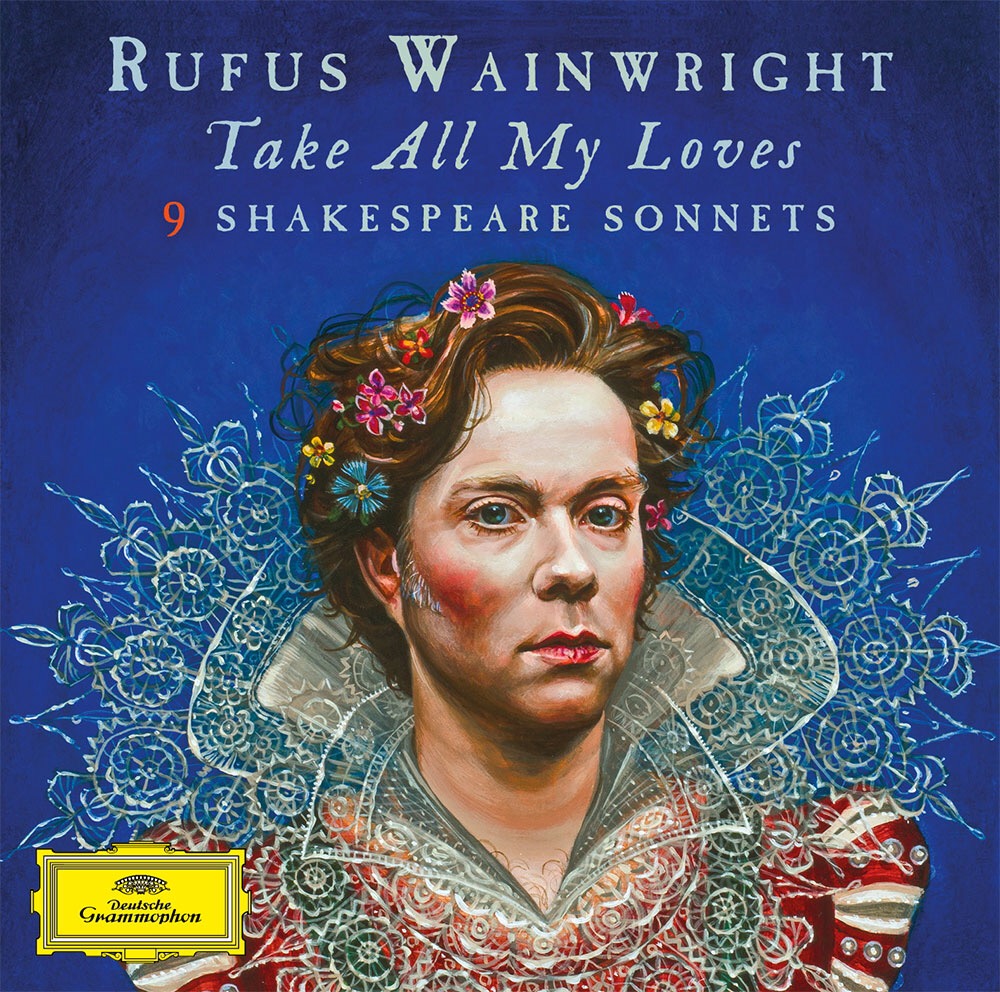
Documentary Evidence 2016 Top 10 Albums: 10. Rufus Wainwright ‘Take All My Loves’

I’m not normally one to embrace the whole end of year countdown thing, but I’ve been asked for my choices a couple of times now and so I thought I’d jump on the journalistic bandwagon also. Over the next few days I will post my top ten albums of the year, as well as a few other bits and pieces about my year in music.

“I wouldn’t say it’s an affliction necessarily, but I definitely have some sort of condition where I am ruled by a kind of duality. On the one hand I want to be on the cover of ‘Rolling Stone’, but on the other hand, there’s my high reach towards that which is completely unpopular, and un-current and unusual.” – Rufus Wainwright, March 2016

First up is Rufus Wainwright’s Take All My Loves, an album that saw the Canadian singer, songwriter and opera composer tackle a batch of Shakespeare’s sonnets with the help of singers like Florence Welch and sister Martha, as well as thespy luminaries Siân Phillips, Peter Eyre and, er, William Shatner.

Your appreciation of this record largely depends on whether a) you’re a fan of Shakespeare and b) you’re a fan of Rufus Wainwright, both of which I happen to be. It is nevertheless a complex and challenging – but ultimately rewarding – album that underlines how talented Mr. Wainwright is; the split between classical and more accesibble fare on the album suggests a return to pop music from the rarefied world of opera that Wainwright has been hanging out in these past few years might well be on the cards.

I fulfilled a longstanding career ambition and interviewed Wainwright about the project for Clash, wherein he explained how gatecrashing parties, hanging out on movie sets and generally being an all-round celebrity pest allowed him to build out the little black book of contacts necessary for the creation of Take All My Loves, as well as how masturbation improbably led to a love of the Bard.

My interview can be read here.

(c) 2016 Mat Smith / Documentary Evidence

Soundescapes – An Interview With Espen J. Jörgensen (2011)

Noise Activity

Five years ago, Mute returned to its independent roots after separating from EMI. One of the first releases on the newly indie imprint was Soundescapes by Mute stalwart Simon Fisher Turner and one-time collaborator Espen J. Jörgensen. It arguably should have set the tone for Mute Artists’ new beginning, returning the label to the noisy, DIY, uncompromising point where it all began.

On the occasion of the fifth aniversary of Soundescapes, I am republishing my 2011 interview with Jörgensen. This will be followed in the next few days by the re-posting of a further interview with both Fisher Turner and Jörgensen from around the time of the album’s actual release. 


Soundescapes is a collaboration between musical auteur Simon Fisher Turner and film-maker / soundsmith Espen J. Jörgensen. The first fruits of this collaboration, the track ‘Noise Activity’, was released on 16 April 2011 as part of Mute‘s Vorwärts compilation; with that title, it is not a terrible surprise that the rest of Soundescapes explores the outer reaches of sound design.

‘I record whatever I like and Simon does whatever he likes with it,’ Jörgensen tells me from his home in Norway. ‘It’s the ultimate democracy; or maybe democrazy is a better word for it.’ Built on a mutual respect for each others’ creative vision, Fisher Turner and Jörgensen have an agreement not to challenge one another. ‘I do whatever I like, and Simon treats the material the way he wants to,’ says Jörgensen. and ‘I don’t comment on the outcome. So you could say that I’m the composer and he’s the re-composer.’

‘Noise Activity’ also appears on the forthcoming Soundescapes album, scheduled for release on a freshly independent Mute in November 2011, replete with a personal endorsement from Daniel Miller. ‘We’ve been working on this album for two to three years,’ explains Jörgensen about the album, recorded over an extended period in between both the composer and re-composer’s other activities, namely Fisher Turner’s scores and solo albums and Jörgenson’s work as a film-maker. ‘Noise Activity’ is our ADHD song. There are a couple of others which are ‘upbeat’, but not as crazy as that; some are very ambient, both light and dark.’

Already familiar with Fisher Turner’s work, I ask Jörgensen about his individual style. ‘I don’t actively try to pursue a sound, and I’m not trying to not pursue a sound. I think a lot of it comes from how I work, which is is more like an exorcism. I try to lure sounds out of devices and instruments. It’s all from intuition. I never write anything. I can have a five minute session one day and then I won’t touch an instrument for a month or two. I don’t do anything if I don’t feel like it.’

‘When I record things it’s mostly to hear what sounds I get if I hook up an instrument, be it circuit bent, analogue or digital, to an effects box or whatever; or it’s from an urge to play or record a beat. I try to record the first time I test an instrument to capture that first meeting or “moment”. I also think that art-by-mistake can be exciting, but I don’t call myself an artist.’

Artist isn’t the only term that Jörgensen doesn’t feel applies to himself. ‘I’m not a schooled musician and I don’t consider myself a musician, and so I can’t really say that I’m influenced by anyone.’

I ask Jörgensen whether his day-job as a film-maker means that the process of film making informs how he makes music. ‘They’re two different worlds, though they’re also not. I think it has more to do with my approach and attitude when I head into the different worlds. I want to be more free with music, so that’s what I do. With film you can improvise and play with the camera, editing and acting, but in the end it’s a lot of work. Music’s a lot of work, too, but Simon gets the hardest job of all – he’s supposed to make my noise work in a context, or a song, if you like. Then again, I wouldn’t call all of the tracks on Soundescapes songs.’

‘I like to write scripts which are more like skeletons,’ he says, returning to film. ‘I think it’s more fun to be open-minded when you work. If you’re not too tied to the script you can make room for things. I think visually, but when I work I often feel, or hear, what kind of music would work well without killing a scene. When I was working with [Faith No More founder / bassist] Billy Gould on the soundtrack for The Sequential Art, my documentary film about comics, he never got to see any of the footage. I told him what I wanted in the form of atmosphere and rhythm, and we worked from there.’

This sense of blind faith and trust also informs the Soundescapes collaboration. Whereas Gould never got to see a single scene, in the case of Soundescapes, Jörgenson and Fisher Turner have never actually even met one another. ‘When I think of it, I’ve never spoken to him either!’ says Jörgensen about this distance collaboration. ‘Our relationship is very text-based. It might sound very odd, but it works very well. I don’t always have control of the outcome with the stuff I record, but I don’t want to control what Simon does either because he does such a great job with putting it all together.’

First published 2011; edited 2016.

(c) 2016 Mat Smith / Documentary Evidence

Body/Head – No Waves (Matador album, 2016)

The duo of ex-Sonic Youth bassist / guitarist Kim Gordon and improv musician Bill Nace continue their Body/Head collaboration with the release of a live album recorded in Tennessee in 2014. Titled No Waves, this is more than just your typical live album, being a headlong journey into the outer edges of music’s malleable core.

I reviewed the album for Clash and you can read the review here.

(c) 2016 Mat Smith / Documentary Evidence for Clash