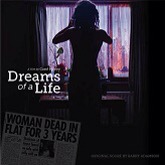
Barry Adamson – Dreams Of A Life (Central Control International album, 2012)

  
central control international | dl unknown cat ref | 10/12/2012

Perhaps it was intentional that Barry Adamson‘s music for Carol Morley’s film Dreams Of A Life went relatively unnoticed. After all, Morley’s film is a drama-documentary about Joyce Carol Vincent, a beautiful woman with a successful career in finance and early aspirations toward a pop career; someone who was well networked with lots of friends and a surprising number of interactions with celebrities like Ben E. King, Stevie Wonder and Gil Scott-Heron, even shaking hands with Nelson Mandela backstage at his tribute concert at Wembley in 1990.

The tragic conclusion to Vincent’s life is, sadly, what she will be remembered for – found in 2006 not just dead, but decomposed, on a sofa in her bedsit in Wood Green, TV still playing BBC1 and rotten food in the fridge dating her death back to 2003. Unpaid utility bills were stacked behind her door; neighbours complained about a smell, but attributed it to the bins from the shops below. That someone could have slipped completely off radar and totally out of the system – effectively disappearing – in today’s hyper-networked times seems all the more shocking, the sense that someone with a wide circle of friends like Vincent could vanish without trace improbable somehow. The cause of Vincent’s death was never ascertained; never a huge drinker and not known to take drugs, the only link to any form of foul play was that she had stayed in a women’s refuge for domestic violence in Haringay in 2001, something that friends suggested was possible given how intense some of her City boyfriends could be.

Adamson’s soundtrack appeared on iTunes in December 2012 but I only found out about it in February when I received an email from Adamson’s mailing list advising that the film would be shown on TV that evening, with a separate link to his soundtrack. Those familiar with Adamson’s work will find few surprises here. There’s the usual rich gumbo of funky basslines, glitches, dub, ice-cold electronica, gospel outpourings (‘Tell Me’), jazzy riffing (‘Profile Of Martin’), organ grooves and noir themes that sound like something from a Seventies blaxploitation flick. Opener ‘The Investigation’ has all the grim urgency of a police drama while simultaneously evoking the mournful, pained observations of Marvin Gaye’s ‘Inner-City Blues (Make Me Wanna Holler)’ from What’s Going On; that track’s main motifs crop up elsewhere on the soundtrack in various different arrangements, giving the whole album a strong sense of coherence, the guitar plucking in particular giving things a folksy, introverted quality. The grandiose ‘Mystery’, complete with ghostly tones and ominous strings, perfectly matches its title’s promise, even if the counterpart ‘Mystery Atmos’ – with far-off rhythms and atmospheric textures – has the greater air of mystique, despite only dealing in semi-audible subtleties.

‘Noir (ish)’, with a chunky, phasing beat, melancholy synths and dirty funk guitars, is the closest Adamson has probably ever got to the sound of early Portishead, a band who claimed to be influenced heavily by the noirmeister, even though there was very little similarity between his music and theirs aside from a whiff of sullen mystery; ‘Noir (ish)’ squares that circle in many ways, and is one of Adamson’s most quietly assured works to date. The moving ‘Joyce Alone’, composed for piano, has a stirring poignancy, the absence of any other accompaniment other than the instrument’s natural reverb prompting you to reflect on Vincent’s three year wait to be discovered; it’s a beautiful, but deeply saddening piece. In contrast, ‘Electro Dreams’ manages to sound like a perfect distillation of Kraftwerk’s every move, albeit covered in a murky sheen of darkness, its inclusion having an urgent car-chase quality which doesn’t necessary fit with the other pieces here, even if it does highlight Adamson’s alarming musical dexterity.

While there are some really excellent pieces of soundtrack composition here, part of me thinks that it occasionally lacks a sense of seriousness and sympathy toward the subject matter. I admit freely that this might be because I’m looking at this solely as a musical response to what I’ve read of Vincent’s life; I haven’t seen the film and so it is often hard to imagine some of these pieces in context, but they just feel a little too playful at times; Adamson has a very prominent sense of humour and I sort of hoped that the challenging subject matter of the film might have curtailed that, but it’s still there, albeit in a relatively muted fashion. There’s also something about some of the pieces here, a dry quality perhaps, that reminds me of a low-budget TV movie.

A detailed piece written by Carol Morley for The Observer on her quest to find out more about Joyce Carol Vincent’s life and death can be found here. A video trailer for Morley’s movie can be found below; Part 10 of Morley’s video diary about the film, an interview with Adamson, can be seen below that.

First published 2013; re-posted 2016

(c) 2016 Mat Smith / Documentary Evidence
Richie Hawtin – DE9 Closer To The Edit (NovaMute album, 2002)

novamute | nomu90cd | 2002
Richie Hawtin, outside his Plastikman guise, is a consistently engaging and exciting DJ, and has been responsible for breathing new life into techno. His individual and pioneering approach to DJing is captured perfectly here.

DE9 is ostensibly a mix album, but it could also be described as a solo Hawtin album released under his own name. Except that it is both and neither simultaneously. Like a regular mix CD, the album rolls forward with no breaks, as if it were one very long and varied track, utilising builds and breakdowns, sharp fades, EQ tweaking and edits to control the pace and keep the sound interesting and fresh. There are 31 tracks here, all in little over an hour, each running for around two minutes. This in itself would stand out as a feat of considerable DJ dexterity, except that there are in fact over 70 tracks here, and it is at this point that Hawtin’s album diverges entirely from the genre.

Hawtin has long been an advocate of bringing ‘live’ elements to his DJ sets, using drum machines and Roland TB-303s over decks to avoid being like many other DJs who simply mix tracks together; hence Hawtin comfortably straddles the DJ / live performance divide. Many others have tried this, but Hawtin’s continuing focus on techno exclusively has seen him retain a focused set of underground credentials. DE9 is the logical, yet painstaking next step for Hawtin’s unique DJing approach (‘DE’ stands for ‘Decks and Effects’).

The seventy tracks, by Basic Channel and Carl Craig among others also include a number by Hawtin himself, culled from his Minus and Plastikman / NovaMute releases. Except don’t go trying to spot them – according to his liner notes (how jazz is that?), Hawtin took extracts from tracks (‘Ranging from 1 note to 4 bars’) and created around 700 loops, which were then reassembled as new tracks, representing the 31 chapters here. Another artist may have seized the opportunity, given the heavy disguising of the source material, to pass this off as his own work. But Hawtin, the innovator, is proud of his process, and readily lists which tracks make up each chapter.

I hadn’t listened to techno for several years before listening to this, but this gives me incredible faith in the genre, and I don’t think I’ve heard such a sonically-pleasing compilation of robotic electronic music before. This is one hell of an impressive futuristic journey.

Originally posted 2004; edited 2016.

(c) 2016 Mat Smith / Documentary Evidence
Electronic Sound #21 – Print Edition


As if I wasn’t proud already about being part of the Electronic Sound team, this month that sense of pride went up a couple of notches as the publication made the transition from being an entirely digital proposition to a fully-fledged newsstand magazine. That’s a bold move in a day and age where we’re told that everything is going in the opposite direction, but the team at Electronic Sound have undoubtedly pulled it off. You can buy copies of the print edition here.

I’m doubly proud because one of the most important features I’ve ever had the good fortune to scribe is heavily featured in the first newsstand edition – an interview with Very Records owner and one half of Erasure, Vince Clarke. The interview was conducted one extremely sticky May afternoon in Vince’s Brooklyn home studio.

As if that wasn’t seismic enough for an individual whose entire interest in music writing can be traced back to a record label flyer that fell out of the 12″ single of Erasure’s ‘Chorus’ almost 25 years ago, we were joined by Orbital’s Paul Hartnoll by Skype from his home in Brighton to discuss the Clarke / Hartnoll album 2Square. Once I’d properly decided that dance music was the place for me in the mid-Nineties, Orbital were a duo I fell for in a big way, and so getting airtime with not one, but two, idols in one go was a pretty sweet deal. I am eternally grateful to Electronic Sound for this opportunity, and also to my family for letting me duck out of part of our vacation in New York to undertake the interview.
Photography for the interview came from the wonderful Ed Walker. Ed wrote a great piece about the experience for his website, which can be read here. While you’re there, please do take a look at Ed’s surreptitious photographs of New Yorkers, which are all taken during a specific period of the day where light is particularly beautiful.

In addition to the Clarke / Hartnoll feature, I also interviewed Rico Conning for this issue. Conning will be familiar to Mute fans because of the remixes and edits he did for the label during its Eighties heyday. I had not appreciated that prior to working at William Orbit’s Guerrila Studio, Conning (and Fad Gadget drummer Nick Cash) had been in a post-punk band called The Lines. The interview tells the story of their hitherto lost third album, Hull Down, which was finally released earlier this year.

(c) 2016 Mat Smith / Documentary Evidence for Electronic Sound

Mick Harvey – Delirium Tremens (Mute album, 2016)


I reviewed the third instalment of Mute stalwart Mick Harvey‘s project to translate the songs of Serge Gainsbourg from their native French to English, Delirium Tremens, which was released back in June.

Since this finally got published after a lengthy delay, Mute have announced details on the fourth volume, Intoxicated Woman – not bad going considering the twenty year gap between the second and third chapters.

You can read my Clash review here.

(c) 2016 Mat Smith / Documentary Evidence for Clash

Shelter – Ascend (Ministry Of Pop album, 2016)

Shelter are a familiar name to anyone with a passing interest in the solo work of Erasure’s Andy Bell given his collaboration with the duo on 2014’s iPop album, another in a series of extra-curricular projects from the Erasure frontman that have started to emerge in the past few years.

The team of Mark Bebb and Rob Bradley describe Ascend as a more mature offering, and while that might be true in the sense of its slightly more emotional, slowed-up moments, the album is also 100% true to the Shelter sound – namely slick, polished, generally upbeat electronic pop songs that lean heavily toward modern hi-NRG club-friendly structures (see the vaguely ‘Jump’-referencing ‘This Must Be Love’) – but also finds the collaborations that have coloured their previous releases consciously absent.

Judging by the lyrics and phrasing on tracks like the opener ‘Breathless’ or ‘Do You Remember’, Shelter’s time in the company of Andy Bell has evidently rubbed off on them. Mark Bebb’s vocal on these songs has the same thwarted, disappointed, defenceless quality – they’re love songs, for sure, but they seem to be delivered from a unrequited vantage point. Bell has made a career out of that bruised, fragile quality, amplified by Vince Clarke’s sympathetic synth melodies, and what you have here is a decent emulation of that latter-day Erasure style. It’s a formula that Shelter revisit throughout the album, but without ever making them sound like one trick ponies or like they’re just trying to rip off their mates.

Elsewhere, there are moments of rapturous surrender, pitched perfectly for the secret corners of nightclubs; tracks like ‘In The Dark’ might have the rhythm and pace demanded by clubland, but the tone is sullen, dangerous, edgy. Some of the best moments on Ascend happen when Shelter slow things right down and eschew the politics of the dancing for the type of pop music that seemed to wither and die about thirty years ago. ‘Figaro’, for example, is all Latin-inflected rhythms and sun-baked summery heartbreak. The track has that whole ‘La Isla Bonita’ mystery thing down to a fine art, with the juxtaposition of jangly guitars and melodramatic, shimmering melodies more than enough to get a jaded pop music fan like me properly wistful.

It may be a simple product of my general disdain for a pop music landscape which feels duty-bound to use collaborations as the only way to keep things vaguely interesting, but the most compelling moments on Ascend are undoubtedly those that find Shelter operating as a self-contained unit. When they lock the doors to the studio and leave the collaborators outside, Ascend is a smart, well-crafted, confident electronic pop album with plenty of fine songs that suggests a duo finding their own voice.

(c) 2016 Mat Smith / Documentary Evidence

Suicide – All Tomorrow’s Parties, Camber Sands 23 April 2005

With the untimely demise of the legendary Alan Vega at the weekend, I dug out this review of the Suicide performance at 2005’s All Tomorrow’s Parties at Camber Sands in the UK. Over time this performance has taken on an almost mythical significance to me, a memory almost as blurred and fuzzy as the photo I took below; but as you can see, at least at the time I was less than impressed with the music. You’ll notice that I did, however, make a point of mentioning just how mesmerising both Vega and Rev were.


Suicide were one of the acts that I’d really been looking forward to at this year’s All Tomorrow’s Parties festival in Camber Sands, East Sussex. And sadly, at least for me, this was not to be the ephiphanic experience I always hoped seeing such a historically important act in the genesis of modern electronic music would be. I’m not sure what the reason was – perhaps the feeling that Martin Rev and Alan Vega were kind of ‘going through the motions’, or perhaps it was the fact that prior to them I’d seen PJ Harvey and Red Hot Chili Peppers’ guitarist John Frusciante in very laidback, stripped-down solo performances with only guitars – in contrast, Suicide’s electronic compositions were a little bit too complex; and this from me, ordinarily an electronic music stalwart and a fan of the intricate and unusual.

I’d seen Rev and Vega wandering around the weird jaded / faded seaside glamour of ATP’s Pontins home the day before whilst queueing to check in. Now that was epiphanic – to be just a few feet away from two of my musical heroes while they shuffled past was quite mind-blowing – but the feeling that I got when I saw them perform was of being somewhat less than thrilled. For a start they were at least half an hour late, and then the music appeared to be played on a CD player, with the volume varying considerably from track to track, and often within the same track. Then there was the uncomfortable fact that Rev appeared to be doing nothing more than triggering some noises over the top of the recording, appearing to be the same set of sounds on each and every song. Cymbals, crashes, swooshes and abrasive noises appeared with frightening predictability / regularity, and often out of time.

Another problem was that I really didn’t recognise many of the songs, especially since they were rendered with an eighties pop sheen – none of the grit of their original incarnations at all, and one track even sounded very like ‘Theme From S’Express’ – hardly a counter-cultural statement. The version of ‘Cheree’ was rendered with a rockabilly edge, with Rev taking a stab at some live Phil Spector-esque Wall Of Sound percussion on one bar, then missing the beat on the second bar, finally giving up on the third.

A note on Marty Rev: if Suicide were the unlikely progenitors to the eighties synth duos (Soft Cell, Pet Shop Boys, Erasure, Blancmange etc), then Dave Ball, Chris Lowe, Vince Clarke and Stephen Luscombe and all the other synth-playing halves take note – this man has a vivid stage personality and an energy that none of these guys have ever shown. He was frantic, like the ubiquitous mad professor, all shock hair and whirling arms with the largest wrap-around shades this side of an athletics track. He really looked like Einstein composing for a Futurist symphony, and when he stood, centre stage, with his back to the audience he was quite a captivating performer. And on Alan Vega, who made showroom dummy shapes with his hands and smoked between (and sometimes during) songs – his voice has become more gravel-filled over the years, becoming the New York post-Beat poet that he always promised to be. I thought he’d totally lost the plot when he started imploring to the audience that you shouldn’t be selfish, that you should look out for your relatives. ‘You should think first before doin’ somethin’ stupid, man,’ he emphatically muttered. And, just when I thought that the fire and rebel spirit had exited the man completely like the smoke exhaled from his lungs, someone thew a bottle at him. ‘Like that,’ he responded; and with that, the punk in him returned. He stepped back from the mic and calmly flipped the bird to the audience member. However, I couldn’t work out whether he was wearing a Davey Crockett hat or a very bad wig. I hope not the latter; it really didn’t match his cyberpunk clobber and similarly-cool shades.

I really thought they’d hit their stride with a totally live version of the classic ‘Ghost Rider’, my favourite electro-punk standard. Sadly, my joyous feeling was to be deflated rapidly as the synth groove failed to run at the same speed as the beat, creating a sickeningly queasy rhythm that was painful after a short while. They followed that disappointment with a track that I didn’t recognise that reminded me chiefly of Depeche Mode‘s ‘A Question Of Time’ with its clanging industrial synth hook and beat. There was nothing especially wrong with their more polished songs, it just always surprises me when a band so at the very centre of their movement become influenced by the bands that they themselves inspired – with results arguably poorer than the newer breed. I left after just five songs, pleased that I’d gotten to see them, but wishing that I was a New Yorker alive in the seventies and able to see them at their CBGBs Bowery prime.

Originally posted 2005; re-edited 2016.

(c) 2016 Mat Smith / Documentary Evidence
Harrison Bond – Honey (single, 2016)

On this blog, whether covering Mute acts or the various other things that I find myself writing about, it’s not often that I get to write about artists that are local to where I live near Milton Keynes. And so it’s refreshing for me to write about ‘Honey’, the debut proper single from Harrison Bond, a young, bespectacled singer / songwriter based round these parts who has been quietly building himself a reputation on the local gig circuit and who has now also started playing shows in London.
‘Honey’ serves as a stop-gap before a longer release later in the year, and showcases the style that Bond expects to permeate that record – namely sedate, gently drifting electronics blending seamlessly with guitar lines that betray a schooling in blues traditions. The instrumental intro to ‘Fingers’ is almost horizontal in its laidback outlook, shimmering synth patterns and summery guitar sounding somewhere between inclusive old-school Balearic chill and The KLF’s American road-trip on Chill Out.

The main track on the single, ‘Honey’, takes the same vibe but flattens the mood down into something more ephemeral, more opaque, balanced on that intriguing fault line between optimism and pessimism that writers like me get universally excited about. Bond’s restrained vocal here has the air of a confessional, combining quiet anguish and lovesick desperation in one tidy package.

Expect great things.

‘Honey’ is available at the iTunes Store.

(c) 2016 Mat Smith / Documentary Evidence
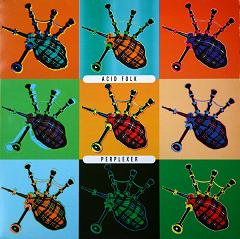
Perplexer – Acid Folk (DEF single, 1994)

perplexer_acidfolk

def | 12″/l12″/cd eef100 | 1994

A while ago a friend told me that every London map designer includes a fake road somewhere in their maps, the purpose being that it allows them to tell if anyone has copied their version illegally. One can only imagine how much of a wild goose chase you’d find yourself on if you actually tried to find that road or asked a cabbie to take you there.

I found myself thinking about that when a copy of Perplexer‘s ‘Acid Folk’ arrived through my letterbox in 2011. ‘Acid Folk’ is listed in my copy of Mute‘s Statement 2 2001 catalogue, but nothing about the CD tells you it’s a Mute release at all. No mention on the label, it doesn’t appear to be licenced, and the address for the record label is a completely different part of London from where Mute were based at the time. So I don’t know. Perhaps it’s just the version I bought, or maybe it was issued by Mute on behalf of the label (Deutsch-Englische-Fruendschaft, or DEF) without wishing to draw any attention to the Mute connection. Not much is known generally about DEF, but as they seemed principally to have been a home to Eskimos & Egypt prior to them releasing stuff on other labels, perhaps it was their own label; I’m pretty sure it was in no way connected to the management company, also known as DEF, that Moby was part of for most of his career.

But enough of the mystery. Perplexer’s public face was ‘enacted’ by Marc Olbertz. ‘Acid Folk’ was written and produced by Alexander Breuer, Andreas Schneider and Ramon Zengler; Zengler is most familiar to me as one half of the seminal Hardfloor, whose ‘Acperience’ EP was responsible for stimulating acid house’s second, enduring renaissance on dancefloors. Unsurprisingly, then, that ‘Acid Folk’ should have a lovely set of 303s running through it. However, it plays second fiddle to the bagpipe drone that dominates the track; that’s right, acid house meets traditional Scottish folk music. Just when it seemed that every possible novelty permutation of dance music had been exploited, along comes a track which mixes the sort of happy hardcore beats that used to get skinhead Dutch ravers very excited, bagpipes and acid house grooves. I used to think that you could add a 303 to anything and it would make it sound superb (see acid head Ege Bam Yasi’s How To Acid An Egg for evidence of that); that’s evidently not the case with bagpipes, or at least it doesn’t feel that way to me. I’ll be relatively upfront and say that I don’t really like ‘Acid Folk’.

The vocal mix is too fast for my liking, plus – despite some Scottish roots – I don’t really like the sound of the bagpipes anyway, so it’s sort of difficult to listen to; the Low-Speed mix is slightly slower and I would really love this mix were it not for the bagpipes, since it would just be a constant acid rush. I’m also not a fan of hardcore DJ Ellis Dee’s breakbeat-and-drone version although the rave stabs and 1992 ‘ardcore vibes are quite good.

The House mix starts with some nice sounds, a deep house beat / bassline and processes the bagpipe riff into the equivalent of the euphoric clipped sax samples that used to be a favourite of house producers back in the day. It’s my favourite mix overall, mostly because the bagpipes are treated and not too irritating; I was never a huge house fan back in the day and yet I really like this. The Pro-Gress mix is a bit all over the place for my liking, blending some ear-friendly aesthetics with some deeper sounds to create a hybrid that would probably appeal to fans of trance. Once again it’s the bagpipe drone that stops this from being better than it should be. I do find it quite strange – in 1994 remixers usually went out of their way to dispense with most of the original elements of a track yet here all the mixers keep the bagpipes in. There are other mixes available on the 12″ and limited remix 12″; I’m not that much of a Mute completist to bother with those for this release.

Perhaps I’m starting to understand why Mute didn’t properly affix their name to this after all…

My version of the CD single is now up for sale on Discogs.com under the username nominalmusics. If you’re desperate to own it, head here.

12″:
A1. Acid Folk (Low Speed Mix)
A2. Acid Folk (House Remix)
B1. Acid Folk (Vocal Mix)
B2. Acid Folk (DJ Tom & Norman Remix)

remix 12″:
A1. Acid Folk (Ellis D. Remix Edit 2)
A2. Acid Folk (Cream & Candy Remix)
B1. Acid Folk (Exit EEE Remix)
B2. Acid Folk (Pro-Gress Remix)

cd:
1. Acid Folk (Vocal Mix)
2. Acid Folk (Low Speed Mix)
3. Acid Folk (Ellis D. Remix Edit 2)
4. Acid Folk (House Remix)
5. Acid Folk (Pro-Gress Remix)

First posted 2011; edited 2016

(c) 206 Mat Smith / Documentary Evidence
The Killer Robots! Crash And Burn (Leomark Studios film, 2016)


This post has moved. You can now find it at Further. here.

Sonic Youth – Spinhead Sessions (Goofin’ album, 2016)


The full sessions for Sonic Youth‘s unused soundtrack to Ken Friedman’s movie Made In The USA have finally seen the light of day, some thirty years after they were recorded. In the UK the band had recently signed to Paul Smith‘s Blast First imprint and were about to release their seminal Sister LP after replacing Bob Bert on drums with Steve Shelley.

Despite the transition they were just about to make, Spinhead Sessions – named for the studio where these instrumental tracks were recorded – has more in common with the spooky atmospheres of their Blast First debut Bad Moon Rising.
I reviewed this for Clash. The review can be found here.

(c) 2016 Mat Smith / Documentary Evidence for Clash