Nick Cave & The Bad Seeds – Push The Sky Away (Bad Seed album, 2013)

Nick Cave & The Bad Seeds 'Push The Sky Away' LP artwork

bad seed ltd | lp/cd/cd+dvd/box/dl bs001 | 18/02/2013

Push The Sky Away is the first Nick Cave material to emerge since he parted company with Mute in the wake of his terminated Grinderman project, and the first Bad Seeds album since 2008’s Dig!!! Lazarus Dig!!!. Now bereft of long-term arranger Mick Harvey, the Dirty Three multi-instrumentalist Warren Ellis steps in and takes the role vacated by Harvey; since 2007 Ellis’ playing has filled the void left by Blixa Bargeld‘s guitar, he was Cave’s foil in Grinderman and the pair have realised several soundtracks together, showcasing a symbiotic relationship that has produced some of the best material in Cave’s back catalogue.

It’s precisely thirty years since the volatile young Nick Cave formed The Bad Seeds in Berlin following the demise of post-punk’s ravaged Birthday Party. Much has changed. Aside from a surprise reappearance of original Bad Seeds bassist Barry Adamson on two tracks here, not one of the original Bad Seeds line-up features in the group that bears the name today, but the core group of musicians that have been with Cave the longest remain in situ – Warren Ellis, Jim Sclavunos (percussion), Thomas Wydler (drums), Martyn P. Casey (bass) and Conway Savage (piano, organ). The fire and brimstone seems to have been exorcised effectively by two raucous Grinderman records and the Dig!!! Lazarus Dig!!! album in the middle, leaving Cave and co focussing more or less completely on the beautiful melancholia of the more serene moments of Abbatoir Blues / The Lyre Of Orpheus.

Your reaction to Push The Sky Away will thus depend on whether what you want from Cave is howling, just on the edge of being out of control blues-informed punk, or the mature ideology that has coincided with the establishment’s embrace of Cave as one of the finest songwriters of the past thirty years. If the former is what you’re looking for, you’ll be disappointed, since Push The Sky Away generally has the slightly maudlin atmosphere that provided the mood on The Lyre Of Orpheus‘ closing track ‘O Children’; all of which is fine, but as anyone who’s listened to the Velvet Underground’s lovely third album for a while will tell you, sometimes you just want to hear ‘Waiting For The Man’. The closest Push The Sky Away gets to anything like the Cave of his earliest Bad Seeds work is on ‘Water’s Edge’ or ‘We Real Cool’, where the growling bass that dominates the low-end reminds listeners of the apocalyptic ‘Tupelo’ from The Firstborn Is Dead. The rest of the album is delicate balladry, with almost psychedelic arrangements (such as the ephemeral title track), quiet musings and bewildered observations on subjects ranging from mermaids to Wikipedia to teenagers cavorting carelessly on the beaches of Hove outside Cave’s window. In the press release, Cave describes Push The Sky Away thusly: ‘I don’t know, this record just seems new, you know, but new in an old school kind of way.’

That sense of the ‘new’ comes through in the remarkable palette of sounds deployed on the album, much of it purportedly derived from loops prepared by Ellis. With Mick Harvey gone and Cave seemingly unwilling to pick up a guitar after Grinderman, the album is largely devoid of any six-string action, with only the stand-out ‘Jubilee Street’ carrying anything close to a guitar line. Ellis shines through as effective lead musician, tracks filled-out with his loops, violin, mandolin and other assorted instruments. The rest of The Bad Seeds literally seem to play second fiddle to the dominance of Ellis, offering up loping basslines, intricate percussion and sprinkles of beautiful piano. Nevertheless, it’s reasonably clear – and not necessarily a bad thing – that Ellis is the primary mood-maker here. The upshot is some of the most advanced music that the Bad Seeds have ever realised, often bordering on a sort of synth music offshoot that no-one has named yet.

Cave’s singing has matured into a distinctive, varied and considered voice over time. The rough edges are all completely gone, leaving a honey-coated rasp that feels a long way from the guttural bleatings of the Cave of the past, hunched over a microphone in apparent pain, spitting words and sibilant sounds forth like a man possessed. The pretty ‘Wide Lovely Eyes’ Cave – with Cave observing the funfare being dismantled and images of departure set to a backdrop of shoes being arranged carefully on a pebble beach – sees the beautiful pairing of Cave and Conway Savage reminding us of some of the most brittle moments of the Bad Seeds catalogue, wherein the tenderness long ago replaced the anger; on this and a number of other songs, Cave reminds me of Ed Harris’s character in The Hours, sat in his window watching the world go by, a resigned, tired air colouring proceedings.

The frontman reprises some of his humourous bluesy story-telling and diverse intonations on the obscure centrepiece, ‘Higgs Boson Blues’, namechecking everything from Hannah Montana / Miley Cyrus, Wikipedia, Robert Johnson, vague mythologies and Switzerland’s Large Hadron Collider; that and ‘Jubilee Street’ are the clear highlights of the album, both being the most fully-formed and musically complete pieces here. The former has a skittish, absorbing jazz-blues dimension; the latter has a rousing, slowly-developing mix of lovely rolling drums, acoustic guitar, percussion, full orchestration and a muted intensity as Cave rises up into the sky toward the end in angelic contrast to the devilish way he flew forth in ‘Mutiny!’ back in the day. ‘Jubilee Street’ (which may or may not be set on the much-altered street in Brighton now devoid of any of its original charm) has a strong and compelling narrative, touching on the darker side of life with a bleak tale of what sounds like a prostitute who gets moved on from Jubilee Street by Russians.

The rest of the album is sonically clever and absorbing, even if Cave sounds like he might be sleepwalking through his songwriting at times. Nevertheless, he’s managed to produce some truly lovely songs as well as a new-found observational capacity in tracks like ‘Water’s Edge’, wherein the opposing forces of London girls looking for a good time and local boys looking for something to do clash; like Quadrophenia for vampires and party girls. There’s also moments where his particular brand of Viz-style smuttiness and wry humour shine through. Overall, it feels like Laura Ashley wallpaper – nice to look at, perfectly inoffensive and fine in the background, but you wouldn’t decorate your whole house with it.

Thanks to Rhian at Big Mouth.

***

I’m reposting this on the occasion of the Push The Sky Away receiving the prestigious Ivor Novello Album Award, an incredible achievement for both Nick Cave and his publisher Mute Song.

Cave has deserved greater recognition for his songwriting for far too long, and I’m delighted that the rest of the music world seems to have caught up with those of us who always knew where his songs would ultimately take him. I just wish that it had been another album that had secured him that recognition; a year on, I still haven’t warmed to this album, and I personally feel that there are far better works than this in the Cave back catalogue.

Track listing:

lp/lp+7″/cd/cd+dvd/dl:
A1. / 1. We No Who U R
A2. / 2. Wide Lovely Eyes
A3. / 3. Water’s Edge
A4. / 4. Jubilee Street
A5. / 5. Mermaids
A6. / 6. We Real Cool
A7. / 7. Finishing Jubilee Street
A8. / 8. Higgs Boson Blues
A9. / 9. Push The Sky Away

7″/dvd:
C. Needle Boy
D. Lightning Bolts

First published 2013; edited 2014.
Barry Adamson – The Negro Inside Me (Mute Records EP, 1993)

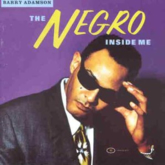
Barry Adamson 'The Negro Inside Me' CD artwork

mute records | lp/cd stumm120 | 19/10/1993

Barry Adamson‘s 1993’s Paul ‘PK’ Kendall-produced 6-track The Negro Inside Me begins with a burst of spiralling horns before rushing headlong into an up-tempo Hammond organ versus James Bond jazz-funk groove; built around a recording of what appears to be Adamson’s publicist or manager trying to run through a list of engagements, interviews and appointments, at around three minutes, the track breaks down into a latin-edged cymbal-intensive percussion rhythm, before rebuilding and gathering greater momentum. ‘The Snowball Effect’ appears to be the most appropriate name for this rolling, energetic track.

‘Dead Heat’, with its varied collection of headcleaner scratched record samples, electronic noises and slow-mo hip-hop breaks wouldn’t have sounded out of place on a Massive Attack album. However, the orchestral textures piano motifs give this a totally different atmosphere from anything that Bristol collective could muster.

The outstanding ‘Busted (Michaelangelo Version)’, built around layers of percussive hip-hoppery and organ flourishes, sounds just like a gangster TV show soundtrack with its car-chase saxophone melodies and sparse and funky wah-wah guitar, Starting with some soulful female vocal textures, ‘Cold Black Preach’ gradually develops into a filmic, atmospheric work with an amazing bassline and urgent hip-hop breaks.

Re-setting and re-positioning an old song should not be slapdash; pop music is littered with failed, miserable attempts to do just that. Thankfully, Adamson’s revisioning of the simultaneously cheesy and sexual ‘Je T’Aime… Moi Non Plus’ – like his version of ‘These Boots Are Made For Walking’ with Anita Lane – is somehow respectful, taking the core melody and song structure of the original and adding a steady, bass-heavy groove. A duet with Louise Ness (with language training by regular Mute chanteuse Pascale Fuillée / Pascale Fuillée-Kendall), the vocals are somehow more coherent and loaded with barely hidden sexual desire than the Serge Gainsbourg original.

This 30-minute mini-LP closes with ‘A Perfectly Natural Union’, a slow and lounge-y piece of café jazz for piano and vibes, with Adamson’s double bass walking alongside at a steady, lazy pace. Sounding a little like the ‘Gallery’ muzak on Tony Hart’s kids TV shows, ‘A Perfectly Natural Union’ is the perfect chilled-out conclusion to this excellent release.

The title of this release always intrigued me. Unlike his other releases (which bear a sense of lightness and humour), it seems, on first examination, strangely serious. However the music itself is characteristically upbeat, and a glance at Adamson’s face in Polly Borland’s photo on the cover tells you that this isn’t meant to be taken too seriously, so sit back and let the good vibes toll…

Track listing:

lp/cd:
A1. / 1. The Snowball Effect
A2. / 2. Dead Heat
A3. / 3. Busted (Michaelangelo Version)
B1. / 4. Cold Black Preach
B2. / 5. Je T’Aime… Moi Non Plus
B3. / 6. A Perfectly Natural Union

First published 2003; edited 2014

(c) 2014 Mat Smith / Documentary Evidence

Anita Lane – Dirty Pearl (Mute Records album, 1993)

Anita Lane 'Dirty Pearl' LP artwork

mute records | lp/cd stumm81 | 10/1993

Dirty Pearl is a rag-bag collection of newly-recorded Anita Lane tracks produced by Mick Harvey as well as older material, the entire Dirty Sings EP and collaborations with Die Haut, Einstürzende Neubauten, Barry Adamson and The Birthday Party. The album is as much a collection of Lane’s work as it is a showcase for the seemingly unlikely cross-pollination of scenes that emerged when The Birthday Party moved from Australia to the UK, followed by a brief and fortuitous sojourn in Berlin; that productive Kreuzberg stop-over was responsible for Nick Cave‘s Bad Seeds being swelled by the likes of Neubauten’s Blixa Bargeld and Die Haut’s Thomas Wydler, as well as some of Cave’s most inventive and inspired early musical work.

The collection covers the period 1982 to 1993 and presents the tracks in reverse chronological order. Overall, the compilation shows just how integral Lane was to the whole scene that formed between London and Berlin in the mid-Eighties, with characters such as Chrislo Haas and Adamson appearing on various tracks. As Nick Cave’s girlfriend and muse, Lane co-wrote a number of The Birthday Party’s songs, including the likes of ‘Dead Joe’, and was credited as a founding member of Cave’s subsequent Bad Seeds though her participation in the group was never exactly clear. What’s also immediately apparent from this collection is just how little music Lane has herself released – over half of Dirty Pearl was already released by the time this compilation was released, and Lane would only come to release her first (and to date only) ‘proper’ LP in 2002 with Sex O’Clock. Whilst Dirty Pearl provides a comprehensive overview of Lane’s music, one notable omission is 1991’s collaboration with Adamson on the excellent cover of Lee Hazlewood’s ‘These Boots Were Made For Walking’ which Adamson crafted for his Delusion soundtrack.

Opening track (and therefore most recent) ‘Jesus Almost Got Me’ is a countrified, Triffids-esque song of drunkenness, cruel love and regret, beautifully carried forward on Harvey’s sensitive drumming and ‘Evil’ Graham Lee’s genteel slide guitar. Immersed in the background are spirals of grainy feedback and some lovely vocal harmonies from Harvey. ‘Jesus Almost Got Me’ has a tired, resigned quality to it. In contrast, ‘The Groovy Guru’ is a funky, psychedelic trip, filled with wild face-melting guitar and wayward organ creating a vibe that felt about twenty-five years old too late, the lyrics describing a sort of pervy Cassanova character with a number of Satanic traits.

The cover of Marvin Gaye’s ‘Sexual Healing’ was produced by Mick Harvey with artist Johannes Beck and Sven Röhrig, finding Lane cooing girlishly over a sick, phasing breakbeat, shimmering vibes from Barry Adamson and some leaden (and less-than-romantic) backing vocals from Beck and Moritz Wolpert. At times Lane sings with a strained needfulness that can feel quite uncomfortable at times, but it’s quite hard to think of this as being too serious. Both ‘Blume’ (from Neubauten’s Tabula Rasa LP) and ‘Subterranean World (How Long…?)’ (from Die Haut’s Head On) highlight how well Lane’s voice matches Blixa Bargeld’s distinctive own. Bargeld’s transition from the howling, shredded vocal style displayed on Neubaten’s earliest material to the sensitive, half-spoken, almost Scott Walker-esque voice of their later material is continually surprising, and that softer side shines through on these two songs. ‘Subterranean World’, with its duet chorus of ‘How long have we known each other now?‘ brings to mind those clips in romantic films where couples explain to camera how long they have been together, except that by the end of this darkly humorous song Lane and Bargeld decide that they’ve never actually met before.

‘Picture Of Mary’ is an atmospheric piece written with Bargeld, dominated by Lane’s ghostly singing and a backdrop of dramatic piano, mournful violin and jangly Latin guitars (from Blixa) which threaten to swell up in the mix but never quite do. The only thing that lets this track down is Lane’s vaguely tuneless musings which bring to mind some of Nico’s material, but that is more than made up for by the intricate backdrop. Latin guitars and strings also colour the maudlin ‘Stories Of Your Dreams’, which possesses a strong narrative and theatrical mood. The song was co-written with Neubuaten’s Alexander Hacke, who also plays guitars on the song, while Crime And The City Solution founding member Bronwyn Adams plays violin.

The CD release of Dirty Pearl also includes ‘A Prison In The Desert’ by Nick Cave, Mick Harvey and Bargeld, taken from their soundtrack to Ghosts… Of The Civil Dead. The piece sees Lane mostly wordlessly singing over a backdrop of droning strings, industrial sounds and high-pitched noises, her voice providing a gentle counterpoint to what is otherwise a reasonably harrowing piece of music, a bit like a Graeme Revell soundtrack.

Eschewing all the released tracks from The Birthday Party canon that Lane contributed to, Dirty Pearl instead offers ‘The Fullness Of His Coming’, an unreleased track which features Lane on lead vocals, serving as strong reminder of why The Birthday Party were a musical force to be reckoned with at the start of the Eighties. The song is dominated by grinding guitar riffs from Rowland S. Howard that sounds like they might have been fed through an organ, Tracy Pew‘s ludicrously prominent bass and insistent and quickening drums from Mick Harvey. Lane murmurs and squirms provocatively through the track, particularly as the pace begins to quicken, the assembled Party members providing a nasty mantra of the track’s title while Lane writhes rapturously in the foreground.

Track listing:

lp/cd:
A1. / 1. Jesus Almost Got Me
A2. / 2. The Groovy Guru
A3. / 3. Sexual Healing
A4. / 4. Blume (Einstürzende Neubauten feat. Anita Lane)
B1. / 5. Subterranean World (How Long…?) (Die Haut feat. Anita Lane)
B2 / 6. Picture Of Mary
B3. / 7. The World’s A Girl
B4. / 8. Stories Of Your Dreams
9. A Prison In The Desert (Nick Cave / Mick Harvey / Blixa Bargeld feat. Anita Lane) – CD bonus track
10. If I Should Die – CD bonus track
11. I’m A Believer – CD bonus track
12. Lost In Music – CD bonus track
13. Sugar In A Hurricane – CD bonus track
B5. / 14. The Fullness Of His Coming (The Birthday Party feat. Anita Lane)

First published 2012; edited 2014

(c) 2014 Mat Smith / Documentary Evidence

Barry Adamson – Oedipus Schmoedipus (Mute Records album, 1996)

Image
mute records | lp/cd stumm134 | 1996

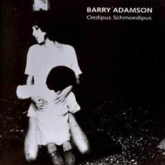
The title could be a New York slang dismissal of the famous Freudian concept while its cover seems strangely maudlin and serious for an artist not normally renowned for being so. The diversity of contextualisations available between the concepts in the title and on the sleeve – the throwaway and the earnest – is a fairly good guide to the typically disparate themes and shapes that populate this 1996 Barry Adamson album.

Featuring collaborations with Pulp’s Jarvis Cocker (‘Set The Controls For The Heart Of The Pelvis’), Nick Cave (‘The Sweetest Embrace’) and Billy Mackenzie (‘Achieved In The Valley Of Dolls’), here we find Adamson traversing fluidly across genres – turbulent electronic compositions, be-bop, Memphis disco rock, spoken word and big band themes – all in little over an hour. It has always amazed me as to how an artist can competently have his finger in so many stylistic pies at once, but Adamson (uniquely) proves how to pull it off, time after time after time.

Over a pounding rock-disco groove (built, it seems, around a sampled snare beat from Primal Scream’s seminal ‘Rocks’), Jarvis Cocker squirms, shakes and squeals his way through ‘Set The Controls For The Heart Of The Pelvis’; buoyed by folkish violins and gospel vocals urging to be saved from one’s own wandering hands, Jarvis is here cast as some sort of desperate, sex-hungry voyeur. ‘Something Wicked This Way Comes’ gives a writing credit to Massive Attack (presumably for a sample, although it is not detailed), and sees Adamson cutting a soulful, downtempo groove.

Starting with some polite audience applause, ‘The Vibes Ain’t Nothin’ But The Vibes’ is a sparse vibes, percussion and bass laidback jazz outing that benefits from a slow percussion break and some synthetic-sounding drums. In a close-mic’d whisper, Adamson describes a sort of humorous frisson between two lovers, although I don’t recall when it became fashionable to namedrop Dunkin’ Donuts as a ‘cool’ place to head for dates. Some heavy phasing creates a spatial, otherworldly atmosphere toward the end, appropriately setting the tone for ‘It’s Business As Usual’, an electronically-processed composition that is claustrophobic and threatening. A relentless bassloop and eerie noises offset distorted, manic answerphone messages, from what appears to be a female stalker.

In comparison, the cover of Miles Davis’ hardbop-era ‘Miles’ is light and airy, deploying vibes where Davis’ trumpet once stalked so effervescently; piano and what appears to be a simply-programmed drum beat offset the traditional brushed cymbals and trumpet, offering a reverential take on the Davis classic. In a yet greater contrast, ‘Dirty Barry’ is built totally around echoing loops and textures with watery, processed horns and ghostly atmospherics invoking a dusty Clive Barker horror soundtrack atmosphere, its tribal bass drums merely reinforcing the cavernous edge. ‘In A Moment Of Clarity’ pushes back into downtempo jazz territory, a Parisian melodramatic piece with so much cymbal-brushing that it sounds like an old 78. No extreme improv here, thank God, just well-studied and careful mood jazz.

‘Achieved In The Valley Of The Dolls’ recalls the sound of Soul II Soul, with scratches, hip-hop beats and soulful vocals from the late Billy Mackenzie. With Adamson’s vocal collaborations, one gets the impression that the smaller canvas of pop music-esque songs actually encourages Adamson to be more precise and layered in his musical accompaniment. ‘Achieved…’ and the later track ‘Sweetest Embrace’ both contain a certain textural completeness, full of mood and imbued with emotion that simply provides the vocals with the respectful setting these excellent vocalists have always deserved.

Arriving at a time when Cave’s curiosity was piqued more by pastoral balladry than the wretched devil gospel of some of his earlier works ‘The Sweetest Embrace’ is a perfect example of sensual, emotional songwriting. In contrast to the verses which are delivered in a warm, confiding whisper, the chorus soars with a Scott Walker or Tony Bennett quality, while Adamson’s rich accompaniment is full of organs, synths and harpsichords over a slow, skipping rhythm, appropriately loaded with the same intimate atmosphere.

The Jackanory-esque ‘Vermillion Kisses’, a twisted fairy tale read with customary over the top inflection above Adamson’s theatrical accompaniment, segues perfectly into ‘The Big Bamboozle’, a big band track recalling the larg-scale ensembles of, say, Glenn Miller. Except, unlike Miller’s boogie-woogie feel-good songs, this exciting track is dark and menacing, like the incidental music to a Twenties gangster movie laced with some very British Sixties harpsichord and guitar. ‘State Of Contraction’ is a simple piano song, filled with beautiful harmonies and melodies, quiet strings giving this a regretful atmosphere.

Oedipus Schmoedipus ends with a reprise of the raucous ‘Set The Controls For The Heart Of The Sun’, which in a way is a shame, particularly since it follows ‘The Sweetest Embrace’. ‘Set The Controls…’ while upbeat and fun, is not Adamson’s finest hour, and its not the best track here. The album could have easily closed without it.

Track listing:

lp/cd:
A1. / 1. Set The Controls For The Heart Of The Pelvis
A2. / 2. Something Wicked This Way Comes
A3. / 3. The Vibes Ain’t Nothin’ But The Vibes
A4. / 4. It’s Business As Usual
A5. / 5. Miles
—- / 6. Dirty Barry [CD bonus track]
B1. / 7. In A Moment Of Clarity
B2. / 8. Achieved In The Valley Of Dolls
B3. / 9. Vermillion Kisses
B4. / 10. The Big Bamboozle
B5. / 11. State Of Contraction
B6. / 12. The Sweetest Embrace
B7. / 13. Set The Controls Again

First published 2003; edited 2014.

(c) 2003 -2014 Mat Smith / Documentary Evidence