Documentary Evidence 2017 Top 10 Albums: 6. Depeche Mode ‘Spirit’

“Not an album to listen to if you are remotely worried about the state of the world right now… The kind of album that is necessary for shining a light on our basest traits and for encouraging us to think differently all over again; in that sense, for the first time in a long time, Depeche Mode have judged this just right.”
– Clash

Honestly, I couldn’t bring myself to get excited about Depeche Mode‘s Spirit album. Partly it was because it was billed as being political, and I’m not an outwardly political person and nor do I especially gravitate toward albums with obvious political content. I was asked by Clash to write a piece explaining that Depeche Mode had always been political on some level, which seemed like utter nonsense until I started writing it. That piece can be found here; I won’t rehash it again but it’s a piece of mature analysis that I am particularly proud of.

‘Where’s The Revolution?’ did nothing for me when it was released, and I didn’t hold out much hope for the album. Being political had become trendy, with bands using music as a platform to make a political point, and I couldn’t get on board with it at all. But spending time with the album to write a review, also for Clash, unlocked something that I hadn’t especially expected to find.

My earliest drafts for the review were uniformly negative. I couldn’t reconcile lyrics about impoverished members of society with a band whose members variously live in Manhattan apartments and Californian mansions; it somehow seemed hypocritical on a very obvious level. But as I spent time time with Spirit I began to hear parallels with a very different album – Marvin Gaye’s What’s Going On – and a certain similarity of poise began to emerge, especially in Martin Gore‘s lyrics for ‘Fail’ at the very end of the album.

Spirit did much to allow me to reconcile issues that I didn’t even know I harboured toward Depeche Mode, a band that have been part of my life since my teens. Consequently, I’m convinced that when, in decades to come, writers like me are asked to assess Depeche Mode’s legacy, Spirit will stand out as the band’s surprising yet defining late period statement.

Listen to Spirithere.

My review for Clash can be found here.

(c) 2017 Mat Smith / Documentary Evidence

Documentary Evidence 2017 Top 10 Albums: 9. RAC ‘Ego’

“Pop music really shouldn’t be this clever.”
Clash

There will be more on this topic later on in this countdown of my favourite albums of 2017, but these past few years have found me migrating back toward pop music, while at the same time maintaining a continual push toward music’s outer edges.

I reviewed producer and songwriter André Allen Anjos’s second album as RAC for Clash and found myself listening to it over, and over, and over for a decent chunk of the summer. In a world where countless producers co-opt guest vocalists to provide the vocals for songs they can’t sing themselves, Anjos stands out not through his black book – Rivers Cuomo from Weezer, Rostam from Vampire Weekend, St. Lucia – but his approach to a brand of smart pop that has a mature, enduring sensitivity as well as some very fine melodic credentials.

Listen to Ego here.

My full Clash review can be found here.

(c) 2017 Mat Smith / Documentary Evidence

Jono Podmore – Jaki Liebezeit: Life, Theory And Practice Of A Master Drummer (book, 2017)

Jaki Liebezeit, photo courtesy of Jono Podmore

Metamono‘s Jono Podmore (aka Kumo) has arguably done more than anyone else in recent years to keep the legacy of Can alive, whether in groups like Cyclopean with Can members Jaki Liebezeit and Irmin Schmidt, or remastering the Can back catalogue and sundry unreleased cuts with Holger Czukay and long-standing Can supporter Daniel Miller.

To those initiatives can be added a new book that Podmore has assembled with US music journalist John Payne, Jaki Liebezeit: Life, Theory & Practice Of A Master Drummer, which seeks to document the unique approach practiced by Can’s late drummer, who passed away in January of this year. The book is currently subject to a crowdfunding campaign via Unbound which can be found here.

I wrote a news piece for Clash which explains more about the book and which can be found here.

In the process of putting my news piece together I asked Podmore for his recollections of working with Liebezeit, and that insight can be found in the Clash piece. “While we were having dinner one night, I was putting on some music,” Podmore also recalled. “At one point I put on some Charles Mingus. Without looking up, Jaki said, with a mixture of confusion and disgust, ‘Jazz? Been there. Done that.’ With that in mind I asked him if there were any other drummers that interested him. ‘Yes,’ he said. ‘808 and 909.'”

(c) 2017 Mat Smith / Documentary Evidence for Clash

RAC – Ego (Counter Records, 2017)

“Pop music really shouldn’t be this clever.” — Clash review, July 2017

André Allen Anjos, aka RAC, is set to release his second album of smart pop songs with a revolving cast of singers later this week via Ninja Tune’s Counter subsidiary.

I reviewed the album for Clash. You can read my review here. Suffice to say that I don’t think I’ve heard a pop album by a modern act this good for a long, long time.

(c) 2017 Mat Smith / Documentary Evidence for Clash

Toro y Moi – Boo Boo (Carpark Records album, 2017)

Boo Boo feels like what we might call a coming-of-age album, the theme of which is that, despite all our best endeavours, life isn’t always perfect.

I reviewed the very fine new Toro y Moi for Clash. My review can be found here

(c) 2017 Mat Smith / Documentary Evidence for Clash

Can – The Singles (Spoon / Mute compilation, 2017)

can_thesingles

Last week Spoon / Mute released The Singles, a collection of all of Can‘s singles and selected B-sides, which serves as a great entry point into the musical genius of this band.

I reviewed the compilation for Clash – read my thoughts here.

(c) 2017 Mat Smith / Documentary Evidence for Clash
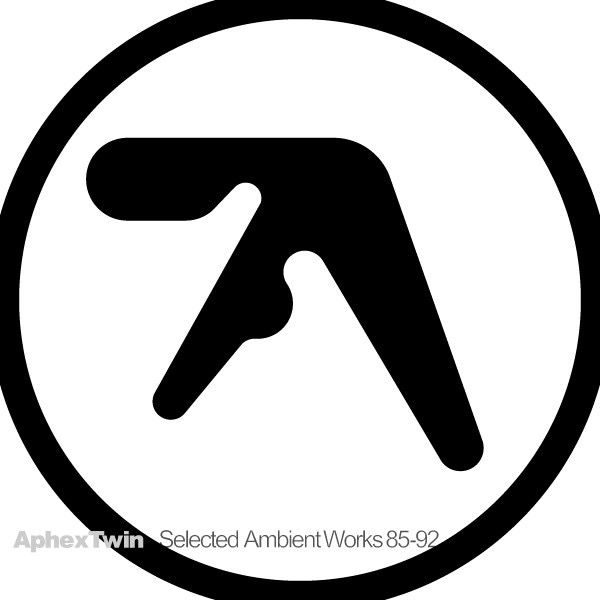
Aphex Twin – Selected Ambient Works 85-92 (R&S / Apollo, 1992)

I wrote a Spotlight feature for Clash about Aphex Twin’s seminal Selected Ambient Works 85-92, a release which still mystifies me to this day, some 24 years after I first encountered it.
Around this time I was to be found mostly to be listening to a bit of dance music, Erasure, Depeche Mode, New Order and Pop Will Eat Itself. Clint Mansell from PWEI retweeted Clash‘s link to this at the weekend, which is a curiously circular honour for me.

My piece for Clash can be found here.

(c) 2017 Mat Smith / Documentary Evidence for Clash

Mick Harvey – Intoxicated Women (Mute album, 2017)

“Does much to alter the misconception that Gainsbourg was little more than a louche, womanising so-and-so only capable of producing kitsch-y songs dominated by sex and decadence.” – Clash

Mute stalwart Mick Harvey has released the fourth and final album in his project to translate the work of Serge Gainsbourg, this time focussing largely on the songs Gainsbourg wrote for female collaborators.

I reviewed the album for Clash. My review can be found here.

(c) Mat Smith / Documentary Evidence for Clash

Daft Punk – Homework (Virgin album, 1997)


I was sat in my pokey little room in Eddington Tower at the University of Essex in Colchester in the autumn of 1995 when a guy from my economics course turned up out of the blue. I rarely had visitors but Michael wasn’t really popping over to hang out – he’d missed a couple of econometrics classes and hadn’t been able to understand the homework we’d been set. He knew I was the kind of dull student who always stayed on top of his homework, so he knew that if he wanted to catch up via the dubious act of copying someone else’s work, I was a pretty safe bet.

As well as sharing a degree subject or two, the other thing that Michael and I agreed on was dance music. I’d fallen head over heels into dance music properly in 1994 and since then it had become what I’d listen to whenever I got a chance. That and punk, which I’d gotten into after recognising the similarities to techno. On Michael’s visit I was just putting on a new 12” I’d picked up from Colchester’s Time Records earlier that week – ‘Da Funk’ by Daft Punk. I must have heard about that in a music magazine, as the campus radio station was only into playing indie, and the only dance music I listened to on national radio was the guest mixes that Pete Tong used to curate on Saturday nights. Back then I heeded the words written by journalists and would seek out records based on their recommendation. Something about the write-up of ‘Da Funk’ appealed to my sensibilities, especially in Muzik, and I probably ordered it in especially from Time when it was released.

Anyway, Michael was absolutely floored when the main hook of ‘Da Funk’ casually wandered into view. We listened to it maybe three or four times before switching to the B-side, the crazy squeal of ‘Rollin’ & Scratchin’’, which Michael thought was flat-out incredible. As well as weed (not my thing), Michael always had lots of cash on him thanks to his rich parents, and I recall he tried to buy the 12” from me on the spot. I refused, but let him copy my homework instead.


By the time Daft Punk issued their own Homework in 1997, my snobbish aesthetic meant that I’d turned my back on them upon Thomas Bangalter and Guy-Manuel de Homem-Christo signing to a major label and dumping Slam’s Soma imprint. This meant I overlooked just how great that record was at first, but slowly caught up and became every bit as much of a fan as, it seemed, everyone else was among the dance music community.

It seems scarcely possible that Homework can be 20 years old, but it is. I had the opportunity to celebrate the anniversary of this seminal record by writing a lengthy piece for Clash, during which time I was transported back to my humble student hovel to recall vividly how jaw-droppingly brilliant Daft Punk were back in the day. That was half a lifetime ago for me, but my memories of that time are as clear as if they happened yesterday. And that sense of freshness, that newness, is what characterises most of Homework – aside from some flimsy house cuts that feel a bit basic now, most of this record sounds as innovative and uniquely placed as it did back then, something that few period dance music albums from the same period can boast.

Nowadays my daughters dance to ‘Da Funk’ on the Wii, I help them with their homework, I sold my ‘Da Funk’ 12″ for considerably more than Michael offered me, at Electronic Sound I write for the very guys whose words I thirsted over when they wrote for Muzik, and I feel desperately old and nostalgic most days.

Eddington Tower, University of Essex (right)

My piece for Clash can be found here.

(c) 2017 Mat Smith / Documentary Evidence for Clash
Brian Eno – Reflection (Opal / Warp album, 2016)

I like to that that I was a very good student of electronic music history, all told. When I understood that synth music didn’t come into existence with the likes of ‘Tainted Love’ in 1981, or even with Kraftwerk’s experiments in the previous decade, I was fastidious about trying to absorb all of the points along the genesis of the genre. I’m still doing that.

At some point in the 1990s I went headlong into the work of Brian Eno, probably around the time of the the second Future Sound Of London album where they’d used some of Robert Fripp’s ‘Frippertronics’ on that record. You read up about Fripp, you get to Eno, but then again most electronic music roads at some point will likely lead you to Eno. As soon as I found out about his electronic music, my local library’s collection of his CDs was rapidly depleted.

I liked most of what I heard, but the one that jumped out was his 1988 album The Shutov Assembly. I remember renting this the same day as Aphex Twin’s Selected Ambient Works II, and being surprised at how similar they both were; both being largely formed of weightless, serene pieces that seemed at times to border on the classical in their melodic content. Since then, The Shutov Assembly has become a go-to album for me at times when I need to chill the fuck out; usually this is at the start of an overnight flight back from the States, or a 4.15 train to St. Pancras before a Eurostar connection. I’m normally fast asleep by the start of the second track, ‘Alhondiga’. I know it’s a complete disservice to the album not to actually listen to it all the way through, at least not consciously, but I sure appreciate the album for helping me to sleep.

Over the years I’ve become an Eno collector, but not to the extent that I wish I could. Nevertheless, when the opportunity came up to review his new single-track Warp album Reflection for Clash, I was all over it. My review of this supremely beautiful record can be found here.

(c) 2016 Mat Smith / Documentary Evidence