Simon Fisher Turner – De Dentro Hacia Afuera (The Tapeworm album, 2009)

Translated, literally, as From The Inside Out, Simon Fisher Turner‘s De Dentro Hacia Afuera was issued as a white cassette on the consistently interesting Tapeworm label in an edition of just 250 copies in 2009.

The pieces on the cassette date back to 2002 / 2003 and the pieces fill a side apiece of the cassette. Side A (‘Outside’) consists of a field recording made by Fisher Turner of the procession of the Virgen del Carmen at Carboneras in 2002. The B-side (‘Inside’) consists of piano improvisations for the soundtrack to I’ll Sleep When I’m Dead, which Mute released as a download in 2003. Both pieces were edited, with Fisher Turner’s full blessing, from the original recordings by Tapeworm’s founder Philip Marshall.

The procession of the Virgen del Carmen takes place on 16 July each year in many Spanish towns, and also in other Spanish-speaking countries, marking the day of the appearance of the Virgin Mary to St. Simon Stock in Cambridge. Stock was the head of an order of the Catholic church which had fled from persecution where they were quartered in Monte Carmelo, now Israel, to Europe. The appearance of Mary to Stock in 1251 was not the first time the Virgin had appeared in the history if the order; in fact, the order was established because of Mary’s likeness in a cloud to some men investigating two prophets. Though some have subsequently cast doubt on Stock’s claims, the reassurance that Mary purportedly gave him, namely that those who wore the traditional scarpel – a cloth garment more or less in the shape of the Cross – would be freed from the fires of Hell has stuck and developed into the festival of divine celebration it has today.

Not that you’d necessarily deduce any of that in the recording Fisher Turner made on 16 July 2002. Here there are segments of chattering crowds milling and thronging around; a rousing brass marching band fades in and delivers a particularly uplifting song that feels like the soundtrack to some sort of Andalusian black and white movie (‘It would be great to play this tune to mum,’ someone is heard saying) before slowly moving out of focus; children chatter; babies cry; birds whistle, so does a man; a lone trumpet lets out a solitary blast before another rousing processional starts up, this one containing a funereal, maudlin middle section and a slightly wonky, out of tune tone; someone speaks above the crowd, prompting others to join in rapturously; what could be a piano pings out a brief high-pitched note; fireworks thunder in the sky; street sellers proffer their wares with repeated and insistent cries; a Latin pop song drifts in and out of focus with a singer sounding suspiciously like Andy Bell from Erasure; a cycle of strange industrial clanking rhythms and atmospheric drones and echoes is unfathomable as a source; someone’s shoes squeak playfully on a pavement.

Divorced from any obvious religious essence, the processions recorded here could have been captured anywhere in the Spanish-speaking world. The only real connection to divinity is the uplifting music, but none of those songs are exactly hymnal, and the church bells that toll at the very end of the piece. From the outside listening in, it feels like a public holiday that’s more or less forgotten why it was established, a bit like May Day, an excuse to kick back and unwind without knowing what you’re celebrating exactly. It all sounds pleasant, fun, the general buzz of people having a good time.

In 2003 Fisher Turner recorded the soundtrack to British director Mike Hodges’ I’ll Sleep When I’m Dead, starring Clive Owen. When I interviewed Simon just after the release of that album he advised that his process of creating the soundtrack involved getting on set, hitting props, talking to the actors, recording stuff and generally making a nuisance of himself to try and capture the essence of a scene.

I’ll Sleep When I’m Dead was pretty much improvised from my end,’ Fisher Turner explained to me back in 2004. ‘As they shot the film I worked at home on material that the editor was able to put in as a rough guide for the scenes. I had a good budget so I could test things out in the studio, bring them home, and rework them on the laptop, and then send them to the editor. I think finally I’d made up 9 CDs’ worth of music for the film. A lot of it is very atmospheric and distant, more ‘sound design’.’

The final soundtrack would contain familiar Fisher Turner elements in the form of tapes and contributions from the likes of former Blockhead Gilad Atzmon, but at its core were segments of noirish piano playing, the improvisations for which are documented on the second side of De Dentro Hacia Afuera. In recent times we’ve become used to Simon Fisher Turner almost dispensing with melody completely, but gathered here are a variety of modes and themes that evidence a unique skill at creating filmic moods with a minimal, discreet set of notes. Styles here range from tentative jazz to experiments that appear to involve sliding objects along the strings, clusters of evocative notes and ominous chords.

‘Solo Piano Improvisation #54’ is remarkable in two senses – first, as a piece of music (as opposed to considering it an assembly of sketches), it works just as dramatically as the fully realised soundtrack even without its additions and processing; second, it gives a rare insight into the early workings of a Simon Fisher Turner piece. Fisher Turner has himself said that his pieces are never really ever finished, often continuing to evolve further beyond the point where they’ve been submitted to a director and used in the finished film. The distance between early ideas and finished piece is thus immeasurable, making this document all the more intriguing. Though edited sensitively into a sequence and narrative by Philip Marshall, the result is still a recording of a work at its earliest stages, yet still capable of standing up as a complete work in its own right.

Related:

Interview with Philip Marshall from The Tapeworm about the label’s formation, ethos and ongoing exploration of the cassette format over at my other blog, Further.

Thanks to Philip at The Tapeworm and Simon Fisher Turner.

Originally posted 2013; re-posted 2018.

(c) 2013 MJA Smith / Documentary Evidence

Start To Move: A Short History Of 1970s Wire (Clash feature, 2018)

On the occasion of last week’s release of deluxe hardback reissues of Wire’s three 1970s albums, I was asked by Clash to contribute a short piece reflecting on the (perhaps overlooked) importance of those albums. Sections of the piece appeared originally on the first version of the Documentary Evidence website about ten years ago and haven’t ever gone back online; the original piece formed part of a longer bio covering the three chapters in the Wire story.

The Clash feature can be found here.

(c) 2018 Mat Smith for Clash

Electronic Sound 41

Issue 41 of Electronic Sound is out now, and if you’re quick you’ll probably still be able to get hold of the exclusive Underworld 7″ featuring two unreleased tracks that accompanies it. Underworld are the major feature in this month’s magazine, yielding yet another incredible sleeve, this time with the headache-inducing moiré patterns of a Bridget Riley painting.

Like many people back then, I got into Underworld upon the release of their 1994 album Dubnobasswithmyheadman, which did that rare thing of managing to cross-over between the worlds of dance music and rock – so much so that fhe NME, at that time so focussed on guitar music that nothing else got a look in, put Underworld on the front cover of an issue around the time Dubno… was released. I went straight down to Music Junction in Stratford-upon-Avon to bag myself a copy and it was played constantly thereafter.

For this issue my main contribution was an interview with Robert Görl, formerly of Deutsch Amerikanische Freundschaft and whose first solo album was released through Mute (with contributions from Annie Lennox no less). The feature centred on Görl’s Record Store Day album The Paris Tapes, and recounts the story of how those tapes came to be created, taking in everything from threatened deportation out of New York, conscription, moonlight flits to Paris, car crashes and Buddhism. Erasure‘s Vince Clarke remixed ‘Part 1’ from The Paris Tapes, and his mix almost included sections of my recorded conversation with Görl, but that’s another story.

Elsewhere in this issue, I wrote reviews of Kaada’s moving rumination on farewells, Closing Statements, and a new release from Chicago’s The Sea And Cake called Any Day which isn’t really electronic at all, but which features so many guitar effects that it might as well be. I also reviewed a new interpretation of John Luther Adams’s Canticles Of The Sky by Oliver Coates and a very fine leftfield R&B album by Friends Of Friends’ Sweatson Klank which I wrote in the departure lounge at New York’s JFK. I was also introduced to the wonderful, eclectic music of the peripatetic, prolific Sad Man, who turned out to have grown up near where I now live, and who now lives near where I grew up.

Finally, I wrote a short introduction to the music of Ariwo, a Cuban-influenced group whose music crosses that fickle boundary between jazz and electronics and is among the most mind-expanding things you’ll hear today.

It’s rare that you get the opportunity to cover rock, classical, jazz and synth music for one publication, but such is the broadminded approach that Electronic Sound bring to the electronic music table. Issue 41 can be ordered here.

Spotify links:

Robert Görl ‘Part 1 (Vince Clarke Remix)’
The Sea And Cake ‘Any Day’
Sad Man ‘Slow Bird’
Ariwo ‘Ariwo’

(c) 2018 Mat Smith / Documentary Evidence for Electronic Sound
Energy: Damo Suzuki (documentary, 2019)

Energy: Damo Suzuki is a documentary by Michelle Heighway scheduled for release in 2019. Heighway’s film follows Can alumnus Damo Suzuki as he confronts his diagnosis with colon cancer in 2014, and tries to continue his neverending tour.

The film is currently seeking crowdfunding, details of which can be found here.

A trailer for the film can be viewed below.

(c) 2018 Mat Smith / Documentary Evidence

White Witches – Heironymus Anonymous (AWAL album, 2018)

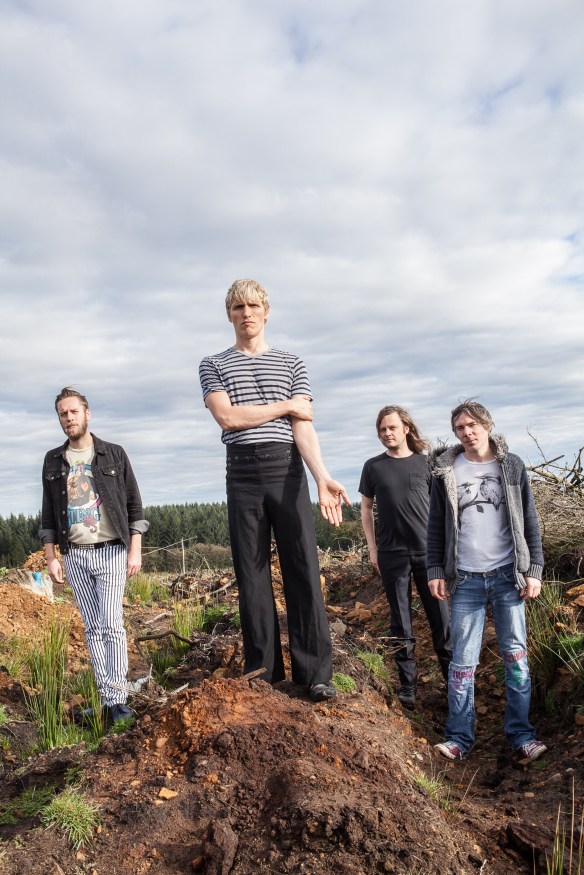
White Witches is a duo of Rory Lewarne, former frontman of the sorely-missed 2000s Mute act Pink Grease, and Piranha Deathray guitarist / keyboard player Jeremy Allen. For their debut album they’ve added the miscellaneous talents of ex-Art Brut drummer Mikey Breyer, Bourgeois & Maurice bassist Charlie Webb, Desperate Journalist vocalist Jo Bevan, and All Seeing I’s JP Buckle. Some six years in the making, Hieronymus Anonymous was recorded with Buckle at Jarvis Cocker’s basement studio and Dean Street studios in Soho.

Lewarne and Allen both grew up streets apart on the westernmost edges of Cornwall and describe White Witches as “dirty glam rock with a dystopian heart and a Cornish spirit”. The music here is wiry, brazen and full of nervous energy, infused with reverential flashes of Ziggy, Bolan, Ferry and the brothers Mael. Itchy guitar, clever lyrics and energetic kitwork combine together here into an album treading a tightrope between opaque fun-filled songs and seriously ominous themes, all fronted by Lewarne’s instantly familiar histrionics.

The album contains a whole host of highlights, from the theatrical melodrama of ‘Estella’ to the swirling basswork and sinewy riffery of ‘Sandcastles’, wherein Lewarne adopts a crazy falsetto amid music operating on the very edge of chaos. The title track is a strident, pathos-laden ode to a life well lived, while towering closing track ‘Savages’ blends the now-familiar White Witches sound with an undercurrent of synths and a rousing chorus amid an album of rousing choruses.

The pair claim that the album was a product of growing up in a way that being in a band like Pink Grease didn’t allow, while in Allen’s case it also involved dealing with life-limiting alcoholism; in spite of what should be, on paper, a relatively mature album, HeironymusAnonymous is bratty, irreverent, original and punk as fuck.

Listen to Heironymus Anonymous here.

(c) 2018 Mat Smith / Documentary Evidence

Junip – Fields (Mute Corporation album, 2010)

Junip‘s Fields presented a dilemma – to review or not? This whole site has tended to focus on Mute‘s UK releases, and I’ve never quite gotten around to looking at the Mute Corporation‘s US-only records. Fields was released in Europe on City Slang, yet released on Mute in the States. I’d heard ‘Always’, a quite beautiful track released as a single, but it didn’t make me want to buy and review the album necessarily. When a Twitter friend and fellow Mute fan said that he’d been listening to Junip and suggested it had a Krautrock sound, that was the clincher. I’d downloaded a few Junip tracks, including some unreleased stuff from rcrdlbl.com and the free Rope & Summit EP but they were just gathering dust on my hard-drive. When Chris said that about the Krautrock vibe, I decided it was high time I acquiesced; when I found Fields on sale in Fopp for a criminal £3.00 the decision to review was reasonably academic, especially once I’d heard it, as it’s excellent.

First, the proposition: Junip is a trio formed of three Swedish musicians, guitarist and vocalist José González (okay, Argentinian / Swedish), drummer Elias Araya and keyboard player Tobias Winterkorn. González is naturally familiar for his genteel solo work and classical guitar playing, with a body of work that includes covers of The Knife‘s arresting ‘Heartbeats’ and doom stalwart Joy Division’s ‘Love Will Tear Us Apart’. Prior to Fields they’d released an EP (Black Refuge) in 2004, the year before González’s solo début.

The Junip sound is difficult to place. There is, at certain points, a very evident motorik ethic. ‘Rope & Summit’ is one example; ‘Howl’, another, is so Can that the surviving members of the band could feasibly sue Junip for the rhythm’s similarity to their ‘Oh Yeah’; ‘Off Point’ rides on a beat that Neu! may well have cast to one side whilst writing ‘Heroes’ but straps on a skiffly, country twang.

What’s possibly more evident is a more broad ‘psychedelic’ or ‘prog’ folk sound, albeit without the huge keyboard soloing (check out the very end of closing track ‘Tide’ for the closest it comes). There’s something about the way that the album was recorded which sounds like a distant echo from forty years ago; a slightly muddy sound and vaguely trippy vibe pervades, enhanced by González’s echoing, ruminatively innocent vocal. ‘Without You’ is a case in point – a beautiful song which sounds like a type of psychedelic folk, augmented by a mysterious synth that drifts in in the second half; references to nature reinforce the folk angle, as does the weathered-looking sleeve design with its geometric hippy motifs.

‘It’s Alright’ can’t decide if it’s going down the trippy folk or trippy blues route, but while we wait for it to decide, it potters along with intent on a lovely bass line, while minimal percussion slowly and cautiously nudges into view. It’s dainty, especially when the hi-hats and tinkly keyboards usher in a muted beat. ‘It’s alright’ murmurs González, which rather sells this song short; for me, along with ‘Howl’ and ‘To The Grain’ it is one of the album’s highlights. ‘Sweet & Bitter’ has a deep, clipped funk edge with fat bass sounds and an ethereal web of synth sounds, which you almost wish would dominate the track completely, prog-stylee. Toward the end it feels like we’re approaching some such freak out, but it’s far too ordered and controlled for that.

‘Don’t Let It Pass’ is a beautiful, serene ballad, González’ voice floating delicately above a sweet folksy accompaniment. The synth solo here is laced with a heart-stopping emotion, while the harmonised title is freighted with a maudlin, weary tone. ‘To The Grain’ and ‘Tide’ mine the same sound, but both are much more dramatic in many ways; examples of songs where you can’t work out whether it’s positive and affirming or filled with poignancy and regret.

I’ll let you decide.

Fields was recorded and produced by Don Alstherberg and Junip; Alstherberg also supplies bass on ‘Always’, ‘Without You’ and ‘Tide’.

Originally posted 2011 / re-posted 2018.

(c) 2011 Mat Smith / Documentary Evidence

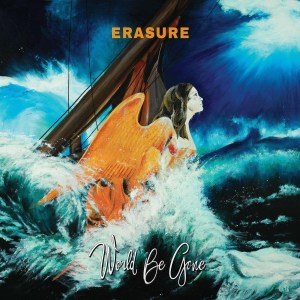
Documentary Evidence 2017 Top 10 Albums: 2. Erasure ‘World Be Gone’ + Alka ‘The Colour Of Terrible Crystal’

“Effortless electronic majesty.”
– Electronic Sound

The release of a new Erasure album is always an emotional experience for me, but that’s what happens when you’ve been a fan for so long (nearly 30 years) and when everything else you’ve ever listened to can, on some level, be connected back to them.

However, even without that context – some might say bias – World Be Gone stands out. It’s the type of mature, bold pop that you’d want a duo like Andy Bell and Vince Clarke to make after this long in the business. It’s an album tinged with despair and disappointment at a world that seems to have turned backwards toward a more hateful, vengeful and intolerant version of itself; one that is occasionally hopeful but one that feels like all hope is gone.

None of this was a surprise to me when I heard World Be Gone for the first time, but some people commented to me that they thought the earlier demos for the songs would have been much faster and more uplifting rather than, as presented on the LP, slower and more thoughful affairs. That wasn’t the case – these songs were always intended to be thus, and World Be Gone is all the more coherent for it.

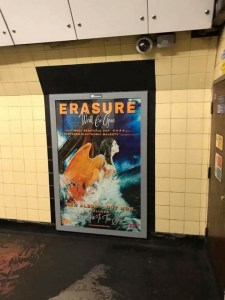
I reviewed the album for Electronic Sound, and I recall that the copy was all written during a flight to Miami with my family. A few days later I was told that a quote from the review would be used on posters to promote the album. I mentioned that to Vince Clarke just after the posters went up on the London Underground, and he refused to believe that there would be posters supporting the record at all. He also refused to let me show him the proof. Here it is (thanks Richard Evans).

Listen to World Be Gone here.

Buy Electronic Sound at www.electronicsound.co.uk.

I continued my work with Vince’s VeryRecords by writing the supporting press materials for Alka‘s The Colour Of Terrible Crystal album. This is truly a work of electronic genius by Bryan Michael and if you haven’t heard it yet, you should.

Given my involvement, albeit behind the scenes, I felt slightly conflicted putting it into my top ten, so I’ve grouped it in here with Erasure because Vince is the common denominator to both.

Listen to The Colour Of Terrible Crystal here. Buy it from VeryRecords here.

(c) 2017 Mat Smith / Documentary Evidence

Electronic Sound 35

Issue 35 of Electronic Sound has been out for a while, and this month features a major in-depth look at the work of much-missed German producer Conny Plank.

This issue features the last part of my feature on Alison Moyet, here focussing in on her influences. Such pieces are often really illuminating, particularly – as here – were they cover non-musical influences, and it was no different on this occasion. The interview was conducted in a bar in Chelsea back in May, and is the companion piece to a feature about Moyet’s latest album, Other.

My other major feature for this month was about the weird world of the Welcome To Night Vale podcast, something’s that been running for years but which totally passed me by. My interview with Jeffrey Cranor, co-author of the podcast, was definitely one of the most fun things I’ve done this year.

On the reviews front, I covered Gregg Kowalsky‘s ambient delight L’Orange, L’Orange, the very Night Vale-friendly strangeness of Snapped Ankles‘s Come Play The Trees, a reissue of an overlooked album by Twins Natalia, an absolutely fantastic electronic jazz crossover in the form of Brzzvll‘s Waiho, a more subtle jazz-with-synths hybrid in the form of Chet Doxas‘s Rich In Symbols, the fantastically raw No Luscious Life by Glasgow’s Golden Teacher, and a career-spanning piece on Simian Mobile Disco‘s ADSR reissue and Anthology collection.

My final contribution this month was among the most personally rewarding. For the magazine’s Buried Treasure section, I wrote a piece on Vic Twenty‘s Electrostalinist, an album which sadly seemed to pass everyone by when it was released in 2005. Vic Twenty was originally a duo of Adrian Morris and Angela Penhaligon (Piney Gir), they supported Erasure in 2003, and Mute‘s Daniel Miller set up a new independent label called Credible Sexy Units just to release one solitary single by the duo. Piney left to follow a successful solo career and Morris carried on alone. I drafted a review of the album for Documentary Evidence when it was released but never finished it, much to my regret, and so it was a pleasure to finally give Electrostalinist the coverage it deserved.

Electronic Sound can be purchaed at www.electronicsound.co.uk.

(c) 2017 Mat Smith / Documentary Evidence for Electronic Sound

Depeche Mode – The O2 Arena, London 22.11.2017 – photos by Andy Sturmey

810_0071810_0224810_0228810_0229810_0242810_0272810_0280810_0392810_0498810_0507810_0510810_0513810_0514810_0562810_9922810_9927810_9941810_9966DSC_5450DSC_5477

(c) 2017 Andy Sturmey for Documentary Evidence & This Is Not Retro

Electronic Sound 34

Issue 34 of Electronic Sound is now available. Focussing in on the world of soundtracks to coincide with the release of Blade Runner 2049, the latest issue includes an exclusive 7″ containing extracts from Louis and Bebe Barron’s genre-defining soundtrack to the sci-fi landmark Forbidden Planet.

My major contribution to the latest issue was an interview with Clint Mansell. Mansell was formerly a member of Pop Will Eat Itself, a band I got into in the mid-90s thanks to a friend at the after-school office jobs we both had, whereupon he plied me with each and every one of their releases up to that point. So smitten by PWEI was I that I did that very 90s thing of buying a t-shirt to show my allegiance, a lovely navy blue Designers Republic thing containing the cartoon band mascot. I was wearing that t-shirt the day I started university, which attracted the attention of another freshman who recognised the logo; we’ve been lifelong friends ever since.

This is a longwinded way of saying that Mansell’s music really matters to me, and so getting the chance to speak to him was a real privilege. Mansell’s inclusion in the Electronic Sound soundtrack issue arises because of his post-PWEI work as a composer for the films of Darren Aronofsky and Duncan Jones’s, developing scores for the harrowing Requiem For A Dream, Moon and the upcoming Mute. And speaking of Mute, which I often do of course, Mansell is pictured in a Mute ‘walking man’ logo in the photos accompanying my feature, and this issue includes a new interview with Mute founder Daniel Miller.

Elsewhere in this issue I wrote a short piece introducing the work of Lithuanian electronic producer Brokenchord, whose new album Endless Transmission is a robust, trip-hop embracing work of great weight. I also wrote short reviews of albums by livesampled piano duo Grandbrothers, the sexually-charged Blade Runner-inspired debut album from Parisian François X, a slinky 80s-inspired R&B album by Submerse, a thoughtful new LP from Aris Kindt and a grainy industrial / minimal release by Vanity Productions issued through Posh Isolation, one of my favourite small labels. To round the issue out, I reviewed the Front & Follow label’s fantastic ten year anniversary compilation Lessons, and surveyed the varied career of Auteurs founder Luke Haines through a new 4-disc box set. Having written the press release and an interview to support the release of Alka‘s The Colour Of Terrible Crystal on Vince Clarke‘s Very Records, it was pleasing to see the album get a deservedly positive review in the latest issue.

You can pick up a copy of the new issue at www.electronicsound.co.uk

(c) 2017 Mat Smith / Documentary Evidence for Electronic Sound