Goldfrapp – Head First (Mute Records album, 2010)


mute records | lp/c/cd/i stumm320 | 22/03/2010

Head First finds the duo of Alison Goldfrapp and Will Gregory abandoning not only the hippy etherialism of last album Seventh Tree but also the confrontational, over-sexed electronica – in the vein of, say, Peaches and Client – in favour of a pure pop sound. At first you’d think that this is intended to permit Goldfrapp to drop neatly into the current trend for female-fronted synth pop acts a la La Roux, Little Boots, who are intent on sweeping up the vast electronica vistas of the Eighties and claiming them as their own; but this is released on Mute, which has been producing quality, credible and enduring electronic music since before the Eighties were even born. Specifically, I’d suggest the influence of Vince Clarke during his late Eighties analogue renaissance would be a principal marker for the noises offered up on Head First.

This is synth pop at its shimmering, shiniest best. I’ve not listened to an electronic pop record for many years (probably since Erasure‘s last) that’s had me so captivated from the opening seconds. In Head First‘s case, that opener is the sublime first single ‘Rocket’ and is quickly followed by ‘Believer’, which starts with minimal pulsing beats before snapping into a huge sing-along chorus the likes of which Goldfrapp seem set on nurturing across most of Head First.

The second single, ‘Alive’ is a ballsy, disco-y track (in the vein of, say, Stock Aitken and Waterman’s take on the genre with Big Fun perhaps) which neatly encapsulates the vibe of Scissor Sisters. ‘Dreaming’ is probably my personal favourite song here – beginning with pulsing synths and breathy words that I can barely decipher, it’s the pleasantly uplifting chorus which provides the core emotional hook of the track. Title track ‘Head First’ sounded to me like an Abba cover with its simple piano lines and grandeur-filled bridge, and I wasn’t surprised to see journalists reviewing the album citing the same similarity. It’s a beautiful love song that the Andersson-Ulvaeus could feasibly claim as being descended from one of their own.

‘Hunt’ is less pop and more like something that the Goldfrapp / Gregory duo may have delivered up on Felt Mountain. The electronics sound submerged and minimal and Goldfrapp’s vocal reminds of how broad her sonic range can be. ‘Hunt’ shares some similarities with the only dip across the whole album, closing track ‘Voice Thing’, which, as its name suggests features Goldfrapp’s voice (wordlessly singing as she did on the Orbital records from years gone by) as a textural instrument. It’s clever, certainly, but a bit low-key compared to the rest of the album. ‘Shiny And Warm’ – a fast-paced and fairly minimal piece – is a song I’m not especially keen on, but it’s growing on me gradually. ‘I Wanna Life’, however, with a few more Abba overtones and a massive dose of Fame-esque optimistic cheeriness is much better.

Overall, this is a brilliant album, setting the duo off on an exciting new course. A couple of below par tracks aside, this really is essential listening for anyone looking for authentic electronic pop music from this consistently inventive pairing.

A cassette version of Head First was released by Mute for Record Store Day 2010.

lp/c/cd/i:
1. Rocket
2. Believer
3. Alive
4. Dreaming
5. Head First
6. Hunt
7. Shiny And Warm
8. I Wanna Life
9. Voicething

First posted 2010; re-edited 2015

(c) 2015 Mat Smith / Documentary Evidence

Josh T. Pearson – Last Of The Country Gentlemen (Mute Artists album, 2011)

album // Last Of The Country Gentlemen
  
mute artists | lp+cd/cd/dl stumm326 | 14/03/2011
rough trade shops edition xcdstumm326 released 21/11/2011

Last Of The Country Gentlemen, Josh T. Pearson‘s much-anticipated début album, garnered all manner of positive reviews in the run up to its release. In a climate where everyone seemed to be focussed on the retro punk stylings of The Vaccines, it was pleasing to see that an album consisting mostly of heart-wrenching confessionals delivered by a singer over simple accompaniment (mostly guitar, some strings) could get so much positive praise. The album was preceded by a piano version of the track ‘Country Dumb’, the album version resplendent with guitars and violin instead of piano, a towering yet fragile ballad that stirs something deep within.

On a personal level, Last Of The Country Gentlemen‘s gentle, emotional grace is deeply affecting. I listened to this over a weekend where we had sold or given away some clothes, toys and other ephemera belonging to our two girls, in itself a moving experience, and Pearson’s songs of transition seemed to heighten the fragile mood I was in over the weekend.

Pearson’s voice is a beautiful thing to listen to. Occasionally whispered, occasionally rising with clarion quality, the consistent aspect is that he makes every single syllable, every word and every line count; everything that comes from his mouth is freighted with depth and sentiment. Though his Texan twang is a million miles away from Antony Heggarty’s vocal gymnastics, the two singers share the same talent for soaking their most basic utterances in something indefinable which can leave you feeling affirmed, tearful and empty after listening to their music; you will need to invest almost everything you have into listening to these songs, and you will feel utterly spent at the conclusion. One song is hard enough; eight songs is nigh on torturous.

Last Of The Country Gentlemen was, according to The Times review, written during a period of heartbreak, and there is a definite theme of separation running through the eight songs here (three of which are well over ten minutes in length). However, with the exception of the bitter (yet controlled) statement of intent ‘Woman, When I’ve Raised Hell’, soaked in strings arranged by Dirty Three and Bad Seeds / Grinderman violinist Warren Ellis that amplify the mood palpably, the theme does not appear to be one of regret at his loss; more, there is a resigned air of Pearson almost forcing a separation, for the benefit of his lover. The twelve minute ‘Sweeheart I Ain’t Your Christ’ is a case in point – throughout this song, Pearson is effectively advising his lover that she’d be better off without him. That sense of setting someone free, for their benefit, especially if they don’t realise it, is just about the hardest damn thing to do, a selflessness that is gut-wrenchingly moving.

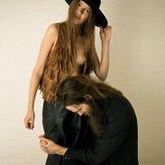
That theme is somewhat at odds with the sleeve, which appears to show Pearson trying to prevent his lover – whose face is blank, emotionless, detached – from leaving. He is grasping her legs, eyes closed, as if he would rather be dragged across the gravel rather than let her go, but it fits with the heartbreak and torment evident in the songs here. The track ‘Honeymoon’s Great! Wish You Were Her’, is a song about marrying someone but still being in love with someone else; this is the closest Pearson gets to being frustrated with his lot (albeit, it seems, of his own doing), and there is a section where the strings come up in great big swells that make you sympathetic toward his conflict, not angry at his infidelity. ‘Sorry With A Song’ is Pearson’s apology, of sorts.

Something about these songs encourage you to believe that Pearson is telling you his story here; like a début novel, the roman a clef tends to be written mostly from personal experience and emotions, containing thinly-disguised autobiographical aspirations more than pure fiction. These songs seem so honest, so genuine, that you want to believe that this is Pearson’s own story being articulated across these eight songs in spite of the desperation, frustration and sorrow contained here. We would be faintly disappointed if this songwriting was found to be fictional.

Last Of The Country Gentlemen was recorded in Berlin, and mixed in London by Gareth Jones (although a couple of tracks were mixed by David ‘Saxon’ Greenep). There is a sense of hands-off production on these tracks, a sense of respect for the songs themselves and the outpourings contained within them. Presenting the songs ‘just so’ is a brave, yet powerful thing to do; the album thus has a stark innocence that leaves me well and truly floored whenever I listen to it.

Special edition: Rough Trade Christmas Bonus

  
mute artists | xcd stumm326 | 21/11/2011

Mute released Last Of The Country Gentlemen again in November 2011 with a second disc of Josh T. Pearson performing a selection of Christmas songs, the occasion being Rough Trade Shops placing his album at the top of their 2011 album chart. The expanded version was only available from Rough Trade. To celebrate the release of Pearson’s Rough Trade Christmas Bonus, Rough Trade East printed up a special rubber curtain containing the picture from the Christmas EP’s sleeve to cover their front entrance.

The thing with Christmas carols is that they can often have an air of sadness about them; few have an obvious joyousness, though all have an inherent beauty. As such, Josh T. Pearson is well-suited to delivering the five songs he intimately performs here. Last Of The Country Gentlemen had few naturally uplifting moments, though – as evidenced by the live LP (again, only released through Rough Trade Shops) The King Is Dead – Pearson himself is actually pretty light-hearted and self-deprecating. Here we find him struggling while trying to pluck the notes to a lovely rendition of ‘Silent Night’, unaware that his musings are being recorded, cocking up the introduction to ‘Angels We Have Heard On High’ and delivering a faultless accapella rendition of ‘Away In A Manger’, which masterfully rescues the carol from thousands of painful school nativities. Likewise, his bluesy rendition of ‘O Little Town Of Bethlehem’ moves the song away from the tuneless butchering of this carol by assembled toddlers and into masterful, graceful territory. In defiance of his image as a humourless misanthrope, he even adds a wee coda of ‘Jingle Bells’ at the very end.

‘O Holy Night’ is testament to how Pearson can take a song that’s not his own and add his own distinctive style to create something utterly original. Here his reading sits somewhere between the melancholy grandeur of Last Of The Country Gentlemen and the more introspective aspects of the Rufus Wainwright back catalogue. In a burst of seasonal goodwill, an alternative version of of ‘O Holy Night’ was made available for free from Pearson’s own website.

lp+cd/cd/i:
1. Thou Art Loosed
2. Sweetheart I Ain’t Your Christ
3. Woman, When I’ve Raised Hell
4. Honeymoon’s Great! Wish You Were Her
5. Sorry With A Song
6. Country Dumb
7. Last Of The Country Gentlemen (lp/i bonus track)
8. Drive Her Out

xcd:
1. Silent Night
2. Angels We Have Heard On High
3. Away In A Manger
4. O Holy Night
5. O Little Town Of Bethlehem

Note: this CD was packaged with the CD copy of the album as a Rough Trade Shops exclusive

First posted 2011; re-edited 2015

(c) 2015 Mat Smith / Documentary Evidence

Josh T. Pearson – The King Is Dead (Mute Records album, 2011)

album // The King Is Dead

 Josh T. Pearson 'The King Is Dead' LP artwork 

mute artists | lp lstumm326 | 05/09/2011

In 2011, my wife and I went to see Ryan Adams at the Barbican for what turned out to be an excellent acoustic solo show. Adams’s musicianship has never been questioned, but what was surprising was how comedic and downright funny his story-telling and banter was; for an artist with a history of issues and a reputation for cantankerousness and volatility (only in evidence once that night), to see / hear this side of him was totally unexpected.

Later on in 2011, we’d had a plan to see Josh T. Pearson, also at the Barbican, for what was billed as a solo acoustic show (with special guests); unfortunately, we wouldn’t make it to that show thanks to a suspected burglary at a relative’s house. When we booked the tickets, Mrs S said ‘He’s supposed to be really funny on stage,’ which seemed totally implausible; the songs presented on his album Last Of The Country Gentlemen were so uniformly maudlin, intimate and personal that any possibility of a lighthearted side to Pearson seemed remote. But, at least at the start of this audio document of his performance at Union Chapel in Islington on 11 May 2011, what’s revealed is a man who’s not afraid to send himself up, making jokes about his appearance (‘I totally forgot to shave this morning,’ he quips, referencing his copious facial hair) and generally acting the clown; he comes across a lot like Loudon Wainwright III in the self-deprecating, all-too-honest way he speaks.

The King Is Dead is described as an ‘official bootleg’ and is presented in a way that does indeed look like a cheeky crowd recording (i.e. a simple white sleeve with the track details glued on). The 6-track album was released on LP only and was exclusively available via Rough Trade Stores and their website, where it was described as ‘future eBay gold’. For some reason, the rear sticker on the sleeve includes the old Mute Czechoslovakia logo. The album was sensitively mastered in Berlin by Stefan Betke, aka minimal techno musician and one-time Mute artist Pole, regarded as one of the best vinyl masterers in the business these days. Betke’s pressing manages to successfully capture the quiet, almost silent, sections of Pearson’s delivery. It is not, as I found, an album to be listened to on a train whilst commuting; this is one for the evening, at home, when the house is near-silent, with or without a herbal tea. Or possibly a glass of bourbon. And most definitely to be consumed on your own without people around you. Especially anyone you may have wronged at some point.

Last Of The Country Gentlemen was a moving album and Pearson’s live delivery of the outwardly simple, but inherently complex, emotional outpourings of his debut’s tracks – all of amorphous length, volume and with tempos often varying throughout – highlights the assuredness with which Pearson owns these songs. The addition of gentle orchestration (on ‘Woman When I’ve Raised Hell’ and again on ‘Country Dumb’, with additional piano by Dustin O’Halloran) subtly raises the moving dimension of these songs. The section of ‘Woman When I’ve Raised Hell’, where the orchestra swells above Pearson’s strummed guitar, is one of the most rousing moments in a set which could otherwise be depressing.

‘Devil’s On The Run’, included here and unavailable elsewhere, features the audience taking over singing duties toward the end – and, as this was recorded in what used to be a church, the assembled voices have a natural choral effect, which is a beautiful thing for your ear to experience. Appropriately enough, given the setting, Pearson also does his familiar blending of ‘Rivers Of Babylon’ with Last Of The Country Gentlemen‘s opener, ‘Thou Art Loosed’ and its one of the most sublime moments on The King Is Dead, particularly at the very end when Pearson’s guitar gets wildly fuzzed-up. Also included here is the upcoming next single, ‘Sorry With A Song’, which is exactly that – an apology, in a song; here it’s a somewhat more rambling affair, but it’s shorter than the other five tracks. The whole thing – all six tracks – runs for a grand total of fifty minutes; Pearson doesn’t do brief.

Listening to this on the way to work back in 2011 had an unexpected effect on my outlook for most of the morning; it may have been tiredness and nothing to do with listening to this, but I found myself thinking introspectively for most of the day, I couldn’t concentrate and I found myself apologising for things I knew weren’t my fault.

lp:
A1. Sweetheart I Ain’t Your Christ
A2. Woman, When I’ve Raised Hell
A3. Sorry With A Song
B1. Country Dumb
B2. Rivers Of Babylon / Thou Art Loosed
B3. Devil’s On The Run

Originally posted 2011; edited 2015

(c) 2015 Mat Smith / Documentary Evidence

Maps – A.M.A. (Short Story, 2013)

In 2013 I reviewed Vicissitude by Maps for Clash, which turned out to be my favourite album of that year. My review can be found here.

It is one of the few albums in recent years where, when I listen back, I still 100% agree with the high score that I gave it. Others that I won’t mention haven’t lasted the test of time, but this one has. I revisit the album every so often and it still stirs something up in me that I can’t fully identify, some strange cocktail of optimism and melancholia that appeals to my outlook on the world as I approach my forties.

James Chapman‘s third album had such a profound impact on me that I was inspired to write a very short piece of fiction loosely related to the track ‘A.M.A.’. I’ve written short fiction before, but never one inspired – however obliquely – by a song. You can read and download ‘A.M.A.’ below.

A.M.A. (inspired by Maps) by MJA Smith

My other short stories are no longer online. If you desperately want to read them, please get in touch.

(c) 2013 Mat Smith / Documentary Evidence

Apparat – Krieg Und Frieden (Mute Artists album, 2013)

IMG_0085

mute artists | stumm352 | 18/02/2013

Everyone will have, at some point or another in their lives, compared something to ‘being like War And Peace‘, probably without knowing that they’re referring to a novel by Tolstoy; they just know it’s a long book. Like a lot of important Russian literature, it is an expansive, long-form affair that progresses at a seemingly glacial pace over many years, almost at a real-time pace. Such works require a level of concentration and persistence that don’t quite chime with our modern need for quick fixes and instant fully-formed character deployment, something to read at the same time as listening to music, watching TV or walking to the train.

Sascha Ring, or Apparat, has made it his business to create advanced electronic music that, like the work of Tolstoy and the other great Russian authors, has real, genuine depth. His pieces – a label far more suited to his music than ‘songs’ or ‘tracks’ – have a sonic complexity and density that requires the listener to focus on layers upon layer of detailed textural dialogue. Apparat’s first album for Mute, The Devil’s Walk contained gossamer-like ideas intertwining with one another like DNA coils to create one of the most beautiful, ephemeral works in the whole history of modern electronic music, laced with lyrics that were at once hopeful and melancholic at the same time, something that would resonate with the transcendent nature of the Russian psyche.

Sebastian Hartmann is an uncompromising theatre director with a track record of staging difficult and challenging works as well as offering radical reinterpretations of classic plays; his productions include the controversial anti-war play Blasted by Sarah Kane, Anthony Burgess’s A Clockwork Orange, a stage realisation of the arid Paris, Texas by Wim Wenders, and works by Ionescu, Chekhov and Shakespeare. The ambitious Krieg Und FriedenWar And Peace – was staged for the 2012 Ruhrfestspiele festival in Recklinghausen, with imagery from Tilo Baumgärtel (from whose work the sleeve for Krieg Und Frieden is taken) and music by Apparat.

Over time I have come to the opinion that theatre, much more so than film perhaps, still offers some of the greatest opportunities and blankest canvases for the experimental musician. Nevertheless, Apparat’s music for Krieg Und Frieden includes a number of pieces that feel like they were written for a theatre audience’s need to hear orchestral reference points in a musical accompaniment. Those pieces – ’44’, both versions of ‘K&F Thema’, ‘Austerlitz’ – find Sascha Ring deploying the cello of Philipp Timm and violin of Christoph Hartmann from his live band to create austere, mournful and occasionally heart-wrenching melodies. These central pieces provide concrete proof that electronics may be capable of moving you but strings do it far more gracefully; here you find stately, regimented piano chords, music box simplicity and structures reminiscent of Irmin Schmidt, all mixed in with a sonic inventiveness that takes in drones and small, mechanical whirrings, clicks and feedback. The most obviously ‘stagey’ composition here (and by the way that’s not meant as a criticism) is ‘PV’, wherein layers of urgent melody rise up from a dark ambient soundscape before finally settling into a web of thunderous drums and skronking horn blasts. Add a trapeze and vast budget to proceedings and you have a perfect score to a Cirque du Soleil show that hasn’t been conceived yet.

Offsetting the overtly theatrical pieces are challenging compositions that evoke bleak, anguished imagery. At the cheeriest end of that spectrum is ‘Blank Page’, featuring shimmering textures, clattering gears, snipping sounds, horses perhaps and a vague sounds of birds get overtaken by discordant noises. Those noises are finally offset by a vague melody that increasingly asserts itself on the front line of the piece; that melody brings with it a howling restlessness that evokes memories of some of Robert Fripp’s most evocative solo soundscape recordings. At the more unsettling end is ’44 (Noise Version)’, which is noise with a lower-case ‘n’. This distant cousin of ’44’ consists of delicately deployed feedback and sullen drones that position this somewhere between the quiet, frozen stillness of Thomas Köner and the industrial ambience of The Hafler Trio around the time of How To Reform Mankind. This is the sound of electronically-processed wind howling across the cruel and unforgiving frozen Russian steppes. There is, within the distortion and feedback, an elegiac quality, barely perceptible, just audible enough to release you from the intense gloom.

Sascha Ring’s distinctive, strained soulful vocal colours two songs here. ‘Light On’ starts with sparse atmospheres and musings on desolate, deserted places, with skittering percussion and oscillating loops offsetting his Chris Keating-esque delivery, the whole thing coalescing over time into a sort of dense mutant dub rhythm. The album closes with a track that totally justifies the oft-abused ‘epic’ tag. ‘A Violent Sky’ is poignant ballad with jazzy percussion and Satie-esque piano clusters. This is the point where Sascha Ring finally flies free of any electronic rigidity into a warm, organic space that could provide a singularly inventive way forward after seven albums of clever electronica.

First published 2013; re-edited 2015.

(c) 2015 Mat Smith / Documentary Evidence

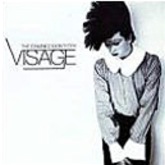
Visage – The Damned Don’t Cry (Spectrum album, 2000)

IMG_0082-0

spectrum / universal music | 544 381-2 | 2000

Sometimes, back in the early days of writing Documentary Evidence, the challenge was trying to find reasons to write about songs and artists I liked but which had no Mute Records connection whatsoever.

Such was the case with Visage. Recalling ‘Fade To Grey’ brings with it recollections of my four-year-old sister marching up and down a catwalk at a student fashion show in Leamington Spa back in the day-glo decade; while that’s a great reason for getting misty-eyed about a song, it didn’t qualify it for Documentary Evidence. So I was delighted to discover by accident that Barry Adamson had played in Visage, and that all of a sudden legitimised me being able to devote a page to Steve Strange’s band.

The untimely death of Strange from a heart attack leads me to re-post this review of a budget compilation today.

During 1979 and 1982, the core three musician members of Howard Devoto‘s Magazine moonlighted in Visage, the electro-pop studio-only project of Steve Strange and Ultravox’s Billy Currie, with additional contributions from Midge Ure and drummer Rusty Egan. Barry Adamson, Dave Formula and the late John McGeoch played on Visage’s first two albums Visage (which included the genre-defining New Romantic hit single ‘Fade To Grey’) and The Anvil. It seems unbelievable that the backbone of Devoto’s post-punk soundsmiths should moonlight in a futuristic band so far removed from their alternative rock day jobs, and this unusual period in Adamson’s musical career is often missed out of biographies. For those interested in hearing some of Visage’s work, you could do well to check out the budget Damned Don’t Cry compilation on Spectrum, which includes selections from the band’s back catalogue, including tracks from their 1984 swansong where the Magazine members were no longer part of the line-up. Another compilation – the full-price Fade To Grey album – was released recently, but includes almost all of the tracks on Damned Don’t Cry, and certainly no extra biographical information than the two sides of text included here.

In truth, without knowing exactly who appears on the tracks from 1979 to 1982, anyone specifically looking for Adamson’s distinctive bass playing is likely to be disappointed. Then again, having spoken to Barry about his use of studio downtime when Magazine were recording Real Life, he was already experimenting with tapes and synths at this time, and therefore it is possible that his involvement in Visage was more than just laying down the odd bassline. To fans of the early eighties cross-over of New Wave, synthpop and New Romanticism, this collection includes some absolute gems. Notwithstanding the mysterious sheen of ‘Fade To Grey’ (a track which for me will always be synonymous with a Leamington fashion show my sister was in), there is also the funk-pop of ‘We Move (Dance mix)’ from 1981, with some pointy guitars and solid Adamson bass groove, and what must be an occasional vocal from the distinctive Midge Ure. Elsewhere, the hyperactive elastic bass of ‘Night Train’ recalls ‘The Thin Wall’ by Ultravox, laced with lashings of horn-led soul. The super-group collision of styles in perhaps most prevalent on ‘Visage’, where Dave Formula’s signature Synergy-style orchestral synth melodies and riffs blend in with some Peter Hook-esque bass from Adamson, and great vocals from Steve Strange, who proves himself to be an excellent – albeit under-rated – vocalist throughout this compilation.

Formula’s keyboards are much more obviously present on these tracks than either McGeoch or Adamson, assuming that they were using their regular instruments. Nevertheless, there are some brilliant tracks here : the 1980s nightclub-friendly ‘The Anvil’, the dance mix of the instrumental ‘Frequency 7’ (sounding like an early Nitzer Ebb track infused with a synthpop flavour rather than electro-punk, along with some ‘Warm Leatherette’ noises), the positively soaring but mournful electronics of ‘Whispers’ and the Thompson Twins meets Human League crisp synthpop of ‘Pleasure Boys’ in its dance mix guise. ‘Damned Don’t Cry’, the 1982 track that provided this compilation with its title shares the same mysterious, ethereal tone as ‘Fade To Grey’, with the addition of a 4/4 beat, arpeggiated bassline and some Andy McCluskey-styled vocals. ‘Love Glove’ is the best track from the 1984 Beat Boy LP, an upbeat electropop number with saxophones that reminds you of everything that was good about 1980s pop. The over-long ‘Beat Boy’, however, reminds you of everything that was bad about the 1980s – that horrible synth slap bass, orchestral stabs and stuttered vocals. Yuck. The sub-Phantom Of The Opera / Rick Wakeman / Vangelis track ‘The Steps’ (1980) is also worth skipping through, if only to get you to ‘Frequency 7’ quicker.

First published 2004; re-edited 2015.

(c) 2015 Mat Smith / Documentary Evidence

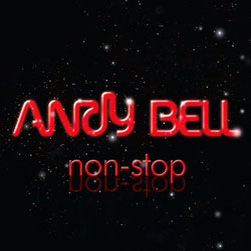
Andy Bell – Non-Stop (Mute Records album, 2010)

IMG_0079

mute records | stumm316 | 07/06/2010

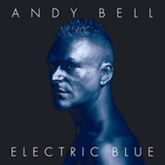
Electric Blue, Andy Bell‘s debut solo album, was a hedonistic club-friendly affair (mostly) that signalled a significant departure from his day job as one half of Erasure. Recorded with Manhattan Clique, who had remixed tracks from Erasure’s return to form Other People’s Songs and supported them on that album’s tour, the album saw Bell collaborating with Propaganda’s Claudia Brucken and head Scissor Sister Jake Shears. It felt like Bell was getting something out of his system, scratching an itch if you will, and the chances of a second solo album seemed slim; though undoubtedly a good album, Electric Blue was at times a little inconsistent.

This is not a charge that could be levied at Non-Stop, Bell’s second album. Recorded with Pascal Gabriel, still affectionately remembered as producer of the string of hits by S’Express (although I love him best as a member of Peach and producer of Inspiral CarpetsRevenge Of The Goldfish), Non-Stop is a much more focussed dancefloor affair. I haven’t kept up with dance music trends since about the mid-Nineties, so I’ve no idea what particular sub-genres this would fit into, but what I do know is that this is a 4/4-fest that operates about a million miles away from the electronic pop of Erasure.

Across ten tracks (eleven if you buy the non-physical version from iTunes), the pace only drops with the delicate slow-mo electro of ‘Slow Release’. The rest is a slew of quality, thudding upbeat dance tracks, including the low-key two singles – ‘Running Out’ and ‘Will You Be There?’ – released under the alias MiMó.

What’s perhaps quite unusual is that given the genre’s obsession with euphoric themes, Non-Stop is altogether quite dark; there are few overtly love-themed tracks here. Since I Say, I Say, I Say, Bell’s lyrics for Erasure have – in the main – focussed on the trials and tribulations of finding, being in and falling out of, love; unless you count the edgy hotel rendezvous with a cigar-smoking, moustachioed character on the track ‘Subject / Object’, the vibe is in places much more overtly sexual than Erasure would dare. ‘Touch’, with its buzzing synths, is possibly sinister, until Bell’s lyrics about not wanting to be a ‘loser‘ kick in (delivered in Bell’s best ‘Mockney’ accent).

Probably my favourite tracks here are the title track, with its deep bass loops and ‘Lost In Music’-meets-Kraftwerk wide-eyed absorption, and ‘Cosmic Climb’ – the iTunes-only bonus track – which is a straightahead, no holds barred, club track. The lyrics on the latter are the only set I can hear that align with Bell’s claim that he was going for pure throwaway on this album – the rest of the album’s lyrics are very clever actually. I’m also a fan of ‘DHDQ’ (‘Debbie Harry Drag Queen’) which is gleefully observant of certain niche areas of clubland’s eclectic nightlife; imagine a dance-music version of Lou Reed’s ‘Walk On The Wild Side’ hitched to a disco rocket and relocated from Downtown Manhattan to London’s Soho on a Friday night.

Much has been made of the frankly bizarre collaboration with Jane’s Addiction’s Perry Farrell on ‘Honey If You Love Him (That’s All That Matters)’, and it’s a good track, just not up there with my personal favourites. Apparently Farrell, an avowed fan, suggested the collaboration and wrote the track; his contribution is certainly more significant than Shears’ almost absent contribution to Electric Blue.

Pre-orders of the CD album from Mute Bank came with a download of a Vince Clarke remix of ‘Non-Stop’; on recent mixes Vince has displayed a knowing ability to knock out sterling dance floor grooves, and his version of ‘Non-Stop’ is a perfectly minimal, sparse take on the more dense, robotic Pascal Gabriel version, with few of Clarke’s signature squiggles and sequences.

First published 2010; re-edited 2015

(c) 2015 Mat Smith / Documentary Evidence

Andy Bell – Electric Blue (Sanctuary album, 2005)

Andy Bell 'Electric Blue' artwork

sanctuary records | san382 | 03/10/2005

Andy Bell‘s debut solo album was produced with Manhattan Clique (Philip Larsen and Chris Smith), who had remixed tracks from Erasure‘s Other People’s Songs and who supported the duo on that album’s tour. That Electric Blue ever got released is something of a surprise – Andy had said in an interview I heard years ago that every time he was asked to do something solo he would panic and invite Vince Clarke along to help (I think he was specifically talking about ‘Rage’, which turned out to be an Erasure collaboration with Lene Lovich for PETA). Other People’s Songs itself apparently started life as an Andy solo project of cover versions, but became a standout Erasure album instead. Electric Blue was released on Sanctuary; presumably the EMI-backed Mute balked at the idea of a solo project from an artist they didn’t deem bankable, despite Bell’s twenty-year tenure with Daniel Miller‘s label.

The principal problem with Electric Blue is that it’s about four tracks too long, giving rise to some torrid filler like ‘Shaking My Soul’ and ‘Delicious’. At times there’s a sense of Andy Bell operating outside of his comfort zone, which is fine, but the results seem to have a reliance on fluffy, inconsequential lyrics on some of the more upbeat tracks. A long time ago, I remember Bell being interviewed on TV and saying how much he admired the way a track like Blondie’s ‘Atomic’ deliberately avoided substance in its lyrics; well, some of the results here are definitely throwaway, but in Bell’s case it’s not necessarily the best example of his lyric writing by a long stretch, though the genre he was operating in here – music for dancing in neon-lit Soho clubs I guess – wouldn’t necessarily tend toward lyrical depth particularly.

After a brief introduction consisting of vocal loops and building synths like clouds gathering on a sunny day, Electric Blue kicks into gear with ‘Caught In A Spin’, a Latin-house sequence of odd couplets and throwaway lines, flamenco flourishes and a chorus spiced with something dark and dangerous, a bit like dancing on a hot summer’s night. One of the best of the upbeat tracks here, ‘Caught In A Spin’ is relentless, urgent and hypnotic. Another of the best songs here is the title track, which includes some very Vince synths, dark, murmuring bass line and detuned beat. Andy here goes for robotic singing about S&M gear and buying uniforms, delivering a pre-chorus that references dancing to ‘Supernature’ (which Erasure covered) and opts for a darkly euphoric chorus which straddles a high energy style with more elastic techno sounds. ‘See The Lights Go Out’ also includes lots of nice electronic noises that Vince would approve of, and actually is not dissimilar to something Erasure would produce today. The track includes a retro disco element to the rhythm and Andy’s vocals have a pained, anguished element which gives the song some welcome depth.

Electric Blue features collaborations with Propaganda’s Claudia Brücken (‘Love Oneself’ and ‘Delicious’) and head Scissor Sister Jake Shears (‘Thought It Was You’ and ‘Shaking My Soul’). ‘Love Oneself’, despite its dubious, onanistic title finds Brücken’s breathy vocal totally dominating proceedings, almost rendering Bell surplus to requirements, a bit like the person who sets up a threesome and finds himself on the sidelines of the bedroom. Fortunately, the music – high energy sounds with a rolling bassline, 303-esque synth ripples and whooshing noises – is interesting enough. The second Brücken collaboration, ‘Delicious’, features some nice Vince-style synths but falls short in the lyrics department; Bell and Brücken deliver a stream of bland clichés that make for a pretty dull song overall. The only saving grace is a riff that reminds me of that Alex Party track from years ago which in turn reminds me of some good nights out. Otherwise ‘Delicious’ is reasonably needless.

If the tracks with Brücken were patchy, the collaborations with Jake Shears are still harder to listen to. ‘Thought It Was You’, something of a battle of the falsettos, is a very Seventies disco number, straight out of Ian Schrager’s Studio 54. The song is very classically disco, with lots of handclaps and wah-wah guitar, but something about Shears’ vocal is ridiculous and way too high, much like pretty much everything Scissor Sisters have ever done. Meanwhile, on ‘Shaking My Soul’ you’d be forgiven for missing Shears’ contribution to this upbeat, soulful but generally throwaway piece of summery pop since it’s all but inaudible. The track features lyrics dealing with jealousy and promiscuity, a theme that is also mined on the far better ‘Jealous’.

The album includes a couple of ballads, both of which are good even if they sit somewhat uncomfortably next to the more upbeat dance tracks. ‘Fantasy’ is a plaintive, Erasure-esque ballad, with lots of jangly acoustic guitar, a big trademark chorus and more articulate lyrics from Andy. There’s a soulful piano and string section that sounds a little like a Barry White ballad; there are also occasional Latin flourishes and plenty of trademark ‘woahs’ from Andy, while a melodic line not dissimilar from ‘Rock Me Gently’ sometimes creeps in. The album’s closer, ‘The Rest Of Our Lives’ is another big ballad, being a gentle love song and a typically Erasure-esque closer, at least lyrically. Musically it’s not a patch on anything Vince and Andy could achieve together, being a bit wet and flimsy (the last two bars are the most interesting). Still, it nevertheless retains a nice, emotional dimension even if it sounds too ‘organic’ and traditional-sounding for Andy’s vocal. The ballads, oddly placed though they might be, perhaps suggests this is what Andy is best at rather than flogging the disco horse elsewhere on Electric Blue.

Electric Blue was clearly a departure for Andy Bell, a brave move after years as Erasure’s frontman, and any issues with the songs generally stem from the production which doesn’t stand up terribly well today. Mercifully, Bell was undeterred by Electric Blue‘s limited commercial success, with 2010’s Non-Stop with Pascal Gabriel being a much more solid, accomplished business.

First published 2005; re-edited 2015.

(c) 2015 Mat Smith / Documentary Evidence

The Afghan Whigs – Up In It (Sub Pop album, 1990)

The Afghan Whigs 'Up In It' artwork

sub pop | sp60b | 1990

Released on the seminal Seattle-based Sub Pop in 1990, this was the first Afghan Whigs album proper – the future Blast First band’s ‘real’ first, Big Top Halloween, was released in a limited edition of 2000 in 1988, and three tracks from that debut are included here. Sub Pop’s quest to sign the Whigs caused not inconsiderable consternation among the likes of Mudhoney, arguably Sub Pop’s second most famous band, prompting their leader Mark Arm to start shopping the band around majors. His action was understandable given that Sub Pop were struggling to pay Mudhoney’s royalties, yet they were throwing money at the Whigs to get them to sign – a classic indie faux pas and one that Sub Pop certainly made more than once. In the end, the Whigs signed with Pavitt and Poneman, while Mudhoney defected to Reprise, just after Nirvana – Sub Pop’s most famous band – had signed with Geffen on Sonic Youth‘s advice.

With the exception of the three tracks from Big Top Halloween and the album’s final track, Up In It was produced by Jack Endino, unintentionally Sub Pop’s ‘in house’ producer in much the same way as Steve Albini / Butch Vig at Touch & Go, Martin Hannett with Factory or even Flood / Gareth Jones / Paul ‘PK’ Kendall at Mute, only considerably more prolific – Endino recorded 75 singles, EPs and albums for Sub Pop between 1987 and 1989. Among these was Nirvana’s debut Bleach, but there is little point of reference between Up In It‘s broad-brush rock appeal and Bleach‘s raw tone. Endino pulls off a sequence of recordings that is simultaneously highly polished and frighteningly urgent. It’s generations removed from their later work, and light years away from vocalist, guitarist and perfect front man Greg Dulli‘s later band, The Twilight Singers. The Whigs here comprised John Curley (bass), Rick McCollum (guitar), Greg Dulli (guitar, vocals) and Steve Earle (drums).

Up In It kicks off with the frenetic ‘Retarded’, which is perhaps the closest this album gets to the grunge sound that Sub Pop and Endino were famed for. Discordant guitars – similar to a Thurston Moore / Lee Ranaldo jam – and gritty vocals ensure that the album steps out on the right foot. Wah-wah guitar (and some additional guitar work that sounds dubiously like ‘Eye Of The Tiger’) ushers in ‘White Trash Party’, a swirling hurricane of howled vocals, grinding guitars and urgent cymbal-playing. ‘Hated’ on the other hand is an emotional melodic song that prove the Whigs were capable of producing sentimental music even at this early stage, even if the dueling guitars and turgid bass owe more at this stage to metal than soul.

‘Southpaw’ has an excellent groove and very muscular drumming, approximately a heavy dirge that manages to blend ‘Sympathy For The Devil’, Pixies and even the shrill vocal of Axl Rose, to surprisingly good effect. At under two minutes, ‘Amphetamines And Coffee’ sees the band tearing into a metal-influenced riff with some fretwork that J. Mascis would appreciate and stop-start drumming that would be captivating to watch. ‘Hey Cuz’ has a really clever sound, with Blixa Bargeld-esque spindly guitar cycles and a snare-dominated backbone, all of which breaks down into a very free and unstructured jam during which Dulli frantically crams words and vocal sounds into seemingly the smallest of spaces. With a great, melodic bass line and descending guitar melody (and tightly-controlled feedback), ‘You My Flower’ is another impassioned, powerfully-sensual rock song, finding Greg offering a tender vocal on the verses before growling his way through the chorus. Appropriately, ‘Son Of The South’ is a heavy blues number, which Jon Spencer would presumably be very proud of, and is certainly one of the best songs here; Endino pushes the bass section right up, and Dulli delivers an arch vocal on the verses over little more than the bass and drums before the howling guitars force themselves back in. ‘I Know Your Little Secret’ is nothing short of an emotive masterstroke, where rage is replaced with bitter melancholy.

‘Big Top Halloween’, ‘Sammy’ and ‘In My Town’ are all taken from the Whigs’ self-released debut, and are much rawer cuts, just a shade above demo standard in the production stakes; they do, however prove how honed the band were, even in 1988. The tracks were produced by Wayne Hartman. ‘Big Top Halloween’ is a classic heavy indie track, finding Greg in places providing a genetic link to White Stripes’ Jack White, while the band manage to sound like Dinosaur Jr. and Guns n’ Roses in the same three and a half minutes. Beginning with a melodic, elastic bassline, ‘Sammy’ is a heartfelt, lo-fi track with a killer sing-a-long chorus and lyrics that seem to blend genders at will, also deploying a fine harmonica solo. ‘In My Town’ is a melodic, jangly guitar track not wholly dissimilar to James circa Laid, with a definite folk / country sound. Back to 1989 for closing track ‘I Am The Sticks’ (produced by Paul Mahern), a muscular rocker with some very Rowland S. Howard guitar melodies, over which Dulli supplies a typical tonsil-shredding vocal performance. It’s a mysterious and sonically-adventurous conclusion to a gripping album. Not a dud track here.

First published 2004; re-edited 2015.

(c) 2015 Mat Smith / Documentary Evidence
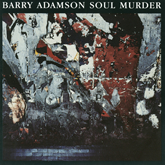
Barry Adamson – Soul Murder (Mute Records album, 1992)

Barry Adamson 'Soul Murder' artwork

mute records | stumm105 | 1992

Released in 1992, Barry Adamson‘s second Mute Records album proper is also perhaps his darkest, most cinematic to date. Beginning as all stories should with a ‘Preface’, Adamson sets the scene of murder and crime with a sample of a convicted brother detailing his list of crimes and misdemeanours, before Adamson kicks in a short burst of dramatic strings; the track concludes with either a vintage movie sample, or a heavily-aged new one – ‘Sorry to disturb you Mr Adamson.’

The album begins in earnest with a classic Adamson spoken word monologue on ‘Split’, referring to himself as El Deludo, Mr Moss Side Gory and Harry Pendulum, all over a lush jazz backdrop dripping with pianos, brshed cymbals and rousing horns. ‘There’s a light at the end of the tunnel,’ concludes Pendle. ‘When you see it that means that you’re dead.’ ‘The Violation Of Expectation’ is mysterious and beautiful – simple piano clusters over synth chords and a characteristic pallette of juxtaposed sounds. The introduction of a watery, distorted voice humming away to some unrecognisable tune runs a chill through this track that is partially leavened by the isolated sounds of crashing waves that conclude the track. ‘Suspicion’ features some solid Public Enemy-style gritty, industrial hip-hop beats, over which high octave keyboard melodies are layered.

‘A Gentle Man Of Colour’ is a truly disturbing story of prejudice in the vein of Harper Lee’s To Kill A Mockingbird – a black man is wrongly accused of a crime against a white woman, leading a mob of men to torture and ultimately burn him to death. The story is delivered as a news report by Marcia Schofield, while Adamson provides the narrative with a backdrop of incidental sounds. This is followed by ‘Trance Of Hatred’, an outwardly gentle piece for vibes and strings, counterweighted by a sample of what could be an armed gang robbery scene from a movie.

The frantic pace of the six minute ‘Checkpoint Charlie’, with its layers of keyboards and swirling, tense melodies reminds me very much of the opening music by Ennio Morricone for Oliver Stones The Untouchables. ‘Reverie’, in contrast, is a piano and xylophone work of melancholy beauty rendered in waltz time. The addition of some serene synth pads give this a soaring, moving quality, and it is hard not to to be touched by its serenity. ‘Un Petit Miracle’ in contrast is throwaway twee Gallic pop, featuring innumerable Casio presets, whistling and a innocent vocal from Pascale Fuillée-Kendall.

‘007, A Fantasy Bond Theme’, in contrast, is one of Adamson’s most humour-filled pieces. Setting the scene, Adamson drops in a narration by Arthur Nicholls detailing a Jamaican – James Bond – who believes he is Ian Fleming’s spy hero; ‘Bond…is black!‘ he tells us, in a stroke of genius wordplay. Monty Norman’s famous theme is here delivered with a skanking rockers beat and ska vibe – ludicrous and marvellous in the same breath. ‘The Adamson Family’ features vibes and some very sixties organ, the jazzy tones and cinematic strings, while ‘Cool Green World’ – with its MOR keyboards – could have been lifted from the soundtrack to an Eighties romantic comedy; it has a wholesome, family feel – imagine tree-lined wide pavements in some US suburb, immaculate front gardens, the leaves collecting in the gutter as summer turns to autumn – until the final minute and a half, where the key changes subtly, casting a darkening shadow over the track.

‘On The Edge Of Atonement’, a slowed-down pairing of jazz and gentle strings to the same theme as ‘Reverie’, with gospel vocals from Sarah Bower, Deloray Campbell, Peter Francis, Patricia Knight and Caron Richards, has a drifting, romantic tone and a capacity to uplift. ‘Epilogue’ closes with the same angry brother and strings as ‘Preface’, closing off a dark and mysterious addition to Barry Adamson’s catalogue.

First published 2004; re-edited 2014.

(c) 2014 Mat Smith / Documentary Evidence