Mute 4.0: Apparat – The Devil’s Walk (Mute Artists album, 2011)

apparat_thedevilswalk2

As part of Mute‘s fortieth ‘anti-versary’, the label is making available very special limited edition vinyl versions of selected releases from their four decades of releasing and curating incredible music. To celebrate this element of Mute 4.0, we’re re-posting reviews of those special albums from the depths of the Documentary Evidence archives. Full details on the releases can be found here.

The Devil’s Walk, Sascha Ring‘s first Apparat album for Mute Artists is perhaps one of the most absorbing and moving pieces of music I’ve ever had the privilege of listening to. I write this like I’m surprised somehow, but I shouldn’t have been. I bought all three singles before the album was released (‘Ash / Black Veil’, ‘Black Water’ and ‘Song Of Los’) and with each one found myself deeply affected by the way those songs played subtly with my emotions. Thus expectations were raised fairly high from the beginning for The Devil’s Walk, though with that came the fear that the mood of those three tracks couldn’t be sustained across a whole LP. That fear was unfounded; it can.

That said, I’ve not finding it especially straightforward to write about The Devil’s Walk, since the exact word that I’m looking for to describe this album fails me. What I do know is that there is a sense of unifying sadness, making the album less about individual tracks and more about the overall sound. Uplifting moments are frequent, but fleeting and unexpected. Tracks will be progressing along a introspective, reflective path and then, out of nowhere, a subtle chord change will allow the light to seep in ever so slightly and just briefly, lifting the mood somehow; yet that inward-looking feeling is still there, underneath, meaning that those bursts of comparative euphoria, when listened to more closely, are never actually that uplifting after all.

iTunes and Mute Bank‘s website classifies The Devil’s Walk as an ‘electronic’ album, which to me creates a totally incorrect perspective on this album. Sure, it has electronic elements and I dare say a lot of this LP came about after tinkering with recorded sounds and vocals in some software package on a shiny Macbook, but in terms of instrumentation that tag doesn’t come close to describing this album. There are guitars – looped, acoustic passages; electric guitar patterns; what sounds like Stars Of The Lid / Labradford drones and distortion overtones; possible plucked ukulele riffs – reeds, harmonium sounds, strings and percussion that sounds like Photek dismantling an alarm clock or Matt Herbert recording breaks made entirely from the contents of his kitchen drawer. And everything comes with layer upon layer of slowly-evolving sound.

Sometimes those layers produce something like the opener ‘Sweet Unrest’, wherein the final layer to be added is some dreamy choral vocals, giving this an icy spirituality. Sometimes it’s the dark reverb of ‘Goodbye’, where that Labradford connection manifests itself with some clanging Spaghetti Western guitar sounds in the vein of that band’s E Luxo So, only with a constant bass drum rhythm that is felt more than heard. Those subtle chord changes and hypnotic vocals (from Anja Franziska Plascha) give this an exquisite poignancy and a heart-wrenching quality. Sometimes those layers produce the strained, almost Massive Attack stasis of ‘Candil De La Calle’ where shimmering vocals play alongside a multi-channel percussion restlessness of amazing intricacy.

‘The Soft Voices’ blends layers of piano, possibly a dulcimer and a murmuring guitar sound in a way that I read about Brian Wilson perfecting on Pet Sounds, whereupon he took Phil Spector’s methodology of layering sounds to a new level, leaving the listener questing to know what this strange instrument they were hearing actually was, when it was in fact many instruments layered atop one another. Perhaps the knackered short wave radio sound in the background is Sascha Ring’s homage to ‘Good Vibrations’; strings arrive unexpectedly; drums that wouldn’t have sounded out of place on Tubular Bells kick in; a sense of euphoria is reached, only to dissipate suddenly, leaving a wobbly bass noise and a fractured vocal from Ring. ‘Escape’ is delicate balladry, an emotive vocal and lots of constantly-shifting, constantly-evolving loops; it’s the type of song that requires concentration to identify the fact that it is indeed constantly developing, while the addition of strings and ethereal harmonies gives this a filmic quality.

Referencing Tubular Bells above, perhaps ‘A Bang In The Void’ is some sort of cross-generational electronica-weaned response to Mike Oldfield’s proggy opus, via Terry Riley’s In C. It takes a while to scale up via goodness-knows how many layers of pretty melodic sounds – I can’t work out what the instrument is or isn’t – and reaches a midpoint whereupon a broken trumpet pattern kicks in. I’m also reminded of Erasure‘s ’91 Steps’, as it shares some of the muted drama of that B-side.

Closer ‘Your House Is My World’ feels like it’s been lifted straight from a soundtrack to an indie flick that hasn’t been made yet, or maybe Grizzly Bear’s soundtrack to Dedication; very Yann Tiersen; very subtle; very processed; very dramatic; I have run out of superlatives. I am frankly exhausted from over-thinking about what that one word, that one crucial word is that describes this album.

The album was released in a gorgeous limited edition book CD format which includes lots of Gothic imagery, including a child-scaring etching on the front cover straight from an M.R. James ghost story. It also contains all the lyrics, and a read of those reveals the word I was looking for all along in this review – ephemeral. The atmosphere on The Devil’s Walk is one of ephemerality. Phew, I’m glad we resolved that. The limited CD format also includes the bonus track ‘The World Around You’ which is how Tears For Fears would have sounded if they’d been fed a diet of glitchy drone electronica.

For Mute 4.0, The Devil’s Walk is being reissued as a violet LP edition.

MUTE4.0_V3

First posted 2011; edited 2018.

(c) 2018 Mat Smith / Documentary Evidence

Nick Cave & The Bad Seeds – The Boatman’s Call (Mute album, 1997)

nctbs_boatmans

I was tempted to write this review with just one word. That word is ‘beautiful’. Written by Nick Cave at exactly the same time as Murder Ballads, these songs were written with simplicity in mind, and as such the majority of these superior compositions feature a stripped back Bad Seeds, and a heavy dose of piano. The contrast with Murder Ballads could not be greater, taking a deeply intimate, romantic and often spiritual tone. No one dies here, one may be relieved to know.

But maybe a little part of Nick Cave died in order to make a collection of songs; that part of him would be the preacher, the aggressor, the dervish spirit howling and caterwauling over a maelstrom of sensational music. It genuinely isn’t a criticism – I happen to think that this is among Cave’s finest work. Everything about The Boatman’s Call is black and white – the Johnny Cash-esque Anton Cobijn photo of a particularly harrowed Nick Cave on the front cover, through the predominance of the piano keys across the LP, through to the downright clarity of Cave’s songwriting. What’s most clear about The Boatman’s Call is the often obvious theme of these songs, for this is Nick Cave’s most directly personal collection of songs, from the post-PJ Harvey reflectiveness of the quirky folk leanings of ‘West Country Girl’ and ‘Black Hair’, through to his ruminations on his failed marriage on ‘People Just Ain’t No Good’ or ‘Where Do We Go Now But Nowhere’.

However, aside from a fair amount of openness from our tortured songsmith, The Boatman’s Call also features two generally beautiful love songs – ‘Lime Tree Arbour’ and ‘Brompton Oratory’. Like much of the album, these have a musical accompaniment from The Bad Seeds that is directly informed by subtle jazz but the latter also features a perfectly twee Casio rhythm that sounds like it survived from Cave’s original demo. The latter describes a trip made by Cave to Kensington’s famous, and imposing, landmark, and finds Cave wishing he were one of the stone apostles therein, just so that he wouldn’t have to deal with his muse’s intense beauty. It perfectly captures the intensity of romance’s first flourishes, that feeling of not being able to cope anymore. ‘Lime Tree Arbour’ is just mystical and beautiful, its waterside setting making me think of Murder Ballads‘ ‘Where The Wild Roses Grow’, with all the same romantic longings, just none of the death; an alternative ending, perhaps?

The album features the full Bad Seeds line-up (Mick Harvey, Blixa Bargeld, Thomas Wydler, the late Conway Savage, Martyn P. Casey, Jim Sclavunos and Warren Ellis), albeit in controlled doses, and benefits from an unusually restrained production job from Flood, who also produced the oft-slated U2 album Pop the same year. The style of production is subtle and delicate, and Cave’s vocal is dominant in the mix, casting a personal, intimate shadow over proceedings. It feels like a one-to-one connection between the narrator and sympathetic listener. Warren Ellis’ violin is also an important element here, receiving greater space in the mix than it had been given previously, bestowing the gypsy folk of ‘West Country Girl’ with a rabidly maudlin edge. His work on ‘Idiot Prayer’, perhaps the track closest to a classic Bad Seeds ballad sees his violin overtaking Blix’s fuzzy guitar as lead instrument, a sign of the sea change that was to come.

I have my own, highly personal reasons, for counting this among my favourite albums of all time. Suffice it to say, many years on, it’s the more miserable tracks here – like ‘Far From Me’ – that I find myself reflecting on when I think of that period in my life. ‘Can’t you find somebody else / That you can ring and tell?’, Cave sings on that penultimate, delicately poignant song. Wise words that I wish my younger self had heeded.

First published 2004; edited 2018.

(c) 2018 Mat Smith / Documentary Evidence

The Residents – I Am A Resident (Cherry Red album, 2018)

I am not the best writer for this piece.

I know, conservatively, less than half a percent of The Residents’ songs, own a diminutive fraction of their 60-odd album releases and would struggle to identify some of their purportedly best-loved songs in a line-up, much as I – or indeed anyone – would struggle to identify an umasked Resident member in a line-up. Accordingly, given that I Am A Resident is almost entirely constructed from songs from The Residents’ extensive back catalogue, I hereby submit, once again, that I am not the best writer for this piece.

I am also the best writer for this piece for precisely the same reason.

I Am A Resident is both by The Residents, and not by The Residents. Its songs are constructed from cover versions of Residents songs, performed by a bunch of underground artists whose names read like they belong on Nurse With Wound’s infamous list, signifying just how prevalent the still semi-mythical San Francisco unit are as influences on what we might define as musical outsiderism. The tracks were then dissected, rebuilt, layered, and augmented with new sounds by The Residents themselves, thus creating something new out of other people making new stuff out of old stuff that you might or might not know. A Residents ‘best of’, both by The Residents, and not by The Residents. New, old, and new-old.

Got it? Good.

If you’re remotely interested in art history, think of this as sitting somewhere on the Warhol-Rauschenberg axis – Warholian because it involves enlisting the support of other people to make the art for you in your name, Rauschenbergian because it’s a collage of repurposed material that Bob would’ve approved of.

Bookended by two faux radio idents presented by DJ Denver Dolittle that sound like they belong on Welcome To Night Vale, the five long tracks here don’t feel like anything other than complete pieces, even though they are stitched together with a turntablist’s frenetic, magpie-like zeal. It’s messy, for sure, but done in a way that implies lots of painstaking studio polish. Like The Residents’ own material, what you get here are lots of musical ideas reflecting back their own relatively borderless and unconstrained approach to sound – wonky, crunchy electronica colliding with scratchy rock colliding with freaky jazz colliding with vaudevillian humour colliding with over-amped rawk colliding with a quintessentially Bay Area take on musique concrète. I’ve now listened to it countless times, and the material is no less familiar ten plays in than the first time I played it, and lots of new details seem to emerge with each and every play.

A special edition two-CD version came with 24 tracks of what is presumably the source material for the collage pieces. At some point when I have more time I’ll listen to each of those tracks alongside the original versions to compare them, but in my head – at least – they’re a mixture of faithful renditions and highly original takes on what would, in other circumstances, be considered uncoverable songs – not because they’re sacred, per se, but because they’re not necessarily the easiest of songs to cover. There’s a reason why The Residents aren’t natural Karaoke artists, although, on the recorded evidence, lots of these guys would pitch up at that weird Karaoke bar night after night.

“In true Residents form, we don’t always follow the rules,” says Dolittle on the concluding radio segment, which is stating the obvious, of course. “Just as it’s always been – the eye is on you,” he concludes. The inference is thus: I am a Resident, she/he is a Resident, you are a Resident and, heck, we can all be Residents, if we so wish… or, in the case of this wonderfully odd LP, if your cover version happened to be among those picked for the source material for this album.

(c) 2018 Mat Smith / Documentary Evidence

Rupert Lally – This Is An Adventure (album, 2018)

cover

Long-term readers of my blog will know I’ve often championed the work of Switzerland-based electronic musician Rupert Lally, who has a string of solo albums to his name, as well as a number of collaborations with Mute alumnus Espen J. Jörgensen.

I reviewed Lally’s superb new album This Is An Adventure for the Cold War Night Life website. My review can be found here.

(c) 2018 Mat Smith / Documentary Evidence

Nitzer Ebb – 1982-2010: The Box Set (Pylon Records, 2018)

Nitzer Ebb is a band whose music dominated my teenage years. My happiest moments may have been soundtracked by Erasure and my uncertain adolescence by Depeche Mode, but it was Nitzer Ebb that I turned to when I was angry and full of rage. Had I been less scared of guitars I might have found that rage vented through Nirvana’s Nevermind like all of my friends instead of the lurid Ebbhead in 1991, but I remain forever thankful that it was Douglas McCarthy and Bon Harris that I trusted with my bitterness.

More or less all of Nitzer Ebb’s output – from their self-released Basic Pain Procedure collection to 1994’s anguished-but-brilliant Big Hit – are now the beneficiaries of a deluxe vinyl reissue boxset courtesy of Pylon Records. Over expanded double LP editions, Pylon have added rare and forgotten mixes to the albums, lovingly restored the original artwork and put back into circulation five important records from the Mute back catalogue that have been out of print for years.

Head to www.pylonrecords.com to pre-order one of two available editions of the boxsets. 1982-2010: The Box Set will be released on October 5, 2018.

Postscript: after a link to this post appeared on Twitter, the official Mute account responded “Mute Ebb catalogue release news coming soon!” I don’t any more than that, but it tantalisingly hints at a separate reissue programme from the label that the band called home for most of their career. Further details will be announced soon, I hope.

(c) 2018 Mat Smith / Documentary Evidence

Voodoo Child – The End Of Everything (Trophy Records album, 1996)

The first album from Moby‘s Voodoo Child alias comes with a title that, like other things released by Richard Melville Hall around this time, is hardly filled with optimism. His first Moby album for Mute was titled Everything Is Wrong, he released a single under the alias Lopez around this time with the title ‘Why Can’t It Stop?’ and Animal Rights, whilst not necessarily negatively-titled, was filled with a real sense of bitterness, anger, disbelief and unbridled rage. I may very possibly have dreamed this, but I seem to remember reading that around this time Moby split up with his long-term girlfriend and so who knows whether these titles reflect a slightly embittered state of mind – lots of the titles on this album are suffixed by the word ‘love’, so it could be true. Equally, we know Moby is a huge fan of Joy Division, a band that made being miserable a career option.

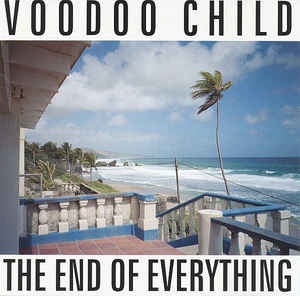
In any case, for all the pessimism of that title, the sleeve images – aside from the gust of wind blowing at the palm tree on the front cover – are actually pretty tranquil. True, there’s no-one in the pictures, and sure, the unpredictability of the ocean can inspire fear in lots of people, but it looks like a nice enough beach. The sense of peacefulness I take from the images are a decent enough clue to the music on The End Of Everything. It doesn’t look like the worst sort of end to me.

Moby has done ambient before – a whole album of the stuff back in the Instinct days, the remix of ‘Hymn’, the bonus Underwater album that accompanied Everything Is Wrong, soundtrack stuff and plenty of other things since – but he’s never done anything like The End Of Everything. This is fragile, emotive electronica dominated by crisp beats, noodling layers of liquid synth modulation and those trademark string lines that really started to sound like a proper orchestra here rather than the occasionally bad looping evident on other Moby records.

‘Patient Love’ is what happens when the intro to Kraftwerk‘s ‘Neon Lights’ doesn’t suddenly open out into a shimmering cinematic pop soirée; instead this is gentle, lilting synth pop with all the analogue wobbliness an electronic music fan could ever need in their lives, and a patient, slowly-developing progress that seems several worlds away from the freneticism of earlier Voodoo Child tracks. It’s also rather jolly, in a wonky sort of way, though a sequence of unexpected chord changes around the halfway mark muck around with your senses cruelly. ‘Great Lake’ is ‘Go’ all over again, just with chiming synth notes and jazzy piano sprinkles struggling to know where they’re supposed to be heading, and that classic Moby moment deconstructed into the territory of textured nuance.

Elsewhere it’s all serene washes of colour, those heart-wrenching strings, gentle phasing, meditative bass lines, clusters of devastatingly accomplished piano sprinkles and beats that chug along wearily like they’ve been burned out from too many nights of intensive partying. Yes, there are moments of darkness that befit the mood evoked in the title of the album (‘Slow Motion Suicide’, somewhat predictably, is pretty bleak), but generally this is a slick, absorbing collection of listening electronica with enough quiet flair and looseness to separate it comfortably from the bland direction that some ambient music opted to take.

All taken together, The End Of Everything feels a lot like watching a big screen blockbuster on a mobile phone – it somehow seems far too bold and expansive a body of work to have been delivered as a low-key side project; it needs, almost demands, a larger presence than it rather anonymously has. Consequently, it stands as one of the most discreetly accomplished, enduring and satisfying releases in the entire Moby back catalogue. The End Of Everything was released on Moby’s Trophy Records sub-label of Mute and the US version of the album featured a different tracklist. In a typical Moby act of self-depreciation, the catalogue number for the Trophy release was idiot1. The inside of the sleeve includes a brief and heartfelt mini-essay from Moby on animal welfare.

First published 2013; re-posted 2018

(c) Mat Smith / Documentary Evidence

Frank Tovey & The Pyros – Grand Union (Mute Records album, 1991)

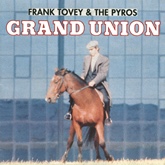
1991’s Grand Union should by rights be lauded as a masterpiece of alternative rock, however Frank Tovey’s reclusive persona ensured that this overlooked gem has slipped through the net. Produced with PK (Paul Kendall), the album is both musically and lyrically enveloping. Something of a ‘concept’ album, Grand Union is ostensibly a collection of skiffly, folksy and vaguely country tracks accompanied by Tovey’s East End stories of the old, the new and the salient. There are many themes here, but one gets the impression that Tovey’s vision of a re-developing East End, with Canary Wharf’s landscape-altering construction in full swing, and the docks that made Britain what it once was turned into luxury restaurants and appartments invoked in him some sort of passion to head back in time and preserve the dirty Docklands spleandour of old in song.

At times melancholy (the WW2-recounting tale on ‘Bethnal Green Tube Disaster’), at others joyful in a ramshackle fashion (the opener ‘Bad Day In Bow Creek’), the album is largely subtle and blissfully easy on the ear. Semi-acoustic guitars, banjos and clever percussion evoke all manner of moods, and when they head into indie-rock territory, as on the Morrissey-esque ‘Cities Of The Vain’, The PyrosPaul Rodden (banjos and guitars), John Cutliffe (bass and acoustic guitars, plus strings on the closing track ‘The Great Attractor’) and Charlie Llewellyn (drums, percussion) – more than prove their adaptability around Tovey’s poetic lyrics. Additional contributions come from Steve Smith on various keyboards, Tracey Booth (bodhran on ‘IKB (RIP)’) and Elliot Carnegie, who plays Jew’s harp on the opener, ‘Bad Day In Bow Creek’. Somewhat more unusual, Tozie Lynch is credited with ‘bones’ on the same track. One imagines those bones may be among the detritus dredged up by the great Thames on a daily basis.

It is actually quite fantastic to hear just how well some primitive music forms lend themselves so well to Tovey’s Cockney vocals. His vocal is somewhere between Wreckless Eric and James’ Tim Booth, both folk and punk at the same time. His hero-worship of the great pioneering British engineer Isembard Kingdom Brunel on ‘IKB (RIP)’ is one of this album’s many high points, a time-travelling trip that leaves the grey towerblock-dominated modern London skylines far behind to witness at first hand the master engineer’s many achievements. And while we’re on the subject of masterful achievements, Paul Kendall’s excellent productions deserve a special mention. Best known for his electronic production for many Mute artists, PK brings a depth and precision to these tracks, using occasional effects with considerable restraint, but pushing the rhythm high up in the mix in an echo of his work with Nitzer Ebb.

With Grand Union, I continue to be impressed by the quality of songwriting, playing and production on display here. Intensely captivating and wonderfully unique, it is difficult to hear it without feeling some great sadness over the fact that the erstwhile Fad Gadget is no longer with us. A truly emotive gem, filled with grief, joy and a yearning for simpler times. Ironically, I wrote this while heading glumly toward my own shiny modern City offices on a train wildly rushing through some of the tunnels that Brunel’s colleagues were famed for.

First published 2003; re-posted 2018

(c) 2003 Mat Smith / Documentary Evidence

Simon Fisher Turner – De Dentro Hacia Afuera (The Tapeworm album, 2009)

Translated, literally, as From The Inside Out, Simon Fisher Turner‘s De Dentro Hacia Afuera was issued as a white cassette on the consistently interesting Tapeworm label in an edition of just 250 copies in 2009.

The pieces on the cassette date back to 2002 / 2003 and the pieces fill a side apiece of the cassette. Side A (‘Outside’) consists of a field recording made by Fisher Turner of the procession of the Virgen del Carmen at Carboneras in 2002. The B-side (‘Inside’) consists of piano improvisations for the soundtrack to I’ll Sleep When I’m Dead, which Mute released as a download in 2003. Both pieces were edited, with Fisher Turner’s full blessing, from the original recordings by Tapeworm’s founder Philip Marshall.

The procession of the Virgen del Carmen takes place on 16 July each year in many Spanish towns, and also in other Spanish-speaking countries, marking the day of the appearance of the Virgin Mary to St. Simon Stock in Cambridge. Stock was the head of an order of the Catholic church which had fled from persecution where they were quartered in Monte Carmelo, now Israel, to Europe. The appearance of Mary to Stock in 1251 was not the first time the Virgin had appeared in the history if the order; in fact, the order was established because of Mary’s likeness in a cloud to some men investigating two prophets. Though some have subsequently cast doubt on Stock’s claims, the reassurance that Mary purportedly gave him, namely that those who wore the traditional scarpel – a cloth garment more or less in the shape of the Cross – would be freed from the fires of Hell has stuck and developed into the festival of divine celebration it has today.

Not that you’d necessarily deduce any of that in the recording Fisher Turner made on 16 July 2002. Here there are segments of chattering crowds milling and thronging around; a rousing brass marching band fades in and delivers a particularly uplifting song that feels like the soundtrack to some sort of Andalusian black and white movie (‘It would be great to play this tune to mum,’ someone is heard saying) before slowly moving out of focus; children chatter; babies cry; birds whistle, so does a man; a lone trumpet lets out a solitary blast before another rousing processional starts up, this one containing a funereal, maudlin middle section and a slightly wonky, out of tune tone; someone speaks above the crowd, prompting others to join in rapturously; what could be a piano pings out a brief high-pitched note; fireworks thunder in the sky; street sellers proffer their wares with repeated and insistent cries; a Latin pop song drifts in and out of focus with a singer sounding suspiciously like Andy Bell from Erasure; a cycle of strange industrial clanking rhythms and atmospheric drones and echoes is unfathomable as a source; someone’s shoes squeak playfully on a pavement.

Divorced from any obvious religious essence, the processions recorded here could have been captured anywhere in the Spanish-speaking world. The only real connection to divinity is the uplifting music, but none of those songs are exactly hymnal, and the church bells that toll at the very end of the piece. From the outside listening in, it feels like a public holiday that’s more or less forgotten why it was established, a bit like May Day, an excuse to kick back and unwind without knowing what you’re celebrating exactly. It all sounds pleasant, fun, the general buzz of people having a good time.

In 2003 Fisher Turner recorded the soundtrack to British director Mike Hodges’ I’ll Sleep When I’m Dead, starring Clive Owen. When I interviewed Simon just after the release of that album he advised that his process of creating the soundtrack involved getting on set, hitting props, talking to the actors, recording stuff and generally making a nuisance of himself to try and capture the essence of a scene.

I’ll Sleep When I’m Dead was pretty much improvised from my end,’ Fisher Turner explained to me back in 2004. ‘As they shot the film I worked at home on material that the editor was able to put in as a rough guide for the scenes. I had a good budget so I could test things out in the studio, bring them home, and rework them on the laptop, and then send them to the editor. I think finally I’d made up 9 CDs’ worth of music for the film. A lot of it is very atmospheric and distant, more ‘sound design’.’

The final soundtrack would contain familiar Fisher Turner elements in the form of tapes and contributions from the likes of former Blockhead Gilad Atzmon, but at its core were segments of noirish piano playing, the improvisations for which are documented on the second side of De Dentro Hacia Afuera. In recent times we’ve become used to Simon Fisher Turner almost dispensing with melody completely, but gathered here are a variety of modes and themes that evidence a unique skill at creating filmic moods with a minimal, discreet set of notes. Styles here range from tentative jazz to experiments that appear to involve sliding objects along the strings, clusters of evocative notes and ominous chords.

‘Solo Piano Improvisation #54’ is remarkable in two senses – first, as a piece of music (as opposed to considering it an assembly of sketches), it works just as dramatically as the fully realised soundtrack even without its additions and processing; second, it gives a rare insight into the early workings of a Simon Fisher Turner piece. Fisher Turner has himself said that his pieces are never really ever finished, often continuing to evolve further beyond the point where they’ve been submitted to a director and used in the finished film. The distance between early ideas and finished piece is thus immeasurable, making this document all the more intriguing. Though edited sensitively into a sequence and narrative by Philip Marshall, the result is still a recording of a work at its earliest stages, yet still capable of standing up as a complete work in its own right.

Related:

Interview with Philip Marshall from The Tapeworm about the label’s formation, ethos and ongoing exploration of the cassette format over at my other blog, Further.

Thanks to Philip at The Tapeworm and Simon Fisher Turner.

Originally posted 2013; re-posted 2018.

(c) 2013 MJA Smith / Documentary Evidence

Kumo – Day / Night (The Tapeworm album, 2018)

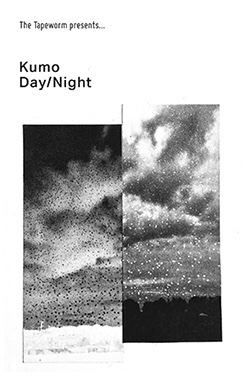
The Tapeworm imprint has always had an unerring capacity to release interesting sounds from interesting artists, and Day / Night by Kumo is yet another fine cassette among many. Kumo is the alias of Jono Podmore, a multi-disciplinary talent known on this blog for his work with Spoon on the Can back catalogue, the book he is assembling on sorely-missed Can drummer Jaki Liebezeit, the very fine Metamono albums and the Kumo and Cyclopean releases issued by Mute over the years.

For Day / Night, Podmore began with two field recordings taken from the balcony of his flat in South East London, adding synths and theremin later to the sounds he’d captured by chance – cars starting, dogs barking, planes droning overheard, snippets of conversation and so on. One recording was made during the day, one during the night. The effect is like listening to a microcosm of urban London life, never quiet for sure, but perhaps more peaceful than one might imagine.

Podmore’s electronic responses to the field recordings vary from sinewy synth arpeggios that wobble and flutter around the ambience to spooky, dead-of-night bursts of drones, tones and bleeps that feel like the soundtrack to existential dread. There is a certain muted quality to the sounds he added to his balcony recordings, as if he wanted the two components – the organic and natural and the composed and artificial – to live in harmony with one another, and neither has the capacity to overburden the other.

Day / Night is the embodiment, for me, of what Brian Eno conceived of for ambient music when he was laid up in bed listening to classical music and environmental sounds together. Podmore’s approach has a delicateness of touch, a sensitivity to his natural surroundings and a powerfully imaginative way of electronically responding to the sounds he hears.

Tapeworm releases are always issued in limited runs – get it now from the Touch shop before it’s gone for good.

Postscript: this review was finalised somewhere over the Atlantic as my overnight return flight home from New York approached the Cornish coast. It was started on the flight to JFK earlier in the week, probably in roughly the same place but during the day. Philip from Tapeworm asked me whether ‘Day’ or ‘Night’ worked best for the night flight. My response was thus: ‘Night’ made me more edgy as we came into land. ‘Day’ made me yearn for home after the best part of a week away from my own familiar daily environmental soundtrack.

(c) 2018 Mat Smith / Documentary Evidence
White Witches – Heironymus Anonymous (AWAL album, 2018)

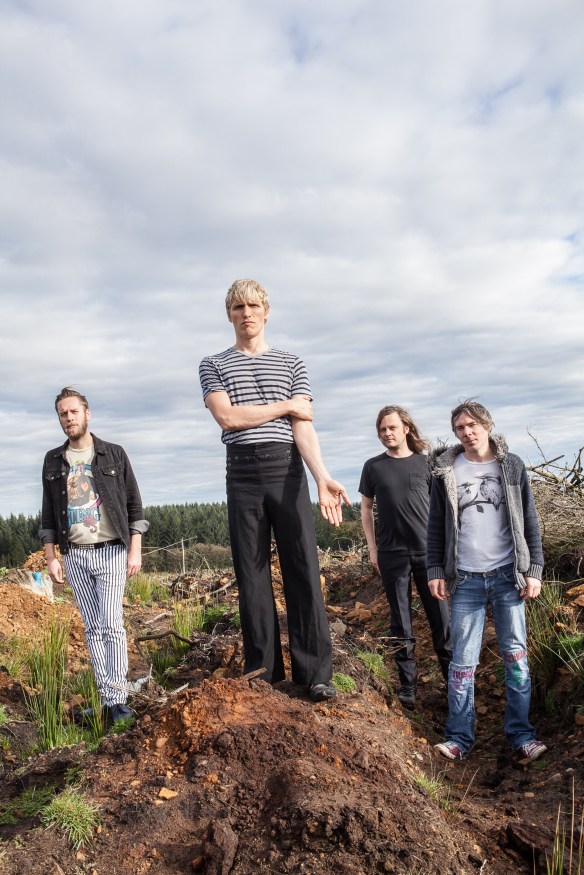
White Witches is a duo of Rory Lewarne, former frontman of the sorely-missed 2000s Mute act Pink Grease, and Piranha Deathray guitarist / keyboard player Jeremy Allen. For their debut album they’ve added the miscellaneous talents of ex-Art Brut drummer Mikey Breyer, Bourgeois & Maurice bassist Charlie Webb, Desperate Journalist vocalist Jo Bevan, and All Seeing I’s JP Buckle. Some six years in the making, Hieronymus Anonymous was recorded with Buckle at Jarvis Cocker’s basement studio and Dean Street studios in Soho.

Lewarne and Allen both grew up streets apart on the westernmost edges of Cornwall and describe White Witches as “dirty glam rock with a dystopian heart and a Cornish spirit”. The music here is wiry, brazen and full of nervous energy, infused with reverential flashes of Ziggy, Bolan, Ferry and the brothers Mael. Itchy guitar, clever lyrics and energetic kitwork combine together here into an album treading a tightrope between opaque fun-filled songs and seriously ominous themes, all fronted by Lewarne’s instantly familiar histrionics.

The album contains a whole host of highlights, from the theatrical melodrama of ‘Estella’ to the swirling basswork and sinewy riffery of ‘Sandcastles’, wherein Lewarne adopts a crazy falsetto amid music operating on the very edge of chaos. The title track is a strident, pathos-laden ode to a life well lived, while towering closing track ‘Savages’ blends the now-familiar White Witches sound with an undercurrent of synths and a rousing chorus amid an album of rousing choruses.

The pair claim that the album was a product of growing up in a way that being in a band like Pink Grease didn’t allow, while in Allen’s case it also involved dealing with life-limiting alcoholism; in spite of what should be, on paper, a relatively mature album, HeironymusAnonymous is bratty, irreverent, original and punk as fuck.

Listen to Heironymus Anonymous here.

(c) 2018 Mat Smith / Documentary Evidence