Various Artists – Artificial Intelligence (Warp compilation, 1992)

  
compilation // Artificial Intelligence

Warp’s groundbreaking Artificial Intelligence compilation did what so many other seminal compilations did and effectively made a scene concrete. Like Eno’s No New York did for post-punk in the US, it could be argued confidently that Warp did the same for the particular brand of electronica over which the Sheffield label presided, spawning a series of intriguing albums by the label that gave voice to many of the artists that were showcased on the compilation.

Artificial Intelligence arrived in 1992, the same year that hardcore had rudely woken the listening public from their slumber, and on many of the tracks included here there’s still a whiff of detuned breakbeats as opposed to the haphazard glitch beats that the likes of Autechre would come to represent over the next two decades. In fact, Autechre’s ‘Crystel’, one of two tracks by Sean Booth and Rob Brown included here, sounds positively like a conventional instrumental synthpop track compared to the jagged rhythms and icy melodies they would become poster children for. Tracks like Musicology’s ‘Preminition’ are not exactly the bedroom listening we came to expect from the AI series, and instead sound like straightforward rave tracks, complete with menacing basslines and euphoric soul samples.

Of interest to Mute / NovaMute fans are three tracks from Speedy J and Richie Hawtin, here operating under his short-lived UP! alias. Hawtin’s ‘Spiritual High’ was originally released on a 12” song on Hawtin’s Probe label, and later released as one side of NovaMute’s Probe Mission 2 12” as part of a tentative partnership between the UK and Canadian labels (the other track on that 12” was by Public Energy, an alias of Speedy J). For a track taken from a relatively early part of Hawtin’s career, the format of his later work is immediately recognisable in the thudding snare-heavy beats, acid squelches and the way his track repeats endlessly but still builds toward several peaks over the course of its six minute duration.

‘Fill 3’ by Speedy J forms part of a series of tracks with that title, but as far as I can tell, was an exclusive to Artificial Intelligence. By the time Jochem Paap had arrived at NovaMute his music had undergone many changes, and ‘Fill 3’ sounds positively naïve in comparison with his later work, though with its synth pads and shimmering textures it is undoubtedly one of the most pleasantly ambient tracks on the whole collection. Given the momentum implied by its bubbling patterns and fragile melodies, it feels like it’s crying out for a beat sequence of some form, but to J’s credit he resisted the temptation of adding one. The other Speedy J track on Artificial Intelligence, ‘De-Orbit’, was featured on his Warp album Ginger and is a slowed-down, chilled-out affair with hip-hops breaks, wherein the languid pace allows for intricate details to emerge through the greater sense of space.

Alongside Autechre, Artificial Intelligence showcased Warp stalwart Aphex Twin, here in his Dice Man guise but with a track from his Polygon Window album for the label, as well as B12 (Musicology) and The Black Dog under the name I.A.O. The album also included Orb’s Alex Paterson with a live version of the classic ‘Loving You’, though it’s not immediately apparent what makes this a Paterson solo effort rather than an Orb performance.

1994’s follow-up compilation mined the same vein, with many of the same players, but branched out further, and also illustrated how much the electronic music could evolve in just two short years. For this reviewer, I bought Artificial Intelligence 2 before the first instalment, and listening in reverse made this first compilation sound decidedly tentative, but I nevertheless fully understood the importance of what Warp had assembled here.

(c) 2015 Mat Smith / Documentary Evidence

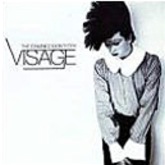
Visage – The Damned Don’t Cry (Spectrum album, 2000)

IMG_0082-0

spectrum / universal music | 544 381-2 | 2000

Sometimes, back in the early days of writing Documentary Evidence, the challenge was trying to find reasons to write about songs and artists I liked but which had no Mute Records connection whatsoever.

Such was the case with Visage. Recalling ‘Fade To Grey’ brings with it recollections of my four-year-old sister marching up and down a catwalk at a student fashion show in Leamington Spa back in the day-glo decade; while that’s a great reason for getting misty-eyed about a song, it didn’t qualify it for Documentary Evidence. So I was delighted to discover by accident that Barry Adamson had played in Visage, and that all of a sudden legitimised me being able to devote a page to Steve Strange’s band.

The untimely death of Strange from a heart attack leads me to re-post this review of a budget compilation today.

During 1979 and 1982, the core three musician members of Howard Devoto‘s Magazine moonlighted in Visage, the electro-pop studio-only project of Steve Strange and Ultravox’s Billy Currie, with additional contributions from Midge Ure and drummer Rusty Egan. Barry Adamson, Dave Formula and the late John McGeoch played on Visage’s first two albums Visage (which included the genre-defining New Romantic hit single ‘Fade To Grey’) and The Anvil. It seems unbelievable that the backbone of Devoto’s post-punk soundsmiths should moonlight in a futuristic band so far removed from their alternative rock day jobs, and this unusual period in Adamson’s musical career is often missed out of biographies. For those interested in hearing some of Visage’s work, you could do well to check out the budget Damned Don’t Cry compilation on Spectrum, which includes selections from the band’s back catalogue, including tracks from their 1984 swansong where the Magazine members were no longer part of the line-up. Another compilation – the full-price Fade To Grey album – was released recently, but includes almost all of the tracks on Damned Don’t Cry, and certainly no extra biographical information than the two sides of text included here.

In truth, without knowing exactly who appears on the tracks from 1979 to 1982, anyone specifically looking for Adamson’s distinctive bass playing is likely to be disappointed. Then again, having spoken to Barry about his use of studio downtime when Magazine were recording Real Life, he was already experimenting with tapes and synths at this time, and therefore it is possible that his involvement in Visage was more than just laying down the odd bassline. To fans of the early eighties cross-over of New Wave, synthpop and New Romanticism, this collection includes some absolute gems. Notwithstanding the mysterious sheen of ‘Fade To Grey’ (a track which for me will always be synonymous with a Leamington fashion show my sister was in), there is also the funk-pop of ‘We Move (Dance mix)’ from 1981, with some pointy guitars and solid Adamson bass groove, and what must be an occasional vocal from the distinctive Midge Ure. Elsewhere, the hyperactive elastic bass of ‘Night Train’ recalls ‘The Thin Wall’ by Ultravox, laced with lashings of horn-led soul. The super-group collision of styles in perhaps most prevalent on ‘Visage’, where Dave Formula’s signature Synergy-style orchestral synth melodies and riffs blend in with some Peter Hook-esque bass from Adamson, and great vocals from Steve Strange, who proves himself to be an excellent – albeit under-rated – vocalist throughout this compilation.

Formula’s keyboards are much more obviously present on these tracks than either McGeoch or Adamson, assuming that they were using their regular instruments. Nevertheless, there are some brilliant tracks here : the 1980s nightclub-friendly ‘The Anvil’, the dance mix of the instrumental ‘Frequency 7’ (sounding like an early Nitzer Ebb track infused with a synthpop flavour rather than electro-punk, along with some ‘Warm Leatherette’ noises), the positively soaring but mournful electronics of ‘Whispers’ and the Thompson Twins meets Human League crisp synthpop of ‘Pleasure Boys’ in its dance mix guise. ‘Damned Don’t Cry’, the 1982 track that provided this compilation with its title shares the same mysterious, ethereal tone as ‘Fade To Grey’, with the addition of a 4/4 beat, arpeggiated bassline and some Andy McCluskey-styled vocals. ‘Love Glove’ is the best track from the 1984 Beat Boy LP, an upbeat electropop number with saxophones that reminds you of everything that was good about 1980s pop. The over-long ‘Beat Boy’, however, reminds you of everything that was bad about the 1980s – that horrible synth slap bass, orchestral stabs and stuttered vocals. Yuck. The sub-Phantom Of The Opera / Rick Wakeman / Vangelis track ‘The Steps’ (1980) is also worth skipping through, if only to get you to ‘Frequency 7’ quicker.

First published 2004; re-edited 2015.

(c) 2015 Mat Smith / Documentary Evidence

Sonic Youth – Hits Are For Squares (Geffen / Starbucks album, 2008)

Sonic Youth 'Hits Are For Squares' CD artwork

geffen / starbucks | cd 0602527781778 | 10/06/2008 | track listing

Hits Are For Squares is an almost career-spanning sixteen-track Sonic Youth compilation album. The album was released initially only in US Starbucks stores in 2008 in conjunction with Geffen, Sonic Youth’s home since leaving SST / Enigma (in the States) and Blast First (in the UK) following the release of Daydream Nation. Ignoring the obvious charges of ‘selling out’ by letting the mighty Starbucks put out a compilation album, what’s relatively unique about Hits Are For Squares is that the tracks themselves were all chosen by various celebrity fans (rubber-limbed Chili Pepper Flea, actress Catherine Keener, Pearl Jam’s Eddie Vedder and so on) or collaborators (Minutemen’s Mike Watt). Those choices, plus their reasons for choosing a particular track are explained in the liner notes alongside brief notes on the tracks and where they fit into the Sonic Youth back catalogue. And hey, the self-deprecating album title isn’t dissimilar to Hip To Be Square, the 1986 album from Huey Lewis & The News beloved by Patrick Bateman in Bret Easton Ellis’s American Psycho, and that’s always cool with me. Meanwhile, the sleeve looks like it’s trying to be an Edward Hopper portrait, the suit drinking his Starbucks coffee shamelessly reinforcing the commercial nature of this album. A ‘caffeine-free’ vinyl edition was released by the band later in 2010.

What’s immediately evident from the selections is that there are way more choices from the Geffen ‘commercial’ Sonic Youth period rather than their earlier independent label period, aside from firm fan favourites like ‘Teen Age Riot’ (from Daydream Nation), ‘Tuff Gnarl’ (from Sister), ‘Shadow Of A Doubt’, ‘Expressway To Yr. Skull’ (aka ‘Madonna, Sean And Me’) and ‘Tom Violence’ (all from Evol) and the earliest track here, the raw ‘The World Looks Red’ (from the Confusion Is Sex EP with Grinderman / Nick Cave And The Bad Seeds / Silver Alert drummer Jim Sclavunos on the skins and lyrics by SwansMichael Gira). In general the tracks lean toward the accessible side of the Sonic Youth back catalogue rather than the more experimental, but that’s what you get when you try and shift your album in outlets of the ubiquitous Seattle coffee chain (Seattle resident Eddie Vedder, incidentally, has a bit of a rant about not liking coffee in his notes to ‘Teen Age Riot’, which is rather like biting the hand that feeds if you ask me, but it’s still funny). Also, most of the tracks are those sung by Thurston Moore; Kim Gordon gets a couple of her lead vocal tracks included (including the annoying ‘duet’ with Chuck D, ‘Kool Thing’ and the beguiling ‘Shadow Of A Doubt’) and poor Lee Ranaldo doesn’t have any of his sung / spoken tracks included at all. Diablo Cody chooses the cover of ‘Superstar’ from a tribute album to The Carpenters which, while pretty, still feels uncharacteristically kitsch for Sonic Youth; far better would have been something from the more radical Ciccone Youth album.

Personally, I’d liken this compilation to the type of coffee you get from Starbucks – in other words a bit watered down, vaguely inauthentic but nevertheless addictive all the same, precisely because it is so accessible. I approached this album having not listened to most of the Sonic Youth back catalogue for some time and it felt like I was hearing these tracks for the first time all over again, ‘Teen Age Riot’ (still one of my favourites from their entire body of work) and ‘Bull In The Heather’ (from Experimental Jet Set, Trash And No Star) in particular sounding really fresh and unfamiliar, just like I was listening to them for the first time again.

The album also includes a previously unreleased track, ‘Slow Revolution’, which mines a similar vein to Washing Machine‘s long-form ‘Diamond Sea’ (a track I’d definitely have included, though at twenty minutes it was clearly never going to make the grade while the single edit lacks the very expansiveness that makes the song so impressive); like ‘Diamond Sea’, ‘Slow Revolution’ is a languidly-paced number, all Jaki Liebezeit-style drums from Steve Shelley and layers of hazy guitar riffs and Kim Gordon wailing away somewhere in the middle ground like she’s singing in tongues. It’s a far cry from this band’s more blistering white hot punk tracks, but it’s quite beautiful nonetheless; think the Velvets’ ‘Pale Blue Eyes’ passed through a Krautrock filter. ‘Slow Revolution’ is worth buying this compilation for in itself.

Gripes aside, Hits Are For Squares provides a great overview for anyone unfamiliar with Sonic Youth. It’s not as good as my own Sonic Youth compilation tapes that I made at the start of the last decade, but that’s personal choices for you.

I decided to re-post this because I’ve been listening to The Best Day, the new solo album from Thurston Moore which I’m reviewing this month for Clash.

Track listing:

cd:
1. Bull In The Heather
2. 100%
3. Sugar Kane
4. Kool Thing
5. Disappearer
6. Superstar
7. Stones
8. Tuff Gnarl
9. Teenage Riot
10. Shadow Of A Doubt
11. Rain On Tin
12. Tom Violence
13. Mary-Christ
14. The World Looks Red
15. Expressway To Yr. Skull
16. Slow Revolution

First published 2010 / re-posted 2014

(c) 2014 Mat Smith / Documentary Evidence

S.C.U.M – 568 (Mojo covermount, 2011)

Various Artists 'Power, Corruption & Lies Covered' CD artwork

Power, Corruption & Lies Covered | mojo covermount cd | 2011

This track was recorded by S.C.U.M for a Mojo compilation celebrating the release of New Order‘s Power, Corruption & Lies thirty years before. Thomas Cohen‘s boys joined the likes of Errors, Walls and Zombie Zombie who recorded a track apiece for the compilation which, given the participants and the different music worlds they individually occupy, has a natural unevenness, unlike the sleek production of the New Order original.

‘568’ was never my personal favourite song, either in the New Order back catalogue or on Power, Corruption & Lies. It was, to me, ‘Blue Monday’-lite, with none of the classic moments that the track it was so similar to contained. Mercifully, I’m able to put that to one side with the S.C.U.M version, which dispenses with the shameless (but careless) bounce of the original and moves proceedings into a far darker place than New Order’s version suggested was possible. Cohen’s vocal is detached and sinister (but also strangely authentic compared with Bernard Sumner‘s original), while the serenity of the lengthy build up provides no clue to the musical handbrake-turn that the band are about to pull when grainy distortion and a twisted bass arpeggio swing into view. Their version is more linear, less stop-start, and winds up sounding a lot like ‘New Gold Dream (81/82/83/84)’ by Simple Minds.

Sadly this was probably among the last recordings S.C.U.M ever made and it’s yet another reminder of how disappointing it was that they called it quits.

I thought it high time to post this for two reasons: the occasion of Mute announcing the somewhat unexpected signing of New Order to the label that was revealed earlier this week, and also because occasionally I like to depress myself about S.C.U.M’s untimely demise.

(c) 2014 Mat Smith / Documentary Evidence

Various Artists – The Tyranny Of The Beat (The Grey Area Of Mute album, 1991)

Various Artists 'The Tyranny Of The Beat - Original Soundtracks From The Grey Area' CD artwork

the grey area of mute | cd agrey1 | 1991

The Tyranny Of The Beat – Original Soundtracks From The Grey Area was a 1991 compilation issued by Mute to showcase releases from its Grey Area sub-label. The Grey Area specialised in reissuing the back catalogues of Cabaret Voltaire (their Rough Trade releases), Can, Throbbing Gristle (plus various Industrial Records acolytes), Graeme Revell‘s SPK and many others. The label also became home to early albums by artists that had been signed to Mute, such as Nick Cave‘s pre-Birthday Party band The Boys Next Door, D.A.F., Wire and Einstürzende Neubauten.

The reissue programme conducted by Mute through The Grey Area inevitably produced a varied counterpoint to the releases issued through the main Mute imprint, through Paul Smith‘s hugely diverse Blast First (which itself, at times, also reissued plenty of older material) and NovaMute. Alongside The Fine Line, specialising predominantly in soundtracks for TV, film and theatre, The Grey Area represented a hugely interesting opportunity to hear some out-of-print releases on CD for the first time.

There days, at least nominally, The Grey Area no longer exists. Can reissues have never officially carried the logo, and whilst Mute remains the custodian of the seminal Cologne unit’s back catalogue, it is done in partnership with Can’s own Spoon imprint; Cabaret Voltaire’s latest reissue programme through Mute is done through the main label and consequently all releases now carry stumm catalogue codes, and Throbbing Gristle effectively bought back their work to reopen the doors of Industrial Records. The opportunity to reinvigorate The Grey Area upon securing the opportunity to reissue the Swans back catalogue in 2014, alongside the Cabs programme, feels like something of a missed opportunity.

The Tyranny Of The Beat then serves as a useful overview of what The Grey Area were up to at this point in the early Nineties. A small four-page flyer inside the sleeve highlighted just how comprehensive the reissue programme undertaken by Mute was through the sub-label – after all, they were effectively re-releasing whole or sizeable elements of back catalogues, not sporadic releases. The flyer also included some items that were planned for releases but which have never materialised – chief among these was the Robert Rental / The Normal live album recorded at West Runton, which Rough Trade had released in 1980 as a one-sided LP.

The sleeve also features liner notes from Biba Kopf, famed NME journalist and currently (under his real name Chris Bohn) the editor of The Wire. Kopf also wrote the copy for the Documentary Evidence brochure which inspired this site.

The breadth of music included in sampler form on The Tyranny Of The Beat is impressive, taking in the grubby pulse of TG’s live track ‘See You Are’, their Industrial signees Monte Cazazza with the truly horrible ‘Candyman’, a bit of early electro from the Cabs, the detached punk of Swell Maps‘ brilliant ‘Midget Submarines’, the similarly aquatic ‘Our Swimmer’ by Wire (still one of their best Seventies pieces), a truly ethereal piece by Wire’s Bruce Gilbert / Graham Lewis as Dome with A.C. Marias and the still-devastating Rowland S. Howard-penned ‘Shivers’ by The Boys Next Door. Can’s ‘Oh Yeah’ – one of Daniel Miller‘s personal favourite tracks – provides a rhythmic counterweight to the urgent mechanical production-line beats of Neubauten’s ‘Tanz Debil’ and Die Krupps‘s ‘Wahre Arbeit, Whare Lohn’. Dark relief comes in the form of SPK’s ‘In Flagrante Delicto’, a track which suggests Graeme Revell was always destined to compose the scores for spooky, suspense-filled films like The Craft.

Like a lot of sampler albums, The Tyranny Of The Beat can sound a little uneven, and whilst a lot of these bands were part of common scenes – industrial, punk, the terribly-named Krautrock – it would have been a pretty weird festival if this was the line-up.

Kopf’s liner notes deserve a mention, if only for the way that he positions the concept of a grey area as a place that people run to for escape or as a means of consciously assaulting musical norms, a place that both acted as a reaction against the regimentation of beats and simultaneously gave birth to the repetitive rhythms of techno. ‘In The Grey Area you get the sense of limits being pushed up against and breached,’ he says, and even now, listening to Genesis P. Orridge deliver a maniacal vocal over corruscating waves of sinister noise from a distance of thirty-five years, or Monte Cazazza’s detached multi-channel reportage of a serial killer’s victims and the nauseatingly vivid listing of the savagery he put those victims through, you can see exactly where Kopf was coming from.

Track listing:

cd:
1. SPK ‘In Flagrante Delicto’
2. Throbbing Gristle ‘See You Are (Live, The Factory July 1979)’
3. Cabaret Voltaire ‘Automotivation’
4. Chris Carter ‘Solidit (Edit)’
5. Die Krupps ‘Wahre Arbeit, Wahre Lohn’
6. D.A.F. ‘Co Co Pina’
7. Einstürzende Neubauten ‘Tanz Debil’
8. NON ‘Cruenta Voluptas’
9. Can ‘Oh Yeah’
10. Wire ‘Our Swimmer (Live, Notre Dame Hall July 1979)’
11. Swell Maps ‘Midget Submarines’
12. The Boys Next Door ‘Shivers’
13. Dome ‘Cruel When Complete’
14. Monte Cazazza ‘Candyman’
15. The Hafler Trio ‘A Thirsty Fish / The Dirty Fire’

(c) 2014 Mat Smith / Documentary Evidence

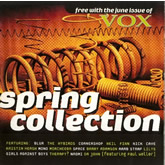
Various Artists – The Vox Spring Collection (covermount album, 1999)

Various Artists 'The Spring Collection' CD artwork

vox | cd sc99 | 06/1999

Ordinarily I wouldn’t mention Mute acts appearing on covermount cassettes or CDs on this blog unless a track was an exclusive mix or edit, or if the compilation itself was Mute-focussed. However, whilst clearing out old CDs recently I came upon this one, which I’ve always loathed because of its sleeve, and inside the sleeve I found two clippings from the issue of the long-defunct Vox that this came with (June 1999).

The clippings were taken from the customary page in the magazine that described the tracks, and included explanatory comments from Nick Cave and Barry Adamson on the songs that were included on the album (‘Red Right Hand’ from Cave’s best-of, and ‘Jazz Devil’ from Adamson’s As Above, So Below). These have been reproduced below, mainly because I thought they were quite useful to retain. Also reproduced are the comments from the liner notes to the CD itself.

The CD also includes ‘Suzy Parker’ by The Hybirds, Richard Warren‘s pre-Echoboy band who had just released their debut album on Heavenly. The liner notes for that have also been reproduced (one wonders what the band made of the ‘dadrock’ comment), but as I had no idea that Warren would metamorphose into Mute’s Echoboy, I never bothered to keep the magazine notes on this song. The inclusion of The Hybirds on this CD in turn prompts the recollection that I caught the tail end of a live set by the band at Colchester Arts Centre on 16 February 1997. The band were supporting Beth Orton, who at the time was my then-girlfriend’s favourite singer. A bunch of us went to watch Orton at our local music venue; it was supposed to be our first Valentine’s weekend together, but instead we seemed to spend most of that weekend either apart or in the company of sundry friends of hers. Consequently I approached the Orton gig, and the Hybirds songs I heard, with a degree of disdain and over-critical resentment.

Nick Cave ‘Red Right Hand’

Sleeve: Originally from Let Love In, perhaps Cave’s finest LP, this also (rather bizarrely) appeared on the Dumb And Dumber soundtrack. ‘You’re just a microscopic cog in his catastrophic plan‘ moans Old Nick in this semi-comically melodramatic take on Stephen King’s The Stand.

Magazine: ‘I had a really wild band then, the best I’d ever had. They could all play, but they were ragged and raw, too. With The Birthday Party there was blues, soul and country, but it was all exploded, there was no kind of respect for anything. It was a machine that was whirling in its own direction and nobody knew what was happening really. The same musical influences are there, but now we respect then more, hold then truer.’

Barry Adamson ‘Jazz Devil’

Sleeve: He played with Magazine, Pete Shelley, and with Nick Cave in The Bad Seeds. Then he went solo to delve deeper into blues / soul / torch / pop / pretty much everything else and somehow remained cool throughout. This is as new as it gets.

Magazine: ‘People talk about the devil as some trickster, a cunning little devil. As far as the darker stuff on the album [As Above, So Below] goes, I wanted to be completely bleak and then relieve it with a humorous look at the dark side with this character that is destined to always be on earth.’

The Hybirds ‘Suzy Parker’

Sleeve: A crazy stream-of-consciouness tribute to the 60s model, and a prime cut from this increasingly popular, thrillingly realist Mansfield band’s eponymously-titled *****-rated debut LP. Dadrock simmering in youthful bile.

(c) 2014 Mat Smith / Documentary Evidence

Wire – 1985-1990: The A List (Mute Records album, 1993)

Wire 'The A List' LP artwork

mute records | 2xlp/cd stumm116 | 05/1993

1985 – 1990: The A List was released in 1993, by which time Wire as a four-piece band were no more. Robert Gotobed had left the band by the time The First Letter was released in 1991, the band ditching the last letter of their name and becoming Wir for that album. Wir themselves then promptly called it quits, leaving behind two further tracks which were released on Touch as the Vien single in 1997.

This is a compilation album of tracks recorded by Wire between the Snakedrill EP and the Drill album that included new versions and live takes of the amorphous-lengthed track that proved to be Eighties Wire’s mainstay, its relentless dugga-dugga-dugga rhythm providing the foundation for their material for Mute. So, yes, a compilation, but one with a difference: according to the sleeve notes, ‘The A List was drawn up by asking various compilers to name their “top 21” Wire tracks in order of preference. They were then arranged on a “football league” basis. The final choice and running order are based on this chart and the maximum time of a CD. There have been no edits.’

Those contributing to the vote included the band’s Colin Newman and his wife and Githead accomplice Malka Spigel, Bruce Gilbert‘s chum Russell Haswell, Touch co-founder Jon Wozencroft (who also did the typography for the album), Wire biographer Kevin Eden, England’s Dreaming author and punk authority Jon Savage and Mute’s Roland Brown, and for completeness the entire distribution of votes is included within the sleeve notes. The A List was compiled and edited by Brown, Newman and Paul ‘PK’ Kendall.

The result is a showcase of just how strong Wire’s body of work was in the Eighties. While the purist post-punk fans would no doubt bitterly complain that Wire had more or less left their late Seventies intensity and creativity behind, the Wire that reformed and signed to Mute in the mid-Eighties delivered a high quality pop-inflected ethos mixed in with some of the strangest lyrics that have ever been committed to record. So what if the snarling guitars had been left behind – that was yesterday’s news. The new tracks (mostly) had a smart sound, infused with greater use of technology, while the wry artsiness that dominated Wire’s trio of albums for Harvest / EMI was never more than a sneer away.

The only criticism I have of The A List is that ‘The Boiling Boy’ didn’t make the grade. The version of the track that appeared on IBTABA is probably my favourite track from Eighties Wire, a slow-developing, graceful but strangely linear piece (it scraped into number #56 on the league table with just 29 votes). However, this album was the product of a resolute democracy – how typically Wire to create a compilation this way – and thus I shouldn’t question its exclusion too much. It’s certainly a more considered compilation than the equivalent sweep-up of Seventies Wire, On Returning, which Harvest put out in 1989.

For sharp-eyed completists, note that this was given a stumm catalogue number, rather than the mutel mark used by Mute for some artist compilations.

Track listing:

2xlp/cd:
A1. / 1. Ahead
A2. / 2. Kidney Bingos
A3. / 3. A Serious Of Snakes
A4. / 4. Eardrum Buzz
B1. / 5. Drill
B2. / 6. Ambitious
B3. / 7. In Vivo (Remix)
B4. / 8. The Finest Drops
C1. / 9. Madman’s Honey
C2. / 10. Over Theirs
C3. / 11. Silk Skin Paws
C4. / 12. The Queen Of Ur & The King Of Um
D1. / 13. Torch It!
D2. / 14. Advantage In Height
D3. / 15. Point Of Collapse
D4. / 16. Feed Me

First published 2012; edited 2014

(c) 2014 Mat Smith / Documentary Evidence

Sun Ra – Out There A Minute (Blast First album, 1989)

Sun Ra 'Out There A Minute' LP artwork

blast first / mute records | lp/cd bffp42 | 1989

Surely the best thing about running a record label must be the opportunity to release music that you love. Such is the case with Blast First head Paul Smith‘s release of three Sun Ra records via his label in the late Eighties and Nineties. That trio of releases – the CD/VHS set Cosmic Visions (which includes the legendary Space Is The Place film), a live album of Ra and his Myth Science Arkestra recorded in London and the compilation Out There A Minute – were all made possible, first and foremost, by Smith being a fan of Sun Ra’s body of work. The other reason was a sense of exasperation and disbelief that there were people out there who bought all the prior Blast First releases. His aversion to being seen as some sort of Factory-style ‘cult’ label, or even being regarded as a record label at all, again led to a focus on bands and artists that Smith was personally interested in.

‘Hence the Sun Ra and Glenn Branca releases,’ explains Smith by email. ‘Both have a connection and influence on, say, the music of Sonic Youth, but both were maybe not so obvious to people at the time. Thurston [Moore, Sonic Youth guitarist] was, even then, a big collector of Ra, and I’d seen the Arkestra play years before in London. They made a real impact on me – and who would not want to meet an Angel, and one from Saturn to boot? Anyway we had about twenty people send these two records back asking for a refund, which we happily gave them. Mission accomplished.’

Sun Ra’s legacy as an outsider jazzman, band-leader, synth pioneer and visitor from another planet is huge, as is his body of work across a multitude of labels. Collecting Ra records can be a daunting and extremely expensive task, which is why compilations like Out There A Minute are useful introductions to Sun Ra’s complex body of music. If you believe the official biography, Sun Ra was born Herman Poole ‘Sonny’ Blount in Birmingham, Alabama in May 1914 and by his early teens was an impressive pianist, able to transcribe full works by ear after witnessing performances of the many jazz legends that performed in Birmingham on the US jazz touring circuit. By the mid-Thirties, Blount was leading his own band, insisting on rigorous practice and creating a disciplined, Calvinistic, work ethic that allowed his band to adapt to a number of jazz styles with ease.

The ‘other’ biography is much more interesting, and likely of much greater influence on the music that was issued by Sun Ra. After a couple of years of limited success with his band, Blount claimed to have been surrounded by a white light, which he followed, and which magically transported him to Saturn where a form of Angel spoke to him of impending chaos on Earth, encouraging him to preach peace through music, and replacing his corporeal form with that of a Saturnine Angel. During the course of his onward career, Sun Ra – as he became known from 1952 having legally changed his name to Le Sony’r Ra – would focus on a form of Afrofuturism, his Arkestra would wear Egyptian costumes on stage and his music would take on an astral dimension.

Whilst liner notes are absent (something jazz fans are pretty intolerant of generally), we know that the tracks that form Out There A Minute were recorded in New York at the Arkestra’s base near 42nd Street, a communal living and performance space that the band were forced to adopt because of Manhattan’s sky-high rents. The band were residents in New York from 1961 through to 1968, during which time they adopted more of a free improv style, currying favour with the beat poets and fans of psychedelia, but also getting frustrated by hecklers and a more universal concern that Sun Ra and his band were a bit too ‘far out’ for the jazz fraternity.

Out There A Minute comprises thirteen tracks from the end of the Arkestra’s New York period, personally compiled by Sun Ra from an archive of rare recordings. The recordings range from straight-up big band bop like ‘Dark Clouds With Silver Linings’ or ‘Lights Of A Satellite’, which showed that Sun Ra was still prepared to tap into more traditional (and more popular) jazz forms, through to some of the more intensely alien pieces. The Sun Ra Moog sound is here not quite developed, though some of the tracks have some distinctive and inventive early synth musings; predominantly Sun Ra deploys piano or organ lines here, nestled among John Gilmour‘s tenor sax and Marshall Allen‘s alto. In the jazz genre, it perhaps doesn’t feel quite so adventurous as the idea itself today, but these pieces undoubtedly have an otherworldly quality when compared with other music being wrought at the time. Tracks veer from polite, romantic musings such as the genteel but noisy ‘When Angels Speak Of Love’ to the scratchy whine of ‘Cosmo Enticement’ or ‘Next Stop Mars’. The playful, wobbly echoes of ‘Song Of Tree And Forest’ sounds like something that wouldn’t have gone amiss on the soundtrack for 2001: A Space Odyssey if Kubrick hadn’t decided to go all highbrow with his use of Ligeti. ‘Other Worlds’ is cloying, manic skronking, hammered pianos and wild percussion, truly out there playing with a playful, expansive reach.

Smith recalls meeting Ra and his band several times. ‘I even got to visit them in their commune in Philly, and once took him shopping on London’s Denmark Street where he picked up a “Heavy Metal” guitar pedal. Sunny had no idea about the musical genre, he just liked the name and started talking about the different physics on the home planet.’

‘I organised some dates, especially in the UK where he’d sort of lost his place with the jazz fraternity at that time,’ Smith recalls. ‘Sun Ra playing at The Mean Fiddler is what showed Vince Power that Camden Jazz Cafe could work! Sunny was a truly lovely soul. A fantastic and mischievous twinkle in his eyes all the time, and a lovely giggle. He was very anti-drug, and very strict with his band members. I remember introducing Thurston Moore to Sunny at the Bottom Line jazz club in New York – it was one of the few times I’ve seen him look freaked out at meeting someone.’

Sun Ra rejoined his Saturnine people in 1993, handing the baton to Marshall Allen, who leads the Arkestra to this day. Only a few of the original members survive, and Allen himself will turn ninety in a couple of years, but the unique band that Ra created continue to tour, the perfect living tribute to one of jazz music’s most celebrated but misunderstood geniuses.

On a personal level, there were two things that formed my still-developing interest and love of jazz. The first was a guy called Brian, a friend of the middle-aged couple that I lived with during my final year at university in Colchester in 1998. Brian was a big man, who I forever imagine now to look like Peter Brötzmann, and he absolutely loved jazz. Every summer he’d take himself off to european jazz festivals, and the few times he and I spoke, he enthused about the genre so much that it cemented in me a need to explore jazz much as I’d been drawn into punk two years earlier. Sadly Brian passed away that year and never managed to give me the recommendations he’d always intended to. The other influence was seeing this Sun Ra compilation listed in the Documentary Evidence pamphlet that ultimately inspired this site. At the time (1991), I had no idea who or what Ra was, and it wasn’t until I read a review of John F. Szwed’s book in The Wire around a year after Brian’s death that I began to appreciate his importance and also the sheer eclecticism of Smith’s label. It took me a few years to build up to delving into Ra’s back catalogue, but it didn’t disappoint when I finally did.

Thanks to Paul Smith.

Track listing:

lp/cd:
A1. / 1. Love In Outer Space
A2. / 2. Somewhere In Space
A3. / 3. Dark Clouds With Silver Linings
A4. / 4. Jazz And Romantic Sounds
A5. / 5. When Angels Speak Of Love
A6. / 6. Cosmo Enticement
B1. / 7. Song Of Tree And Forest
B2. / 8. Other Worlds
B3. / 9. Journey Outward
B4. / 10. Lights Of A Satellite
B5. / 11. Starships And Solar Boats
B6. / 12. Out There A Minute
13. Next Stop Mars (CD bonus track)

First published 2012; edited 2014.

(c) 2014 Mat Smith / Documentary Evidence

Anita Lane – Dirty Pearl (Mute Records album, 1993)

Anita Lane 'Dirty Pearl' LP artwork

mute records | lp/cd stumm81 | 10/1993

Dirty Pearl is a rag-bag collection of newly-recorded Anita Lane tracks produced by Mick Harvey as well as older material, the entire Dirty Sings EP and collaborations with Die Haut, Einstürzende Neubauten, Barry Adamson and The Birthday Party. The album is as much a collection of Lane’s work as it is a showcase for the seemingly unlikely cross-pollination of scenes that emerged when The Birthday Party moved from Australia to the UK, followed by a brief and fortuitous sojourn in Berlin; that productive Kreuzberg stop-over was responsible for Nick Cave‘s Bad Seeds being swelled by the likes of Neubauten’s Blixa Bargeld and Die Haut’s Thomas Wydler, as well as some of Cave’s most inventive and inspired early musical work.

The collection covers the period 1982 to 1993 and presents the tracks in reverse chronological order. Overall, the compilation shows just how integral Lane was to the whole scene that formed between London and Berlin in the mid-Eighties, with characters such as Chrislo Haas and Adamson appearing on various tracks. As Nick Cave’s girlfriend and muse, Lane co-wrote a number of The Birthday Party’s songs, including the likes of ‘Dead Joe’, and was credited as a founding member of Cave’s subsequent Bad Seeds though her participation in the group was never exactly clear. What’s also immediately apparent from this collection is just how little music Lane has herself released – over half of Dirty Pearl was already released by the time this compilation was released, and Lane would only come to release her first (and to date only) ‘proper’ LP in 2002 with Sex O’Clock. Whilst Dirty Pearl provides a comprehensive overview of Lane’s music, one notable omission is 1991’s collaboration with Adamson on the excellent cover of Lee Hazlewood’s ‘These Boots Were Made For Walking’ which Adamson crafted for his Delusion soundtrack.

Opening track (and therefore most recent) ‘Jesus Almost Got Me’ is a countrified, Triffids-esque song of drunkenness, cruel love and regret, beautifully carried forward on Harvey’s sensitive drumming and ‘Evil’ Graham Lee’s genteel slide guitar. Immersed in the background are spirals of grainy feedback and some lovely vocal harmonies from Harvey. ‘Jesus Almost Got Me’ has a tired, resigned quality to it. In contrast, ‘The Groovy Guru’ is a funky, psychedelic trip, filled with wild face-melting guitar and wayward organ creating a vibe that felt about twenty-five years old too late, the lyrics describing a sort of pervy Cassanova character with a number of Satanic traits.

The cover of Marvin Gaye’s ‘Sexual Healing’ was produced by Mick Harvey with artist Johannes Beck and Sven Röhrig, finding Lane cooing girlishly over a sick, phasing breakbeat, shimmering vibes from Barry Adamson and some leaden (and less-than-romantic) backing vocals from Beck and Moritz Wolpert. At times Lane sings with a strained needfulness that can feel quite uncomfortable at times, but it’s quite hard to think of this as being too serious. Both ‘Blume’ (from Neubauten’s Tabula Rasa LP) and ‘Subterranean World (How Long…?)’ (from Die Haut’s Head On) highlight how well Lane’s voice matches Blixa Bargeld’s distinctive own. Bargeld’s transition from the howling, shredded vocal style displayed on Neubaten’s earliest material to the sensitive, half-spoken, almost Scott Walker-esque voice of their later material is continually surprising, and that softer side shines through on these two songs. ‘Subterranean World’, with its duet chorus of ‘How long have we known each other now?‘ brings to mind those clips in romantic films where couples explain to camera how long they have been together, except that by the end of this darkly humorous song Lane and Bargeld decide that they’ve never actually met before.

‘Picture Of Mary’ is an atmospheric piece written with Bargeld, dominated by Lane’s ghostly singing and a backdrop of dramatic piano, mournful violin and jangly Latin guitars (from Blixa) which threaten to swell up in the mix but never quite do. The only thing that lets this track down is Lane’s vaguely tuneless musings which bring to mind some of Nico’s material, but that is more than made up for by the intricate backdrop. Latin guitars and strings also colour the maudlin ‘Stories Of Your Dreams’, which possesses a strong narrative and theatrical mood. The song was co-written with Neubuaten’s Alexander Hacke, who also plays guitars on the song, while Crime And The City Solution founding member Bronwyn Adams plays violin.

The CD release of Dirty Pearl also includes ‘A Prison In The Desert’ by Nick Cave, Mick Harvey and Bargeld, taken from their soundtrack to Ghosts… Of The Civil Dead. The piece sees Lane mostly wordlessly singing over a backdrop of droning strings, industrial sounds and high-pitched noises, her voice providing a gentle counterpoint to what is otherwise a reasonably harrowing piece of music, a bit like a Graeme Revell soundtrack.

Eschewing all the released tracks from The Birthday Party canon that Lane contributed to, Dirty Pearl instead offers ‘The Fullness Of His Coming’, an unreleased track which features Lane on lead vocals, serving as strong reminder of why The Birthday Party were a musical force to be reckoned with at the start of the Eighties. The song is dominated by grinding guitar riffs from Rowland S. Howard that sounds like they might have been fed through an organ, Tracy Pew‘s ludicrously prominent bass and insistent and quickening drums from Mick Harvey. Lane murmurs and squirms provocatively through the track, particularly as the pace begins to quicken, the assembled Party members providing a nasty mantra of the track’s title while Lane writhes rapturously in the foreground.

Track listing:

lp/cd:
A1. / 1. Jesus Almost Got Me
A2. / 2. The Groovy Guru
A3. / 3. Sexual Healing
A4. / 4. Blume (Einstürzende Neubauten feat. Anita Lane)
B1. / 5. Subterranean World (How Long…?) (Die Haut feat. Anita Lane)
B2 / 6. Picture Of Mary
B3. / 7. The World’s A Girl
B4. / 8. Stories Of Your Dreams
9. A Prison In The Desert (Nick Cave / Mick Harvey / Blixa Bargeld feat. Anita Lane) – CD bonus track
10. If I Should Die – CD bonus track
11. I’m A Believer – CD bonus track
12. Lost In Music – CD bonus track
13. Sugar In A Hurricane – CD bonus track
B5. / 14. The Fullness Of His Coming (The Birthday Party feat. Anita Lane)

First published 2012; edited 2014

(c) 2014 Mat Smith / Documentary Evidence

Can – Opener (Sunset / United Artists album, 1976)

Can 'Opener' LP artwork

sunset records / united artists | lp/c sls50400 | 1976

The title of this 1976 Sunset Records / Universal Artists compilation of Can tracks works on at least three levels – first, it suggests an accessible introduction to the music of this influential but often ignored or difficult-to-pigeonhole Cologne unit, formed as it is from their mid-period legacy; secondly, it’s an amusing pun on the band’s name (mercifully, in spite of being quite good-humoured chaps, this was the only time they – or their labels – saw fit to make lighthearted fun of their name); finally, when combined with designer Paul Henry and photographer Trevor Rogers’s sleeve image of an open Campbells condensed soup can, there’s an inextricable link to Warhol’s semi-ironic brand of pop-art. So there you have it – best of, joke or artistic statement; take your pick.

Opener was compiled by journalist and major Can fan Duncan Fallowell and Tim Read and features eleven classic cuts ranging from the impossible funk of ‘Moonshake’ to the screwy clank of ‘Spoon’. Fallowell offers gushing sleevenotes which I’ve provided below (he co-wrote ‘Dizzy Dizzy’, included here, and so represents a somewhat biased viewpoint) and the rear has that typically Seventies approach of turning the sleeve over to pictures of the band – ranging from Michael Karoli and Holger Czukay looking like extras from Easy Rider to Irmin Schmidt and Jaki Liebezeit looking like hippy professors; Damo Suzuki just looks suave – plus brief details of their respective roles. Among the facts quoted: Karoli was a pupil of Czukay and saw The Who play in Torquay; Schmidt studied under Karlheinz Stockhausen and Luciano Berio; Suzuki busked round Europe playing one chord on a guitar while improvising on top. Czukay is described functionally as the bassist and engineer, while Liebezeit’s multi-cyclical drumming is heralded as the defining factor in Can’s music. You can imagine how oddly compelling that sleeve might have been to someone flicking idly through the racks of LPs in an HMV in 1976.

So it was for me, albeit twenty years later, when I alighted upon this record in Time Records in Colchester. I bought this either just before or just after Sacrilege, and it served as my proper introduction to the music of Can. I’d been aware of them since I first read through the Mute Documentary Evidence brochure that inspired this site and my love of the label, but Opener offered the first real opportunity to get my head into their music; I fell in love with it instantly, and I used to play thus a lot, often late at night on a Sunday ahead of the following day’s lectures and classes.

I hadn’t listened to this probably since I left university in 1998 until I played it yesterday whilst selecting LPs to listen to with my youngest daughter (six). She described Opener as ‘weird but good’ and grooved along to ‘Moonshake’ like it had been recorded today.

Duncan Fallowell liner notes
Can was launched on an unsuspecting audience in autumn 1969, to a totally polarised critical reception. Their ability to arouse such strong confused feelings, for and against, was in itself a statement of their dynamism, confused because they were an enigma, could not be fitted to the current scheme of things, nothing was known of them as individuals. They are still the most unsettling of the German rock groups. Cologne is not Germany’s wildest city. This is why Can live there. Their studio, once a castle, now occupies an old cinema a few miles out of the city. Visitors are few – but never turned away, and in this easy practical atmosphere the band work. Can do not record numbers so much as discover songs or patterns in the process of recording. The timbre of their music, on record at least, has softened with their later albums from which this is compiled, and their music became more accessible. The key to Can’s music is not where it comes from or what the ingredients are, but how it works, how it moves and that’s to be discovered by listening.

Track listing:

lp/c:
A1. Dizzy Dizzy
A2. Moonshake
A3. Sing Swan Song
A4. Come Sta, La Luna
B1. Spoon
B2. I’m So Green
B3. Vitamin C
B4. Future Days

(c) 2014 Mat Smith / Documentary Evidence