Documentary Evidence 2016 Top 10 Albums: 4. Reed & Caroline ‘Buchla & Singing’ // Erasure ‘From Moscow To Mars’

I felt a little conflicted about including these two on my list, for reasons which I will attempt somewhat clumsily to explain. I then reasoned that this is my list, I’m kind of really proud of what I’ve done to support both these releases, and so on the list they shall remain. I’ve also linked them together for the purposes of convenience.
erasure_moscow_to_mars_1000
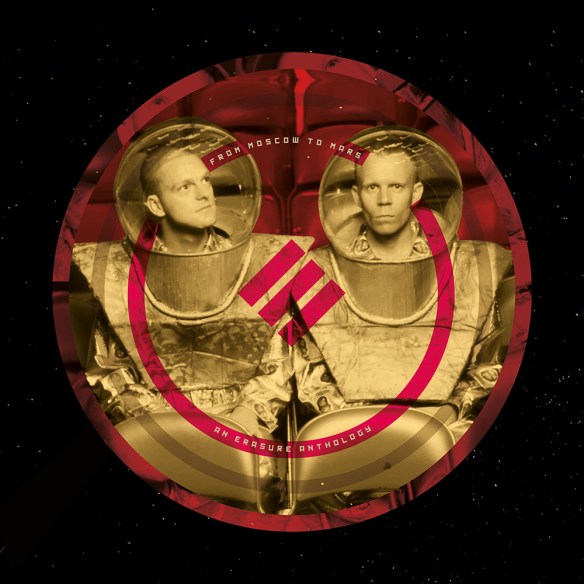
“It might have the look and feel of a futuristic tombstone, but From Moscow To Mars, as its title from the oft-forgotten single ‘Star’ indicates, represents a thirty year journey – a journey that the duo are very firmly still on with a new album in the works and plenty more rocket fuel left in the tanks.” – This Is Not Retro

“What emerges here is a distinct sense of loyalty – from Vince Clarke and Andy Bell to one another, and to the enduring art of writing emotional pop music.” – Electronic Sound

First up, the mammoth and some would definitely argue long overdue Erasure box. This was finally released in December after production delays and I reviewed this – atypically for me – for two places: Electronic Sound and then a slightly more personal piece for This Is Not Retro. I am, and forever will be, a massive Erasure fan first and foremost, so my ability to be objective about From Moscow To Mars is one possible conflict of interest. Personally, I think I pulled it off, but you can judge for yourself. The review for This Is Not Retro can be found here. Back issues of Electronic Sound are over at www.electronicsound.co.uk

The second reason for feeling slightly conflicted came in November when I found myself in Birmingham as a guest of the Erasure fan club at the official launch party for the boxset. I was there nominally as a guest but found myself helping out in a couple of ways – blowing up some very sorry balloons (I apologise to anyone who attended and laughed at those) while listening to Vince Clarke and Andy Bell soundcheck their set (including a new song) and then helping out with three hours of meet and greets. It was a special, and slightly surreal experience.

img_0419

Second, Buchla & Singing by Reed & Caroline, a charming album of compositions for the Buchla by Reed Hays with beautiful singing by Caroline Schutz. The album was released on Vince Clarke’s Very Records back in October to universal acclaim. I didn’t get to review this one, but trust me, had I done so I would have called it out as very special indeed.

I wrote the press release for Very Records for this album and enjoyed a very pleasant Skype chat with Hays in order to prepare that. Of all the things I have done this year, getting handed that job and helping support the release of Buchla & Singing – in a way somewhat different from just scribing a review – was right up there as a major career highlight, and I’m eternally grateful for the opportunity.

One of the best tracks on the album is ‘Henry The Worm’. Reed and I spoke about that track at length but I just couldn’t find a way of fitting it into the press release, so here is that little off-cut. I thought it was a nice story. Music sometimes needs to take itself less seriously.

“Around the time my son was born, I wrote a song that’s on the record called ‘Henry The Worm’,” explained Reed. “We named Henry, my son, after a little caterpillar that was crawling around a Mexican restaurant. When we saw the first sonogram I thought he looked like a little caterpillar.”

(c) 2016 Mat Smith / Documentary Evidence

Documentary Evidence 2016 Top 10 Albums: 5. Savoir Adore ‘The Love That Remains’

“The best thing to come out of Brooklyn since the last thing.” – Electronic Sound

This one snuck in right at the very end of the year, and caught me totally unawares. I’ve become accustomed, like most people have, to great music coming flooding out of Brooklyn, but Savoir Adore‘s new album was something else. The album was released earlier in the year in the US but only got its UK release in December.

The best reference point I have for this synth-heavy opus – which its creator Paul Hammer explains was influenced by the dominant romantic input to Fado music, the elusive concept of saudade – would probably be Bleachers’ debut LP. Except that where Bleachers seemed to really have to work hard at writing big choruses and infectious synth melodies, Hammer and Savoir Adore never sound like they’re having to try too hard. This gives The Love That Remains a certain polish and sheen that far bigger productions would die for, without ever once sounding completely like a chart pop album.

My review of this will appear in the next issue of Electronic Sound.

(c) 2016 Mat Smith / Documentary Evidence

Documentary Evidence 2016 Top 10 Albums: 8. Yeasayer ‘Amen & Goodbye’

“At its best when it stops trying to be overly clever and instead rushes shamelessly into the slick pop that has run throughout Yeasayer’s career.” – Electronic Sound

Album number four from Yeasayer had a title that suggested some sort of full stop, but whose music suggested the trio were finding new ways of writing music and exciting experimental angles to exploit. In spite of that foray into slightly odder areas, opening track ‘I Am Chemistry’ and the stand-out ‘Silly Me’ are among this Brooklyn band’s finest moments.

I found myself listening to this album a lot over the summer, and kicked myself for not responding to an opportunity to interview Chris Keating from the band for a second time.

I reviewed this for Electronic Sound. Back issues are available from http://www.electronicsound.co.uk

(c) 2016 Mat Smith / Documentary Evidence

Documentary Evidence 2016 Top 10 Albums: 9. The Seshen ‘Flames & Figures’

“Modern pop music’s ongoing homage to the sounds and rhythms of 80s music has produced some outstanding songs, but also some absolute stinkers.” – Electronic Sound 23

The Seshen hail from San Francisco’s Bay Area and make shiny, soulful and infectious pop music. Their second album found the band delivering a high gloss electronic album full of heartache, heartbreak, angst, abuse and many more deeply personal emotional cues from Lalin St. Juste and the rest of The Seshen.

I covered this album for Electronic Sound 23, whereupon I described it as containing some of the best pop songs you’ll hear today. High praise indeed.

One of the weirdest and most unexpected things that’s happened to me this year has been rediscovering a love of pop music, something that outside of the likes of Erasure I’d pretty much actively stopped looking for. That’s allowed me to appreciate acts like The Seshen in a way that I’d never have been prepared to before. More on my rekindled appreciation of pop later on.

Back issues of Electronic Sound can be found at electronicsound.co.uk

(c) 2016 Mat Smith / Documentary Evidence

Electronic Sound #21 – Print Edition


As if I wasn’t proud already about being part of the Electronic Sound team, this month that sense of pride went up a couple of notches as the publication made the transition from being an entirely digital proposition to a fully-fledged newsstand magazine. That’s a bold move in a day and age where we’re told that everything is going in the opposite direction, but the team at Electronic Sound have undoubtedly pulled it off. You can buy copies of the print edition here.

I’m doubly proud because one of the most important features I’ve ever had the good fortune to scribe is heavily featured in the first newsstand edition – an interview with Very Records owner and one half of Erasure, Vince Clarke. The interview was conducted one extremely sticky May afternoon in Vince’s Brooklyn home studio.

As if that wasn’t seismic enough for an individual whose entire interest in music writing can be traced back to a record label flyer that fell out of the 12″ single of Erasure’s ‘Chorus’ almost 25 years ago, we were joined by Orbital’s Paul Hartnoll by Skype from his home in Brighton to discuss the Clarke / Hartnoll album 2Square. Once I’d properly decided that dance music was the place for me in the mid-Nineties, Orbital were a duo I fell for in a big way, and so getting airtime with not one, but two, idols in one go was a pretty sweet deal. I am eternally grateful to Electronic Sound for this opportunity, and also to my family for letting me duck out of part of our vacation in New York to undertake the interview.
Photography for the interview came from the wonderful Ed Walker. Ed wrote a great piece about the experience for his website, which can be read here. While you’re there, please do take a look at Ed’s surreptitious photographs of New Yorkers, which are all taken during a specific period of the day where light is particularly beautiful.

In addition to the Clarke / Hartnoll feature, I also interviewed Rico Conning for this issue. Conning will be familiar to Mute fans because of the remixes and edits he did for the label during its Eighties heyday. I had not appreciated that prior to working at William Orbit’s Guerrila Studio, Conning (and Fad Gadget drummer Nick Cash) had been in a post-punk band called The Lines. The interview tells the story of their hitherto lost third album, Hull Down, which was finally released earlier this year.

(c) 2016 Mat Smith / Documentary Evidence for Electronic Sound
Electronic Sound Issue 19

  
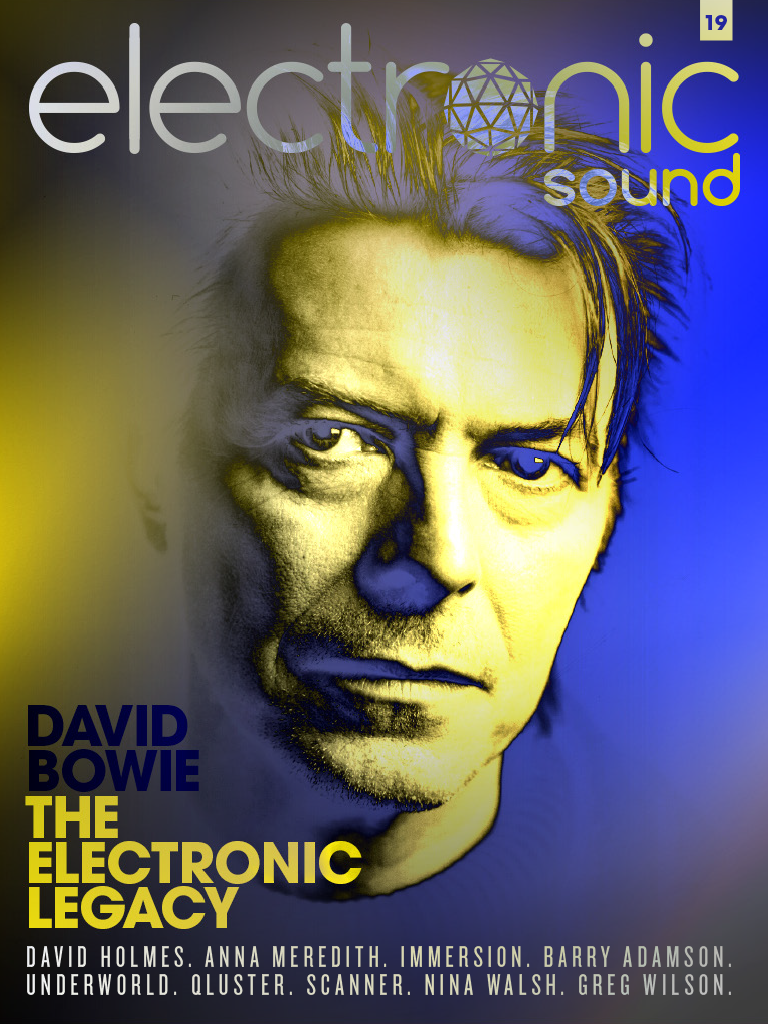
Issue 19 of Electronic Sound is available now, either at electroni sound.co.uk or the iTunes App Store. Appropriately, this issue focuses on the electronic legacy of the sorely-missed David Bowie.

I interviewed Colin Newman and Malka Spigel (aka Immersion) for this issue on the occasion of the duo dusting off their electronic project for the first time since performing at the Royal Festival Hall for Wire‘s spectacularly artsy comeback in 2000. I was there that night, as you can probably tell from my interview. Elsewhere in this issue, I wrote a short piece about a thrilling band called HÆLOS, and reviewed albums by The Choir Of Young Believers, Public Memory and my new favourite band LNZNDRF.

(c) Mat Smith / Documentary Evidence

Electronic Sound – Issue 18


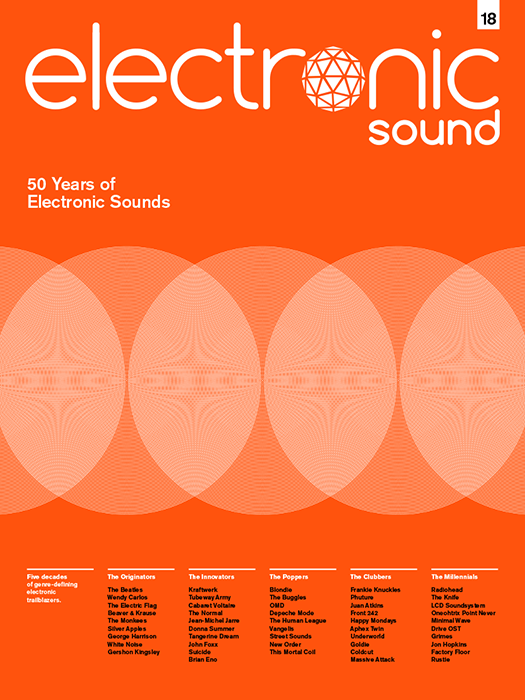
Electronic Sound Issue 18 is now available, with a major focus on fifty years of electronic music, and as ever its delivered with the magazine’s usual depth of focus.

For the latest issue I reviewed albums by Africaine 808 (a crazy musical gumbo drawing from a whole world of sonic soundclashes), Duke St Workshop (a truly terrifying setting of horror writing by HP Lovecraft to electronics), Deux Filles (the long-awaited return of Simon Fisher Turner and Colin Lloyd Tucker), Wild Style Lion (dirty electronics with contributions from Sonic Youth‘s Kim Gordon and Dinosaur Jr.‘s J Mascis) and an improv set from Klaus Filip and Leonel Kaplan for trumpet and sinewaves.

Also in the magazine is a short feature I wrote on the acid- and Salinger-influenced duo The Caulfield Beats, and the third of my 2015 interviews with Erasure‘s Andy Bell, where he explains three of his foremost influences. Prepare to be somewhat surprised by what Bell was inspired by. I know I was pretty taken back.

Electronic Sound is available at the iTunes App Store or at electronicsound.co.uk

(c) 2016 Mat Smith / Electronic Sound

Electronic Sound – December 2015

  
Four of my reviews appeared in the latest issue of Electronic Sound.

Yokan System is a Japanese pop duo who make some of the classiest electronic music you’ll ever hear, so much so that it all feels rather effortless for the pair. Their debut album Whispering is released by Ample Play and is probably one of my favourite pop releases of the year.

Lilies On Mars are another duo, originally from Sardinia but now based in Hackney. Their second album  is released by Lady Sometimes and finds the pair dabbling with dreampop without surrendering themselves fully to drab shoegazery dullness. 

Shape Worship is the alias of Ed Gillett, and his debut album A City Remembrancer was released by the fantastic Front & Follow imprint. The album concerns itself with the constant mutability of London, from the windows to the past revealed in the mudbanks of the Thames to social disruption from the demolition of Corbusier-inspired housing, which we might be used to thinking of now as a failed social experiment. A complex album, for me writing this review allowed me to indulge two of my other passions – the history of London and architecture. I often say that I’d love to have become an architect if my actual career hadn’t gotten in the way.

‘Tppr’ by Laica is also a social experiment, though arguably more successful. For his latest release on his own Arell imprint, Dave Fleet sent a raft of friends and collaborators a small rhythm he’d tapped out on his desk while setting up his equipment. He asked them to mess with the sequence and send it back to him for further tweaking and re-assembly into a single track album. The result is, as I say in the review, proof that “mighty oaks from little acorns grow”. Fleet was a massive guiding presence in my MuteResponse compilation project and contributed a cover of Depeche Mode’s ‘See You’ to the album under his MO75 alias. Some of the artists he sent his inchoate rhythm to also appeared on MuteResponse – Thee Balancer, Joe Ahmed of Security and Simplicity Is Beauty.

I was delighted to get the chance to review Fleet’s album for Electronic Sound. I’ve championed his work for a while, and we featurd him in the 50 artists to watch in 2015. Both my piece on the album and ‘Tppr’ itself are among my favourite things I’ve written about / heard this year. In keeping with the original theme of the album, here is a picture of my writing environment for the review of ‘Tppr’ – a desk in my room in the funky Chambers hotel in New York in November. 

Electronic Sound is available from the iTunes Store or electronicsound.co.uk. The latest issue also includes a lengthy extract from Kris Needs’s new book about legendary New York synth punks Suicide. 
(c) 2015 Mat Smith / Documentary Evidence

Electronic Sound 15

  
It’s been a while since I last posted about my monthly contributions to Electronic Sound.

For the latest issue, appropriately focussed on the so-called “crucible of electronic music” that is the city of Düsseldorf, I interviewed Gabi Delgado from D.A.F. about his recollections of the city and his new album 2.

I also achieved something I never could have expected as a kid while I drove around my home town with my dad listening to OMD by interviewing Andy McCluskey about the track ‘Enola Gay’. Elsewhere in this issue you’ll find a short piece on slow-working New Zealander Introverted Dancefloor, as well as my reviews of Kelpe and my new favourite band, New York’s The Fantastic Plastics.

Electronic Sound can be purchased from the iTunes Store or from electronicsound.co.uk

(c) 2015 Mat Smith / Documentary Evidence

Mono Life – Dark Star Theory

I have reviewed Mono Life’s exciting debut album Phrenology for the next issue of Electronic Sound. This is the stand-out ‘Dark Star Theory’, taken from the album.

Phrenology will be released later this year.

Content (c) 2015 Mono Life / Mark Osborne
Post (c) 2015 Mat Smith / Documentary Evidence