Vince Clarke’s Very Records announce Alka ‘The Colour Of Terrible Crystal’ album

robot_280

Very Records are delighted to announce details of their third album release, The Colour of Terrible Crystal by US artist Alka, which will be released on October 13th 2017.

“… and their appearance and their work was as it were a wheel in the middle of a wheel. They move through the firmament which is the colour of a ‘terrible crystal’, and around a throne like sapphire, on which sits Metatron, suffused in the radiance of the rainbow.” – Peter Lamborn Wilson, Angels (1980)

The fact that the name of Philadelphia-based Bryan Michael’s third Alka album, his first since 2009’s A Dog Lost In The Woods, was named after a quote from anarchist philosopher Peter Lamborn Wilson’s vast study of angels says a lot about the diverse interests of its creator.

Bryan Michael is not an artist to be conveniently pigeonholed within electronic music, and The Colour Of Terrible Crystal showcases the many facets of its creator across 12 captivating tracks. “It happens with music in general, but specifically in electronic music – people get caught up in this strict need to identity something with a specific genre. That’s good in some ways, but I always prefer to hear a much larger cross-section of things,” he says.

Here you will find the same melodic sensibilities that coloured the two earlier Alka albums, but you’ll also hear the sound of a restless, mercurial musician unafraid of crashing together diffuse elements – faltering stop-start rhythms, glitches, drifting ambience, near-pop and crisp beats inflected with the boldness of early electro. The serene ‘Melancholy Lasts’ is the closest Alka’s music is likely to get to delivering pure vocal synth pop, while the paranoid textures of ‘Collusion’ feel like the nervous, fear-inducing synth horror score that never was. The unexpected upbeat disco-funk of ‘Truncate’ marries a robotic instinct with a human looseness that serves as a full revolution away from Bryan Michael’s IDM roots.

Amid all of that are two interlinked soundscape pieces, ‘Over Hills And Vales’ and ‘Under Waves And Seas’, taking the form of reverential nods to musique concrète and the early pioneers of electronic music, back when making machine music was much more of a science than an art. “I really wanted to get to the roots of what electronic music was doing back then, in the late Forties, early Fifties, into the Sixties,” says Bryan Michael. “It was more experimental. When Wendy Carlos released the Switched On Bach album, electronic music creators and aficionados at the time were pulling their hair out because the synthesizer, with this endless range of possibilities, was being confined to this classical music tradition. Those two tracks were a direct connection to that earlier electronic sound.”

The Colour Of Terrible Crystal is an exercise in electronic eclecticism; dark and moody, at times broodingly cinematic, at times carrying subtle layers of delicate optimism alongside edgier, experimental moments. Few can make albums where so many apparently incompatible stylistic switches appear so coherent, or make music whose clashing juxtapositions continually reveal themselves with successive listens. With The Colour Of Terrible Crystal, Alka just did it.

About Very Records

Very Records was founded in Brooklyn by Erasure’s Vince Clarke in 2016. We are a small record label dedicated to releasing very fine electronic music. The label was launched with 2 Square by Vince Clarke and Paul Hartnoll, which was then followed by Buchla & Singing by Reed & Caroline. Alka’s The Colour Of Terrible Crystal will be the third Very Records release.

Press release (c) 2017 Mat Smith for Very Records

Jono Podmore – Jaki Liebezeit: Life, Theory And Practice Of A Master Drummer (book, 2017)

Jaki Liebezeit, photo courtesy of Jono Podmore

Metamono‘s Jono Podmore (aka Kumo) has arguably done more than anyone else in recent years to keep the legacy of Can alive, whether in groups like Cyclopean with Can members Jaki Liebezeit and Irmin Schmidt, or remastering the Can back catalogue and sundry unreleased cuts with Holger Czukay and long-standing Can supporter Daniel Miller.

To those initiatives can be added a new book that Podmore has assembled with US music journalist John Payne, Jaki Liebezeit: Life, Theory & Practice Of A Master Drummer, which seeks to document the unique approach practiced by Can’s late drummer, who passed away in January of this year. The book is currently subject to a crowdfunding campaign via Unbound which can be found here.

I wrote a news piece for Clash which explains more about the book and which can be found here.

In the process of putting my news piece together I asked Podmore for his recollections of working with Liebezeit, and that insight can be found in the Clash piece. “While we were having dinner one night, I was putting on some music,” Podmore also recalled. “At one point I put on some Charles Mingus. Without looking up, Jaki said, with a mixture of confusion and disgust, ‘Jazz? Been there. Done that.’ With that in mind I asked him if there were any other drummers that interested him. ‘Yes,’ he said. ‘808 and 909.'”

(c) 2017 Mat Smith / Documentary Evidence for Clash

RAC – Ego (Counter Records, 2017)

“Pop music really shouldn’t be this clever.” — Clash review, July 2017

André Allen Anjos, aka RAC, is set to release his second album of smart pop songs with a revolving cast of singers later this week via Ninja Tune’s Counter subsidiary.

I reviewed the album for Clash. You can read my review here. Suffice to say that I don’t think I’ve heard a pop album by a modern act this good for a long, long time.

(c) 2017 Mat Smith / Documentary Evidence for Clash

Toro y Moi – Boo Boo (Carpark Records album, 2017)

Boo Boo feels like what we might call a coming-of-age album, the theme of which is that, despite all our best endeavours, life isn’t always perfect.

I reviewed the very fine new Toro y Moi for Clash. My review can be found here

(c) 2017 Mat Smith / Documentary Evidence for Clash

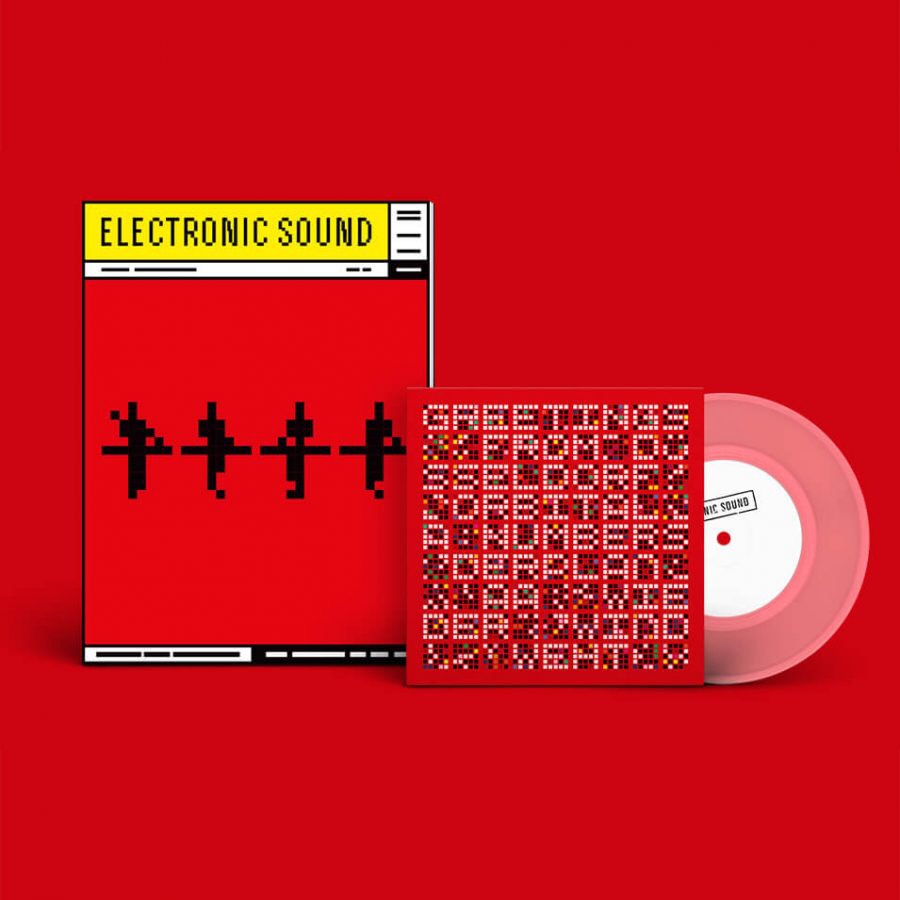
Electronic Sound – Issue 30 – Kraftwerk / Alison Moyet

Issue 30 of Electronic Sound has hit the newstands with everyone’s favourite Düsseldorf electronic pioneers (and onetime Mute act) Kraftwerk gracing the cover and the subject of a major feature to coincide with their UK tour. The special edition version of the magazine includes a 7″ with Orbital covering ‘Numbers’ from Computer World, backed with a new track from Der Plan.

This month I had the pleasure of interviewing Alison Moyet over drinks in Chelsea about her sensational new album Other, her second collaboration with multi-instrumentalist producer Guy Sigsworth. I also wrote pieces on clever techno producer Daniel Ruane, electronic legend Ragnar Grippe, IX Tab, the wonderfully-named Deathcount In Silicon Valley, ex-Coil / Psychic TV member Drew McDowall and the latest album from Ghostly Records Brooklynites Xeno & Oaklander.

Rounding out all of that, I wrote a long review of the second Floating Points album; Sam Shepherd’s first album, 2015’s Elaenia was my favourite album of that year and Shepherd has somehow managed to sidestep the typical difficult-second-album issues with a thrilling electronically-inflected jazz rock epic influenced by the environs in which it was recorded, the mysterious Joshua Tree National Park.

A big congratulations to the team at Electronic Sound who just completed an extremely successful funding round on Crowdcube.

The special edition issue of the issue 30 can be purchased here.

(c) 2017 Mat Smith / Documentary Evidence

Fader – First Light (Blanc Check Records album, 2017)

fader_firstlight-1024x1024

Fader is a duo of Blancmange’s Neil Arthur – whose collaboration with Mute stalwarts Fortran 5 on ‘Persian Blues’ remains, in my humble opinion, an overlooked classic – and Benge from John Foxx & The Maths.

First Light is their first album and is released by Blanc Check next week. Here you’ll find Arthur at his elliptical best, backed by some varied and truly ingenious electronic backdrops.

I reviewed the album for This Is Not Reto. My thoughts can be read here.

(c) 2017 Mat Smith / Documentary Evidence for This Is Not Retro

Can – The Singles (Spoon / Mute compilation, 2017)

can_thesingles

Last week Spoon / Mute released The Singles, a collection of all of Can‘s singles and selected B-sides, which serves as a great entry point into the musical genius of this band.

I reviewed the compilation for Clash – read my thoughts here.

(c) 2017 Mat Smith / Documentary Evidence for Clash

Electronic Sound – Issue 29 – New Order / Erasure

The latest issue of Electronic Sound includes a major new interview with New Order ahead of their new live album for Mute, NOMC15. The magazine has also landed a major coup by bundling an exclusive clear vinyl 7″ with special copies of the new issue which includes a previously-unreleased remix of New Order’s ‘Academic’.

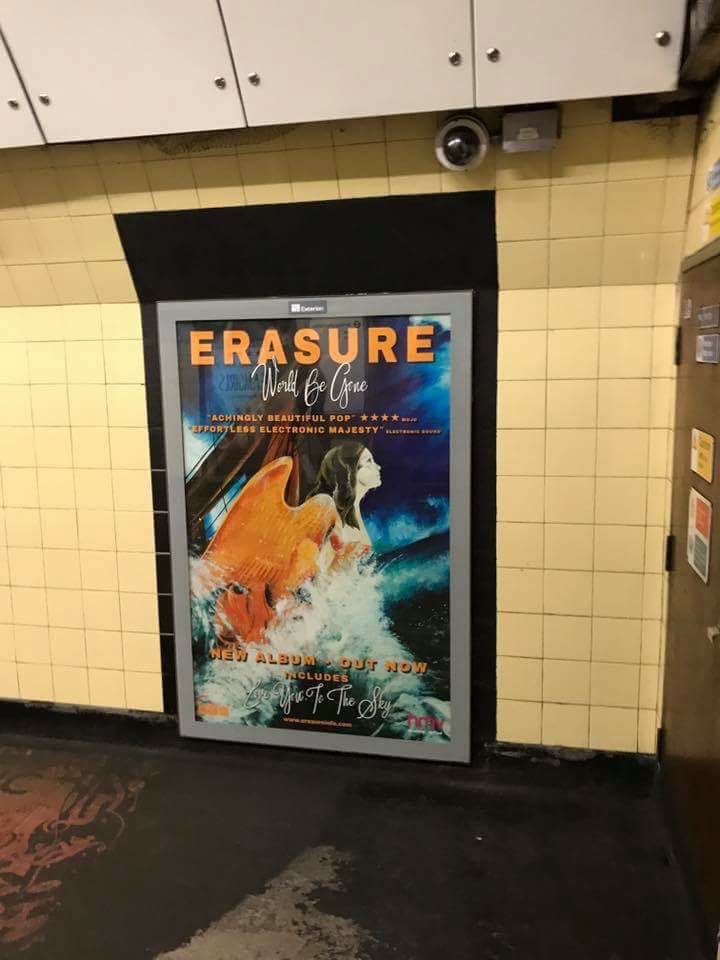
I contributed a handful of reviews to the latest issue covering the eclectic fields of pop, electronic jazz, electronic grunge and cinematic soundtrack-friendly material in the form of write-ups of new releases by Slackk, Stuff, The Mark Lanegan Band, Kilchhofer / Hainbach and Erasure. I was proud to achieve another career first this month when a quote from my Erasure review made it to the posters promoting their new album World Be Gone across London’s Underground network.

To buy the special New Order edition of issue 29 of Electronic Sound, head here.

(c) 2017 Mat Smith / Documentary Evidence

iEuropean – Into The Unknown (The People’s Electric album, 2017)

I wrote the following press release for iEuropean’s debut album on The People’s Electric.

The People’s Electric are proud to announce the release of iEuropean’s debut album Into The Unknown, which will be released worldwide on April 21st.

Into The Unknown is just that – an unplanned journey made on utterly unchartered waters, by two of the most unlikely of musical collaborators. That partnership has produced a bold, original musical statement full of unexpected moments, sudden shifts and towering pop songs.

After leaving his former group Empire State Human, iEuropean founder and electronic music stalwart Seán Barron found himself lost at sea and considering a voyage which he intended to take with numerous guest passengers delivering vocals. The project began with an auspicious pairing with Kraftwerk’s Wolfgang Flür (2014’s ‘Activity Of Sound’ EP), but Barron soon found himself drawn increasingly to the siren-like a cappella vocal he’d been sent of a song called ‘Sweet Paranoia’ by an actress and singer friend, Ruth Lalor. The iEuropean ship was taken hastily back to port, fully refitted and then set sail once more, this time as a fully-fledged duo.

Recorded between 2013 and 2016 in Barron’s studio in Dublin and then after its relocation to Kildare, the stylish production of Into The Unknown takes in prowling synths reminiscent of Alan Wilder’s Recoil releases and Depeche Mode albums, disco-era strings, crisp electronic rhythms and occasional unanticipated nods to techno and dance music. This is modern electronic pop music which is both forward-looking and reverential, unafraid to experiment but entirely sensitive to history.

The consistent thread running through this album is Ruth Lalor’s voice, full of bluesy angst and anguished emotional outpourings. Hers is a voice that belongs in smoky underground speakeasies and dimly-lit jazz clubs, all rich soulfulness and molasses-smooth tenderness. On paper, setting that voice to an electronic template would sound as treacherous and ill-advised as deciding to put to sea in the midst of a violent storm, but one listen to tracks like the rapturous nod to dance music on ‘Don’t Lose Control’ or the unpredictable switches of ‘Fire Out’ and you realise that this is a calculated risk that has absolutely paid off.

Into The Unknown was released on April 21st on CD and digital download. The CD can be ordered at www.thepeopleselectric.com/shop.

Track Listing:
1. Sweet Paranoia
2. Falling
3. Fire Out
4. Don’t Lose Control
5. I Will Follow
6. Requiem
7. Sweet Dreams
8. Bring On The Rain
9. We Are Brothers (feat. Clive Pierce from Hard Corps)
10.World Of Fantasy

About The People’s Electric

The People’s Electric is an electronic music community where everyone is welcome. Our artists like to release on physical formats, but our little community will just as readily embrace those who love to download too. We exist to bring great electronic music to your discerning ears, wherever your listening preference. We were founded in 2016 by Jon ‘Jonteknik’ Russell in Shoreham-on-Sea, England.

Press release by Mat Smith for The People’s Electric. (c) 2017 The People’s Electric

© 2017 The People’s Electric

Rupert Lally / Espen J. Jörgensen – Øde (No Studio album, 2017)


The work of Rupert Lally and Espen J. Jörgensen is a lot like a tabloid-friendly romance. The duo have consciously uncoupled more than once, only to reform again each time. There’s no animosity, no conflict, just a compulsion to continue pushing out albums and to keep collaborating whenever they feel like it, typically followed by mutterings that each will be their last project together.

The result of this on-off-on again approach is a series of interconnected albums where the only connection is a firm willingness to do whatever feels right at that particular time. The pair have traded in ambient soundscapes, touched on pop and even mucked around with guitars. From a distance, being so outwardly inconsistent in terms of style could be decried as an incoherent vanity or therapy project never intended to be heard outside of the duo themselves; the reality is instead a rich seam of new ideas and new approaches, largely arising as a result of never physically working together in the same place as one another.

The 25-track Øde’s precedent lies in Lally’s last two solo albums, Day One and Scenes From A High Rise, both of which made heavy use of modular synthesis in their rich sound design, and both of which found Lally’s music taking on a somewhat uncharacteristically dark hue. Øde pushes that darkness to an extreme, the result being a nervous, edgy, tense affair full of cloying atmospheres and a panic-inducing analogue buzz about the sequences.

It would be tempting to view Øde as being a sonic representation of the parlous state of the world right now. Lots of such albums have begun to emerge as musicians variously attempt to direct their anger and resentment through their music; being mostly instrumental, Øde can’t rely on lyrical gestures to make its point. Instead, the album does a commendable job of encapsulating what it feels like to be living through all of this: the feeling that there’s something in the air, something restless, something not quite right that could develop into something far worse if not kept in check. Not for nothing does the album open with a tone-setting piece of sound design – echoes, muffled feedback, a tired voice – called ‘Getting Darker’.

While a lot of Øde relies on modular synth work, the album’s construction from lots of short pieces allows for a multitude of brief ideas to flourish, ranging from orchestral arrangements to wonky hip-hop, filled out by glitchy static and borrowed atmospheres. The pair have always traded voraciously in the markets of eclecticism, but never quite so liberally as they do here. No idea is allowed to develop into repetition, and yet each idea is developed just enough to avoid feeling like a collection of unfinished sketches. The approach feels highly democratic, as if each idea is afforded equal airtime in the album’s debate with itself.

Whether this represents another final album among final albums remains to be seen. If it is, Lally and Jörgensen may have just delivered their definitive statement; if not, what you are listening to here is surely part one of the soundtrack to the end of the world, as realised by its self-appointed resident composers.

Øde is released via Bandcamp – rupertandespen.com

(c) Mat Smith / Documentary Evidence