Complex Industrialist: Douglas J. McCarthy (interview, 2012)

I interviewed Nitzer Ebb’s Douglas McCarthy in 2012. At that time, Doug was prepping his first solo LP, at that time intended to be called Life Is Sucking The Life Out Of Me, but which eventually emerged as Kill Your Friends on Pylon later that year. My interview was originally accompanied by a promotional photo that Doug had supplied, but which the photographer insisted I removed. I’ve no idea now if this photo is the one she asked me to remove – if it is, I will happily remove (again).

One of the two most important electronic acts to emerge from Essex in the Eighties, Nitzer Ebb surprised a lot of fans by reforming in the 2000s, not just for shows as is the current money-spinning way for the record industry machine to milk a band’s back catalogue, but also to record new material. The trio of Bon Harris, Douglas McCarthy and Jason Payne that had recorded 1994’s supposed swansong, Big Hit, almost ten years earlier, came back together to record Industrial Complex (also abbreviated to ICP), an album which managed to complete the circle that Nitzer Ebb had started but never quite finished, returning them to the punishing electronic body music of their earliest Power Of Voice and Mute releases. With Nitzer Ebb now on downtime after a couple of intense years of touring, including a powerful slot at Mute’s Short Circuit festival at The Roundhouse in London last year, Douglas McCarthy has recorded his first solo album, Life Is Sucking The Life Out Of Me. The album is due for release in April 2012.

‘Last year proved to be a bit frustrating for me with a few projects and tours being stymied by situations, events or people beyond my control,’ explains McCarthy by email from Los Angeles on the origins of Life Is Sucking The Life Out Of Me, ‘so I decided to take matters into my own hands. As it has turned out it was a fortuitous judgement call as, about six months after I started writing, we decided that we would take a year out from Nitzer Ebb. I also wanted to make music that was much more club based than Nitzer Ebb have ever done.’

McCarthy first moved to LA in the early Nineties, then spent some time moving round the country before heading back to England toward the end of the decade. ‘I initially came back to LA in 2005 to work with Bon on the reunion tour and then as the tour progressed and we started to work on new tracks it seemed sensible to relocate from London and work on the album that eventually was released as Industrial Complex.’ Life Is Sucking The Life Out Of Me, however, was begun back in the UK. ‘My father was in the last stages of a very grim terminal illness,’ says McCarthy, ‘and so my wife and I spent a lot of time in the UK. Going out to various nights and parties like my dear friend Richard Clouston’s Cosey Club really reminded me of a lot of things from years gone by and played a big part in the approach to the album. After my dad died, my wife and I came back to LA where the rest of the album was written and recorded in a relatively short space of time. We worked in an amazingly relaxed way, which is a direct response to being out here I think. I actually achieved much more taking that approach.’

While details of McCarthy’s solo record are starting to emerge, ears are still ringing from the breathtaking, urgent fast-paced beats and classic syncopated basslines of 2009’s Industrial Complex, the release of which was promoted by two hard years of touring and almost 150 live shows. ‘It came about after I had recorded an album as Fixmer/McCarthy with Terence Fixmer,’ says McCarthy of Industrial Complex‘s origins. ‘We toured extensively and would always drop in one or two classic Nitzer Ebb tracks. Inevitably it lead those cunning promoters to start asking if Nitzer Ebb could actually do shows again. I emailed Bon and as we were both going to be in the Midwest we agreed to meet up in Chicago for a chat. All went well and we agreed to play a smattering of festivals in Europe. Then, so as not to just be sitting on our arses between events, we added club shows in between. As it turned out we play something like 75 shows in Europe, Japan, Australia, New Zealand, North America and South America. I had already moved from London to LA to rehearse and prepare for the tour so when we had breaks from touring, that was our home. We decided to fill the time with trying out some new ideas and, remarkably given our long break from the studio, it was fun, so we carried on in our own sweet time until we thought we had an album.’

‘In a lot of ways it was very similar to making Big Hit,’ continues McCarthy. ‘We would often start with a blank piece of paper, just evolving ideas in the simplest form as the mood took us – a bass part, a keyboard part, a percussion part, a guitar part, whatever was easiest to start an idea rolling. After that we would work on it for usually no more than a day, put it to bed and start the whole process again on something new. We carried on like that until we had over thirty tracks and then thought we better stop and pick the ones that would be a good collection for ICP. That’s the main difference, with Big Hit we really wrung the living hell out of the tracks before moving on to the next.’

The brittle Big Hit was preceded by Ebbhead, the 1991 album produced by Alan Wilder, recently of Recoil fame, with whom the trio of McCarthy, Harris and Payne performed on stage at The Roundhouse last year. In 1991 Wilder was the musical backbone of Depeche Mode, the other important electronic band to emerge from Essex in case you were wondering. ‘We toured with the Mode for the second time on the Violator album tour in North America in 1990, which was a life changing experience for all and sundry. On the tour we discussed working with Alan upon our return to the studio. The plan was for him to co-produce with Flood, which worked out perfectly. We approached Ebbhead this way because we saw how well these two could work together on Violator and wanted a more ‘musical’ approach to the songs, which is really at the core of someone like Alan as he is classically trained. The combination of that with Flood and Bon’s fantastic knob-twiddling, and my desire to ‘sing’ more, were all part of the evolution of that album.’ Ebbhead showcased a new, tortured emotional depth for Nitzer Ebb, even if it was obscured by the lurid dayglo colours of the album’s bright yellow sleeve.

‘We started as school friends who enjoyed skateboarding, music and drinking cider,’ recalls McCarthy of the halcyon youthful days from which Nitzer Ebb would eventually emerge. ‘Musically, we took our influences from a fairly eclectic array of artists and styles – Forties jazz, Fifties rock ‘n’ roll, glam, disco, punk and the post-punk scene that was emerging as we were starting to go out. Bands like The Banshees, Bauhaus, Killing Joke, Theatre of Hate, The Birthday Party, Neubauten and Malaria! were all playing live shows that we would go to. We were also listening to Cabaret Voltaire, DAF, Fad Gadget, The Human League, Abwärts, Virgin Prunes, Soft Cell and The Normal among many more.’

Nitzer Ebb signed to Mute in time for the release of their first album, 1987’s insistent That Total Age, which was produced by Daniel Miller. ‘We were very aware of Mute and Daniel Miller of course; growing up in Essex with Depeche down the road in Basildon meant it was a no-brainer. Once we had signed Dan took me and Bon over to Hansa Tonstudio in Berlin to remix ‘Let Your Body Learn’ with Gareth Jones. It was our first trip to Berlin and at the airport we ran into Diamanda Galás, who was in the process of moving there so we all took pieces of her luggage as she had a mountain of stuff and had a very amusing flight getting told off by the flight attendants. It was like being Daniel’s naughty nephews on a weekend cultural break.’ Of their former label head, McCarthy has nothing but high praise. ‘Daniel has always been full of fantastic ideas, some more fantastic than others, but he never shows any diminished excitement about a project even, as it often does, when it gets tough.’

As the interview began to wind up, it seemed appropriate to ask McCarthy about the pronunciation of Nitzer Ebb, a debate which has seen fans take two sides, those who call the band Night-zer Ebb and those who prefer Nitt-zer Ebb. McCarthy is ambiguous as ever. ‘To be honest it started off as Night-zer but after decades of Nitt-zer I slip between the two.’

Originally posted; re-posted 2018.

(c) 2012 MJA Smith / Documentary Evidence

Cold War Night Life presents Non-Stop Electronic Cabaret (The Islington, London 29.09.2018)

If you’re remotely interested in electronic music you must have been asleep under a rock to have missed the Soft Cell activities that have been happening this year – a huge box set, a singles collection and a tour.

Ahead of Marc Almond and Dave Ball’s final London date, Simon Helm’s Cold War Night Life website have curated a very special event in Islington under the wonderful title Non-Stop Electronic Cabaret on September 29, 2018.

The event brings together all-too-easily overlooked Canadian synth duo Rational Youth (whose debut album begat Helm’s site its name), fellow Canadian moody electronic act Psyche and Sweden’s Page – to the best of my knowledge the only synth group to openly claim to be directly influenced by Daniel Miller’s cheeky short-lived fake group Silicon Teens.

Discerning electronic music fans can get tickets via Billetto.

Venue: The Islington, Tolpuddle Street, N1 (Angel Tube)
Date: Saturday, 29 September 2018
Times: doors at 7:00 pm, first band on stage at 7:30 pm, ends at 11:00 pm
Tickets: £15 plus agency fee through Billetto
Ages: 18+

(c) 2018 Mat Smith / Documentary Evidence

Electronic Sound Issue 42 – Mute Cover Feature & The Normal Clear Vinyl 7″

ES42_BUNDLE-SQUARE

Electronic Sound have today announced their Mute-focussed latest issue, featuring a major new interview with Daniel Miller and an exclusive clear vinyl pressing of The Normal‘s ‘Warm Leatherette / T.V.O.D.’ 7″.

The issue also features a rundown of Mute’s 2018 artist roster and a new interview with the longest-serving member of the Mute community, Erasure‘s Vince Clarke, wherein he talks about joining the label with Depeche Mode, Miller’s influence on him as an electronic musician, and how he approaches running his own label, VeryRecords.

The full announcement from Electronic Sound is included below.

“I honestly didn’t think anybody would like it,” says Daniel Miller, talking about The Normal’s ‘TVOD’ / ‘Warm Leatherette’, which we are delighted to be reissuing with this issue of Electronic Sound. While The Normal was where Mute Records all started, this month’s cover story finds Daniel Miller discussing how his label is shaping up for the future. We also profile the artists that make up Mute’s Class of 2018, as well as catching up with Vince Clarke, a man who has only ever been signed to one label for his entire recording career. Click here to order now.

This issue also includes a rare interview with David Sylvian, discussing his soon-to-be reissued work with Can’s Holger Czukay, a chat with Finiflex, the artists formerly known as Finitribe, and a drinking session with post-punkers Sink Ya Teeth, who put us under the table. Elsewhere, we speak to Klaus Schulze, Claudia Brücken & Jerome Froese, The Orb, A Flock Of Seagulls and LUMP, a new project from indie folkster Laura Marling and Tunng’s Mike Lindsay. Plus there’s our usual bumper mix of tech, toys, books, gadgets and, of course, the very latest must-hear album releases.

This month’s exclusive music offer is a limited edition reissue of The Normal’s ‘TVOD’ and ‘Warm Leatherette’ seven-inch on crystal clear vinyl. Recorded by Daniel Miller using just a Korg 700S and a four-track tape machine, the single was the first release on Mute Records and is recognised as one of the most important electronic music records ever. Our reissue comes in a replica of the original 1978 picture sleeve. Click here to order now.

(c) 2018 Electronic Sound

Electronic Sound 34

Issue 34 of Electronic Sound is now available. Focussing in on the world of soundtracks to coincide with the release of Blade Runner 2049, the latest issue includes an exclusive 7″ containing extracts from Louis and Bebe Barron’s genre-defining soundtrack to the sci-fi landmark Forbidden Planet.

My major contribution to the latest issue was an interview with Clint Mansell. Mansell was formerly a member of Pop Will Eat Itself, a band I got into in the mid-90s thanks to a friend at the after-school office jobs we both had, whereupon he plied me with each and every one of their releases up to that point. So smitten by PWEI was I that I did that very 90s thing of buying a t-shirt to show my allegiance, a lovely navy blue Designers Republic thing containing the cartoon band mascot. I was wearing that t-shirt the day I started university, which attracted the attention of another freshman who recognised the logo; we’ve been lifelong friends ever since.

This is a longwinded way of saying that Mansell’s music really matters to me, and so getting the chance to speak to him was a real privilege. Mansell’s inclusion in the Electronic Sound soundtrack issue arises because of his post-PWEI work as a composer for the films of Darren Aronofsky and Duncan Jones’s, developing scores for the harrowing Requiem For A Dream, Moon and the upcoming Mute. And speaking of Mute, which I often do of course, Mansell is pictured in a Mute ‘walking man’ logo in the photos accompanying my feature, and this issue includes a new interview with Mute founder Daniel Miller.

Elsewhere in this issue I wrote a short piece introducing the work of Lithuanian electronic producer Brokenchord, whose new album Endless Transmission is a robust, trip-hop embracing work of great weight. I also wrote short reviews of albums by livesampled piano duo Grandbrothers, the sexually-charged Blade Runner-inspired debut album from Parisian François X, a slinky 80s-inspired R&B album by Submerse, a thoughtful new LP from Aris Kindt and a grainy industrial / minimal release by Vanity Productions issued through Posh Isolation, one of my favourite small labels. To round the issue out, I reviewed the Front & Follow label’s fantastic ten year anniversary compilation Lessons, and surveyed the varied career of Auteurs founder Luke Haines through a new 4-disc box set. Having written the press release and an interview to support the release of Alka‘s The Colour Of Terrible Crystal on Vince Clarke‘s Very Records, it was pleasing to see the album get a deservedly positive review in the latest issue.

You can pick up a copy of the new issue at www.electronicsound.co.uk

(c) 2017 Mat Smith / Documentary Evidence for Electronic Sound

Alan Burnham – Music To Save The World By (Cherry Red single, 1981)

Alan Burnham 'Music To Save The World By' artwork

cherry red | cherry15 | 16/01/1981

Alan Burnham’s ‘Music To Save The World By’ was released by indie stalwart Cherry Red in 1981. As well as being something of an electropop obscurity, its interest to Mute fans is that it was produced by Daniel Miller and engineered by early Mute studio guy, Assembly member and Blackwing Studio owner Eric Radcliffe. The two tracks on this solitary release from Burnham were recorded at Blackwing, Mute’s studio basecamp for a good few years, which was based in All Hallows Church in South London. Hold on, apologies… I called this an electropop track didn’t I? Apparently we call that minimal wave these days, proof yet again that I’m not down with the kids these days at all.

Around this time, Miller was to be found producing the odd track here and there for non-Mute acts like Soft Cell, Missing Scientists and Alex Fergusson. I like to think that it was for aesthetic reasons or to help promote his nascent label, but the reality it was probably to make ends meet. Until Depeche Mode signed to Mute, the label nursed a small roster of acts and one-off singles that were unlikely to make Miller much money, so picking up the odd production job might well have helped pay some of the bills.

Could synth music save the world? Somewhat unlikely, but Alan Burnham’s single suggests it could. His vocal has a subtle, whispered quality that sits somewhere between completely captivated and slightly saddened, as if the observations catalogued on the lead track both intrigued and depressed him. Around his quiet delivery is wrapped a backdrop of ponderous bass synths, atmospheric whooshes and echoing bleeps that recall satellite signals being broadcast into space. In a blind listening test you might consider ‘Music To Save The World By’ to be a very early I Start Counting track. With distinct echoes of Miller and Radcliffe’s later work, this is a Mute record in all but name, aiming toward the radio-friendly pop that early Depeche Mode and later Yazoo would call their own, mixed in with a sci-fi sensibility that had inevitably surrounded music made with synths the decade before.

B-side ‘Science Fiction’ continues the spacey vibe with an enquiring bassline that gently nudges its way through the track. Hissing synths, bleeping melodies and live drums from Cam Findlay give this a more organic feel than ‘Music To Save The World By’, a throwback to a slightly proggier vibe with vaguely apocalyptic portents of a technologically-driven life on the horizon in Burnham’s lyrics. ‘Are we living at all?’ asks Burnham of a populous living in fibreglass domes. Maybe he hoped synth music would save us from that fate rather than being a contributing factor to the decline of mankind.

First published 2013; re-edited 2014.

(c) 2015 Mat Smith / Documentary Evidence

A Different Daniel Miller

A different Daniel Miller. Still from 'Take The Money And Run' (1969, dir. Woody Allen)

A different Daniel Miller: still taken from Woody Allen’s madcap 1969 comedy Take The Money And Run.

(c) 2014 Mat Smith / Documentary Evidence

Richard X – Into You (Virgin, 2003)

Richard X 'Richard X Presents His X-Factor Vol. 1' CD artwork

Richard X Presents His X-Factor Vol. 1 album | Virgin | 2003

Richard Hawley added subtle, discrete slide guitar and backing vocals to this pretty ballad from Richard X’s solitary album, with his old Pulp bandmate Jarvis Cocker on strangely maudlin lead vocals. ‘Into U’ has the disctinction of being one of the only tracks on X-Factor that doesn’t feature X cheekily sampling and mashing up bits of other pop songs, but the chiming melody sounds like it’s copying the sound of well-known bells peeling. Richard X thanks Daniel Miller in the liner notes. The track was co-written with Mazzy Star’s Hope Sandoval.

Richard X produced the new Erasure album The Violet Flame which will be released in September 2014.

First published 2013; re-posted 2014

(c) 2014 Mat Smith / Documentary Evidence

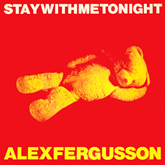
Alex Fergusson – Stay With Me Tonight (Red Records single, 1980)

Alex Fergusson 'Stay With Me Tonight' 7" artwork

red records | 7″ rs003 | 1980

There appears to be a television theme running through Daniel Miller‘s work between 1978 and 1980. First (of course) there was Mute‘s first move, his single ‘T.V.O.D.’ as The Normal; Silicon Teens, his fake synth group, had a track called ‘TV Playtime’ and Missing Scientists, who Miller produced for their single ‘Bright Lights Big City’ were better known as The Television Personalities. Alex Fergusson, whose ‘Stay With Me Tonight’ Miller produced under his Larry Least alias in 1980, was a founder member of Alternative TV. If nothing else, this release proves that too much TV is not necessarily a bad thing, despite what the health professionals might say.

Alternative TV were formed by Mark ‘Sniffin’ Glue’ Perry and Fergusson, a Scottish guitarist. The debut release by the nascent ATV was a flexi (‘Love Lives Limp’) given away with the last issue of Perry’s Sniffin’ Glue punk fanzine in 1977. Shortly after, following a couple of 7″ singles, Perry sacked Fergusson and cast his original collaborator aside. Fergusson went on to join Sid Vicious biographers Fred and Judy Vermorel’s brainchild, the band Cash Pussies (with Alan Gruner, model Diana Rich and Ray Weston); Cash Pussies released one single, ‘99% Is Shit’ which featured clips of Sid Vicious being interviewed, and withered away like the Vermorel-constructed act they were. In 1981, Fergusson formed Psychic TV (aka Psychick TV) with Genesis P. Orridge (who had been a sometime ATV percussionist) and Peter ‘Sleazy’ Christopherson, after the initial demise of Throbbing Gristle. TG had contacted Fergusson when they were working on the soundtrack to the Vermorels’ Millions Like Us movie, asking him to assist with the music they were creating.

1980’s solo Fergusson 7″ on Red, ‘Stay With Me Tonight’, sounds a million miles from those punk / industrial roots. Featuring Fergusson on vocals and Gruner on synths, the track is a pretty, out-and-out synthpop track that provides no clue whatsoever to the harsh cerebral onslaught that Psychic TV would create. Quite how Daniel / Larry got on board is hard to understand, but it perhaps serves to highlight how intertwined the punk / post-punk landscape in the UK was. (Gruner would go on to work with Bonnie Tyler; we won’t talk about that.) The synths on both tracks distinctly sound Miller-esque, both from Fad Gadget and Depeche Mode records; it wouldn’t surprise me if perhaps they were Miller’s synths. No details are provided on where this was recorded or who else worked with Miller / Fergusson / Gruner on this, but it’s feasible that this is a Blackwing / Eric Radcliffe / John Fryer affair like the Missing Scientists 7″.

‘Stay With Me Tonight’ (copyrighted to 1979) has a steady, thudding beat and some brilliant arpeggiating synths plus a beat on the chorus that Depeche Mode would definitely borrow for ‘Dreaming Of Me’. The way some of the synths get filtered from subtle background noises to foreground flashes is good too; it’s an effect that acid house and techno would repeat ad infinitum, but it’s nice to hear it deployed on a synth pop track. Fergusson’s vocal has a certain naivety, an unpolished, nasal youthfulness which is about the only ‘punk’ quality this song has; punk in the sense that it sounds like he’s not a singer in the trained sense. Overall, it’s a nice, upbeat and forgotten synth pop track and I really like the transition from flat-out verses to sparse choruses, which sounds like a Miller trick to me.

The less we say about the name of the B-side, ‘Brushing Your Hair’, the better. The track is a too-short synth instrumental, co-written by Fergusson, Gruner and Miller. The drums have a Krautrock quality while electronic squiggles reminiscent of the percussion on Depeche Mode’s ‘Nodisco’ have prominence in the foreground. Meanwhile, a wavering keyboard riff that was appropriated and expanded for Fad Gadget’s ‘Ricky’s Hand’ makes a brief appearance. This track has Daniel Miller’s handiwork in major evidence, and it’s worth tracking this down for the B-side alone.

Track listing:

7″:
A. Stay With Me Tonight
B. Brushing Your Hair

First published 2011; edited 2014

(c) 2014 Mat Smith / Documentary Evidence

S.C.U.M – Again Into Eyes (Mute Records album, 2011)

S.C.U.M 'Again Into Eyes' LP+CD artwork

mute artists | lp+cd/cd/i stumm327 | 12/09/2011

Things I’m reminded of when listening to S.C.U.M‘s Again Into Eyes – Joy Division, Gary Numan, Sheep On Drugs, early OMD; when I look at the layered, intertwined half-naked bodies on the sleeve of the gatefold LP, I’m reminded of the film adaptation of the Bret Easton Ellis novel The Informers. In fact I’m reminded of most of Bret Easton Ellis novels when I look at that sleeve. Plus, for some reason the pastel colouring reminds me of fruit Mentos.

But those synaptic connections are not intended to imply that this debut album for Mute makes me think I’ve heard (and seen) this all before. Far from it. Again Into Eyes is a truly original suite of ten tracks, and none of them sound anything like Joy Division, Gary Numan or Sheep On Drugs – it’s just that I hear an essence of Joy Division’s flatline pulse and restlessness, the robotic detachment of Gary Numan’s vocal entwined with the cynical snarl of Sheep On Drugs’ Duncan X / King Duncan and the synths – especially on the second single ‘Whitechapel’ – of OMD. Meanwhile, the effect, the personal impact if you like, of listening to these obliquely nihilistic tracks is similar to how listening to Interpol always affects me, namely nudging my mood in negative directions and making me want to pick up the pieces of my as-yet-uncompleted novel. But again, S.C.U.M are nothing like Interpol. They are like S.C.U.M.

Key to the mood here is the grinding, itchy drone-punk track ‘Summon The Sound’, which was in circulation much earlier this year and which featured on the Mute Artists compilation Vorwärts. ‘Summon The Sound’ is the connective tissue that binds this LP together; it sent out a very clear signal (pun intended) that S.C.U.M are anything but cheerful optimists with its beautifully cloying stop-start rhythm, urgent low-end and mysterious, sneering vocal. Then again, naming your band after Valerie ‘I shot Warhol’ Solanis’s feminist manifesto – her Society for Cutting Up Men – was never likely to produce anything remotely upbeat. Just a glance at the lyric sheet reveals the elusive, poetic depth of these songs. The spiky ‘Amber Hands’, the first single proper from Again Into Eyes, likewise pointed to a richly bleak outlook for the album. In fact, it’s only the second single ‘Whitechapel’ that has anywhere near a sense of positivity attached to it.

Again Into Eyes, metaphorically speaking, is an album of two sides. The first five tracks are uniformly dark. ‘Faith Unfolds’ opens with some shimmering, elegiac keyboard patterns from Bradley Baker – cf OMD’s ‘Joan Of Arc’ / ‘Maid Of Orleans’ – which remain throughout the song but soon get subsumed by whining guitar textures from Samuel Kilcoyne (son of Add N To (X)‘s Barry 7 and also credited with keyboards), Psychocandydrumming from the elfin Melissa Rigby and a powerful bass undertow from Huw Webb. Meanwhile vocalistThomas Cohen sings an elliptical tale of faith and fate and love. There’s barely a pause before the colour washes away into ‘Days Untrue’, all icy synths, twitchy drums and heavily-reverbed vocals. ‘Cast Into Season’ begins with those ‘Joan Of Arc’ / ‘Maid Of Orleans’ textures and appends cello sounds, ‘Atmosphere’-esque funereal drums and a prominent vocal in the mix from Cohen; it feels like a ritual or a sacrifice or an alternative soundtrack to Eyes Wide Shut. Or The Informers‘ vampiric passages. It’s also my favourite track on Again Into Eyes.

The second half of Again Into Eyes is less obviously dark, but nevertheless retains a seam of black colour. ‘Sentinal Drift’ starts with subtle drumming and gentle, polite synth melodies a la Yazoo‘s Upstairs At Eric’s, but in the end – almost inevitably – the song becomes dominated by swathes of droning noise and pounded drums; the brief ‘Requiem’ may have beautiful piano passages from Huw Webb, but those notes are submerged under hissing distortion and reverberating processed noise in the foreground. ‘Paris’ was previously available in far simpler form as part of the Signals series and was originally produced by Gareth Jones. It is a poignant, reflective ballad – again dominated by Webb’s piano and still containing plenty of gritty noises – which seems to strain toward the light but alas never quite reaches it. ‘I will never bear my skin for you,‘ sings Cohen in one of the most evocative lyrics on the album. ‘Water’, in contrast, is just harmonically-interwoven droning noise, but it makes complete sense after the emotional ‘Paris’.

Again Into Eyes was produced and mixed by Ken and Veryon Thomas, with additional mixing by Mute MD Daniel Miller. Keeping it in the (Mute) family even more, the album was pre-produced by Jim Sclavunos, he of recent Bad Seeds / Grinderman fame.

Note
Thomas Cohen & Peaches Geldof (c) Getty Images

I listened to Again Into Eyes today in the wake of the death of the death of Peaches Geldof, wife of S.C.U.M’s Thomas Cohen and the mother of their two sons. Cohen and Geldof married in 2012, by which time S.C.U.M had either already split up or were on their way to being so.

The news sites quoted Cohen’s heartfelt statement about his wife’s passing: ‘My beloved wife Peaches was adored by myself and her two sons. I shall bring them up with their mother in their hearts everyday. We shall love her forever.’

Track listing:

lp+cd/cd/i:
1. Faith Unfolds
2. Days Untrue
3. Cast Into Seasons
4. Amber Hands
5. Summon The Sound
6. Sentinal Bloom
7. Requiem
8. Paris
9. Water
10. Whitechapel

First published 2011; edited 2014

(c) 2014 Mat Smith / Documentary Evidence

Jeremy Deller & Nicholas Abrahams – Our Hobby Is Depeche Mode / The Posters Came From The Walls (Mute Film, 2007 – unreleased)

Jeremy Deller & Nick Abrahams 'Our Hobby Is Depeche Mode' artwork

‘I love Martin’s hair.’ – a tweet posted during the live stream of Depeche Mode’s tour announcement, Paris 23 October 2012

With a new Depeche Mode album and mega-tour just around the corner, and with fans evidently getting excited on social media sites like Twitter, it feels like an appropriate moment to write about Turner Prize-winning artist Jeremy Deller and director Nicholas Abrahams‘ film, Our Hobby Is Depeche Mode. The film, also known as The Posters Came From The Walls, was commissioned by Mute MD Daniel Miller and focusses its lens on the fans of the band, rather than acting as a strict biography of the group.

When I first saw clips of Our Hobby Is Depeche Mode on the BBC documentary about Deller in 2012, I was prepared to think of the film as ridiculing devoted fans of the band; people I’ve spoken to over the past year or so, generally hard-core followers of the band, have all told me that the film is universally disliked by most fans as it casually mocks what for many people is a huge obsession. Whilst there are a couple of segments that feel a little too devoted, such as German couple Claudia and Ronny dressing their young son in home-made costumes from Depeche Mode videos like ‘Enjoy The Silence’ or Muscovites Ruslan, Marta, Margo and Elena delivering awful versions of DM songs complete with home-made videos, Our Hobby Is Depeche Mode is in reality a very sympathetic and sensitive portrait that shows just how much a band can influence, help and shape peoples’ lives.

Throughout interviews with fans in St. Petersburg, Moscow, Bucharest, California, New York, Berlin, Iran and Canada, Depeche Mode emerge as a band that appealed to people who just didn’t fit in. Alex, a fan from Bucharest, explains that in the early Nineties the long-haired guys were into metal, the ugly guys were into folk, and the sensitive, clean-shaven, good-looking guys who wanted to know about the best clothes and fragrances were all into Depeche Mode; Orlando, a young fan from California dancing in the car park of the Pasadena Rose Bowl where the band played the 101 concert before he was even born, explains how Depeche Mode’s music helped him through the darkest days of his teenage years, saying ‘Martin Gore’s lyrics speak for me’; a Russian pirate TV performance sees a fan grabbing the microphone and stating that ‘it’s music for the lonely’; celebrity fan and self-confessed outsider nerd Trent Reznor says that for him Depeche Mode played ‘music for someone who felt like they didn’t fit in’; Andy, an Iranian fan now living in Canada explains that if you were caught listening to, or dressing like, Depeche Mode in Iran you would be beaten by authorities, and that for many in Iran Depeche Mode represented an outlet from an oppressive society. Even Marta, with her dreadful but heartfelt singing over Depeche Mode’s own songs, nails the message home when she says that the band’s music helped her to find her friends.

If seeing obsessed Russian fans dressing like members of the band on ‘Dave Day’ – 9th May, Russia’s Military Day and Dave Gahan‘s birthday – seems a bit too much, English fans will probably never appreciate how important Depeche Mode’s music was to people whose democratic rights were managed entirely by the state. Albert, a hairy-backed melancholy chap with a huge tattoo of Gahan from his shoulders to his waist, explains that for many Russians, ‘this new music coincided with the fall of the Soviet Union so I see it as having been the music of freedom.’ For Alex, the well-groomed fan from Bucharest, Depeche Mode’s music was synonymous with freedom, with Violator arriving just three months after the bloody fall of Ceaucescu and becoming the music of a generation of young people whose cultural exposures had been dictated to them before. A trio of East Berliners speak about the seismic impact Depeche had in the East when they played the Free German Youth Concert in 1988. In contrast, Peter Burton from Basildon explains that even now Depeche Mode aren’t well known in the town they came from whilst offering a pretty colourless picture of the Essex new town back in the late Seventies.

Taking the ‘back home they just don’t get it’ notion frequently attached to Depeche Mode one major step forward, the emphatic Francisca explains that Martin Gore‘s lyrics have a natural sense of tragedy and despair, something that she feels is central to Russian fans’ adoption of the band. She then goes on to brusquely tell the translator that English fans couldn’t understand or appreciate the lyrics in the same way as a Russian could. I perhaps don’t fully appreciate what she describes as the ‘transcendent nature’ of the Russian psyche, but I’ve read enough translations of Chekhov, Tolstoy and Solzhenitsyn in my time to see more or less where she’s coming from.

One of the most powerful stories comes from Mark, filmed at Hammersmith Bridge, under which he would sleep as a homeless resident of London. Mark’s story perhaps punctures a large hole in Francisca’s logic about English fans – here is an individual who spent most of his homeless years listening to 101, scraping together enough cash to buy a ticket to see one of the band’s watershed concert at Crystal Palace on the Songs Of Faith And Devotion tour and drawing so much inspiration from the powerful feeling of togetherness that he experienced at the show to get himself off the streets.

Two things aren’t featured in the film – first and foremost, the band themselves. They’re clearly a current that runs through the documentary, their music runs through the film throughout and their images are plain as day on posters, t-shirts, sketches and all manner of personal tributes in the bedrooms of the profiled fans, but there’s no interview footage here. Their absence makes the enthusiasm of the fans all the more powerful in many senses. The other thing that’s missing are the fans who collect each and every format of every record the band have released, from every country they’re released in. By focussing on the impact of Depeche’s live shows, it highlights the powerful way that concerts – or even fans dancing to concert footage in nightclubs – can bring people together, reminding me of something I once heard about fans being more interested in going to Depeche concerts to sing along rather than hear the band play.

Our Hobby Is Depeche Mode has never been officially released, though it is screened occasionally. The precise reason why Mute have never issued it remains something of a mystery to Deller and Abrahams, though I have heard a rumour that despite the band liking it, there was some pressure behind the scenes to prevent it from being released. The pair even compiled a whole series of extra interviews with artists who were influenced by Depeche Mode, including techno pioneers Derrick May and Kevin Saunderson, the idea being that these would appear as bonus features on a DVD release. It remains a real shame, almost a tragedy of Russian proportions, that such a vivid and affectionate overview of what this band means to many people won’t get seen or appreciated by more fans, many of whom will find reflections of their own reasons for being attracted to the band mirrored in the stories here.

DVDr review copy and signed photograph. Thanks to Nicholas Abrahams.

Thanks to Jeremy and Nick for the DVD copy of the film for this review.

First published 2013; edited 2014.

(c) 2014 Mat Smith / Documentary Evidence