Documentary Evidence 2017 Top 10 Albums: 6. Depeche Mode ‘Spirit’

“Not an album to listen to if you are remotely worried about the state of the world right now… The kind of album that is necessary for shining a light on our basest traits and for encouraging us to think differently all over again; in that sense, for the first time in a long time, Depeche Mode have judged this just right.”
– Clash

Honestly, I couldn’t bring myself to get excited about Depeche Mode‘s Spirit album. Partly it was because it was billed as being political, and I’m not an outwardly political person and nor do I especially gravitate toward albums with obvious political content. I was asked by Clash to write a piece explaining that Depeche Mode had always been political on some level, which seemed like utter nonsense until I started writing it. That piece can be found here; I won’t rehash it again but it’s a piece of mature analysis that I am particularly proud of.

‘Where’s The Revolution?’ did nothing for me when it was released, and I didn’t hold out much hope for the album. Being political had become trendy, with bands using music as a platform to make a political point, and I couldn’t get on board with it at all. But spending time with the album to write a review, also for Clash, unlocked something that I hadn’t especially expected to find.

My earliest drafts for the review were uniformly negative. I couldn’t reconcile lyrics about impoverished members of society with a band whose members variously live in Manhattan apartments and Californian mansions; it somehow seemed hypocritical on a very obvious level. But as I spent time time with Spirit I began to hear parallels with a very different album – Marvin Gaye’s What’s Going On – and a certain similarity of poise began to emerge, especially in Martin Gore‘s lyrics for ‘Fail’ at the very end of the album.

Spirit did much to allow me to reconcile issues that I didn’t even know I harboured toward Depeche Mode, a band that have been part of my life since my teens. Consequently, I’m convinced that when, in decades to come, writers like me are asked to assess Depeche Mode’s legacy, Spirit will stand out as the band’s surprising yet defining late period statement.

Listen to Spirithere.

My review for Clash can be found here.

(c) 2017 Mat Smith / Documentary Evidence

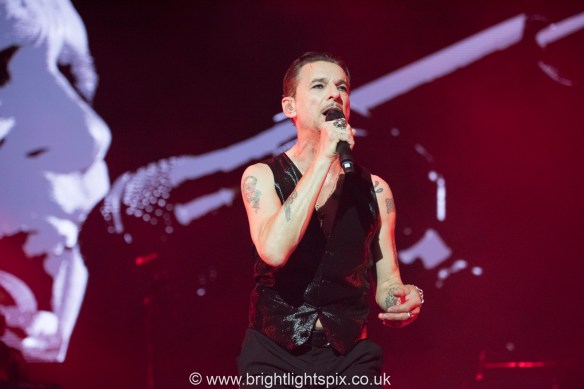
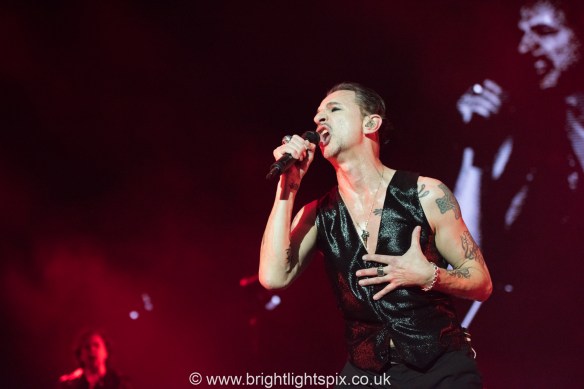
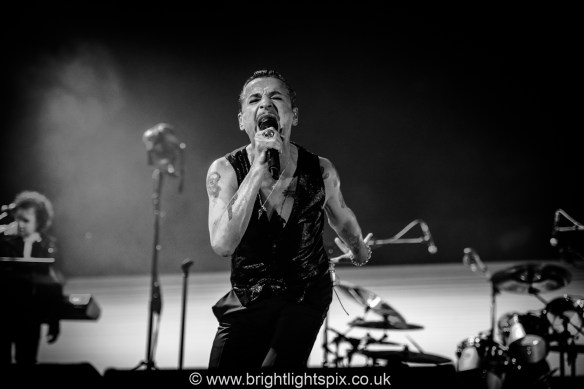
Depeche Mode – The O2 Arena, London 22.11.2017 – photos by Andy Sturmey

810_0071810_0224810_0228810_0229810_0242810_0272810_0280810_0392810_0498810_0507810_0510810_0513810_0514810_0562810_9922810_9927810_9941810_9966DSC_5450DSC_5477

(c) 2017 Andy Sturmey for Documentary Evidence & This Is Not Retro

People Are People – The Politics Of Depeche Mode (Clash feature, 2017)

“If ‘Where’s The RevolutIon?’ is any sort of bellwether of what Spirit will sound like, it suggests that Depeche Mode are ready to stop dealing in vagueness, the cryptic and the shrouded, and instead feel inclined to go for a more direct approach to the message they’re trying to get across.”

Clash, 2017

Ahead of the release of the new Depeche Mode album Spirit, I wrote a feature for Clash that explores the political messages within first single ‘Where’s The Revolution?’.

As a rule, I try to steer clear of politics if I can help it, but in the last twelve months that’s been pretty hard to do. And rightly so; to say we live in interesting times is a huge understatenent, and if there’s ever been a time to take notice of politics, amid the chaos and uncertainty in the wake of the votes against the status quo represented by Brexit and Donald Trump, now is most definitely that time.

Even so, this was a piece that I felt ill-equipped to write, until I got started. The piece was written in the second week of a fortnight spent working in the US, initially on the East Coast, then in the Mid-West, then from the East Coast ahead of returning to the UK, and maybe a sense of proximity to what’s going on over there allowed the piece to come together slightly easier. That and taking the opportunity to trawl back through the entire Depeche Mode catalogue in a bid to see whether the political dimension the band were showcasing with new single ‘Where’s The Revolution?’ was really that new after all.

My feature for Clash can be found here.

(c) 2017 Mat Smith / Documentary Evidence for Clash

MG – Europa Hymn (Mute Records single, 2015) – Official Video

Mute Records today revealed the animated video for ‘Europa Hymn’, the first single taken from the forthcoming Martin Gore album MG which is released in April.

I had the great pleasure of getting to interview Martin earlier this month; that interview will be published online ahead of MG‘s release.

(c) 2015 Mat Smith / Documentary Evidence

Depeche Mode Photo

Depeche Mode photoI was wandering through our Edinburgh office last month when I came upon this collage of Eighties celebrities, presumably as part of some sort of guilty pleasure thing. Depeche Mode and Carl from Neighbours anyone?

(c) 2014 Mat Smith / Documentary Evidence

Gwen Stefani – Wonderful World (Interscope, 2006)

Gwen Stefani 'The Sweet Escape' CD artwork

The Sweet Escape album | Interscope | 2006

Mute alumni Martin Gore and Richard Hawley appeared on this upbeat closer to Gwen Stefani’s The Sweet Escape, both adding their guitar talents to a song which sounds suspiciously like Stefani trying to cover Depeche Mode‘s ‘Enjoy The Silence’ via Black’s song of the same name. Hawley and Gore’s contributions are quiet and not exactly distinctive: Hawley seems to offer ruminative slide guitar wheras Gore’s playing seems to be the kind of simple but devastating melodies he’s made his own. Unfortunately, they’re both just drowned out by the garish high energy pop of this Linda Perry-penned tune.

First posted 2013; re-posted 2014.

(c) 2014 Mat Smith / Documentary Evidence

Hope & Harrow – Sufferhead (Workhouse Digital single, 2013)

IMG_0013-1.JPG

workhouse digital | dl | 23/10/2013

After almost twenty-eight years, Pete Hope and Dave Harrow have decided the time is right for a follow up to their 1985 EP, also titled Sufferhead.

Vocalist Pete Hope is a stalwart of the Sheffield post-punk scene, which meant that some sort of collaboration with someone from Cabaret Voltaire was always a possibility – in Hope’s case it was working with Richard H. Kirk on the album Hoodoo Talk. Hope has also worked with Jono Podmore (Kumo, Metamono, Cyclopean) and in The Box with members of Clock DVA. As for Harrow, he has occupied a shadowy presence in the world of electronic music, working with Psychic TV, Adrian Sherwood’s venerable On-U institution (overseeing mixes for Depeche Mode, Mark Stewart and others), Anne Clark, Andy Weatherall and working as Technova and other aliases.

Some things are worth waiting for, as proven by this five-track EP. Sufferhead is an understated, assured release wherein electronics flutter and stalk with repetitious dark menace and vocals growl with thinly-concealed threat, anger and cynicism. Standout track ‘Revolution Train’ (see the clip below) is like an amalgam of everything Nitzer Ebb were trying to do around the time of Belief, only with more depth and attention to detail, while ‘Tongue Tied’ takes a crisp, jittery IDM pulse and adds in suggestive low-pitched spoken vocals that probably aren’t about getting your words muddled up. At opposite ends of the spectrum, ‘Sparticus’ might sound aggressive and disappointed by turns but it conceals a hidden sincerity, while the electronic dub of ‘Turn Up The Fuzz’ comes with a punkish social awareness suggesting that things are just as rubbish today as they were in the mid-Eighties.

Labelling this a comeback would be an insult; against a backdrop of electronic music regaining visibility with critically-acclaimed albums from bands and artists that have been treading the boards since the early Eighties, Sufferhead is a lot like a grenade being tossed casually into the fray, its impact proving categorically that much more interesting music is made just below the surface.

Sufferhead can be bought from Juno, Amazon or iTunes.

Thanks to Jono.

dl:
1. Perfect Rain
2. Tongue Tied
3. Revolution Train
4. Sparticus
5. Turn Up The Fuzz

First published 2013; edited 2014

(c) 2014 Mat Smith / Documentary Evidence

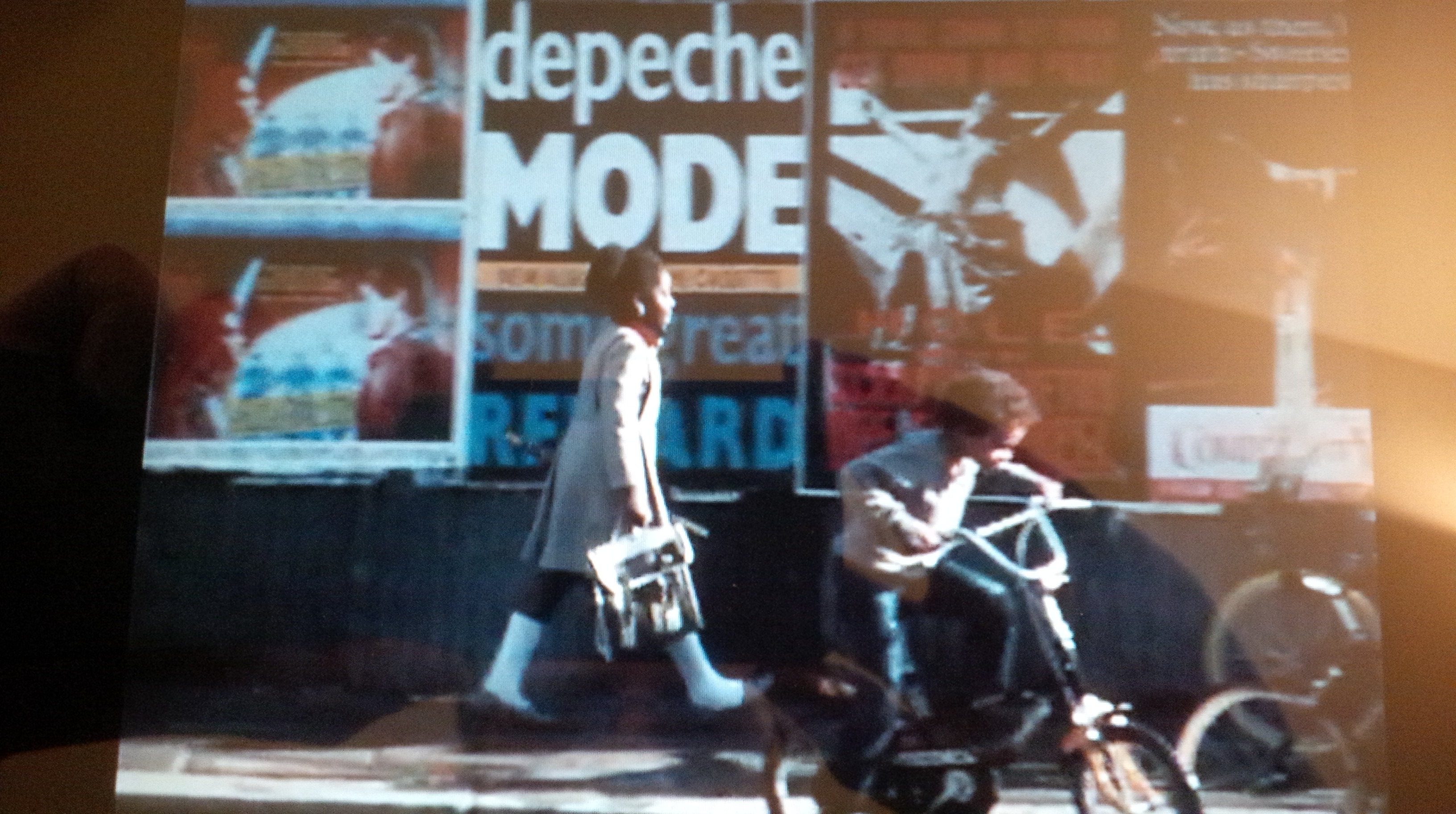
Depeche Mode – Some Great Reward (billboard poster, 1984)

Depeche Mode 'Some Great Reward' (billboard poster)

A billboard poster for Depeche Mode‘s Some Great Reward, London 1984.

Still taken from To The World’s End: Scenes And Characters On London Bus Route, a BBC programme first broadcast in 1985. Available on BBC iPlayer.

(c) 2014 Mat Smith / Documentary Evidence

Recoil – Bloodline (Mute Records album, 1992)

Recoil 'Bloodline' LP artwork

mute records | lp/c/cd stumm94 | 04/1992

Released in 1992 between Depeche Mode‘s Violator and Songs Of Faith And Devotion, Recoil‘s Bloodline found Alan Wilder collaborating with Moby, covering The Sensational Alex Harvey Band’s ‘Faith Healer’ with Nitzer Ebb‘s Douglas McCarthy and deploying the vocals of Curve’s Toni Halliday; nicking swathes of vocals from bluesman Bukka White, and even dropping in a spoken word prayer from Diamanda Galas.

Unlike Wilder’s previous two releases as Recoil (1986’s 1+2 and 1988’s Hydrology), Bloodline showcases a more uptempo, song-based album; whilst his painstaking studio endeavours and long-form sound designs are in evidence across Bloodline, what emerges is an album that benefits from having the various vocalist contributors add their respective sections, even if at times it’s more pop than one might have expected. Then again, if there was one criticism of Wilder’s two previous releases, it was that they didn’t fit into any particular electronic genre – too pop to be ambient and too organic at times to be suited to the electronic music purist; clever, certainly, but somewhat impenetrable.

I like to think that Recoil showcases a certain ‘big budget’ electronic music. It’s the difference between a big Hollywood picture with all the special effects you can imagine and a tiny indie flick. Sonically, it feels like Wilder had access to all the best kit and equipment because of his role in one of the biggest bands in the world; in the hands of a bedroom-confined electronic musician the result would have been different and perhaps a little edgier, a touch grittier maybe. According to Wilder’s helpful Q&A on his website, the reality was somewhat more toward the ‘small’ end of the studio spectrum compared to his later studio, with Bloodline put together in the back room of his London home. Nevertheless, Bloodline still has a glossy high-end sheen to most of the tracks.

One of the most surprising (and most adventurous) tracks is ‘Curse’, which features Moby – at this point still in his pre-Mute Instinct days – rapping desperately about social and moral issues. I say surprising, because Moby hasn’t ever been known as a rapper; he’s clearly dabbled in a whole spectrum of different musical genres from ghostly ambient stasis to thrash metal but actually rapping remains something of an oddity. To confound things yet further, ‘Curse’ finds Moby’s vocal pitch-shifted downwards, giving his contribution a dark, aggressive quality, even if it means that his voice is unrecognisable. Wilder drops in slowed-down wheezing sounds, beats that sound like they originate from a steam-powered production line and liquid electro bass riffs. In keeping with a number of other tracks on Bloodline, ‘Curse’ is lengthy, the second half here being dominated by a more robust beat and samples of a manic orator delivering a religious protest speech.

‘Electro Blues For Bukka White’ proves categorically that Moby’s sampling of old blues records and hitching them to more modern soundscapes wasn’t necessarily all that innovative on Play, Wilder here doing the same with lengthy a cappella section of White’s vocal while a throbbing electro rhythm and some meditative bass noises drift along underneath. At times it feels like Depeche’s ‘Waiting For The Night’ from Violator only with a more pronounced beat. Neat symphonic strings add an unexpected emotional quality to this song, highlighting just how adept Wilder has always been at forcing out the emotions in a song. A similar effect is achieved on the closing track, ‘Freeze’, which has an austere sound, not dissimilar from some of Wilder’s more grandiose classically-informed work with Depeche at the time of Music For The Masses.

One of the best tracks on Bloodline is ‘The Defector’, a pulsing and mostly instrumental electro track that was Wilder’s self-confessed homage to Kraftwerk; that’s certainly evidenced in the thippy electronic sounds and clattering industrial beat reminiscent of Trans-Europe Express-era Kraftwerk. That said, ‘The Defector’ retains a robustness to its rhythms and synths that Kraftwerk have never quite been able to deliver. The two tracks featuring Toni Halliday (the languid ‘Edge To Life’, mooted as an ultimately abandoned second single, and the harder ‘Bloodline’) are among the most ‘pop’ tracks here, Halliday’s strained vocals for some reason getting a little too close to Madonna for comfort. Wilder’s backdrop, particularly on the twitchy ‘Bloodline’ has an edginess, an definite apocalyptic tone, but on the whole, while they’re undoubtedly clever sonically, there’s something vaguely disappointing about these two songs that I can’t quite put my finger on. ‘Bloodline’s saving grace is the dense middle section featuring lots of wordless singing from Halliday, dubby guitar plucks a la ‘Policy Of Truth’ and all sorts of drama, not least from Jenni McCarthy (Doug McCarthy’s daughter) who provides an unsettling vocal section.

Bloodline also includes two unnamed link tracks, one between ‘Electro Blues For Bukka White’ and ‘The Defector’ and one between ‘Curse’ and ‘Bloodline’. The former is a short atmospheric piece with a threatening, claustrophobic quality, a little like being surrounded by looming clouds of noxious electronics; the second features a heavily-processed Diamanda Galas delivering the Lord’s Prayer, creating a similarly unsettling effect.

Galas’s religious contribution, whether you can make it out or not, as well as the occasional use of preacher samples, highlight a vague theme that exists at various points during Bloodline. The album’s sequencing, from the possessed sounds of a man speaking in tongues at the very start of ‘Faith Healer’ through to the redemptive, elegiac sound of ‘Freeze’ creates the impression of someone moving from darkness to light, a theme that Wilder’s bandmate Martin L. Gore would use to devastating effect time after time in his writing for Depeche Mode. If anything, Wilder’s approach to enlightenment and salvation on Bloodline is more subtle and somehow all the more dangerous for it.

***

I bought this album whilst on holiday in Southend-on-Sea during Whitsun week in 1992, a few weeks before my mock GCSEs, along with Mute’s International compilation and Nitzer Ebb’s Belief. As it’s Whitsun this week, I decided to head down memory lane and re-post this review from 2012.

Thanks to Andy, Lyn and Jonathan for their help with this review.

Track listing:

lp/cd/c:
A1. / 1. Faith Healer
A2. / 2. Electro Blues For Bukka White
A3. / 3. The Defector
B1. / 4. Edge To Life
B2. / 5. Curse
B3. / 6. Bloodline
B4. / 7. Freeze (cassette and CD bonus track)

First published 2012; edited 2014

(c) 2014 Mat Smith / Documentary Evidence

Martin L. Gore – Counterfeit (Mute Records, 1989)

Martin L. Gore 'Counterfeit' LP artwork

mute records | lp/cd/c stumm67 | 06/1989

Counterfeit was Martin L. Gore‘s first solo release outside of Depeche Mode. A collection of six covers ranging from The Durutti Column to Sparks, Gore’s voice is here allowed to shine through rather than being relegated to backing vocals or only appearing on the more poignant ballads of the Depeche back catalogue that were less suited to nominal frontman Dave Gahan‘s vocal style. Counterfeit was produced by Gore and Rhythm King stalwart Rico Conning, and released by Mute in 1989 while Depeche Mode were on downtime between the Music For The Masses and Violator albums. Never a band to go for cover versions (off the top of my head I can only count three, including one Beethoven piece), hearing Gore delivering other people’s songs is something of a rare, and absorbing, proposition.

Opening with a cover of Joe Crow’s ‘Compulsion’, things start off in relatively upbeat territory. Sometime Nightingales member Crow’s solitary and pretty obscure Cherry Red 7″ is here delivered as an affirming, strident track, all upbeat pianos, pulsing percussion and melodica-style synths. I used to listen to this occasionally after disappointing events took place (usually getting dumped by a girl), the ‘got to move on sometime’ refrain and the gentle piano somehow allowing me to transcend whatever I was feeling miserable about. Nearly twenty years on from when I first bought this, it still never fails to work. ‘In A Manner Of Speaking’ was originally recorded by Tuxedomoon and appeared on their Holy Wars LP. Gore’s version includes a vaguely Latin rhythm in the style of Depeche Mode’s ‘To Have And To Hold’ from Music For The Masses, underpinned by a dark synth bass pulse. ‘In A Manner Of Speaking’ is filled with a theatrical drama, and to add to the mood Gore speaks his way through the final section, its elliptical lyric about telling someone everything by saying nothing making a level of sense on an emotional level.

The cover of Factory Records’ stalwart Vini Reilly’s ‘Smile In The Crowd’ again opts for a Latin-style arrangement, a thin, pondering guitar line running throughout most of the track. This cover of the Durutti Column song is perhaps the closest Counterfeit comes to the bleak, inward-looking balladry that Gore’s own performances on record tend to lean toward. Meanwhile ‘Gone’, originally delivered by The Comsat Angels, has a cloying urgency, mining the same vibe of danger and helplessness that powered ‘A Question Of Time’, riding forth on a pulsing beat marked by thick bass notes and industrial tension.

Gore’s cover of Sparks’ ‘Never Turn Your Back On Mother Earth’ finds Gore taking Ron Mael’s beguiling, simple ode to the planet we live on and maintaining that sense of grace over a fragile, gentle backdrop of acoustic guitar and shimmering percussion. Tempted to make this plaintive song a whole lot darker though you might have expected Gore to be, instead the sense of wonderment of the Sparks original is maintained, Gore even having a decent crack at Russell Mael’s falsetto, highlighting the lead Depeche Mode songwriter’s strong vocal range. Gore saves the darkness for his take on the traditional song ‘Motherless Child’, here cast as a edgy jazz number, the dark swing of Gore’s introspective vocal delivered like an unused track from Cabaret.

Counterfeit is a relatively unassuming record, considering how big Depeche Mode had become by this point. Gore’s emotional outpourings have always been popular with fans (check out the deafening cheers after one of Gore’s solo performances in the middle of a Depeche Mode stadium show), and hearing his effortless ownership of these six songs is one of the genuine highlights of his body of vocal work. A follow-up to this EP would be released by Mute in 2003 containing more unexpected reworkings of other bands’ material.

Track listing:

lp/cd/c:
A1. / 1. Compulsion
A2. / 2. In A Manner Of Speaking
A3. / 3. Smile In The Crowd
B1. / 4. Gone
B2. / 5. Never Turn Your Back On Mother Earth
B3. / 6. Motherless Child

First published 2012; edited 2014

(c) 2014 Mat Smith / Documentary Evidence