Beth Jeans Houghton – Hey, That’s No Way To Say Goodbye (Unreleased Home Recording, 2010)

Among the unreleased 2010 home recordings of Beth Jeans Houghton – sorry, Du Blonde given her latest guise – lurks this beautiful cover of Leonard Cohen’s ‘Hey, That’s No Way To Say Goodbye’ from the Canadian singer’s 1967 debut album, Songs Of Leonard Cohen.

Beth put this on YouTube back in 2013, augmented by a simple rough-cut video with shots of everything from bathroom stalls to graceful Californian windfarms taken from a passing car.

Watch / listen below.

Post (c) 2015 Mat Smith / Documentary Evidence

Liars & Saint Laurent – Women’s Spring / Summer ’14 – Collection VIII (30/09/2013)

A video from Paris Fashion Week 2013 showcasing the Saint Laurent Spring / Summer 2014 collection, soundtracked by an exclusive remix of ‘Mr. Your On Fire Mr.’ by Liars. The stark neon catwalk design also evokes the angular sleeve stylings of Liars’s WIXIW album.

Video:
Saint Laurent Women’s Spring / Summer 2014
Collection VIII
30/09/2013
The official Saint Laurent page for this video can be found here.

Music:
Liars – ‘Mr. Your On Fire Mr.’
Originally recorded 1999 and available on the album They Threw Us All In A Trench And Stuck A Monument On Top (Blast First).
Remix and additional recording for Saint Laurent by Angus Andrew in LA, September 2013
Soundcloud stream available here.

Content (c) 2013 Saint Laurent / Liars
Blog post (c) 2015 Mat Smith / Documentary Evidence

Apparat – Krieg Und Frieden (Mute Artists album, 2013)

IMG_0085

mute artists | stumm352 | 18/02/2013

Everyone will have, at some point or another in their lives, compared something to ‘being like War And Peace‘, probably without knowing that they’re referring to a novel by Tolstoy; they just know it’s a long book. Like a lot of important Russian literature, it is an expansive, long-form affair that progresses at a seemingly glacial pace over many years, almost at a real-time pace. Such works require a level of concentration and persistence that don’t quite chime with our modern need for quick fixes and instant fully-formed character deployment, something to read at the same time as listening to music, watching TV or walking to the train.

Sascha Ring, or Apparat, has made it his business to create advanced electronic music that, like the work of Tolstoy and the other great Russian authors, has real, genuine depth. His pieces – a label far more suited to his music than ‘songs’ or ‘tracks’ – have a sonic complexity and density that requires the listener to focus on layers upon layer of detailed textural dialogue. Apparat’s first album for Mute, The Devil’s Walk contained gossamer-like ideas intertwining with one another like DNA coils to create one of the most beautiful, ephemeral works in the whole history of modern electronic music, laced with lyrics that were at once hopeful and melancholic at the same time, something that would resonate with the transcendent nature of the Russian psyche.

Sebastian Hartmann is an uncompromising theatre director with a track record of staging difficult and challenging works as well as offering radical reinterpretations of classic plays; his productions include the controversial anti-war play Blasted by Sarah Kane, Anthony Burgess’s A Clockwork Orange, a stage realisation of the arid Paris, Texas by Wim Wenders, and works by Ionescu, Chekhov and Shakespeare. The ambitious Krieg Und FriedenWar And Peace – was staged for the 2012 Ruhrfestspiele festival in Recklinghausen, with imagery from Tilo Baumgärtel (from whose work the sleeve for Krieg Und Frieden is taken) and music by Apparat.

Over time I have come to the opinion that theatre, much more so than film perhaps, still offers some of the greatest opportunities and blankest canvases for the experimental musician. Nevertheless, Apparat’s music for Krieg Und Frieden includes a number of pieces that feel like they were written for a theatre audience’s need to hear orchestral reference points in a musical accompaniment. Those pieces – ’44’, both versions of ‘K&F Thema’, ‘Austerlitz’ – find Sascha Ring deploying the cello of Philipp Timm and violin of Christoph Hartmann from his live band to create austere, mournful and occasionally heart-wrenching melodies. These central pieces provide concrete proof that electronics may be capable of moving you but strings do it far more gracefully; here you find stately, regimented piano chords, music box simplicity and structures reminiscent of Irmin Schmidt, all mixed in with a sonic inventiveness that takes in drones and small, mechanical whirrings, clicks and feedback. The most obviously ‘stagey’ composition here (and by the way that’s not meant as a criticism) is ‘PV’, wherein layers of urgent melody rise up from a dark ambient soundscape before finally settling into a web of thunderous drums and skronking horn blasts. Add a trapeze and vast budget to proceedings and you have a perfect score to a Cirque du Soleil show that hasn’t been conceived yet.

Offsetting the overtly theatrical pieces are challenging compositions that evoke bleak, anguished imagery. At the cheeriest end of that spectrum is ‘Blank Page’, featuring shimmering textures, clattering gears, snipping sounds, horses perhaps and a vague sounds of birds get overtaken by discordant noises. Those noises are finally offset by a vague melody that increasingly asserts itself on the front line of the piece; that melody brings with it a howling restlessness that evokes memories of some of Robert Fripp’s most evocative solo soundscape recordings. At the more unsettling end is ’44 (Noise Version)’, which is noise with a lower-case ‘n’. This distant cousin of ’44’ consists of delicately deployed feedback and sullen drones that position this somewhere between the quiet, frozen stillness of Thomas Köner and the industrial ambience of The Hafler Trio around the time of How To Reform Mankind. This is the sound of electronically-processed wind howling across the cruel and unforgiving frozen Russian steppes. There is, within the distortion and feedback, an elegiac quality, barely perceptible, just audible enough to release you from the intense gloom.

Sascha Ring’s distinctive, strained soulful vocal colours two songs here. ‘Light On’ starts with sparse atmospheres and musings on desolate, deserted places, with skittering percussion and oscillating loops offsetting his Chris Keating-esque delivery, the whole thing coalescing over time into a sort of dense mutant dub rhythm. The album closes with a track that totally justifies the oft-abused ‘epic’ tag. ‘A Violent Sky’ is poignant ballad with jazzy percussion and Satie-esque piano clusters. This is the point where Sascha Ring finally flies free of any electronic rigidity into a warm, organic space that could provide a singularly inventive way forward after seven albums of clever electronica.

First published 2013; re-edited 2015.

(c) 2015 Mat Smith / Documentary Evidence

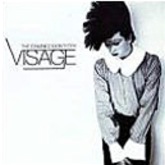
Visage – The Damned Don’t Cry (Spectrum album, 2000)

IMG_0082-0

spectrum / universal music | 544 381-2 | 2000

Sometimes, back in the early days of writing Documentary Evidence, the challenge was trying to find reasons to write about songs and artists I liked but which had no Mute Records connection whatsoever.

Such was the case with Visage. Recalling ‘Fade To Grey’ brings with it recollections of my four-year-old sister marching up and down a catwalk at a student fashion show in Leamington Spa back in the day-glo decade; while that’s a great reason for getting misty-eyed about a song, it didn’t qualify it for Documentary Evidence. So I was delighted to discover by accident that Barry Adamson had played in Visage, and that all of a sudden legitimised me being able to devote a page to Steve Strange’s band.

The untimely death of Strange from a heart attack leads me to re-post this review of a budget compilation today.

During 1979 and 1982, the core three musician members of Howard Devoto‘s Magazine moonlighted in Visage, the electro-pop studio-only project of Steve Strange and Ultravox’s Billy Currie, with additional contributions from Midge Ure and drummer Rusty Egan. Barry Adamson, Dave Formula and the late John McGeoch played on Visage’s first two albums Visage (which included the genre-defining New Romantic hit single ‘Fade To Grey’) and The Anvil. It seems unbelievable that the backbone of Devoto’s post-punk soundsmiths should moonlight in a futuristic band so far removed from their alternative rock day jobs, and this unusual period in Adamson’s musical career is often missed out of biographies. For those interested in hearing some of Visage’s work, you could do well to check out the budget Damned Don’t Cry compilation on Spectrum, which includes selections from the band’s back catalogue, including tracks from their 1984 swansong where the Magazine members were no longer part of the line-up. Another compilation – the full-price Fade To Grey album – was released recently, but includes almost all of the tracks on Damned Don’t Cry, and certainly no extra biographical information than the two sides of text included here.

In truth, without knowing exactly who appears on the tracks from 1979 to 1982, anyone specifically looking for Adamson’s distinctive bass playing is likely to be disappointed. Then again, having spoken to Barry about his use of studio downtime when Magazine were recording Real Life, he was already experimenting with tapes and synths at this time, and therefore it is possible that his involvement in Visage was more than just laying down the odd bassline. To fans of the early eighties cross-over of New Wave, synthpop and New Romanticism, this collection includes some absolute gems. Notwithstanding the mysterious sheen of ‘Fade To Grey’ (a track which for me will always be synonymous with a Leamington fashion show my sister was in), there is also the funk-pop of ‘We Move (Dance mix)’ from 1981, with some pointy guitars and solid Adamson bass groove, and what must be an occasional vocal from the distinctive Midge Ure. Elsewhere, the hyperactive elastic bass of ‘Night Train’ recalls ‘The Thin Wall’ by Ultravox, laced with lashings of horn-led soul. The super-group collision of styles in perhaps most prevalent on ‘Visage’, where Dave Formula’s signature Synergy-style orchestral synth melodies and riffs blend in with some Peter Hook-esque bass from Adamson, and great vocals from Steve Strange, who proves himself to be an excellent – albeit under-rated – vocalist throughout this compilation.

Formula’s keyboards are much more obviously present on these tracks than either McGeoch or Adamson, assuming that they were using their regular instruments. Nevertheless, there are some brilliant tracks here : the 1980s nightclub-friendly ‘The Anvil’, the dance mix of the instrumental ‘Frequency 7’ (sounding like an early Nitzer Ebb track infused with a synthpop flavour rather than electro-punk, along with some ‘Warm Leatherette’ noises), the positively soaring but mournful electronics of ‘Whispers’ and the Thompson Twins meets Human League crisp synthpop of ‘Pleasure Boys’ in its dance mix guise. ‘Damned Don’t Cry’, the 1982 track that provided this compilation with its title shares the same mysterious, ethereal tone as ‘Fade To Grey’, with the addition of a 4/4 beat, arpeggiated bassline and some Andy McCluskey-styled vocals. ‘Love Glove’ is the best track from the 1984 Beat Boy LP, an upbeat electropop number with saxophones that reminds you of everything that was good about 1980s pop. The over-long ‘Beat Boy’, however, reminds you of everything that was bad about the 1980s – that horrible synth slap bass, orchestral stabs and stuttered vocals. Yuck. The sub-Phantom Of The Opera / Rick Wakeman / Vangelis track ‘The Steps’ (1980) is also worth skipping through, if only to get you to ‘Frequency 7’ quicker.

First published 2004; re-edited 2015.

(c) 2015 Mat Smith / Documentary Evidence

Anita Lane – Do That Thing (Mute Records single, 2002)

Anita Lane 'Do That Thing' artwork

mute records | mute285 | 2002

I actually felt quite embarrassed listening to this second single from Anita Lane‘s appallingly-titled Sex O’Clock. Not because it’s a terrible track, far from it, but because the lyrics are so overtly sexual (example lyric: ‘Call me up on the erogenous zone / All night kundalini telephone.‘) – it is a bit like how uncomfortable you felt as a teenager when the passion levels rose a bit too high in a film you were watching with your parents. Or maybe that was just me.

No two ways about it, Lane here is feeling horny, many of the lyrics delivered as if midway through a hazy passionate clinch. Repeated choruses with Mick Harvey of ‘Do that thing / That thing that you do.‘ urge the sexual momentum forward. Musically, Harvey has constructed a song of considerable beauty, a classic soul groove with a host of Motown strings and percussion-driven beat; think Marvin Gaye duetting with Serge Gainsbourg. Classy, subversive, blatant – perfect.

The solitary B-side ‘Look At The Sun’, co-written and produced by Johnny Klimek, is a countrified ballad, a thing of remarkable beauty. Lane’s vocal is perfect for the track, which really draws out the emotional quality of the song. In fact, the song could have been delivered just as successfully by her former beau Nick Cave.

First published 2004; re-edited 2015.

(c) 2015 Mat Smith / Documentary Evidence

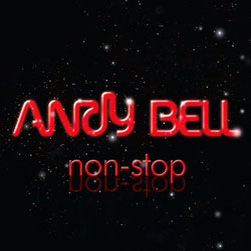
Andy Bell – Non-Stop (Mute Records album, 2010)

IMG_0079

mute records | stumm316 | 07/06/2010

Electric Blue, Andy Bell‘s debut solo album, was a hedonistic club-friendly affair (mostly) that signalled a significant departure from his day job as one half of Erasure. Recorded with Manhattan Clique, who had remixed tracks from Erasure’s return to form Other People’s Songs and supported them on that album’s tour, the album saw Bell collaborating with Propaganda’s Claudia Brucken and head Scissor Sister Jake Shears. It felt like Bell was getting something out of his system, scratching an itch if you will, and the chances of a second solo album seemed slim; though undoubtedly a good album, Electric Blue was at times a little inconsistent.

This is not a charge that could be levied at Non-Stop, Bell’s second album. Recorded with Pascal Gabriel, still affectionately remembered as producer of the string of hits by S’Express (although I love him best as a member of Peach and producer of Inspiral CarpetsRevenge Of The Goldfish), Non-Stop is a much more focussed dancefloor affair. I haven’t kept up with dance music trends since about the mid-Nineties, so I’ve no idea what particular sub-genres this would fit into, but what I do know is that this is a 4/4-fest that operates about a million miles away from the electronic pop of Erasure.

Across ten tracks (eleven if you buy the non-physical version from iTunes), the pace only drops with the delicate slow-mo electro of ‘Slow Release’. The rest is a slew of quality, thudding upbeat dance tracks, including the low-key two singles – ‘Running Out’ and ‘Will You Be There?’ – released under the alias MiMó.

What’s perhaps quite unusual is that given the genre’s obsession with euphoric themes, Non-Stop is altogether quite dark; there are few overtly love-themed tracks here. Since I Say, I Say, I Say, Bell’s lyrics for Erasure have – in the main – focussed on the trials and tribulations of finding, being in and falling out of, love; unless you count the edgy hotel rendezvous with a cigar-smoking, moustachioed character on the track ‘Subject / Object’, the vibe is in places much more overtly sexual than Erasure would dare. ‘Touch’, with its buzzing synths, is possibly sinister, until Bell’s lyrics about not wanting to be a ‘loser‘ kick in (delivered in Bell’s best ‘Mockney’ accent).

Probably my favourite tracks here are the title track, with its deep bass loops and ‘Lost In Music’-meets-Kraftwerk wide-eyed absorption, and ‘Cosmic Climb’ – the iTunes-only bonus track – which is a straightahead, no holds barred, club track. The lyrics on the latter are the only set I can hear that align with Bell’s claim that he was going for pure throwaway on this album – the rest of the album’s lyrics are very clever actually. I’m also a fan of ‘DHDQ’ (‘Debbie Harry Drag Queen’) which is gleefully observant of certain niche areas of clubland’s eclectic nightlife; imagine a dance-music version of Lou Reed’s ‘Walk On The Wild Side’ hitched to a disco rocket and relocated from Downtown Manhattan to London’s Soho on a Friday night.

Much has been made of the frankly bizarre collaboration with Jane’s Addiction’s Perry Farrell on ‘Honey If You Love Him (That’s All That Matters)’, and it’s a good track, just not up there with my personal favourites. Apparently Farrell, an avowed fan, suggested the collaboration and wrote the track; his contribution is certainly more significant than Shears’ almost absent contribution to Electric Blue.

Pre-orders of the CD album from Mute Bank came with a download of a Vince Clarke remix of ‘Non-Stop’; on recent mixes Vince has displayed a knowing ability to knock out sterling dance floor grooves, and his version of ‘Non-Stop’ is a perfectly minimal, sparse take on the more dense, robotic Pascal Gabriel version, with few of Clarke’s signature squiggles and sequences.

First published 2010; re-edited 2015

(c) 2015 Mat Smith / Documentary Evidence

Andy Bell – I’ll Never Fall In Love Again (Sanctuary single, 2005)

IMG_0077

sanctuary records | sanxs425 | 29/06/2005

If anyone can explain the lengthy gap between first single, ‘Crazy’ and this, I’d really appreciate that. Just when it looked like Sanctuary had resigned themselves to the fact that Electric Blue, despite carrying a decent suite of (mostly) dance-oriented tracks – of which ‘I’ll Never Fall In Love Again’ is a strong example – was never going to shift in massive quantities outside of Andy Bell‘s Erasure fans, along came a second single.

‘I’ll Never Fall In Love Again’ is an excellent up-tempo number in its original guise which is given a more housey treatment by Goetz on his generally quite laissez faire single mix, but perhaps the biggest draw is an exclusive new track ‘Back Into The Old Routine’ which finds Andy softly celebrating the advent of autumn, although his pastoral lament for finding his usual place in the park does concern me that he’s referencing the sort of acts that some people get up to in such places. That aside, this gentle little song, with its soulful bridge and ‘Don’t Dance’-esque melody, is a fitting full stop to a good first solo album from Bell.

Two further mixes are available from various download sites, including iTunes – the Goetz Extended Mix, which is literally (and nothing more than) just that, and a remix by Mr Do which actually does try to do something slightly different by changing the melodies and augmenting the chorus with a tinkly refrain, but there is something not quite right about the way the vocals are mixed in, as if they were pasted in as an afterthought onto an existing track. In all, it’s worth getting the CD for the B-side, but the mixes are hardly essential.

First published 2005; re-edited 2015.

(c) 2015 Mat Smith / Documentary Evidence

Andy Bell – Crazy (Sanctuary single, 2005)

Andy Bell 'Crazy' artwork

sanctuary records | san396 | 26/09/2005

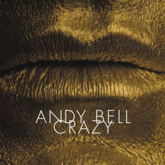
If I was Erasure‘s Andy Bell upon listening to the top 40 on the Sunday after this came out in September 2005, I think I’d be pretty livid as my debut solo single entered the charts at 35. For a start I’d feel like my own fan base – loyal still after 20 years and responsible earlier this year for propelling Erasure’s ‘Breathe’ to number four in the UK charts earlier in the same year – had failed to support my first solo efforts. But I’m not Andy Bell, I just evidently appear to be one of the few Erasure fans who bothered to buy ‘Crazy’. On all three formats too, traitors.

What’s not to like? ‘Crazy’ is an infectious, anthemic track that would sound excellent in certain clubs, with a throbbing beat and bassline overlaid by masterful synths. Does it sound like Erasure? Well, yes and no – Andy delivers one of his most euphoric vocals while Other People’s Songs collaborators Manhattan Clique dip their toes in Vince Clarke-like synth progressions, giving the feel of a one of the better of Erasure remixes from over the years. And yet the lyrics are somehow more direct, and in some respects not so ‘literal’, giving the feel of a proper dancefloor-oriented style; and Vince had never been able to lay down such a tightly pulsing 4/4 beat by this point in his own career (sorry Vince). What can I say? It should have been far bigger.

The two-track CD1 comes with a radio edit of ‘Crazy’ (which was mixed by occasional Erasure assistant Bob Kraushaar) and the playful B-side ‘Little Girl Lies’, wherein Manhattan Clique’s Philip Larsen and Chris Smith are joined by Adrian Revell, Winston Rollins and Martin Shaw on horns. This has a soulful pop style, reminding me most of ‘Paradise’, the B-side to Erasure’s ‘Drama!’.

CD2 has remixes from Cicada and King Roc which intensify the clubby sound of ‘Crazy’, while Manhattan Clique offer what seems to be an extended mix. Vince Clarke lends his support (unlike you, you know who you are) with what was then his first remix in ages, and it’s distinctive Clarke material – a quirky synth hook and odd percussion. Surely this alone was worth buying this for? The DVD features the apparently expensive video which features masked cops with truncheons, angel wings and folk with flames instead of faces, and Andy Bell looking as confused by this garish Dali meets Bosch vision of hell as I am. If you want close-ups of Andy’s silver-painted nipple (come on, for some of you this must have made you want to buy this), you will be gratified by the photo gallery that accompanies the audio of the pleasant acoustic version of ‘Crazy’ and the B-side ‘Names Change’.

First published 2005; re-edited 2015.

(c) 2015 Mat Smith / Documentary Evidence

Andy Bell – Electric Blue (Sanctuary album, 2005)

Andy Bell 'Electric Blue' artwork

sanctuary records | san382 | 03/10/2005

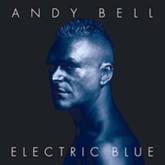
Andy Bell‘s debut solo album was produced with Manhattan Clique (Philip Larsen and Chris Smith), who had remixed tracks from Erasure‘s Other People’s Songs and who supported the duo on that album’s tour. That Electric Blue ever got released is something of a surprise – Andy had said in an interview I heard years ago that every time he was asked to do something solo he would panic and invite Vince Clarke along to help (I think he was specifically talking about ‘Rage’, which turned out to be an Erasure collaboration with Lene Lovich for PETA). Other People’s Songs itself apparently started life as an Andy solo project of cover versions, but became a standout Erasure album instead. Electric Blue was released on Sanctuary; presumably the EMI-backed Mute balked at the idea of a solo project from an artist they didn’t deem bankable, despite Bell’s twenty-year tenure with Daniel Miller‘s label.

The principal problem with Electric Blue is that it’s about four tracks too long, giving rise to some torrid filler like ‘Shaking My Soul’ and ‘Delicious’. At times there’s a sense of Andy Bell operating outside of his comfort zone, which is fine, but the results seem to have a reliance on fluffy, inconsequential lyrics on some of the more upbeat tracks. A long time ago, I remember Bell being interviewed on TV and saying how much he admired the way a track like Blondie’s ‘Atomic’ deliberately avoided substance in its lyrics; well, some of the results here are definitely throwaway, but in Bell’s case it’s not necessarily the best example of his lyric writing by a long stretch, though the genre he was operating in here – music for dancing in neon-lit Soho clubs I guess – wouldn’t necessarily tend toward lyrical depth particularly.

After a brief introduction consisting of vocal loops and building synths like clouds gathering on a sunny day, Electric Blue kicks into gear with ‘Caught In A Spin’, a Latin-house sequence of odd couplets and throwaway lines, flamenco flourishes and a chorus spiced with something dark and dangerous, a bit like dancing on a hot summer’s night. One of the best of the upbeat tracks here, ‘Caught In A Spin’ is relentless, urgent and hypnotic. Another of the best songs here is the title track, which includes some very Vince synths, dark, murmuring bass line and detuned beat. Andy here goes for robotic singing about S&M gear and buying uniforms, delivering a pre-chorus that references dancing to ‘Supernature’ (which Erasure covered) and opts for a darkly euphoric chorus which straddles a high energy style with more elastic techno sounds. ‘See The Lights Go Out’ also includes lots of nice electronic noises that Vince would approve of, and actually is not dissimilar to something Erasure would produce today. The track includes a retro disco element to the rhythm and Andy’s vocals have a pained, anguished element which gives the song some welcome depth.

Electric Blue features collaborations with Propaganda’s Claudia Brücken (‘Love Oneself’ and ‘Delicious’) and head Scissor Sister Jake Shears (‘Thought It Was You’ and ‘Shaking My Soul’). ‘Love Oneself’, despite its dubious, onanistic title finds Brücken’s breathy vocal totally dominating proceedings, almost rendering Bell surplus to requirements, a bit like the person who sets up a threesome and finds himself on the sidelines of the bedroom. Fortunately, the music – high energy sounds with a rolling bassline, 303-esque synth ripples and whooshing noises – is interesting enough. The second Brücken collaboration, ‘Delicious’, features some nice Vince-style synths but falls short in the lyrics department; Bell and Brücken deliver a stream of bland clichés that make for a pretty dull song overall. The only saving grace is a riff that reminds me of that Alex Party track from years ago which in turn reminds me of some good nights out. Otherwise ‘Delicious’ is reasonably needless.

If the tracks with Brücken were patchy, the collaborations with Jake Shears are still harder to listen to. ‘Thought It Was You’, something of a battle of the falsettos, is a very Seventies disco number, straight out of Ian Schrager’s Studio 54. The song is very classically disco, with lots of handclaps and wah-wah guitar, but something about Shears’ vocal is ridiculous and way too high, much like pretty much everything Scissor Sisters have ever done. Meanwhile, on ‘Shaking My Soul’ you’d be forgiven for missing Shears’ contribution to this upbeat, soulful but generally throwaway piece of summery pop since it’s all but inaudible. The track features lyrics dealing with jealousy and promiscuity, a theme that is also mined on the far better ‘Jealous’.

The album includes a couple of ballads, both of which are good even if they sit somewhat uncomfortably next to the more upbeat dance tracks. ‘Fantasy’ is a plaintive, Erasure-esque ballad, with lots of jangly acoustic guitar, a big trademark chorus and more articulate lyrics from Andy. There’s a soulful piano and string section that sounds a little like a Barry White ballad; there are also occasional Latin flourishes and plenty of trademark ‘woahs’ from Andy, while a melodic line not dissimilar from ‘Rock Me Gently’ sometimes creeps in. The album’s closer, ‘The Rest Of Our Lives’ is another big ballad, being a gentle love song and a typically Erasure-esque closer, at least lyrically. Musically it’s not a patch on anything Vince and Andy could achieve together, being a bit wet and flimsy (the last two bars are the most interesting). Still, it nevertheless retains a nice, emotional dimension even if it sounds too ‘organic’ and traditional-sounding for Andy’s vocal. The ballads, oddly placed though they might be, perhaps suggests this is what Andy is best at rather than flogging the disco horse elsewhere on Electric Blue.

Electric Blue was clearly a departure for Andy Bell, a brave move after years as Erasure’s frontman, and any issues with the songs generally stem from the production which doesn’t stand up terribly well today. Mercifully, Bell was undeterred by Electric Blue‘s limited commercial success, with 2010’s Non-Stop with Pascal Gabriel being a much more solid, accomplished business.

First published 2005; re-edited 2015.

(c) 2015 Mat Smith / Documentary Evidence

Alan Burnham – Music To Save The World By (Cherry Red single, 1981)

Alan Burnham 'Music To Save The World By' artwork

cherry red | cherry15 | 16/01/1981

Alan Burnham’s ‘Music To Save The World By’ was released by indie stalwart Cherry Red in 1981. As well as being something of an electropop obscurity, its interest to Mute fans is that it was produced by Daniel Miller and engineered by early Mute studio guy, Assembly member and Blackwing Studio owner Eric Radcliffe. The two tracks on this solitary release from Burnham were recorded at Blackwing, Mute’s studio basecamp for a good few years, which was based in All Hallows Church in South London. Hold on, apologies… I called this an electropop track didn’t I? Apparently we call that minimal wave these days, proof yet again that I’m not down with the kids these days at all.

Around this time, Miller was to be found producing the odd track here and there for non-Mute acts like Soft Cell, Missing Scientists and Alex Fergusson. I like to think that it was for aesthetic reasons or to help promote his nascent label, but the reality it was probably to make ends meet. Until Depeche Mode signed to Mute, the label nursed a small roster of acts and one-off singles that were unlikely to make Miller much money, so picking up the odd production job might well have helped pay some of the bills.

Could synth music save the world? Somewhat unlikely, but Alan Burnham’s single suggests it could. His vocal has a subtle, whispered quality that sits somewhere between completely captivated and slightly saddened, as if the observations catalogued on the lead track both intrigued and depressed him. Around his quiet delivery is wrapped a backdrop of ponderous bass synths, atmospheric whooshes and echoing bleeps that recall satellite signals being broadcast into space. In a blind listening test you might consider ‘Music To Save The World By’ to be a very early I Start Counting track. With distinct echoes of Miller and Radcliffe’s later work, this is a Mute record in all but name, aiming toward the radio-friendly pop that early Depeche Mode and later Yazoo would call their own, mixed in with a sci-fi sensibility that had inevitably surrounded music made with synths the decade before.

B-side ‘Science Fiction’ continues the spacey vibe with an enquiring bassline that gently nudges its way through the track. Hissing synths, bleeping melodies and live drums from Cam Findlay give this a more organic feel than ‘Music To Save The World By’, a throwback to a slightly proggier vibe with vaguely apocalyptic portents of a technologically-driven life on the horizon in Burnham’s lyrics. ‘Are we living at all?’ asks Burnham of a populous living in fibreglass domes. Maybe he hoped synth music would save us from that fate rather than being a contributing factor to the decline of mankind.

First published 2013; re-edited 2014.

(c) 2015 Mat Smith / Documentary Evidence