Daniel Blumberg & Hebronix – Liv (Mute album, 2018)

Milton Keynes Gallery, 11 October 2018: after meticulously setting up in front of the audience, and removing his shoes, violinist Billy Steiger is nowhere to be seen. He has disappeared into an antechamber to the left of where I’m sitting, coaxing sounds from a metal music stand that he moved there earlier. It is a curious effect, these naturally reverberating, occasionally uncomfortable metallic, unamplified resonances emerging from a place that isn’t where your eyes are naturally trained.

After a while, though these sounds are far from predictable, you find yourself adjusting to the noise, leaving you just with your thoughts. After his set concludes, he takes up position on the opposite side of the performance space from Daniel Blumberg and his headless black Steinberger guitar, the intense form of double bass player Tom Wheatley between them. The trio run through songs from Blumberg’s Minus opus and songs that are inextricably of the same source as Minus but unfamiliar, including one track – ‘Off And On’ – that they play twice, both versions as different from one another as they are similar. As is Blumberg’s preference, the audience is not given the opportunity to applaud between songs, and the only interaction discernible with those here to watch him comes when Blumberg lets his brass slide fall to the floor in response to someone at the back’s wine glass falling on its side, not once, but twice (it would turn out to be his out to be his girlfriend’s, something she embarrassedly admits after the show).

Afterwards, I find myself outside with Daniel. In the course of that conversation, he enthusiastically flits from one thing to another – the tour, the next album he’s already working on, the weird topography of Milton Keynes and the fact that he’s off to his nan’s care home the following day to sing traditional Hebrew songs

To the uninitiated, this is pure logorrhoea, a chaotic slew of seemingly randomly-assembled thoughts and subjects; I was fortunate enough to spend the best part of two hours interviewing Blumberg earlier in the year and you just kind of adjust to it after a while; it shows a mind always racing, always thinking, always processing, always crashing ideas together, constantly creating, never still.

‘Off And On’ and another track, ‘Digital’, that the band play turn out to be taken from Liv, recorded by Blumberg, Steiger and Wheatley at London’s Sarm West in 2014 with additional contributions from Seymour Wright (sax) and Kohhei Matsuda (mono synth). Minus was an important album, showing an artist operating at the furthest orbit from where he had been before with bands like Yuck; but, as important and complete it was, it showed Blumberg after his metamorphosis. Liv is an important album as it shows how Blumberg got there, and shows the impact on his affecting songwriting from his time immersing himself into the Café Oto scene with skilled players like those on this album. It illustrates the profound effect that that immersion had on his approach to songwriting: the noise-followed-by-calm methodology is there, but it is perhaps less absolute in its switches from one device to another; it is more interwoven, blurrier even.

Liv opens with ‘Liv’, containing layer upon layer of synth loops, distortion, and impenetrable clusters of compelling, intense noise that suddenly breaks into the enquiry “Who are you that I lived with?” in Blumberg’s distinctive, questing tone. The noise returns, ebbs away and Blumberg’s enquiry becomes “Who are you in my kitchen?” I’m reminded of my own time sat in his kitchen, and I briefly recall how uncomfortable and out of my depth I felt as we started that interview. The track then becomes beatific wordless harmonies, pitched over an antsy, restless bed of sonic shards.

The version of ‘Digital’ included here is more elemental; quieter and more reflective. You can discern a sort of hollow, inquisitive blues poking its way through, the model for the tender songs that would pepper Minus; synth noises whirr and ping around the guitar, as does fluttering violin. It is romantic yet uncertain. “How do I greet her when I’ve been thinking about the other one?” asks Blumberg, his words loaded with pathos. It’s rueful, fragile, uncertain, restless, and speaks to a rift, a crisis, viewed from an otherworldly, out-of-body type of vantage point. ‘Digital’ ends with Steiger’s violin sawing over bird-like sounds, either from Matsuda’s synths or Wright’s sax.

‘Off And On’ begins with hypnotic bass evolutions, tentative synth melodies becoming a stop / start blend of silence and fullness. It’s wonderfully pretty when all enmeshed together, only to become disrupted and expansive. Here you will find hope filtered through strangely uncertain ruminations. Steiger’s violin is here, at times, straight, unadorned, expressive without being taken into angular splinters. Wheatley‘s approach to the double bass is an entirely physical one, being less an instrument and more a box of toys for him to manipulate, pull, scrape, pluck and push its strings to the limits of their tension, and if you close your eyes you can imagine him doing all of that when the players are working their way through this troubled piece.

‘Caught’ is a a long, ‘Madder’-esque centrepiece, Blumberg’s guitar nodding less to inchoate freeform shapes but toward a kind of floating, droning post-rock suite of riffs bobbing up and down over fuzzy distortion and prowling bass. The effect is like drifting along on an uncertain, turbulent sea. It is unswerving in its progress, if a little frayed at the edges, staying there until a tentative vocal appears out of the fog around five minutes in. As ever, these words undeniably mean something to Blumberg, but to the observer, they are impenetrable, suggestive but never definitive; you can interpret the sentiment, but the true impression is elusive, like a fragment of a diary entry of an unknown writer. “Why is this happening?” might be a message of despair or a quizzical, offhand enquiry of some piece of equipment not behaving quite as it should. Around the halfway mark, as the music lurches into a comfortable dirge, Blumberg’s vocal veers toward folksy sung harmonies, a pretty counterpoint to the music elsewhere. Everything stops, falls away, sounding like the end of days in its absence, while the lyrics suggest some sort of harrowing interstitial space in which Blumberg finds himself. Toward the end, the piece lunges back toward a desperate, impenetrable wall of sound in which Wright’s sax bleats and whistles over everything else, briefly.

The album concludes with ‘Life Support’, an accomplished moment of lovely, early Velvets balladry. Here, Blumberg’s folk singer poise and Matsuda’s held tones and splintered half-melodies are underpinned by Steiger’s adaptable playing. Truly transcendent, ‘Life Support’ is a wonder to behold, a towering conclusion to a set showcasing a songwriter undergoing a major transformation and the minus-ing of his craft to where he finds himself today.

Liv is only available through Rough Trade. Thanks to Paul, Zoe, Joff and DB.

(c) 2018 Mat Smith / Documentary Evidence

Klara Lewis & Simon Fisher Turner – Care (Editions Mego album, 2018)

Pairing two esteemed sound artists together, Care found Klara Lewis working in collaboration with Simon Fisher Turner across four long, painstakingly-created atmospheric pieces for Editions Mego.

These are pieces built from discrete sonic movements, never quite following any sort of predictable path or settling into formulaic ambient / soundscape familiarity. Opening piece ‘8’ is a case in point – 15 minutes in length and consisting of noisy interruptions interlaced with quieter found sound – conversation, birds, whispering near-silence – each gyration from one passage to another catches you off guard, typically just as you think the track has settled into itself. Electronics are processed into grainy distortion and rhythmic gestures are compressed into harsher shapes, often for the briefest of moments before being harshly cut into silence at seemingly randomised points.

It’s a conceit that Lewis and Turner use across Care without ever once feeling like they’ve settled into some sort of cosy familiarity, either with one another as collaborators, or with the material they’re working with. Far from it – these four pieces are alive with a continual tension and drama, never quite betraying where they might evolve to next, or for how long, or which section might suddenly re-emerge.

Each piece here is subtly different – ‘Drone’, despite its name, isn’t some sort of elaborate, dense dronescape but a piece filled with haunting textures and minimalist piano passages, along with an interruption from what sounds like a mediaeval folk ritual; ‘Tank’ utilises glitchy electronics that seem like they’re writhing out of control, fleeting voices and a processed jazz epilogue that feels skewed toward the point of Lynchian nausea.

The final track, ‘Mend’ starts out with genteel synth chords before becoming elaborately distorted over its full length, though it’s imperceptible at what point the piece lurches from nice to nasty. I was listening to this while descending through the clouds on the way into New York’s JFK. Its evolution from serene drift to noisy texture seemed the perfect soundtrack to the change in vista from uncluttered blue sky to the chaotic sprawl of Queens and Manhattan beyond.

(c) 2018 Mat Smith / Documentary Evidence
Mick Harvey & Christopher Richard Barker – The Fall And Rise Of Edgar Bourchier And The Horrors Of War (Mute album, 2018)

“With each year that passes there are fewer and fewer of us who have a direct connection to those who lived through the two world wars.” Those were the words of our town mayor at this year’s Remembrance service in Woburn Sands, before he solemnly read out the names of those from here who had lost their lives, leaving an indelible mark on this small community with whole generations of family members eliminated.

Over the years their short lives and contributions are reduced to an etching on a war memorial that few of us even notice other than at the annual Remembrance service. Upon the occasion of the hundredth anniversary of the end of the Great War, the sacrifice of over a million British service personnel is – rightly – prominently back in focus, serving as a salutary reminder of war’s devastating consequences.

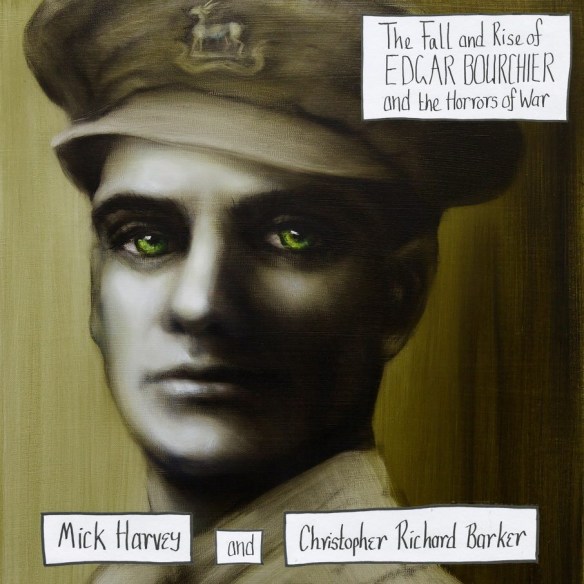
Edgar Bourchier didn’t serve his country in the First World War, at least not outside the imagination of author Christopher Richard Barker anyway. The poet and soldier Bourchier is a fictional character that Barker first created for his 2012 novella The Melancholy Haunting Of Nicholas Parkes, fabricating his Warwickshire birth and Passchendaele death and a vivid backstory of how his poetry took on an entire life of its own following his demise. That include a never-realised Weimar cabaret show, the re-discovery of his words during the turbulent Parisian revolution of the Sixties to ‘new’ realisations his (Barker’s) poetry with Mick Harvey. The Fall And Rise Of Edgar Bourchier And The Horrors Of War is thus a conceptual tribute to the endeavours of an Unknown Soldier that never actually existed, but whom speaks for a whole generation of conscripted boys.

Harvey’s experience as a producer, vocalist and a multi-instrumentalist lends these songs the requisite sensitivity, drama and horror to evoke the realities of life in the trenches, all seen from the first-hand vantage point of a contemporary observer. Veering from wistful, mournful folk on tracks like ‘Listen In The Twilight Breeze’ to distorted, feisty rock on ‘The Last Bastard Son Of War’, this is an album inevitably loaded with dramatic, thought-provoking moments. Harvey leads an ensemble cast including his long-time collaborator JP Shilo, vocalists Jade Imagine, Alain Johannes and Simon Breed across fifteen stirring tracks written collaboratively with Barker. Through these songs we hear the hatred of the footsoldiers toward their stiff upper-lipped superiors and their natural reluctance at finding themselves defending their country in spite of the hollow promises of glory and prosperity.

‘Softly Spoken Bill’ observes a callow young soldier thrust into the role of unwilling cannon fodder, losing the plot as he legs it toward the enemy and ultimately getting sent back to Blighty suffering from an early, undiagnosed, wilfully ignored form of PTSD. That effect on these young men can be heard again on ‘The Expressionist Tell #1’ and ‘#2’, describing the numbing, hollowed-out impact that barrages of mustard gas and incessant mortar fire would have on even the most resolute of individuals, reducing them to ghostly human shields in the name of a greater peace.

To call this harrowing would be a pointless understatement, even as Bourchier’s narrative moves from a sort of forced jingoism to the terrifying, cloying sound art of ‘The Messenger’, in which we hear of the falsehoods of life on the frontline that were forbidden from being reported back home.

As time passes and collective memories fade, we need such honest, unflinching descriptions of the manmade hell-on-earth of war to lead us not into the temptations of conflict as our only means of resolving differences. At a time when ugly, incendiary rhetoric between nations is at an all-time high, as peacetime defence spending is increasing, and as Cold War treaties and agreements are unilaterally scrapped, we need the likes of Bourchier’s posthumous words more than ever – irrespective of their false providence – lest we forget.

(c) 2018 Mat Smith / Documentary Evidence
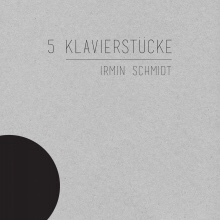
Irmin Schmidt – 5 Klavierstücke (Mute / Spoon album, 2018)

5 Klavierstücke is Can co-founder Irmin Schmidt’s first album since 2015’s career-spanning Electro Violet, and finds the composer – ably assisted by Gareth Jones – playing not just one, but two pianos on five spontaneous compositions.

Well, I say spontaneous; one of Schmidt’s pianos, a Pleyel, was prepared following the teachings of his onetime mentor John Cage, whose various prepared piano compositions over a roughly 25 year period are perhaps the best exemplars of adding nuts, bolts and all sorts of contraptions to piano wires to disrupt their typical sound. It is a painstaking approach that few have the energy and artistic vision to undertake, since one needs to almost surrender one’s compositional ideas to the piano before striking a single note; unprepared, a composer may, in their head, create an expectation of what a song might sound like – when prepared, the composer cannot make those assumptions, for the piano will never behave precisely the same each time unless the precise preparations are followed each and every time. It is one manifestation of Cage’s lifelong obsession with chance interventions into the composition process.

Alongside the prepared piano, Schmidt also used a Steinway, his instrument not that much older than the octogenarian composer himself, and the five tracks alternate between both instruments, the Steinway or the prepared Pleyel. Aside from natural studio ambience, no further gimmicky or sonic trickery was employed, even though at times it’s hard to convince your ears that could possibly be the case.

Though I’m generally not a fan of the track-by-track album dissection approach these days, the five pieces here seem to justify individual analysis on this occasion. These are songs that contain a quiet drama, a composer’s natural instinct for melody and the white space in which the notes can float, uninterrupted, unadorned or adorned depending on which piano is being used. They may be formed from complex treatments, but the results are surprisingly sparse, bringing to mind Chopin’s observation that “simplicity is the final achievement. After one has played a vast quantity of notes, and more notes, it is simplicity that emerges as the crowning reward of art.”

I.

Delicate, filigree playing gives way to noisier, percussive sections from the prepared piano. At times, the repeated prepared bass note sounds like a very meditative jazz rhythm section that’s been asked to wait it out in the background, or notes that sound like the extended echoes of a gong.

II.

Rain-like sounds and insistent rumbling infiltrate the natural resonance of the sporadic unprepared piano notes. After a while, the piece opens out into a section that sounds like a clanking Hang pattern, one that is intensely melodic but unrecognisable from a piano.

III.

Percussive, low-register sketches are coupled with high-register sounds not unlike a cymbal. Loud shards of sound arrive without expectation, almost as if someone is driven to emphatically striking the side of the piano.

IV.

Beginning with churning, bass-heavy arpeggios reminiscent of some of Throbbing Gristle or Dome’s most regimented work, the addition of sprinkles of unaltered piano ends up making this sound like some sort of heavily-shrouded exotica or a spontaneous jazz cop theme. ‘IV’ accelerates toward the end into a thunderous, panic-inducing conclusion that leaves nothing but cavernous reverb in its wake.

V.

This is vaguely reminiscent of Jacques Louissier’s interpretations of Satie’s Gymnopedies and Gnossiennes or a Sunday afternoon Bill Evans session, all gentle, delicate melody and harmonics. That’s the case until the very end, when a clangorous discordancy comes to the fore to bring this outstanding, understated album to a conclusion.

(c) 2018 Mat Smith / Documentary Evidence

Jon Spencer – Spencer Sings The Hits! (In The Red album, 2018)

Jon Spencer‘s fantastic debut solo album is perhaps exactly what you’d expect from this purveyor of raucous goodtime rock ‘n’ roll, even if you’ve only taken the most cursory of listens to the Blues Explosion, Boss Hog or Pussy Galore.

I reviewed Spencer Sings The Hits! for Clash – click here to read my comments. Bellbottoms are optional.

(c) 2018 Mat Smith / Documentary Evidence for Clash
Iv/An – Transmute (0.5 EP, 2018)

ivan_transmute2

To celebrate Mute‘s 40th anti-versary, electronic musician, 0.5 label owner and Small Doses publisher Iv/An has issued a unique tribute to the formative years of Daniel Miller‘s label.

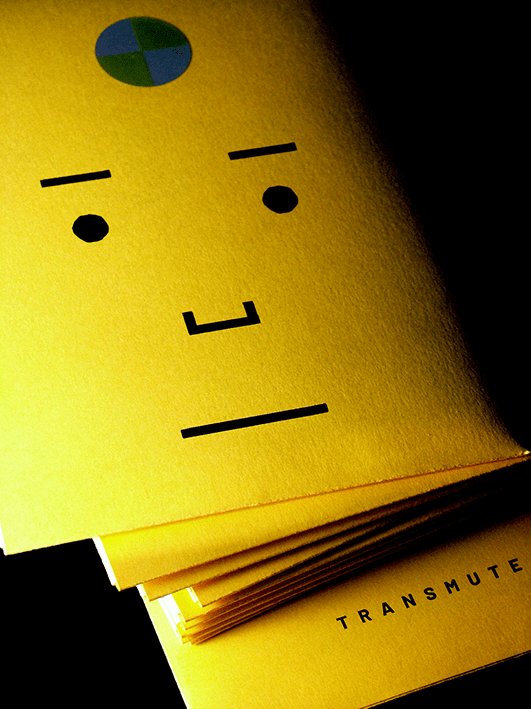
Iv/An has previously released a carefully-hidden cover of The Normal‘s ‘Warm Leatherette’ – spliced with Donna Summer’s ‘I Feel Love’ – on a CDr that came with an issue of Small Doses that coincided with the 35th anniversary of Miller’s debut single. For its 40th, he has issued a highly limited handmade object in a private edition of just twenty copies, containing a CDr with a new version of ‘Warm Leatherette’ interspersed with sections recognisable from Depeche Mode‘s ‘I Sometimes Wish I Was Dead’ and Nitzer Ebb‘s ‘Join In The Chant’.

The CD also includes a new track ‘FG/FT’ based on Fad Gadget‘s ‘Ricky’s Hand’, ‘New Jerusalem’ by Frank Tovey and another early Ebb track, ‘Violent Playground’; taking the concept of documentary evidence to an obsessive level that I could only ever dream of, the lyrics on ‘FG/FT’ are derived from Biba Kopf’s liner notes to The Fad Gadget Singles, a snippet of Fad’s own ‘Insecticide’ and an old Mute LibTech article about Fad / Frank. The final track on the EP is a cover of Yazoo‘s ‘Bad Connection’ containing sections of ‘Back To Nature’, ‘Salt Lake City Sunday’ and ‘Lady Shave’ by Fad Gadget, and Yazoo’s own ‘Goodbye 70s’. The effect is like listening to an Eric Radcliffe and John Fryer DJ set at a Blackwing Mute staff party, with exclusive invites to just a handful of twenty fortunate souls.

The cardboard sleeve quotes J.G. Ballard’s seminal and controversial 1973 novel Crash, one of the primary influences on Miller’s lyrics for ‘Warm Leatherette’, along with still life photocopied images of Ballard and two of the novel’s narrator’s main muses, both of whom died in car accidents – James Dean and Grace Kelly.

The new version of ‘Warm Leatherette’ is available at 0.5’s Bandcamp page as a free download and can be streamed below. Iv/An has also created a video for the track, which you can also find below.

Link: 0.5 on Bandcamp


With thanks to Iv/An for making me one of the fortunate twenty.

(c) 2018 Mat Smith / Documentary Evidence

In Conversation: Barry Adamson (Rough Trade East, 7 November 2018)

Upon the release of his career-surveying Memento Mori compilation, I will have the enormous pleasure of talking to Barry Adamson at a very special Rough Trade East event on 7th November from 7pm.

Barry Adamson talks to Mat Smith about his 40 years in music, taking in his formative beginnings with Magazine, his time as a member of Nick Cave and the Bad Seeds, film soundtracks and his solo career, as a musician and composer.

This will be followed by a short set of songs from his new 40 year anthology ‘Memento Mori’.

After the performance there will be a signing where Barry will be available to sign his new album and items from throughout his career.

Tickets can be obtained through Rough Trade’s website here.

(c) 2018 Mute / Rough Trade

Simon Fisher Turner / Espen J. Jörgensen – Soundescapes (Mute Artists album, 2011)

R-3350612-1326902239.jpeg

‘I think we’re both rebels,’ is how Simon Fisher Turner summarised Soundescapes, his distance collaboration with documentary film-maker Espen J. Jörgensen which was released by Mute Artists in November 2011. The product of a chance encounter following Jörgensen browsing MySpace in response to having heard Turner’s soundtrack to the David Lynch movie Nadja, Soundescapescontains thirteen tracks of adventurous sonic exploration, marking this out as the freshly-independent Mute’s most experimental release so far, and reuniting Turner with the enduring faith of Daniel Miller, whose original Mute imprint was Turner’s primary output for a large chunk of his career.

On the gatefold cardboard sleeve (which hides a fold-out poster), Turner is credited with ‘structure, rearrangements, composing, editor, voice, life recordings’ while Jörgensen is responsible for ‘sampling, circuit bent & analogue instruments, beats, oscillators, rain app, voice, composing’. From how the pair have described their collaboration, this demarcation of roles and responsibilities was crucial to Soundescapes‘ genesis – Jörgensen would effectively ‘feed’ Turner a diverse array of almost random recorded sounds, the sources of which were often not evident or known to the recipient, while over the course of two to three years Turner would process those sounds into the tracks via harsh edits into the thirteen songs included on the album. Just as Turner would be blind to the sources of the sounds, Jörgensen would often find it yet harder to identify his own sounds in the resulting tracks. Jörgensen’s sound sources included circuit bent instruments, snatches of conversations and pounded wood among others, none of which are remotely identifiable on the album. It’s also worth bearing in mind that this collaboration occurred without either side ever meeting one another, nor even speaking over the phone.

One condition of the collaboration would be that each side was unable to challenge the other, meaning that Jörgensen would not comment extensively on the final tracks Turner was sending him, while Turner would be the one to ask for more sounds or indeed decide when Jörgensen should stop the pipeline of noises. Jörgensen only commented on two tracks, one of which, ‘Tristfull’, includes one of the more identifiable sound sources in the form of a French rain shower recorded by Turner, soaking the backdrop with organic sound while layers of what could be tinkly music box sounds (but easily could be from something entirely different) dominate the foreground. Similarly ‘Drippex’, which starts with a snatch of wobbly, Marc Bolan-esque vocals (one of Turner’s own contributions) wanders off on nice gentle synth arpeggios, while closer ‘Twomen’ features snatches of what Jörgensen calls ‘bedtalk in Japanese’ and simple, layered baby xylophone loops. These are three of the prettier tracks here, a direct contrast with the busy ‘Noise Activity’ which Jörgensen originally described to me as the duo’s ‘ADHD track’ when describing its short abrasive punch to the eardrums.

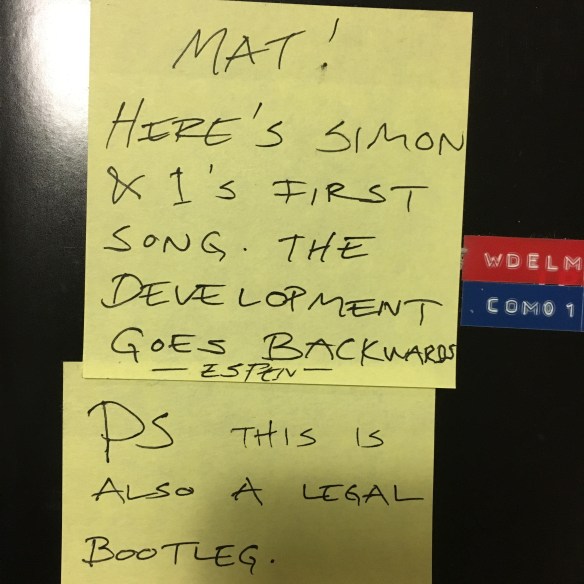
Jörgensen sent me a photo of one of his favourite sound sources, a circuit bent Speak & Learn children’s education tool that I vaguely remember from my own childhood. That trademark electronic voice tone is evident (I think) on ‘Worry’, but instead of the friendly computer I remember, that voice is manic, distorted and uncomfortable to listen to, while all the while a regimented grid of pulsing not-quite-beats and synth squalls keep time. Elsewhere tracks blend together calm and serene tones with mechanistic cyborg confrontationalism, a case in point being the (almost) title track ‘Soundescape’ (early versions of which Jörgensen sent me as a ‘legal bootleg’), wherein vast blankets of Eno-esque drift clash with the abrupt intrusion of broken electronic machinery whirring to life.

ejj_circuitbentinstrument

‘Selfcentred’ starts with drones and noxious clouds of threatening noise, concluding with brief snatches of what could be tiny orchestral loops if you listen really closely punctuated by patches of strained silence. Most tracks on Soundescapes are perfunctory affairs, generally lasting no more than four minutes or so, until you reach the hypnotic ‘Start At The End’ which stretches out its template of loops and grinding Throbbing Gristle-style industrial sound closer to the nine minute mark. Some Aphex-style detuned and distorted beats emerge toward the end of this album highlight, closing out the track with thunderous and gorgeous noise.

When I tried to import this CD into iTunes, the genre that came up was ‘pop’. Surely this should be ‘subversive pop’, given the often punishing sonic assault that the listener is presented with, and it is amusing to imagine a parallel dimension in which this is what pop music might sound like. For me, this noisy and adventurous release is a welcome, uncompromising, addition to New Mute’s diverse 2011 release schedule, a direct relative of its more sonically challenging material from yesteryear and a not-so-gentle reminder that Mute’s genesis lies squarely in electronic music’s wilder hinterlands. Sometimes you just need something a bit more edgy to clear your head, and Soundescapes does that many times over the course of its 40-odd minutes.

Originally posted 2011; edited 2018.

(c) 2018 Mat Smith / Documentary Evidence

Mute 4.0: Fad Gadget – Fireside Favourites (Mute album, 1980)

As part of Mute‘s fortieth ‘anti-versary’, the label is making available very special limited edition vinyl versions of selected releases from their four decades of releasing and curating incredible music. Full details on the releases can be found here.

Released in 1980, Fireside Favourites was the third album to be released by the nascent Mute imprint and the first LP by the sorely-missed, still woefully-overlooked Frank Tovey. Tovey’s early work as Fad Gadget played an enormously significant role in the development of Mute’s creative aesthetic, beginning with the Daniel Miller-produced ‘Back To Nature’ single and continuing with this album.

The creative team behind Fireside Favourites was common to a number of early Mute releases – the album was recorded by Eric Radcliffe at his esteemed Blackwing studio, accompanied by his young protégé John Fryer; Miller added extra synth nous to a number of the track and the sleeve was designed by Simone Grant. ‘Back To Nature’ isn’t among the tracks on the album (not an uncommon thing for early Mute albums), but a radically reworked version of its B-side ‘The Box’ appears toward the end.

As an album, Fireside Favourites is a collection of contrasts. The are moments of near-pop that brim with vibrant synth-driven energy, such as the frantic opener ‘Pedestrian’, which has one foot in the evolving post-punk movement and another in the developing electronic pop scene. But even in something like ‘Pedestrian’ there’s a noisy, clattering interlude and conclusion; the brief, mewling sound of a baby in the background, along with Tovey’s distinctive half-spoken / half-sung vocal, keeps this and other more accessible tracks like ‘Salt Lake City Sunday’ from feeling too accessible.

Elsewhere there are moments of ugly, abrasive noise that aligned our Fad with the works of contemporaries like Throbbing Gristle and Cabaret Voltaire, the processed vocal on single ‘Insecticide’ and the theme of ‘Newsreel’ being cases in point. The vivid lyrics on those songs nodded to Tovey’s physical stage performances and also carried a nihilistic, Ballardian impulse that Daniel Miller had also employed for his own ‘Warm Leatherette’ single.

What also emerges here, perhaps surprisingly, is a dark and occasionally threatening funk angle. ‘State Of The Nation’ has some solid drumming from Nick Cash and a treacly bassline from Eric Radcliffe over which are layered all sorts of sonic events, from squalling, saw-edged synth blasts to wonky melodies, to probably anything that was lying around in Blackwing at the time that could be made to make a sound. The seminal ‘Coitus Interruptus’ does the same, but its funky disposition is subsumed under unswerving, focussed synths that give this frustrated sexual paean a robotic quality, a bit like how Kraftwerk might approach Soft Cell’s ‘Sex Dwarf’; there’s an increasingly breathless, desperate, snarling quality to Tovey’s vocal here, the perfect human foil to the menacing, repetitive electronics that surround him on this weirdly anthemic track.

Tovey had a reputation for being something of a confrontational performer, but he was also a purveyor of dark humour. There’s no better example of this than the title track, bestowed with a wandering, irrepressibly joyous Radcliffe bassline and jazzy, (qu)easy listening brassy synths. It’s a lot of fun, but if you listen to the lyrics –sung with a gentle, music hall breeziness – they are unendingly grim, loaded with vivid post-apocalyptic imagery and a bit of that Crash-style perversity: “Hey now honey, open your eyes / There’s a mushroom cloud up in the sky / Your hair is falling out and your teeth are gone / Your legs are still together but it won’t be long.”

The rendition of ‘The Box’ is perhaps the most surprising of the tracks here. In the place of the original version’s insistent, over-amped synth bounce, the version here is much more subdued, with the distinctive synths being replaced by what could be a pump organ. The whole track only emerges out of its subdued, detached mood at the very end, making this almost the inverse of itself and acting as something of an oblique clue to Tovey’s later work under his own name with The Pyros.

Why this LP doesn’t seem to carry the same sort of influential weight as the synth albums that arrived en masse the following year – such as the similarly dark Non-Stop Erotic Cabaret by Tovey’s fellow Leeds Poly students Soft Cell – remains a bit of mystery to me. Perhaps Fad Gadget was too much of an outsider figure, too linked with that grubby, confrontational DIY industrial movement to appeal more broadly. The orange vinyl re-release of Fireside Favourites for the Mute 4.0 ‘anti-versary’ provides an ideal and timely opportunity to give this album the critical appreciation it always deserved.

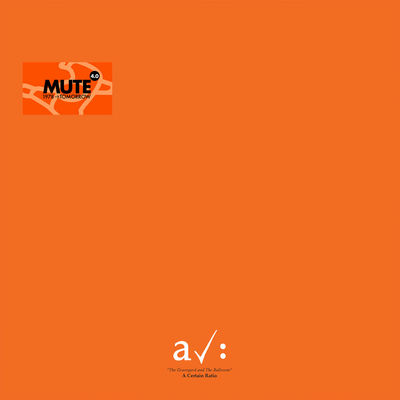
For Mute 4.0, Fireside Favourites is being reissued as an orange LP edition.

(c) 2018 Mat Smith / Documentary Evidence

Mute 4.0: A Certain Ratio – The Graveyard And The Ballroom (Factory album, 1980)

As part of Mute‘s fortieth ‘anti-versary’, the label is making available very special limited edition vinyl versions of selected releases from their four decades of releasing and curating incredible music. Full details on the releases can be found here.

“All the energy of Joy Division but better clothes,” is how Steve Coogan, playing Factory Records founder Tony Wilson, described A Certain Ratio in the 24 Hour Party People movie. Whether Wilson said it or not is obviously debatable – though it sounds like the kind of thing he would say – but it rather did the band something of a disservice. Joy Division may have been poster boys for Wilson’s experiment in running a label (badly), but aside from both hailing from around Manchester, arising out of punk, sharing producer Martin Hannett and being signed to Factory, there’s very little that ACR and Joy Division had in common; but then again, Wilson was never one to let the facts get in the way of a decent quote.

ACR were formed in either Flixton or Wythenshawe in 1977, taking their name from a Brian Eno song. The Graveyard And The Ballroom was rush-released by Factory on cassette in January 1980, and consists of a side’s worth of Hannett-recorded demos from Graveyard Studios in Prestwich and a handful of live tracks recorded at Camden’s Electric Ballroom when ACR were supporting Ian Curtis and crew. As was the case with most Factory releases, Peter Saville designed the sleeve, though on this occasion he wasn’t credited. As a debut LP release, hitching together demos – presumably of tracks ACR had been gigging for a while – with live tracks is a curious one, and the band would only record their first album proper – To Each… – in 1981. The curiosity of its release aside, it nevertheless perfectly captured that energy that Wilson may or may not have spoken about.

In 1979, ACR were a five-piece group of Martin Moscrop (guitar / trumpet), Jez Kerr (bass / vocals), Donald Johnson (drums), Simon Topping (keyboards) and Peter Terrell (guitar). As evidenced on the seven live tracks that made up the B-side of the tape, ACR might have come out of punk, but their music was much more honed than might have been expected. Together, as heard on tracks like ‘Oceans’, they made a tight, very precise sound, genuinely worthy of the often-used punk-funk tag. During that track’s extended instrumental sections you can hear a sense of refined musicianship coming through, each player fluidly interacting with one another in a manner best observed among jazz groups. In Jez Kerr the band had a singer who eschewed the nasal, I’m-not-really-a-singer traits of most post-punk vocalists, possessing a soulful streak on the looser, more open-ended, jazzier tracks like ‘The Fox’ as opposed to a period snarl. The side opens with the sinewy ‘All Night Party’, ACR’s first single, with its manic, intensely irrepressible rhythm section, being all the more remarkable as a live track for originally not having a drummer on it at all when Factory issued it earlier in 1979.

The Electric Ballroom tracks were recorded from the mixing desk by Tony Wilson in October 1979, just over a month after Hannett oversaw the Graveyard sessions. If it’s possible for a band to develop and grow into their sound in a mere month, A Certain Ratio did that, and some. The demos are raw and sludgy, bereft of Hannett’s mystic prowess behind the mixing desk.

What they have though is a latent quality, something itching to get out, as exemplified by the controlled sound of ‘Flight’ compared to its longer, more flexible live rendition. It’s the only track from the studio sessions to make it to the Ballroom set, suggesting that either ACR had jettisoned most of these tracks in favour of an entirely fresh new batch of much better material, most of which would end up on To Each… Nevertheless, amid the seven studio tracks are some real gems, such as the edgy, wistful ‘Crippled Child’ or opener ‘Do The Du (Casse)’ and ‘Choir’, both of which seem to owe as much of a debt to Stax soul or Motown as they do the Sex Pistols.

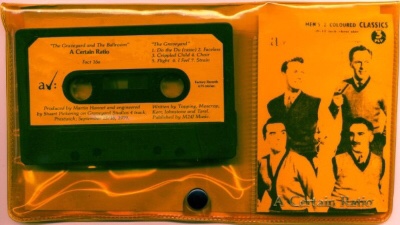
In the years after Factory’s sloppy collapse, several labels – chiefly Creation and Soul Jazz – have had a crack at reissuing The Graveyard And The Ballroom. Mute began working with ACR in 2017, becoming custodians of the band’s entire catalogue across the several labels they’d found themselves on over the years, as well as presenting brand new material. It found the label doing precisely what they’d done for the likes of Throbbing Gristle and Cabaret Voltaire before, drawing a band’s entire body of work together under the careful jurisdiction of a genuinely artist-first imprint. For this album, Mute created a vinyl edition that linked back to the 1979 release, lovingly packaging the LP in a green PVC sleeve reminiscent of one of the versions of the the pouch that held the original cassette.

For Mute 4.0, The Graveyard And The Ballroom is being reissued as an orange LP edition in an orange PVC pouch, just like the original Factory cassette.

(c) 2018 Mat Smith / Documentary Evidence