Electronic Sound: Issue 7 Reviews – Cabaret Voltaire, Plastikman, Fatal Casualties, Spacebuoy

Cabaret Voltaire '#7885' CD artwork Plastikman 'EX' CD artwork

Four of my reviews appeared in issue 7 of the digital magazine Electronic Sound, available for iPad or as a PDF file.

First up is the new Cabaret Voltaire album #7885 – Electropunk To Technopop (1978 – 1985) (Mute), the first Cabs compilation to bring together both their Rough Trade and Some Bizarre / Virgin periods. The album comes complete with revealing technical liner notes from Richard H. Kirk and longstanding fan and Mute MD Daniel Miller.

Richie Hawtin releases a new Plastikman album this month. EX (Mute) was recorded live at the Solomon R. Guggenheim Museum in New York at the personal request of Dior head designer Raf Simons for the museum’s annual fundraiser in late 2013, and saw Hawtin offer an entirely new suite of Plastikman tracks. Fans of dark acid ambience recorded in highbrow surroundings need look no further.

Fatal Casualties 'Psalm' LP artwork Spacebuoy 'Intoxicated' CD artwork

Issue 7 of Electronic Sound also includes my reviews of two non-Mute bands whose work I’ve featured on Documentary Evidence over the past couple of years. Swedish darkcore electronic duo Fatal Casualties have released their debut album Psalm on the consistently interesting Seja imprint. A dark, cloying album filled with intricate Depeche Mode-isms and Downward Spiral-era vibe of Nine Inch Nails, Psalm is far from an easy listen but fully realises the aesthetic that the duo of Stefan Ljungdahl and Ivan Hirvonen have painstakingly developed on their previous two singles for Seja.

Also delivering their much-anticipated debut, electronic duo Spacebuoy (Howard Moth and Jez Allan-Smith) release Intoxicated this month. Erasure fans will recall that Spacebuoy were the support act for the veteran synthpop duo’s warm-up for the Total Pop forest tour, and since 2013’s Breathe EP the pair have been hard at work crafting the tracks for their first album. Intoxicated straddles both classic electronic pop and harder trance and techno-inflected styles, making for an interesting and varied debut release.

The iPad edition of Electronic Sound can be purchased through iTunes. The PDF edition will be available through the Electronic Sound website soon.

(c) 2014 Mat Smith / Electronic Sound

Wire – 1985-1990: The A List (Mute Records album, 1993)

Wire 'The A List' LP artwork

mute records | 2xlp/cd stumm116 | 05/1993

1985 – 1990: The A List was released in 1993, by which time Wire as a four-piece band were no more. Robert Gotobed had left the band by the time The First Letter was released in 1991, the band ditching the last letter of their name and becoming Wir for that album. Wir themselves then promptly called it quits, leaving behind two further tracks which were released on Touch as the Vien single in 1997.

This is a compilation album of tracks recorded by Wire between the Snakedrill EP and the Drill album that included new versions and live takes of the amorphous-lengthed track that proved to be Eighties Wire’s mainstay, its relentless dugga-dugga-dugga rhythm providing the foundation for their material for Mute. So, yes, a compilation, but one with a difference: according to the sleeve notes, ‘The A List was drawn up by asking various compilers to name their “top 21” Wire tracks in order of preference. They were then arranged on a “football league” basis. The final choice and running order are based on this chart and the maximum time of a CD. There have been no edits.’

Those contributing to the vote included the band’s Colin Newman and his wife and Githead accomplice Malka Spigel, Bruce Gilbert‘s chum Russell Haswell, Touch co-founder Jon Wozencroft (who also did the typography for the album), Wire biographer Kevin Eden, England’s Dreaming author and punk authority Jon Savage and Mute’s Roland Brown, and for completeness the entire distribution of votes is included within the sleeve notes. The A List was compiled and edited by Brown, Newman and Paul ‘PK’ Kendall.

The result is a showcase of just how strong Wire’s body of work was in the Eighties. While the purist post-punk fans would no doubt bitterly complain that Wire had more or less left their late Seventies intensity and creativity behind, the Wire that reformed and signed to Mute in the mid-Eighties delivered a high quality pop-inflected ethos mixed in with some of the strangest lyrics that have ever been committed to record. So what if the snarling guitars had been left behind – that was yesterday’s news. The new tracks (mostly) had a smart sound, infused with greater use of technology, while the wry artsiness that dominated Wire’s trio of albums for Harvest / EMI was never more than a sneer away.

The only criticism I have of The A List is that ‘The Boiling Boy’ didn’t make the grade. The version of the track that appeared on IBTABA is probably my favourite track from Eighties Wire, a slow-developing, graceful but strangely linear piece (it scraped into number #56 on the league table with just 29 votes). However, this album was the product of a resolute democracy – how typically Wire to create a compilation this way – and thus I shouldn’t question its exclusion too much. It’s certainly a more considered compilation than the equivalent sweep-up of Seventies Wire, On Returning, which Harvest put out in 1989.

For sharp-eyed completists, note that this was given a stumm catalogue number, rather than the mutel mark used by Mute for some artist compilations.

Track listing:

2xlp/cd:
A1. / 1. Ahead
A2. / 2. Kidney Bingos
A3. / 3. A Serious Of Snakes
A4. / 4. Eardrum Buzz
B1. / 5. Drill
B2. / 6. Ambitious
B3. / 7. In Vivo (Remix)
B4. / 8. The Finest Drops
C1. / 9. Madman’s Honey
C2. / 10. Over Theirs
C3. / 11. Silk Skin Paws
C4. / 12. The Queen Of Ur & The King Of Um
D1. / 13. Torch It!
D2. / 14. Advantage In Height
D3. / 15. Point Of Collapse
D4. / 16. Feed Me

First published 2012; edited 2014

(c) 2014 Mat Smith / Documentary Evidence

The Ministry Of Wolves – Music From Republik Der Wölfe (Mute Records album, 2014)

The Ministry Of Wolves 'Music From Republik Der Wölfe' LP artwork

mute artists | lp/cd/i stumm360 | 10/03/2014

Republik der Wölfe is a theatre production commissioned by Theatre Dortmund’s artistic director Kay Voges and directed by Claudia Bauer which premiered on 15 February 2014. The music for the production comprised collaborations between Mick Harvey, Alexander Hacke, his girlfriend Danielle di Picciotto and Paul Wallfisch. Harvey is a veritable Mute stalwart given his tenure with bands like The Bad Seeds, and as a multi-instrumentalist and producer he has a reputation as being a highly skilled and versatile addition to any line-up. Hacke is a veritable Goliath – in both stature and reputation – who formed a crucial component of the noise onslaught of Einstürzende Neubauten and found himself offering a more nuanced role in Simon Bonney‘s Crime & The City Solution. Di Picciotto is an accomplished artist who formed part of the new Crime lineup that released American Twilight in 2012, and whose live visuals accompanied that album’s tour. Keyboard player and singer Wallfisch is founder of the New York group Botanica, a group whose music is variously described as ‘gypsy and punk-cabaret infused chamber rock’ and who have collaborated with Kid Congo Powers, another Bad Seeds alumnus.

The music takes its principal inspiration from the fairytales of Jacob and Wilhelm Grimm, the stories of whom will be familiar to more or less any child albeit viewed through a distinctly Disneyfied lens. The original stories by Grimm were a mix of the ethereal and macabre, drawing inspiration as much from folklore as the frighteningly original imagination of the two brothers. (By way of a recent anecdotal footnote, I was in a shop in the Germany pavilion at Disney’s EPCOT last month where they had copies of the collected Grimm tales for sale. Two Americans next to me were dumbfounded as to why these fairytales were in the Germany pavilion, so co-opted have they been by Hollywood over the past century that they are regarded as quintessentially American in origin.) Just like the original fairytales on which they are based, the music written by this group has an authentic air of dark mystery, sorcery and otherworldliness, making for an original body of work that exists happily – if strangely – without the visuals for which they were intended.

First, let us deal with the songwriting. My only real awareness of the original Grimm fairytales come from a combination of the sanitised Ladybird books and Disney movies of my youth, and my two daughters’ enduring fascination with fantastical princesses and mythical creatures. Consequently I have no real understanding of what the band are going on about here, though it’s clear from titles and some of the subject matter as to which particular story they are dealing with. Whether in the ethereal spoken word tracks from di Picciotto, the fragile double-tracked musings of Mick Harvey or Alex Hacke’s ominous intonation on ‘Rumpelstiltskin’ the guts of the story are evident, even to an ignorant like me. Only, the tone here is fundamentally dark, linking the songs to the original stories albeit through a thoroughly contemporary lens – the mischievous dwarf Rumpelstiltskin wasn’t, as far as I can tell, ever exhibited at a Coney Island funfair, for example. The whole thing is shrouded in a sinister, almost violent mysteriousness, knocking for six most versions of these tales.

Next, consider the music. Neither Harvey nor Hacke are strangers to composing music for theatre, and both Neubauten and Harvey (with Nick Cave) have albums in the Mute back catalogue that were commissioned for plays. Between the two of them their sense of space and detail is second to none, and when combined with Wallfisch’s piano – somewhere between bar-room blues and jazz – the whole thing swings with a depth and inventiveness that is in many ways more interesting than making sense of the vocals. An obvious reference point would be The Bad Seeds between Tender Prey and Let Love In (‘The Little Peasant’ even has ‘Red Right Hand’-esque organ vamps), but there’s also a relaxed, jazz-inflected dimension here too, cutting gently through the gloom. The start of ‘Cinderella’, with di Picciotto on vocals even sounds a lot like ‘The Carny’ from Cave’s The Firstborn Is Dead. For this reviewer the highlight is ‘Little Red Riding Hood’, a edgy stew of droning guitars, grungy vibes and a storyline delivered in German and English by Wallfisch that seems to relocate Little Red to a New York gangland scene.

Above all, this is an inventive album based on an interesting concept, produced by four individuals who, in their own right, are incredibly talented but who together can create something very special indeed. My only gripe is that it feels like this music really needs its visual dimension to completely make complete sense of this theatrical offering.

Listen to ‘Rumpelstiltskin’ and watch di Picciotto’s making-of documentary below.

Track listing:

lp/cd/i:
1. The Gold Key
A1. / 2. Rumpelstiltskin
A2. / 3. The Frog Prince
A3. / 4. Cinderella
A4. / 5. Rapunzel… (As Isdora Duncan)
B1. / 6. Hansel And Gretel
B2. / 7. Snow White (Heptagon)
B4. / 8. The Little Peasant
B3. / 9. Sleeping Beauty
A5. / 10. Iron Hans
11. Little Red Riding Hood
B5. / 12. White Snake Waltz

(c) 2014 Mat Smith / Documentary Evidence

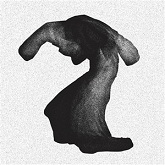
Yeasayer – Fragrant World (Mute Records album, 2012)

Yeasayer 'Fragrant World' LP artwork

mute artists | lp+cd/cd/i stumm346 | 20/08/2012

If 2010’s Odd Blood was Yeasayer‘s attempt to have what the band’s Chris Keating described at the time as a ‘dialogue with pop’, third album Fragrant World is more or less a reaction against the dominance of that album’s deliberately anthemic sound. On Odd Blood that approach yielded huge tracks like ‘Ambling Alp’ and ‘O.N.E’ but it also left Keating and the others – Anand Wilder and Ira Wolf Tuton – feeling a little dismayed that the audience at their shows really only knew and cared for those songs.

Taking its seemingly pastoral title from a vision Keating had of a dystopian, Ballardian world devoid of smell, Fragrant World was recorded in the band’s Brooklyn home at the studio of Daniel Lopatin, also known as experimental musician Oneohtrix Point Never. Whilst it may sound much more electronic than its predecessor, with little unprocessed guitar to be heard, during an interview with Keating that I did for Clash, he insisted that the record was created using plenty of guitar and bass sounds, but that those were used to trigger samplers and various sound sources alongside pure electronics. When I suggested that actually it isn’t a very electronic record at all, he challenged me to rethink my concept of what makes an electronic record, it not being necessary to think of such a record as being dominated by traditional keyboards and synths.

One of Yeasayer’s more characteristic facets, namely tracks which seem capable of being depressing and uplifting at the same time, is never very far away. Opening track, ‘Fingers Never Bleed’ is a case in point. Built on a jerky rhythm, Anand Wilder delivers a strained vocal complete with resigned observations on people who want to take the easy option of playing air guitar and committing corporate fraud (an interesting slant that suggests both are equal sins) so that their ‘fingers never bleed’. Sonically busy, the song sets the tone for Fragrant World with lots of loops, skittering percussion, relaxed guitar and piano, the elements coalescing into a vaguely uplifting chorus blended with whining electronics that leaves you characteristically unsure how you should be feeling. ‘Demon Road’ is another track with an Odd Blood feel, albeit one that is dubby, steady, regretful and anguished. ‘All hell is gonna break loose,‘ sings Keating, the track having that same, complex, anguished anthemic quality that defined Fragrant World‘s predecessor. The conclusion sees vocodered vocals blended with straight harmonies, something about the stridency of the combination feeling like an electro-country missive.

Keating told me about his enthusiasm for late Eighties Chicago house when I spoke with him. Like many of the echoes of other musics that get filtered through Yeasayer’s sonic lens, it’s not something that overtly features on Fragrant World. Nevertheless, tracks like ‘No Bones’ hint at that interest. After some stop-start robotic beats, there’s a point in Keating’s ‘chorus’ where the beats become a sticky 4/4 mesh, much like a breakdown in a DJ’s set, sending the not-quite fontman into rapturous, housey euphoria. Stand-out track ‘Reagan’s Skeleton’ has a droning bassline, and even features the classic ‘ah yeah‘ sample, once the staple of early dance music records. Over thudding beats, Keating delivers a vocal about the evil red-eyed skeleton of Reagan coming at you, horror-film stylee, in the moonlight. It’s urgent and slick, blending evocative Eighties sounds with classic dance music synths and altogether more modern sensibilities.

If Keating’s songs aim for some sort of transcendancy, Wilder’s songs are altogether more introspective. ‘Blue Paper’ opens with processed sounds that could have been lifted from an Indian cinema soundtrack. Wilder here delivers a cynical tale of a rich girl who suddenly decides to reconnect with nature, moving away from her spoiled life, something Wilder can’t ‘buy for a second‘. Musically, it’s subtle, gentle pulses and shimmering sounds until the middle eight of the song, where things get a bit wonky, the track concluding with a retro electro rhythm and some nice vocal harmonies about writing something on blue paper. Live highlight ‘Devil And The Deed’ has fractured electro beats, electronic slide guitar and occasional synth interjections; the track maintains a minimal footprint until the chunky, desperate chorus, which seems to be about sexual pressure, declining moral standards, and difficult, agonised decisions. There are also two beautiful instrumental sections which have an electronic musicbox melody, evoking warm memories of Depeche Mode‘s ‘Shouldn’t Have Done That’ from This Broken Frame.

Two of the most unusual songs close out the album. ‘Folk Hero Schtick’, is, on the surface at least, a joyous, upbeat jangly electro pop with a vocal that sounds suspiciously like Wilder doing an impression of Level 42’s Mark King. It seems to be a tired plea for a famous folk hero (Dylan?) to call it quits. Lots of big electronic sounds and a fair amount of processing make for a sprawling, but engaging skewed pop highlight of Fragrant World. Album finale ‘Glass Of The Microscope’ starts as classically low-key end to the album, with wistful vocals reminiscing about nice days and sweet memories. After some beautiful, serene ambience, sympathetically processed vocals take a turn toward the unexpected with the misanthropic line ‘in truth we’re doomed‘. It’s wryly humourous with its Dad’s Army-style sense of panic, but as an ending point it’s pretty depressing, even if the track’s final moments are among the most stirring on the whole album.

In the US, the album was released as a special edition LP with a free 7″ of the non-album track ‘Fragrant World’ backed with an exclusive remix of ‘No Bones’ as well as a t-shirt. Here in Blighty, Mute didn’t opt for such shenanigans, and the bonus track was only made available as a iTunes pre-order exclusive. Later in the year, at the Rough Trade East Mute showcase with high-end personal audio equipment manufacturer Bowers & Wilkins in December, the indie music chain ran a promotion to get a free copy of the 7″ if you bought any Yeasayer release. (Apparently there are two versions of the 7″ – a black one and a glow-in-the-dark one). Quite why the band decided to leave ‘Fragrant World’ off the album is something of a mystery, particularly as it was part of their live set, as it’s a really good track – lots of deep electronic sounds, organic percussion, really evocative, weary vocals from Chris Keating and even some quirky guitar and electronic sax tones. The Helado Negro mix of ‘No Bones’ is a bit of a mess, a jumble of snatched sections from the original assembled into a weird collage.

Yeasayer 'Fragrant World' 7" artwork

Videos for all eleven songs from the album were put on various websites for around 48 hours at the start of August 2012 under the banner PSCYVOTV (PREEMPTIVE SELF-COMMISSIONED YEASAYER VORSTELLUNG or TRACK VISUALIZER), allowing those with plenty of time to kill a wild goose chase around the farthest corners of the web to see director Yoshi Sodeoka’s vignettes and hear the album before its official release.

Track listing:

lp/cd/i:
A1. / 1. Fingers Never Bleed
A2. / 2. Longevity
A3. / 3. Blue Paper
B1. / 4. Henrietta
B2. / 5. Devil And The Dead
C1. / 6. No Bones
C2. / 7. Reagan’s Skeleton
C3. / 8. Demon Road
D1. / 9. Damaged Goods
D2. / 10. Folk Hero Shtick
D3. / 11. Glass Of The Microscope
12. Fragrant World (iTunes bonus track)

7″:
A. Fragrant World
B. No Bones (Helado Negro Remix)

First published 2012; edited 2014.

(c) 2014 Mat Smith / Documentary Evidence

Si Begg – Extreme Environments (free album, 2014)

Si Begg 'Extreme Environments' download artwork

self-released | download | 26/05/2014

Extreme Environments is a free, download-only album from former NovaMute artist Si Begg made available through the Soundcloud platform.

The album is instantly more sonically intricate than Si Begg’s last album proper, 2013’s Permission To Explode, showcasing a strand of brutal ambience across its ten short tracks. Howling drones, glitches, crisp static and ominous tones are responsible for giving this a largely threatening tone, offset by occasional periods of reflection and slowly-evolving, heavily-shrouded melody. ‘Location 4’ almost sounds like a finely wrought piece of minimalist composition or the soundtrack to a particularly harrowing scene from a Darren Aronofsky flick, while the tranquil euphoria of ‘Location 6’ could be a missing track from Brian Eno’s The Shutov Assembly.

‘It was originally going to be a couple of tracks to show off my new sample library and instrument [Kontakt] that I developed,’ explains Si Begg by email, ‘but then I had so much fun I decided to do a whole LP of this kind of detailed / immersive stuff. Then I thought I’d whack it out for free as it’s not something that is in any way commercial and also it hopefully will promote the product a bit along the way.’

Since departing NovaMute, Si Begg has made a name for himself as a commercial composer for advertising and other media. Such a career move inevitably requires a degree of flexibility and the ability to switch between styles on a whim. Whilst ostensibly an ambient giveaway, Extreme Environments nonetheless highlights that Si Begg can turn his hand to more or less anything with an equal sense of space and depth.

Read more about Si Begg’s Extreme Environments sample library and Kontakt instrument here.

Download the free Extreme Environments album from Soundcloud here.

Stay tuned to Si Begg’s YouTube channel for a series of videos to go with the album.

Track listing:

dl:
1. Location 1
2. Location 2
3. Location 3
4. Location 4
5. Location 5
6. Location 6
7. Location 7
8. Location 8
9. Location 9
10. Location 10

(c) 2014 Mat Smith / Documentary Evidence

Recoil – Bloodline (Mute Records album, 1992)

Recoil 'Bloodline' LP artwork

mute records | lp/c/cd stumm94 | 04/1992

Released in 1992 between Depeche Mode‘s Violator and Songs Of Faith And Devotion, Recoil‘s Bloodline found Alan Wilder collaborating with Moby, covering The Sensational Alex Harvey Band’s ‘Faith Healer’ with Nitzer Ebb‘s Douglas McCarthy and deploying the vocals of Curve’s Toni Halliday; nicking swathes of vocals from bluesman Bukka White, and even dropping in a spoken word prayer from Diamanda Galas.

Unlike Wilder’s previous two releases as Recoil (1986’s 1+2 and 1988’s Hydrology), Bloodline showcases a more uptempo, song-based album; whilst his painstaking studio endeavours and long-form sound designs are in evidence across Bloodline, what emerges is an album that benefits from having the various vocalist contributors add their respective sections, even if at times it’s more pop than one might have expected. Then again, if there was one criticism of Wilder’s two previous releases, it was that they didn’t fit into any particular electronic genre – too pop to be ambient and too organic at times to be suited to the electronic music purist; clever, certainly, but somewhat impenetrable.

I like to think that Recoil showcases a certain ‘big budget’ electronic music. It’s the difference between a big Hollywood picture with all the special effects you can imagine and a tiny indie flick. Sonically, it feels like Wilder had access to all the best kit and equipment because of his role in one of the biggest bands in the world; in the hands of a bedroom-confined electronic musician the result would have been different and perhaps a little edgier, a touch grittier maybe. According to Wilder’s helpful Q&A on his website, the reality was somewhat more toward the ‘small’ end of the studio spectrum compared to his later studio, with Bloodline put together in the back room of his London home. Nevertheless, Bloodline still has a glossy high-end sheen to most of the tracks.

One of the most surprising (and most adventurous) tracks is ‘Curse’, which features Moby – at this point still in his pre-Mute Instinct days – rapping desperately about social and moral issues. I say surprising, because Moby hasn’t ever been known as a rapper; he’s clearly dabbled in a whole spectrum of different musical genres from ghostly ambient stasis to thrash metal but actually rapping remains something of an oddity. To confound things yet further, ‘Curse’ finds Moby’s vocal pitch-shifted downwards, giving his contribution a dark, aggressive quality, even if it means that his voice is unrecognisable. Wilder drops in slowed-down wheezing sounds, beats that sound like they originate from a steam-powered production line and liquid electro bass riffs. In keeping with a number of other tracks on Bloodline, ‘Curse’ is lengthy, the second half here being dominated by a more robust beat and samples of a manic orator delivering a religious protest speech.

‘Electro Blues For Bukka White’ proves categorically that Moby’s sampling of old blues records and hitching them to more modern soundscapes wasn’t necessarily all that innovative on Play, Wilder here doing the same with lengthy a cappella section of White’s vocal while a throbbing electro rhythm and some meditative bass noises drift along underneath. At times it feels like Depeche’s ‘Waiting For The Night’ from Violator only with a more pronounced beat. Neat symphonic strings add an unexpected emotional quality to this song, highlighting just how adept Wilder has always been at forcing out the emotions in a song. A similar effect is achieved on the closing track, ‘Freeze’, which has an austere sound, not dissimilar from some of Wilder’s more grandiose classically-informed work with Depeche at the time of Music For The Masses.

One of the best tracks on Bloodline is ‘The Defector’, a pulsing and mostly instrumental electro track that was Wilder’s self-confessed homage to Kraftwerk; that’s certainly evidenced in the thippy electronic sounds and clattering industrial beat reminiscent of Trans-Europe Express-era Kraftwerk. That said, ‘The Defector’ retains a robustness to its rhythms and synths that Kraftwerk have never quite been able to deliver. The two tracks featuring Toni Halliday (the languid ‘Edge To Life’, mooted as an ultimately abandoned second single, and the harder ‘Bloodline’) are among the most ‘pop’ tracks here, Halliday’s strained vocals for some reason getting a little too close to Madonna for comfort. Wilder’s backdrop, particularly on the twitchy ‘Bloodline’ has an edginess, an definite apocalyptic tone, but on the whole, while they’re undoubtedly clever sonically, there’s something vaguely disappointing about these two songs that I can’t quite put my finger on. ‘Bloodline’s saving grace is the dense middle section featuring lots of wordless singing from Halliday, dubby guitar plucks a la ‘Policy Of Truth’ and all sorts of drama, not least from Jenni McCarthy (Doug McCarthy’s daughter) who provides an unsettling vocal section.

Bloodline also includes two unnamed link tracks, one between ‘Electro Blues For Bukka White’ and ‘The Defector’ and one between ‘Curse’ and ‘Bloodline’. The former is a short atmospheric piece with a threatening, claustrophobic quality, a little like being surrounded by looming clouds of noxious electronics; the second features a heavily-processed Diamanda Galas delivering the Lord’s Prayer, creating a similarly unsettling effect.

Galas’s religious contribution, whether you can make it out or not, as well as the occasional use of preacher samples, highlight a vague theme that exists at various points during Bloodline. The album’s sequencing, from the possessed sounds of a man speaking in tongues at the very start of ‘Faith Healer’ through to the redemptive, elegiac sound of ‘Freeze’ creates the impression of someone moving from darkness to light, a theme that Wilder’s bandmate Martin L. Gore would use to devastating effect time after time in his writing for Depeche Mode. If anything, Wilder’s approach to enlightenment and salvation on Bloodline is more subtle and somehow all the more dangerous for it.

***

I bought this album whilst on holiday in Southend-on-Sea during Whitsun week in 1992, a few weeks before my mock GCSEs, along with Mute’s International compilation and Nitzer Ebb’s Belief. As it’s Whitsun this week, I decided to head down memory lane and re-post this review from 2012.

Thanks to Andy, Lyn and Jonathan for their help with this review.

Track listing:

lp/cd/c:
A1. / 1. Faith Healer
A2. / 2. Electro Blues For Bukka White
A3. / 3. The Defector
B1. / 4. Edge To Life
B2. / 5. Curse
B3. / 6. Bloodline
B4. / 7. Freeze (cassette and CD bonus track)

First published 2012; edited 2014

(c) 2014 Mat Smith / Documentary Evidence

Nick Cave & The Bad Seeds – Push The Sky Away (Bad Seed album, 2013)

Nick Cave & The Bad Seeds 'Push The Sky Away' LP artwork

bad seed ltd | lp/cd/cd+dvd/box/dl bs001 | 18/02/2013

Push The Sky Away is the first Nick Cave material to emerge since he parted company with Mute in the wake of his terminated Grinderman project, and the first Bad Seeds album since 2008’s Dig!!! Lazarus Dig!!!. Now bereft of long-term arranger Mick Harvey, the Dirty Three multi-instrumentalist Warren Ellis steps in and takes the role vacated by Harvey; since 2007 Ellis’ playing has filled the void left by Blixa Bargeld‘s guitar, he was Cave’s foil in Grinderman and the pair have realised several soundtracks together, showcasing a symbiotic relationship that has produced some of the best material in Cave’s back catalogue.

It’s precisely thirty years since the volatile young Nick Cave formed The Bad Seeds in Berlin following the demise of post-punk’s ravaged Birthday Party. Much has changed. Aside from a surprise reappearance of original Bad Seeds bassist Barry Adamson on two tracks here, not one of the original Bad Seeds line-up features in the group that bears the name today, but the core group of musicians that have been with Cave the longest remain in situ – Warren Ellis, Jim Sclavunos (percussion), Thomas Wydler (drums), Martyn P. Casey (bass) and Conway Savage (piano, organ). The fire and brimstone seems to have been exorcised effectively by two raucous Grinderman records and the Dig!!! Lazarus Dig!!! album in the middle, leaving Cave and co focussing more or less completely on the beautiful melancholia of the more serene moments of Abbatoir Blues / The Lyre Of Orpheus.

Your reaction to Push The Sky Away will thus depend on whether what you want from Cave is howling, just on the edge of being out of control blues-informed punk, or the mature ideology that has coincided with the establishment’s embrace of Cave as one of the finest songwriters of the past thirty years. If the former is what you’re looking for, you’ll be disappointed, since Push The Sky Away generally has the slightly maudlin atmosphere that provided the mood on The Lyre Of Orpheus‘ closing track ‘O Children’; all of which is fine, but as anyone who’s listened to the Velvet Underground’s lovely third album for a while will tell you, sometimes you just want to hear ‘Waiting For The Man’. The closest Push The Sky Away gets to anything like the Cave of his earliest Bad Seeds work is on ‘Water’s Edge’ or ‘We Real Cool’, where the growling bass that dominates the low-end reminds listeners of the apocalyptic ‘Tupelo’ from The Firstborn Is Dead. The rest of the album is delicate balladry, with almost psychedelic arrangements (such as the ephemeral title track), quiet musings and bewildered observations on subjects ranging from mermaids to Wikipedia to teenagers cavorting carelessly on the beaches of Hove outside Cave’s window. In the press release, Cave describes Push The Sky Away thusly: ‘I don’t know, this record just seems new, you know, but new in an old school kind of way.’

That sense of the ‘new’ comes through in the remarkable palette of sounds deployed on the album, much of it purportedly derived from loops prepared by Ellis. With Mick Harvey gone and Cave seemingly unwilling to pick up a guitar after Grinderman, the album is largely devoid of any six-string action, with only the stand-out ‘Jubilee Street’ carrying anything close to a guitar line. Ellis shines through as effective lead musician, tracks filled-out with his loops, violin, mandolin and other assorted instruments. The rest of The Bad Seeds literally seem to play second fiddle to the dominance of Ellis, offering up loping basslines, intricate percussion and sprinkles of beautiful piano. Nevertheless, it’s reasonably clear – and not necessarily a bad thing – that Ellis is the primary mood-maker here. The upshot is some of the most advanced music that the Bad Seeds have ever realised, often bordering on a sort of synth music offshoot that no-one has named yet.

Cave’s singing has matured into a distinctive, varied and considered voice over time. The rough edges are all completely gone, leaving a honey-coated rasp that feels a long way from the guttural bleatings of the Cave of the past, hunched over a microphone in apparent pain, spitting words and sibilant sounds forth like a man possessed. The pretty ‘Wide Lovely Eyes’ Cave – with Cave observing the funfare being dismantled and images of departure set to a backdrop of shoes being arranged carefully on a pebble beach – sees the beautiful pairing of Cave and Conway Savage reminding us of some of the most brittle moments of the Bad Seeds catalogue, wherein the tenderness long ago replaced the anger; on this and a number of other songs, Cave reminds me of Ed Harris’s character in The Hours, sat in his window watching the world go by, a resigned, tired air colouring proceedings.

The frontman reprises some of his humourous bluesy story-telling and diverse intonations on the obscure centrepiece, ‘Higgs Boson Blues’, namechecking everything from Hannah Montana / Miley Cyrus, Wikipedia, Robert Johnson, vague mythologies and Switzerland’s Large Hadron Collider; that and ‘Jubilee Street’ are the clear highlights of the album, both being the most fully-formed and musically complete pieces here. The former has a skittish, absorbing jazz-blues dimension; the latter has a rousing, slowly-developing mix of lovely rolling drums, acoustic guitar, percussion, full orchestration and a muted intensity as Cave rises up into the sky toward the end in angelic contrast to the devilish way he flew forth in ‘Mutiny!’ back in the day. ‘Jubilee Street’ (which may or may not be set on the much-altered street in Brighton now devoid of any of its original charm) has a strong and compelling narrative, touching on the darker side of life with a bleak tale of what sounds like a prostitute who gets moved on from Jubilee Street by Russians.

The rest of the album is sonically clever and absorbing, even if Cave sounds like he might be sleepwalking through his songwriting at times. Nevertheless, he’s managed to produce some truly lovely songs as well as a new-found observational capacity in tracks like ‘Water’s Edge’, wherein the opposing forces of London girls looking for a good time and local boys looking for something to do clash; like Quadrophenia for vampires and party girls. There’s also moments where his particular brand of Viz-style smuttiness and wry humour shine through. Overall, it feels like Laura Ashley wallpaper – nice to look at, perfectly inoffensive and fine in the background, but you wouldn’t decorate your whole house with it.

Thanks to Rhian at Big Mouth.

***

I’m reposting this on the occasion of the Push The Sky Away receiving the prestigious Ivor Novello Album Award, an incredible achievement for both Nick Cave and his publisher Mute Song.

Cave has deserved greater recognition for his songwriting for far too long, and I’m delighted that the rest of the music world seems to have caught up with those of us who always knew where his songs would ultimately take him. I just wish that it had been another album that had secured him that recognition; a year on, I still haven’t warmed to this album, and I personally feel that there are far better works than this in the Cave back catalogue.

Track listing:

lp/lp+7″/cd/cd+dvd/dl:
A1. / 1. We No Who U R
A2. / 2. Wide Lovely Eyes
A3. / 3. Water’s Edge
A4. / 4. Jubilee Street
A5. / 5. Mermaids
A6. / 6. We Real Cool
A7. / 7. Finishing Jubilee Street
A8. / 8. Higgs Boson Blues
A9. / 9. Push The Sky Away

7″/dvd:
C. Needle Boy
D. Lightning Bolts

First published 2013; edited 2014.

Erasure – I Say I Say I Say (Mute Records album, 1994)

Erasure 'I Say I Say I Say' LP artwork

mute records | lp/cd/lcd/c stumm115 | 16/05/1994

Erasure‘s 1994 album found Andy Bell and Vince Clarke getting warm and tender. Compared to the previous album, Chorus, which had a grit to its analogue construction, the oddly named I Say I Say I Say – whose electronic backdrops were again created entirely using retro synths – has a serene, enveloping tone. Andy’s lyrics too veer toward the affectionate and romantic. Rightly or wrongly, I like to think of this as Erasure’s album of love songs, eschewing some of the more wordly-wise themes of the previous albums.

Curiously, this is also the Erasure album I have listened to the least. I put this down to the limited edition CD that I bought – a beautifully-designed 12″ box with a pop-up fairytale castle with the CD itself intended to look like a shimmering lake at the foot of the castle, everything swathed in shades of blue from a gibbous moon. Great idea, but it meant that this got stuck in a box with my vinyl for safekeeping, rather than being accessibly on the shelf with my other CDs. ‘Fairytale’ is not a bad description for this album, as producer Martyn Ware (ex-Human League and Heaven 17 and future project partner of Vince as The Illustrious Company) wraps a dream-like, sommnambulent atmosphere around many of the songs, particularly those featuring St. Patrick’s Cathedral choir (‘So The Story Goes’ and ‘Miracle’). I Say I Say I Say yielded three singles – the gorgeous ‘Always’, the chart success of which Erasure would not match until 2005, ‘Run To The Sun’ and ‘I Love Saturday’ – but sadly marked the start of a long period of poor singles success for the duo.

‘Take Me Back’ has a beautiful, extended introduction, which unfolds into a multitude of cascading melodies, Andy delivering a strident, impassioned vocal, wishing to return to the safety of his childhood. There is a brief section where the layers are sloughed off, leaving an intricate drum pattern built of springy, metallic synth sounds and what can only be described as a distorted attempt to replicate vinyl scratching using a synth. ‘Man In The Moon’ runs in waltz time and includes some almost classical keyboard work (albeit an elastic synth rather than piano or harpsichord) and a melody played on a flute-esque synth, while Andy delivers a cosy, romantic lyric. The track concludes with Andy singing solo over what sounds suspiciously like the tinkly opening bars of the Velvet Underground’s ‘Sunday Morning’, and overall this track has a quirkily similar, enveloping sound. ‘So The Story Goes’ is another waltz, and the first to feature the choir. Andy’s vocal is full and theatrical, while Vince offers a deep bassline similar to Chorus‘ ‘Turns The Love To Anger’ and flutters of synth arpeggios. Andy delivers a solo monologue at the end of the song, while the choir achieve an atmospheric discord that is as much mysterious as it is chilling.

‘All Through The Years’ has a country twang to it, and plenty of sterling synth work from Vince. Its autumnal imagery and warm tones mark this out as one of the best songs on the album, Andy bathing the track with mystery and misery with the addition of some beautiful backing vocals. ‘Blues Away’ is also one of the outstanding tracks here, a mellow soulful tune with sparse synths and a vocal from Andy delivered in a difficult falsetto while his own backing vocals cover all the mid- and low-range harmonies – he single-handedly (single-voicedly?) covers the full range without any signs of difficulty, and rightly so Vince takes a back seat on this song, although there is another great midsection that finds shards of electronics pealing off in random directions over a detuned beat.

‘Miracle’ is simultaneously inspiring and moving, a beatifully simple electropop track blessed by a harmony-filled chorus where Andy is ably aided by the St. Patrick’s choir. ‘We’ll be going home / Where the passion finds the perfect love‘ runs the chorus, sung with a melody similar to The Cranberries’ ‘Dreams’. Closing track, ‘Because You’re So Sweet’ is a sugary sweet ballad with some very meditative synthwork from Vince and an innocence and naivety that is both brave as it is beguiling.

***

I’m reposting this review since its now twenty years since I Say I Say I Say was released. It’s nearly ten years since I wrote this review, and my opening comments about not having listened to this that much compared to other Erasure albums still holds.

The album turning twenty years old inevitably encourages comments of the ‘where does time go?’ variety; for me it signifies that it’s twenty years since I went to look around the university campus that would become my home from 1995 to 1998. My family and I drove from Southend-on-Sea, where we were staying in a guest house, to Colchester to visit the university, and I insisted on playing the cassette of this album that had come out that week.

Some years after I wrote this review I alighted upon an old VHS video cassette which included a short interview with Andy Bell and Vince Clarke on some Saturday morning kids’ TV show; Andy attempted to explain the title of the album using a joke. It fell flat on its face, wasn’t funny and didn’t help explain the daftness of this title. It’s always struck me as odd – this is a comparatively serious LP, but its title suggests a lightheartedness that just isn’t there in the music.

Track listing:

lp/cd/lcd/c:
A1. / 1. Take Me Back
A2. / 2. I Love Saturday
A3. / 3. Man In The Moon
A4. / 4. So The Story Goes
A5. / 5. Run To The Sun
B1. / 6. Always
B2. / 7. All Through The Years
B3. / 8. Blues Away
B4. / 9. Miracle
B5. / 10. Because You’re So Sweet

First published 2005; edited 2014

(c) 2014 Mat Smith / Documentary Evidence

Goldfrapp – Tales Of Us (Mute Records album, 2013)

Goldfrapp 'Tales Of Us' LP artwork

mute artists | lp+cd/cd/dl/box stumm356 | 09/09/2013

Apparently neither Alison Goldfrapp nor Will Gregory were happy with Head First, their 2010 ballsy, largesse-filled electronic disco album. Tales Of Us is, compared to that record, a much more subtle affair, closer in hue and texture to Felt Mountain‘s glacial soundscapes or Seventh Tree‘s naturalist folk leanings.

Subtle is the operative word here. Throughout Tales Of Us there’s an impression of much larger songs, great, strident moments even, but with few exceptions everything feels like it’s been rubbed away, leaving just an ethereal impression of what might have been there before. Guitars are strummed gently, sounds quietly murmur in the background fleetingly and Alison’s voice is delivered as little more than a ruminative whisper throughout most Tales Of Us. I’ve always found it difficult to decipher what she is singing about, and that’s even more of a challenge here; short of the word ‘caribou‘ on ‘Ulla’ which stands out almost preposterously on ‘Ulla’, I really struggle to crack the quiet musings across Tales Of Us.

Tales Of Us is presented as a series of ten character studies, each one a story about, or delivered by, the person named in the track’s title, making for – at least on paper – a personality crisis of multiple imagined identities, while the list of names might be the register of a private school classroom in a posh part of West London. As above, I can’t really make out anything in particular from the lyrics I can hear, but suffice to say the resultant theme is one of mournful serenity. That theme is evoked most prominently by the use of string arrangements, which I’m sure will get described as ‘lush orchestrations’; combined with the gentle guitar chords Tales Of Us runs the risk of sounding a little bit like it should be filed under the easy listening section (‘Drew’ even seems to remind me of ‘Strangers In The Night’ at one point).

Aside from the unassailable, ephemeral beauty of ‘Annabel’ or the ‘Blue Room’ dub pulse of ‘Thea’, taken as a whole I do find Tales Of Us a little safe. That these songs are pretty, delicate things is without question, but it just doesn’t feel terribly new. ‘Stranger’, for example, sounds like it was lifted straight from Felt Mountain. It’s undoubtedly arresting, undeniably emotional, but just a bit unadventurous after the brash pop of Head First. For me it proved to be the perfect soundtrack to watching clouds moving imperceptibly from 30,000 feet up.

Tales Of Us was released in several formats including the by now obligatory overstuffed, expensive, probably handmade boxed edition. A video was made for ‘Drew’, which can be viewed below.

Track listing:

lp+cd/cd/dl:
1. Jo
2. Annabel
3. Drew
4. Ulla
5. Alvar
6. Thea
7. Simone
8. Stranger
9. Laurel
10. Clay

First published 2013; edited 2014.

(c) 2014 Mat Smith / Documentary Evidence

S.C.U.M – Again Into Eyes (Mute Records album, 2011)

S.C.U.M 'Again Into Eyes' LP+CD artwork

mute artists | lp+cd/cd/i stumm327 | 12/09/2011

Things I’m reminded of when listening to S.C.U.M‘s Again Into Eyes – Joy Division, Gary Numan, Sheep On Drugs, early OMD; when I look at the layered, intertwined half-naked bodies on the sleeve of the gatefold LP, I’m reminded of the film adaptation of the Bret Easton Ellis novel The Informers. In fact I’m reminded of most of Bret Easton Ellis novels when I look at that sleeve. Plus, for some reason the pastel colouring reminds me of fruit Mentos.

But those synaptic connections are not intended to imply that this debut album for Mute makes me think I’ve heard (and seen) this all before. Far from it. Again Into Eyes is a truly original suite of ten tracks, and none of them sound anything like Joy Division, Gary Numan or Sheep On Drugs – it’s just that I hear an essence of Joy Division’s flatline pulse and restlessness, the robotic detachment of Gary Numan’s vocal entwined with the cynical snarl of Sheep On Drugs’ Duncan X / King Duncan and the synths – especially on the second single ‘Whitechapel’ – of OMD. Meanwhile, the effect, the personal impact if you like, of listening to these obliquely nihilistic tracks is similar to how listening to Interpol always affects me, namely nudging my mood in negative directions and making me want to pick up the pieces of my as-yet-uncompleted novel. But again, S.C.U.M are nothing like Interpol. They are like S.C.U.M.

Key to the mood here is the grinding, itchy drone-punk track ‘Summon The Sound’, which was in circulation much earlier this year and which featured on the Mute Artists compilation Vorwärts. ‘Summon The Sound’ is the connective tissue that binds this LP together; it sent out a very clear signal (pun intended) that S.C.U.M are anything but cheerful optimists with its beautifully cloying stop-start rhythm, urgent low-end and mysterious, sneering vocal. Then again, naming your band after Valerie ‘I shot Warhol’ Solanis’s feminist manifesto – her Society for Cutting Up Men – was never likely to produce anything remotely upbeat. Just a glance at the lyric sheet reveals the elusive, poetic depth of these songs. The spiky ‘Amber Hands’, the first single proper from Again Into Eyes, likewise pointed to a richly bleak outlook for the album. In fact, it’s only the second single ‘Whitechapel’ that has anywhere near a sense of positivity attached to it.

Again Into Eyes, metaphorically speaking, is an album of two sides. The first five tracks are uniformly dark. ‘Faith Unfolds’ opens with some shimmering, elegiac keyboard patterns from Bradley Baker – cf OMD’s ‘Joan Of Arc’ / ‘Maid Of Orleans’ – which remain throughout the song but soon get subsumed by whining guitar textures from Samuel Kilcoyne (son of Add N To (X)‘s Barry 7 and also credited with keyboards), Psychocandydrumming from the elfin Melissa Rigby and a powerful bass undertow from Huw Webb. Meanwhile vocalistThomas Cohen sings an elliptical tale of faith and fate and love. There’s barely a pause before the colour washes away into ‘Days Untrue’, all icy synths, twitchy drums and heavily-reverbed vocals. ‘Cast Into Season’ begins with those ‘Joan Of Arc’ / ‘Maid Of Orleans’ textures and appends cello sounds, ‘Atmosphere’-esque funereal drums and a prominent vocal in the mix from Cohen; it feels like a ritual or a sacrifice or an alternative soundtrack to Eyes Wide Shut. Or The Informers‘ vampiric passages. It’s also my favourite track on Again Into Eyes.

The second half of Again Into Eyes is less obviously dark, but nevertheless retains a seam of black colour. ‘Sentinal Drift’ starts with subtle drumming and gentle, polite synth melodies a la Yazoo‘s Upstairs At Eric’s, but in the end – almost inevitably – the song becomes dominated by swathes of droning noise and pounded drums; the brief ‘Requiem’ may have beautiful piano passages from Huw Webb, but those notes are submerged under hissing distortion and reverberating processed noise in the foreground. ‘Paris’ was previously available in far simpler form as part of the Signals series and was originally produced by Gareth Jones. It is a poignant, reflective ballad – again dominated by Webb’s piano and still containing plenty of gritty noises – which seems to strain toward the light but alas never quite reaches it. ‘I will never bear my skin for you,‘ sings Cohen in one of the most evocative lyrics on the album. ‘Water’, in contrast, is just harmonically-interwoven droning noise, but it makes complete sense after the emotional ‘Paris’.

Again Into Eyes was produced and mixed by Ken and Veryon Thomas, with additional mixing by Mute MD Daniel Miller. Keeping it in the (Mute) family even more, the album was pre-produced by Jim Sclavunos, he of recent Bad Seeds / Grinderman fame.

Note
Thomas Cohen & Peaches Geldof (c) Getty Images

I listened to Again Into Eyes today in the wake of the death of the death of Peaches Geldof, wife of S.C.U.M’s Thomas Cohen and the mother of their two sons. Cohen and Geldof married in 2012, by which time S.C.U.M had either already split up or were on their way to being so.

The news sites quoted Cohen’s heartfelt statement about his wife’s passing: ‘My beloved wife Peaches was adored by myself and her two sons. I shall bring them up with their mother in their hearts everyday. We shall love her forever.’

Track listing:

lp+cd/cd/i:
1. Faith Unfolds
2. Days Untrue
3. Cast Into Seasons
4. Amber Hands
5. Summon The Sound
6. Sentinal Bloom
7. Requiem
8. Paris
9. Water
10. Whitechapel

First published 2011; edited 2014

(c) 2014 Mat Smith / Documentary Evidence