Howes – 3.5 Degrees (Melodic album, 2016)


3.5 Degrees is the debut album from Manchester-based electronic musician John Howes, and it title says a lot about the approach taken on this compelling album. That implied measurement is opaque, divorced from context, an in-between angle, just left-of-centre, and it neatly encapsulates the amorphous quality of the music that Howes has assembled here.

This is an album constructed of layers, often overlapping and – as on the opener, ‘Concangis’ – running out of sync with one another. The effect is to create hidden warrens and alleyways of never-repeating sonic events, like a mash-up intentionally gone wrong, and those events are intriguing for their slightly disjointed, randomised quality. Unlike Brood Ma’s DAZE, which shares some of 3.5 Degrees‘s skewness, Howes’s album sounds calculated and focussed, as if any randomness was actually a composed act rather than mere consequence.

Although 3.5 Degrees is an album that relies on the depth and originality of its sounds, rhythm is an important contributor to the overall presentation. ‘Zeroset’ and ‘DVR 16’ are delivered through locked, unswerving but subtle beats, slowly evolving but broadly constant, while wandering synths and springy effects give this a wayward, malfunctioning quality. You can imagine this being the kind of self-generating electronic music made by circuit-bent artificial intelligence-led computers as they bide their time on some lengthy inter-galactic trip through space. That ‘Zeroset’ also takes in a deep, swelling euphoric quality toward the middle of the track might link back to Howes’s earlier house experiments, but it’s cracked and chipped enough to sound perfectly imperfect.

It’s not all warped – by which I mean misshapen as well as sharing characteristics with the fabled mid-Nineties roster of a certain Sheffield-based label. ‘OYC’, with its pretty melodic cluster and droning synth texture could have easily found itself on a Kraftwerk album like Ralf & Florian, where classical-esque tonality was then a more important frame of reference than roboticism for the group. It represents another angle altogether in Howes’s music and one that suggests he’s immersed himself in a whole array of detailed electronic research to assemble this album.

Above all else, it’s the jagged angles and blooming textures of 3.5 Degrees make for such an intriguing album. Nothing sounds the same twice, and the inner universe of each track continually reveals itself with each listen. I’m not prone to hyperbole, but I’ve not felt this drawn to the elusive, infinite possibilities and fractured beauty of ‘listening electronica’ since I bought Aphex Twin’s ‘On’ single way back in the mid-Nineties. This is a truly impressive debut.

Howes at Bandcamp: here

(c) 2016 Mat Smith / Documentary Evidence
Immersion – Analogue Creatures (Swim~ single, 2016)

  
‘Analogue Creatures’ is the first material by ImmersionMalka Spigel from Minimal Compact and Colin Newman from Wire – since a fabled performance at London’s Royal Festival Hall in 2000 which marked the reformation of Newman’s group. The next decade and a half would see Swim~, the electronica label that Spigel and Newman had established, put on the backburner while the duo variously worked on the resurgence of Wire, live shows by Minimal Compact and the Githead group they formed with Robin ‘Scanner’ Rimbaud and Minimal Compact’s Max Franken.

Named for the organic quality of the synths deployed rather than suggesting that this new 10” EP is a product of the analogue renaissance that gets Big Bang Theory-esque synth nerds all hot under the collar, ‘Analogue Creatures’ is at once deeply ambient, while simultaneously Krautrock in its dimensions. ‘Always The Sea’ and ‘Shapeshifters’ blend together choppy guitar lines with slowly ebbing and flowing synth backdrops, it often being unclear when the synths stop and the guitars start. Despite the absence of any discernible rhythm, there is nevertheless a pulse – of sorts – running throughout the record, evoking the chugging motorik grove that characterised much of Krautrock; Newman sees ‘Analogue Creatures’ as being in the territory of a ‘beatless Neu!’ and it’s easy to see why he’d come to that conclusion.

The EP pivots on the track ‘Organic Cities’. That track saw the duo collaborating with local Brighton synth geek Guy Schneerson, and the track demonstrates a more harmonically full suite of arpeggios, plucked guitar lines and evocative texture. It sits somewhere between the churning linear lines of a Githead melody and a previously-unheard outtake from Vangelis’s Bladerunner soundtrack.

‘Analogue Creatures’ is a slick return to the drifting, expansive electronica that occupied Spigel and Newman in the Nineties, but it’s also yet another evolution of this stop-start-stop collaboration. It doesn’t necessary signal a return to the prominence that the duo gave Immersion in the formative Swim~ days, but despite a long period of absence during which they focussed on the classic guitar-bass-drums formation, the pair are showing that they’re every bit as intrigued by synth music as they ever were.

A full interview I held with Malka Spigel and Colin Newman about the new Immersion record will appear in the next issue of Electronic Sound. Electronic Sound is available at the App Store or electronicsound.co.uk.

(c) 2016 Mat Smith / Documentary Evidence
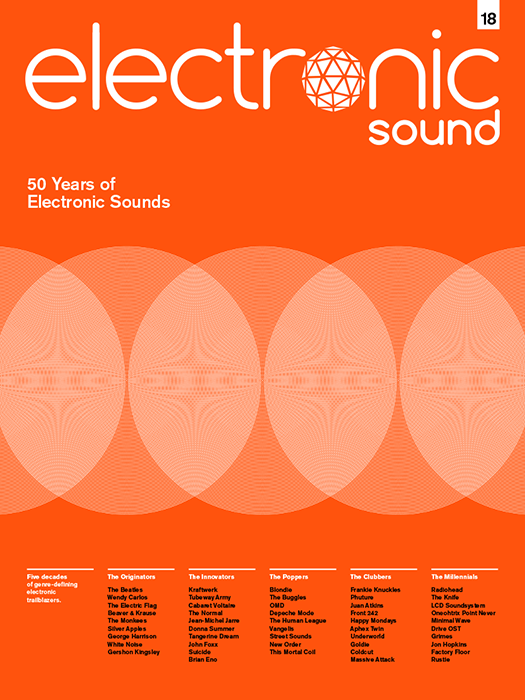
Electronic Sound – Issue 18


Electronic Sound Issue 18 is now available, with a major focus on fifty years of electronic music, and as ever its delivered with the magazine’s usual depth of focus.

For the latest issue I reviewed albums by Africaine 808 (a crazy musical gumbo drawing from a whole world of sonic soundclashes), Duke St Workshop (a truly terrifying setting of horror writing by HP Lovecraft to electronics), Deux Filles (the long-awaited return of Simon Fisher Turner and Colin Lloyd Tucker), Wild Style Lion (dirty electronics with contributions from Sonic Youth‘s Kim Gordon and Dinosaur Jr.‘s J Mascis) and an improv set from Klaus Filip and Leonel Kaplan for trumpet and sinewaves.

Also in the magazine is a short feature I wrote on the acid- and Salinger-influenced duo The Caulfield Beats, and the third of my 2015 interviews with Erasure‘s Andy Bell, where he explains three of his foremost influences. Prepare to be somewhat surprised by what Bell was inspired by. I know I was pretty taken back.

Electronic Sound is available at the iTunes App Store or at electronicsound.co.uk

(c) 2016 Mat Smith / Electronic Sound

Tuff Love – Resort (Lost Map Records album, 2016)


album // Resort

Tuff Love – a duo of Julie Eisenstein and Suse Bear – hail from Glasgow and have caused a bit of a stir with their three EP releases, garnering praise from your usual dictators of all things hip and cool. The duo’s EPs have now been compiled into one tidy package, which possibly feels a little like a cheat’s way of releasing a debut album, but on the strength of the songs, we’ll forgive them for that.

This is guitar pop first and foremost, delivered with sweetly harmonising vocals and lyrics that carry a lighthearted, diaristic style. There also a delicately wry humour and a penchant for naming tracks after birds and animals. Songs like ‘Flamingo’, ‘Crocodile’ and ‘Slammer’ are curt, immediate and a lot of fun, while also carrying a deft, shoegazery shimmer. But listen closer, and what emerges is a much rougher, fuzzy quality that slices right through the pop exterior. Guitars whine and buzz with grunged-up angst and elegant restraint, recalling axe-wielding forebears like Dinosaur Jr., while Suse Bear’s bass playing on songs like ‘Sebastian’ brings to mind the melodic ominousness of Pixies. And while those vocals might suggest sweetness, there’s also a flat, detached sensibility direct descended from Glasgow’s finest, Jesus And Mary Chain. Melody and harmony ultimately triumph here, but it’s not necessarily a smooth ride to get there.

Though lining up mostly previously-available material for a debut is a bit of a cop-out for such a lauded outfit, ‘Resort’ also illustrates the impressive growth of Eisenstein and Bear across three releases. By the time closing track ‘Carbon’ wraps up, the earlier material feels positively naïve in comparison. These songs were all recorded in Bear’s apartment; we have to hope they stay there in the front room rather than moving to a studio proper and embracing a cleaner, more polished sound.

This non-Mute review was originally intended for publication elsewhere. Thanks to Frankie. 

(c) 2016 Mat Smith / Documentary Evidence


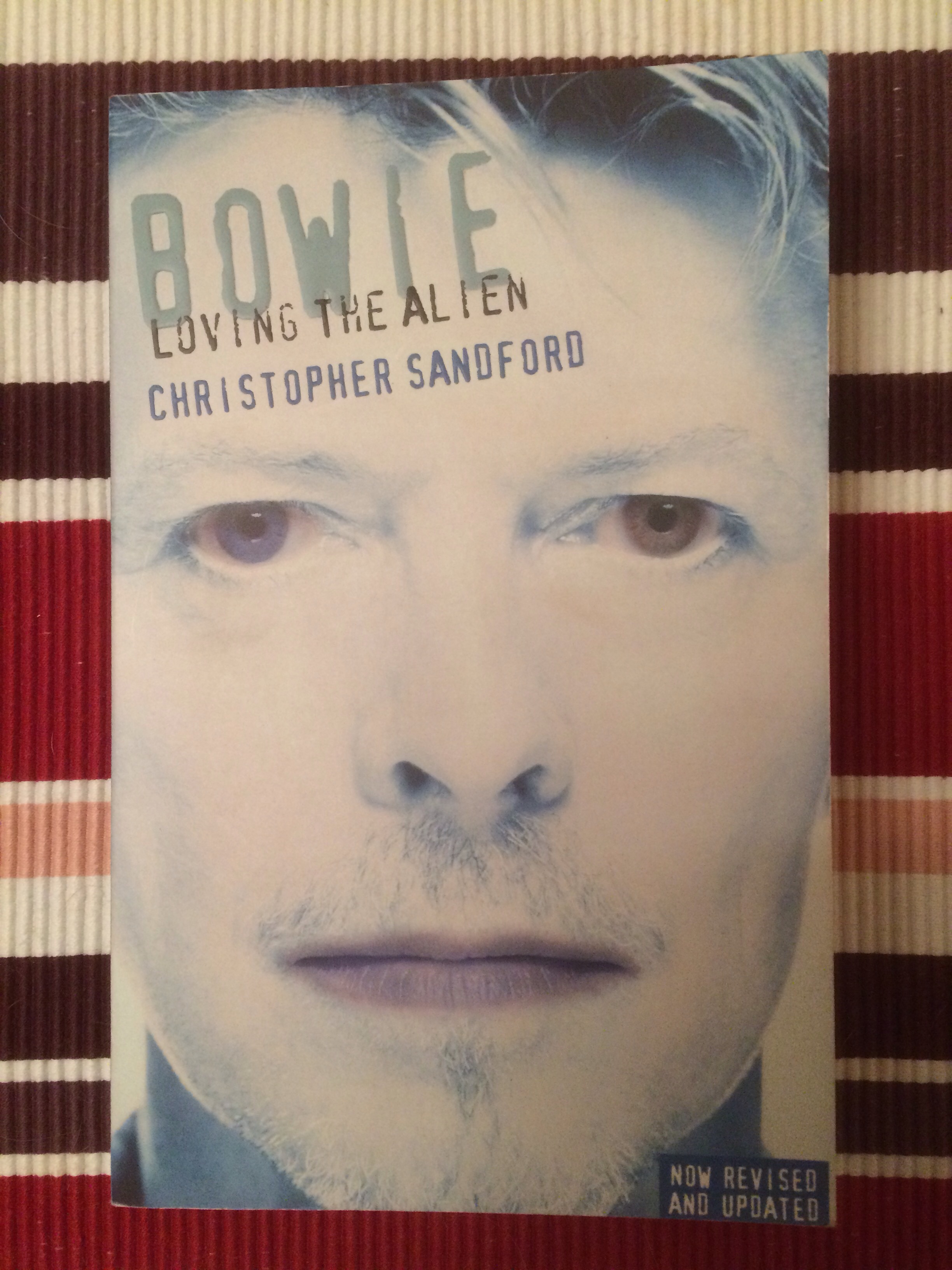
David Bowie: Loving The Alien by Christopher Sandford (Warner book, 1997)

  
Everything I learned to love about David Bowie came from this book.

Growing up, a child of the mid-Seventies first exposed properly to music in the early Eighties, Bowie was clearly always there but he didn’t register with me. I still don’t know why. Music was always on in our family home but I don’t remember ever hearing one of his songs; I don’t recall watching Live Aid, though I can well imagine I did. I suspect my entire view of Bowie was informed by his ‘Dancing In The Street’ duet with Mick Jagger, and that view was that this was an artist for an older generation, and therefore not for me.

Like a lot of things – girls, guitars, passing my driving test – my appreciation of Bowie came very late. 1997 to be exact. By that time I’d had it drummed into my that Bowie was important, but I still figured he wasn’t an artist I’d ever fall in love with.

I was in my university bookshop one day when the arresting image of Sandford’s book caught my eye. Rather than looking at the words on the back, I instantly looked at the index to see who the book mentioned, and when I saw Erasure, I immediately flicked to that page it mentioned to find out why. In among various sentences I read that Bowie had influenced my favourite band. I don’t know whether that’s true or not, but the notion that this artist who I couldn’t fathom of bring myself to appreciate had played a part in shaping either the music or imagery of Andy Bell in particular was compelling enough to make me buy the book.

In my quest to broaden my musical horizons it’s often been through academically studying texts or writings on the music before ever listening to it. If I look at my current passion, jazz, I know that this has come around twenty years after I first began reading about it, and I’d conservatively say it was ten years before I ever owned a jazz record. So it was also with Bowie, though not over such a long period.

I read ‘Loving The Alien’ avidly, fell head over heels in love with this man’s music, but never thought to go out and buy any music by him. Slightly ahead of him was the music of The Velvet Underground, another band who I had bout a book about before going out and buying The Velvet Underground And Nico. I thought it somewhat serendipitous that Lou Reed from The Velvets kept cropping up in the story of Bowie, either as a figure that inspired Bowie to create Ziggy Stardust, or on to when Bowie’s Belay Brothers pseudonym produced Reed’s Transformer. That convinced me, probably more than anything else, that I was going to go all out for Bowie further down the line.

I already knew I was going to head for Bowie’s Berlin period first. To someone schooled in electronic music, and who had already fallen for Brian Eno, and who already knew of the influence that this period had on Joy Division, that seemed like an obvious starting point. It also helped that I’d ready a great book about Berlin around the same time, and I thought that was another reasonable serendipitous matter, given how much I was interested in Berlin (I’ve still never been).

While I was reading the book, at my ex-girlfriend’s house, the BBC randomly broadcast a repeat of the Cracked Actor documentary. It seemed like too much of a coincidence. I’d built up a healthy interest in and knowledge of William S. Burroughs, though – typically – I’d never read anything by him, but I could appreciate the cut-up approach that Bowie was employing. To say I was by then enthralled by the man, his methods and his demeanour was an understatement. To my girlfriend’s father, the documentary was enough to make him leave the room in bigoted disgust. I sensed he wasn’t a fan. Too straight.

Rather than the Berlin period, it would turn out to be the song ‘Suffragette City’ that would provide the gateway to my Bowie collecting, specifically a live version from an Uncut cover-mount CD called Screenadelica, taken from the D.A. Pennebaker-directed final performance as Ziggy Stardust, a song delivered with punk-esque energy and sheer unbridled, antagonistic fun. That was May 1998 according to the date of the magazine, well over a year on from when I first started ‘researching’ Bowie. It hit my right between the eyes like Ziggy’s famous lightning bolt, and I was hooked. I played that track so many times, and at such severely loud volumes, that I’m surprised I can ever hear anything objectively today.

  
Since then, Bowie’s music has been a constant source of inspiration for me, and I find my youthful disdain for his music as somewhat risible now. My two daughters have grown up with his music, and Labyrinth of course, and, unlike I was at their age, are both well aware of just how monumentally important this man was, is, and always will be. I like to think that this has partially righted the wrong of me looking on him as too removed from my generation for me to like him.

Today ‘The Prettiest Star’ became the Black(est)star and music won’t feel quite the same again. I can only hope, as some surmised in the Sixties and Seventies, that he really was an alien after all, and has merely returned to his home planet now that his work here on Earth is done. I’d like to believe that.

David Bowie 1947 – 2016.

(c) 2016 Mat Smith / Documentary Evidence
Dinger – Sunsets Pink (Moulin Blanc download, 2011)

  
ep // Sunsets Pink

le moulin blanc records | download | 11/03/2011

Sometimes iTunes has a wonderful way of completely justifying its existence and its impact on the music industry. The relative efficiency with which bands / artists without a record label can just get music out there for people to buy with a few clicks is part of its universal appeal, especially where releasing rare or hard to find material that would be costly to press up for a relatively small audience remains the preserve of the short-run musical underground – The Wire is filled with small-run releases on tiny labels, mostly on CD-R or cassette. iTunes therefore is perfectly suited to efficiently releasing out-of-print items, especially where they are heavily bootlegged.

Still, even with iTunes’ utilitarian dimension, I never expected to be able to download five tracks from Dinger, the duo of Andy Bell and Pierre Cope that existed before Bell’s fateful audition with Vince Clarke that led to the formation of Erasure; the duo’s moniker came from Bell’s nickname, presumably a play on his surname. Previously I’d only managed to download ‘I Love To Love’ and ‘Air Of Mystery’ from some dodgy Erasure fansites, and presumed that the two tracks (which I seem to recall formed the only official 7″ release by the band) were the only songs they recorded. So three additional tracks is a bit of a bonus.

The principal curiosity value of this EP is being able to hear a young Andy Bell making his first foray into the world of pop music, ahead of that audition, audio evidence of which has also come available thanks to the Erasure Information Service. It was often said, by Bell and others, that it took pretty much the whole of Wonderland before Andy found his ‘own’ voice, claiming that the voice he adopted as his ‘own’ was modelled on Alison Moyet‘s. On the strength of the tracks compiled on Sunsets Pink, I’m not so sure. It is different, certainly, but not unrecognisably so. If anything, Bell sounds like a cross between David Bowie, David Sylvian and the guy from Our Daughter’s Wedding that sang that ‘Lawn Chairs’ track, very melodramatic and engaging, especially on the slinky and dangerous ‘Air Of Mystery’. It’s very of it’s time, unlike the voice that brought Vince’s songs to life on Wonderland.

The point about sounding of its time is most enforced by the sound of Cope’s backing; the whole thing has a very 1984 / 85 vibe, particularly in the use of funky slap bass, a sound that hasn’t aged well. When used in a controlled manner it sounds sublime – ‘I Love To Love’ still sounds to me like an early, shimmering OMD cut, though the middle eight – with a slap bass solo – is a bit much. Erasure could have easily recorded this for Wonderland – the one note synth melodies are right up Vince’s street and I swear he has actually co-opted that descending hook since. ‘The China Song’ (about, er, going to China) sounds like an attempt to distill the sound of the (Expanded) Talking Heads of Remain In Light, and has that cute sense of awe that the early Eighties had for all things foreign and ‘exotic’ (and that presumably explains the palm trees and holiday sunset on the sleeve image). That same funk vibe propels ‘Kettle Of Fish’ whilst also referencing the stuttered S’Express beat that Bell’s future collaborator Pascal Gabriel would develop for ‘Theme From S’Express’.

‘Dance’ is a seedy number with a Non-Stop Erotic Cabaret feel, Bell imploring us to ‘dance, dance, dance‘ while far-off chatter and voices mutter away in the background. It’s the least straightforward pop song here, the most uncompromising, and probably my personal favourite, even if I did wish the low end of the beat was more prominent.

A single track download of ‘I Love To Love’ was released on iTunes on 4 March 2011.

‘Air Of Mystery’ and ‘I Love To Love’ were originally issued as a 7″ single by SRT / Face Value Records in 1985. a quick glance at Discogs suggests that getting your mits on an original of the single will set you back around GBP55.

  
download:
1. Kettle Of Fish
2. Dance
3. Air Of Mystery
4. I Love To Love
5. The China Song

Originally posted 2011; edited 2015

(c) 2015 Mat Smith / Documentary Evidence

The 7th Plain – Wishbone


The 7th Plain was an alias that future NovaMute / Mute artist Luke Slater used for a brief time, the first album issued under the name being the brilliant My Wise Yellow Rug released in 1994 by General Production Recordings (GPR). The 7th Plain found Slater operating in a firmly ambient mode, complementing the more dancefloor-friendly tracks he issued under his Planetary Assault Systems alias.

‘Wishbone’ doesn’t appear on My Wise Yellow Rug, but it sounds like it should have been included there. Here Slater lays down a rich, slowly-developing tapestry of mostly pleasant sounds underpinned by a hissing rhythm that sits somewhere between skeletal electro and the factory-like drum pattern from Depeche Mode’s ‘Ice Machine’. Toward the end Slater introduces a bassline constructed from a somewhat darker synth sound while a repetitive arpeggio sequence takes on a queasy insistence as the track concludes.

Throughout, even as Slater drops in what feels like a organic, jazzy looseness at the very beginning via vaguely piano riffs, there’s an underlying mechanistic, robotic quality to ‘Wishbone’; that reminds me of a review of one of the tracks on My Wise Yellow Rug which compared the track in question to Vince Clarke covering Vangelis’s theme to Blade Runner. In the interests of full disclosure, I actually bought the album on the strength of that line alone. At the time it wasn’t apparent that Slater would go on to become a Mute artist, but I was pleased he ultimately signed to the label, though I can honestly say that his work as The 7th Plain was always more interesting to me than the output under his own name.

Equanimity was released as a double compilation by the GPR label in 1995 and features some really good tracks from Max 404, D:Fuse, Beaumont Hannant, Russ Gabriel and other artists from the imprint’s roster. It sits squarely alongside the Warp series of Artificial Intelligence / listening electronica albums but at times seems to have much more of a concrete, robust edge compared to some of the ambient noodling that Warp’s series tended towards. With Max 404 and a crunchy Bari-speed rave track from the absurdly-named Radioactive Lamb being two possible exceptions, it would have been slightly inconceivable to find any of the tracks here finding themselves sitting comfortably in a techno set of the time, but an adventurous DJ could have probably found a way. They usually could.

(c) 2015 Mat Smith / Documentary Evidence

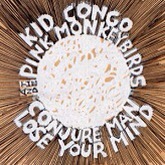
Kid Congo Powers & The Pink Monkey Birds – Conjure Man (In The Red single, 2012)

  
single // Conjure Man / Lose Your Mind

in the red | 7″/dl itr239 | 2012

Kid Congo Powers, as well as being Nick Cave‘s guitarist in the Bad Seeds and a founder member of The Gun Club, used to be in The Cramps. If you ever needed validation of his involvement in the band formed by the late, great Lux Interior and Poison Ivy, ‘Conjure Man’ is probably it, albeit what The Cramps might have become if they’d studied Morricone. Powers, or Brian Tristan to immigration, has a particularly distinctive tremolo guitar style which manifests itself here as a sort of desert-washed, dramatic blues, with all the insistent bleakness of a spaghetti western soundtrack in ‘Conjure Man’s spacious tumbleweeds-in-dystopia arrangement. His vocal may lack the stuttering jerkiness of Lux and the music some of the obtuse angles that made The Cramps such a compelling unit, but his echo-drenched Californian drawl has the same appealing blank weirdness, whilst lyrically here also recalling the wonderful anarchic mysticism of Screaming Jay Hawkins’ ‘I Put A Spell On You’.

The B-side is a cover of The Seeds’ ‘Lose Your Mind’ (misspelled, perhaps deliberately, as ‘Loose Your Mind’ on the 7″ label). That’s right, an ex-Bad Seed covering The Seeds. Powers captures the garagey rock ‘n’ roll blues of the original with ease, adding a lysergic, psychedelic quality to the arrangement via some sky-scouring synths and captivatingly frazzled, whining guitar trickery. It’s effortlessly cool, much like Kid Congo Powers himself.

The single was released in both red and black vinyl editions (100 and 400 copy editions), with both editions enclosed in a screen-printed sleeve printed onto cardboard cut from a Pabst Blue Ribbon box. If that doesn’t scream ‘carefully-produced lo-fi’ then I don’t know what else does.

First posted 2013; re-edited 2015

(c) 2015 Mat Smith / Documentary Evidence
Various Artists – Artificial Intelligence (Warp compilation, 1992)

  
compilation // Artificial Intelligence

Warp’s groundbreaking Artificial Intelligence compilation did what so many other seminal compilations did and effectively made a scene concrete. Like Eno’s No New York did for post-punk in the US, it could be argued confidently that Warp did the same for the particular brand of electronica over which the Sheffield label presided, spawning a series of intriguing albums by the label that gave voice to many of the artists that were showcased on the compilation.

Artificial Intelligence arrived in 1992, the same year that hardcore had rudely woken the listening public from their slumber, and on many of the tracks included here there’s still a whiff of detuned breakbeats as opposed to the haphazard glitch beats that the likes of Autechre would come to represent over the next two decades. In fact, Autechre’s ‘Crystel’, one of two tracks by Sean Booth and Rob Brown included here, sounds positively like a conventional instrumental synthpop track compared to the jagged rhythms and icy melodies they would become poster children for. Tracks like Musicology’s ‘Preminition’ are not exactly the bedroom listening we came to expect from the AI series, and instead sound like straightforward rave tracks, complete with menacing basslines and euphoric soul samples.

Of interest to Mute / NovaMute fans are three tracks from Speedy J and Richie Hawtin, here operating under his short-lived UP! alias. Hawtin’s ‘Spiritual High’ was originally released on a 12” song on Hawtin’s Probe label, and later released as one side of NovaMute’s Probe Mission 2 12” as part of a tentative partnership between the UK and Canadian labels (the other track on that 12” was by Public Energy, an alias of Speedy J). For a track taken from a relatively early part of Hawtin’s career, the format of his later work is immediately recognisable in the thudding snare-heavy beats, acid squelches and the way his track repeats endlessly but still builds toward several peaks over the course of its six minute duration.

‘Fill 3’ by Speedy J forms part of a series of tracks with that title, but as far as I can tell, was an exclusive to Artificial Intelligence. By the time Jochem Paap had arrived at NovaMute his music had undergone many changes, and ‘Fill 3’ sounds positively naïve in comparison with his later work, though with its synth pads and shimmering textures it is undoubtedly one of the most pleasantly ambient tracks on the whole collection. Given the momentum implied by its bubbling patterns and fragile melodies, it feels like it’s crying out for a beat sequence of some form, but to J’s credit he resisted the temptation of adding one. The other Speedy J track on Artificial Intelligence, ‘De-Orbit’, was featured on his Warp album Ginger and is a slowed-down, chilled-out affair with hip-hops breaks, wherein the languid pace allows for intricate details to emerge through the greater sense of space.

Alongside Autechre, Artificial Intelligence showcased Warp stalwart Aphex Twin, here in his Dice Man guise but with a track from his Polygon Window album for the label, as well as B12 (Musicology) and The Black Dog under the name I.A.O. The album also included Orb’s Alex Paterson with a live version of the classic ‘Loving You’, though it’s not immediately apparent what makes this a Paterson solo effort rather than an Orb performance.

1994’s follow-up compilation mined the same vein, with many of the same players, but branched out further, and also illustrated how much the electronic music could evolve in just two short years. For this reviewer, I bought Artificial Intelligence 2 before the first instalment, and listening in reverse made this first compilation sound decidedly tentative, but I nevertheless fully understood the importance of what Warp had assembled here.

(c) 2015 Mat Smith / Documentary Evidence

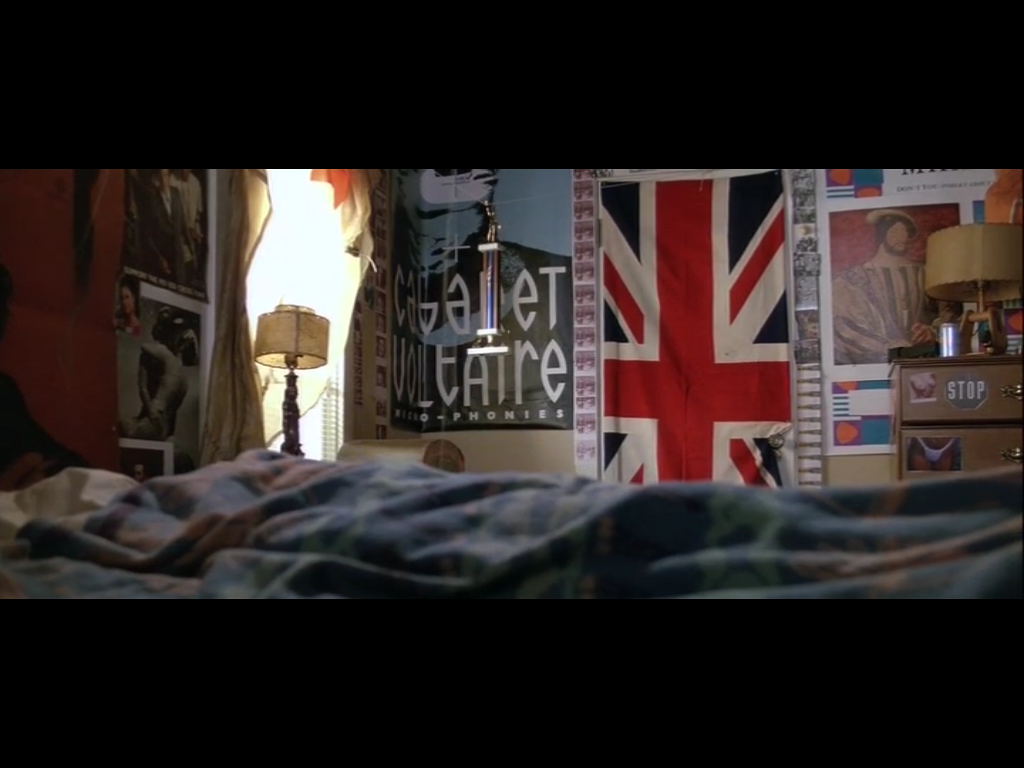
Ferris Bueller & the Cabaret Voltaire cameo

  
‘Cameo’ is probably an exaggeration, but a poster for Cabaret Voltaire‘s Micro-Phonies can be seen just behind Ferris Bueller’s bedroom door, alongside posters for Simple Minds, Blancmange and Killing Joke. Ferris might belt out ‘Twist And Shout’ from the back of a float in the film, but it looks as if he’d prefer to be singing ‘Sensoria’.

I referenced this in my review of the last Cabs compilation for Electronic Sound but never got around to putting the visual evidence up here. A couple of trips to Chicago in the last few weeks led me to want to watch Ferris Bueller’s Day Off for about the hundredth time.

(c) 2015 Mat Smith / Documentary Evidence