Plastikman – Sheet One (NovaMute album, 1993)

sheetone

Plastikman ‘Sheet One’ 2xLP NovaMute sleeve.

Released in October 1993 on NovaMute, Sheet One brought Windsor, Ontario’s Richie Hawtin‘s Plastikman onto the label’s roster, Daniel Miller‘s imprint effectively licencing the album for the UK and Europe from Hawtin’s own Plus 8 label.

While Sheet One became notorious for all the wrong (or right) reasons by the CD sleeve’s recreation of a perforated sheet of LSD tabs, with the requisite and implausible rumours that the sleeve really did have acid on it, what’s most surprising is that electronic music designed to be listened to at home or in a club, as opposed to merely in a club, was still a relatively unusual thing twenty years ago. Warp’s Artificial Intelligence compilations (the first volume of which had included Hawtin in his UP! guise) and the series of clever electronica releases clustered around them – such as Polygon Window’s Surfing On Sinewaves and Black Dog Productions’ Bytes, as well as early releases from sometime NovaMute signee Speedy J and Autechre – had paved the way for a new strain of dance music that didn’t require any form of dancing at all.

If Sheet One found itself dropped neatly into that whole Artificial Intelligence genre, it set itself apart by eschewing the notion that these tracks couldn’t be played in clubs. Throughout the album’s eleven tracks, Hawtin maintained a focus on pared-back rhythms more usually found on acid house tracks, perhaps slowed down a fraction compared to the then-popular number of BPMs but not inconsistent with the original tracks by the likes of Phuture from the decade before. Added to that was Hawtin’s love of the key ingredient of acid house tracks – the Roland TB303 – which gave these tracks an energy and vibrancy that most armchair techno seemed to forget to include. Okay, so the 303s weren’t tweaked as hard as Hawtin would do on, say, his astonishing remix of System 7’s ‘Alpha Wave’, but they nevertheless contained enough of a squelchy urgency to get most acid heads excited and if would only take a modicum of pitch-shifting to get these tracks into a more adventurous DJ set.

The other distinctive element on Sheet One, and the element that meant it was able to align itself with the Artificial Intelligence crowd, was the use of reverb. Everything on Sheet One is swathed in rich levels of treacly echo, giving the textures here a languid, atmospheric and vaguely chilling quality. That echoing aspect always reminded me of the eerie static hum that wrapped itself around Kraftwerk‘s Radio-Activity album, and for some reason also made me think of some of the haunting passages on the soundtrack to Teen Wolf. I used to study and revise to Sheet One and its equally-enthralling follow-up Musik, which perhaps credentialises the atmospheric quotient.

In many ways the central track on Sheet One is ‘Plasticine’, an eleven minute epic consisting of a minimal pulse, nervous bass tones and a 303 line that rises up seemingly out of nowhere, bringing with it a more rigid beat and a degree of dark energy. Hearing a 303 like this, where it is presented more or less nakedly, shows just how weirdly versatile Roland’s instrument was – even if it’s being deployed in a way that the manufacturer never intended. A breathy voice that seems to be saying ‘it’s you’ adds to the overall vibe of a haunted, alien dancefloor. ‘Plasticine’ has all the requisite rises and falls associated with most dance music, only here it’s elongated, extended and somehow much more emotionally affecting. The track’s final moments are comprised of deep bass resonances and a thudding remnant of what used to be the beat.

The similarly-timed ‘Plasticity’ is the other stand-out track here, with the sounds of aircraft rumble ushering in a echo-soaked rhythm and ruminative 303 melody. There’s a floating, shapeless quality to some of the other sounds deployed on ‘Plasticity’ – brief melodic pads, clicking, noisy interventions, what might be a euphoric yelp or an anguished scream – giving this a psychotic vibe that would have suited a desperate chase scene in a movie. ‘Smak’ goes even further – a dense web of heavy beats and brooding synths underpinned by strings that evoke comparisons with Laibach and samples of screaming angst.

Any uplifting quality is there offset by a far darker energy, ebbing away into ‘Ovokx’, which reveals the stark message to the world’s population sampled from The Day The Earth Stood Still.

‘Gak’ departs from the regimentation of the 4/4 rhythm and instead opts for a clattering, bass-heavy electro beat draped in layers of cavernous reverb, and double-time percussion that leans close to the skeletal bone-rattling that would come on ‘Spastik’, an effect which is also deployed on the urgent ‘Helikopter’. ‘Helikopter’ really does sound like the rapidly rotating blades of a chopper, layers of hard-spun sound rotating around your ears with an infinite swirl. In complete contrast, ‘Vokx’ is a quiet, stirring cinematic symphony for the scene that surveys the scarred landscape, the second half dominated by sirens, screams and panicked sections of dialogue.

Sheet One is an unsettlingly unique album, and one that knocked its peers out of the park, retaining enough of techno’s key energy rather than disposing with it altogether. Twenty-five years on, it sounds as sharply arresting as it did at the time, while other albums from the time sound positively dull. The follow-up album, 1994’s Musik, was just as attention-grabbing but leaned harder into a more scientifically-assembled experimentalism, highlighting Hawtin’s restless dexterity.

Sheet One was released as a CD and vinyl edition in the UK. There were two versions of the vinyl album, the 2000 copy limited edition picturedisc version of which is now something of a collectors’ item. In 2012 Mute released a remastered Sheet One in the wake of Hawtin’s expansive Arkives 1993 – 2010 boxset, ditching the original NovaMute catalogue reference (nomu22) and replacing it with a Mute one (stumm347).

First published 2013; edited 2019.

(c) 2019 Mat Smith / Documentary Evidence
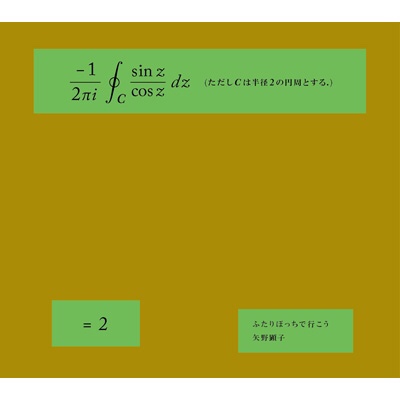
News: Akiko Yano feat. Reed & Caroline – When We’re In Space (Speedstar Records, 2018)

Continuing the themes of their Hello Science album from earlier this year, VeryRecords artists Reed & Caroline have collaborated with Japanese pop singer Akiko Yano on a new track, ‘When We’re In Space’. The track is taken from Akiko’s latest album Futari Bocchi De Ikou, which was released by Speedstar Records in Japan today.

“Akiko and I are neighbours,” says Reed about the origins of the song. “Whenever we ride the elevator together we talk about music, space and Kraftwerk. She came to the very first Reed & Caroline show at a little club in NYC – our first fan!

“Earlier this year she asked if we could collaborate on this project. She played a beautiful melody and I asked what the song should be about. She said, ‘The International Space Station!’ All of the music – except for Akiko’s piano – was created using the Buchla synthesizer.”

Piano and vocals: Akiko Yano
Additional vocals: Caroline Schutz
Buchla: Reed Hays
Music composed by Akiko Yano. Lyrics written by Reed Hays.

Futari Bocchi De Ikou is available to buy from amazon.jp here.

(c) 2018 Mat Smith / Documentary Evidence for Reed & Caroline and VeryRecords

Electronic Sound Issue 43

Issue 43 of Electronic Sound is now available, and this month’s magazine & 7″ bundle includes exclusive tracks from the Radiophonic Workshop, the beneficiaries of a major in-depth feature this month.

For this issue I wrote a short introduction to the music of Ratgrave, whose jazz / hip-hop / electro / funk debut I mentioned in The Electricity Club interview, and who I expect I’m going to be banging on about for several months to come. Their self-titled album is released at the end of this month and it is a wild, untameable beast of a fusion record. I also interviewed Norwich’s Let’s Eat Grandma for this issue about their second album, which sees childhood friends Jenny Hollingworth and Rosa Walton taking their curiously idiosyncratic music in a squarely electronic pop direction, complete with analogue synths and production nous from Faris Badwan and SOPHIE. We also had a god natter about the merits of rich tea biscuits.

In the review section I covered Yeah Yeah Yeahs drummer Brian Chase‘s mesmerising Drums & Drones collection, three discs of processed percussion inspired by time spent at La Monte Young and Marian Zazeela’s Dream House; a hard-hitting gem of an album by 1i2c which I described as ‘therapeutic music for anxious robots’; the new album from 4AD’s Gang Gang Dance; another brilliant collaboration tape on the Front & Follow label by Jodie Lowther and ARC Soundtracks; the brilliant second album by Geniuser, one half of which is Mick Allen from The Models, Rema-Rema, MASS and The Wolfgang Press.

Finally, I reviewed albums by two projects by current members of WireColin Newman and Malka Spigel‘s second Immersion album since they reactivated the band in the last couple of years, and the third album from Wire guitarist Matthew Simms as Slows. Simms is a highly inventive musical polymath, as comfortable with a guitar in his hand as he is using analogue synths, found sound or pretty much anything he can lay his hands on. A Great Big Smile From Venus consists of two long tracks covering an incredible breadth of ideas, continually moving out in directions that are both unexpected and yet entirely expected when you’re familiar with Simms’s vision.

The review section also features Ben Murphy’s fantastically detailed review of the new Reed & Caroline album, Hello Science, released earlier this month on Vince Clarke‘s VeryRecords.

The magazine and 7″ bundle is available exclusively from the Electronic Sound website here.

(c) 2018 Mat Smith / Documentary Evidence for Electronic Sound

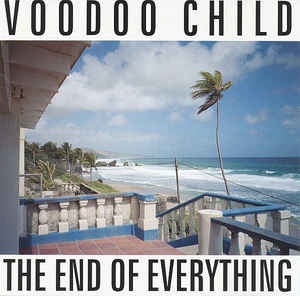
Voodoo Child – The End Of Everything (Trophy Records album, 1996)

The first album from Moby‘s Voodoo Child alias comes with a title that, like other things released by Richard Melville Hall around this time, is hardly filled with optimism. His first Moby album for Mute was titled Everything Is Wrong, he released a single under the alias Lopez around this time with the title ‘Why Can’t It Stop?’ and Animal Rights, whilst not necessarily negatively-titled, was filled with a real sense of bitterness, anger, disbelief and unbridled rage. I may very possibly have dreamed this, but I seem to remember reading that around this time Moby split up with his long-term girlfriend and so who knows whether these titles reflect a slightly embittered state of mind – lots of the titles on this album are suffixed by the word ‘love’, so it could be true. Equally, we know Moby is a huge fan of Joy Division, a band that made being miserable a career option.

In any case, for all the pessimism of that title, the sleeve images – aside from the gust of wind blowing at the palm tree on the front cover – are actually pretty tranquil. True, there’s no-one in the pictures, and sure, the unpredictability of the ocean can inspire fear in lots of people, but it looks like a nice enough beach. The sense of peacefulness I take from the images are a decent enough clue to the music on The End Of Everything. It doesn’t look like the worst sort of end to me.

Moby has done ambient before – a whole album of the stuff back in the Instinct days, the remix of ‘Hymn’, the bonus Underwater album that accompanied Everything Is Wrong, soundtrack stuff and plenty of other things since – but he’s never done anything like The End Of Everything. This is fragile, emotive electronica dominated by crisp beats, noodling layers of liquid synth modulation and those trademark string lines that really started to sound like a proper orchestra here rather than the occasionally bad looping evident on other Moby records.

‘Patient Love’ is what happens when the intro to Kraftwerk‘s ‘Neon Lights’ doesn’t suddenly open out into a shimmering cinematic pop soirée; instead this is gentle, lilting synth pop with all the analogue wobbliness an electronic music fan could ever need in their lives, and a patient, slowly-developing progress that seems several worlds away from the freneticism of earlier Voodoo Child tracks. It’s also rather jolly, in a wonky sort of way, though a sequence of unexpected chord changes around the halfway mark muck around with your senses cruelly. ‘Great Lake’ is ‘Go’ all over again, just with chiming synth notes and jazzy piano sprinkles struggling to know where they’re supposed to be heading, and that classic Moby moment deconstructed into the territory of textured nuance.

Elsewhere it’s all serene washes of colour, those heart-wrenching strings, gentle phasing, meditative bass lines, clusters of devastatingly accomplished piano sprinkles and beats that chug along wearily like they’ve been burned out from too many nights of intensive partying. Yes, there are moments of darkness that befit the mood evoked in the title of the album (‘Slow Motion Suicide’, somewhat predictably, is pretty bleak), but generally this is a slick, absorbing collection of listening electronica with enough quiet flair and looseness to separate it comfortably from the bland direction that some ambient music opted to take.

All taken together, The End Of Everything feels a lot like watching a big screen blockbuster on a mobile phone – it somehow seems far too bold and expansive a body of work to have been delivered as a low-key side project; it needs, almost demands, a larger presence than it rather anonymously has. Consequently, it stands as one of the most discreetly accomplished, enduring and satisfying releases in the entire Moby back catalogue. The End Of Everything was released on Moby’s Trophy Records sub-label of Mute and the US version of the album featured a different tracklist. In a typical Moby act of self-depreciation, the catalogue number for the Trophy release was idiot1. The inside of the sleeve includes a brief and heartfelt mini-essay from Moby on animal welfare.

First published 2013; re-posted 2018

(c) Mat Smith / Documentary Evidence

Simon Fisher Turner – De Dentro Hacia Afuera (The Tapeworm album, 2009)

Translated, literally, as From The Inside Out, Simon Fisher Turner‘s De Dentro Hacia Afuera was issued as a white cassette on the consistently interesting Tapeworm label in an edition of just 250 copies in 2009.

The pieces on the cassette date back to 2002 / 2003 and the pieces fill a side apiece of the cassette. Side A (‘Outside’) consists of a field recording made by Fisher Turner of the procession of the Virgen del Carmen at Carboneras in 2002. The B-side (‘Inside’) consists of piano improvisations for the soundtrack to I’ll Sleep When I’m Dead, which Mute released as a download in 2003. Both pieces were edited, with Fisher Turner’s full blessing, from the original recordings by Tapeworm’s founder Philip Marshall.

The procession of the Virgen del Carmen takes place on 16 July each year in many Spanish towns, and also in other Spanish-speaking countries, marking the day of the appearance of the Virgin Mary to St. Simon Stock in Cambridge. Stock was the head of an order of the Catholic church which had fled from persecution where they were quartered in Monte Carmelo, now Israel, to Europe. The appearance of Mary to Stock in 1251 was not the first time the Virgin had appeared in the history if the order; in fact, the order was established because of Mary’s likeness in a cloud to some men investigating two prophets. Though some have subsequently cast doubt on Stock’s claims, the reassurance that Mary purportedly gave him, namely that those who wore the traditional scarpel – a cloth garment more or less in the shape of the Cross – would be freed from the fires of Hell has stuck and developed into the festival of divine celebration it has today.

Not that you’d necessarily deduce any of that in the recording Fisher Turner made on 16 July 2002. Here there are segments of chattering crowds milling and thronging around; a rousing brass marching band fades in and delivers a particularly uplifting song that feels like the soundtrack to some sort of Andalusian black and white movie (‘It would be great to play this tune to mum,’ someone is heard saying) before slowly moving out of focus; children chatter; babies cry; birds whistle, so does a man; a lone trumpet lets out a solitary blast before another rousing processional starts up, this one containing a funereal, maudlin middle section and a slightly wonky, out of tune tone; someone speaks above the crowd, prompting others to join in rapturously; what could be a piano pings out a brief high-pitched note; fireworks thunder in the sky; street sellers proffer their wares with repeated and insistent cries; a Latin pop song drifts in and out of focus with a singer sounding suspiciously like Andy Bell from Erasure; a cycle of strange industrial clanking rhythms and atmospheric drones and echoes is unfathomable as a source; someone’s shoes squeak playfully on a pavement.

Divorced from any obvious religious essence, the processions recorded here could have been captured anywhere in the Spanish-speaking world. The only real connection to divinity is the uplifting music, but none of those songs are exactly hymnal, and the church bells that toll at the very end of the piece. From the outside listening in, it feels like a public holiday that’s more or less forgotten why it was established, a bit like May Day, an excuse to kick back and unwind without knowing what you’re celebrating exactly. It all sounds pleasant, fun, the general buzz of people having a good time.

In 2003 Fisher Turner recorded the soundtrack to British director Mike Hodges’ I’ll Sleep When I’m Dead, starring Clive Owen. When I interviewed Simon just after the release of that album he advised that his process of creating the soundtrack involved getting on set, hitting props, talking to the actors, recording stuff and generally making a nuisance of himself to try and capture the essence of a scene.

I’ll Sleep When I’m Dead was pretty much improvised from my end,’ Fisher Turner explained to me back in 2004. ‘As they shot the film I worked at home on material that the editor was able to put in as a rough guide for the scenes. I had a good budget so I could test things out in the studio, bring them home, and rework them on the laptop, and then send them to the editor. I think finally I’d made up 9 CDs’ worth of music for the film. A lot of it is very atmospheric and distant, more ‘sound design’.’

The final soundtrack would contain familiar Fisher Turner elements in the form of tapes and contributions from the likes of former Blockhead Gilad Atzmon, but at its core were segments of noirish piano playing, the improvisations for which are documented on the second side of De Dentro Hacia Afuera. In recent times we’ve become used to Simon Fisher Turner almost dispensing with melody completely, but gathered here are a variety of modes and themes that evidence a unique skill at creating filmic moods with a minimal, discreet set of notes. Styles here range from tentative jazz to experiments that appear to involve sliding objects along the strings, clusters of evocative notes and ominous chords.

‘Solo Piano Improvisation #54’ is remarkable in two senses – first, as a piece of music (as opposed to considering it an assembly of sketches), it works just as dramatically as the fully realised soundtrack even without its additions and processing; second, it gives a rare insight into the early workings of a Simon Fisher Turner piece. Fisher Turner has himself said that his pieces are never really ever finished, often continuing to evolve further beyond the point where they’ve been submitted to a director and used in the finished film. The distance between early ideas and finished piece is thus immeasurable, making this document all the more intriguing. Though edited sensitively into a sequence and narrative by Philip Marshall, the result is still a recording of a work at its earliest stages, yet still capable of standing up as a complete work in its own right.

Related:

Interview with Philip Marshall from The Tapeworm about the label’s formation, ethos and ongoing exploration of the cassette format over at my other blog, Further.

Thanks to Philip at The Tapeworm and Simon Fisher Turner.

Originally posted 2013; re-posted 2018.

(c) 2013 MJA Smith / Documentary Evidence

Electronic Sound 41

Issue 41 of Electronic Sound is out now, and if you’re quick you’ll probably still be able to get hold of the exclusive Underworld 7″ featuring two unreleased tracks that accompanies it. Underworld are the major feature in this month’s magazine, yielding yet another incredible sleeve, this time with the headache-inducing moiré patterns of a Bridget Riley painting.

Like many people back then, I got into Underworld upon the release of their 1994 album Dubnobasswithmyheadman, which did that rare thing of managing to cross-over between the worlds of dance music and rock – so much so that fhe NME, at that time so focussed on guitar music that nothing else got a look in, put Underworld on the front cover of an issue around the time Dubno… was released. I went straight down to Music Junction in Stratford-upon-Avon to bag myself a copy and it was played constantly thereafter.

For this issue my main contribution was an interview with Robert Görl, formerly of Deutsch Amerikanische Freundschaft and whose first solo album was released through Mute (with contributions from Annie Lennox no less). The feature centred on Görl’s Record Store Day album The Paris Tapes, and recounts the story of how those tapes came to be created, taking in everything from threatened deportation out of New York, conscription, moonlight flits to Paris, car crashes and Buddhism. Erasure‘s Vince Clarke remixed ‘Part 1’ from The Paris Tapes, and his mix almost included sections of my recorded conversation with Görl, but that’s another story.

Elsewhere in this issue, I wrote reviews of Kaada’s moving rumination on farewells, Closing Statements, and a new release from Chicago’s The Sea And Cake called Any Day which isn’t really electronic at all, but which features so many guitar effects that it might as well be. I also reviewed a new interpretation of John Luther Adams’s Canticles Of The Sky by Oliver Coates and a very fine leftfield R&B album by Friends Of Friends’ Sweatson Klank which I wrote in the departure lounge at New York’s JFK. I was also introduced to the wonderful, eclectic music of the peripatetic, prolific Sad Man, who turned out to have grown up near where I now live, and who now lives near where I grew up.

Finally, I wrote a short introduction to the music of Ariwo, a Cuban-influenced group whose music crosses that fickle boundary between jazz and electronics and is among the most mind-expanding things you’ll hear today.

It’s rare that you get the opportunity to cover rock, classical, jazz and synth music for one publication, but such is the broadminded approach that Electronic Sound bring to the electronic music table. Issue 41 can be ordered here.

Spotify links:

Robert Görl ‘Part 1 (Vince Clarke Remix)’
The Sea And Cake ‘Any Day’
Sad Man ‘Slow Bird’
Ariwo ‘Ariwo’

(c) 2018 Mat Smith / Documentary Evidence for Electronic Sound

Electronic Sound 35

Issue 35 of Electronic Sound has been out for a while, and this month features a major in-depth look at the work of much-missed German producer Conny Plank.

This issue features the last part of my feature on Alison Moyet, here focussing in on her influences. Such pieces are often really illuminating, particularly – as here – were they cover non-musical influences, and it was no different on this occasion. The interview was conducted in a bar in Chelsea back in May, and is the companion piece to a feature about Moyet’s latest album, Other.

My other major feature for this month was about the weird world of the Welcome To Night Vale podcast, something’s that been running for years but which totally passed me by. My interview with Jeffrey Cranor, co-author of the podcast, was definitely one of the most fun things I’ve done this year.

On the reviews front, I covered Gregg Kowalsky‘s ambient delight L’Orange, L’Orange, the very Night Vale-friendly strangeness of Snapped Ankles‘s Come Play The Trees, a reissue of an overlooked album by Twins Natalia, an absolutely fantastic electronic jazz crossover in the form of Brzzvll‘s Waiho, a more subtle jazz-with-synths hybrid in the form of Chet Doxas‘s Rich In Symbols, the fantastically raw No Luscious Life by Glasgow’s Golden Teacher, and a career-spanning piece on Simian Mobile Disco‘s ADSR reissue and Anthology collection.

My final contribution this month was among the most personally rewarding. For the magazine’s Buried Treasure section, I wrote a piece on Vic Twenty‘s Electrostalinist, an album which sadly seemed to pass everyone by when it was released in 2005. Vic Twenty was originally a duo of Adrian Morris and Angela Penhaligon (Piney Gir), they supported Erasure in 2003, and Mute‘s Daniel Miller set up a new independent label called Credible Sexy Units just to release one solitary single by the duo. Piney left to follow a successful solo career and Morris carried on alone. I drafted a review of the album for Documentary Evidence when it was released but never finished it, much to my regret, and so it was a pleasure to finally give Electrostalinist the coverage it deserved.

Electronic Sound can be purchaed at www.electronicsound.co.uk.

(c) 2017 Mat Smith / Documentary Evidence for Electronic Sound

Depeche Mode – The O2 Arena, London 22.11.2017 – photos by Andy Sturmey

810_0071810_0224810_0228810_0229810_0242810_0272810_0280810_0392810_0498810_0507810_0510810_0513810_0514810_0562810_9922810_9927810_9941810_9966DSC_5450DSC_5477

(c) 2017 Andy Sturmey for Documentary Evidence & This Is Not Retro

Documentary Evidence 2016 Top 10 Albums: 3. LNZNDRF ‘LNZNDRF’

lnzndrf

“In thrall to the methods of Can, if not their actual sound.” – Electronic Sound

I heralded the trio of Scott and Bryan Devendorf (from The National) and Bryan Lanz (from Beirut) as my new favourite band upon the release of their self-titled album for 4AD earlier this year. It would the first of three such occasions where I made that claim.

This was a frighteningly inventive LP, formed out of the same sort of long-form improvised jams that Can used nearly fifty years before in the creation of their seminal early records, only then treated and manipulated to take on a relatively ‘composed’ form. The output was a sort of Krautrock / electronic hybrid whose details reveal themselves over repeated listens.

I reviewed the album for Electronic Sound and interviewed Scott Devendorf for Clash. Back issues of Electronic Sound are available at http://www.electronicsound.co.uk while my interview can be read here.

(c) 2016 Mat Smith / Documentary Evidence

Documentary Evidence 2016 Top 10 Albums: The Departed Ones

We lost some incredible musical luminaries in 2016, chief among which were David Bowie back in January and Leonard Cohen in November. Both artists released powerfully creative albums this year, underlining talents that seemed to have been snuffed out far too early, yet both records seemed to contain clues – in coded form (Bowie’s Black Star) and more obvious form (Cohen’s You Want It Darker) – that death was just around the corner.

I wrote a piece for Clash about David Bowie that was published just two days before he was announced to have passed away. It was written from the point of view of someone who was enjoying a new phase of life whereas in fact it was already over. For Cohen, moved though I was to write the piece below, I never placed it anywhere.

youwantitdarker

In was in Toronto when the news broke that Leonard Cohen had passed away. My first reaction, upon reading the news was somewhere between surprise, anger and sadness.
It was a little like the passing of a distant relative – someone who had always been there in the background, who you’d spent some time with but not enough, and who you just figured would always be there.

The front cover of Friday’s Globe & Mail was turned over to Montréal’s renegade troubadour, and it felt like the whole of Canada was undergoing a day of national mourning. Flags were flying at half-mast and there was a general feeling of glumness about the place; this was, of course, little more than optics and coincidence, since Friday was the 11th November and Canada was set for its annual remembrance of those who had lost their lives in the two World Wars of the twentieth century, but it felt like it could have been – should have been – all for Cohen’s benefit.

I never thought I’d get into Leonard Cohen. Growing up, immersing yourself in music magazines, you alighted upon Cohen’s legacy and legendary status, but he just didn’t seem like an artist I’d ever fully understand or whose music I’d ever be able to appreciate. This was mere narrow mindedness on my part, but such is the opinionated arrogance of youth.

Cohen’s ‘Avalanche’ was covered by Nick Cave on his debut album in 1984, but it was never my favourite track on that LP and, besides, at that point (I bought that album in around 1997) it was hard enough for me just to have made the switch the Mute electronic acts to Cave, let alone try to wrap my head around the music of Leonard Cohen as well.

It would take the purchase of Rufus Wainwright’s Want almost a decade later to fully start my appreciation. Wainwright, also coincidentally Canadian, covered Cohen’s ‘Chelsea Hotel No. 2’ at a tribute concert assembled by Hal Wilner, at which Nick Cave also performed. Wainwright’s live version of the song was included on the second part of his Want opus, and completely floored me when I first heard it. It helped that it was about New York, which will always get my attention, but it was the nakedness, the bluntness if you will, of Cohen’s lyrics that truly grabbed me. The Songs Of Leonard Cohen quickly came into my possession, and I’ve been collecting sporadically ever since.

Maybe I still haven’t completely ‘got’ him, but I’ve gotten a lot closer. What you start to appreciate as you spend quality time in the company of his music is that the stereotype of Cohen as this abject, depressed miseryguts is woefully misplaced. Upon announcing his passing, Cohen’s son drew attention to his father’s incredible sense of humour. It’s the only way to explain the song ‘Don’t Go Home With Your Hard-On’ and some of the verses in ‘Hallelujah’ (a song that is both spiritual and utterly out-there, something lost on the multitude of pop acts that have covered it). Sure, it’s dark humour, but it’s humour nonetheless.

There’s also this theory that Cohen was just a hapless, thwarted romantic, but that’s also incorrect. A lot of Cohen’s lyrics were unashamedly, nay eyewateringly, frank and open about sex, so one could assume he wasn’t as unlucky as his wistful balladeering would have you believe. Let’s hope the smooth-talking, gravel-voiced, romantic is having the same fun he had in his corporeal existence up there in the heavens.

The untimely death of a perpetual ladies man.

(c) 2016 Mat Smith / Documentary Evidence