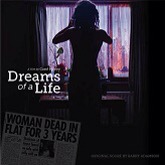
Richie Hawtin – DE9 Closer To The Edit (NovaMute album, 2002)

novamute | nomu90cd | 2002
Richie Hawtin, outside his Plastikman guise, is a consistently engaging and exciting DJ, and has been responsible for breathing new life into techno. His individual and pioneering approach to DJing is captured perfectly here.

DE9 is ostensibly a mix album, but it could also be described as a solo Hawtin album released under his own name. Except that it is both and neither simultaneously. Like a regular mix CD, the album rolls forward with no breaks, as if it were one very long and varied track, utilising builds and breakdowns, sharp fades, EQ tweaking and edits to control the pace and keep the sound interesting and fresh. There are 31 tracks here, all in little over an hour, each running for around two minutes. This in itself would stand out as a feat of considerable DJ dexterity, except that there are in fact over 70 tracks here, and it is at this point that Hawtin’s album diverges entirely from the genre.

Hawtin has long been an advocate of bringing ‘live’ elements to his DJ sets, using drum machines and Roland TB-303s over decks to avoid being like many other DJs who simply mix tracks together; hence Hawtin comfortably straddles the DJ / live performance divide. Many others have tried this, but Hawtin’s continuing focus on techno exclusively has seen him retain a focused set of underground credentials. DE9 is the logical, yet painstaking next step for Hawtin’s unique DJing approach (‘DE’ stands for ‘Decks and Effects’).

The seventy tracks, by Basic Channel and Carl Craig among others also include a number by Hawtin himself, culled from his Minus and Plastikman / NovaMute releases. Except don’t go trying to spot them – according to his liner notes (how jazz is that?), Hawtin took extracts from tracks (‘Ranging from 1 note to 4 bars’) and created around 700 loops, which were then reassembled as new tracks, representing the 31 chapters here. Another artist may have seized the opportunity, given the heavy disguising of the source material, to pass this off as his own work. But Hawtin, the innovator, is proud of his process, and readily lists which tracks make up each chapter.

I hadn’t listened to techno for several years before listening to this, but this gives me incredible faith in the genre, and I don’t think I’ve heard such a sonically-pleasing compilation of robotic electronic music before. This is one hell of an impressive futuristic journey.

Originally posted 2004; edited 2016.

(c) 2016 Mat Smith / Documentary Evidence

Electronic Sound #21 – Print Edition


As if I wasn’t proud already about being part of the Electronic Sound team, this month that sense of pride went up a couple of notches as the publication made the transition from being an entirely digital proposition to a fully-fledged newsstand magazine. That’s a bold move in a day and age where we’re told that everything is going in the opposite direction, but the team at Electronic Sound have undoubtedly pulled it off. You can buy copies of the print edition here.

I’m doubly proud because one of the most important features I’ve ever had the good fortune to scribe is heavily featured in the first newsstand edition – an interview with Very Records owner and one half of Erasure, Vince Clarke. The interview was conducted one extremely sticky May afternoon in Vince’s Brooklyn home studio.

As if that wasn’t seismic enough for an individual whose entire interest in music writing can be traced back to a record label flyer that fell out of the 12″ single of Erasure’s ‘Chorus’ almost 25 years ago, we were joined by Orbital’s Paul Hartnoll by Skype from his home in Brighton to discuss the Clarke / Hartnoll album 2Square. Once I’d properly decided that dance music was the place for me in the mid-Nineties, Orbital were a duo I fell for in a big way, and so getting airtime with not one, but two, idols in one go was a pretty sweet deal. I am eternally grateful to Electronic Sound for this opportunity, and also to my family for letting me duck out of part of our vacation in New York to undertake the interview.
Photography for the interview came from the wonderful Ed Walker. Ed wrote a great piece about the experience for his website, which can be read here. While you’re there, please do take a look at Ed’s surreptitious photographs of New Yorkers, which are all taken during a specific period of the day where light is particularly beautiful.

In addition to the Clarke / Hartnoll feature, I also interviewed Rico Conning for this issue. Conning will be familiar to Mute fans because of the remixes and edits he did for the label during its Eighties heyday. I had not appreciated that prior to working at William Orbit’s Guerrila Studio, Conning (and Fad Gadget drummer Nick Cash) had been in a post-punk band called The Lines. The interview tells the story of their hitherto lost third album, Hull Down, which was finally released earlier this year.

(c) 2016 Mat Smith / Documentary Evidence for Electronic Sound

Mick Harvey – Delirium Tremens (Mute album, 2016)


I reviewed the third instalment of Mute stalwart Mick Harvey‘s project to translate the songs of Serge Gainsbourg from their native French to English, Delirium Tremens, which was released back in June.

Since this finally got published after a lengthy delay, Mute have announced details on the fourth volume, Intoxicated Woman – not bad going considering the twenty year gap between the second and third chapters.

You can read my Clash review here.

(c) 2016 Mat Smith / Documentary Evidence for Clash

Perplexer – Acid Folk (DEF single, 1994)

perplexer_acidfolk

def | 12″/l12″/cd eef100 | 1994

A while ago a friend told me that every London map designer includes a fake road somewhere in their maps, the purpose being that it allows them to tell if anyone has copied their version illegally. One can only imagine how much of a wild goose chase you’d find yourself on if you actually tried to find that road or asked a cabbie to take you there.

I found myself thinking about that when a copy of Perplexer‘s ‘Acid Folk’ arrived through my letterbox in 2011. ‘Acid Folk’ is listed in my copy of Mute‘s Statement 2 2001 catalogue, but nothing about the CD tells you it’s a Mute release at all. No mention on the label, it doesn’t appear to be licenced, and the address for the record label is a completely different part of London from where Mute were based at the time. So I don’t know. Perhaps it’s just the version I bought, or maybe it was issued by Mute on behalf of the label (Deutsch-Englische-Fruendschaft, or DEF) without wishing to draw any attention to the Mute connection. Not much is known generally about DEF, but as they seemed principally to have been a home to Eskimos & Egypt prior to them releasing stuff on other labels, perhaps it was their own label; I’m pretty sure it was in no way connected to the management company, also known as DEF, that Moby was part of for most of his career.

But enough of the mystery. Perplexer’s public face was ‘enacted’ by Marc Olbertz. ‘Acid Folk’ was written and produced by Alexander Breuer, Andreas Schneider and Ramon Zengler; Zengler is most familiar to me as one half of the seminal Hardfloor, whose ‘Acperience’ EP was responsible for stimulating acid house’s second, enduring renaissance on dancefloors. Unsurprisingly, then, that ‘Acid Folk’ should have a lovely set of 303s running through it. However, it plays second fiddle to the bagpipe drone that dominates the track; that’s right, acid house meets traditional Scottish folk music. Just when it seemed that every possible novelty permutation of dance music had been exploited, along comes a track which mixes the sort of happy hardcore beats that used to get skinhead Dutch ravers very excited, bagpipes and acid house grooves. I used to think that you could add a 303 to anything and it would make it sound superb (see acid head Ege Bam Yasi’s How To Acid An Egg for evidence of that); that’s evidently not the case with bagpipes, or at least it doesn’t feel that way to me. I’ll be relatively upfront and say that I don’t really like ‘Acid Folk’.

The vocal mix is too fast for my liking, plus – despite some Scottish roots – I don’t really like the sound of the bagpipes anyway, so it’s sort of difficult to listen to; the Low-Speed mix is slightly slower and I would really love this mix were it not for the bagpipes, since it would just be a constant acid rush. I’m also not a fan of hardcore DJ Ellis Dee’s breakbeat-and-drone version although the rave stabs and 1992 ‘ardcore vibes are quite good.

The House mix starts with some nice sounds, a deep house beat / bassline and processes the bagpipe riff into the equivalent of the euphoric clipped sax samples that used to be a favourite of house producers back in the day. It’s my favourite mix overall, mostly because the bagpipes are treated and not too irritating; I was never a huge house fan back in the day and yet I really like this. The Pro-Gress mix is a bit all over the place for my liking, blending some ear-friendly aesthetics with some deeper sounds to create a hybrid that would probably appeal to fans of trance. Once again it’s the bagpipe drone that stops this from being better than it should be. I do find it quite strange – in 1994 remixers usually went out of their way to dispense with most of the original elements of a track yet here all the mixers keep the bagpipes in. There are other mixes available on the 12″ and limited remix 12″; I’m not that much of a Mute completist to bother with those for this release.

Perhaps I’m starting to understand why Mute didn’t properly affix their name to this after all…

My version of the CD single is now up for sale on Discogs.com under the username nominalmusics. If you’re desperate to own it, head here.

12″:
A1. Acid Folk (Low Speed Mix)
A2. Acid Folk (House Remix)
B1. Acid Folk (Vocal Mix)
B2. Acid Folk (DJ Tom & Norman Remix)

remix 12″:
A1. Acid Folk (Ellis D. Remix Edit 2)
A2. Acid Folk (Cream & Candy Remix)
B1. Acid Folk (Exit EEE Remix)
B2. Acid Folk (Pro-Gress Remix)

cd:
1. Acid Folk (Vocal Mix)
2. Acid Folk (Low Speed Mix)
3. Acid Folk (Ellis D. Remix Edit 2)
4. Acid Folk (House Remix)
5. Acid Folk (Pro-Gress Remix)

First posted 2011; edited 2016

(c) 206 Mat Smith / Documentary Evidence

Vince Clarke & Paul Hartnoll – 2Square (Very Records album, 2016)


Erasure‘s Vince Clarke has set up a record label, Very Records. His inaugural release is a collaboration with Paul Hartnoll from Orbital, an eight track album called 2Square. I reviewed the album for This Is Not Retro and my review can be read here.

While in New York a couple of weeks ago I had the great privilege of getting to interview Vince in his studio, with Paul joining us from Brighton by Skype. That interview will be included in the next issue of Electronic Sound, available through all decent UK newsagents in July.

(c) 2016 Mat Smith / Documentary Evidence for This Is Not Retro
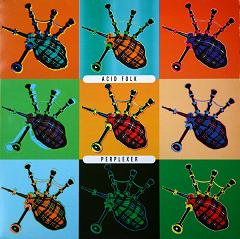
onDeadWaves – On Dead Waves (Mute album, 2016)


onDeadWaves
is a collaboration between two Mute artists, both of whom have been at the label during the EMI years as well as the new, independent-once-more phase – Polly Scattergood and James ‘Maps’ Chapman. Their debut album, On Dead Waves is that rare example of something that is far, far, far greater than the sum of its parts.

I reviewed the album for Clash and you can read my review here.

On Dead Waves is released on May 20. The duo play a free show in London on June 7. For more information, go to the onDeadWaves Facebook page.

(c) 2016 Mat Smith / Documentary Evidence for Clash

Yeasayer – Chris Keating (Clash interview, 2012)

  
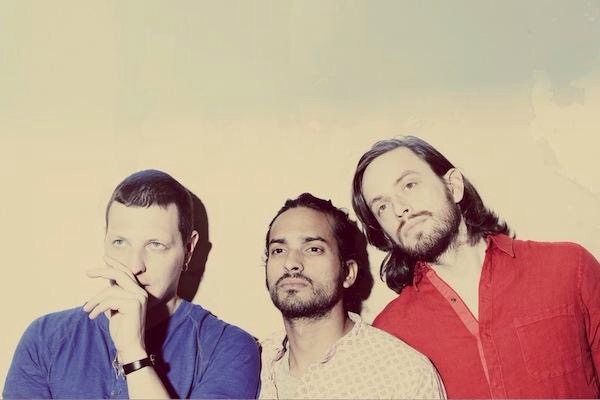
This past week I’ve been listening to Amen & Goodbye, the fourth Yeasayer album due for release by Mute on April 1st, which I’ve reviewed for Electronic Sound.

Way back in 2012, I had the great privilege of getting to interview the band’s Chris Keating (above right) ahead of a second intimate show at Islington’s The Lexington to promote the upcoming release of their third album, Fragrant World.
My Clash interview can be found here. I still think of it as one of my favourites.

(c) 2016 Mat Smith / Documentary Evidence  

Various Artists – Straight To You – The Gothic Country And Blues That Inspired Nick Cave (Uncut covermount album, 2010)


Uncut put together this covermount CD of tracks that purportedly inspired Nick Cave, covering blues and country tracks by the likes of Leadbelly, Elvis Presley, Hank Williams and Johnny Cash.

I’m always a little dubious of these types of things, especially where the artist in question wasn’t actually involved, particularly since a lot of the tracks and artists here are ones that Nick Cave & The Bad Seeds covered during their career (mostly on Kicking Against The Pricks) – while it may be possible to conclude that they were therefore an influence, I’m not so sure about all of them. The one artist that Cave frequently spoke about as being a major formative influence on him was The Man In Black, Johnny Cash, who Cave would have the nerve-racking opportunity to work with during Cash’s twilight years. Cash’s nihilistic ‘I’d Rather Die Young’ is one of the tracks included here.

Certainly you can hear a certain Birthday Party-era wildness in Gene Vincent’s ‘Cat Man’, there’s the ‘grinderman’ lineage in Memphis Slim’s ‘Grinder Man Blues’ and Cave displayed a healthy interest in the mystical aura of Elvis Presley on ‘Tupelo’. Defining precisely what has influenced a person, given that life is an entire summation of experience – recognised or otherwise – is a fool’s game. When I interview an artist and feel duty-bound to ask them about their influences, it is invariably greeted with a sigh or an awkward silence. We nevertheless are obsessed with such details, on the basis that it helps us rationalise a person via certain reference points, and that will never change.

This is one for the Cave completist only. I’m not sure now whether the magazine that this came with included a feature on Cave or some sort of explanation about how these tracks had been selected, or maybe it tied in with a Bad Seeds release that month. I certainly don’t have it any longer. If you surrender the notion that this is intended as some sort of definitive listing of what made Nick Cave who he is today – ignoring the fact that to do that justice would involve everything from church choir music through to The Stooges – what you are left with is a decent album of some very important blues and country songs.

(c) 2016 Mat Smith / Documentary Evidence
Barry Adamson – Know Where To Run (Central Control album, 2016)

  
I reviewed former Mute stalwart and current Bad Seed Barry Adamson‘s new album Know Where To Run for Clash. My review can be found here.

(c) 2016 Mat Smith / Documentary Evidence

The Pop Group – For How Much Longer Do We Tolerate Mass Murder? (Y / Rough Trade album, 1980)

  
The Pop Group‘s second album has finally been given the reissue treatment. The group consisted of future Mute artist Mark Stewart (vocals), Gareth Sager (guitar and sax), Dan Catsis (bass) John Waddington (guitar) and the drummer they shared with The Slits, Bruce Smith, and For How Much Longer Do We Tolerate Mass Murder? was originally released by the group’s Y label via Rough Trade in 1980. The incendiary album has been reissued by the Freaks R Us label, who were also responsible for putting out The Pop Group’s 2015 album Citizen Zombie. For the reissue the label has also added the single ‘We Are All Prostitutes’ to the track listing. 

I reviewed the album for Clash. My review can be found here.

(c) 2016 Mat Smith / Documentary Evidence