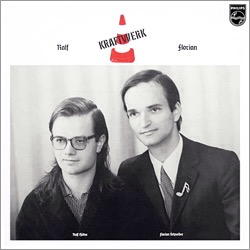
Kraftwerk – Ralf & Florian (Philips album, 1973)

  
album // Ralf & Florian

Sometimes I look around at band names and think it’s a tragedy that some of the best names have ended up attached to some of the worst groups, bands that maybe produce one dodgy single and are then forgotten about; yet the name – often the most inspired thing about said failing group – is then taken, unavailable for use by anyone else unless you’re prepared to expend major legal effort to prise the name from the corpse of that band.

Anyone in the early Seventies may have been forgiven for thinking that Ralf Hütter and Florian Schneider had nabbed a really powerful name – Kraftwerk – that really didn’t match their music. The name has connotations of a powerful source of energy, and yet their lightweight music, with flutes and guitar sat alongside primitive synths, sounded like it was stranded in among a weird hints and between formal classical music, jazz improvisation and weed-shrouded Haight-Ashbury hippyishness. It was certainly not immediately obvious that the duo would go on to become the influential unit they would ultimately be.

1973’s abysmally unimaginatively named Ralf & Florian continued the theme of their previous two albums but at least moved the duo into a proper studio, which may have had the effect of making their sound a little more structured. With the guidance of engineer Konrad ‘Conny’ Plank, Ralf & Florian was a more polished affair, utilising nascent rhythm generators alongside EMS and Moog synths, yet still retaining the jazzy oddness of previous records. The rear sleeve of the album showed the pair working in an early version of their as-yet-unnamed Kling-Klang studio, smiling and obviously having a laugh amidst an unholy mess of a workspace; part of me thinks that this period shows the pair to have an undisciplined approach, something that feels like it was eliminated when Kraftwerk really became Kraftwerk.

Ralf & Florian, for all its oddness, does at least garner a hint of what would emerge with 1975’s Autobahn. The attempt at greater synchronicity between the instruments – something of a challenge in the early Seventies – is a direct precursor to the more solid rhythms that would coalesce on that album thanks to the recruitment of Wolfgang Flür (he joined Hütter and Schneider for a German TV performance to promote Ralf & Florian). The languid and beautiful ‘Ananas Symphonie’ has sounds and textures that would appear again on that album’s ‘Kometenmelodie’, though here those sounds are augmented by guitarwork that is somewhere between a slowed-down Neu! and a Hawaiian beach performer.

On the whole, Ralf & Florian still sounds a little twee compared to where Kraftwerk would ultimately settle. However, if you try to listen to the album without any sort of reference to their future greatness, this remains an interesting hybrid album full of organic, carefully-composed moments and early synth sounds that remind you of how unearthly and exciting it must have been to hear such noises at the time. Opening track ‘Elektrisches Roulette’ might sound playful, but with its proggy lead synth line, rapidly played piano line and ricocheting drums, it bears a striking similarity to the first few bars of Roxy Music’s ‘Virginia Plain’, rising out of messy beginnings into a solid piece of infectious music. ‘Kristallo’ fizzes with dark energy, with jagged arpeggios cutting through the haphazard harpsichord riffing (though the high-speed conclusion is a bit daft), while ‘Heimatklänge’ bears a striking resemblance to the Eno track that was used as the title music to Arena (just without the droney guitar). ‘Tanzmusik’ is infectiously bouncy primitive synth pop mixed with classical motifs but still sounds like a world apart from, say, ‘Europe Endlos’; it’s the kind of piece you could imagine Mike Oldfield coming up with along the way to Tubular Bells. On the whole it’s an interesting collection of songs, and one that requires a degree of deep listening and immersion to appreciate.

Despite achieving some critical and commercial acclaim in Germany – presumably not because of the college yearbook-esque sleeve used in that country – the album has been out of print for many years. Kraftwerk indicated it might emerge in remastered form following the re-release of their classic albums in the late 2000s, but so far nothing has seen the light of day. I bought a bootleg CD copy in the pre-Internet mid-Nineties, from a record stall that used to set up shop in the central courtyard at my university campus, and at that time I didn’t even know if it was an album proper or just a collection of random old Kraftwerk songs compiled together. I roundly hated it the first time I heard it, but in my defence, at that time in my musical education I needed music that was squarely attached to a grid, whether that was synth pop, techno or punk, and had no appreciation whatsoever of looseness or space in music.

Various different bootleg versions have emerged over the years; mine was not on a label at all and bears a buried ‘WERK3’ catalogue reference. The original LP came with a comic from collaborator Emil Schult, but that was not reproduced with my CD. The CD came with a bonus track of a live version of ‘Autobahn’ from Cologne in 1975; though terribly recorded, the addition of the track does go to some lengths to bridge the gap between Ralf & Florian and Autobahn since it shows that their sound may have become more robust by that time, but the playing was still just loose enough to sound human.

(c) 2015 Mat Smith / Documentary Evidence 
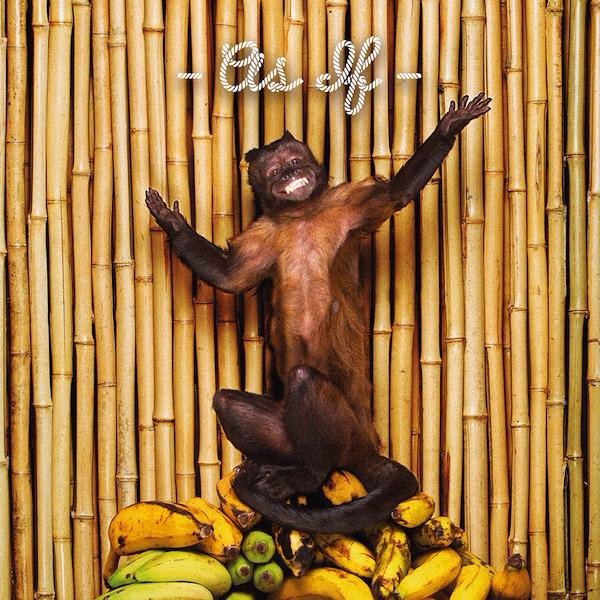
!!! – As If (Warp album, 2015)


!!!, undoubtedly the finest bunch of New York disco-punk-funks terms you’ll ever come across, released their new album As If in Ocober. I reviewed the album for Clash and you can read my review here. Somewhat appropriately for an album that evokes the spirit of Studio 54, my review was written on a flight to NYC.
Sometime Mute act Modey Lemon drummer Paul Quattrone plays in !!!.

(c) 2015 Mat Smith / Documentary Evidence

Will Gregory – Dolphins: Spy In The Pod (BBC, first aired 2014)


Dolphins: Spy In The Pod soundtrack | BBC | first aired 2014

Continuing his parallel career as a soundtrack composer for innovative BBC nature documentaries, Goldfrapp‘s Will Gregory provided the music to Dolphins: Spy In The Pod, first broadcast in January 2014. Reflecting the playful scenes of dolphins interacting with each other and the cameras hidden in the likes of a robotic tuna and turtle, Gregory’s music occasionally sounds a lot like the calypso music made for Disney’s The Little Mermaid, so much so that you half expect Sebastian to start singing ‘Under The Sea’ at any moment. Elsewhere there’s a sort of dreamy, aquatic ambience filled with languid guitar lines and wave-like textures.

The music has never been released officialy to the best of my knowledge, but a DVD of the David Tennant-narrated documentary can be bought from Amazon etc.

First posted 2014; edited 2015

(c) 2015 Mat Smith / Documentary Evidence

Short Break Operator – Short Break Operator EP (Radiate single, 2003)


single // Short Break Operator EP

radiate / virgin | cd rdt9 / 724354701320 | 2003

These songs they seem to write themselves,‘ sings James Chapman on the poignant, bittersweet ‘Glory Verse’, the towering ballad which rounds off the solitary EP from Short Break Operator and which some indie movie director really needs to snag for his next film’s soundtrack. That line, accompanied by a skittering drum pattern, organ chords and genteel guitar serves as a neat summary of how effortless, relaxed and casual the four songs on the EP feel, a distinct accomplishment for a debut release from an artist better known as Maps. The EP was released on Radiate, a subsidiary of Virgin / EMI and predates Chapman’s own Lost Space imprint, through which the first Maps singles were issued.

Chapman himself calls these ‘lo-fi’ recordings, and in contrast to the fuller, more electronic production on the Maps releases, that isn’t a totally inappropriate way of describing them. What’s more evident is a restrained, almost folksy leaning, the four songs here generally consisting of plucked guitar, subtle electronics and percussion, with vocal harmonies that evoke a pastoral sense of longing and muted euphoria. It’s the kind of chilled-out, warm music you’d expect to hear in a tent on the fringes of a festival, a guy with a guitar sat hunched over a mic at the edge of a small stage accompanied by a miniscule box of tricks.

The songs here feel like raw outpourings of uncertain emotions, the harmonies and chords suggesting something uplifting while the lyrics hint at some monumental misery, interlaced with wintery imagery and plaintive pleadings. ‘This Transmission’, with its delicate string section and lyrics suggesting unrequited love captures that delicate balancing act perfectly, while ‘Some Winter Song’ has a beguiling, wide-eyed theme with circular lyrics referring to positive feelings, the source of which Chapman – somewhere between gleefully and spitefully – doesn’t divulge to whoever the song is being delivered to. Synths shimmer like reflections on ice, giving these songs a glacial, frozen beauty.

‘Take Route / Point Odinsve’ is probably the most overtly ‘electronic’ piece here, a sparsely populated soundscape undercut by a steady pulse and melodies from guitars, synths and strings that weave and glide like a light aircraft on the thermals above the Reykjavik ice-world alluded to in the second part of the song’s title. If Biosphere’s Geir Jenssen tried to cover Dave Angel’s In-Flight Entertainment EP with an orchestra, it might sound something like this. A processed ‘peaceful‘ uttered deep in the middle of the trip feels tranquil and still, comfortably isolated.

Chapman adopted the moniker Short Break Operator during a period of wanting to escape more or less everything, finding himself gazingly longingly at holiday brochures for short-haul destinations like Iceland but thwarted by prohibitive costs. One of those brochures claimed itself to be from ‘Your No. 1 Short Break Operator’, giving rise to the alias used on this EP, while the name Maps too fits with a sense of travelling. Chapman finally got to work in Rejyavik on the We Can Create album after signing to Mute.

Thanks to James.

cd:

1. Some Winter Song
2. This Transmission
3. Take Route / Point Odinsve
4. Glory Verse

First published 2013; edited 2015.

(c) 2015 Mat Smith / Documentary Evidence
  

Barry Adamson – Brighton Rockers (Central Control single, 2012)


single // Brighton Rockers

central control | postcard-flexi/dl no cat ref | 03/09/2012

Barry Adamson released ‘Brighton Rockers’ on his own Central Control label in September 2012. Released as a single track download and also as a limited-edition flexi-postcard record, all profits and additional donations are donated to the charity CALM, the Campaign Against Living Miserably, which seeks to reduce the suicide rate of men. More information on CALM, its aims and its plans to deal with the biggest killer of men under the age of thirty-five can be found at their website.

The ‘sleeve’ shows an idyllic Brighton blue sky and a pedestrian taking a break on one of the benches dotted along the promenade. The music is a nice heavy slice of solid dub reggae, all thunderous bass, staccato piano and reverb-heavy rhythms and interludes, with some authentic horns and organ lines washing into the mix at times. The inclusion of some soulful, meditative sax and tinkly jazz organ stops this from becoming too dub-derivative, creating a typically noirish Adamson take on the genre, and a hitherto under-explored area of Adamson’s musical interest. The result is something that sounds like an authentic, well-researched take on the dub template, whilst retaining an identifiable distinctly Adamson groove (and, in the title, his trademark wry sense of humour) at the same time.

The summer may sadly be all but over, but this track is just about the best soundtrack I can think of for kicking back and relaxing on Brighton’s pebble beach in the sunshine.

postcard-flexi/dl:
1. Brighton Rockers

First posted 2012; re-edited 2015

(c) 2015 Mat Smith / Documentary Evidence
  

Electronic Sound 15

  
It’s been a while since I last posted about my monthly contributions to Electronic Sound.

For the latest issue, appropriately focussed on the so-called “crucible of electronic music” that is the city of Düsseldorf, I interviewed Gabi Delgado from D.A.F. about his recollections of the city and his new album 2.

I also achieved something I never could have expected as a kid while I drove around my home town with my dad listening to OMD by interviewing Andy McCluskey about the track ‘Enola Gay’. Elsewhere in this issue you’ll find a short piece on slow-working New Zealander Introverted Dancefloor, as well as my reviews of Kelpe and my new favourite band, New York’s The Fantastic Plastics.

Electronic Sound can be purchased from the iTunes Store or from electronicsound.co.uk

(c) 2015 Mat Smith / Documentary Evidence
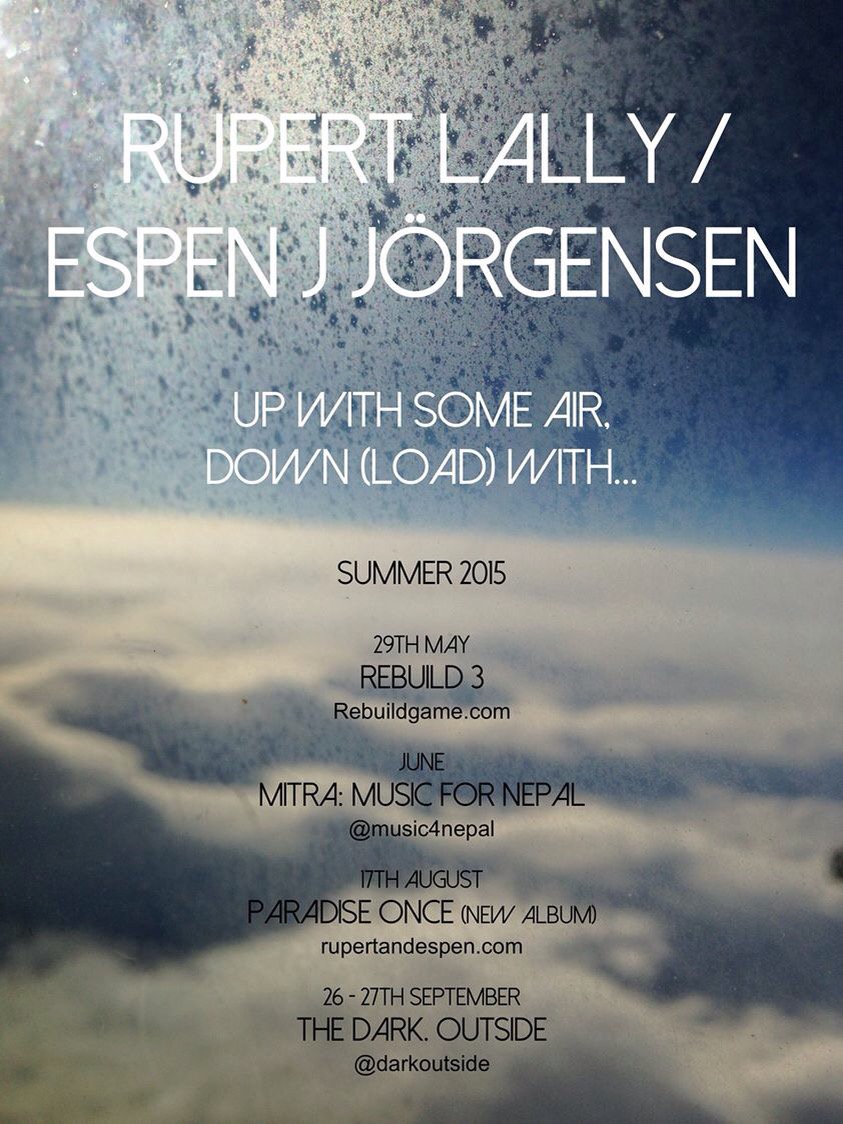
Rupert Lally & Espen J. Jörgensen: Paradise Once and a Busy Summer


Long-time collaborators Rupert Lally and Espen J. Jörgensen are set for a busy summer, with contributions to Stuart McLean’s The Dark Outside event, the worthy Mitra – Music For Nepal compilation, the soundtrack to the Rebuild 3 game and a new album, Paradise Once. Check rupertandespen.com for more details.

(c) 2015 Mat Smith / Documentary Evidence 

Renegade Connection – I’ll Surrender (Le Coq Musique single, 2015)

Renegade Connection 'I'll Surrender' 7" artwork

Renegade Connection is a collaboration between Gary Asquith (Renegade Soundwave, Mass, Rema-Rema) and Lee Curtis from Lee Curtis Connection. I reviewed Curtis’s Psyclops Trees single ‘All Back To Spikes’ for this site last year and at that point this collaboration was on the blocks ready for a release later in 2014. Manufacturing and artwork issues prevented the single seeing the light of day last year, and this will now be released to coincide with Record Store Day on 18 April 2015.

‘I’ll Surrender’ finds Asquith in an emotional mood, delivering a tender, warm-hearted love song over a loose, heavy dub groove that links this back to both the dub albums of Renegade Soundwave material but also back to the type of soul-scarring music reaching these shores from Jamaica way back in the Seventies. It’s a new direction for Asquith, and one that works really well. His voice is well-suited to this type of romantic outpouring, even if that seems something of a surprise after being so used to his vocal having more of an aggressive, nihilistic edge.

The flip, as is traditional in this genre, is a straightahead dub version, containing all sorts of springy effects and sonic trickery, as if the ghost of King Tubby had been meddling in the mixing desk.

The B-side to ‘I’ll Surrender’, ‘White Flag Dub’, can be heard below. The single will be available from Rough Trade and the Le Coq Musique webstore.

I recently had the pleasure of interviewing Gary again for a forthcoming Electronic Sound feature; that feature will appear later this year. 2015 is set to be a good one for Asquith followers – on the same day as ‘I’ll Surrender’ gets its release, two Rema-Rema 12″ singles will see the light of day. The first 12″ pairs ‘Entry/Exit’, a track from the original Rema-Rema sessions that begat the Wheel In The Roses 12″ for 4AD, with an instrumental version; the second 12″ (What You Could Not Visualise) sees Asquith collaborating with Takatsuna Mukai on Renegade Soundmachine remixes of the track ‘Rema-Rema’.

Rema-Rema 'What You Could Not Visualise' 12" artwork Rema-Rema 'Entry / Exit' 12" artwork

Asquith is also working on a new, as-yet-untitled project with Michael Allen (Rema-Rema /  Wolfgang Press) and Andrew Gray (Wolfgang Press). More details will follow in due course.

Renegade Connection 'I'll Surrender' postcard

(c) 2015 Mat Smith / Documentary Evidence

Mono Life – Dark Star Theory

I have reviewed Mono Life’s exciting debut album Phrenology for the next issue of Electronic Sound. This is the stand-out ‘Dark Star Theory’, taken from the album.

Phrenology will be released later this year.

Content (c) 2015 Mono Life / Mark Osborne
Post (c) 2015 Mat Smith / Documentary Evidence

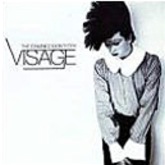
Visage – The Damned Don’t Cry (Spectrum album, 2000)

IMG_0082-0

spectrum / universal music | 544 381-2 | 2000

Sometimes, back in the early days of writing Documentary Evidence, the challenge was trying to find reasons to write about songs and artists I liked but which had no Mute Records connection whatsoever.

Such was the case with Visage. Recalling ‘Fade To Grey’ brings with it recollections of my four-year-old sister marching up and down a catwalk at a student fashion show in Leamington Spa back in the day-glo decade; while that’s a great reason for getting misty-eyed about a song, it didn’t qualify it for Documentary Evidence. So I was delighted to discover by accident that Barry Adamson had played in Visage, and that all of a sudden legitimised me being able to devote a page to Steve Strange’s band.

The untimely death of Strange from a heart attack leads me to re-post this review of a budget compilation today.

During 1979 and 1982, the core three musician members of Howard Devoto‘s Magazine moonlighted in Visage, the electro-pop studio-only project of Steve Strange and Ultravox’s Billy Currie, with additional contributions from Midge Ure and drummer Rusty Egan. Barry Adamson, Dave Formula and the late John McGeoch played on Visage’s first two albums Visage (which included the genre-defining New Romantic hit single ‘Fade To Grey’) and The Anvil. It seems unbelievable that the backbone of Devoto’s post-punk soundsmiths should moonlight in a futuristic band so far removed from their alternative rock day jobs, and this unusual period in Adamson’s musical career is often missed out of biographies. For those interested in hearing some of Visage’s work, you could do well to check out the budget Damned Don’t Cry compilation on Spectrum, which includes selections from the band’s back catalogue, including tracks from their 1984 swansong where the Magazine members were no longer part of the line-up. Another compilation – the full-price Fade To Grey album – was released recently, but includes almost all of the tracks on Damned Don’t Cry, and certainly no extra biographical information than the two sides of text included here.

In truth, without knowing exactly who appears on the tracks from 1979 to 1982, anyone specifically looking for Adamson’s distinctive bass playing is likely to be disappointed. Then again, having spoken to Barry about his use of studio downtime when Magazine were recording Real Life, he was already experimenting with tapes and synths at this time, and therefore it is possible that his involvement in Visage was more than just laying down the odd bassline. To fans of the early eighties cross-over of New Wave, synthpop and New Romanticism, this collection includes some absolute gems. Notwithstanding the mysterious sheen of ‘Fade To Grey’ (a track which for me will always be synonymous with a Leamington fashion show my sister was in), there is also the funk-pop of ‘We Move (Dance mix)’ from 1981, with some pointy guitars and solid Adamson bass groove, and what must be an occasional vocal from the distinctive Midge Ure. Elsewhere, the hyperactive elastic bass of ‘Night Train’ recalls ‘The Thin Wall’ by Ultravox, laced with lashings of horn-led soul. The super-group collision of styles in perhaps most prevalent on ‘Visage’, where Dave Formula’s signature Synergy-style orchestral synth melodies and riffs blend in with some Peter Hook-esque bass from Adamson, and great vocals from Steve Strange, who proves himself to be an excellent – albeit under-rated – vocalist throughout this compilation.

Formula’s keyboards are much more obviously present on these tracks than either McGeoch or Adamson, assuming that they were using their regular instruments. Nevertheless, there are some brilliant tracks here : the 1980s nightclub-friendly ‘The Anvil’, the dance mix of the instrumental ‘Frequency 7’ (sounding like an early Nitzer Ebb track infused with a synthpop flavour rather than electro-punk, along with some ‘Warm Leatherette’ noises), the positively soaring but mournful electronics of ‘Whispers’ and the Thompson Twins meets Human League crisp synthpop of ‘Pleasure Boys’ in its dance mix guise. ‘Damned Don’t Cry’, the 1982 track that provided this compilation with its title shares the same mysterious, ethereal tone as ‘Fade To Grey’, with the addition of a 4/4 beat, arpeggiated bassline and some Andy McCluskey-styled vocals. ‘Love Glove’ is the best track from the 1984 Beat Boy LP, an upbeat electropop number with saxophones that reminds you of everything that was good about 1980s pop. The over-long ‘Beat Boy’, however, reminds you of everything that was bad about the 1980s – that horrible synth slap bass, orchestral stabs and stuttered vocals. Yuck. The sub-Phantom Of The Opera / Rick Wakeman / Vangelis track ‘The Steps’ (1980) is also worth skipping through, if only to get you to ‘Frequency 7’ quicker.

First published 2004; re-edited 2015.

(c) 2015 Mat Smith / Documentary Evidence