Crown Estate – Lazers (Driver Sounds single, 2014)

Crown Estate 'Lazers' download artwork

driver sounds | download | 30/06/2014

‘Lazers’ is the follow-up single to last year’s ‘Battlesbridge’, Crown Estate‘s critically lauded debut single. For their second release, the duo of Julie and Sacha fuse the quirky electronics and sensibilities of today (references to texting, Twitter and Facebook) with a vocal vibe that stretches way, way back to the wry, detached style of classic Blondie.

Pop music doesn’t come more perfect than this: ‘Lazers’ is a vibrant, upbeat track with a wall of sound that positively shimmers with all manner of pretty glimmering textures and cutesy melodies. Stylistically, its themes of craving contact links it to Yazoo‘s ‘Bad Connection’ and Vic Twenty‘s ‘Txt Msg’, but this is at once something far fresher and more uplifting, propelled ever forward on a intricate beat that can’t help but make you smile.

Perhaps it’s the talk of heatwaves and transport meltdowns in the media today, but ‘Lazers’ could well be this reviewer’s summer anthem.

Get ‘Lazers’ on iTunes here. It could be the best 79p you spend.

Thanks to Clare at 1-2-hear and Julie.

Track listing:

Download:
1. Lazers

(c) 2014 Mat Smith / Documentary Evidence

Audio Journal 03/07/2014: Front & Follow

Audio Journal logo

Front & Follow are a Manchester-based label who I hadn’t noticed until Clash asked me to review Blind Mouths Eat by The Doomed Bird Of Providence earlier this year. That album really impressed me, even though I initially labelled it a concept album.

The Doomed Bird Of Providence are an Australian group presently based in my old residence of Colchester, and for Blind Mouths Eat the focus of their attention was on a devastating 19th century storm known as Cyclone Mahina. For me, Doomed Bird tapped into the same strand of folk and blues that bands like The Bad Seeds, The Triffids and Crime & The City Solution all made their own during their careers, and I happily gave the album 8/10. I described it as ‘a haunting exploration of hopelessness and violence’.

Blind Mouths Eat, in turn, begat To Mahina, an EP by fellow Front & Follow artist Kemper Norton. If Cyclone Mahina inspired Doomed Bird’s album, the album about the storm inspired Kemper Norton. The response is an EP that takes the mysterious fatalism of the original album and uses that feeling as the basis for a collection of electronic explorations that possess a natural dimension infused with a sort of sea shanty quality. This is all about texture, whereas Doomed Bird’s album was primarily about the narrative; To Mahina lies somewhere between a calm millpond and the terrifying stillness that returns after the devastation, making this an imaginative and captivating release.

Kemper Norton 'To Mahina' artwork

If Kemper Norton is mysterious, Pye Corner Audio are downright mythical. Their WordPress site proclaims them to have been active since the Seventies, but in what capacity it doesn’t say, raising eyebrows and leading the listener to ponder whether this isn’t some fanciful aspiration to create a history where one simply doesn’t exist.

Irrespective, Pye Corner Audio produce brilliant electronic music that has its head firmly placed in the world of analogue synthesis, back at a point where you were more likely to wear a suit and a lab coat to the studio, those early synths being akin to giant science experiments than real instruments. The new Pye Corner Audio 12″ for Front & Follow, The Black Mist EP, takes rich pulses, percussion and melodic sounds and infuses them with a chunky beat that sounds like it was borrowed from the Chemical Brothers’ early works. Towering washes of sculpted synth pads wash in like waves and buzzing drones have the distorted quality of punk guitars. Like the longform explorations of, say, Node, ‘The Black Mist’ has that mesmerising quality that I will use as evidence that electronic music has an inner human quality whenever detractors try to tell me otherwise.

Pye Corner Audio 'The Black Mist' artwork

The B-side features a remix of ‘The Black Mist’ and the detuned Plaid-esque deep ambient electro of ‘Bulk Erase’. Here is a track that could easily be a minimal, slowly-shifting exploration of rhythm and pulse, but Pye Corner Audio aren’t afraid of co-opting classical melodic sensibilities and that’s the case here with an arresting, emotive filmic passage that sounds like it’s begging for use by an independent director.

Front & Follow releases can be found here.

Thanks to Justin.

(c) 2014 Mat Smith / Documentary Evidence

Alex Fergusson – Stay With Me Tonight (Red Records single, 1980)

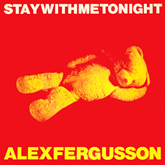
Alex Fergusson 'Stay With Me Tonight' 7" artwork

red records | 7″ rs003 | 1980

There appears to be a television theme running through Daniel Miller‘s work between 1978 and 1980. First (of course) there was Mute‘s first move, his single ‘T.V.O.D.’ as The Normal; Silicon Teens, his fake synth group, had a track called ‘TV Playtime’ and Missing Scientists, who Miller produced for their single ‘Bright Lights Big City’ were better known as The Television Personalities. Alex Fergusson, whose ‘Stay With Me Tonight’ Miller produced under his Larry Least alias in 1980, was a founder member of Alternative TV. If nothing else, this release proves that too much TV is not necessarily a bad thing, despite what the health professionals might say.

Alternative TV were formed by Mark ‘Sniffin’ Glue’ Perry and Fergusson, a Scottish guitarist. The debut release by the nascent ATV was a flexi (‘Love Lives Limp’) given away with the last issue of Perry’s Sniffin’ Glue punk fanzine in 1977. Shortly after, following a couple of 7″ singles, Perry sacked Fergusson and cast his original collaborator aside. Fergusson went on to join Sid Vicious biographers Fred and Judy Vermorel’s brainchild, the band Cash Pussies (with Alan Gruner, model Diana Rich and Ray Weston); Cash Pussies released one single, ‘99% Is Shit’ which featured clips of Sid Vicious being interviewed, and withered away like the Vermorel-constructed act they were. In 1981, Fergusson formed Psychic TV (aka Psychick TV) with Genesis P. Orridge (who had been a sometime ATV percussionist) and Peter ‘Sleazy’ Christopherson, after the initial demise of Throbbing Gristle. TG had contacted Fergusson when they were working on the soundtrack to the Vermorels’ Millions Like Us movie, asking him to assist with the music they were creating.

1980’s solo Fergusson 7″ on Red, ‘Stay With Me Tonight’, sounds a million miles from those punk / industrial roots. Featuring Fergusson on vocals and Gruner on synths, the track is a pretty, out-and-out synthpop track that provides no clue whatsoever to the harsh cerebral onslaught that Psychic TV would create. Quite how Daniel / Larry got on board is hard to understand, but it perhaps serves to highlight how intertwined the punk / post-punk landscape in the UK was. (Gruner would go on to work with Bonnie Tyler; we won’t talk about that.) The synths on both tracks distinctly sound Miller-esque, both from Fad Gadget and Depeche Mode records; it wouldn’t surprise me if perhaps they were Miller’s synths. No details are provided on where this was recorded or who else worked with Miller / Fergusson / Gruner on this, but it’s feasible that this is a Blackwing / Eric Radcliffe / John Fryer affair like the Missing Scientists 7″.

‘Stay With Me Tonight’ (copyrighted to 1979) has a steady, thudding beat and some brilliant arpeggiating synths plus a beat on the chorus that Depeche Mode would definitely borrow for ‘Dreaming Of Me’. The way some of the synths get filtered from subtle background noises to foreground flashes is good too; it’s an effect that acid house and techno would repeat ad infinitum, but it’s nice to hear it deployed on a synth pop track. Fergusson’s vocal has a certain naivety, an unpolished, nasal youthfulness which is about the only ‘punk’ quality this song has; punk in the sense that it sounds like he’s not a singer in the trained sense. Overall, it’s a nice, upbeat and forgotten synth pop track and I really like the transition from flat-out verses to sparse choruses, which sounds like a Miller trick to me.

The less we say about the name of the B-side, ‘Brushing Your Hair’, the better. The track is a too-short synth instrumental, co-written by Fergusson, Gruner and Miller. The drums have a Krautrock quality while electronic squiggles reminiscent of the percussion on Depeche Mode’s ‘Nodisco’ have prominence in the foreground. Meanwhile, a wavering keyboard riff that was appropriated and expanded for Fad Gadget’s ‘Ricky’s Hand’ makes a brief appearance. This track has Daniel Miller’s handiwork in major evidence, and it’s worth tracking this down for the B-side alone.

Track listing:

7″:
A. Stay With Me Tonight
B. Brushing Your Hair

First published 2011; edited 2014

(c) 2014 Mat Smith / Documentary Evidence

Beatz – Divergences & Contradictions Of Electronic Music (Analog Solutions film, 2014)

Beatz

Beatz – Divergences & Contradictions Of Electronic Music is a documentary film by DJ Eduardo De La Calle that surveys the health of the global dance music scene.

An independent – some might say underground – film, De La Calle’s methods veer toward the lo-fi, being largely just what he captured as he travelled around the world to interview many of dance music’s legends (Carl Craig, Derrick May, Marshall Jefferson, Carl Cox, Laurent Garnier, Juan Atkins) and newer talents in order to collect their views on what they think dance music has become and where it’s going.

Although the likes of Garnier ultimately deliver a spirited reading of the enduring vitality of the international club scene, elsewhere the vibe is uniformly sombre. Much decrying is made of the likes of Beatport as a means of manipulating tastes and pre-filtering selections for the listener in a way that record shops never did; similarly impassioned comments are delivered about the supposed commodification of dance music and mp3s – particularly unmastered tracks constructed of nothing more than three loops (echoes of punk’s limited musicianship aside, such tracks inevitably lack any particular human quality) – and DJs that eschew proper mixing in favour of simply queuing up poor quality mp3s and letting a machine synchronise them; one commentator likens buying records off the internet to drinking at home. Vinyl is seen as the golden medium, encouraging lots of fetishistic comments about its fragility, malleability and even artistic merit, while others counter this with a view that the medium itself doesn’t matter – it’s the ideas that make something original or not. Minus artist and Richie Hawtin protégé Matthew Jonson (they even dress the same and have the same hair) sums it up perfectly with ‘the machine will never have the idea’.

Throughout the film, the ‘human’ quality comes through in a loud way – perhaps somewhat surprisingly for a strand of music that is supposedly all about technology. That human dimension appears most negatively with diatribes against the super-DJ where showmanship has overtaken the actual music, or in discussions about ‘live’ versus programmed music where mistakes can happen, therefore allowing a real unpredictability can creep in. Carl Craig talks enthusiastically about the influence of jazz on dance music, an often overlooked input into the genre and one which perfectly illustrates the impact of individual flair over lumpen technology. Mute‘s own Apparat (Sascha Ring) offers his own slightly bemused reaction to talking to people in clubs and finding that people don’t know – or don’t care – who’s on the bill, as if the natural conclusion of the so-called facelessness of techno’s logical conclusion comes as a surprise to him.

The film is a bit rough around the edges, especially with regard to the subtitles, but this globetrotting film was shot with evident care and attention – much more so than most lo-fi productions. The soundtrack features a number of intricate pieces by De La Calle himself which had this reviewer feeling nostalgic for his old techno collection. For Mute fans, as well as Apparat, Speedy J and BMB‘s Surgeon also appear as talking heads.

The film can be streamed at Eduardo De La Calle’s website or below.

(c) 2014 Mat Smith / Documentary Evidence

Nick Cave & The Bad Seeds – Push The Sky Away (Bad Seed album, 2013)

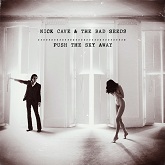
Nick Cave & The Bad Seeds 'Push The Sky Away' LP artwork

bad seed ltd | lp/cd/cd+dvd/box/dl bs001 | 18/02/2013

Push The Sky Away is the first Nick Cave material to emerge since he parted company with Mute in the wake of his terminated Grinderman project, and the first Bad Seeds album since 2008’s Dig!!! Lazarus Dig!!!. Now bereft of long-term arranger Mick Harvey, the Dirty Three multi-instrumentalist Warren Ellis steps in and takes the role vacated by Harvey; since 2007 Ellis’ playing has filled the void left by Blixa Bargeld‘s guitar, he was Cave’s foil in Grinderman and the pair have realised several soundtracks together, showcasing a symbiotic relationship that has produced some of the best material in Cave’s back catalogue.

It’s precisely thirty years since the volatile young Nick Cave formed The Bad Seeds in Berlin following the demise of post-punk’s ravaged Birthday Party. Much has changed. Aside from a surprise reappearance of original Bad Seeds bassist Barry Adamson on two tracks here, not one of the original Bad Seeds line-up features in the group that bears the name today, but the core group of musicians that have been with Cave the longest remain in situ – Warren Ellis, Jim Sclavunos (percussion), Thomas Wydler (drums), Martyn P. Casey (bass) and Conway Savage (piano, organ). The fire and brimstone seems to have been exorcised effectively by two raucous Grinderman records and the Dig!!! Lazarus Dig!!! album in the middle, leaving Cave and co focussing more or less completely on the beautiful melancholia of the more serene moments of Abbatoir Blues / The Lyre Of Orpheus.

Your reaction to Push The Sky Away will thus depend on whether what you want from Cave is howling, just on the edge of being out of control blues-informed punk, or the mature ideology that has coincided with the establishment’s embrace of Cave as one of the finest songwriters of the past thirty years. If the former is what you’re looking for, you’ll be disappointed, since Push The Sky Away generally has the slightly maudlin atmosphere that provided the mood on The Lyre Of Orpheus‘ closing track ‘O Children’; all of which is fine, but as anyone who’s listened to the Velvet Underground’s lovely third album for a while will tell you, sometimes you just want to hear ‘Waiting For The Man’. The closest Push The Sky Away gets to anything like the Cave of his earliest Bad Seeds work is on ‘Water’s Edge’ or ‘We Real Cool’, where the growling bass that dominates the low-end reminds listeners of the apocalyptic ‘Tupelo’ from The Firstborn Is Dead. The rest of the album is delicate balladry, with almost psychedelic arrangements (such as the ephemeral title track), quiet musings and bewildered observations on subjects ranging from mermaids to Wikipedia to teenagers cavorting carelessly on the beaches of Hove outside Cave’s window. In the press release, Cave describes Push The Sky Away thusly: ‘I don’t know, this record just seems new, you know, but new in an old school kind of way.’

That sense of the ‘new’ comes through in the remarkable palette of sounds deployed on the album, much of it purportedly derived from loops prepared by Ellis. With Mick Harvey gone and Cave seemingly unwilling to pick up a guitar after Grinderman, the album is largely devoid of any six-string action, with only the stand-out ‘Jubilee Street’ carrying anything close to a guitar line. Ellis shines through as effective lead musician, tracks filled-out with his loops, violin, mandolin and other assorted instruments. The rest of The Bad Seeds literally seem to play second fiddle to the dominance of Ellis, offering up loping basslines, intricate percussion and sprinkles of beautiful piano. Nevertheless, it’s reasonably clear – and not necessarily a bad thing – that Ellis is the primary mood-maker here. The upshot is some of the most advanced music that the Bad Seeds have ever realised, often bordering on a sort of synth music offshoot that no-one has named yet.

Cave’s singing has matured into a distinctive, varied and considered voice over time. The rough edges are all completely gone, leaving a honey-coated rasp that feels a long way from the guttural bleatings of the Cave of the past, hunched over a microphone in apparent pain, spitting words and sibilant sounds forth like a man possessed. The pretty ‘Wide Lovely Eyes’ Cave – with Cave observing the funfare being dismantled and images of departure set to a backdrop of shoes being arranged carefully on a pebble beach – sees the beautiful pairing of Cave and Conway Savage reminding us of some of the most brittle moments of the Bad Seeds catalogue, wherein the tenderness long ago replaced the anger; on this and a number of other songs, Cave reminds me of Ed Harris’s character in The Hours, sat in his window watching the world go by, a resigned, tired air colouring proceedings.

The frontman reprises some of his humourous bluesy story-telling and diverse intonations on the obscure centrepiece, ‘Higgs Boson Blues’, namechecking everything from Hannah Montana / Miley Cyrus, Wikipedia, Robert Johnson, vague mythologies and Switzerland’s Large Hadron Collider; that and ‘Jubilee Street’ are the clear highlights of the album, both being the most fully-formed and musically complete pieces here. The former has a skittish, absorbing jazz-blues dimension; the latter has a rousing, slowly-developing mix of lovely rolling drums, acoustic guitar, percussion, full orchestration and a muted intensity as Cave rises up into the sky toward the end in angelic contrast to the devilish way he flew forth in ‘Mutiny!’ back in the day. ‘Jubilee Street’ (which may or may not be set on the much-altered street in Brighton now devoid of any of its original charm) has a strong and compelling narrative, touching on the darker side of life with a bleak tale of what sounds like a prostitute who gets moved on from Jubilee Street by Russians.

The rest of the album is sonically clever and absorbing, even if Cave sounds like he might be sleepwalking through his songwriting at times. Nevertheless, he’s managed to produce some truly lovely songs as well as a new-found observational capacity in tracks like ‘Water’s Edge’, wherein the opposing forces of London girls looking for a good time and local boys looking for something to do clash; like Quadrophenia for vampires and party girls. There’s also moments where his particular brand of Viz-style smuttiness and wry humour shine through. Overall, it feels like Laura Ashley wallpaper – nice to look at, perfectly inoffensive and fine in the background, but you wouldn’t decorate your whole house with it.

Thanks to Rhian at Big Mouth.

***

I’m reposting this on the occasion of the Push The Sky Away receiving the prestigious Ivor Novello Album Award, an incredible achievement for both Nick Cave and his publisher Mute Song.

Cave has deserved greater recognition for his songwriting for far too long, and I’m delighted that the rest of the music world seems to have caught up with those of us who always knew where his songs would ultimately take him. I just wish that it had been another album that had secured him that recognition; a year on, I still haven’t warmed to this album, and I personally feel that there are far better works than this in the Cave back catalogue.

Track listing:

lp/lp+7″/cd/cd+dvd/dl:
A1. / 1. We No Who U R
A2. / 2. Wide Lovely Eyes
A3. / 3. Water’s Edge
A4. / 4. Jubilee Street
A5. / 5. Mermaids
A6. / 6. We Real Cool
A7. / 7. Finishing Jubilee Street
A8. / 8. Higgs Boson Blues
A9. / 9. Push The Sky Away

7″/dvd:
C. Needle Boy
D. Lightning Bolts

First published 2013; edited 2014.

The Psyclops Trees – All Back To Spikes (Flying Saucer Records single, 2014)

The Psyclops Trees 'All Back To Spikes' 7" artwork

flying saucer records | 7″ flys5001 | 30/05/2014

Lee Curtis is a producer and DJ who has released records as Lee Curtis Connection on the venerable Ninja Tune and who also formed one half of Flavournaughts with Dave Priseman. His latest project is Psyclops Trees, prefacing a much-anticipated track for Gary Asquith‘s Le Coq Musique imprint called ‘I’ll Surrender’ which will see Curtis collaborating with the erstwhile Renegade Soundwave / Rema-Rema frontman as Renegade Connection.

All Back To Spikes’ is like a time machine back to the halcyon big-beat / trip-hop days of 1994 – Athletico compilations, The Chemical Brothers back when they still lived on Planet Dust, Mo’Wax before megastardom etc. Curtis himself describes these tracks as ‘funky psychedelic breaks’ which is completely apt – on ‘All Back To Spikes’ the (block rocking) beats are rich, hypnotic and chunky, while deep textures that shimmer, twist and loop suggest movement through multiple dimensions.

The single is backed with ‘Beak Street’, which earns the distinction of being this author’s summer anthem. On this particular street the beats are slower, the vibe funkier; the melodic hooks sits somewhere between Stevie Wonder circa ‘Sir Duke’, the theme tune to Grange Hill and the Pierre Henry piece that Fatboy Slim ripped off shamelessly. ‘Beak Street’ casually pulls off this mood with a cheeky swagger, making this a perfect soundtrack to sipping cocktails by the pool.

Check out videos for the two tracks below. The single can be purchased from Rough Trade here or Flying Saucer’s own website here.

Track listing:

7″:
A. All Back To Spikes
B. Beak Street

(c) 2014 Mat Smith / Documentary Evidence