Short Break Operator – Short Break Operator EP (Radiate single, 2003)


single // Short Break Operator EP

radiate / virgin | cd rdt9 / 724354701320 | 2003

These songs they seem to write themselves,‘ sings James Chapman on the poignant, bittersweet ‘Glory Verse’, the towering ballad which rounds off the solitary EP from Short Break Operator and which some indie movie director really needs to snag for his next film’s soundtrack. That line, accompanied by a skittering drum pattern, organ chords and genteel guitar serves as a neat summary of how effortless, relaxed and casual the four songs on the EP feel, a distinct accomplishment for a debut release from an artist better known as Maps. The EP was released on Radiate, a subsidiary of Virgin / EMI and predates Chapman’s own Lost Space imprint, through which the first Maps singles were issued.

Chapman himself calls these ‘lo-fi’ recordings, and in contrast to the fuller, more electronic production on the Maps releases, that isn’t a totally inappropriate way of describing them. What’s more evident is a restrained, almost folksy leaning, the four songs here generally consisting of plucked guitar, subtle electronics and percussion, with vocal harmonies that evoke a pastoral sense of longing and muted euphoria. It’s the kind of chilled-out, warm music you’d expect to hear in a tent on the fringes of a festival, a guy with a guitar sat hunched over a mic at the edge of a small stage accompanied by a miniscule box of tricks.

The songs here feel like raw outpourings of uncertain emotions, the harmonies and chords suggesting something uplifting while the lyrics hint at some monumental misery, interlaced with wintery imagery and plaintive pleadings. ‘This Transmission’, with its delicate string section and lyrics suggesting unrequited love captures that delicate balancing act perfectly, while ‘Some Winter Song’ has a beguiling, wide-eyed theme with circular lyrics referring to positive feelings, the source of which Chapman – somewhere between gleefully and spitefully – doesn’t divulge to whoever the song is being delivered to. Synths shimmer like reflections on ice, giving these songs a glacial, frozen beauty.

‘Take Route / Point Odinsve’ is probably the most overtly ‘electronic’ piece here, a sparsely populated soundscape undercut by a steady pulse and melodies from guitars, synths and strings that weave and glide like a light aircraft on the thermals above the Reykjavik ice-world alluded to in the second part of the song’s title. If Biosphere’s Geir Jenssen tried to cover Dave Angel’s In-Flight Entertainment EP with an orchestra, it might sound something like this. A processed ‘peaceful‘ uttered deep in the middle of the trip feels tranquil and still, comfortably isolated.

Chapman adopted the moniker Short Break Operator during a period of wanting to escape more or less everything, finding himself gazingly longingly at holiday brochures for short-haul destinations like Iceland but thwarted by prohibitive costs. One of those brochures claimed itself to be from ‘Your No. 1 Short Break Operator’, giving rise to the alias used on this EP, while the name Maps too fits with a sense of travelling. Chapman finally got to work in Rejyavik on the We Can Create album after signing to Mute.

Thanks to James.

cd:

1. Some Winter Song
2. This Transmission
3. Take Route / Point Odinsve
4. Glory Verse

First published 2013; edited 2015.

(c) 2015 Mat Smith / Documentary Evidence
  

Barry Adamson – Brighton Rockers (Central Control single, 2012)


single // Brighton Rockers

central control | postcard-flexi/dl no cat ref | 03/09/2012

Barry Adamson released ‘Brighton Rockers’ on his own Central Control label in September 2012. Released as a single track download and also as a limited-edition flexi-postcard record, all profits and additional donations are donated to the charity CALM, the Campaign Against Living Miserably, which seeks to reduce the suicide rate of men. More information on CALM, its aims and its plans to deal with the biggest killer of men under the age of thirty-five can be found at their website.

The ‘sleeve’ shows an idyllic Brighton blue sky and a pedestrian taking a break on one of the benches dotted along the promenade. The music is a nice heavy slice of solid dub reggae, all thunderous bass, staccato piano and reverb-heavy rhythms and interludes, with some authentic horns and organ lines washing into the mix at times. The inclusion of some soulful, meditative sax and tinkly jazz organ stops this from becoming too dub-derivative, creating a typically noirish Adamson take on the genre, and a hitherto under-explored area of Adamson’s musical interest. The result is something that sounds like an authentic, well-researched take on the dub template, whilst retaining an identifiable distinctly Adamson groove (and, in the title, his trademark wry sense of humour) at the same time.

The summer may sadly be all but over, but this track is just about the best soundtrack I can think of for kicking back and relaxing on Brighton’s pebble beach in the sunshine.

postcard-flexi/dl:
1. Brighton Rockers

First posted 2012; re-edited 2015

(c) 2015 Mat Smith / Documentary Evidence
  

Renegade Connection – I’ll Surrender (Le Coq Musique single, 2015)

Renegade Connection 'I'll Surrender' 7" artwork

Renegade Connection is a collaboration between Gary Asquith (Renegade Soundwave, Mass, Rema-Rema) and Lee Curtis from Lee Curtis Connection. I reviewed Curtis’s Psyclops Trees single ‘All Back To Spikes’ for this site last year and at that point this collaboration was on the blocks ready for a release later in 2014. Manufacturing and artwork issues prevented the single seeing the light of day last year, and this will now be released to coincide with Record Store Day on 18 April 2015.

‘I’ll Surrender’ finds Asquith in an emotional mood, delivering a tender, warm-hearted love song over a loose, heavy dub groove that links this back to both the dub albums of Renegade Soundwave material but also back to the type of soul-scarring music reaching these shores from Jamaica way back in the Seventies. It’s a new direction for Asquith, and one that works really well. His voice is well-suited to this type of romantic outpouring, even if that seems something of a surprise after being so used to his vocal having more of an aggressive, nihilistic edge.

The flip, as is traditional in this genre, is a straightahead dub version, containing all sorts of springy effects and sonic trickery, as if the ghost of King Tubby had been meddling in the mixing desk.

The B-side to ‘I’ll Surrender’, ‘White Flag Dub’, can be heard below. The single will be available from Rough Trade and the Le Coq Musique webstore.

I recently had the pleasure of interviewing Gary again for a forthcoming Electronic Sound feature; that feature will appear later this year. 2015 is set to be a good one for Asquith followers – on the same day as ‘I’ll Surrender’ gets its release, two Rema-Rema 12″ singles will see the light of day. The first 12″ pairs ‘Entry/Exit’, a track from the original Rema-Rema sessions that begat the Wheel In The Roses 12″ for 4AD, with an instrumental version; the second 12″ (What You Could Not Visualise) sees Asquith collaborating with Takatsuna Mukai on Renegade Soundmachine remixes of the track ‘Rema-Rema’.

Rema-Rema 'What You Could Not Visualise' 12" artwork Rema-Rema 'Entry / Exit' 12" artwork

Asquith is also working on a new, as-yet-untitled project with Michael Allen (Rema-Rema /  Wolfgang Press) and Andrew Gray (Wolfgang Press). More details will follow in due course.

Renegade Connection 'I'll Surrender' postcard

(c) 2015 Mat Smith / Documentary Evidence

MG – Europa Hymn (Mute Records single, 2015) – Official Video

Mute Records today revealed the animated video for ‘Europa Hymn’, the first single taken from the forthcoming Martin Gore album MG which is released in April.

I had the great pleasure of getting to interview Martin earlier this month; that interview will be published online ahead of MG‘s release.

(c) 2015 Mat Smith / Documentary Evidence

Anita Lane – Do That Thing (Mute Records single, 2002)

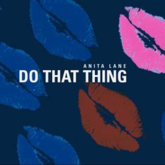
Anita Lane 'Do That Thing' artwork

mute records | mute285 | 2002

I actually felt quite embarrassed listening to this second single from Anita Lane‘s appallingly-titled Sex O’Clock. Not because it’s a terrible track, far from it, but because the lyrics are so overtly sexual (example lyric: ‘Call me up on the erogenous zone / All night kundalini telephone.‘) – it is a bit like how uncomfortable you felt as a teenager when the passion levels rose a bit too high in a film you were watching with your parents. Or maybe that was just me.

No two ways about it, Lane here is feeling horny, many of the lyrics delivered as if midway through a hazy passionate clinch. Repeated choruses with Mick Harvey of ‘Do that thing / That thing that you do.‘ urge the sexual momentum forward. Musically, Harvey has constructed a song of considerable beauty, a classic soul groove with a host of Motown strings and percussion-driven beat; think Marvin Gaye duetting with Serge Gainsbourg. Classy, subversive, blatant – perfect.

The solitary B-side ‘Look At The Sun’, co-written and produced by Johnny Klimek, is a countrified ballad, a thing of remarkable beauty. Lane’s vocal is perfect for the track, which really draws out the emotional quality of the song. In fact, the song could have been delivered just as successfully by her former beau Nick Cave.

First published 2004; re-edited 2015.

(c) 2015 Mat Smith / Documentary Evidence

Andy Bell – I’ll Never Fall In Love Again (Sanctuary single, 2005)

IMG_0077

sanctuary records | sanxs425 | 29/06/2005

If anyone can explain the lengthy gap between first single, ‘Crazy’ and this, I’d really appreciate that. Just when it looked like Sanctuary had resigned themselves to the fact that Electric Blue, despite carrying a decent suite of (mostly) dance-oriented tracks – of which ‘I’ll Never Fall In Love Again’ is a strong example – was never going to shift in massive quantities outside of Andy Bell‘s Erasure fans, along came a second single.

‘I’ll Never Fall In Love Again’ is an excellent up-tempo number in its original guise which is given a more housey treatment by Goetz on his generally quite laissez faire single mix, but perhaps the biggest draw is an exclusive new track ‘Back Into The Old Routine’ which finds Andy softly celebrating the advent of autumn, although his pastoral lament for finding his usual place in the park does concern me that he’s referencing the sort of acts that some people get up to in such places. That aside, this gentle little song, with its soulful bridge and ‘Don’t Dance’-esque melody, is a fitting full stop to a good first solo album from Bell.

Two further mixes are available from various download sites, including iTunes – the Goetz Extended Mix, which is literally (and nothing more than) just that, and a remix by Mr Do which actually does try to do something slightly different by changing the melodies and augmenting the chorus with a tinkly refrain, but there is something not quite right about the way the vocals are mixed in, as if they were pasted in as an afterthought onto an existing track. In all, it’s worth getting the CD for the B-side, but the mixes are hardly essential.

First published 2005; re-edited 2015.

(c) 2015 Mat Smith / Documentary Evidence
Andy Bell – Crazy (Sanctuary single, 2005)

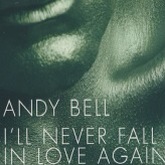
Andy Bell 'Crazy' artwork

sanctuary records | san396 | 26/09/2005

If I was Erasure‘s Andy Bell upon listening to the top 40 on the Sunday after this came out in September 2005, I think I’d be pretty livid as my debut solo single entered the charts at 35. For a start I’d feel like my own fan base – loyal still after 20 years and responsible earlier this year for propelling Erasure’s ‘Breathe’ to number four in the UK charts earlier in the same year – had failed to support my first solo efforts. But I’m not Andy Bell, I just evidently appear to be one of the few Erasure fans who bothered to buy ‘Crazy’. On all three formats too, traitors.

What’s not to like? ‘Crazy’ is an infectious, anthemic track that would sound excellent in certain clubs, with a throbbing beat and bassline overlaid by masterful synths. Does it sound like Erasure? Well, yes and no – Andy delivers one of his most euphoric vocals while Other People’s Songs collaborators Manhattan Clique dip their toes in Vince Clarke-like synth progressions, giving the feel of a one of the better of Erasure remixes from over the years. And yet the lyrics are somehow more direct, and in some respects not so ‘literal’, giving the feel of a proper dancefloor-oriented style; and Vince had never been able to lay down such a tightly pulsing 4/4 beat by this point in his own career (sorry Vince). What can I say? It should have been far bigger.

The two-track CD1 comes with a radio edit of ‘Crazy’ (which was mixed by occasional Erasure assistant Bob Kraushaar) and the playful B-side ‘Little Girl Lies’, wherein Manhattan Clique’s Philip Larsen and Chris Smith are joined by Adrian Revell, Winston Rollins and Martin Shaw on horns. This has a soulful pop style, reminding me most of ‘Paradise’, the B-side to Erasure’s ‘Drama!’.

CD2 has remixes from Cicada and King Roc which intensify the clubby sound of ‘Crazy’, while Manhattan Clique offer what seems to be an extended mix. Vince Clarke lends his support (unlike you, you know who you are) with what was then his first remix in ages, and it’s distinctive Clarke material – a quirky synth hook and odd percussion. Surely this alone was worth buying this for? The DVD features the apparently expensive video which features masked cops with truncheons, angel wings and folk with flames instead of faces, and Andy Bell looking as confused by this garish Dali meets Bosch vision of hell as I am. If you want close-ups of Andy’s silver-painted nipple (come on, for some of you this must have made you want to buy this), you will be gratified by the photo gallery that accompanies the audio of the pleasant acoustic version of ‘Crazy’ and the B-side ‘Names Change’.

First published 2005; re-edited 2015.

(c) 2015 Mat Smith / Documentary Evidence
ANBB – Ret Marut Handshake (Raster-Noton EP, 2010)

ANBB 'Ret Marut Handshake' artwork

raster-noton | r-n 120 | 21/06/2010

ANBB is a collaboration between Alva Noto (electronic musician and artist Carsten Nicolai, head of the Raster-Noton imprint and one half of Diamond Version) and Blixa Bargeld. Bargeld is the stimmung of cult Berlin noise-merchants Einstürzende Neubauten who has recently developed processed spoken-word performances (‘rede‘) into his repertoire alongside his day job fashioning unexpected sounds from guitars and detritus in Neubaten. Nicolai on the other hand is the poster boy for glitch-based electronics, notable for works based on ‘forced error’. Before Diamond Version, Nicolai’s collaboration with Byetone, Mute and Raster-Noton collaborated on the Short Circuit festival in 2011; back in 2010 though, ANBB could perhaps be seen as an early precursor to greater engagement between the two labels, even though Bargeld has all but severed ties with his former label home.

The combination of two mavericks on the Ret Marut Handshake EP finds Bargeld’s voice surprisingly suited to Nicolai’s cracked electronics, serving as a tantalising taster of the full-length album which this ultimately supported, Mimikry. This mini-album / EP is named after Ret Marut, a shady, chameleon figure (actor, writer, activist and a pseudonym of the author B. Traven) that Bargeld found intriguing from his childhood years onward.

Neubauten releases over the years have made it their business to explore found sounds and sounds conjured from industrial equipment; Bargeld’s guitar was never played so much as abused on early releases and drum kits were constructed from nothing quite so pedestrian as actual drums. Later releases added strings and sensitivity, finding beauty in detritus. But generally, electronics didn’t feature, were almost eschewed, making Neubauten releases all the more appealing for their relatively ‘organic’ development. Imagining Bargeld intoning his wonderfully expressive words over a bed of electronic sounds wouldn’t have crossed my mind, but I was nevertheless intrigued by this collaboration.

In an interview with The Wire, Bargeld explained how Nicolai’s approach initially baffled him. The fifth track on the release ‘I Wish I Was A Mole In The Ground’ (a cover of the traditional American folk song) found Bargeld needing to explain the chords to the piece which Nicolai then had to translate into frequencies for them to make sense in his idiosyncratic soundworld. That track is playful, and possibly just a bit of fun, finding Blixa getting all shaky and rock ‘n’ roll while a muted palette of bassy tones and scratchy beats occupies the background. Something about this screams that Bargeld possibly wasn’t even aware of being recorded, as it has the feel of him musing away to himself throughout. The EP also includes a version of Harry Nilsson’s tender ‘One’. ‘One is the loneliest number that you ever know,‘ sings Bargeld on this fragile ballad, his voice taking on a warmth and mournful quality while a gentle web of echoing tones, speaking clock pulses and sketchy non-beats heighten the muted atmosphere. Rarely has a clash between two collaborators from different oeuvres been so stark, and the results so good.

Anyone remotely familiar with Nicolai’s soundworld will be familiar with the fractured, detuned beats, clicks and hisses that characterise his rhythms, those off-centre beats being combined with minimal synth tones, melodic clusters and drones. The sonic tapestry provides the backdrop to Bargeld’s distorted vocal, which veers from half-sung intonations to semi-rapped stream-of-conscious slews of words, everyone single sibilant utterance and word pronounced with a consideration every bit as calculated as Nicolai’s soundworld. At times Bargeld’s words are chopped, spliced and layered, as on the opening title track of the EP. ‘Electricity Is Fiction’ is like a more or less conventional electro track just with a more skittish beat, Bargeld delivering a lecture on what electricity is; a bit like Kraftwerk‘s ‘Radioactivity’ subjected to a high voltage current, whereupon their considered, clean electronics become wildly out of control. The darkest piece here, ‘Bernsteinzimmer’ is a dark, noirish soundtrack-style piece. Buzzing drones, violin sounds and thudding bass drum, give this a bleak cinematic feel; clipped, whispered sibilant vocals in the background and Blixa delivering a stately, towering vocal performance.

First published 2012; re-edited 2015.

(c) 2015 Mat Smith / Documentary Evidence

Alan Burnham – Music To Save The World By (Cherry Red single, 1981)

Alan Burnham 'Music To Save The World By' artwork

cherry red | cherry15 | 16/01/1981

Alan Burnham’s ‘Music To Save The World By’ was released by indie stalwart Cherry Red in 1981. As well as being something of an electropop obscurity, its interest to Mute fans is that it was produced by Daniel Miller and engineered by early Mute studio guy, Assembly member and Blackwing Studio owner Eric Radcliffe. The two tracks on this solitary release from Burnham were recorded at Blackwing, Mute’s studio basecamp for a good few years, which was based in All Hallows Church in South London. Hold on, apologies… I called this an electropop track didn’t I? Apparently we call that minimal wave these days, proof yet again that I’m not down with the kids these days at all.

Around this time, Miller was to be found producing the odd track here and there for non-Mute acts like Soft Cell, Missing Scientists and Alex Fergusson. I like to think that it was for aesthetic reasons or to help promote his nascent label, but the reality it was probably to make ends meet. Until Depeche Mode signed to Mute, the label nursed a small roster of acts and one-off singles that were unlikely to make Miller much money, so picking up the odd production job might well have helped pay some of the bills.

Could synth music save the world? Somewhat unlikely, but Alan Burnham’s single suggests it could. His vocal has a subtle, whispered quality that sits somewhere between completely captivated and slightly saddened, as if the observations catalogued on the lead track both intrigued and depressed him. Around his quiet delivery is wrapped a backdrop of ponderous bass synths, atmospheric whooshes and echoing bleeps that recall satellite signals being broadcast into space. In a blind listening test you might consider ‘Music To Save The World By’ to be a very early I Start Counting track. With distinct echoes of Miller and Radcliffe’s later work, this is a Mute record in all but name, aiming toward the radio-friendly pop that early Depeche Mode and later Yazoo would call their own, mixed in with a sci-fi sensibility that had inevitably surrounded music made with synths the decade before.

B-side ‘Science Fiction’ continues the spacey vibe with an enquiring bassline that gently nudges its way through the track. Hissing synths, bleeping melodies and live drums from Cam Findlay give this a more organic feel than ‘Music To Save The World By’, a throwback to a slightly proggier vibe with vaguely apocalyptic portents of a technologically-driven life on the horizon in Burnham’s lyrics. ‘Are we living at all?’ asks Burnham of a populous living in fibreglass domes. Maybe he hoped synth music would save us from that fate rather than being a contributing factor to the decline of mankind.

First published 2013; re-edited 2014.

(c) 2015 Mat Smith / Documentary Evidence
AK-47 – Stop! Dance! (Output Records single, 1981)

AK-47 'Stop! Dance!' artwork

output records | opr202 | 1981

AK-47 was the work of Simon Leonard; ‘Stop! Dance!’ was released a year before Leonard met David Baker, his future musical accomplice in I Start Counting, Fortran 5 and Komputer, at Middlesex University, and two years after his solitary 7″ with File Under Pop on Rough Trade.

Unlike the industrial noise claustrophobia of FUP’s ‘Heathrow’, ‘Stop! Dance!’ is a bouncy little synthpop track which is very 1981 (in a good way), albeit with a dark edge thanks to the vocodered vocals which seem to be lots of references to AK-47, which, in case a whole generation of computer games and action movies has passed you by, is a gun. Naming your musical alias after a weapon and then delivering fey pop music is just about as contradictory as anything else Leonard has done in his musical career I guess. ‘Stop! Dance!’ is all simple, persistent drum patterns, stalking single-key basslines and bubbling sounds and sweeps blended in over the top, while a chord change brings in a brief, wobbly and quite pleasant melody.

‘Autobiography’, the first of two tracks on the B-side, is a short instrumental featuring a sawing synth sound, tick-tock beat, some Kraftwerk-esque vocal loops, reedy melodies and Leonard intoning a brief couplet about waking up and getting on a freight train, as if the autobiographical element was some deep southern porch blues number. ‘Hilversum AO’, another instrumental, has a euphoric quality, even if there are a few dud notes in among its elegiac melodies.

There’s nothing exceptionally polished about these three tracks, unlike the comparatively gleaming work Daniel Miller and Depeche Mode would put out the same year on Speak & Spell; like ‘Heathrow’ it retains a firmly experimental dimension, only here that edge is delivered through synths rather than grainy field recordings. Quite aside from its collector status among I Start Counting / Fortran 5 / Komputer fans, this is an example of an alternative electropop and bagging a copy on 7″ would have set you back near enough GBP50.00 at the time this was first uploaded.

First published 2011; re-edited 2015.

(c) 2015 Mat Smith / Documentary Evidence