Various – The Boston Creative Jazz Scene 1970 – 1983 (Cultures Of Soul book + album, 2016)

Just lately, I’ve found myself delving further and further into jazz music of all forms. I haven’t fully worked out yet how I came to persue this genre so avidly, but it’s become a major musical passion for me over the last five years. Caitlin Moran wrote recently in The Times about how your music taste atrophies in your thirties; in my case, as I race toward the conclusion of my thirties, the burning quest to still find new things to get excited about hasn’t diminished at all, but whereas at the start of this last decade of my life I was listening primarily to Mute, now I find myself more and more playing and buying jazz records.

One of the reasons it’s become so important for me is because I rarely ever write about it. Instead it’s become music I can just listen to without feeling compelled to document it in some way. Opportunities to review jazz records only come up at Electronic Sound if they stray into adventurous synth territory, and Clash never covers jazz – so I jumped at the chance to cover this book and album when it appeared on the monthly reviews list for the latter. 

This album covers the under-surveyed Boston avant-garde jazz scene of the Seventies and early Eighties via an authoritative book written by one of the scene’s central figures, accompanied by a CD featuring some of the artists whose careers the book highlights. For anyone who thinks that developments in jazz were confined to New York and Chicago, it’s an illuminating proposition.

My review can be found here.

(c) 2016 Mat Smith / Documentary Evidence for Clash

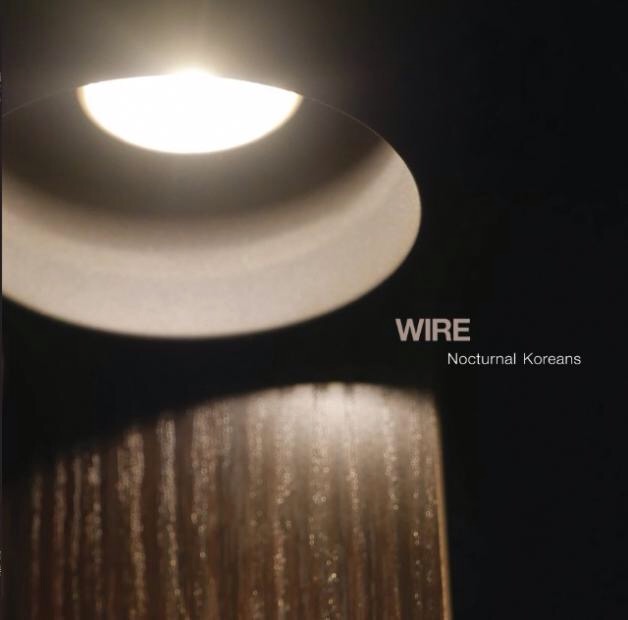
Wire – Nocturnal Koreans (Pink Flag album, 2016)

It’s hard to believe that it’s forty years since Wire began playing their highly individual approach to music. Nocturnal Koreans finds the band sounding as energised and vital as ever.

I reviewed the album for Clash. My review can be found here.

(c) 2016 Mat Smith / Documentary Evidence for Clash

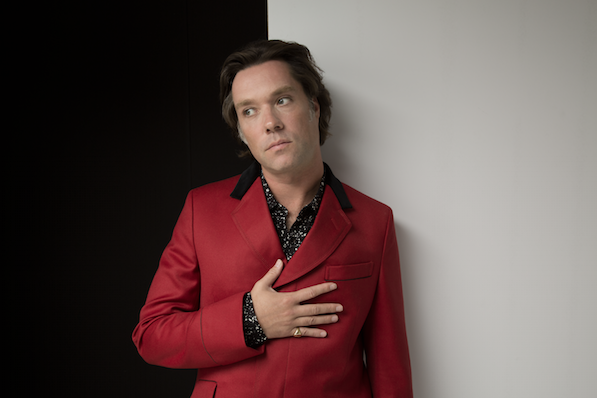
Rufus Wainwright interview (Clash, 2016)

I’ve been a fan of Rufus Wainwright for about ten years now, and for a long time his music has been the soundtrack to all sorts of ups and downs in my life, from the highest highs to the lowest lows. So to get the opportunity to interview someone whose music is so important to me was something of a career high.

The interview was focussed on Wainwright’s album of Shakespeare sonnets, Take All My Loves, which has a further personal significance for given I grew up in Stratford-upon-Avon, the birthplace of Shakespeare, meaning I was surrounded by the importance of the playwright for a significant chunk of my early life.

My interview can be found here.

(c) Mat Smith / Documentary Evidence for Clash

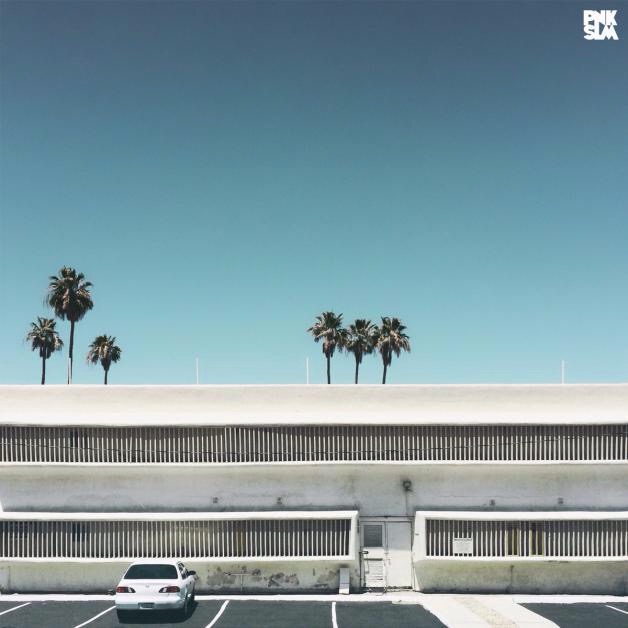
Beach Skulls – Slow Grind (Pink Slime album, 2016)


I reviewed the debut album from Beach Skulls for Clash. My review can be found here.

Ignore the one line summary – this is like anti-shoegaze music, and an easy candidate for my upbeat album of the summer so far. The thwarted architect in me loves the sleeve.

(c) 2016 Mat Smith / Documentary Evidence for Clash

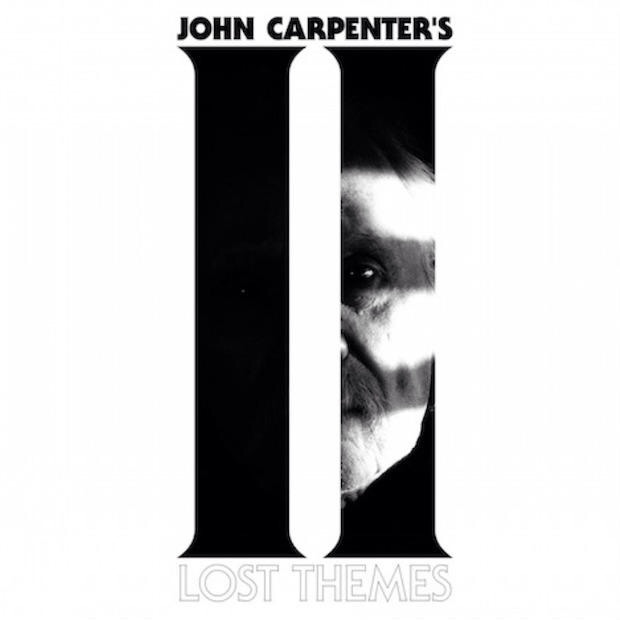
John Carpenter – Lost Themes II (Sacred Bones album, 2016)


I reviewed John Carpenter’s Lost Themes II album for Clash. My review can be found here.

(c) 2016 Mat Smith / Documentary Evidence for Clash

onDeadWaves – On Dead Waves (Mute album, 2016)


onDeadWaves
is a collaboration between two Mute artists, both of whom have been at the label during the EMI years as well as the new, independent-once-more phase – Polly Scattergood and James ‘Maps’ Chapman. Their debut album, On Dead Waves is that rare example of something that is far, far, far greater than the sum of its parts.

I reviewed the album for Clash and you can read my review here.

On Dead Waves is released on May 20. The duo play a free show in London on June 7. For more information, go to the onDeadWaves Facebook page.

(c) 2016 Mat Smith / Documentary Evidence for Clash

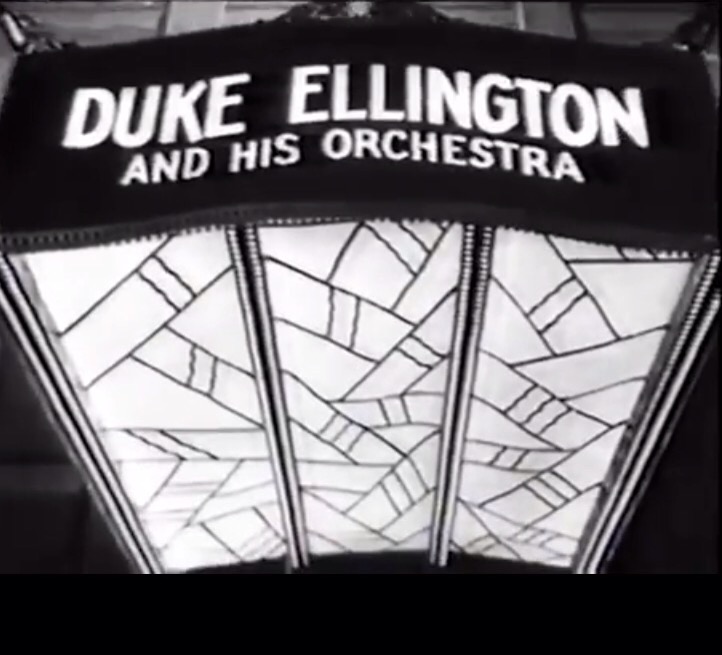
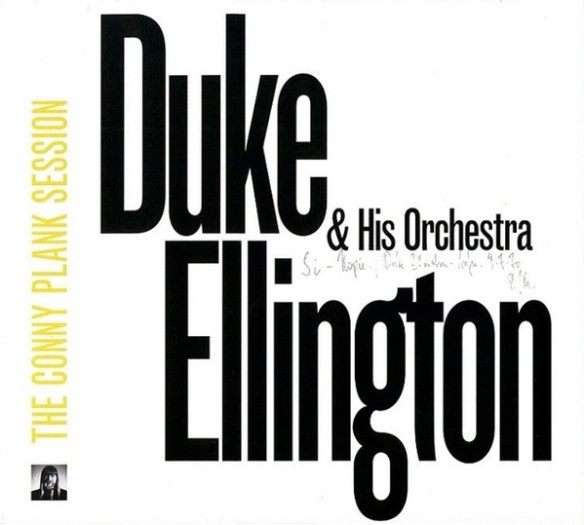
Duke Ellington & His Orchestra – The Conny Plank Session (Grönland EP, 2015)


At least as a concept, the idea of two musical legends – though operating in two vastly different, and arguably incompatible arenas – coming together as on this EP has the capacity to make the hairs on your neck stand to attention.

Edward Kennedy Ellington, better known as Duke, was undoubtedly the most famous big band leader. From 1923 until his death In 1974, Ellington presided over a body of work that encompassed so many memorable tunes that it sometimes feels like no-one else ever bothered to write a standard while he was around. Although generally written for his orchestra, it’s remarkable testament to the quality of Ellington’s compositions that they sound just as good performed by a smaller group (see The Dave Brubeck Quartet’s Newport Jazz Festival recording from 1959 for proof); heck, even The Wiggles had a crack at an Ellington tune, giving rise to the possibility that a generation of post-millennials might be switched on to swing era influences rather than abysmal pop music.

Despite learning his chops in venues like Harlem’s Cotton Club, places synonymous with jazz music, Ellington never considered his music jazz – he just thought of it as great American music, and that’s exactly what jazz is.

If the Duke was a compositional genius, Konrad Plank was similarly gifted in the environment of the recording studio. The artists he worked with is nothing short of awe-inspiring, taking in the likes of Kraftwerk, DAF, Brian Eno, Eurythmics, Neu!, Ultravox, Can, Devo and countless others. From 1969 until his untimely demise in 1987, Plank had worked across genres ranging from prog rock, Krautrock, the earliest forays into synth music within popular music, and even developed a type of proto-techno in collaboration with Dieter Moebius. His studio just outside Cologne was legendary, as was his prowess as an engineer.

DAF’s Gabi Delgado, who I interviewed last year for Electronic Sound gave me some insight as to just how important Plank was in the development of the gritty Deutsche Amerikanische Sound. Plank thought that the humble Korg that DAF brought to the studio was far too tinny and plastic-sounding, so he found a way to capture the natural sound of the synth via bass guitar distortion pedal effects, captured live in his studio via normal ambient mics. The result was something more edgy, but also more naturalised. Not quite like the aural fullness from a big band like Ellington’s, but certainly more human than the Korg without any help.

So, two legends, operating in vastly different and seemingly incompatible fields. Aside from working on sax giant Peter – father of Blast First artist Caspar – Brötzmann’s More Nipples album, jazz was notably absent from Plank’s repertoire, and aside from a bit of electric organ, Ellington’s music was pretty pure. The idea of Ellington asking Plank to make his orchestra sound dirty was never going to happen. And yet here we find Ellington, in July 1970 and toward the end of his career, working in the very studio out of which Plank was already carving a very distinct niche.

In truth, it could have been any studio in Cologne. Ellington was a furiously active composer, always trying out new ideas right to the bitter end, and so it wasn’t uncommon for him to usher his band into any available studio to work through new material, typically with little notice. Therefore the recordings of these two pieces – ‘Alerado’ and ‘Afrique’ – at Plank’s place were only made because his studio happened to be free for Ellington to rehearse in, because Plank’s rates were low, or because it was big enough to house Ellington’s band. Studios are commercial enterprises, and Plank was no different in this regard. There’s a fine line between struggling for your art and the breadline.

Critics have commented that the key level of intrigue in this release lies in being able to see Ellington’s compositional methods at close quarter. Both ‘Alerado’ and the drum-heavy ‘Afrique’ have appeared elsewhere on Ellington collections, but here we’re presented with three different takes of each piece, each of which subtly varies in terms of either arrangement, the tempo or duration. That said, to the untrained ear, both sound pretty complete on the first take (with the possible exception of how prominent Wild Bill Davis’s organ is on ‘Alerado’; it’s much less conspicuous by the final take), but when you contrast the third take with the first they sound world’s apart in terms of exactness. Ellington was a perfectionist of the highest order, and this confirms it.

He was also trying out a slightly reconfigured band after the death of his go-to alto saxophonist Johnny Hodges and a couple of new recruits, trying out flugelhorn player Fred Stone and putting in a rare flute solo; to an Ellington newcomer it will just sound like a big band going through their paces, but it was in fact Ellington constantly reimagining his orchestra.

Less obvious, but equally important, is that these recordings indicate how naturally accomplished Conny Plank was, even at this early stage in his studio career. Being able to engineer and record a full big band orchestra is a skill usually only reserved for the most specialised studio boffin, usually at cavernous mega-studios like Abbey Road. Assuming that Plank did engineer these sessions rather than just renting out his studio space for another hand to curate proceedings, it shows him to be just as adept at capturing a huge live band as he would do with smaller set-ups or where a lot of the action could be achieved on his side of the mixing desk, or with a recording like Eno’s Music For Airports which was barely there in comparison with the full sound that Ellington bashed out.

There’s undoubted curiosity value here whichever way you look at it. Just don’t go expecting to hear some radical reworking of a trademark sound. This is Ellington doing what he did best, and Plank more than proving his worth in the environment of a studio that would never again see quite so many players arrive en masse.

(c) 2016 Mat Smith / Documentary Evidence

Larry Levan – Genius Of Time (Universal compilation, 2016)

  
Larry Levan was a major figure in the New York club scene of the Eighties, and The Paradise Garage on NYC’s King Street where he had his residency was the day-glo decade’s answer to Studio 54. As a DJ Levan was legendary; as a remixer he applied his dancefloor nous to his work in the studio, developing mixes that focussed on the groove but emphasised soulfulness over alien electronics and overly-regimented 4/4 beats. 

Universal have released a compilation of 22 mixes, edits and extended versions by Levan. I reviewed the album for Clash. You can read my review here.

(c) 2016 Mat Smith / Documentary Evidence

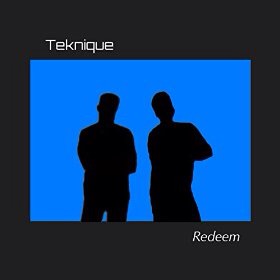
Teknique – Redeem (Teknique EP, 2016)


Teknique are a duo of Aaron Young and Jeff Barringer. The pair recorded a truly brilliant electronic pop in the Nineties which was shopped around various labels, including Mute, but was criminally not picked up by anyone. Thanks to Bandcamp it’s now possible to hear that first album (Nightfall) and it’s well worth checking out.

Young and Barringer have decided – wisely, judging by the results – that the time is right to reconvene the Teknique project, starting initially with an EP of three new songs padded out by various remixes and extend versions.

The three new tracks are authentic electronic pop pieces drawing on the legacy of over thirty years of reference points while also sounding fresh and innovative. Opener ‘Fade Away’ feels like a melancholy soundclash between Depeche Mode’s ‘Precious’ and Pet Shop Boys’ ‘This Must Be The Place I’ve Waited Years To Leave’, and anyone with a cursory knowledge of either song will know how heavy the mood on such a mash-up would sound; here Barringer concerns himself with regret and sadnes, only allowing a brief slither of optimism to filter through around the middle eight.

‘Jealous’, by comparison, feeds off a retro Nineties Euro-disco mood that was ripe for rediscovery, fusing bold, strident vocals with thudding beats and heavy synth work. ‘I Confess’, the last of the three new tracks has a sunny, Balearic feel mixed with squelchy analogue-esque passages and guitar sounds; the track has a muted optimism, as if Aaron Young (who sings this track? held himself back, even as the musical backdrop tries to reach a euphoric crescendo.

The EP includes an extended mix of ‘Fade Away’ while Maxi-Man wades in with bludgeoning hard techno retreads of ‘Jealous’. The more subtle mixes of the same track from Daybreakers – an alias of Koishii & Hush – isolate the hidden depths of the track and turn it into a slick, tight dancefloor number.

(c) 2016 Mat Smith / Documentary Evidence
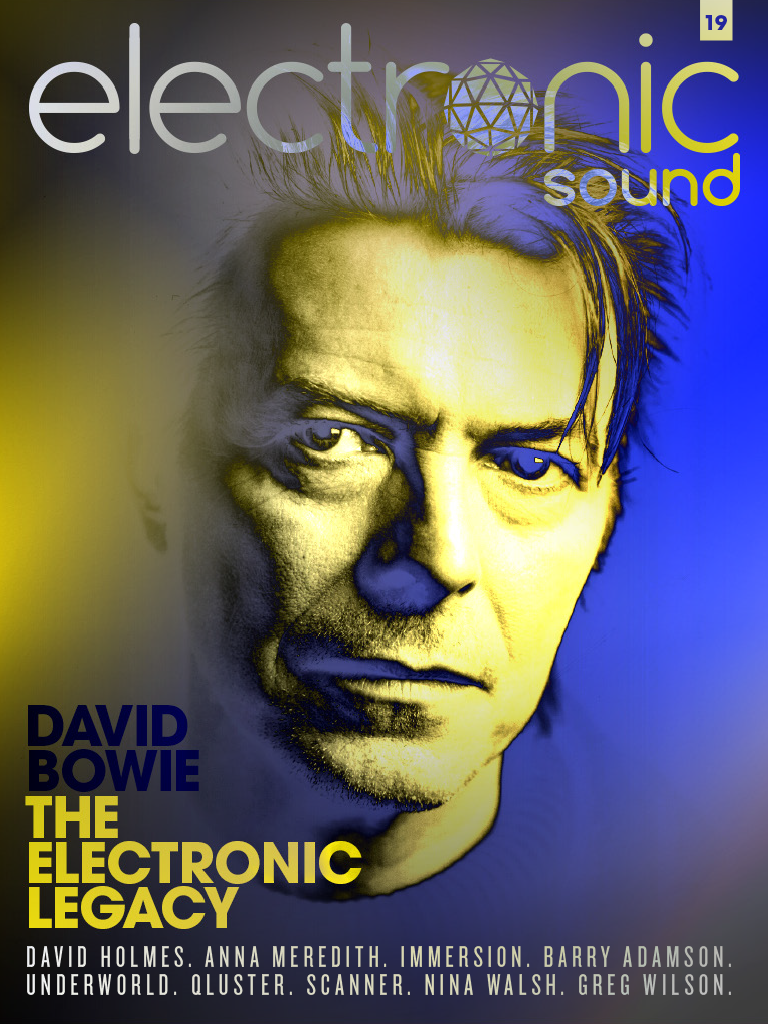
Electronic Sound Issue 19

  
Issue 19 of Electronic Sound is available now, either at electroni sound.co.uk or the iTunes App Store. Appropriately, this issue focuses on the electronic legacy of the sorely-missed David Bowie.

I interviewed Colin Newman and Malka Spigel (aka Immersion) for this issue on the occasion of the duo dusting off their electronic project for the first time since performing at the Royal Festival Hall for Wire‘s spectacularly artsy comeback in 2000. I was there that night, as you can probably tell from my interview. Elsewhere in this issue, I wrote a short piece about a thrilling band called HÆLOS, and reviewed albums by The Choir Of Young Believers, Public Memory and my new favourite band LNZNDRF.

(c) Mat Smith / Documentary Evidence