Jorge Punaro – An Introduction To Mute (Spotify playlist, 2014)

Jorge Punaro - An Introduction To Mute

At Documentary Evidence, we like to think of ourselves as pretty knowledgeable about all things Mute, but Jorge Punaro is the ultimate expert, and his collection includes some of the most sought-after items in the back catalogue of the label.

By way of proof, Jorge has obsessively compiled this extensive Mute playlist on Spotify, consisting of 133 tracks available on the platform presented largely in alphabetical order. Jorge even points out that the full playlist – containing tracks from every artist that recorded for Mute and many of its sub-labels – contains a whopping 153 tracks, but that twenty artists aren’t available on Spotify.

This painstakingly-prepared playlist runs for a staggering 12 hours and can be found here.

Thanks to Jorge.

(c) 2014 Mat Smith / Documentary Evidence

Nick Cave Introduces The Gospel According To Mark (Canongate book, 1998)

'The Gospel According To Mark' book artwork

canongate | book | 1998

Nick Cave supplied an illuminating introduction to this small book, which formed part of a series of £1 editions of Biblical chapters. Other works in the series saw Will Self scribing an introduction to Revelation, and Fay Weldon introducing Corinthians.

I consider this illuminating, principally because it seems to offer up something of an explanation for the transition that Nick Cave’s music underwent as The Bad Seeds extrapolated the visionary fire and brimstone works that fell easily out of The Birthday Party‘s howling reverie, stretched that until it snapped, leaving a more mellow, almost meditative sound. ‘Up Jumped The Devil’, so the song goes, but despite running amok through Murder Ballads, it was pretty clear he was running away from Nick Cave.

Cave’s initial disdain for everything New Testament stems, according to his introduction, from his time in the Wangarafta Cathedral Choir in his pre-teens, and he uncharitably describes the book as ‘wishy-washy’ at best and ‘the decaf of worship’ at worst. The interest in the vengeful God of the Old Testament, meting out punishment and retribution to the nascent residents of his planet came from Cave’s interest in violent literature in his early twenties, fully explaining the nihilism which dominated both The Birthday Party and Nick’s own self-abuse.

So, what prompted the shift in focus from the Old to the New, the angry to the reflective? ‘You grow up,’ Cave explains. ‘You do. You mellow out. You no longer find comfort watching a whacked-out God tormenting a wretched humanity as you learn to forgive yourself and the world.’

Cave attributes his turn toward the New Testament to a vicar who suggested he start with this very gospel, ostensibly because it was the shortest. He enthuses over Mark’s grasp of enthralling narrative gestures and mysterious simplicity, his portrait of Christ as a solitary figure and one focussed on the fate that he knew was ahead of him. Cave also cites Mark as continuing to influence his spirituality and religiousness: ‘The essential humanness of Mark‘s Christ provides us with a blueprint for our own lives, so that we have something that we can aspire to, rather than revere, that can lift us free of the mundanity of our existences, rather than affirming the notion that we are lowly and unworthy.’

It’s a long, long way from ‘Nick The Stripper’ but delivered with such a compelling grasp of theology that it may well have prompted a religious conversion among a few fans with its enthusiastic words, much like Mark did for Cave himself.

(c) 2014 Mat Smith / Documentary Evidence

Erasure – A Little Raspberry-spect (cocktail)

Image

IMG_20140531_204657

So, following up my post last week about the Blue Savannah cocktail from the Snow Globe boxset booklet of recipes, I decided that the next one on the list would be the A Little Raspberry-spect. Clearly, this is somewhat clumsily named after what I recently described as Vince Clarke and Andy Bell‘s signature song, ‘A Little Respect’, and just like that single, this one has hit written all over it.

This is a mix of gin, lemon juice and muddled raspberries, the tartness of which is offset by sugar syrup (I used agave syrup, which has a lower GI, whatever that means, and where the taste is a bit less in your face). The recipe in the Snow Globe book specifically calls for Beefeater gin, but I wasn’t going to go and buy some just for this, and instead used the dregs of some Tanqueray that have been skulking in the back of the drinks cabinet since Christmas. (The second time around we used vodka and that worked just as well.)

This drink is refreshing, sweet / sour, brilliantly seasonal and provides a neat use for raspberries that have gone a bit squidgy and which would otherwise be destined for a smoothie if you can be bothered, or the bin if you can’t. It also looks pretty darned chic as well, and might well replace the relative heaviness of Pimm’s round our way when summer really gets going.

(c) 2014 Mat Smith / Documentary Evidence

Yeasayer – Fragrant World (Mute Records album, 2012)

Yeasayer 'Fragrant World' LP artwork

mute artists | lp+cd/cd/i stumm346 | 20/08/2012

If 2010’s Odd Blood was Yeasayer‘s attempt to have what the band’s Chris Keating described at the time as a ‘dialogue with pop’, third album Fragrant World is more or less a reaction against the dominance of that album’s deliberately anthemic sound. On Odd Blood that approach yielded huge tracks like ‘Ambling Alp’ and ‘O.N.E’ but it also left Keating and the others – Anand Wilder and Ira Wolf Tuton – feeling a little dismayed that the audience at their shows really only knew and cared for those songs.

Taking its seemingly pastoral title from a vision Keating had of a dystopian, Ballardian world devoid of smell, Fragrant World was recorded in the band’s Brooklyn home at the studio of Daniel Lopatin, also known as experimental musician Oneohtrix Point Never. Whilst it may sound much more electronic than its predecessor, with little unprocessed guitar to be heard, during an interview with Keating that I did for Clash, he insisted that the record was created using plenty of guitar and bass sounds, but that those were used to trigger samplers and various sound sources alongside pure electronics. When I suggested that actually it isn’t a very electronic record at all, he challenged me to rethink my concept of what makes an electronic record, it not being necessary to think of such a record as being dominated by traditional keyboards and synths.

One of Yeasayer’s more characteristic facets, namely tracks which seem capable of being depressing and uplifting at the same time, is never very far away. Opening track, ‘Fingers Never Bleed’ is a case in point. Built on a jerky rhythm, Anand Wilder delivers a strained vocal complete with resigned observations on people who want to take the easy option of playing air guitar and committing corporate fraud (an interesting slant that suggests both are equal sins) so that their ‘fingers never bleed’. Sonically busy, the song sets the tone for Fragrant World with lots of loops, skittering percussion, relaxed guitar and piano, the elements coalescing into a vaguely uplifting chorus blended with whining electronics that leaves you characteristically unsure how you should be feeling. ‘Demon Road’ is another track with an Odd Blood feel, albeit one that is dubby, steady, regretful and anguished. ‘All hell is gonna break loose,‘ sings Keating, the track having that same, complex, anguished anthemic quality that defined Fragrant World‘s predecessor. The conclusion sees vocodered vocals blended with straight harmonies, something about the stridency of the combination feeling like an electro-country missive.

Keating told me about his enthusiasm for late Eighties Chicago house when I spoke with him. Like many of the echoes of other musics that get filtered through Yeasayer’s sonic lens, it’s not something that overtly features on Fragrant World. Nevertheless, tracks like ‘No Bones’ hint at that interest. After some stop-start robotic beats, there’s a point in Keating’s ‘chorus’ where the beats become a sticky 4/4 mesh, much like a breakdown in a DJ’s set, sending the not-quite fontman into rapturous, housey euphoria. Stand-out track ‘Reagan’s Skeleton’ has a droning bassline, and even features the classic ‘ah yeah‘ sample, once the staple of early dance music records. Over thudding beats, Keating delivers a vocal about the evil red-eyed skeleton of Reagan coming at you, horror-film stylee, in the moonlight. It’s urgent and slick, blending evocative Eighties sounds with classic dance music synths and altogether more modern sensibilities.

If Keating’s songs aim for some sort of transcendancy, Wilder’s songs are altogether more introspective. ‘Blue Paper’ opens with processed sounds that could have been lifted from an Indian cinema soundtrack. Wilder here delivers a cynical tale of a rich girl who suddenly decides to reconnect with nature, moving away from her spoiled life, something Wilder can’t ‘buy for a second‘. Musically, it’s subtle, gentle pulses and shimmering sounds until the middle eight of the song, where things get a bit wonky, the track concluding with a retro electro rhythm and some nice vocal harmonies about writing something on blue paper. Live highlight ‘Devil And The Deed’ has fractured electro beats, electronic slide guitar and occasional synth interjections; the track maintains a minimal footprint until the chunky, desperate chorus, which seems to be about sexual pressure, declining moral standards, and difficult, agonised decisions. There are also two beautiful instrumental sections which have an electronic musicbox melody, evoking warm memories of Depeche Mode‘s ‘Shouldn’t Have Done That’ from This Broken Frame.

Two of the most unusual songs close out the album. ‘Folk Hero Schtick’, is, on the surface at least, a joyous, upbeat jangly electro pop with a vocal that sounds suspiciously like Wilder doing an impression of Level 42’s Mark King. It seems to be a tired plea for a famous folk hero (Dylan?) to call it quits. Lots of big electronic sounds and a fair amount of processing make for a sprawling, but engaging skewed pop highlight of Fragrant World. Album finale ‘Glass Of The Microscope’ starts as classically low-key end to the album, with wistful vocals reminiscing about nice days and sweet memories. After some beautiful, serene ambience, sympathetically processed vocals take a turn toward the unexpected with the misanthropic line ‘in truth we’re doomed‘. It’s wryly humourous with its Dad’s Army-style sense of panic, but as an ending point it’s pretty depressing, even if the track’s final moments are among the most stirring on the whole album.

In the US, the album was released as a special edition LP with a free 7″ of the non-album track ‘Fragrant World’ backed with an exclusive remix of ‘No Bones’ as well as a t-shirt. Here in Blighty, Mute didn’t opt for such shenanigans, and the bonus track was only made available as a iTunes pre-order exclusive. Later in the year, at the Rough Trade East Mute showcase with high-end personal audio equipment manufacturer Bowers & Wilkins in December, the indie music chain ran a promotion to get a free copy of the 7″ if you bought any Yeasayer release. (Apparently there are two versions of the 7″ – a black one and a glow-in-the-dark one). Quite why the band decided to leave ‘Fragrant World’ off the album is something of a mystery, particularly as it was part of their live set, as it’s a really good track – lots of deep electronic sounds, organic percussion, really evocative, weary vocals from Chris Keating and even some quirky guitar and electronic sax tones. The Helado Negro mix of ‘No Bones’ is a bit of a mess, a jumble of snatched sections from the original assembled into a weird collage.

Yeasayer 'Fragrant World' 7" artwork

Videos for all eleven songs from the album were put on various websites for around 48 hours at the start of August 2012 under the banner PSCYVOTV (PREEMPTIVE SELF-COMMISSIONED YEASAYER VORSTELLUNG or TRACK VISUALIZER), allowing those with plenty of time to kill a wild goose chase around the farthest corners of the web to see director Yoshi Sodeoka’s vignettes and hear the album before its official release.

Track listing:

lp/cd/i:
A1. / 1. Fingers Never Bleed
A2. / 2. Longevity
A3. / 3. Blue Paper
B1. / 4. Henrietta
B2. / 5. Devil And The Dead
C1. / 6. No Bones
C2. / 7. Reagan’s Skeleton
C3. / 8. Demon Road
D1. / 9. Damaged Goods
D2. / 10. Folk Hero Shtick
D3. / 11. Glass Of The Microscope
12. Fragrant World (iTunes bonus track)

7″:
A. Fragrant World
B. No Bones (Helado Negro Remix)

First published 2012; edited 2014.

(c) 2014 Mat Smith / Documentary Evidence

Si Begg – Extreme Environments (free album, 2014)

Si Begg 'Extreme Environments' download artwork

self-released | download | 26/05/2014

Extreme Environments is a free, download-only album from former NovaMute artist Si Begg made available through the Soundcloud platform.

The album is instantly more sonically intricate than Si Begg’s last album proper, 2013’s Permission To Explode, showcasing a strand of brutal ambience across its ten short tracks. Howling drones, glitches, crisp static and ominous tones are responsible for giving this a largely threatening tone, offset by occasional periods of reflection and slowly-evolving, heavily-shrouded melody. ‘Location 4’ almost sounds like a finely wrought piece of minimalist composition or the soundtrack to a particularly harrowing scene from a Darren Aronofsky flick, while the tranquil euphoria of ‘Location 6’ could be a missing track from Brian Eno’s The Shutov Assembly.

‘It was originally going to be a couple of tracks to show off my new sample library and instrument [Kontakt] that I developed,’ explains Si Begg by email, ‘but then I had so much fun I decided to do a whole LP of this kind of detailed / immersive stuff. Then I thought I’d whack it out for free as it’s not something that is in any way commercial and also it hopefully will promote the product a bit along the way.’

Since departing NovaMute, Si Begg has made a name for himself as a commercial composer for advertising and other media. Such a career move inevitably requires a degree of flexibility and the ability to switch between styles on a whim. Whilst ostensibly an ambient giveaway, Extreme Environments nonetheless highlights that Si Begg can turn his hand to more or less anything with an equal sense of space and depth.

Read more about Si Begg’s Extreme Environments sample library and Kontakt instrument here.

Download the free Extreme Environments album from Soundcloud here.

Stay tuned to Si Begg’s YouTube channel for a series of videos to go with the album.

Track listing:

dl:
1. Location 1
2. Location 2
3. Location 3
4. Location 4
5. Location 5
6. Location 6
7. Location 7
8. Location 8
9. Location 9
10. Location 10

(c) 2014 Mat Smith / Documentary Evidence

Erasure – Blue Savannah (cocktail)

Image

Erasure - Blue Savannah (cocktail)

To celebrate the announcement of the new Erasure album yesterday, I thought it was probably high time to take a proper look inside the box of their last album, 2013’s Snow Globe. Specifically, I thought I’d raise a glass to The Violet Flame by mixing one of the Erasure song-themed drinks included in the novelty cocktail booklet that came inside the Snow Globe box.

Alongside my love of all things Mute, another of my interests is making cocktails. I don’t say that as code for enjoying getting drunk – far from it; I’m not good at that at all – but rather I genuinely enjoy the process of taking ingredients, following recipes and mixing interesting drinks.

I selected the Blue Savannah, named in honour of the third single taken from Wild!, for two reasonably sensible reasons; first because I happened to have all of the ingredients in the house already, and second because Mrs S tends to prefer longer, juice-based cocktails.

The Blue Savannah is a vodka-based drink mixed with blue curacao, orange and pineapple juices which is then strained into a highball glass over ice. Anyone with a rudimentary grasp of colours will know that mixing blue with orange will produce a greeny, almost turquoise hue, and so it is with the Blue Savannah, as can be seen in the photo. Pineapple juice, when shaken and strained, produces a velvet foam (as does egg white), hence the ‘head’ that’s visible on the drink.

Curacao is a liqueur made with a bitter, orange-esque fruit called lahara. When mixed with sweet juices as it is in this drink, curacao has the effect of cutting through sweeter flavours and toning down fruit sugars. Plus, in the case of blue curacao, it naturally adds a distinctive colour to proceedings. Not being a fan of really sweet cocktails, I really liked the addition of some bitterness. Mrs S was less convinced, saying that something in the drink was bothering her throat.

I will ultimately work my way through the other cocktails in the book over the next few months. I’ll even tackle the Love To Hate You, a challenging drink that includes Marmite alongside fruit flavours.

Cheers.

(c) 2014 Mat Smith / Documentary Evidence
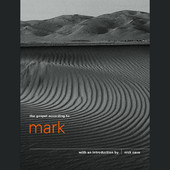
Recoil – Bloodline (Mute Records album, 1992)

Recoil 'Bloodline' LP artwork

mute records | lp/c/cd stumm94 | 04/1992

Released in 1992 between Depeche Mode‘s Violator and Songs Of Faith And Devotion, Recoil‘s Bloodline found Alan Wilder collaborating with Moby, covering The Sensational Alex Harvey Band’s ‘Faith Healer’ with Nitzer Ebb‘s Douglas McCarthy and deploying the vocals of Curve’s Toni Halliday; nicking swathes of vocals from bluesman Bukka White, and even dropping in a spoken word prayer from Diamanda Galas.

Unlike Wilder’s previous two releases as Recoil (1986’s 1+2 and 1988’s Hydrology), Bloodline showcases a more uptempo, song-based album; whilst his painstaking studio endeavours and long-form sound designs are in evidence across Bloodline, what emerges is an album that benefits from having the various vocalist contributors add their respective sections, even if at times it’s more pop than one might have expected. Then again, if there was one criticism of Wilder’s two previous releases, it was that they didn’t fit into any particular electronic genre – too pop to be ambient and too organic at times to be suited to the electronic music purist; clever, certainly, but somewhat impenetrable.

I like to think that Recoil showcases a certain ‘big budget’ electronic music. It’s the difference between a big Hollywood picture with all the special effects you can imagine and a tiny indie flick. Sonically, it feels like Wilder had access to all the best kit and equipment because of his role in one of the biggest bands in the world; in the hands of a bedroom-confined electronic musician the result would have been different and perhaps a little edgier, a touch grittier maybe. According to Wilder’s helpful Q&A on his website, the reality was somewhat more toward the ‘small’ end of the studio spectrum compared to his later studio, with Bloodline put together in the back room of his London home. Nevertheless, Bloodline still has a glossy high-end sheen to most of the tracks.

One of the most surprising (and most adventurous) tracks is ‘Curse’, which features Moby – at this point still in his pre-Mute Instinct days – rapping desperately about social and moral issues. I say surprising, because Moby hasn’t ever been known as a rapper; he’s clearly dabbled in a whole spectrum of different musical genres from ghostly ambient stasis to thrash metal but actually rapping remains something of an oddity. To confound things yet further, ‘Curse’ finds Moby’s vocal pitch-shifted downwards, giving his contribution a dark, aggressive quality, even if it means that his voice is unrecognisable. Wilder drops in slowed-down wheezing sounds, beats that sound like they originate from a steam-powered production line and liquid electro bass riffs. In keeping with a number of other tracks on Bloodline, ‘Curse’ is lengthy, the second half here being dominated by a more robust beat and samples of a manic orator delivering a religious protest speech.

‘Electro Blues For Bukka White’ proves categorically that Moby’s sampling of old blues records and hitching them to more modern soundscapes wasn’t necessarily all that innovative on Play, Wilder here doing the same with lengthy a cappella section of White’s vocal while a throbbing electro rhythm and some meditative bass noises drift along underneath. At times it feels like Depeche’s ‘Waiting For The Night’ from Violator only with a more pronounced beat. Neat symphonic strings add an unexpected emotional quality to this song, highlighting just how adept Wilder has always been at forcing out the emotions in a song. A similar effect is achieved on the closing track, ‘Freeze’, which has an austere sound, not dissimilar from some of Wilder’s more grandiose classically-informed work with Depeche at the time of Music For The Masses.

One of the best tracks on Bloodline is ‘The Defector’, a pulsing and mostly instrumental electro track that was Wilder’s self-confessed homage to Kraftwerk; that’s certainly evidenced in the thippy electronic sounds and clattering industrial beat reminiscent of Trans-Europe Express-era Kraftwerk. That said, ‘The Defector’ retains a robustness to its rhythms and synths that Kraftwerk have never quite been able to deliver. The two tracks featuring Toni Halliday (the languid ‘Edge To Life’, mooted as an ultimately abandoned second single, and the harder ‘Bloodline’) are among the most ‘pop’ tracks here, Halliday’s strained vocals for some reason getting a little too close to Madonna for comfort. Wilder’s backdrop, particularly on the twitchy ‘Bloodline’ has an edginess, an definite apocalyptic tone, but on the whole, while they’re undoubtedly clever sonically, there’s something vaguely disappointing about these two songs that I can’t quite put my finger on. ‘Bloodline’s saving grace is the dense middle section featuring lots of wordless singing from Halliday, dubby guitar plucks a la ‘Policy Of Truth’ and all sorts of drama, not least from Jenni McCarthy (Doug McCarthy’s daughter) who provides an unsettling vocal section.

Bloodline also includes two unnamed link tracks, one between ‘Electro Blues For Bukka White’ and ‘The Defector’ and one between ‘Curse’ and ‘Bloodline’. The former is a short atmospheric piece with a threatening, claustrophobic quality, a little like being surrounded by looming clouds of noxious electronics; the second features a heavily-processed Diamanda Galas delivering the Lord’s Prayer, creating a similarly unsettling effect.

Galas’s religious contribution, whether you can make it out or not, as well as the occasional use of preacher samples, highlight a vague theme that exists at various points during Bloodline. The album’s sequencing, from the possessed sounds of a man speaking in tongues at the very start of ‘Faith Healer’ through to the redemptive, elegiac sound of ‘Freeze’ creates the impression of someone moving from darkness to light, a theme that Wilder’s bandmate Martin L. Gore would use to devastating effect time after time in his writing for Depeche Mode. If anything, Wilder’s approach to enlightenment and salvation on Bloodline is more subtle and somehow all the more dangerous for it.

***

I bought this album whilst on holiday in Southend-on-Sea during Whitsun week in 1992, a few weeks before my mock GCSEs, along with Mute’s International compilation and Nitzer Ebb’s Belief. As it’s Whitsun this week, I decided to head down memory lane and re-post this review from 2012.

Thanks to Andy, Lyn and Jonathan for their help with this review.

Track listing:

lp/cd/c:
A1. / 1. Faith Healer
A2. / 2. Electro Blues For Bukka White
A3. / 3. The Defector
B1. / 4. Edge To Life
B2. / 5. Curse
B3. / 6. Bloodline
B4. / 7. Freeze (cassette and CD bonus track)

First published 2012; edited 2014

(c) 2014 Mat Smith / Documentary Evidence

Erasure – The Violet Flame (Mute Records album, 2014)

Video

Erasure release their new album, The Violet Flame, on 22 September through Mute.

Listen to an extract from a new track from the Richard X-produced album via YouTube.

The album will be released as a CD, 2CD, download and obligatory, financial destitution-ensuring boxset and will be accompanied by a global tour.

More info at erasureinfo.com

Erasure – A Little Respect (HMI Redux) (Mute Records single, 2010)

Erasure 'A Little Respect (HMI Redux)' download artwork

mute records | i mute451 | 05/12/2010

Erasure re-recorded what might well be their signature song, ‘A Little Respect’, in 2010. Released as a one-track download, the single was issued in support of the Hetrick-Martin Institute, a New York-based non-profit organisation for lesbian, gay, bisexual, transgender or questioning (LBGTQ) youths between the ages of 13 and 24.

The charity’s name is taken in honour of its founders, psychiatrist Dr. Emery Hetrick and NYU professor Dr. Damien Martin who founded the Institution for the Protection of Lesbian and Gay Youth (IPLGY) in 1979. The organisation was renamed following the deaths of its co-founders and states its aim as follows: ‘The Hetrick-Martin Institute believes all young people, regardless of sexual orientation or identity, deserve a safe and supportive environment in which to achieve their full potential.’ (Source: HMI website)

‘A Little Respect’ has always had an anthemic quality, whether in the hands of Erasure themselves or in the likes of Wheatus or the many other acts who have subsequently co-opted the song for themselves (and there are plenty). At its heart is a simple, understated message of defiance and a polite demand for equal treatment. As a spirited call to respect a person just because they don’t fit in, have a different sexual orientation, a different belief system or any number of personal values that might not quite fit with the homogeneity that is the so-called ‘norm’, ‘A Little Respect’ has a universally simple appeal and it lends itself perfectly to HMI’s laudable goals. It’s an organisation that Erasure’s Andy Bell is a major supporter of, hence the re-worked version of the track that he and Vince Clarke put together – aided by the Hetrick-Martin Institute Youth Chorus – with proceeds going to the charity.

Fans of the original Stephen Hague-produced track will no doubt bemoan the springy, updated new arrangement (which ditches Vince’s guitar in favour of a crisper beat and shimmering electronic palette), but Andy Bell could probably sing this backward and it would still sound just as uplifting. The addition of the choir inevitably reminds the listener of the crowd at Rangers who seem to have co-opted the track as an unofficial anthem, but some deep soulful ad libs at the very end brings this right back into the warm nod to Motown that many of the tracks on The Innocents carried.

More information on HMI can be found here. A video for the single was released and can be viewed below.

Thanks to Jorge.

Track listing:

i:
1. A Little Respect (HMI Redux)

(c) 2014 Mat Smith / Documentary Evidence

Nick Cave & The Bad Seeds – Push The Sky Away (Bad Seed album, 2013)

Nick Cave & The Bad Seeds 'Push The Sky Away' LP artwork

bad seed ltd | lp/cd/cd+dvd/box/dl bs001 | 18/02/2013

Push The Sky Away is the first Nick Cave material to emerge since he parted company with Mute in the wake of his terminated Grinderman project, and the first Bad Seeds album since 2008’s Dig!!! Lazarus Dig!!!. Now bereft of long-term arranger Mick Harvey, the Dirty Three multi-instrumentalist Warren Ellis steps in and takes the role vacated by Harvey; since 2007 Ellis’ playing has filled the void left by Blixa Bargeld‘s guitar, he was Cave’s foil in Grinderman and the pair have realised several soundtracks together, showcasing a symbiotic relationship that has produced some of the best material in Cave’s back catalogue.

It’s precisely thirty years since the volatile young Nick Cave formed The Bad Seeds in Berlin following the demise of post-punk’s ravaged Birthday Party. Much has changed. Aside from a surprise reappearance of original Bad Seeds bassist Barry Adamson on two tracks here, not one of the original Bad Seeds line-up features in the group that bears the name today, but the core group of musicians that have been with Cave the longest remain in situ – Warren Ellis, Jim Sclavunos (percussion), Thomas Wydler (drums), Martyn P. Casey (bass) and Conway Savage (piano, organ). The fire and brimstone seems to have been exorcised effectively by two raucous Grinderman records and the Dig!!! Lazarus Dig!!! album in the middle, leaving Cave and co focussing more or less completely on the beautiful melancholia of the more serene moments of Abbatoir Blues / The Lyre Of Orpheus.

Your reaction to Push The Sky Away will thus depend on whether what you want from Cave is howling, just on the edge of being out of control blues-informed punk, or the mature ideology that has coincided with the establishment’s embrace of Cave as one of the finest songwriters of the past thirty years. If the former is what you’re looking for, you’ll be disappointed, since Push The Sky Away generally has the slightly maudlin atmosphere that provided the mood on The Lyre Of Orpheus‘ closing track ‘O Children’; all of which is fine, but as anyone who’s listened to the Velvet Underground’s lovely third album for a while will tell you, sometimes you just want to hear ‘Waiting For The Man’. The closest Push The Sky Away gets to anything like the Cave of his earliest Bad Seeds work is on ‘Water’s Edge’ or ‘We Real Cool’, where the growling bass that dominates the low-end reminds listeners of the apocalyptic ‘Tupelo’ from The Firstborn Is Dead. The rest of the album is delicate balladry, with almost psychedelic arrangements (such as the ephemeral title track), quiet musings and bewildered observations on subjects ranging from mermaids to Wikipedia to teenagers cavorting carelessly on the beaches of Hove outside Cave’s window. In the press release, Cave describes Push The Sky Away thusly: ‘I don’t know, this record just seems new, you know, but new in an old school kind of way.’

That sense of the ‘new’ comes through in the remarkable palette of sounds deployed on the album, much of it purportedly derived from loops prepared by Ellis. With Mick Harvey gone and Cave seemingly unwilling to pick up a guitar after Grinderman, the album is largely devoid of any six-string action, with only the stand-out ‘Jubilee Street’ carrying anything close to a guitar line. Ellis shines through as effective lead musician, tracks filled-out with his loops, violin, mandolin and other assorted instruments. The rest of The Bad Seeds literally seem to play second fiddle to the dominance of Ellis, offering up loping basslines, intricate percussion and sprinkles of beautiful piano. Nevertheless, it’s reasonably clear – and not necessarily a bad thing – that Ellis is the primary mood-maker here. The upshot is some of the most advanced music that the Bad Seeds have ever realised, often bordering on a sort of synth music offshoot that no-one has named yet.

Cave’s singing has matured into a distinctive, varied and considered voice over time. The rough edges are all completely gone, leaving a honey-coated rasp that feels a long way from the guttural bleatings of the Cave of the past, hunched over a microphone in apparent pain, spitting words and sibilant sounds forth like a man possessed. The pretty ‘Wide Lovely Eyes’ Cave – with Cave observing the funfare being dismantled and images of departure set to a backdrop of shoes being arranged carefully on a pebble beach – sees the beautiful pairing of Cave and Conway Savage reminding us of some of the most brittle moments of the Bad Seeds catalogue, wherein the tenderness long ago replaced the anger; on this and a number of other songs, Cave reminds me of Ed Harris’s character in The Hours, sat in his window watching the world go by, a resigned, tired air colouring proceedings.

The frontman reprises some of his humourous bluesy story-telling and diverse intonations on the obscure centrepiece, ‘Higgs Boson Blues’, namechecking everything from Hannah Montana / Miley Cyrus, Wikipedia, Robert Johnson, vague mythologies and Switzerland’s Large Hadron Collider; that and ‘Jubilee Street’ are the clear highlights of the album, both being the most fully-formed and musically complete pieces here. The former has a skittish, absorbing jazz-blues dimension; the latter has a rousing, slowly-developing mix of lovely rolling drums, acoustic guitar, percussion, full orchestration and a muted intensity as Cave rises up into the sky toward the end in angelic contrast to the devilish way he flew forth in ‘Mutiny!’ back in the day. ‘Jubilee Street’ (which may or may not be set on the much-altered street in Brighton now devoid of any of its original charm) has a strong and compelling narrative, touching on the darker side of life with a bleak tale of what sounds like a prostitute who gets moved on from Jubilee Street by Russians.

The rest of the album is sonically clever and absorbing, even if Cave sounds like he might be sleepwalking through his songwriting at times. Nevertheless, he’s managed to produce some truly lovely songs as well as a new-found observational capacity in tracks like ‘Water’s Edge’, wherein the opposing forces of London girls looking for a good time and local boys looking for something to do clash; like Quadrophenia for vampires and party girls. There’s also moments where his particular brand of Viz-style smuttiness and wry humour shine through. Overall, it feels like Laura Ashley wallpaper – nice to look at, perfectly inoffensive and fine in the background, but you wouldn’t decorate your whole house with it.

Thanks to Rhian at Big Mouth.

***

I’m reposting this on the occasion of the Push The Sky Away receiving the prestigious Ivor Novello Album Award, an incredible achievement for both Nick Cave and his publisher Mute Song.

Cave has deserved greater recognition for his songwriting for far too long, and I’m delighted that the rest of the music world seems to have caught up with those of us who always knew where his songs would ultimately take him. I just wish that it had been another album that had secured him that recognition; a year on, I still haven’t warmed to this album, and I personally feel that there are far better works than this in the Cave back catalogue.

Track listing:

lp/lp+7″/cd/cd+dvd/dl:
A1. / 1. We No Who U R
A2. / 2. Wide Lovely Eyes
A3. / 3. Water’s Edge
A4. / 4. Jubilee Street
A5. / 5. Mermaids
A6. / 6. We Real Cool
A7. / 7. Finishing Jubilee Street
A8. / 8. Higgs Boson Blues
A9. / 9. Push The Sky Away

7″/dvd:
C. Needle Boy
D. Lightning Bolts

First published 2013; edited 2014.