The Residents – Santa Dog (Superior Viaduct single, 2014)

The Residents 'Santa Dog' 2x7" artwork

reissue: superior viaduct | 2×7″ | 29/04/2014
original release: ralph records | 2×7″ rr1272 | 20/12/1972

It would be misplaced to state that Santa Dog, a double 7″ released in 1972 by the new Ralph imprint, firmly impressed the strange world of The Residents on the contemporary conscience. Misplaced, because hardly anyone heard it: 500 copies were pressed and mailed out by the label, a lot of them were returned and a further batch can be presumed to have been discarded, like unwanted Christmas gifts, by the baffled recipients of what looked like a strange corporate gift. The sleeve indicated that Santa Dog was an advert of sorts for the film Vileness Fats, a 14-hour epic that has never fully seen the light of day.

Given the few copies in existence, it’s no surprise that Santa Dog has become an expensive, sought-after artifact, much bootlegged and any copies that do come up for sale are pounced upon by moneyed fans of art-music-weirdness with intense zeal – one copy went on Discogs for GBP650. Mercifully, the Californian reissue label Superior Viaduct – a name which has all sorts of Residential nonsensicality about it – can now rescue us all from either financial ruin in the pursuit of this eleven-minute curiosity or horrible YouTube rips of the tracks, thanks to a new replica pressing of the original gatefold double 7″ which will set you back a mere fifteen dollars.

The original release was weird to its very centre; side D followed side A, side C more naturally followed B. Why Ralph did this, we’ll probably never know. Why The Residents decided to attribute the four songs here to four fantastically-monikered pseudonyms we’ll also never know. Check them out: Ivory & The Braineaters, Arf & Omega (featuring The Singing Lawnchairs), Delta Nudes, The College Walkers. All four ‘bands’ are linked by a uniform oddness or archly experimental aesthetic, but each does indeed sound like an individual band, of sorts. We assume, of course, that these really are pseudonymous groups of this supposedly San Francisco-based unit, but can we really be sure? With The Residents you can never be totally sure, and that’s part of the fun of the chase.

Each of the four pieces here are, effectively, collages; nothing stays in place for long, almost as if the technical limitations of specific tape-loop lengths meant that the layered recordings only had a short lifespan before being abruptly moved out of focus in favour if something else – a tropicalia-flecked rhythm, a chorus of vocals singing about (I think) kicking a cat, clattering distorted noise bursts. Heard as a whole, Santa Dog is both lighthearted, one might say almost twee, and yet malevolently dark at the same time; a subversive hand gesture whilst grinning innocently simultaneously. The Beatles, whose album sleeve The Residents would shamelessly co-opt later, did this more or less contemporaneously with ‘You Know My Name’, itself an assemblage of sundry disembodied short studio vignettes, and achieved the same effect with swathes of Sgt. Pepper’s Lonely Hearts Club Band; but whereas the Mop Tops flirted with the possibilities of musique concrète from within the confines of the richly-equipped Abbey Road, The Residents commenced their journey in that gear and never really changed it (a lidless eyeball cannot blink, after all).

‘Fire’, credited to Ivory & The Braineaters finds our vocalist delivering a performance that sounds like Bryan Ferry at his most tremulous, blended with assorted plunderphonics and an effortless wonky garage rock groove, almost as if The Residents might have been a straight R&B group at some point in their shrouded past. ‘Fire’ is the most accessible track here, if you squint; ‘Aircraft Damage’ has the feel of a radio play where the script had been crafted entirely from advertising slogans for mythical products, a (Santa) dog yaps in the background, a military drum rattles and ghostly voices fill the void left by the players; familiar Christmas melodies open ‘Explosion’ before things descend into a skronking over-amped free jazz stew – with manically-treated horns – and finally a queasy klezmer-style fiddle and chimes; ‘Lightning’ finds wandering Moog of almost cartoon-ish proportions getting jump-cut into a cycle of ominous drums and Latin rhythms spiked with clipped voices and the sort of future-facing sloganeering that might have graced a promotional video for Walt Disney’s original vision for his Experimental Prototype Community Of Tomorrow before an apocryphal newsroom tale involving a turkey and some cranberries concludes this (sort of) festive brain-melting record.

Superior Viaduct’s re-release of Santa Dog is faithful to the original, maintaining the double 7″ gatefold format, the quirky sequencing and the same faceless anonymity that surrounded the original mailing of this record. The Residents would return to Santa Dog many, many times over the years, becoming a seasonal staple like a Dickens novel realised by Zappa. Nevertheless, it is fitting – on a very wry level – that Superior Viaduct have opted to release a Christmas record at Easter.

Buy at www.superiorviaduct.com

Track listing:

2×7″
A. Ivory & The Braineaters ‘Fire’
D. Arf & Omega (feat. The Singing Lawnchairs) ‘Aircraft Damage’
B. The College Walkers ‘Explosion’
C. Delta Nudes ‘Lightning’

Thanks to Sam / Superior Viaduct.

(c) 2014 Mat Smith / Documentary Evidence
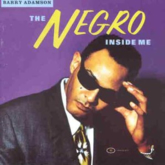
Barry Adamson – The Negro Inside Me (Mute Records EP, 1993)

Barry Adamson 'The Negro Inside Me' CD artwork

mute records | lp/cd stumm120 | 19/10/1993

Barry Adamson‘s 1993’s Paul ‘PK’ Kendall-produced 6-track The Negro Inside Me begins with a burst of spiralling horns before rushing headlong into an up-tempo Hammond organ versus James Bond jazz-funk groove; built around a recording of what appears to be Adamson’s publicist or manager trying to run through a list of engagements, interviews and appointments, at around three minutes, the track breaks down into a latin-edged cymbal-intensive percussion rhythm, before rebuilding and gathering greater momentum. ‘The Snowball Effect’ appears to be the most appropriate name for this rolling, energetic track.

‘Dead Heat’, with its varied collection of headcleaner scratched record samples, electronic noises and slow-mo hip-hop breaks wouldn’t have sounded out of place on a Massive Attack album. However, the orchestral textures piano motifs give this a totally different atmosphere from anything that Bristol collective could muster.

The outstanding ‘Busted (Michaelangelo Version)’, built around layers of percussive hip-hoppery and organ flourishes, sounds just like a gangster TV show soundtrack with its car-chase saxophone melodies and sparse and funky wah-wah guitar, Starting with some soulful female vocal textures, ‘Cold Black Preach’ gradually develops into a filmic, atmospheric work with an amazing bassline and urgent hip-hop breaks.

Re-setting and re-positioning an old song should not be slapdash; pop music is littered with failed, miserable attempts to do just that. Thankfully, Adamson’s revisioning of the simultaneously cheesy and sexual ‘Je T’Aime… Moi Non Plus’ – like his version of ‘These Boots Are Made For Walking’ with Anita Lane – is somehow respectful, taking the core melody and song structure of the original and adding a steady, bass-heavy groove. A duet with Louise Ness (with language training by regular Mute chanteuse Pascale Fuillée / Pascale Fuillée-Kendall), the vocals are somehow more coherent and loaded with barely hidden sexual desire than the Serge Gainsbourg original.

This 30-minute mini-LP closes with ‘A Perfectly Natural Union’, a slow and lounge-y piece of café jazz for piano and vibes, with Adamson’s double bass walking alongside at a steady, lazy pace. Sounding a little like the ‘Gallery’ muzak on Tony Hart’s kids TV shows, ‘A Perfectly Natural Union’ is the perfect chilled-out conclusion to this excellent release.

The title of this release always intrigued me. Unlike his other releases (which bear a sense of lightness and humour), it seems, on first examination, strangely serious. However the music itself is characteristically upbeat, and a glance at Adamson’s face in Polly Borland’s photo on the cover tells you that this isn’t meant to be taken too seriously, so sit back and let the good vibes toll…

Track listing:

lp/cd:
A1. / 1. The Snowball Effect
A2. / 2. Dead Heat
A3. / 3. Busted (Michaelangelo Version)
B1. / 4. Cold Black Preach
B2. / 5. Je T’Aime… Moi Non Plus
B3. / 6. A Perfectly Natural Union

First published 2003; edited 2014

(c) 2014 Mat Smith / Documentary Evidence
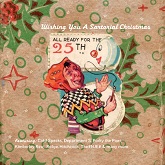
Cold Specks ‘Christmas Evermore’ (Sartorial Records, 2012)

Various Artists 'All Ready For The 25th?' download artwork

All Ready For The 25th album | Sartorial Records | 2012

Cold Specks delivered this cover of a Mary Margaret O’Hara track for a Christmas compilation released on Sartorial Records. A plaintive cry for peace and an end to war, ‘Christmas Evermore’ is at times beautiful and at others defiant, Al Spx‘s voice turning tricks that evidence a captivating vocal power she’s barely even started using yet. Spx is here joined by Mark Bedford (double bass), Lee J Harris (electric guitar) and Terry Edwards (flugelhorn, acoustic guitar); if, like me, you think Christmas isn’t Christmas without brass, ‘Christmas Evermore’ won’t disappoint.

First published 2012; re-published 2014

(c) 2014 Mat Smith / Documentary Evidence

Email Exchange With Penguin Books

Image

From: Mat Smith (Documentary Evidence)
Sent: 15 March 2014 11.56
To: Editor (Penguin UK)
Subject: Research Help – Rhythm King And The Dance Explosion book

Dear Penguin,

I am trying to find details of a book that may have been published by Penguin ‎/ Fantail in 1990. The book is entitled Beat This! Rhythm King And The Dance Explosion. I have undertaken a number of Google searches but this book either never existed, never got published or has simply been forgotten in the passage of time.

The book is referenced on the sleeve‎ of an LP released by the Rhythm King record label in 1990 and describes the book as being imminently published. See the attached picture by way of evidence.

I am trying to confirm the existence of this book at this stage, and also any details of the ISBN, cover, author etc. I don’t want to particularly think about how hard it will be to track down a copy. I will cross that bridge in due course.

This is all research for a series of articles I am writing for my website in order to present the most comprehensive history of the Rhythm King label, which had a major impact on the development of electronic dance music in the UK.

Any assistance would be greatly appreciated.

By way of background, I am a freelance music journalist writing for Clash, This Is Not Retro, Electronic Sound, Feeder and my own blog Documentary Evidence.

I look forward to any help you can supply.

Best regards,

Mat

————

From: Editor (Penguin UK)
Sent: 21 March 2014 10.45
To: Mat Smith (Documentary Evidence)
Subject: Re: Research Help – Rhythm King And The Dance Explosion book

Dear Mat,

Thank you for your email.  Unfortunately I’ve been unable to find the book you’re looking for in our title database and I admit I am unfamiliar with Fantail publishing, as it no longer exists as an imprint.

Really sorry I can’t help you any further with your search.

Kind regards,

——————————-
The Editor
Penguin Random House

Penguin

80 Strand, London, WC2R 0RL
http://www.penguin.co.uk

Mute Swan(s)

Image

Mute Swan(s)

Michael Gira’s Swans have signed to Mute and the label will release the first fruits of this partnership in May.

At Whipsnade Zoo yesterday I caught a small exhibition of nature photographs. Seeing the words ‘Mute’ and ‘swan’ in the description of this piece made me smile.

IMG_20140330_112143

(c) 2014 Mat Smith / Documentary Evidence

Big Deal – Chair (Mute Records single, 2011)

bigdeal_chair

mute artists | 7″/i mute459 | 05/09/2011

The sleeve to Big Deal‘s ‘Chair’, which was bizarrely released on the same day as the album Lights Out, features a portrait of a cat wearing a dunce’s hat. To me this looks distinctly like a sleeve that belongs in the Butthole Surfers / Blast First camp, but the hat at least serves as a decent reference point for the lyrics of this song – the bit about being put on a chair in the corner anyway. I can’t explain the cat. Unless where the lyrics refer to not being able to sit on the other person’s bed, KC Underwood and Alice Costelloe are actually singing about a cat. Who knows?

‘Chair’ sounds like a possible mid-point between thrashy punk and the classic rhythm guitar-driven rock ‘n roll of Buddy Holly. It’s quirky, confused, angsty teen-rock / pop, generally delivered in a cheerful style, although the torrents of over-amped guitar distortion threaten to destroy that mood. The generally polite way that the two voices overlap suggest a breeziness and lightness, but the lyrics seem to convey a sense of hurt, disappointment and distrust. It’s curt, intense, but rather beautiful.

Beautiful is also how I would describe the languid, pastoral blues guitars of B-side ‘Buzz Money’. ‘Does your mom still pack your lunch?‘ runs the enquiring lyric, anchoring this to hazy school days and problem-free innocence. ‘Someday I’m gonna pack your lunch for you,‘ is the retort, an odd but quintessentially youthful way of expressing love for a fellow kid. It feels like a fragment of a conversation turned into lyrics. I again feel like I’m too old to listen to this, but I get where this lovely little song is coming from. I think.

***

On Mothers Day 2013, I tweeted that I couldn’t think of any songs in the Mute Records back catalogue that were about mothers. Big Deal immediately tweeted back ‘you can’t get a song more about mother’s [sic] than this?’ and copied in a link to a YouTube non-video of ‘Lunch Money’, which appears to be a renamed ‘Buzz Money’. As I am re-posting this on Mothers Day 2014, I thought I’d include that. This post is for caring, lunch-preparing mothers everywhere.

Track listing:

7″/i:
A. / 1. Chair
B. / 2. Buzz Money

First published 2011; edited 2014

(c) 2014 Mat Smith / Documentary Evidence

Mute Tote Bag (2011)

Image

Mute Tote Bag (2011)

Mute tote bag, purchased at Short Circuit in 2011.

Primary use: for carrying bagels from Brick Lane back home on the train.

Renegade Soundwave ‘Women Respond To Bass’ badge (1990)

Image

Renegade Soundwave 'Women Respond To Bass' badge (1990)

Email from Gary Asquith (Rema-Rema, Renegade Soundwave), 27 March 2014

Hello Mat,

I noticed on your pages somewhere that you had a memorabilia section. So……..

Here’s my Women Respond To Bass Badge and my World Cup Willie badge from the 1966 World Cup. I’m not too big on badges, but I have some punk rock bands and……..?

Willie was our lucky mascot for 1966, and the Women Respond badge was a giveaway at our American tour dates in 1990.

Later. G

Photo courtesy of Gary Asquith.

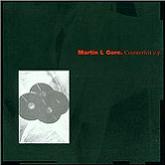
Martin L. Gore – Counterfeit (Mute Records, 1989)

Martin L. Gore 'Counterfeit' LP artwork

mute records | lp/cd/c stumm67 | 06/1989

Counterfeit was Martin L. Gore‘s first solo release outside of Depeche Mode. A collection of six covers ranging from The Durutti Column to Sparks, Gore’s voice is here allowed to shine through rather than being relegated to backing vocals or only appearing on the more poignant ballads of the Depeche back catalogue that were less suited to nominal frontman Dave Gahan‘s vocal style. Counterfeit was produced by Gore and Rhythm King stalwart Rico Conning, and released by Mute in 1989 while Depeche Mode were on downtime between the Music For The Masses and Violator albums. Never a band to go for cover versions (off the top of my head I can only count three, including one Beethoven piece), hearing Gore delivering other people’s songs is something of a rare, and absorbing, proposition.

Opening with a cover of Joe Crow’s ‘Compulsion’, things start off in relatively upbeat territory. Sometime Nightingales member Crow’s solitary and pretty obscure Cherry Red 7″ is here delivered as an affirming, strident track, all upbeat pianos, pulsing percussion and melodica-style synths. I used to listen to this occasionally after disappointing events took place (usually getting dumped by a girl), the ‘got to move on sometime’ refrain and the gentle piano somehow allowing me to transcend whatever I was feeling miserable about. Nearly twenty years on from when I first bought this, it still never fails to work. ‘In A Manner Of Speaking’ was originally recorded by Tuxedomoon and appeared on their Holy Wars LP. Gore’s version includes a vaguely Latin rhythm in the style of Depeche Mode’s ‘To Have And To Hold’ from Music For The Masses, underpinned by a dark synth bass pulse. ‘In A Manner Of Speaking’ is filled with a theatrical drama, and to add to the mood Gore speaks his way through the final section, its elliptical lyric about telling someone everything by saying nothing making a level of sense on an emotional level.

The cover of Factory Records’ stalwart Vini Reilly’s ‘Smile In The Crowd’ again opts for a Latin-style arrangement, a thin, pondering guitar line running throughout most of the track. This cover of the Durutti Column song is perhaps the closest Counterfeit comes to the bleak, inward-looking balladry that Gore’s own performances on record tend to lean toward. Meanwhile ‘Gone’, originally delivered by The Comsat Angels, has a cloying urgency, mining the same vibe of danger and helplessness that powered ‘A Question Of Time’, riding forth on a pulsing beat marked by thick bass notes and industrial tension.

Gore’s cover of Sparks’ ‘Never Turn Your Back On Mother Earth’ finds Gore taking Ron Mael’s beguiling, simple ode to the planet we live on and maintaining that sense of grace over a fragile, gentle backdrop of acoustic guitar and shimmering percussion. Tempted to make this plaintive song a whole lot darker though you might have expected Gore to be, instead the sense of wonderment of the Sparks original is maintained, Gore even having a decent crack at Russell Mael’s falsetto, highlighting the lead Depeche Mode songwriter’s strong vocal range. Gore saves the darkness for his take on the traditional song ‘Motherless Child’, here cast as a edgy jazz number, the dark swing of Gore’s introspective vocal delivered like an unused track from Cabaret.

Counterfeit is a relatively unassuming record, considering how big Depeche Mode had become by this point. Gore’s emotional outpourings have always been popular with fans (check out the deafening cheers after one of Gore’s solo performances in the middle of a Depeche Mode stadium show), and hearing his effortless ownership of these six songs is one of the genuine highlights of his body of vocal work. A follow-up to this EP would be released by Mute in 2003 containing more unexpected reworkings of other bands’ material.

Track listing:

lp/cd/c:
A1. / 1. Compulsion
A2. / 2. In A Manner Of Speaking
A3. / 3. Smile In The Crowd
B1. / 4. Gone
B2. / 5. Never Turn Your Back On Mother Earth
B3. / 6. Motherless Child

First published 2012; edited 2014

(c) 2014 Mat Smith / Documentary Evidence

Mick Harvey – Sketches From The Book Of The Dead (Mute Records album, 2011)

Mick Harvey 'Sketches From The Book Of The Dead' CD artwork

mute artists | lp+cd/cd stumm329 | 02/05/2011

Unbelievably, despite being in his fifth decade of making music, this is Mick Harvey‘s first album of totally self-penned songs. Time spent in the bands of Nick Cave, Simon Bonney and PJ Harvey, plus all that time devoted to poring over the Serge Gainsbourg legacy for two albums, has evidently paid off; Sketches From The Book Of The Dead is an accomplished, yet understated, collection of eleven songs, all of which ruminate on death. The album was produced by Mick, who also plays guitars, piano, organ, electric bass and percussion. Harvey was also joined by Rosie Westbrook (double bass), J.P. Shilo (accordion, violin, electric guitar) and Xanthe Waite on backing vocals.

According to my new best friend Wikipedia ‘the Book of the Dead is the modern name of an ancient Egyptian funerary text, used from the beginning of the New Kingdom (around 1550 BC) to around 50 BC.’ So now you know.

Overt reference to the Book of the Dead, or at least Harvey’s version, comes in the lyrics of the opening track, ‘October Boy’, which was made available as a free mp3 a few months before the album was released. ‘If you’re writing a song for the Book of the Dead / Then write one, write one for me,‘ sings Harvey in the voice of the October Boy of the title, while a dark, filmic, almost Morricone-esque backdrop underpins the black tale of a man anointed with a ‘sonic gun‘ who takes ‘rock ‘n roll poison’; that October Boy is almost certainly Rowland S. Howard, departed to the afterlife in recent years, and whose birth month was October. It is an unopinionated obituary to one of Howard’s earliest musical allies, the writer of the haunting ‘Shivers’ and his co-creator of amazing sounds in The Birthday Party.

‘The Ballad Of Jay Givens’ will be familiar to anyone who picked up a copy of Mute‘s Vorwärts compilation from earlier this year. This is Mick, with accompaniment from guitar, strings and organ, telling a dark tale of Givens, apparently his father’s best friend, a chap with a pretty dark and shady past. As a story set to music it’s absorbing and mysterious. ‘Two Paintings’ exists on a haunting musical tapestry of looping, often elegiac noise and mournful piano, depicting it seems, the separation from a loved one, featuring the descriptions of two paintings by Gustav Pillig. There are some truly moving moments in this song, particularly Mick’s wordless vocal harmonies at the very end. Pillig’s artwork adorns the sleeve and booklet, along with other paintings from Katy Beale.

‘Rhymeless’ is a clever, folksy piece whose verses are structured from fragments of well-known nursery rhymes. ‘All the songs that you never sang / To your little ones,‘ is a line which fills me with much regret. The song deals with children moving from being cherished to being effectively abandoned, neglected, deserted, forgotten, none of which I am remotely guilty of when it comes to my two wonderful daughters. But it does sadden me that my children seem to know the nursery rhymes that Harvey quotes from without me ever having once sung them those words. ‘Frankie T. & Frankie C.’ describes the love shared by the two characters of this song, a man and a woman both sharing the same first name; the way Harvey describes the spark shared between them reminds me of the way people of my grandparents’ generation might have described the first flushes of romance. Alas, the love of the two Frankies was to be short-lived, the death of Frankie C. leaving Frankie T. alone and mourning the loss of his beloved, finding himself spending his days longing after her and ultimately fading away in a bid to join her. While most of the backing has Harvey plucking elliptical patterns on his guitar over droning, carefully-sculpted sound, there are some fantastically heavy guitar crescendos at the end of the chorus.

In a neat play on words, ‘A Place Called Passion’ – a tale of someone lost during World War One – the front-line assault on Passchendaele and the word ‘passion’ are forced into an unhappy marriage, Harvey’s story of a relative who lost his life during the Great War evoked through the artefacts handed down to him – books bearing futile inscriptions from that relative’s parents pointing him toward a bright, but ultimately thwarted, future. This is the realities of conflict distilled into personal impact and significance. Like so many of the tracks on Sketches From The Book Of The Dead, ‘A Place Called Passion’ is extremely poignant. ‘To Each His Own’ is mysterious, a spoken-word poem of sorts over whining noise, with an intonation not unlike his former Bad Seeds bandmate Blixa Bargeld‘s spoken word pieces.

‘The Bells Never Rang’ is one of my personal favourite tracks, a ballad which takes us to Paris, rural Australia and Geneva over its three verses set to layers of strummed guitar that rise in intensity and urgency, only to drop away into a chorus of vocal harmonies and thin, reedy organ. This appears not to be a reflection on death of people per se, but on wasted opportunities, lost chances and relationships that fizzled out. ‘That’s All, Paul’ has a title that wouldn’t have gone amiss on one of Harvey’s Gainsbourg albums. Who Paul is we never know, but it would seem from the lyrics that young Paul, seemingly cut short in his prime, probably never really got to know himself either; Harvey is evidently bitter toward this pointless loss of life, which sounds as if it was caused by a single moment of recklessness. For that reason alone it reminds me of Rebel Without A Cause.

The album, fittingly, closes with the rousing single ‘Famous Last Words’, but it is preceded by one of the most evocative, moving love songs I’ve ever heard, ‘How Would I Leave You?’. Accordion, dramatic but sparse drums, piano and strummed guitars underpin Harvey reflecting on his attempts to leave somewhere (home?), his decision, or indecision, influenced by the wondrous nature he sees all around him. It all sounds idyllic, pristine, Walden-like, Harvey laconically and benevolently forced into inaction by the world he sees enveloping him.

Track listing:

lp+cd / cd:
1. October Boy
2. The Ballad Of Jay Givens
3. Two Paintings
4. Rhymeless
5. Frankie T. & Frankie C.
6. A Place Called Passion
7. To Each His Own
8. The Bells Never Rang
9. That’s All, Paul
10. How Do I Leave You?
11. Famous Last Words

First published 2011; edited 2014

(c) 2014 Mat Smith / Documentary Evidence