Interview: Stubbleman’s Pascal Gabriel on the making of ‘Mountains And Plains’

Pascal Gabriel – Stubbleman. (c) Pippa Ungar

“I had a plan, and that plan was simply to be inspired,” begins Pascal Gabriel. “I wouldn’t say I was jaded, but I was certainly feeling bored of pop, and bored of the tricks I’d learned. I wanted to unlearn all of that.”

For Gabriel to confess such a disdain for pop music at first sounds like he’s biting the very hand that has fed him for the best part of thirty years. From his pioneering work with samplers on tracks like ‘Theme From S’Express’ by S’Express and ‘Beat Dis’ by Bomb The Bass, Gabriel went on to write and produce countless pop hits, from Debbie Harry to Kylie Minogue to Will Young to Dido, and a cursory glance through the record collections of anyone who bought into pop music over the past three decades is highly likely to yield more than one Gabriel songwriting credit.

If that’s the Pascal Gabriel you think you know, his album Mountains And Plains – released last month by the legendary Belgian Crammed Discs imprint under his Stubbleman alias – represents an altogether unexpected proposition. Stubbleman was the nickname that the staff at Gabriel’s future wife Pippa Ungar’s Carnevale restaurant gave the unshaven patron that would generally turn up each day for breakfast, lunch and dinner, evidently smitten by the owner. It immediately suggests something entirely distinct from Gabriel’s work in the pop field; something much more experimental; something altogether hairier.

Mountains And Plains is a quietly euphoric instrumental travelogue written by Gabriel while journeying across America from New York State to California. Its eleven geographically-informed pieces slot neatly into an electronically-infused modern classical canon, while also sounding only ever of themselves. They veer from wide-eyed wonder at America’s bountiful natural beauty to the ceaseless, intoxicating hum of downtown Los Angeles, containing musical gestures that are simultaneously serene and violent.

It is, in essence, the sound of a producer letting go of his inhibitions and moving in a new and rewarding direction.

Gabriel and his wife started their road-trip from the east coast of America to its most westerly points in October 2016. In among their luggage were two Brompton fold-up bicycles for exploring, a MacBook loaded with software synths, a small keyboard, a portable digital recorder and microphone (known as the Hairy Guys) and a playlist of eclectic music influenced by the trip they were taking.

At the start of the trip, the idea for what became Mountains And Plains hadn’t yet presented itself; the only thing Gabriel knew was that he wanted to do something that took him many thousands of miles away from his pop background. “I’d always loved American music,” he says. “Things like Memphis-based soul, stuff from New Orleans, jazz music and so on. I thought the trip would recharge my batteries and maybe something good would come out of it. As it progressed, I realised it was really working, and lots of great things were starting to emerge. Suddenly I had this little seed of an idea, and it got watered and it grew as the trip progressed. Just after we got to Central Texas, and then by the time we got to New Mexico, I had loads and loads of ideas.”

The concept that emerged was simple, but highly disciplined: using the Hairy Guys – a Sony PCM-M10 recorder with a Sony ECM-MS957 microphone, each equipped with a rumble-reducing windshield – Gabriel would capture the sounds of the natural environment in whatever places they’d been to that day and then write music in response to what he’d seen and heard. “We’d arrive somewhere, we’d have dinner and we’d probably be a little bit tired from the driving. We’d just hang out in town, walk round, and then I’d go home and faff around for an hour or maybe more. If an idea came to me, I’d work on that a bit more, and then if it didn’t I’d just go to bed. Generally, I would try and find an upright piano to play and sample, if there was one, really just to get an idea going. They were all sketches, basically. They weren’t finished pieces, but the melodies, the basic construction and the arrangements, were all written while we were on the road.”

Gabriel never really struggled with the composer’s equivalent of writer’s block. “It’s definitely easier to write if you experience a lot of incredible views and panoramas,” he reflects. “That’s probably why maybe some of the New Mexican and southern Coloradan days were so inspiring, because the vistas were just so incredible. In contrast, Texas is a bit flat and boring. I had to make musical decisions about what was working and what wasn’t working, regardless of the places that I loved. Some places I loved more than others. I mean, Memphis was an incredible place, I really loved it, but no piece made it from Memphis.

“It was scary at the same time as being liberating,” he admits. “For pretty much all of my musical career I’d been working with someone else, so I’d be able to turn to that person in the studio and go, ‘What do you think?’, and you’d get feedback and encouragement back. But with this project I was having a conversation with myself. I’d go, ‘What do you think Pasc?’ and sometimes I wouldn’t know the answer. Back when I still smoked, that’s the point where I’d have gone and had a cigarette and tried to figure the song out, but because I don’t smoke anymore, when I was making this album there was lots of cups of tea and walking around the block. It was a bit like Magritte: every morning, his wife would make him a lunchbox of sandwiches, and he’d go out of his front door, walk round the block, come back to his front door and go upstairs to where his studio was in the attic, and he’d do exactly the opposite in the evening. I did that a few times when I was writing this album, because I wanted to have the cigarette break, just without the cigarette.”

Aside from having someone to turn to and bounce ideas off, Gabriel admits that producing the tracks at his studios in London and France also presented unique challenges. “It was a bit more difficult, because, as a producer and a pop writer, I was very much inclined to think, ‘Let’s go really big. Let’s go Sigur Rós on this and bring on the strings!’ I realised that I needed to set myself parameters. With any project I’ve worked on, I always write down what I call the Ten Commandments – the rules of the project. It’ll be things like staying minimal, using short reverbs, smooth bass and so on. I like to think that it stops me from getting lost. I can break those rules, and that’s okay, because I’m breaking them with intent. It just limits your framework, which I think creates a kind of coherence to the work.” His Commandments for what became Mountains And Plains included phrases like ‘purposefully unrefined’, ‘minimal dynamic shifts’, ‘frame a place and a moment’, ‘sound as a memory’ and ‘say much with very little’; in aggregate, those rules have given the album the fragile, transcendent, impressionistic tone it possesses.

One manifestation of those parameters Gabriel wrote for himself was that the album would not use strings, even though their inclusion would have perhaps been entirely logical. “I love strings, and I think that there’s wonderful, wonderful music made with strings, but I just didn’t want any on this album, because I thought it would be too easy,” he confesses. “When you use strings they glue everything together, and I just wanted space. And if I didn’t want the space, I didn’t want strings to be there – I wanted something else to be there.”

Griffith Park. (c) Pippa Ungar

Nevertheless, true to his mantra that rules can also be broken, Gabriel did add a string passage to ‘Griffith Park’, named for the landmark observatory building on Mount Hollywood that looks down on Los Angeles, a site beloved by film directors, and an important backdrop for James Dean’s Rebel Without A Cause. A frantic string arrangement was added to the track, designed to evoke the waking LA dawn visible from the observatory’s commanding – yet tranquil – vantage point, but in the end Gabriel reverted to his firm desire to leave the strings out. “There’s probably as much music on the album that you can hear as there was that was rejected,” he explains.

During the course of the road-trip, Gabriel accumulated some forty sketches, a testament to how excited he was by what he was experiencing each day. Sometimes his Hairy Guy recordings would feature in the tracks with prominence; on other occasions they’d be processed, stretched and altered, providing a kind of imperceptible resonance alongside Gabriel’s synths, guitars or toy drums. “On each piece they were a little bit fiddled with,” he says. “I would generally filter the rumble, otherwise you’d get this droning sound which is pretty annoying on recordings of the waves, for instance. On ‘Piety Wharf’, which is the last track on the album, it was a mixture of both processed and unprocessed field recordings from an area of New Orleans that we really liked. There’s birds, which were some of the field recordings that were there, and there’s also a kind of sound that’s also the atmosphere slowed down and stretched a lot to make the length of a recognisable note. I synced that up to the piano part, so then it’s almost like a ghost piano part behind the piano. I think it gives that melody a kind of underwater quality.”

Fourteen of the forty tracks were mixed by Gabriel with his friend Gareth Jones, but only eleven feature on Mountains And Plains. Gabriel remains unconvinced as to what he should do with the remaining mixed and unmixed pieces, namely whether they should be given away as free tracks after an unspecified period of time has elapsed, or simply left gathering digital dust on his hard drive, never seeing the light of day. “I don’t like to go back too much,” he muses. “The ones I rejected – they bore me already. It’s hard to kill your babies, but for me they devalued the others, even though some of them were more complex, or more grand, than the ones we kept. For instance, ‘Great River Road’, recorded along the Mississippi, is three chords repeated at different intervals, but it has something about it that’s special. And the others just didn’t quite have that.”

Mountains And Plains navigates us through some of America’s most incredible landscapes, along the dramatic Californian coast, through the foothills of the Rocky Mountains, across the unforgiving barren plains of Texas and beyond, following paths cut by America’s earliest inhabitants and new roads built to replace older ones which are left unused, abandoned and hauntingly visible from the modern freeways. Each piece was accompanied by suggested reading material that Gabriel had used when he began researching his road-trip – the poem that appends Jack Kerouac’s Big Sur (‘Sea: Sounds Of The Pacific Ocean At Big Sur’), socio-geographic maps by Rebecca Solnit, books of Ansel Adams photography, books on trains in America. Alongside the sounds he had recorded and the images he accumulated, these books added another evocative input to the moods of these pieces.

At times those moods can be uplifting, at others there seems to be a certain disappointment in the tone that Gabriel presents. “I’m quite a melancholic person,” he explains, “but I find joy in melancholy as well. I am genuinely a positive person, and I don’t revel in the past. As with everyone, some things upset me and some things touch me, but I always try to think that there is redemption, that there is a light at the end of the tunnel. Life isn’t an easy ride for most people, especially in some of the poorest parts of America that we visited, like Alabama. I’ve only just started to analyse it now, but if I go back to my pop work, things like the Peach album, there wasn’t that many tracks that were completely euphoric. There’s always been a little bit of a questioning quality, and I think it’s the same in this project.”

“My guideline for making music is ‘Do I like it or not?’,” he continues. “In the past I’ve worked with people who say ‘Would the A&R guy like this?’ or ‘Would the record label like this?’ or ‘Will the publisher like this?’ I can’t do that. I’ve never been very good at doing that. I can’t work by formula. I just work by feeling. That’s my compass when I’m making music.”
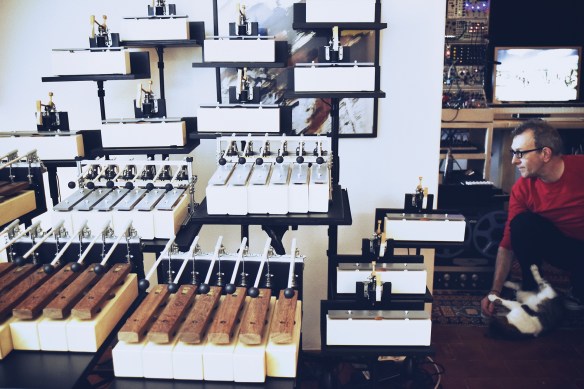
Stubbleman – studio with cat. (c) Pippa Ungar

Pascal Gabriel will perform the tracks from Mountains And Plains at London’s Purcell Rooms on November 20, with support from Simon Fisher Turner. Not a seasoned live performer, Gabriel was faced with a difficult decision over how to present the Stubbleman tracks. “I didn’t want people to look at me too much, and so I didn’t just want to go onstage with a keyboard and a laptop. But on the other hand, to perform these pieces like they are on the album, I’d need six or seven musicians, maybe even more. I obviously physically can’t play everything myself at once.”

Instead, Gabriel alighted upon a novel idea, but one that, perhaps more than anything else, illustrates his firm commitment to the Stubbleman project and its music. “I’d heard about this guy in Berlin who designed little MIDI-to-voltage boxes,” he explains. “The boxes fire up little electric motors, and that pulls a hammer down. You give it a little impulse, it pulls the hammer down, and it’ll hit whatever instrument you attach to it.”

Gabriel spent most of summer 2018 in his shed in France building a number of instruments using these motors, each one housed in an old-fashioned hard trunk Globe Trotter suitcase, which will play alongside himself, a bassist and other musicians at the Purcell Room show. “I’m quite good at DIY,” he says, modestly. “I enjoyed making them. I bought a job lot of piano hammers from the States to get me started with a first set of vibraphones, and then I decided to make another set, this time with xylophones.” Because of their construction, and the space available to him within the Purcell Rooms, the instruments can be spread out across the stage, rather than being confined to a specific place. The result is nothing short of a theatrical, visually interesting means of presenting Mountains And Plains, somewhere between the primitive punch-card automated music of Victorian fairgrounds and the elaborate, often audacious work of Luigi Russolo’s Futurists.

Stubbleman – live rehearsal, April 2018. (c) Pippa Ungar

Talking to Pascal Gabriel and being caught up in his enthusiastic interest for this entirely new direction, it would be tempting to think that he’d throw himself headlong into other road-trips across other countries, repeating the approach taken on Mountains And Plains. Nothing could be further from reality right now. A return to pop writing and production isn’t on the cards, however.

Instead, he has taken his enthusiasm for road cycling and used that as the basis for his next project. Titled 1:46:43, his next Stubbleman album will be an auditory evocation of his best time on the punishing Mont Ventoux in Provence. “It’s very selfish,” he laughs. “It’s not a bad time. It’s an acceptable time. I’d like to beat 1:45 but I’m not sure I’ll do it this year.”

Not for Gabriel, however, the twee concept album approach taken by Kraftwerk on Tour De France Soundtracks; instead, he used the various statistics about his performance recorded by his on-bike computer – heart rate, cadence, gradient and speed – and converted that data into four modular synth sequences derived from the length of his climb to the end of the route up Ventoux.

“You could do it on any mountain, really,” he says. “Like the US road trip Pippa and I did, it’s another journey. With this, you really push yourself to the limit, and every corner becomes an entire state, if you compare it to my current album. Essentially it’s going to be made up of different events along the climb that inspired me differently, and themes that reoccur through the whole thing – for example, something that evokes the feeling of your legs being completely dead and like you can’t go on! I can write themes for those kinds of feelings and then bring them in at different points.

“To me, it’s the same way as how Max Richter’s Sleep is made up of lots of different elements,” he continues. “It’s not a single piece. For example, there’s a few times on the climb up Ventoux where you have these very sharp turns, and I can write for those events, and allow them to repeat at different points during the whole piece.” I’m treated to a brief snippet of this work in progress as our interview concludes; at this early stage the first gestures of what will become 1:46:43 are inextricably recognisable as being Gabriel’s work, but are entirely different to the album he’s just released.

Mountains And Plains, the forthcoming live show and his new work all find Pascal Gabriel enthused and enlivened in a way that he recognises he hasn’t been for some years. “I’m really fired up right now,” he agrees. “I’m mixing different artforms and I find that really interesting after years of observing other people doing interesting things in other places from the pop world I was in.

“When I first came to London in the late 70s I mixed with lots of people from St. Martin’s College Of Art,” he recalls. “I always loved the free thinking they brought. I came from a small town in Belgium and when I came to London and I hung around with them, it was like everything was possible. They were great artists that went on to do many, many brilliant things. I’ve always wanted to do something more artistic, but, over time, pop became my raison d’etre. So what I’m working on right now is a very, very liberating thing for me.”

Mountains And Plains by Stubbleman is out now on Crammed Discs and can be purchased from the Stubbleman website. Tickets for the Stubbleman and Simon Fisher Turner show at the Purcell Rooms on November 20 2019 can be purchased from the EFG London Jazz Festival website.

Stubbleman is published by Mute Song.

All photos used with the permission of Pascal Gabriel and Pippa Ungar.

Documentary Evidence album review: here

Words: Mat Smith

(c) 2019 Mat Smith / Documentary Evidence

Electronic Sound 53 – including my Mute STUMM433 feature

ES53_Bundle-Square.jpg

The latest issue of Electronic Sound is now available in the usual high street retailers and as a bundle with an exclusive 7″ from their website. This issue has a primary focus on Berlin, featuring conversations with Alexander Hacke from Einstürzende Neubaten, Mick Harvey, Simon Bonney and others who recall the vibrant creative melting pot that the divided city represented in the late 70s and early 80s. The accompany 7″ features Berlin legends Malaria! while Gudrun Gut from band offers her take on sometime Berlin resident David Bowie’s ‘Boys Keep Swinging’ on the B-side.

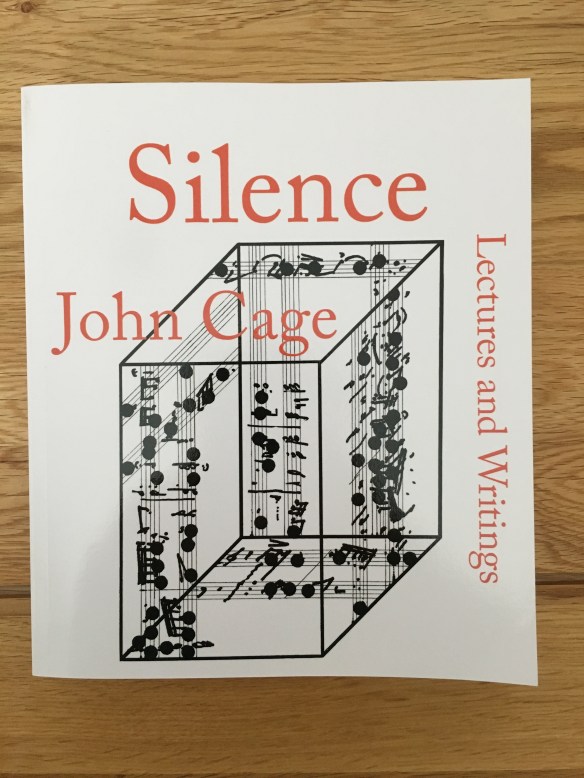
My major contribution to issue 53 was a feature on John Cage’s seminal composition 4’33” and the incoming Mute STUMM433 project. For this feature I interviewed K Á R Y Y N, Daniel Miller, Simon Fisher Turner, Irmin Schmidt, Laibach, Pink Grease and Maps, each of whom explained how they approached their performance of Cage’s distinctive piece – where they recorded it, and what instrument they didn’t play. Each of the 58 versions on STUMM433 is wildly different from the next, each one includes its own individual story and accompanying visual, and only one of the inclusions is actually silent – just as Cage would have wanted.

This feature involved me diving back into Cage’s Silence book – something I’d first tackled in my late teens when I found a copy in my local library and studying the score. One took much longer than the other. It also awoke in me an interest in Zen after reading about Cage’s following of these ascetic Buddhist principles.

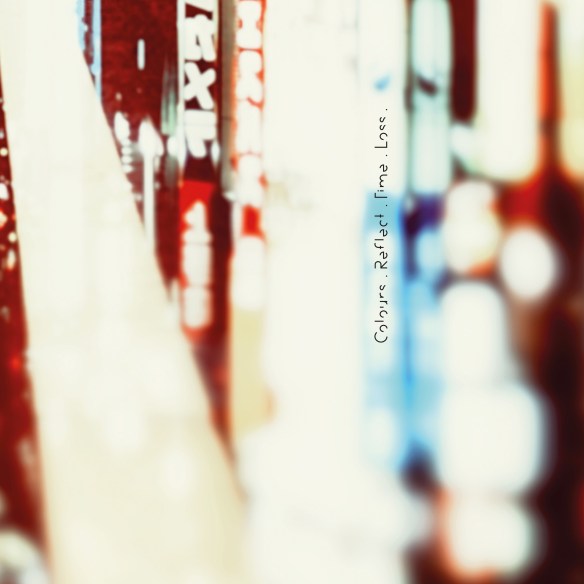
Elsewhere in this issue I reviewed Colours. Reflect. Time. Loss. by Maps; the score to Marnie by Bernard Herrmann; David Tibbet and Andrew Lisle’s debut Nodding God album; the latest Blow collaboration on Front & Follow by Polypores and Field Lines Cartographer; and a fantastic new Buchla-based concept album by Simon James.

(c) Mat Smith / Documentary Evidence for Electronic Sound

Maps (Clash feature, 2019)

Six years on from James Chapman‘s last solo LP and his 2016 onDeadWaves project with Mute labelmate Polly Scattergood, Maps returns with the brilliant Colours. Reflect. Time. Loss. on May 10th 2019.

The album takes the signature Maps sound down bold new pathways, finding him collaborating with Erasure collaborators Echo Collective, live drummers and additional vocalists.

Ahead of its release, it was an honour and pleasure to speak to James for Clash about strings, synths and… SodaStream. You can read the interview here.

(c) 2019 Mat Smith / Documentary Evidence for Clash
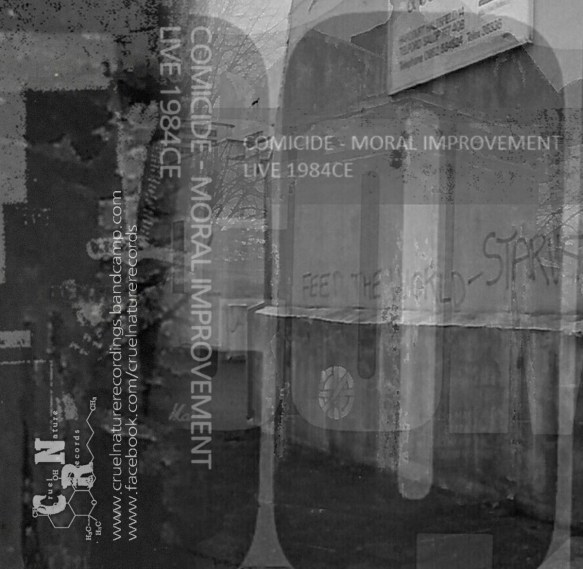
Comicide – Moral Improvement (Live 1984CE) (Cruel Nature album, 2019)

Comicide were a duo of Eric Jurenovskis (guitar) and Stephen Àh Burroughs (synths and vocals), who would later go on to form celebrated Blast First unit Head Of David. They formed Comicide in 1984 specifically for two gigs, each consisting of the same set list of four tracks, opening for CON-DOM at two venues in their native Midlands – the Star Club in Birmingham and the possibly unlikely setting of the Eve Hill Afro-Caribbean Community Club in Dudley.

A new archive limited edition cassette by Cruel Nature puts these eight live tracks into the cassette players of Head Of David completists for the first time, as well as providing another insight into the early Eighties noise movement. These tracks are, as might have been expected, noisy and uncompromising affairs. Each track is built up from ground-out guitar riffs and disturbing synth shapes that have been subjected to the same extensive distortion as Jurenovskis’s guitar. Tracks like ‘Hatehouse’ swell with layers of dubby reverb, each time adding an element of compelling dissonance, finally becoming nothing more than bleak echoes of the racket Burroughs and Jurenovskis were curating.

The second set introduces Burroughs’s angry, shouty vocals to the tracks ‘Bloodmeat’, ‘Muscular Jesus’ and the aforementioned ‘Hatehouse’. Those vocals aren’t obviously missing from the Star Club set, but when added in they have the effect of making the duo’s loud, repetitive riffing less uncomfortable somehow – even though Burroughs’s voice could never really be considered comforting. Though still a challenging, impure experience, the Eve Hill set sounds more polished, perhaps more studied, probably because the pair had longer to develop the songs. The instrumental ‘Bruised Organon’ takes on an atmospheric, installation-like tone, as if the two were actively countering the maximalism of their other pieces and seeking to channel the cultural echoes of Warhol’s Exploding Plastic Inevitable.

(c) 2019 Mat Smith / Documentary Evidence
Stubbleman – Mountains And Plains (Crammed Discs album, 2019)

Stubbleman is the alias of Pascal Gabriel, formerly of Mute electronic pop alumni Peach, a central figure in Rhythm King via S’Express, Bomb The Bass and others, and a producer to the stars. Mountains And Plains was inspired by a trip across the breadth of the United States and finds Gabriel in deeply reflective territory, the eleven pieces here tapping into a voguish, borderless modern classical style wherein an array of analogue synthesizers sensitively accompany stentorian piano. The album was mixed with the knowing ear of fellow Mute stalwart Gareth Jones.

Despite the grand scale of the vistas, buildings and infrastructure that Gabriel was enthralled and captivated by, there is a deeply introspective tone here, one that only slips into uplifting territory on the closing piece, the ephemeral ‘Piety Wharf’. Could it be that he is silently commenting on some sort of quasi-political squandered environmental opportunity as he looks out from car and train windows between New Mexico, California and the relentless flatness of the Mid-West? Did he not enjoy the trip? Or was it simply that I played these tracks on a particularly sullen, overcast Tuesday after a warm public holiday where nothing in my life seemed to make much sense anymore as I trudged to and from work?

Maybe that’s oversharing on my part, but such is the effect of the beguiling detail available to the listener on Mountains And Plains. Pieces like the stillness of ‘Great River Road’s upright piano motifs, sensitively-deployed modular synths and found sounds prompt you to consider your tiny place in the world; ‘Griffith Park’ moves forward on a particularly absorbing, ever-changing synth pattern, a perfect allegory to the unsleeping vibrancy and disposable creative hustle of the Los Angeles that the park overlooks; ‘Badlands Train’ has a quiet grandeur, water-like synth sprinkles evoking the incessant slow-motion dance of the derricks as they suck oil from below the Texas bedrock.

It shouldn’t comes as the remotest surprise, when you consider Gabriel’s CV, that this album is a highly accomplished body of work. It is more than just a producer’s pet vanity project and opportunity to deploy a mouth-watering array of kit; it is a highly personal, evocative, thought-provoking, affecting and arresting endeavour that seems to transcend just about every single expectation you might have about what it could sound like.

(c) 2019 Mat Smith / Documentary Evidence
Andy Bell Is Torsten In Queereteria TV (Clash feature, 2019)

The third instalment of Barney Ashton-Bullock’s Torsten series kicks off at Vauxhall’s Above The Stag theatre on April 10 and finds Erasure’s Andy Bell once again taking on the role of the half-Norwegian, half-English polysexual semi-immortal Torsten.

Amid the maelstrom of press interviews that Bell has undertaken to support Queereteria TV, managed to get some time with Andy and Barney during rehearsals to talk in detail about the latest postcard from the hotspots of the 114-year old Torsten’s memory.

My interview went live on the Clash website earlier today and can be found here. A longer version will appear here on Documentary Evidence during the show’s run.

Queereteria TV runs at Above The Stag from April 10 to April 28. Tickets are available at abovethestag.com. A new album, Andy Bell Is Torsten In Queereteria is released by Strike Force Entertainment on April 12.

(c) 2019 Mat Smith / Documentary Evidence for Clash

K Á R Y Y N – The Quanta Series (Mute album, 2019)

The music of K Á R Y Y N first appeared on my radar two years ago when she’d just released a new track, ‘Yajna’, in what she was already calling her Quanta series.

That track, a fragile, sparse piece that tapped into a pulsing, shifting minimal techno-inflected sound world, showcased two things for me – a mastery of the diffuse potential of using electronics in a way that nodded to the framework and stricture of contemporary pop while deploying a edge that could keep po-faced art fanatics happy; but, perhaps more importantly, ‘Yajna’ showcased a compelling, mesmerising voice that you couldn’t help but be moved by. I wrote a glowing Introducing… piece for Electronic Sound and looked forward to hearing more music in the Quanta series. That she decided to sign to Mute and compile the whole series into one album for them was frankly just a bonus for me.

K Á R Y Y N was born in Alabama, spent her childhood summers with relatives in Syria and wound up living in Los Angeles. Not for nothing was one instalment of the Quanta series called ‘Aleppo’, written in the wake of the death of two relatives in a city that has become synonymous with the humanitarian and cultural devastation of the Syrian civil war. The track blended glitches, stop-start rhythms and carefully-crafted detail alongside K Á R Y Y N’s heavily processed voice, resulting in a deceptive four minute slice of artisan sound design.

The Quanta series draws tracks together recorded after K Á R Y Y N had left LA and didn’t settle anywhere for long, beginning with 2011’s ‘Today I Read Your Life Story 11:11’. The fact that the pieces were written over a seven year period means that listening to the entire series as a single album is like watching the gestation of K Á R Y Y N’s creative sensibilities in slow motion. A pivotal point came in 2016 with the music she composed for Samantha Shay’s Of Light, her score attracting the patronage of Marina Abramovic and Björk.

Taken as a whole, this can, at times, be a troubling , difficult listen. The first pieces she wrote, placed at the end of the album, are heartwrenchingly raw, with no attempt to mask or shield you from the reclusive, mournful state in which K Á R Y Y N wrote them. In contrast, there are moments of towering beauty, moments of sensitivity, moments of contemplation and, in the frantic rhythms and lush synth pads of ‘Ever’, a yearning, romantic, delicate spirit. On the strength of that track, K Á R Y Y N could easily pivot into the sort of pure, intelligent pop proffered by the likes of Lucy Mason, but I get the sense that this restless soul would never concede to being so easily pigeonholed, and may she be justifiably celebrated for that.

The Quanta Series by K Á R Y Y N is released by Mute on March 29 2019.

(c) Mat Smith / Documentary Evidence

Beth Jeans Houghton & The Hooves Of Destiny – Yours Truly, Cellophane Nose (Mute album, 2012)

bjhytcn

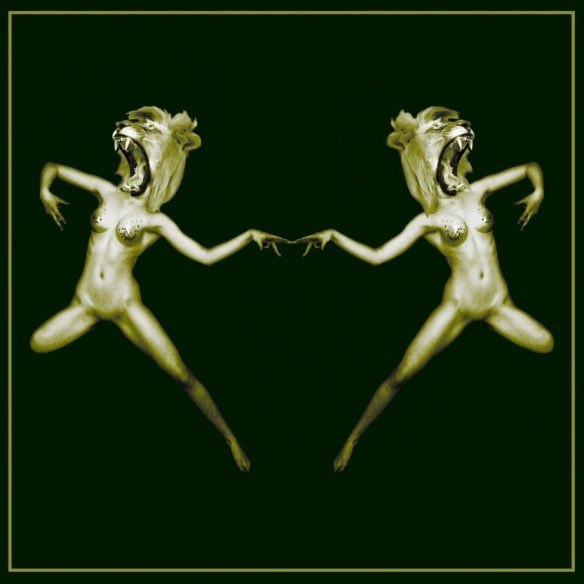
Chances are if the weird naked-girl-with-animal-head sleeve doesn’t grab you then the anticipation would have already have got you: Beth Jeans Houghton is one of those artists, a bit like labelmate Josh T. Pearson, whose first LP was greeted with angsty expectation by the music press, that expectation cultivated over an extended period; in this case, that period is almost four years from when Houghton’s first music appeared in 2008.

It also helped that Mute kept the album under wraps far longer than reviewers would ordinarily tolerate; if this was a Hollywood movie, the critics would have already drawn the unassailable conclusion that the movie was a stinker, otherwise the studio would have readily let the journos in to watch. For some reason, not making this available to the press much earlier than its actual release seems to have just heightened the hype surrounding Houghton’s first album.

Produced by Ben Hillier, the inexplicably-named Yours Truly, Cellophane Nose finds Houghton, a talented lyricist and multi-instrumentalist judging by the sleeve, and her Hooves Of Destiny (Findlay MacAskill on violin, Dav Shiel on drums, Rory Gibson on bass, and Edward Blazey on trumpet and guitar) cutting a distinctive path through modern music’s more folksy places.

Houghton’s style appears to draw upon the weird mysticism of British folk groups from yesteryear blended with the downright unhinged kookiness of the likes of Tori Amos. A quick run through the lyric sheet provides few clues to what these songs are all about, almost as if Houghton was writing down particularly vivid and strange dreams, lots of strange imagery and oblique references. My favourite lines come during the spoken-word section of ‘Nightswimmer’, an early version of which first appeared on Houghton’s ‘Golden’ single in 2009, whereupon she mouths ‘And the cracks in the pavement sweat like the crust / Of a toffee pecan pie‘.

Hillier certainly wrings out an organic quality from the ten songs here, Houghton and The Hooves (and occasionally Hillier himself) laying down a multitude of instruments, giving the tracks a casual feel, almost as if everyone was content to grab whatever instruments were hanging about the studio and muck around while Hillier expertly captured the whole affair. A sense of warmth and often dark beauty seeps from every track, augmented on most tracks by a string quartet formed of Ian Budge on cello, Everton Nelson and Sally Herbert on violins and Bruce White on viola.

I said in the single review of ‘Liliputt’ (which I’m no closer to fathoming after reading the lyrics) that the song reminded me on some level of Dexy’s or their modern counterparts The Rumble Strips, and that same sense of joyful abandon colours all but the quietest tracks on Yours Truly, Cellophane Nose. I asked my music-loving, ukulele-playing daughter (then just five years old) what she thought; after the inevitable request to add the songs to her iPod, she described the songs as ‘jumpy’. I suspect if she knew what ‘jaunty’ meant, she’d probably have employed that adjective instead.

The track that was playing when I asked my eldest daughter for review input was ‘Atlas’, which is one of the strongest songs on the album, featuring pounded layers of intense drums, skinny funk guitar culled from Vampire Weekend or their antecedents Talking Heads. ‘Dissecting the atlas for places we’ve been / Your list is longer but you’ve got more years on me,‘ is one of the most evocative lines here, coincidentally echoing a conversation around our household dinner table a weekend or so before the album was released. Houghton’s voice here effortlessly shifts between the hyper-falsetto and warm, sweet tones that pervade many of the tracks here, while a spoken word section by Neesha Champaneria provides a dark counterpoint to the more joyously carefree sound elsewhere on the song.

Another big highlight is ‘Humble Digs’ with its rolling drums and plucked countrified ukulele, expressive strings and a chorus of Houghton and The Hooves that sounds like a miners’ choir or Annie Get Your Gun chorus line; ‘Humble Digs’ is upbeat and infectious. A couple of listens and it’ll feel like an old friend.

A sense of wry breeziness dominates tracks like ‘Franklin Benedict’ wherein Houghton offers up lines that evoke summery warmth (‘Roasting peppers in the back yard,‘) and the downright creepy (something about a unitard, singly the most unpleasant thing ever invented). This is in direct contrast to the album’s official closing track, ‘Carousel’, which is a short track with a weird, harpsichord and piano rhythm. There’s also gorgeous strings, scary cackling, crackling noises and bells. It should feel upbeat but feels unsettling on some level, as if it masks something dark and unpleasant; like a track from Poses by Rufus Wainwright. It also sounds like something from a fairground, and that’s always guaranteed to creep me out.

The new version of ‘Nightswimmer’ retains that track’s producer Adem’s spiralling synth curlicues, but Hillier polishes the track with a new depth compared to that tentative original, the enquiring bass in particular gaining a blissful prominence. While on face value it sounds as ethereal as anything else here, Houghton’s detached lyrics seem to indicate a metaphorical drowning. Of this track I have said previously that it reminds me of both Depeche Mode‘s ‘One Caress’ and ‘Trilby’s Couch’ from AC Marias‘s solitary Mute album, One Of Our Girls Has Gone Missing, sharing a similar sense of dark Twin Peaks-style mysteriousness.

A sense of mysteriousness also dominates ‘The Barely Skinny Bone Tree’, which sounds vaguely like a traditional Russian or Greek dance song, all plucked violin and the sense that at any second it could accelerate into a manic and out-of-control fervency, only offset by Houghton’s floating, dark vocal. The chorus sees the plucking replaced by mournful strings and a sense of weariness and strained sadness. ‘The Barely Skinny Bone Tree’ has a deeply affecting quality, though it’s queasily unsettling at the same time.

As if to confound further still, once ‘Carousel’ winds down, an uncredited song suddenly snarls into view. This bonus track (I’ve been advised that it’s called ‘Prick AKA Sean’) sounds like Green Day’s take on grimy punk rock, Houghton’s voice barely audible underneath the Hooves’ ramshackle harmonies. Against all the odds, this song is angry, joyous, a little bit glam-rock and evidently a whole lot of fun after the more studied pieces elsewhere. It provides a fittingly baffling conclusion to a brave, adventurous and above all, well-realised debut album, and one that was truly worth waiting for.

First posted 2012; edited and re-posted 2019. This archive review was brought to you by the letter H, as chosen by Jorge Punaro.

(c) 2019 Mat Smith / Documentary Evidence

I’m From Barcelona – We’re From Barcelona (Interpop single, 2006)

barca

‘We’re From Barcelona’ by I’m From Barcelona received a physical release on Mute‘s Interpop imprint in September 2006. The track had been available on iTunes earlier in the year, first as part of the EMI Sweden Don’t Give Up On Your Dreams, Buddy! EP, and then again as a single track download. The sleeve photo captures all 25 of the members of the band, like some sort of yearbook photo; the sleeve helpfully lists out who all the members are, but doesn’t go so far as to tell you what they all actually do in the band.

Kitsch sleeve aside, ‘We’re From Barcelona’ is a highly original pop track. Taking its cues from grand, Phil Spector or Van Dyke Parkes-style productions, the song is multi-layered to the point where it is often difficult to identify individual instruments, something that Brian Wilson and the Beach Boys did to much more commercially-successful effect on Pet Sounds.

As songs go, ‘We’re From Barcelona’ is one of the happiest, most upbeat and inoffensive track ever conceived, with pretty, tinkly, sincere melodies and a chorus that only the most depressed individual would fail to be moved by. The CD single version includes a different version of the song, minus the lead vocals.

B-side ‘Glasses’ also appeared on iTunes as part of EMI Sweden’s digitial release of ‘Collection Of Stamps’. Beginning with the sound of cicadas, the track evolves into a gentle, rousing folk ballad about not wanting to wear spectacles. Quite how the group’s founder Emanuel Lundgren manages to be able to write songs about the most mundane feelings and objects is well beyond me, but the delicate ‘Glasses’ – all simple percussion, big sweeping vocal harmonies and relaxed, bluesy guitars – is another example of a very individual talent.

First posted 2011; edited and re-posted 2019.

(c) 2019 Mat Smith / Documentary Evidence

Foil – Never Got Hip (13th Hour album, 2000)

foil

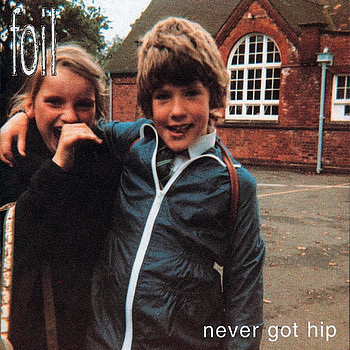
While all of the trademark Foil elements – heavy drums, rapidfire punk guitar riffs and tense and intelligent vocals – are present on Never Got Hip, their second album for Mute‘s 13th Hour sub-label reveals a more emotive quality to the Scottish fourpiece.

At times, Never Got Hip has an unexpected pop twist, and at others – on the string-soaked ‘Groundwork’, or ‘The Ghost Of Vernon Howell’ – a maudlin, almost weary tone. Like vintage whisky, it’s a perfect blend, a well-executed masterpiece that also now appears to be their swansong, since no new Foil releases have appeared since this album came out in 2000.

Melody is an integral, and unchanged aspect of the Foil sound, demonstrated on tracks such as ‘End Of The World’, which also features Hugh’s familiar half-spoken, half-sung narrative and a midsection reminiscent of many a tumbleweed and dustbowl scene in classic westerns.

At times, this is uncomfortable, depressing listening, reminiscent of the kind of bitter, bleak music favoured by Joy Division or Nirvana, despite the inclusion of the pop gem single ‘Superhero No 1’, or the supreme upbeat thrash of ‘Half Life Bunker’. When they do let rip with their particular brand of high-speed rock, it is with a controlled and clipped professionalism borrowed from their influences (e.g. Fugazi, Minor Threat). With Hugh Duggie‘s refreshingly restrained vocal rarely straying into shredded rage territory, the duelling guitar interplay and drum fills are reminiscent of both Pixies and Sonic Youth (check out the Thurston Moore-isms embedded into ‘Weird Kid’).

What’s frustrating about Never Got Hip, is that if this record was released – and better-marketed – just a couple of years later, it would possibly have garnered a degree of pop chart success. In the light of rock’s sudden resurgence in the mid-2000s, a single like ‘I’ll Take My Chances’ was miles better than some of the rubbish faux-punk that our ears had to contend with at that time. That track represents an emotional masterpiece with a punk rock core; it rocks out whilst tugging at the heartstrings. The chorus on the final track ‘Claremont Junction Optimist’ perfectly encapsulates the contrast : ‘You breathe new life into me / And I’ll do what’s necessary‘. It’s the sound of a reluctant coming of age.

Foil were Hugh Duggie (vocals, guitar), Colin McInally (vocals, guitar), Alan Findlay (drums) and Shug Anderson (bass). Never Got Hip was recorded at Edinburgh’s Chamber Studios.

First published 2004; edited and re-posted 2019. This post was brought to you by the letter F, chosen by Andy Sturmey.

(c) 2019 Mat Smith / Documentary Evidence