I’m Dreaming Of A Mute Christmas

It’s that special time of the year where the sounds of well-worn Christmas hits from yesteryear fill playlists and people begin to debate whether ‘Fairytale Of New York’ really is the best Christmas song of all time.

With some help from my good friend and Mute afficionado Jorge Punaro, I here present a trawl through the back catalogues of Mute artists past and present to deliver an alternative compilation of seasonal songs; songs that range from the traditional, the just plain festive and on to the downright tenuous. Jorge has meticulously prepared a Spotify playlist containing everything we could get our hands on (and many more songs than I’ve covered here). For your optimal listening experience, Jorge’s should be listened to while drinking one of the cocktails from Erasure’s Snow Globe box set.

I often think of Erasure at Christmas, mostly because I remember receiving a 7″ of ‘You Surround Me’ in 1989 in my stocking. The year before, Vince Clarke and Andy Bell narrowly missed securing the coveted Christmas number one slot with Crackers International, an EP which led with ‘Stop!’ but also included the moving ‘She Won’t Be Home’ (renamed ‘Lonely Christmas’ on the slightly dubious The Erasure Christmas Gift 7″); elsewhere on the EP, the duo delivered a spooky version of the traditional carol ‘God Rest Ye Merry Gentlemen’ complete with authentic choir-boy vocals from Bell, while two years before the pair did a relatively throwaway take on ‘Silent Night’ for the US Yulesville promo LP (the same year that Clarke’s former Yazoo band mate Alison Moyet had contributed ‘The Coventry Carol’ to the compilation A Very Special Christmas). The limited formats of Erasure’s ‘Am I Right’ EP (1991) featured a festive Me Company design of Christmas trees with a photo of a young boy holding presents, while Andy Bell co-hosted Channel 4’s Camp Christmas in 1993, with musical accompaniment from Vince. Andy also featured in a short film called I Hate Christmas as a market stall worker.

2013 was the year that Erasure went all-out Christmas with the celebrated release of Snow Globe. The album collected a number of classic Christmas songs, including ‘Silent Night’ and ‘God Rest Ye Merry Gentlemen’ in updated splendour, as well as some of Vince and Andy’s own tracks. The limited-edition box – or should I say the obligatory limited-edition box, since if Mute did one thing in 2013 it was to ensure that their avid fans went without their turkey after spending out a small country’s GDP on ever more elaborate and expensive box sets – included a bauble, balloon, a packet of sweets and some Erasure-themed cocktail recipes. 

Other artists who’ve covered Christmas songs include Echoboy, who released a special split EP with Six By Seven for a Christmas show in Nottingham in 1999 which included a very alternative version of ‘Silent Night’. Richard Hawley also delivered a very easy listening take on ‘Silent Night’ for a special one-track CD given away to people who attended his show in Sheffield in December 2006, a track that was also included on his 2008 live album Live At The Devil’s Arse; during winter gigs and on radio Hawley has also covered ‘Blue Christmas’, made famous by Elvis Presley, but I haven’t heard a recording of that yet (if anyone feels charitable enough at this time of giving to send me one in the name of research, please get in touch).

In the wake of their 2008 album Seventh TreeGoldfrapp found time to record a beautifully jaunty version of ‘Winter Wonderland’ for a US Starbucks compilation, while former Blast First act Sonic Youth recorded a sketchy and somewhat unpleasant version of Martin Mull’s ‘Santa Doesn’t Cop Out On Dope’ for a 1996 compilation, which is definitely one for completists only. 

For Can completists, the veteran Krautrockers put out an ultra-twee take on ‘Silent Night’ way back in 1976 on Virgin in the UK. The Residents launched their audacious avant-garde music career with Santa Dog in 1972, a double 7″ single mailed out to various people featuring four tracks by various pseudonymous artists, all of whom were actually The Residents themselves (whoever they are). The band have released several other versions of Santa Dog since 1972 – in 1978, 1998, 1992 (‘Show Us Your Ugly’), 1999 (Refused), 2006, 2012 (SD12) and a fiftieth anniversary version in 2022. Way back in 1956, occasional Blast First artist Sun Ra co-opted the alias The Qualities and issued the doo wop 7-inch ‘It’s Christmas Time’. Backed with the sincere blues of ‘Happy New Year To You!’ this curiosity remains one of the most surprisingly accessible pop releases in the expansive Ra catalogue, and proof that they celebrate the holidays on Saturn just like they do here on Ra’s adopted home.

Einstürzende Neubauten stalwart F.M. Einheit and Caspar Brötzmann recorded an album called Merry Christmas which Paul Smith‘s label put out in 1994, but it isn’t at all festive and, besides, it was released in May that year. Still, the album’s sleeve of a hand-drawn tank reminds me of troops putting down arms during World War II, so maybe there’s a connection to the festive season somewhere on this album after all. Mute US duo The Knife recorded a song called ‘Reindeer’ for their eponymous album in 2001; as if the song wasn’t festive enough already with its lyrics about Santa, The Knife issued a version with Christmas bells (renamed ‘Christmas Reindeer’) in 2006 as a free download. In 2023, The Knife’s Karin Dreijer (Fever Ray) released a new album, Radical Romantics, featuring the track ‘North’. Jorge and I like to think she was referring to the North Pole.

Holger Hiller’s eponymous last album for Mute in 2000 included the track ‘Once I Built A Snowman’, while Ben Frost’s 2017 album Music From Fortitude opened with ‘This Is Not Christmas’. Andreas Dorau, he of one-time Mute group Die Doraus Und Die Marinas, has recorded two Christmas songs. ‘Weihnachten Ist Auch Nicht Mehr Das Was Es Mal War’ is a bouncy electropop track that appeared on Staatsakt’s Santo Klaus sampler in 2016, and just over ten years earlier, he released the track ‘Weihnachten Im Wald’ as a limited-edition of 100 CDs for a Carhartt jeans promotion.

The Jon Spencer Blues Explosion‘s 1992 Sub Pop Singles Club 7-inch paired together two excellent tracks – the wild rockabilly gestures of ‘Big Yule Log Boogie’ and the ‘Blue Christmas’-esque ‘My Christmas Wish’. Josh T. Pearson became the first Mute artist to deliver a whole EP of Christmas songs, with his maudlin Rough Trade Bonus disc getting released in 2011 as a Rough Trade shop exclusive accompanying his Mute debut, Last Of The Country Gentlemen. This year, Pearson issued a new song, ‘2020’s Silent Night Hindsight’ straight to YouTube, and a more perfectly cynical take on a shit year you will be hard-pressed to find.

In 2012, Canada’s Ladan Hussein, variously known as Al Spx and later Cold Specks covered Mary Margaret O’Hara’s ‘Christmas Evermore’ for a Christmas compilation, complete with brass and obligatory messages of peace and hope and a bit of Diamanda Galás-esque tremulous wailing. The debut Cold Specks album, I Predict A Beautiful Expulsion (2012) also features the stirring track ‘Winter Solstice’.

Looper‘s 2003 album The Snare features the haunting and evocative ‘New York Snow’, while the ‘Intro’ track on M83‘s Hurry Up, We’re Dreaming has dreamy lyrics about walking in snow. Way back in 1982, Yazoo’s Upstairs At Eric‘s included the sparse ‘Winter Kills’ and an orchestral version of ‘Only You’ was used in a Boots TV ad in 2017. A year before Upstairs At Eric’s, future Mute artists A Certain Ratio recorded the irrepressable long-form funk track ‘Winter Hill’ for their To Each album, while, some twenty years later, Nick Cave & The Bad Seeds released the wintery ‘Fifteen Feet Of Pure White Snow’ in 2001, regrettably the closest the songwriter has yet come to recording a seasonal song. Surely there’s a Christmas album in St. Nick somewhere? Moby‘s never officially done a Christmas track either, though he did remix the late arch-crooner Tony Bennett’s ‘I’m Coming Home For Christmas’ in 2007, but the track was only ever released as a promo.

Maps, known to his parents as James Chapman, kicked off his pre-Mute career as Short Break Operator, including the haunting ‘Some Winter Song’ as the first track on his debut EP from 2003. In fact, of all the Mute roster, Maps is easily the most prolific Christmas-loving artists. He recorded the frosty ‘Sparks In The Snow’ for his second single, went on to cover East 17’s ‘Stay Another Day’ for a promo CDr and released ‘Merry Christmas (My Friend)’ straight to Soundcloud in 2013, which is among the most atmospheric things Chapman has ever recorded. (Shameless plug: in 2024, I wrote a short story inspired by ‘Sparks In The Snow’. You can find that here.)

Later still, 2016 Chapman’s collaboration with former Mute artist Polly Scattergood, On Dead Waves, yielded two Christmas songs in the form of a cover of ‘In The Bleak Midwinter’ and the track ‘Winter’s Child’ that closed the duo’s only album together. In 2022, Polly Scattergood released her own Christmas track, ‘Snowburden’, which followed this year’s career-defining and intensely personal album In This Moment. The new song found the singer somewhere between Laurie Anderson-esque sound art and sensitive balladeering.

In 2020, one of Mute’s longest-serving sons, David Baker – one half of I Start Counting, Fortran 5 and Komputer – released ‘The Lights Of The Pub’, a charity single under his Joanna-tinkling alias Dave The Keys in aid of his local London boozer, The Lamb on Holloway Road. Dave (now working as lonelyklown) unwrapped another Christmas treat in 2022 with the emotive ‘Winter In London’, and in 2023 popped ‘I Believe In Snow’ under your burgeoning Mute Christmas tree. For 2024, Baker offered the rather lovely ‘Solstice Song’. With his seasonal deliveries, Baker is fast becoming as dependable at Christmas as Quality Street, speeches from the Monarch and really nasty hangovers.

Speaking of charity, here’s a shameless plug: in 2012, Documentary Evidence compiled MuteResponse, a double download charity compilation album intended as a tribute to Mute’s legacy, and also to rule off the first ten years of writing this very site. On MuteResponse #1, I was able to include one-time Credible Sexy Units act Vic Twenty‘s ‘Christmas In Korea (New Year In Japan)’. Angela ‘Piney Gir’ Penhaligon and Adrian Morris recorded the track years ago but it was never officially released until the MuteResponse compilation. I first heard this track years ago during an interview with Morris, and I always wanted to make sure that others would get to hear it, and so I was delighted to let the song see the light of day. Incidentally, Piney’s done plenty of other Christmas songs, one of my personal favourites being the lovely ‘For The Love Of Others’ in 2009. You can find MuteResponse over at Bandcamp.

So we’ve surveyed the traditional and the festive – what about the tenuous? Look no further than Mute’s most bankable act, Depeche Mode, whose only obvious Christmas connection was Dave Gahan delivering a festive message on the aforementioned Yulesville compilation. However, a year earlier, Depeche’s Alan Wilder and Martin Gore penned the track ‘Christmas Island’ as the B-side to ‘A Question Of Lust’; it isn’t remotely festive, it was released in May that year, it’s named after an island in the Indian Ocean, but it’s got the word Christmas in the title and so, dubious though it is, onto the Dreaming Of A Mute Christmas playlist it goes. Sticking with the theme of tenuousness, former Depeche member Alan Wilder (Recoil) included a track called ‘Freeze’ on 1992’ s Bloodline. And what do you know? Vocals on that track were provided by Moby. In 2024, Jorge added ‘Life On The Line’ by first Mute signing Fad Gadget. If you are wondering why, check out the outro of the track, where, if you use a bit of imagination, that twee little synth hook sounds a lot like ‘Jingle Bells’. I’m advised by a very reliable source that it was a little accidental, hence including it here in the tenuous section…

Another member of the extended Mute alumni family, Beth Jeans Houghton (Du Blonde) dropped the misanthropic ‘It’s Christmas And I’m Crying’ in 2023, a track that even Ebenezer Scrooge would find miserable. But hey! Christmas is supposed to be fun, and so here’s a version of The Normal’s ‘Warm Leatherette’ by The Bombshelter Brigade, re-titled ‘Merry Christmas’ and taken from the 1988 compilation Christmas At The Bombshelter.

In 2024, Mute delivered two festive treats in the form of Laibach‘s collaboration with Silence, ‘White Christmas’ (backed with ‘Silence Night’; LOL). It seems remarkable – but strangely fitting – that a band that have been disrupting convention since 1980 should finally offer their characteristically obtuse take on a Christmas classic. In what represented a bumper year for Mute acts offering up – er – festive cheer, A Certain Ratio landed their second place in the playlist with a seasonal EP, Christmasville UK.

Like the good Mute elf that he is, Jorge has done an exemplary job of fattening the Christmas turkey in 2024 with tracks we’d missed from Andreas Dorau (‘Mein englischer Winter’ from 2023), Ben Frost (‘Thundersnow’ from 2018; heck, with that surname, his whole catalogue should be in this playlist!) and my all-time favourite anonymous art punks The Residents, whose full 1995 Gingerbread Man album could have been added here; instead, Jorge opted for ‘The Gingerbread Man’ from the Icky Flix OST.

Next year, if you’re very good and very friendly children, we might include Throbbing Gristle‘s Christmas Eve Eve concert from Derek Jarman’s Butler’s Wharf pad on 23 December 1979. After all, that set featured ‘The First Noel’ and concluded with ‘Throbbing Gristlemas’. Who says TG lacked a sense of humour?

Happy Christmas to Mute fans everywhere. 

Words: Mat Smith 
Spotify playlist and Mute Navidad nous: Jorge Punaro 

(c) 2023 Documentary Evidence & Jorge Punaro. Earlier versions of this feature were published in 2012, 2013, 2020, 2022, 2023 and 2024. If we’ve missed anything let us know and we’ll get them added in.

FM Einheit – Exhibition Of A Dream

Exhibition Of A Dream by former Einstürzende Neubauten noisemaker FM Einheit was originally released as a triple vinyl set under its French title L’exposition D’un Rêve in 2018. The release was made through Lisbon’s esteemed Fondation Calouste Gulbenkian and coincided with Einheit’s exhibition at the gallery. 

Try as I might, though, I can’t fathom what the exhibition actually was. It may be the final record, and it may also have been the act of the record’s creation, its live performances in Lisbon and separate recordings at Einheit’s own Steinschlag studio. The exhibition may also have involved drawings of mandalas in the gallery’s empty spaces, but how these are connected to the playing of the music is somewhat beyond my two-dimensional artistic brain. You can read more about it at the website of Studio Bruyant, who facilitated the exhibition alongside Einheit, and if you can figure out what the mandalas have to do with anything, or you were there, please contact me. 

Instead, in an effort to stay on more certain ground, let us focus on the music. Except that here too, nothing is especially certain. The packaging of a new 2xCD remaster by Cold Spring says as much as it doesn’t. We know that the twelve tracks are Einheit’s interpretation of dreams offered by musicians Band Of Susans founder Susan StengerSonic Youth’s Lee Ranaldo and Throbbing Gristle’s Genesis Breyer P-Orridge; it includes dreams transcribed by Thai director Apichatpong Weerasethakul and by artists Susie Green and David Link. Others were involved, but their dreams are strangely anonymised, creating a sort of amorphous impenetrability and mystery that leaves more questions than answers. 

In some cases, the ‘dreamer’ reads out their dream; in others, Einheit, another vocalist or the Gulbenkian’s choir does; in still others like the filmic, industrial western theme that is ‘FFW’ or the Can-esque ‘The Dungeon’, no one does. Like dreams themselves, the effect is disorientating and otherworldly: it reminds us that there are good reasons that dreams live in our subconscious. To expose them to the outside world places them into a sort of naked vulnerability, and what made sense in your deepest sleep makes zero sense during waking hours; disconnected from reality yet informed and made strange by it so as to become unreal. 

So here you can expect lewd imagery, strange interactions, odd stories that have no ending; vivid, emphatic stories as disturbing as ‘The Gift’ by The Velvet Underground or as filled with nonsensical non sequiturs as a Kafka novel cut up and reassembled by William S. Burroughs and Brion Gysin during a heavy night in their Parisian flophouse. In some cases – as with Lee Ranaldo’s ‘Alpine Traum’ or Genesis Breyer P-Orridge’s ‘Creation Re/Created’ – their dream-stories are entirely in keeping with their usual aesthetic, and could have appeared on any of their various albums. For Ranaldo, this reunites him with the Beat-y spoken word style that dominated his contributions to early Sonic Youth albums, pre-dating finding his singing voice comparatively recently. In Gen’s case, his delivery is somewhere between lysergic work-out and a career in Open University lecturing that sadly never existed in the version of the omniverse we knew him in. 

The album’s musical accompaniment is, like all dreams, varied and unpredictable, fond of wandering off down oblique pathways. Performed by Einheit (stones, springs), Volker Kamp (bass, brass), Saskia von Klitzing (drums), Susan Stenger (flute, bass) and her Band Of Susan bandmate Robert Poss (guitar), each of the twelve tracks here is as different as the next, ranging from mutant jazz and funk to militaristic parade ground pomp to noisily contemplative post-rock to inchoate noisescapes. The players are adept at the masterful pivot, comfortable going off in whatever direction Einheit and the dreamers suggest they should go in. 

Cold Spring’s reissue of Exhibition Of A Dream arrives at a point where all of us perhaps feel like we’ve been living inside someone’s most impenetrable dream; where we find ourselves mutely looking back on the events of 2020 with the same weird feeling that you get when you wake up into that vague interzone between sleepy fantasy and the menacing horrors of the day. Truth be told, as strange and unsettling as some of these moments are, their intriguing mystique remains less terrifying than the world that we’ve endured over the past year. Lest us forget that dreams are the only places we have been able to dependably travel to, wrapped in the virus-free safety of our sleep. 

Exhibition Of A Dream by FM Einheit was released by Cold Spring on February 26 2021. Thanks to Gary. 

Words: Mat Smith 

(c) 2021 Documentary Evidence 

Carter Tutti Void – Transverse (Mute album, 2012)

CarterTuttiVoidAlbumFront_6001-560x560

The tracks that make up Carter Tutti Void‘s Transverse collaboration were recorded live at Mute‘s Short Circuit festival at London’s Roundhouse on May 13th 2011, and according to the sleeve (more on that in a moment) the trio of Chris Carter, Cosey Fanni Tutti and Nik Void prepared the pieces together in the studio and then played them live on the day. No-one else had apparently heard the four tracks that made up their performance, but the prospect of witnessing a collaboration between one half of Throbbing Gristle teaming up with Factory Floor‘s Void had people being turned away at the door. Transverse, according to the Mute spiel, is one of a number of concert recordings from Short Circuit being prepared for release.

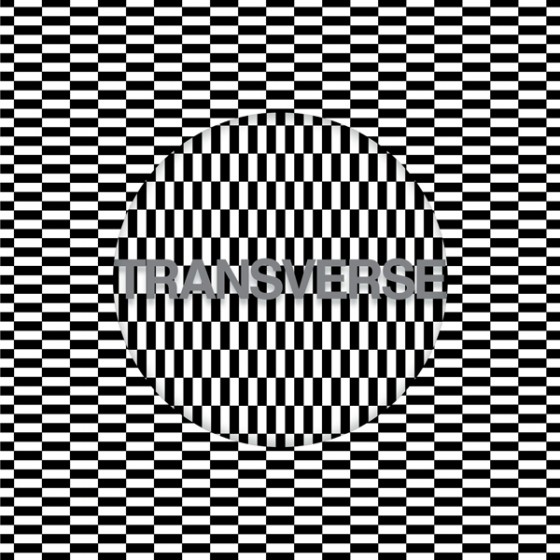
The first thing that grabs you about Transverse is the sleeve, a simple Bridget Riley-esque repeated monochrome pattern which appears to move as you tilt your head, and which really hurts your eyes if you stare at it too long. Simple is not a word you could use to describe the music contained on Transverse, however. Aiming for the complex end of the sonic spectrum, Transverse consists of four tracks of thudding, heavy, hypnotic ambience loaded with edgy sounds, dark tones and industrial style noise infiltration.

The central point of reference in each case is a deep, pulsing beat, not dissimilar from some of Orb’s most dub-esque soundscapes, that beat providing a consistent backdrop for the more challenging drones, squalls, yelps and clattering percussion that litter these tracks. At times barely-controlled bowed guitar feedback from Void drifts into view; at others Cosey Fanni Tutti moans wordlessly as though experiencing some sort of dark religious euphoria; at others snatches of words swing into view; at others, thick bass drones dominate; at others it feels like each track might just be a tweak of a dial away from complete overload and ear-shredding noise collapse.

Overall, the effect is exactly what you’d expect from this trio. Factory Floor have been heralded as taking Throbbing Gristle’s legacy and bringing that band’s name to a whole new audience, while Chris and Cosey have been toying with industrial clamour for decades. The four long pieces included here are detailed, intricate and confrontational all at the same time, particularly suited to those who need more angst and unpredictability in their deep listening soundscapes. Unlike most work of this nature, the fractured sounds and feedback bursts suggest that this should be listened to really loud, allowing the bass passages to have a similar, punishing effect on your body as that monochrome sleeve has on your eyes.

The LP + CD edition of Transverse includes an alternate version of the CD release, the four tracks being augmented by an additional track in the shape of ‘V4 Studio (Slap 1)’, a studio version of the final track played as part of the trio’s Short Circuit set. The studio version feels more playful than the version played live, reducing the prominence of the bass and eliminating a lot of the reverb and resonance inevitably presented on the Roundhouse performance version. Pre-ordering the album from Carter Tutti Void’s own Sandbag web store also meant you could get hold of an exclusive recording, ‘cruX’ which was delivered as a download on the day of release.

First posted 2012; edited 2018.

(c) 2018 Mat Smith / Documentary Evidence.

Throbbing Gristle – Very Friendly / The First Annual Report (recorded 1975)

  
The material on what has been variously described as Very Friendly and The First Annual Report represent the first recordings that Throbbing Gristle made under that name in 1975, in the midst of their transition from the COUM Transmissions moniker in a concerted effort toward making music rather than more eclectic arty initiatives.

These so-called “wreckers of civilisation” – Genesis P-Orridge, Cosey Fanni Tutti, Chris Carter and the late Peter ‘Sleazy’ Christopherson – were no strangers to controversy when they decided to focus on what became Throbbing Gristle. COUM, while including an element of sonic exploration, was fundamentally a multi-disciplinary project, with imagery and ideologies that were often challenging, even for the liberal approach often taken toward the arts during the Seventies. Throbbing Gristle extracted the confrontational artsy angle but focussed that around sound, developing an aesthetic that was contemporary with the genesis of punk but which split itself off in a uniquely devastating counterweight to the Transatlantic feedback loop between The Ramones and The Sex Pistols.

This so-called first annual report begins with an almost twenty minute dirge of sound that recounts, in blunt, detached detail, the Moors Murders of Ian Brady and Myra Hindley. Gen’s narrative on ‘Very Friendly’ spares no detail, taking on the dispassionate delivery that Patrick Bateman would deploy over a decade later in Bret Easton Ellis’s American Psycho; no detail is spared, whether that be the detailing of various proclivities on the part of the victims or the brutal violence that Brady / Hindley wrought upon those individuals. Gen’s voice takes on a manic, almost excitable and aroused quality as the sonic backdrop begins to pick up the pace to reflect the executions, with jarring synths and fuzzed-up guitars delivering the requisite nightmarish atmosphere for the story.

By the conclusion of TG’s opening gambit, the group are dealing in mere atmospheres, Gen’s voice stuttering the words ‘there’s been a m-m-m-m-murder’ with layers of echo that almost suggests a dreamy, sedated otherworldliness, as if what just played out couldn’t possibly be true. For a lot of people the serial killer antics of Brady and Hindley were something that couldn’t be rationalised, while for others they were a numbing tragedy that cast a pall over the North of England.

The rest of the album takes the same sonic foundations – the same grainy texture and noisy, clamorous atmospheres – and skews them, sometimes finding Gen vocalising some weird lament (’10 Pence’), adding TV news reportage while guitars and freeform noise structures push the TG sound closer to The Velvet Underground’s ‘Black Angel Death Song’ (‘Whorls Of Sound’), or into intriguing synth shapes (‘Dead Bait’) that belong on a Clive Barker soundtrack.

Though nowhere near as devastatingly confrontational as the opener, the most interesting piece here is ‘Final Muzak’, which propels itself forth on a dense, churning, sub-motorik metallic groove that’s part rhythm and part bass sequence. Noises whine and drone continually over that jarring rhythm, cycling round in queasy loops that suggest this early attempt toward the disciplinarian approach that would become one of Throbbing Gristle’s signature motifs could have run on far longer than the mere five and a half minutes presented here.

Very Friendly / The First Annual Report has never officially been released, but it has been bootlegged plenty of times over the years, with the name varying according to the release. I bought a CD copy of this released by the Genetic Terrorists label, with the above sleeve image and the name Very Friendly from an HMV on Oxford Street in 1997, which lead me to believe it was perhaps more official than it actually was. The most recent release was in 2001 on the Yeaah! label. Quite why the band never saw fit to release the record officially via their own Industrial imprint is something of a mystery, but just another strange decision in the history of this most uncompromising of British groups.

(c) 2016 Mat Smith / Documentary Evidence

Various Artists – The Tyranny Of The Beat (The Grey Area Of Mute album, 1991)

Various Artists 'The Tyranny Of The Beat - Original Soundtracks From The Grey Area' CD artwork

the grey area of mute | cd agrey1 | 1991

The Tyranny Of The Beat – Original Soundtracks From The Grey Area was a 1991 compilation issued by Mute to showcase releases from its Grey Area sub-label. The Grey Area specialised in reissuing the back catalogues of Cabaret Voltaire (their Rough Trade releases), Can, Throbbing Gristle (plus various Industrial Records acolytes), Graeme Revell‘s SPK and many others. The label also became home to early albums by artists that had been signed to Mute, such as Nick Cave‘s pre-Birthday Party band The Boys Next Door, D.A.F., Wire and Einstürzende Neubauten.

The reissue programme conducted by Mute through The Grey Area inevitably produced a varied counterpoint to the releases issued through the main Mute imprint, through Paul Smith‘s hugely diverse Blast First (which itself, at times, also reissued plenty of older material) and NovaMute. Alongside The Fine Line, specialising predominantly in soundtracks for TV, film and theatre, The Grey Area represented a hugely interesting opportunity to hear some out-of-print releases on CD for the first time.

There days, at least nominally, The Grey Area no longer exists. Can reissues have never officially carried the logo, and whilst Mute remains the custodian of the seminal Cologne unit’s back catalogue, it is done in partnership with Can’s own Spoon imprint; Cabaret Voltaire’s latest reissue programme through Mute is done through the main label and consequently all releases now carry stumm catalogue codes, and Throbbing Gristle effectively bought back their work to reopen the doors of Industrial Records. The opportunity to reinvigorate The Grey Area upon securing the opportunity to reissue the Swans back catalogue in 2014, alongside the Cabs programme, feels like something of a missed opportunity.

The Tyranny Of The Beat then serves as a useful overview of what The Grey Area were up to at this point in the early Nineties. A small four-page flyer inside the sleeve highlighted just how comprehensive the reissue programme undertaken by Mute was through the sub-label – after all, they were effectively re-releasing whole or sizeable elements of back catalogues, not sporadic releases. The flyer also included some items that were planned for releases but which have never materialised – chief among these was the Robert Rental / The Normal live album recorded at West Runton, which Rough Trade had released in 1980 as a one-sided LP.

The sleeve also features liner notes from Biba Kopf, famed NME journalist and currently (under his real name Chris Bohn) the editor of The Wire. Kopf also wrote the copy for the Documentary Evidence brochure which inspired this site.

The breadth of music included in sampler form on The Tyranny Of The Beat is impressive, taking in the grubby pulse of TG’s live track ‘See You Are’, their Industrial signees Monte Cazazza with the truly horrible ‘Candyman’, a bit of early electro from the Cabs, the detached punk of Swell Maps‘ brilliant ‘Midget Submarines’, the similarly aquatic ‘Our Swimmer’ by Wire (still one of their best Seventies pieces), a truly ethereal piece by Wire’s Bruce Gilbert / Graham Lewis as Dome with A.C. Marias and the still-devastating Rowland S. Howard-penned ‘Shivers’ by The Boys Next Door. Can’s ‘Oh Yeah’ – one of Daniel Miller‘s personal favourite tracks – provides a rhythmic counterweight to the urgent mechanical production-line beats of Neubauten’s ‘Tanz Debil’ and Die Krupps‘s ‘Wahre Arbeit, Whare Lohn’. Dark relief comes in the form of SPK’s ‘In Flagrante Delicto’, a track which suggests Graeme Revell was always destined to compose the scores for spooky, suspense-filled films like The Craft.

Like a lot of sampler albums, The Tyranny Of The Beat can sound a little uneven, and whilst a lot of these bands were part of common scenes – industrial, punk, the terribly-named Krautrock – it would have been a pretty weird festival if this was the line-up.

Kopf’s liner notes deserve a mention, if only for the way that he positions the concept of a grey area as a place that people run to for escape or as a means of consciously assaulting musical norms, a place that both acted as a reaction against the regimentation of beats and simultaneously gave birth to the repetitive rhythms of techno. ‘In The Grey Area you get the sense of limits being pushed up against and breached,’ he says, and even now, listening to Genesis P. Orridge deliver a maniacal vocal over corruscating waves of sinister noise from a distance of thirty-five years, or Monte Cazazza’s detached multi-channel reportage of a serial killer’s victims and the nauseatingly vivid listing of the savagery he put those victims through, you can see exactly where Kopf was coming from.

Track listing:

cd:
1. SPK ‘In Flagrante Delicto’
2. Throbbing Gristle ‘See You Are (Live, The Factory July 1979)’
3. Cabaret Voltaire ‘Automotivation’
4. Chris Carter ‘Solidit (Edit)’
5. Die Krupps ‘Wahre Arbeit, Wahre Lohn’
6. D.A.F. ‘Co Co Pina’
7. Einstürzende Neubauten ‘Tanz Debil’
8. NON ‘Cruenta Voluptas’
9. Can ‘Oh Yeah’
10. Wire ‘Our Swimmer (Live, Notre Dame Hall July 1979)’
11. Swell Maps ‘Midget Submarines’
12. The Boys Next Door ‘Shivers’
13. Dome ‘Cruel When Complete’
14. Monte Cazazza ‘Candyman’
15. The Hafler Trio ‘A Thirsty Fish / The Dirty Fire’

(c) 2014 Mat Smith / Documentary Evidence

Alex Fergusson – Stay With Me Tonight (Red Records single, 1980)

Alex Fergusson 'Stay With Me Tonight' 7" artwork

red records | 7″ rs003 | 1980

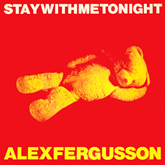
There appears to be a television theme running through Daniel Miller‘s work between 1978 and 1980. First (of course) there was Mute‘s first move, his single ‘T.V.O.D.’ as The Normal; Silicon Teens, his fake synth group, had a track called ‘TV Playtime’ and Missing Scientists, who Miller produced for their single ‘Bright Lights Big City’ were better known as The Television Personalities. Alex Fergusson, whose ‘Stay With Me Tonight’ Miller produced under his Larry Least alias in 1980, was a founder member of Alternative TV. If nothing else, this release proves that too much TV is not necessarily a bad thing, despite what the health professionals might say.

Alternative TV were formed by Mark ‘Sniffin’ Glue’ Perry and Fergusson, a Scottish guitarist. The debut release by the nascent ATV was a flexi (‘Love Lives Limp’) given away with the last issue of Perry’s Sniffin’ Glue punk fanzine in 1977. Shortly after, following a couple of 7″ singles, Perry sacked Fergusson and cast his original collaborator aside. Fergusson went on to join Sid Vicious biographers Fred and Judy Vermorel’s brainchild, the band Cash Pussies (with Alan Gruner, model Diana Rich and Ray Weston); Cash Pussies released one single, ‘99% Is Shit’ which featured clips of Sid Vicious being interviewed, and withered away like the Vermorel-constructed act they were. In 1981, Fergusson formed Psychic TV (aka Psychick TV) with Genesis P. Orridge (who had been a sometime ATV percussionist) and Peter ‘Sleazy’ Christopherson, after the initial demise of Throbbing Gristle. TG had contacted Fergusson when they were working on the soundtrack to the Vermorels’ Millions Like Us movie, asking him to assist with the music they were creating.

1980’s solo Fergusson 7″ on Red, ‘Stay With Me Tonight’, sounds a million miles from those punk / industrial roots. Featuring Fergusson on vocals and Gruner on synths, the track is a pretty, out-and-out synthpop track that provides no clue whatsoever to the harsh cerebral onslaught that Psychic TV would create. Quite how Daniel / Larry got on board is hard to understand, but it perhaps serves to highlight how intertwined the punk / post-punk landscape in the UK was. (Gruner would go on to work with Bonnie Tyler; we won’t talk about that.) The synths on both tracks distinctly sound Miller-esque, both from Fad Gadget and Depeche Mode records; it wouldn’t surprise me if perhaps they were Miller’s synths. No details are provided on where this was recorded or who else worked with Miller / Fergusson / Gruner on this, but it’s feasible that this is a Blackwing / Eric Radcliffe / John Fryer affair like the Missing Scientists 7″.

‘Stay With Me Tonight’ (copyrighted to 1979) has a steady, thudding beat and some brilliant arpeggiating synths plus a beat on the chorus that Depeche Mode would definitely borrow for ‘Dreaming Of Me’. The way some of the synths get filtered from subtle background noises to foreground flashes is good too; it’s an effect that acid house and techno would repeat ad infinitum, but it’s nice to hear it deployed on a synth pop track. Fergusson’s vocal has a certain naivety, an unpolished, nasal youthfulness which is about the only ‘punk’ quality this song has; punk in the sense that it sounds like he’s not a singer in the trained sense. Overall, it’s a nice, upbeat and forgotten synth pop track and I really like the transition from flat-out verses to sparse choruses, which sounds like a Miller trick to me.

The less we say about the name of the B-side, ‘Brushing Your Hair’, the better. The track is a too-short synth instrumental, co-written by Fergusson, Gruner and Miller. The drums have a Krautrock quality while electronic squiggles reminiscent of the percussion on Depeche Mode’s ‘Nodisco’ have prominence in the foreground. Meanwhile, a wavering keyboard riff that was appropriated and expanded for Fad Gadget’s ‘Ricky’s Hand’ makes a brief appearance. This track has Daniel Miller’s handiwork in major evidence, and it’s worth tracking this down for the B-side alone.

Track listing:

7″:
A. Stay With Me Tonight
B. Brushing Your Hair

First published 2011; edited 2014

(c) 2014 Mat Smith / Documentary Evidence

Industrial Soundtrack For The Urban Decay (Les Films Du Garage film, 2014)

Industrial Soundtrack For The Urban Decay logo

Industrial Soundtrack For The Urban Decay is a film by Amélie Ravalec and Travis Collins which will be released in late 2014.

The film charts the history and development of industrial music through the political, economic and urban upheaval experienced in late Seventies Europe and America through a series of interviews with the key individuals and groups that were at the forefront of this musical genre.

The film features interviews with many names familiar to Mute Records fans – Chris Carter, Cosey Fanni Tutti and Genesis Breyer P. Orridge from Throbbing Gristle, Boyd Rice, Graeme Revell, Stephen Mallinder from Cabaret Voltaire and other luminaries such as Test Dept, Hula and Z’Ev. The film promises to be one of the first, and certainly most comprehensive, surveys of a scene whose echoes can still be felt in the worlds of Factory Floor and noise protagonists like Cold Cave.

A trailer for Industrial Soundtrack For The Urban Decay can be viewed below. A Documentary Evidence interview with Ravalec and Collins, as well as a review of the film, will follow later in 2014.

For more information, a list of interviewees and a selection of industrial mixtapes (including one by electronic music stalwart and Simon Fisher Turner / Githead collaborator Robin ‘Scanner’ Rimbaud) head to industrialsoundtrack.com

(c) 2014 Mat Smith / Documentary Evidence

Throbbing Gristle, Village Underground 23/10/2010

Throbbing Gristle, Village Underground 23/10/2014 - photo source unknown

‘If you’re going to come to a Throbbing Gristle gig,’ said my friend Ian, ‘you have to expect it to be loud.’ He was gesturing in the direction of the couple next to us at their gig at the Village Underground on the Shoreditch / Hackney borders, both of whom had their fingers in their ears throughout the final song of their set.

It was a common sight. There were lots of earphones and earplugs, which we felt rather defeated the purpose. The point is that this was supposed to be confrontationally loud, because that’s what TG were always all about – confrontation. It was one of many observations made through the course of almost two hours of relentless and – mostly – structured noise. Other observations included Peter ‘Sleazy’ Christopherson (in a kimono) looking a little like Harold Bishop, and Genesis Breyer P’Orridge looking like… well, we aren’t really sure what he looks like, but he’s certainly a lot shorter than I thought he’d be.

I’m writing this on a Jubilee Line Tube the day after; my ears are still ringing. But there is something about the noise of Tube trains on this particular line which provides a useful analogy for the majority of ‘songs’ last night – leaving the stations along the line the trains depart quietly until some sections of the tunnels where the noise levels rise quickly, swiftly becoming almost distressingly loud in their dense screeching and howling; like a gong softly hammered and then hit more forcefully, only put through a massive bank of distortion. Lots of the songs were like that last night – quiet, almost dark ambient at first then rising through waves of added ferocity to create a huge bed of noise that occasionally made the tendons in my neck vibrate. Beats were not eschewed, sometimes emerging as deep bassy throbs, sometimes rattling around like an old Cabaret Voltaire vintage drum machine.

New instruments were apparently being roadtested tonight. Chris Carter chimed what looked like small bells, while P’Orridge waved an iPhone about, coaxing feedback and tones from a white electric violin, at one point standing in front of it while it was resting on its stand and bowing it with two bows at the same time. Cosey Fanni Tutti played an electronic guitar, producing sparks of feedback, and switched to cornet for one track. At times the four of them were sat at their devices like online gamers. During the cacophonous final track of the main set, Christopherson put his fingers in his ears. It tells you it must have been loud if one of the band members had to block out the sound. By the end his eyes were closed and his head swaying from side to side, much as you’d expect to see someone absorbed rapturously in a piece of classical music.

The sound came to a juddering halt and they left the stage to applause marginally louder than the racket they’d just made. A few moments later Christopherson took the mic and advised that the band were ‘all feeling a little jetlagged so there’ll be no encore tonight’. This prompted boos from some quarters and half the audience departed, but, though it was delivered in an apologetic voice which hardly encapsulated rebellion, I almost saw in it the contrarian-ness, the punk spirit, of their earliest days. When they came back on, Christopherson muttering ‘Oh, go on then,’ like he was taking a proffered chocolate that he knew he probably shouldn’t take, it almost felt like baying to the pressure of the crowd, something they’d have never done back in the day. Luckily, the unashamed confrontation and aggression of ‘Discipline’ more than made up for the doubts, P’Orridge by this stage swigging from a glass of red wine and fending off a naked stagediver, taking the evening to a powerful close.

First published 2010; edited 2014

(c) 2014 Mat Smith / Documentary Evidence
Note – the source of the accompanying photo is now unknown. I am happy to attribute the credit if the photographer can be identified.