GUO – GUO4

Daniel Blumberg could well be seen as the most sonically challenging addition to Mute’s present-day roster. His prolific release schedule highlights both a limitless improvisatory imagination and also a huge amount of trust and freedom by the label that he joined last year with his Minus opus.

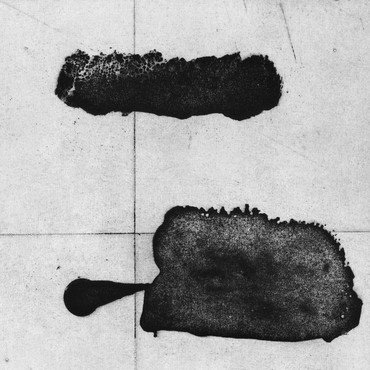
In parallel to his work under his own name as de facto band leader, his output as GUO with tenor saxophonist Seymour Wright represents an ever-adaptable framework that allows the pair space to collaborate with other like-minded musicians. After previous releases with friend and muse Brady Corbet, GUO4 pitches the Blumberg/Wright duo together with drummer Crystabel Riley, accompanied by a text from Fran Edgerley. The impetus for the session was a new short film by Peter Strickland concerning itself with an altercation between two men in a locker room.

Violence, then, is to be expected from this atypical soundtrack, which is, for the most part, led by Riley’s evocative, sheet metal-esque percussion. Taken as a sympathetic and wonderfully noisy response, Wright’s atonal squalls of upper-register bleating and Blumberg’s signature guitar un-playing – ranging from low distortion rumbles to metallic splinters to an undercurrent of angry note clusters – make the single 22-minute piece both expressive and beautifully uncomfortable.

To paraphrase what another of Mute’s noisier pairings might have dubbed it, this is easy listening for the hard of hearing. Whether it acts as a portent of what we can expect from Daniel Blumberg’s next LP under his own name remains to be heard.

Catref: stumm444
Words: Mat Smith

(c) 2019 Documentary Evidence

Teho Teardo – Grief Is The Thing With Feathers (Specula album, 2019)

Blixa Bargeld and Balanescu Quartet collaborator Teho Teardo has charted a singular course through electronic, classical and industrial music since he first emerged with a self-released cassette album in 1985. His approach to works for strings and sound design can be linked back to his early days as an Italian punk, his music containing a visceral weight coupled with a blunt, almost antagonistic command of the loud-quiet-loud dynamic.

His latest work is arguably the most complete realisation of that vision. Inspired by Max Porter’s book Grief Is The Thing With Feathers and used in its subsequent stage adaptation by Enda Walsh, the eight pieces here chart the narrative of a crow and his family as he struggles to cope following the loss of his partner and the need to raise his two chicks by himself.

Here we find Teardo offering up recurring passages of staccato cello that carry the sonic attack and challenge of heavy metal guitars, blended with jangly guitars, dramatic percussion and intense violin, best exemplified by standout moments like ‘London Offered Us Possible Mothers’. Elsewhere, the interplay between processed wind instruments and modular synths on ‘Hop Sniff And Tackle’ creates a nauseating, ominous tension wherein a serene string section toward the end is just about the only relief from a darkness as intense as a crow’s feathers.

Grief Is The Thing With Feathers by Teho Teardo was released in March 2019 by Specula.

Words: Mat Smith

(c) 2019 Mat Smith / Documentary Evidence

Electronic Sound 53 – including my Mute STUMM433 feature

ES53_Bundle-Square.jpg

The latest issue of Electronic Sound is now available in the usual high street retailers and as a bundle with an exclusive 7″ from their website. This issue has a primary focus on Berlin, featuring conversations with Alexander Hacke from Einstürzende Neubaten, Mick Harvey, Simon Bonney and others who recall the vibrant creative melting pot that the divided city represented in the late 70s and early 80s. The accompany 7″ features Berlin legends Malaria! while Gudrun Gut from band offers her take on sometime Berlin resident David Bowie’s ‘Boys Keep Swinging’ on the B-side.

My major contribution to issue 53 was a feature on John Cage’s seminal composition 4’33” and the incoming Mute STUMM433 project. For this feature I interviewed K Á R Y Y N, Daniel Miller, Simon Fisher Turner, Irmin Schmidt, Laibach, Pink Grease and Maps, each of whom explained how they approached their performance of Cage’s distinctive piece – where they recorded it, and what instrument they didn’t play. Each of the 58 versions on STUMM433 is wildly different from the next, each one includes its own individual story and accompanying visual, and only one of the inclusions is actually silent – just as Cage would have wanted.

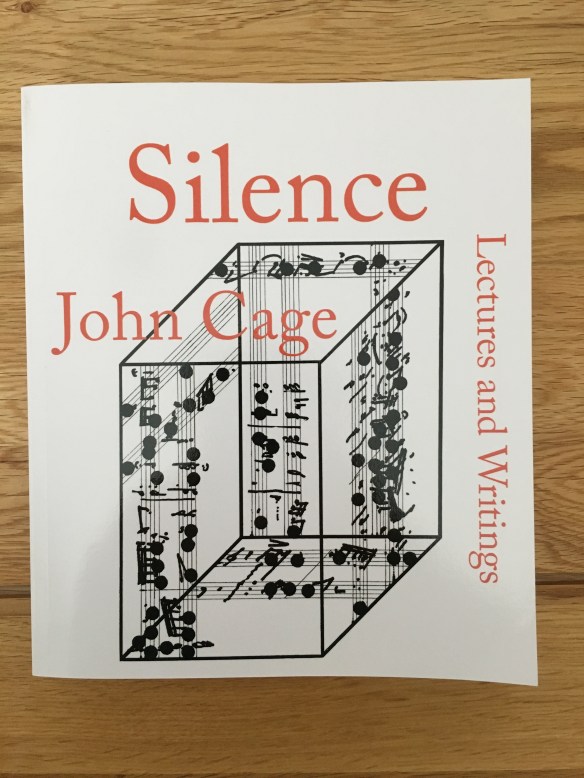
This feature involved me diving back into Cage’s Silence book – something I’d first tackled in my late teens when I found a copy in my local library and studying the score. One took much longer than the other. It also awoke in me an interest in Zen after reading about Cage’s following of these ascetic Buddhist principles.

Elsewhere in this issue I reviewed Colours. Reflect. Time. Loss. by Maps; the score to Marnie by Bernard Herrmann; David Tibbet and Andrew Lisle’s debut Nodding God album; the latest Blow collaboration on Front & Follow by Polypores and Field Lines Cartographer; and a fantastic new Buchla-based concept album by Simon James.

(c) Mat Smith / Documentary Evidence for Electronic Sound

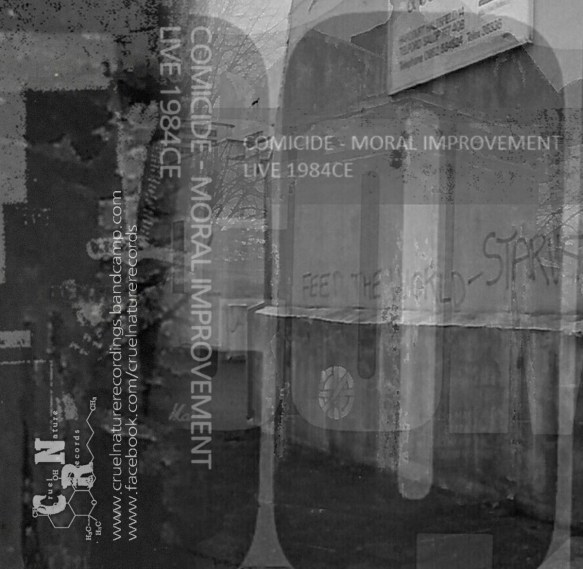
Comicide – Moral Improvement (Live 1984CE) (Cruel Nature album, 2019)

Comicide were a duo of Eric Jurenovskis (guitar) and Stephen Àh Burroughs (synths and vocals), who would later go on to form celebrated Blast First unit Head Of David. They formed Comicide in 1984 specifically for two gigs, each consisting of the same set list of four tracks, opening for CON-DOM at two venues in their native Midlands – the Star Club in Birmingham and the possibly unlikely setting of the Eve Hill Afro-Caribbean Community Club in Dudley.

A new archive limited edition cassette by Cruel Nature puts these eight live tracks into the cassette players of Head Of David completists for the first time, as well as providing another insight into the early Eighties noise movement. These tracks are, as might have been expected, noisy and uncompromising affairs. Each track is built up from ground-out guitar riffs and disturbing synth shapes that have been subjected to the same extensive distortion as Jurenovskis’s guitar. Tracks like ‘Hatehouse’ swell with layers of dubby reverb, each time adding an element of compelling dissonance, finally becoming nothing more than bleak echoes of the racket Burroughs and Jurenovskis were curating.

The second set introduces Burroughs’s angry, shouty vocals to the tracks ‘Bloodmeat’, ‘Muscular Jesus’ and the aforementioned ‘Hatehouse’. Those vocals aren’t obviously missing from the Star Club set, but when added in they have the effect of making the duo’s loud, repetitive riffing less uncomfortable somehow – even though Burroughs’s voice could never really be considered comforting. Though still a challenging, impure experience, the Eve Hill set sounds more polished, perhaps more studied, probably because the pair had longer to develop the songs. The instrumental ‘Bruised Organon’ takes on an atmospheric, installation-like tone, as if the two were actively countering the maximalism of their other pieces and seeking to channel the cultural echoes of Warhol’s Exploding Plastic Inevitable.

(c) 2019 Mat Smith / Documentary Evidence

Stubbleman – Mountains And Plains (Crammed Discs album, 2019)

Stubbleman is the alias of Pascal Gabriel, formerly of Mute electronic pop alumni Peach, a central figure in Rhythm King via S’Express, Bomb The Bass and others, and a producer to the stars. Mountains And Plains was inspired by a trip across the breadth of the United States and finds Gabriel in deeply reflective territory, the eleven pieces here tapping into a voguish, borderless modern classical style wherein an array of analogue synthesizers sensitively accompany stentorian piano. The album was mixed with the knowing ear of fellow Mute stalwart Gareth Jones.

Despite the grand scale of the vistas, buildings and infrastructure that Gabriel was enthralled and captivated by, there is a deeply introspective tone here, one that only slips into uplifting territory on the closing piece, the ephemeral ‘Piety Wharf’. Could it be that he is silently commenting on some sort of quasi-political squandered environmental opportunity as he looks out from car and train windows between New Mexico, California and the relentless flatness of the Mid-West? Did he not enjoy the trip? Or was it simply that I played these tracks on a particularly sullen, overcast Tuesday after a warm public holiday where nothing in my life seemed to make much sense anymore as I trudged to and from work?

Maybe that’s oversharing on my part, but such is the effect of the beguiling detail available to the listener on Mountains And Plains. Pieces like the stillness of ‘Great River Road’s upright piano motifs, sensitively-deployed modular synths and found sounds prompt you to consider your tiny place in the world; ‘Griffith Park’ moves forward on a particularly absorbing, ever-changing synth pattern, a perfect allegory to the unsleeping vibrancy and disposable creative hustle of the Los Angeles that the park overlooks; ‘Badlands Train’ has a quiet grandeur, water-like synth sprinkles evoking the incessant slow-motion dance of the derricks as they suck oil from below the Texas bedrock.

It shouldn’t comes as the remotest surprise, when you consider Gabriel’s CV, that this album is a highly accomplished body of work. It is more than just a producer’s pet vanity project and opportunity to deploy a mouth-watering array of kit; it is a highly personal, evocative, thought-provoking, affecting and arresting endeavour that seems to transcend just about every single expectation you might have about what it could sound like.

(c) 2019 Mat Smith / Documentary Evidence

K Á R Y Y N – The Quanta Series (Mute album, 2019)

The music of K Á R Y Y N first appeared on my radar two years ago when she’d just released a new track, ‘Yajna’, in what she was already calling her Quanta series.

That track, a fragile, sparse piece that tapped into a pulsing, shifting minimal techno-inflected sound world, showcased two things for me – a mastery of the diffuse potential of using electronics in a way that nodded to the framework and stricture of contemporary pop while deploying a edge that could keep po-faced art fanatics happy; but, perhaps more importantly, ‘Yajna’ showcased a compelling, mesmerising voice that you couldn’t help but be moved by. I wrote a glowing Introducing… piece for Electronic Sound and looked forward to hearing more music in the Quanta series. That she decided to sign to Mute and compile the whole series into one album for them was frankly just a bonus for me.

K Á R Y Y N was born in Alabama, spent her childhood summers with relatives in Syria and wound up living in Los Angeles. Not for nothing was one instalment of the Quanta series called ‘Aleppo’, written in the wake of the death of two relatives in a city that has become synonymous with the humanitarian and cultural devastation of the Syrian civil war. The track blended glitches, stop-start rhythms and carefully-crafted detail alongside K Á R Y Y N’s heavily processed voice, resulting in a deceptive four minute slice of artisan sound design.

The Quanta series draws tracks together recorded after K Á R Y Y N had left LA and didn’t settle anywhere for long, beginning with 2011’s ‘Today I Read Your Life Story 11:11’. The fact that the pieces were written over a seven year period means that listening to the entire series as a single album is like watching the gestation of K Á R Y Y N’s creative sensibilities in slow motion. A pivotal point came in 2016 with the music she composed for Samantha Shay’s Of Light, her score attracting the patronage of Marina Abramovic and Björk.

Taken as a whole, this can, at times, be a troubling , difficult listen. The first pieces she wrote, placed at the end of the album, are heartwrenchingly raw, with no attempt to mask or shield you from the reclusive, mournful state in which K Á R Y Y N wrote them. In contrast, there are moments of towering beauty, moments of sensitivity, moments of contemplation and, in the frantic rhythms and lush synth pads of ‘Ever’, a yearning, romantic, delicate spirit. On the strength of that track, K Á R Y Y N could easily pivot into the sort of pure, intelligent pop proffered by the likes of Lucy Mason, but I get the sense that this restless soul would never concede to being so easily pigeonholed, and may she be justifiably celebrated for that.

The Quanta Series by K Á R Y Y N is released by Mute on March 29 2019.

(c) Mat Smith / Documentary Evidence

Apparat – LP5 (Mute album, 2019)

The recording of LP5 by Apparat’s Sascha Ring saw him unburdening himself of the grand, bold gestures that have become the domain of his Moderat trio. In doing so, and in trying to focus instead on the fundamental components of these new Apparat pieces rather than aiming after something anthemic, Ring has nonetheless created something where his quintessentially muted, restless power still offers an affecting, emotional dimension.

In the context of Ring’s other Apparat output, none of this is a surprise. However, compared to something like 2011’s The Devil’s Walk, there’s less of an emphasis on ephemerality. Tracks like ‘Heroist’ or ‘In Gravitas’ move forward on robust, clubby rhythms that give the piece an immediacy, even if Ring’s vocal and the unswerving synths in the background contain a mitigating, mournful quality. These are tracks where those offsetting gestures pull you in all sorts of different, competing directions at once, a dizzying, manipulative effect that leaves you feeling fully uncertain by the end.

The big departure for LP5 is its sheer breadth of vision and instrumentation. Ring has always operated at the more tolerant, eclectic end of electronic music, but LP5 finds him investing in a whole new sonic palette more akin to his occasional work for theatre – opening track ‘Voi_Do’ is like a cinematic free jazz experiment, an unshackled approach to sequenced structures and one where strings, guitar, piano and horns can co-exist with synths and processing.

The stand-out track ‘Caronte’ employs Philipp Thimm’s defiant cello where the temptation might instead have been to use a faltering, scratchy synth, giving the track a strident, expansive dimension, making its sudden lurch into buzzing electronics and urgent rhythms all the more thrilling. It’s those unexpected moves, those introductions of new sounds or sharp pivots in motion, combined with his diaristic lyrics, that once again means Ring has delivered another mesmerising album, and one whose vision allows it to stand slightly apart from everything else.

LP5 by Apparat is released by Mute on March 22 2019.

(c) 2019 Mat Smith / Documentary Evidence

Beth Jeans Houghton & The Hooves Of Destiny – Yours Truly, Cellophane Nose (Mute album, 2012)

bjhytcn

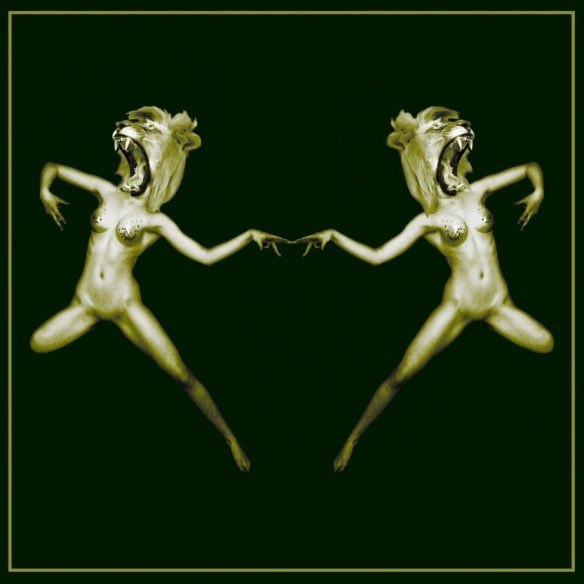
Chances are if the weird naked-girl-with-animal-head sleeve doesn’t grab you then the anticipation would have already have got you: Beth Jeans Houghton is one of those artists, a bit like labelmate Josh T. Pearson, whose first LP was greeted with angsty expectation by the music press, that expectation cultivated over an extended period; in this case, that period is almost four years from when Houghton’s first music appeared in 2008.

It also helped that Mute kept the album under wraps far longer than reviewers would ordinarily tolerate; if this was a Hollywood movie, the critics would have already drawn the unassailable conclusion that the movie was a stinker, otherwise the studio would have readily let the journos in to watch. For some reason, not making this available to the press much earlier than its actual release seems to have just heightened the hype surrounding Houghton’s first album.

Produced by Ben Hillier, the inexplicably-named Yours Truly, Cellophane Nose finds Houghton, a talented lyricist and multi-instrumentalist judging by the sleeve, and her Hooves Of Destiny (Findlay MacAskill on violin, Dav Shiel on drums, Rory Gibson on bass, and Edward Blazey on trumpet and guitar) cutting a distinctive path through modern music’s more folksy places.

Houghton’s style appears to draw upon the weird mysticism of British folk groups from yesteryear blended with the downright unhinged kookiness of the likes of Tori Amos. A quick run through the lyric sheet provides few clues to what these songs are all about, almost as if Houghton was writing down particularly vivid and strange dreams, lots of strange imagery and oblique references. My favourite lines come during the spoken-word section of ‘Nightswimmer’, an early version of which first appeared on Houghton’s ‘Golden’ single in 2009, whereupon she mouths ‘And the cracks in the pavement sweat like the crust / Of a toffee pecan pie‘.

Hillier certainly wrings out an organic quality from the ten songs here, Houghton and The Hooves (and occasionally Hillier himself) laying down a multitude of instruments, giving the tracks a casual feel, almost as if everyone was content to grab whatever instruments were hanging about the studio and muck around while Hillier expertly captured the whole affair. A sense of warmth and often dark beauty seeps from every track, augmented on most tracks by a string quartet formed of Ian Budge on cello, Everton Nelson and Sally Herbert on violins and Bruce White on viola.

I said in the single review of ‘Liliputt’ (which I’m no closer to fathoming after reading the lyrics) that the song reminded me on some level of Dexy’s or their modern counterparts The Rumble Strips, and that same sense of joyful abandon colours all but the quietest tracks on Yours Truly, Cellophane Nose. I asked my music-loving, ukulele-playing daughter (then just five years old) what she thought; after the inevitable request to add the songs to her iPod, she described the songs as ‘jumpy’. I suspect if she knew what ‘jaunty’ meant, she’d probably have employed that adjective instead.

The track that was playing when I asked my eldest daughter for review input was ‘Atlas’, which is one of the strongest songs on the album, featuring pounded layers of intense drums, skinny funk guitar culled from Vampire Weekend or their antecedents Talking Heads. ‘Dissecting the atlas for places we’ve been / Your list is longer but you’ve got more years on me,‘ is one of the most evocative lines here, coincidentally echoing a conversation around our household dinner table a weekend or so before the album was released. Houghton’s voice here effortlessly shifts between the hyper-falsetto and warm, sweet tones that pervade many of the tracks here, while a spoken word section by Neesha Champaneria provides a dark counterpoint to the more joyously carefree sound elsewhere on the song.

Another big highlight is ‘Humble Digs’ with its rolling drums and plucked countrified ukulele, expressive strings and a chorus of Houghton and The Hooves that sounds like a miners’ choir or Annie Get Your Gun chorus line; ‘Humble Digs’ is upbeat and infectious. A couple of listens and it’ll feel like an old friend.

A sense of wry breeziness dominates tracks like ‘Franklin Benedict’ wherein Houghton offers up lines that evoke summery warmth (‘Roasting peppers in the back yard,‘) and the downright creepy (something about a unitard, singly the most unpleasant thing ever invented). This is in direct contrast to the album’s official closing track, ‘Carousel’, which is a short track with a weird, harpsichord and piano rhythm. There’s also gorgeous strings, scary cackling, crackling noises and bells. It should feel upbeat but feels unsettling on some level, as if it masks something dark and unpleasant; like a track from Poses by Rufus Wainwright. It also sounds like something from a fairground, and that’s always guaranteed to creep me out.

The new version of ‘Nightswimmer’ retains that track’s producer Adem’s spiralling synth curlicues, but Hillier polishes the track with a new depth compared to that tentative original, the enquiring bass in particular gaining a blissful prominence. While on face value it sounds as ethereal as anything else here, Houghton’s detached lyrics seem to indicate a metaphorical drowning. Of this track I have said previously that it reminds me of both Depeche Mode‘s ‘One Caress’ and ‘Trilby’s Couch’ from AC Marias‘s solitary Mute album, One Of Our Girls Has Gone Missing, sharing a similar sense of dark Twin Peaks-style mysteriousness.

A sense of mysteriousness also dominates ‘The Barely Skinny Bone Tree’, which sounds vaguely like a traditional Russian or Greek dance song, all plucked violin and the sense that at any second it could accelerate into a manic and out-of-control fervency, only offset by Houghton’s floating, dark vocal. The chorus sees the plucking replaced by mournful strings and a sense of weariness and strained sadness. ‘The Barely Skinny Bone Tree’ has a deeply affecting quality, though it’s queasily unsettling at the same time.

As if to confound further still, once ‘Carousel’ winds down, an uncredited song suddenly snarls into view. This bonus track (I’ve been advised that it’s called ‘Prick AKA Sean’) sounds like Green Day’s take on grimy punk rock, Houghton’s voice barely audible underneath the Hooves’ ramshackle harmonies. Against all the odds, this song is angry, joyous, a little bit glam-rock and evidently a whole lot of fun after the more studied pieces elsewhere. It provides a fittingly baffling conclusion to a brave, adventurous and above all, well-realised debut album, and one that was truly worth waiting for.

First posted 2012; edited and re-posted 2019. This archive review was brought to you by the letter H, as chosen by Jorge Punaro.

(c) 2019 Mat Smith / Documentary Evidence

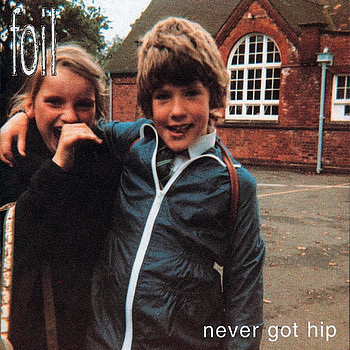
Foil – Never Got Hip (13th Hour album, 2000)

foil

While all of the trademark Foil elements – heavy drums, rapidfire punk guitar riffs and tense and intelligent vocals – are present on Never Got Hip, their second album for Mute‘s 13th Hour sub-label reveals a more emotive quality to the Scottish fourpiece.

At times, Never Got Hip has an unexpected pop twist, and at others – on the string-soaked ‘Groundwork’, or ‘The Ghost Of Vernon Howell’ – a maudlin, almost weary tone. Like vintage whisky, it’s a perfect blend, a well-executed masterpiece that also now appears to be their swansong, since no new Foil releases have appeared since this album came out in 2000.

Melody is an integral, and unchanged aspect of the Foil sound, demonstrated on tracks such as ‘End Of The World’, which also features Hugh’s familiar half-spoken, half-sung narrative and a midsection reminiscent of many a tumbleweed and dustbowl scene in classic westerns.

At times, this is uncomfortable, depressing listening, reminiscent of the kind of bitter, bleak music favoured by Joy Division or Nirvana, despite the inclusion of the pop gem single ‘Superhero No 1’, or the supreme upbeat thrash of ‘Half Life Bunker’. When they do let rip with their particular brand of high-speed rock, it is with a controlled and clipped professionalism borrowed from their influences (e.g. Fugazi, Minor Threat). With Hugh Duggie‘s refreshingly restrained vocal rarely straying into shredded rage territory, the duelling guitar interplay and drum fills are reminiscent of both Pixies and Sonic Youth (check out the Thurston Moore-isms embedded into ‘Weird Kid’).

What’s frustrating about Never Got Hip, is that if this record was released – and better-marketed – just a couple of years later, it would possibly have garnered a degree of pop chart success. In the light of rock’s sudden resurgence in the mid-2000s, a single like ‘I’ll Take My Chances’ was miles better than some of the rubbish faux-punk that our ears had to contend with at that time. That track represents an emotional masterpiece with a punk rock core; it rocks out whilst tugging at the heartstrings. The chorus on the final track ‘Claremont Junction Optimist’ perfectly encapsulates the contrast : ‘You breathe new life into me / And I’ll do what’s necessary‘. It’s the sound of a reluctant coming of age.

Foil were Hugh Duggie (vocals, guitar), Colin McInally (vocals, guitar), Alan Findlay (drums) and Shug Anderson (bass). Never Got Hip was recorded at Edinburgh’s Chamber Studios.

First published 2004; edited and re-posted 2019. This post was brought to you by the letter F, chosen by Andy Sturmey.

(c) 2019 Mat Smith / Documentary Evidence

Yann Tiersen – Skyline (Mute album, 2011)

r-3186896-1320342509.jpeg

Yann Tiersen ‘Skyline’ LP artwork.

I’m almost ashamed to say that Skyline was my first exposure to the work of Yann Tiersen; for reasons that I barely understand, I’d managed to avoid buying Dust Lane, the 2010 album that preceded this one and which brought Tiersen to the Mute family. Prior to the ‘Monuments’ and ‘I’m Gonna Live Anyhow’ singles, the only Tiersen song I’d ever heard was ‘The Gutter’, included here, which featured on Mute’s Record Store Day compilation, Vorwärts. If my comments on ‘The Gutter’ were tentative, that was because I didn’t have the foggiest idea how to describe a track which seemed to contain so many inherent contradictions – was this low-key industrial soundscaping? The soundtrack to a particularly strange movie? Indicative of Tiersen’s work generally or some tiny experimental vignette filled with unexpected drama? All I knew was that I liked what I heard.

The album is packaged in beautifully oblique artwork from Frank Loriou which sees blocks of heavy black, monolithic colour pasted over more quotidian imagery, creating a visual contradiction which is the perfect expression of the nine very complex pieces – I refuse to call these songs, or even tracks – contained on Skyline; each of the pieces is laced with some sort of unexpected, unanticipated sonic event – a drum beat coming out of nowhere, harsh synth sounds, ear-pummelling guitar distortion, layers of chattering voices – which totally destroys your perceptions of the song up to that point. ‘My plan,’ says Tiersen, in Skyline‘s press release, ‘was to play with [the] contrast between electric and quite dense parts and more sober and minimal quiet parts including piano and strings.’

Skyline, his seventh album, was recorded by Tiersen in places as diverse as San Francisco and the tiny island of Ouessant / Ushant before additional contributions from an array of adept collaborators was added, including Dave Collingwood on drums and various vocalists including Efterklang on the closing track ‘Vanishing Point’, while Tiersen is credited with – deep breath – toy piano, bass, guitar, various synthesizers, vocals, drums, Mellotron, accordion, piano, strings, glockenspiel, vibraphone, bouzouki, mandolin and marimba. The album was then mixed in Leeds by legendary producer Ken Thomas, who also worked on S.C.U.M‘s Again Into Eyes for Mute.

That contrast between the noisy and the pastoral is showcased brilliantly in the opener, ‘Another Shore’, wherein tinkling bells, pretty acoustic guitar and a distant hip-hop style beat usher the track gently forth; only just as you’re getting comfortable with the chilled-out atmospheres, angry guitar and aggressively beautiful chord changes suddenly rip right through the mood, creating soaring waves of melodies. The track suddenly breaks down into quietude again, with rasping bass clarinets (played by Stéphane Bouvier) emerging from the background like they’ve come straight from the Screamadelica rehearsal tapes. ‘Another Shore’ is a busy, densely-layered track fraught with conflicting emotions, arranged around that midpoint between the harrowing and the rapturous. At its conclusion, the track just falls away, leaving nothing more than dirty drones before the seamless drop into the second single ‘I’m Gonna Live Anyhow’; that change of pace is somehow a welcome respite as ‘Another Shore’ could take your emotions too far.

Similar effects happen on ‘The Trial’, which begins with shimmering, pretty sounds, and almost cutesy textures, subtle horns, and tender vocal harmonies. It feels like the component parts of a raging Philip Glass sequence only taken apart with only the slightest essence of the original work presented for the listener. Halfway through, sharp noises prick the silence, euphoric guitars and droning synths arrive and a plaintive vocal drifts in over a distant beat, all of which reminds me of Neu! for some inexplicable reason.
yann_skyline

Yann Tiersen ‘Skyline’ – some of Frank Loriou’s original artwork

The album’s closer, ‘Vanishing Point’, displays a similar approach: the vaguest of motorik pulses, an essence of a much more obvious Krautrocking rhythm, over which nervous synths and tribal vocal sounds coalesce into a feisty, but not unpleasant affair. Rapturous, almost wordless voices loop over the top as typically clattering, disjointed percussion sounds drive a wedge through the very heart of the track. ‘The Gutter’ contains haunting, creeping evolutions, filled with delicate if ambiguous singing from Gaëlle Kerrien and a sweet organic quality which is only marginally offset by the grainy spoken word samples muttering away in the background. Crashing drums and mournful violin back the implied futility ingrained into the chorus – ‘try to reach the sea‘ – while Nineties techno synth sounds rise out of nowhere above plaintive piano echoes to take the track to an unexpected conclusion.

Elsewhere things get sonically threatening. ‘Exit 25 Block 20’ contains distorted shouting, yelps and very unfriendly industrial noise rising above music box sounds, folksy guitars, whining synths, chattering voices (including swearing from Third Eye Foundation / This Mortal Coil’s Matt Elliott) and a beat that spends the entire track fighting its way through the layers of sonic sludge and layers of sound just to reach some sort of crashing closure. Yet despite its howling, dark depths, pleasant melodies somehow find their way to the surface.

‘Hesitation Wound’ consists of echoing Spanish guitar, buzzing bass synths, and stuttering, disembodied vocals. It feels like an early wax cylinder recording picking up voices from the afterlife and recorded in a particularly cavernous cathedral. ‘Hesitation Wound’ is spooky, maudlin and unpleasant, and if it wasn’t for the layers of reverb and general air of strangeness, it would probably sound quite operatic.

A similar sense of feeling disturbed or uncomfortable comes through on ‘Forgive Me’ which rides in on grungy guitar strumming while plucked notes from what sounds to me like the neck end of the guitar ping away to themselves. Whining guitar textures cruise in over the jangly rhythm, and for a brief moment I can’t help myself and, despite not wanting to labour any sort of cheap point about Tiersen’s music being ‘filmic’, this feels like a soundtrack to some sort of epic moment in a Western they haven’t made yet. At that very point, the nucleus of the track is revealed, with a repeated request for forgiveness from a massed choir of voices, almost as if this whole longform, chaotic, hyperactive, shambling piece was just created to say the simple words ‘I’m sorry‘. There is a towering grandeur to this, one of the album’s longer pieces, and as the song progresses toward its conclusion that need for forgiveness feels ever-more desperate and insistent.

In addition to LP+CD, CD and digital formats, Skyline was released as a luxury 500-copies-only boxset available from Tiersen’s own website. The boxset includes a signed Skyline LP+CD, an exclusive T-Shirt featuring a Skyline ‘Monolith’ print in bright orange on white, a Skyline ‘Monolith’ stencil, a hardback photo book featuring an exclusive collection of personal behind the scenes photographs and Skyline artwork by Frank Loriou, and an A4 poster, all housed in a numbered box.

First published 2011; edited and re-posted on the occasion of reaching 444 likes for the Documentary Evidence Facebook page, 2019 (Skyline is stummm444).

(c) 2019 Mat Smith / Documentary Evidence