Documentary Evidence 2017 Top 10 Albums: 5. Moon Hooch ‘Live At The Cathedral’

“The trio of Mike Wilbur, Wenzl McGowen and James Muschler may well have just written a whole new playbook for modern jazz.”
– Electronic Sound

It’s warm, sunny evening in July and I’m in a quiet little hotel near the Champs Elysées in Paris, with the loud and uncompromising sounds of New York trio Moon Hooch blasting out at neighbour-bothering volumes.

This was one of those albums that hit my inbox and initially went straight into the trash folder, only to resurface later when my editor at Electronic Sound put it on my list of things to cover that month. I felt like such an idiot for deleting it. Loved by luminaries like Iggy Pop and recorded here in the cavernous environs of the Cathedral of St. John The Divine in New York, Moon Hooch make an unholy punk-jazz racket that is entirely in the NYC tradition of James Chance & The Contortions. It’s bratty, electronically-augmented and wildly inventive, twisting New York’s venerable jazz legacy into incredibly creative new shapes.

Electronic Sound can be purchased at www.electronicsound.co.uk

(c) 2017 Mat Smith / Documentary Evidence

Documentary Evidence 2017 Top 10 Albums: 6. Depeche Mode ‘Spirit’

“Not an album to listen to if you are remotely worried about the state of the world right now… The kind of album that is necessary for shining a light on our basest traits and for encouraging us to think differently all over again; in that sense, for the first time in a long time, Depeche Mode have judged this just right.”
– Clash

Honestly, I couldn’t bring myself to get excited about Depeche Mode‘s Spirit album. Partly it was because it was billed as being political, and I’m not an outwardly political person and nor do I especially gravitate toward albums with obvious political content. I was asked by Clash to write a piece explaining that Depeche Mode had always been political on some level, which seemed like utter nonsense until I started writing it. That piece can be found here; I won’t rehash it again but it’s a piece of mature analysis that I am particularly proud of.

‘Where’s The Revolution?’ did nothing for me when it was released, and I didn’t hold out much hope for the album. Being political had become trendy, with bands using music as a platform to make a political point, and I couldn’t get on board with it at all. But spending time with the album to write a review, also for Clash, unlocked something that I hadn’t especially expected to find.

My earliest drafts for the review were uniformly negative. I couldn’t reconcile lyrics about impoverished members of society with a band whose members variously live in Manhattan apartments and Californian mansions; it somehow seemed hypocritical on a very obvious level. But as I spent time time with Spirit I began to hear parallels with a very different album – Marvin Gaye’s What’s Going On – and a certain similarity of poise began to emerge, especially in Martin Gore‘s lyrics for ‘Fail’ at the very end of the album.

Spirit did much to allow me to reconcile issues that I didn’t even know I harboured toward Depeche Mode, a band that have been part of my life since my teens. Consequently, I’m convinced that when, in decades to come, writers like me are asked to assess Depeche Mode’s legacy, Spirit will stand out as the band’s surprising yet defining late period statement.

Listen to Spirithere.

My review for Clash can be found here.

(c) 2017 Mat Smith / Documentary Evidence

Documentary Evidence 2017 Top 10 Albums: 7. Floating Points ‘Reflections – Mojave Desert’

“Sam Shepherd seems set to become one of his generation’s musicians to watch, and a potential legend in the making.”
Electronic Sound

Floating Points‘s Elaenia was my favourite album of 2015 by far, and was responsible for me beginning to realise that fusing electronics with jazz wasn’t quite as naff as everyone had told me it was. Consequently I was ridiculously excited to get the chance to review Sam Shepherd’s latest album for Electronic Sound, an album where he had moved from solo artist to de facto band leader.

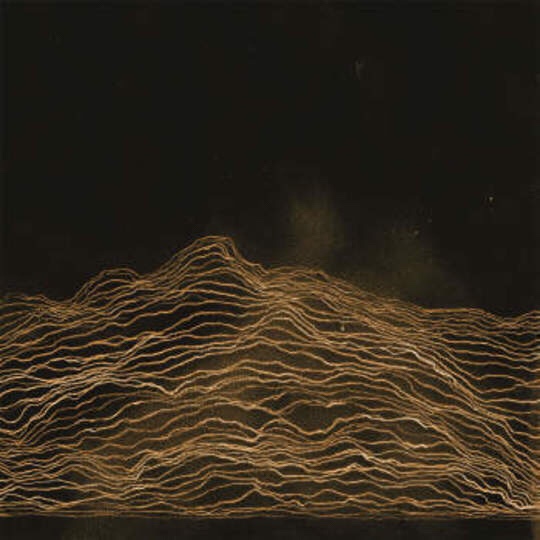
Reflections – Mojave Desert is a major progression on from Elaenia, where the addition of extra musicians has allowed Shepherd to more precisely express what he was clearly to do back in 2015 but couldn’t when his only tools were samples and electronics. To fully understand the exacting process Shepherd went through to create the five tracks on the album, an accompanying film showed the group performing and collecting sounds amid the breathtaking backdrop of the Joshua Tree National Park.

The result is an album full of finely-wrought atmospherics and complex arrangements that showcases Shepherd’s strong appreciation of jazz music history and his ability to push things in a thoroughly modern direction.

Listen to Reflections – Mojave Desert here.

Electronic Sound can be purchased at www.electronicsound.co.uk.

(c) 2017 Mat Smith / Documentary Evidence

Documentary Evidence 2017 Top 10 Albums: 8. The National ‘Sleep Well Beast’

The National are a band that I only listen to when I feel like life is piling up, even if I don’t necessarily recognise it at the time. It usually requires some distance from the problem at hand to see that you even had a problem. So it is now as I listen back to Sleep Well Beast some six months on from playing it near constantly, where I can only listen to this and decipher details and depth whereas at the time I was only really focussed on the gloomy texture of the music.

Despite its inevitably maudlin overtones – you wouldn’t want a National album to be any other way, after all – Sleep Well Beast is an accomplished album that takes the band’s framework and fleshes it out, much more so that ever before, with electronics and clever processing. I like to attribute some of this newfound, widescreen expansiveness to the work of members Scott and Bryan Devendorf’s separate work in LNZNDRF, whose self-titled album was among my favourites of last year.

These are songs that carry a particularly transcendent quality, having a considered, introspective quality that makes for a perfect soundtrack to a world wrecked by disbelief and despair, where there is beauty and levity if only you care to look for it. Consequently, they are perhaps the best songs this band have ever written.

Listen to Sleep Well Beast here.

(c) 2017 Mat Smith / Documentary Evidence
Documentary Evidence 2017 Top 10 Albums: 9. RAC ‘Ego’

“Pop music really shouldn’t be this clever.”
Clash

There will be more on this topic later on in this countdown of my favourite albums of 2017, but these past few years have found me migrating back toward pop music, while at the same time maintaining a continual push toward music’s outer edges.

I reviewed producer and songwriter André Allen Anjos’s second album as RAC for Clash and found myself listening to it over, and over, and over for a decent chunk of the summer. In a world where countless producers co-opt guest vocalists to provide the vocals for songs they can’t sing themselves, Anjos stands out not through his black book – Rivers Cuomo from Weezer, Rostam from Vampire Weekend, St. Lucia – but his approach to a brand of smart pop that has a mature, enduring sensitivity as well as some very fine melodic credentials.

Listen to Ego here.

My full Clash review can be found here.

(c) 2017 Mat Smith / Documentary Evidence

Documentary Evidence 2017 Top 10 Albums: 10. BRZZVLL ‘Waiho’

“An album of genuinely memorable riffs on jazz’s essential spirit.”
Electronic Sound

I’ve had another year of getting to write about incredible music, and choosing my seasonal top ten albums this year was especially difficult.

To kick things off, I’ve selected BRZZVLL‘s stunning Waiho, the new album from a Belgian seven-piece group who take the infinitely flexible template of jazz and infuse that with everything from hip-hop to the edgy big-band funk espoused by Talking Heads when they’d more or less doubled their line-up.

I reviewed Waiho for Electronic Sound.

Listen to Waiho here.

Buy Electronic Sound at www.electronicsound.co.uk.

(c) 2017 Mat Smith / Documentary Evidence

Tricky feat. Alison Goldfrapp – Pumpkin (from Maxinquaye, 4th & Broadway album, 1995)

Back in the day, Alison Goldfrapp could occasionally be found adding her vocals to all sorts of tracks, the most prominent of which tended to be by Orbital and where, for no discernible reason, she went under the name ‘Auntie’. One of my favourite pre-Goldfrapp Alison Goldfrapp collaborations is this track with Massive Attack alumnus Tricky. I can’t fathom a word she’s saying since it has that jazzy wordless style that Orbital liked to deploy as a textural component of their tracks, but which is here presented as a foreground to this sluggish trip-hop piece. Her strange, Shirley Bassey-esque vocal is the perfect foil to a delivery from Tricky that rasps with a stoner’s ramblings. In the background, the samples run from folksy ethereality (something Goldfrapp would investigate years later with Seventh Tree) and a scratchy grunge passage not dissimilar to Butch Vig’s mix of Depeche Mode’s ‘In Your Room’. It might not be patch on other tracks on Maxinquaye, but it all adds to the quiet confidence exuded by Tricky on his first solo record.

Elsewhere on the album, occasional Mute producer and Rhythm King stalwart Mark Saunders adds his production nous to most of the tracks here, including the seminal, much-quoted ‘Brand New You’re Retro’.

(c) 2017 Mat Smith / Documentary Evidence

Electronic Sound – Issue 29 – New Order / Erasure

The latest issue of Electronic Sound includes a major new interview with New Order ahead of their new live album for Mute, NOMC15. The magazine has also landed a major coup by bundling an exclusive clear vinyl 7″ with special copies of the new issue which includes a previously-unreleased remix of New Order’s ‘Academic’.

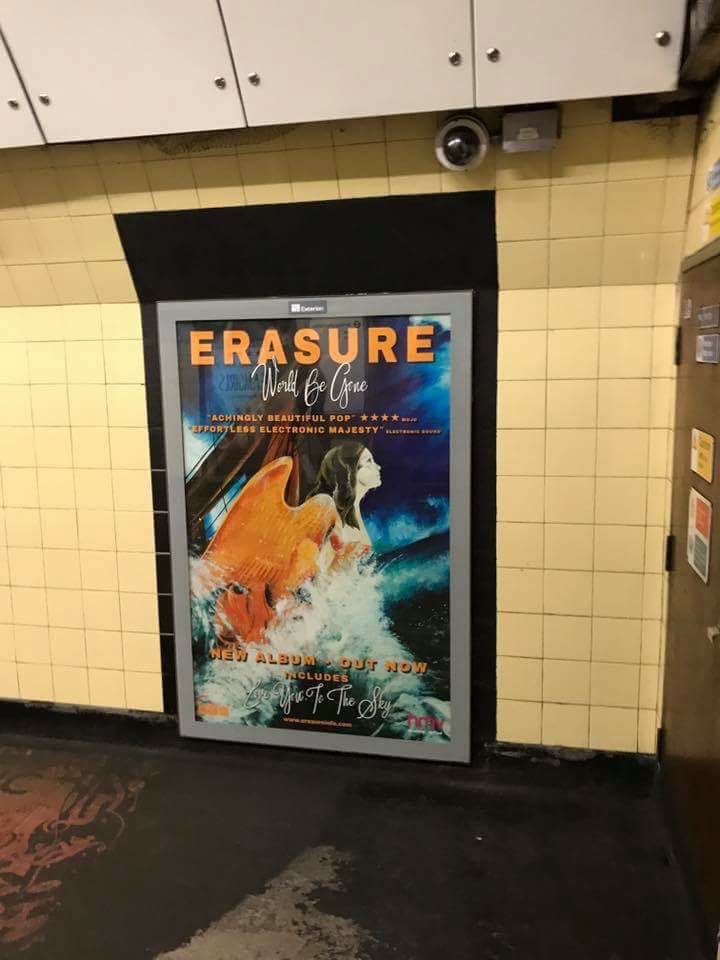
I contributed a handful of reviews to the latest issue covering the eclectic fields of pop, electronic jazz, electronic grunge and cinematic soundtrack-friendly material in the form of write-ups of new releases by Slackk, Stuff, The Mark Lanegan Band, Kilchhofer / Hainbach and Erasure. I was proud to achieve another career first this month when a quote from my Erasure review made it to the posters promoting their new album World Be Gone across London’s Underground network.

To buy the special New Order edition of issue 29 of Electronic Sound, head here.

(c) 2017 Mat Smith / Documentary Evidence

Documentary Evidence 2016 Top 10 Albums: 1. onDeadWaves ‘On Dead Waves’

“Posesses a stripped-back, nascent, haunted bluesy quality, which is both arresting and intriguing by equal measure.” – Clash

I would love to say that identifying my favourite album of 2016 was a trial so painful I almost gave up the whole notion of doing this, but that would be a complete lie. I always knew this one would be it, pretty much from the moment I heard it.

onDeadWaves is a powerful collaboration between Mute stalwarts Polly Scattergood and James ‘Maps’ Chapman. They first performed together at the Short Circuit festival back in 2011 and finally put this album together for release this year. As I noted in my review for Clash, the concept of two singers coming together when their lyrics are usually so uniformly downbeat is, at least on paper, a terrifying prospect. But it’s not like that in reality.

This is an album that is borderline profound, completely moving and inventive at every turn, full of mesmerising fragility and cavernous emotional depth, daubed with an oblique Americana; an album that makes you appreciate music slightly differently after its played with your emotions so effortlessly; a music delivered with an intimacy that feels like eavesdropping on private musings.

My review for Clash can be found here.

(c) 2016 Mat Smith / Documentary Evidence

Documentary Evidence 2016 Top 10 Albums: 2. NZCA Lines ‘Infinite Summer’

Basic RGB

“An album chock-full of juxtapositions and deft emotional manipulations, held effortlessly together by Michael Lovett’s soulboy vocals.” – Electronic Sound

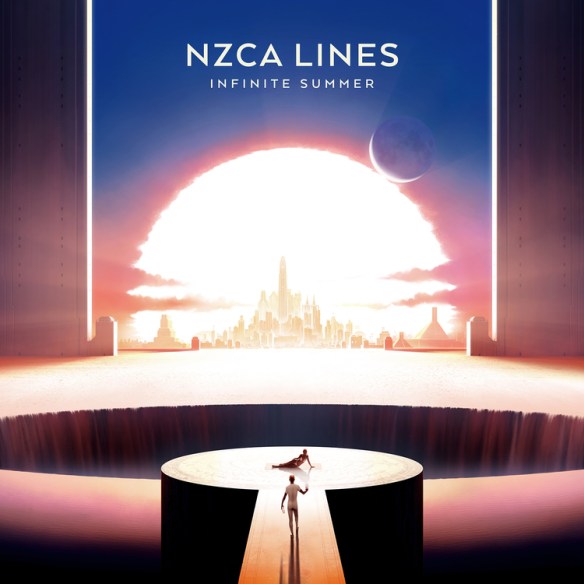
NZCA Lines were another band that I fell in love with as soon as I heard their new LP this year, and totally kicked myself for not having heard of them until the occasion of their second album, Infinite Summer. Michael Lovett, the brains behind NZCA Lines, has appeared on Metronomy’s albums and helped Christine & The Queens on the outstanding Chaleur Humaine. His is a prodigious talent, effortlessly creating addictive pop music with the same artsiness that made Chaleur Humaine a great example of the thinking listener’s electronica.

I wrote about NZCA Lines for Electronic Sound. Back issues of Electronic Sound can be found at www.electronicsound.co.uk.

(c) 2016 Mat Smith / Documentary Evidence