Barry Adamson – Brighton Rockers (Central Control International single, 2012)

central control | postcard-flexi/dl no cat ref | 03/09/2012


Barry Adamson released ‘Brighton Rockers’ on his own Central Control label in September 2012. Released as a single track download and also as a limited-edition flexi-postcard record, all profits and additional donations are donated to the charity CALM, the Campaign Against Living Miserably, which seeks to reduce the suicide rate of men. More information on CALM, its aims and its plans to deal with the biggest killer of men under the age of thirty-five can be found at their website.

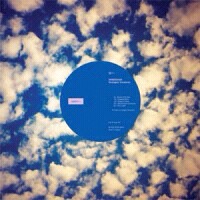
The ‘sleeve’ shows an idyllic Brighton blue sky and a pedestrian taking a break on one of the benches dotted along the promenade. The music is a nice heavy slice of solid dub reggae, all thunderous bass, staccato piano and reverb-heavy rhythms and interludes, with some authentic horns and organ lines washing into the mix at times. The inclusion of some soulful, meditative sax and tinkly jazz organ stops this from becoming too dub-derivative, creating a typically noirish Adamson take on the genre, and a hitherto under-explored area of Adamson’s musical interest. The result is something that sounds like an authentic, well-researched take on the dub template, whilst retaining an identifiable distinctly Adamson groove (and, in the title, his trademark wry sense of humour) at the same time.

The summer may sadly be all but over, but this track is just about the best soundtrack I can think of for kicking back and relaxing on Brighton’s pebble beach in the sunshine.

Originally posted 2012.

(c) 2016 Mat Smith / Documentary Evidence

Harrison Bond – Honey (single, 2016)

On this blog, whether covering Mute acts or the various other things that I find myself writing about, it’s not often that I get to write about artists that are local to where I live near Milton Keynes. And so it’s refreshing for me to write about ‘Honey’, the debut proper single from Harrison Bond, a young, bespectacled singer / songwriter based round these parts who has been quietly building himself a reputation on the local gig circuit and who has now also started playing shows in London.
‘Honey’ serves as a stop-gap before a longer release later in the year, and showcases the style that Bond expects to permeate that record – namely sedate, gently drifting electronics blending seamlessly with guitar lines that betray a schooling in blues traditions. The instrumental intro to ‘Fingers’ is almost horizontal in its laidback outlook, shimmering synth patterns and summery guitar sounding somewhere between inclusive old-school Balearic chill and The KLF’s American road-trip on Chill Out.

The main track on the single, ‘Honey’, takes the same vibe but flattens the mood down into something more ephemeral, more opaque, balanced on that intriguing fault line between optimism and pessimism that writers like me get universally excited about. Bond’s restrained vocal here has the air of a confessional, combining quiet anguish and lovesick desperation in one tidy package.

Expect great things.

‘Honey’ is available at the iTunes Store.

(c) 2016 Mat Smith / Documentary Evidence

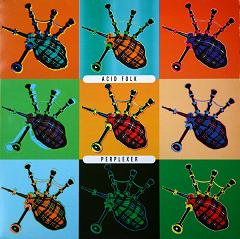
Perplexer – Acid Folk (DEF single, 1994)

perplexer_acidfolk

def | 12″/l12″/cd eef100 | 1994

A while ago a friend told me that every London map designer includes a fake road somewhere in their maps, the purpose being that it allows them to tell if anyone has copied their version illegally. One can only imagine how much of a wild goose chase you’d find yourself on if you actually tried to find that road or asked a cabbie to take you there.

I found myself thinking about that when a copy of Perplexer‘s ‘Acid Folk’ arrived through my letterbox in 2011. ‘Acid Folk’ is listed in my copy of Mute‘s Statement 2 2001 catalogue, but nothing about the CD tells you it’s a Mute release at all. No mention on the label, it doesn’t appear to be licenced, and the address for the record label is a completely different part of London from where Mute were based at the time. So I don’t know. Perhaps it’s just the version I bought, or maybe it was issued by Mute on behalf of the label (Deutsch-Englische-Fruendschaft, or DEF) without wishing to draw any attention to the Mute connection. Not much is known generally about DEF, but as they seemed principally to have been a home to Eskimos & Egypt prior to them releasing stuff on other labels, perhaps it was their own label; I’m pretty sure it was in no way connected to the management company, also known as DEF, that Moby was part of for most of his career.

But enough of the mystery. Perplexer’s public face was ‘enacted’ by Marc Olbertz. ‘Acid Folk’ was written and produced by Alexander Breuer, Andreas Schneider and Ramon Zengler; Zengler is most familiar to me as one half of the seminal Hardfloor, whose ‘Acperience’ EP was responsible for stimulating acid house’s second, enduring renaissance on dancefloors. Unsurprisingly, then, that ‘Acid Folk’ should have a lovely set of 303s running through it. However, it plays second fiddle to the bagpipe drone that dominates the track; that’s right, acid house meets traditional Scottish folk music. Just when it seemed that every possible novelty permutation of dance music had been exploited, along comes a track which mixes the sort of happy hardcore beats that used to get skinhead Dutch ravers very excited, bagpipes and acid house grooves. I used to think that you could add a 303 to anything and it would make it sound superb (see acid head Ege Bam Yasi’s How To Acid An Egg for evidence of that); that’s evidently not the case with bagpipes, or at least it doesn’t feel that way to me. I’ll be relatively upfront and say that I don’t really like ‘Acid Folk’.

The vocal mix is too fast for my liking, plus – despite some Scottish roots – I don’t really like the sound of the bagpipes anyway, so it’s sort of difficult to listen to; the Low-Speed mix is slightly slower and I would really love this mix were it not for the bagpipes, since it would just be a constant acid rush. I’m also not a fan of hardcore DJ Ellis Dee’s breakbeat-and-drone version although the rave stabs and 1992 ‘ardcore vibes are quite good.

The House mix starts with some nice sounds, a deep house beat / bassline and processes the bagpipe riff into the equivalent of the euphoric clipped sax samples that used to be a favourite of house producers back in the day. It’s my favourite mix overall, mostly because the bagpipes are treated and not too irritating; I was never a huge house fan back in the day and yet I really like this. The Pro-Gress mix is a bit all over the place for my liking, blending some ear-friendly aesthetics with some deeper sounds to create a hybrid that would probably appeal to fans of trance. Once again it’s the bagpipe drone that stops this from being better than it should be. I do find it quite strange – in 1994 remixers usually went out of their way to dispense with most of the original elements of a track yet here all the mixers keep the bagpipes in. There are other mixes available on the 12″ and limited remix 12″; I’m not that much of a Mute completist to bother with those for this release.

Perhaps I’m starting to understand why Mute didn’t properly affix their name to this after all…

My version of the CD single is now up for sale on Discogs.com under the username nominalmusics. If you’re desperate to own it, head here.

12″:
A1. Acid Folk (Low Speed Mix)
A2. Acid Folk (House Remix)
B1. Acid Folk (Vocal Mix)
B2. Acid Folk (DJ Tom & Norman Remix)

remix 12″:
A1. Acid Folk (Ellis D. Remix Edit 2)
A2. Acid Folk (Cream & Candy Remix)
B1. Acid Folk (Exit EEE Remix)
B2. Acid Folk (Pro-Gress Remix)

cd:
1. Acid Folk (Vocal Mix)
2. Acid Folk (Low Speed Mix)
3. Acid Folk (Ellis D. Remix Edit 2)
4. Acid Folk (House Remix)
5. Acid Folk (Pro-Gress Remix)

First posted 2011; edited 2016

(c) 206 Mat Smith / Documentary Evidence

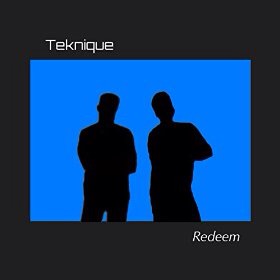
Teknique – Redeem (Teknique EP, 2016)


Teknique are a duo of Aaron Young and Jeff Barringer. The pair recorded a truly brilliant electronic pop in the Nineties which was shopped around various labels, including Mute, but was criminally not picked up by anyone. Thanks to Bandcamp it’s now possible to hear that first album (Nightfall) and it’s well worth checking out.

Young and Barringer have decided – wisely, judging by the results – that the time is right to reconvene the Teknique project, starting initially with an EP of three new songs padded out by various remixes and extend versions.

The three new tracks are authentic electronic pop pieces drawing on the legacy of over thirty years of reference points while also sounding fresh and innovative. Opener ‘Fade Away’ feels like a melancholy soundclash between Depeche Mode’s ‘Precious’ and Pet Shop Boys’ ‘This Must Be The Place I’ve Waited Years To Leave’, and anyone with a cursory knowledge of either song will know how heavy the mood on such a mash-up would sound; here Barringer concerns himself with regret and sadnes, only allowing a brief slither of optimism to filter through around the middle eight.

‘Jealous’, by comparison, feeds off a retro Nineties Euro-disco mood that was ripe for rediscovery, fusing bold, strident vocals with thudding beats and heavy synth work. ‘I Confess’, the last of the three new tracks has a sunny, Balearic feel mixed with squelchy analogue-esque passages and guitar sounds; the track has a muted optimism, as if Aaron Young (who sings this track? held himself back, even as the musical backdrop tries to reach a euphoric crescendo.

The EP includes an extended mix of ‘Fade Away’ while Maxi-Man wades in with bludgeoning hard techno retreads of ‘Jealous’. The more subtle mixes of the same track from Daybreakers – an alias of Koishii & Hush – isolate the hidden depths of the track and turn it into a slick, tight dancefloor number.

(c) 2016 Mat Smith / Documentary Evidence

Immersion – Analogue Creatures (Swim~ single, 2016)

  
‘Analogue Creatures’ is the first material by ImmersionMalka Spigel from Minimal Compact and Colin Newman from Wire – since a fabled performance at London’s Royal Festival Hall in 2000 which marked the reformation of Newman’s group. The next decade and a half would see Swim~, the electronica label that Spigel and Newman had established, put on the backburner while the duo variously worked on the resurgence of Wire, live shows by Minimal Compact and the Githead group they formed with Robin ‘Scanner’ Rimbaud and Minimal Compact’s Max Franken.

Named for the organic quality of the synths deployed rather than suggesting that this new 10” EP is a product of the analogue renaissance that gets Big Bang Theory-esque synth nerds all hot under the collar, ‘Analogue Creatures’ is at once deeply ambient, while simultaneously Krautrock in its dimensions. ‘Always The Sea’ and ‘Shapeshifters’ blend together choppy guitar lines with slowly ebbing and flowing synth backdrops, it often being unclear when the synths stop and the guitars start. Despite the absence of any discernible rhythm, there is nevertheless a pulse – of sorts – running throughout the record, evoking the chugging motorik grove that characterised much of Krautrock; Newman sees ‘Analogue Creatures’ as being in the territory of a ‘beatless Neu!’ and it’s easy to see why he’d come to that conclusion.

The EP pivots on the track ‘Organic Cities’. That track saw the duo collaborating with local Brighton synth geek Guy Schneerson, and the track demonstrates a more harmonically full suite of arpeggios, plucked guitar lines and evocative texture. It sits somewhere between the churning linear lines of a Githead melody and a previously-unheard outtake from Vangelis’s Bladerunner soundtrack.

‘Analogue Creatures’ is a slick return to the drifting, expansive electronica that occupied Spigel and Newman in the Nineties, but it’s also yet another evolution of this stop-start-stop collaboration. It doesn’t necessary signal a return to the prominence that the duo gave Immersion in the formative Swim~ days, but despite a long period of absence during which they focussed on the classic guitar-bass-drums formation, the pair are showing that they’re every bit as intrigued by synth music as they ever were.

A full interview I held with Malka Spigel and Colin Newman about the new Immersion record will appear in the next issue of Electronic Sound. Electronic Sound is available at the App Store or electronicsound.co.uk.

(c) 2016 Mat Smith / Documentary Evidence

Elevation – Can You Feel It / Spiral Trance (NovaMute single, 1992)


single // Can You Feel It / Spiral Trance

novamute | 12″/cd nomu3 | 1992

Ask any dance music fanatic what word they would associate with the year 1992 and the chances are they will reply, without hesitation, ‘hardcore’. Hardcore dance music was a fusion of sped-up breakbeats, thudding drums, speaker-wrecking dub bass, crowd noise, whistles and a synth effect that could only ever be described as sounding like a hoover; the effect was a sort of bludgeoning euphoria. Hardcore was, at times, ridiculous and the genre was ultimately short-lived, mutating quickly into a multitude of other genres, not least of which was the even more breakbeat-heavy jungle.

Elevation, a pseudonym of producer Shaun Imrei, has all the trademark hardcore traits listed above, plus housey piano and some gutsy, euphoric vocals courtesy of an unnamed contributor (she sounds a little like Sylvia Tella, who guested on Pop Will Eat Itself’s 92ºF) which rescues ‘Can You Feel It’ from the nihilistic quality of some other hardcore tunes, and also ensuring the track could work in a variety of DJ boxes. Okay, so the piano sounds a little weak and the whistles, bells and crowd noise may feel a bit contrived twenty odd years later, but there’s no denying the uplifting energy that ‘Can You Feel It’ possesses, marking the track out as a major highlight in a dance music style that rapidly went off the boil. And that manic ‘hoover’ sound still sounds as thrilling today, even if its potential as a rival to the TB303 was limited. The 12″ and CD released by NovaMute contains mixes taken from the tune’s original release on Creative Rhythm earlier in 1992, as well as a previously unreleased version (the Mutation Mix) which contains a breakdown filled with an excellent King Tubby-style dub passage.

For its NovaMute release, ‘Can You Feel It’ was backed by ‘Spiral Trance’ which was produced by Imrei and John O’Halloran. Starting with some ethereal vocals that sound like they belong on a Clannad record, ‘Spiral Trance’ retains only the barest trace elements of a hardcore aesthetic in some of its sounds, instead offering a deep, entrancing cut which doesn’t sound dissimilar to early Orbital or Juno Reactor. There’s not a heavy breakbeat in sight, Imrei and O’Halloran opting instead for a carefully-constructed 4/4 beat and a bass sound that could spill over into acid madness, but doesn’t, and for once this song is all the better for it.

12″/cd:
A1. / 1. Can You Feel It (Mutation Mix)
A2. / 2. Can You Feel It (Extended Mix)
B1. / 3. Spiral Trance (Into The Light Mix)
B2. / 4. Can You Feel It (Remix)

Originally posted 2012; re-posted 2015.

(c) 2015 Mat Smith / Documentary Evidence

Dinger – Sunsets Pink (Moulin Blanc download, 2011)

  
ep // Sunsets Pink

le moulin blanc records | download | 11/03/2011

Sometimes iTunes has a wonderful way of completely justifying its existence and its impact on the music industry. The relative efficiency with which bands / artists without a record label can just get music out there for people to buy with a few clicks is part of its universal appeal, especially where releasing rare or hard to find material that would be costly to press up for a relatively small audience remains the preserve of the short-run musical underground – The Wire is filled with small-run releases on tiny labels, mostly on CD-R or cassette. iTunes therefore is perfectly suited to efficiently releasing out-of-print items, especially where they are heavily bootlegged.

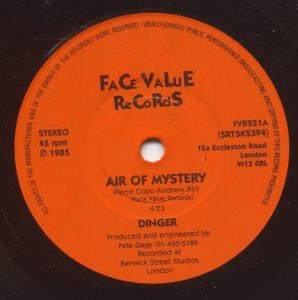
Still, even with iTunes’ utilitarian dimension, I never expected to be able to download five tracks from Dinger, the duo of Andy Bell and Pierre Cope that existed before Bell’s fateful audition with Vince Clarke that led to the formation of Erasure; the duo’s moniker came from Bell’s nickname, presumably a play on his surname. Previously I’d only managed to download ‘I Love To Love’ and ‘Air Of Mystery’ from some dodgy Erasure fansites, and presumed that the two tracks (which I seem to recall formed the only official 7″ release by the band) were the only songs they recorded. So three additional tracks is a bit of a bonus.

The principal curiosity value of this EP is being able to hear a young Andy Bell making his first foray into the world of pop music, ahead of that audition, audio evidence of which has also come available thanks to the Erasure Information Service. It was often said, by Bell and others, that it took pretty much the whole of Wonderland before Andy found his ‘own’ voice, claiming that the voice he adopted as his ‘own’ was modelled on Alison Moyet‘s. On the strength of the tracks compiled on Sunsets Pink, I’m not so sure. It is different, certainly, but not unrecognisably so. If anything, Bell sounds like a cross between David Bowie, David Sylvian and the guy from Our Daughter’s Wedding that sang that ‘Lawn Chairs’ track, very melodramatic and engaging, especially on the slinky and dangerous ‘Air Of Mystery’. It’s very of it’s time, unlike the voice that brought Vince’s songs to life on Wonderland.

The point about sounding of its time is most enforced by the sound of Cope’s backing; the whole thing has a very 1984 / 85 vibe, particularly in the use of funky slap bass, a sound that hasn’t aged well. When used in a controlled manner it sounds sublime – ‘I Love To Love’ still sounds to me like an early, shimmering OMD cut, though the middle eight – with a slap bass solo – is a bit much. Erasure could have easily recorded this for Wonderland – the one note synth melodies are right up Vince’s street and I swear he has actually co-opted that descending hook since. ‘The China Song’ (about, er, going to China) sounds like an attempt to distill the sound of the (Expanded) Talking Heads of Remain In Light, and has that cute sense of awe that the early Eighties had for all things foreign and ‘exotic’ (and that presumably explains the palm trees and holiday sunset on the sleeve image). That same funk vibe propels ‘Kettle Of Fish’ whilst also referencing the stuttered S’Express beat that Bell’s future collaborator Pascal Gabriel would develop for ‘Theme From S’Express’.

‘Dance’ is a seedy number with a Non-Stop Erotic Cabaret feel, Bell imploring us to ‘dance, dance, dance‘ while far-off chatter and voices mutter away in the background. It’s the least straightforward pop song here, the most uncompromising, and probably my personal favourite, even if I did wish the low end of the beat was more prominent.

A single track download of ‘I Love To Love’ was released on iTunes on 4 March 2011.

‘Air Of Mystery’ and ‘I Love To Love’ were originally issued as a 7″ single by SRT / Face Value Records in 1985. a quick glance at Discogs suggests that getting your mits on an original of the single will set you back around GBP55.
  
download:
1. Kettle Of Fish
2. Dance
3. Air Of Mystery
4. I Love To Love
5. The China Song

Originally posted 2011; edited 2015

(c) 2015 Mat Smith / Documentary Evidence

Richard Hawley – Down In The Woods @ 33rpm (Mute / Parlophone single, 2012)

  
single // Down In The Woods

One of the many loveable things about John Peel was his tendency, with alarming regularity, to play records at the wrong speed. For the masterful Peel, this was a natural consequence of packing his late-night shows with so much adventurous music that the odd RPM gaffe here and there was to be expected.

Somewhat less excusably, I did exactly the same with the 10” copy of this Richard Hawley single from his Singles Club series which left my music collection forever last week courtesy of a Discogs buyer. Long gone are the days of me sitting down and sticking on an LP in my lounge; in these time-pressed parental days, I often record the vinyl into my laptop with the volume set to mute (pun intended) and then listen to it back on the train to work the next day on my iPod. I know, I know; and to think I call myself a music writer. Don’t trust anything I say.

That’s exactly what I did with ‘Down In The Woods’ when I first received it three years ago, except that I either misread the label or the label didn’t say what the speed was, or I just figured the turntable was set to 45 when it was actually still set to 33, and I never went and recorded it again. As a result, this review is of ‘Down In The Woods’ and its B-side ‘Kindly Rain’ – at the Peel-friendly wrong speed. Read it faster if you want to guess what it really sounds like.

‘Down In The Woods’ is a long, sludgy piece of psychedelic blues wherein a gravel-voiced Hawley does his best impression of a robotic heavy metal vocalist whacked out on tranquillisers. The guitars fizz with astral aspirations and feedback drones reminiscent of something the Jesus And Mary Chain might have developed in a vague homage to The Velvet Underground. The whole thing has an epic, heavy density; a cloying, foggy, slightly threatening stew that Hawley’s demonic vocal does little to dispel, especially on his echoey delivery across the sparse and slowly rebuilding middle eight. This is possibly what it sounds like when you listen to ‘The End’ by The Doors within a lab-controlled LSD experiment.

‘Kindly Rain’ is pure angelic, ethereal texture, with lots of shimmering, mellow grandeur and atmospheric touches, at least until it tries, abortively, to push upwards into another lysergic jam; it just happens to be fronted by someone who sounds a lot like Iggy Pop does these days. Even at the wrong speed I can tell this is Hawley at his ballad-toting best.

(c) 2015 Mat Smith / Documentary Evidence

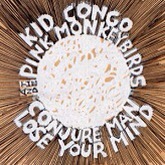
Kid Congo Powers & The Pink Monkey Birds – Conjure Man (In The Red single, 2012)

  
single // Conjure Man / Lose Your Mind

in the red | 7″/dl itr239 | 2012

Kid Congo Powers, as well as being Nick Cave‘s guitarist in the Bad Seeds and a founder member of The Gun Club, used to be in The Cramps. If you ever needed validation of his involvement in the band formed by the late, great Lux Interior and Poison Ivy, ‘Conjure Man’ is probably it, albeit what The Cramps might have become if they’d studied Morricone. Powers, or Brian Tristan to immigration, has a particularly distinctive tremolo guitar style which manifests itself here as a sort of desert-washed, dramatic blues, with all the insistent bleakness of a spaghetti western soundtrack in ‘Conjure Man’s spacious tumbleweeds-in-dystopia arrangement. His vocal may lack the stuttering jerkiness of Lux and the music some of the obtuse angles that made The Cramps such a compelling unit, but his echo-drenched Californian drawl has the same appealing blank weirdness, whilst lyrically here also recalling the wonderful anarchic mysticism of Screaming Jay Hawkins’ ‘I Put A Spell On You’.

The B-side is a cover of The Seeds’ ‘Lose Your Mind’ (misspelled, perhaps deliberately, as ‘Loose Your Mind’ on the 7″ label). That’s right, an ex-Bad Seed covering The Seeds. Powers captures the garagey rock ‘n’ roll blues of the original with ease, adding a lysergic, psychedelic quality to the arrangement via some sky-scouring synths and captivatingly frazzled, whining guitar trickery. It’s effortlessly cool, much like Kid Congo Powers himself.

The single was released in both red and black vinyl editions (100 and 400 copy editions), with both editions enclosed in a screen-printed sleeve printed onto cardboard cut from a Pabst Blue Ribbon box. If that doesn’t scream ‘carefully-produced lo-fi’ then I don’t know what else does.

First posted 2013; re-edited 2015

(c) 2015 Mat Smith / Documentary Evidence
Maps – I Heard Them Say (Mute Artists single, 2013)


single // I Heard Them Say

mute artists | 12″ mute499 | 14/04/2013

‘I Heard Them Say’, the first taster from the third Maps album Vicissitude, was released as an exclusive 100-copy, hand-stamped* 12″ in association with Manchester mail-order outlet Boomkat. Set to become a contributor to the pension plan of a select few record collectors** in the future, the 100 copies sold out pretty much straight away, creating a bit of a justified buzz for Vicissitude, which will be released in the summer of 2013.

James Chapman‘s music as Maps feel a lot like being subjected to hypnosis: his voice on ‘I Heard Them Say’ is whispered meditatively like a therapist as you involuntarily recall events and emotions locked well inside, while musically he offers a shifting, amorphous palette of sounds that feels hazy, lush and entrancing by turns. Sounds are layered in dense seams of locked-up feelings to create a sensibility that the kids would probably label chillwave (or hypnogogic pop if you’re one of those academic types over at The Wire). ‘I Heard Them Say’ is brutal, in a very subtle way – by the end, after you’ve been subjected to those enveloping synth tones, drones and pulses and Chapman’s quiet musings, you’re left with an uncomfortable feeling of unease (heightened by detached references to insanity) laced with something vague on the periphery that could be, but probably isn’t, optimism.

The 12″ comes with two mixes, one from Maps and one from Andy Stott. Chapman’s remix is sparse, fragile and dark, ultimately reaching the same emotional place, just more slowly and deploying judicious use of treacly reverb along the way. Man of the (underground) moment Stott’s mix is filled with crunchy percussion and beats between which whole universes reside, the bassline burbling gently to the surface every so often and Chapman’s rearranged voice washing in like a sonic wave. Toward the end the emergence of droning synths offers some respite from relentless slow-motion techno minimalism, becoming the soundtrack to a very dark sci-fi flick instead.

A digital version of ‘I Heard Them Say’ was initially available with album pre-orders via the Maps webstore.

* Sadly, the 12″ singles were not stamped by Chapman himself but by a friend in the Mute office. Talk about an illusion-shatterer…

** My pristine copy is currently available for purchase on Discogs

12″:
A1. I Heard Them Say
A2. I Heard Them Say (Maps Remix)
AA. I Heard Them Say (Andy Stott Remix)

First posted 2013; edited 2015.

(c) 2015 Mat Smith / Documentary Evidence