Sun Ra – Out There A Minute (Blast First album, 1989)

Sun Ra 'Out There A Minute' LP artwork

blast first / mute records | lp/cd bffp42 | 1989

Surely the best thing about running a record label must be the opportunity to release music that you love. Such is the case with Blast First head Paul Smith‘s release of three Sun Ra records via his label in the late Eighties and Nineties. That trio of releases – the CD/VHS set Cosmic Visions (which includes the legendary Space Is The Place film), a live album of Ra and his Myth Science Arkestra recorded in London and the compilation Out There A Minute – were all made possible, first and foremost, by Smith being a fan of Sun Ra’s body of work. The other reason was a sense of exasperation and disbelief that there were people out there who bought all the prior Blast First releases. His aversion to being seen as some sort of Factory-style ‘cult’ label, or even being regarded as a record label at all, again led to a focus on bands and artists that Smith was personally interested in.

‘Hence the Sun Ra and Glenn Branca releases,’ explains Smith by email. ‘Both have a connection and influence on, say, the music of Sonic Youth, but both were maybe not so obvious to people at the time. Thurston [Moore, Sonic Youth guitarist] was, even then, a big collector of Ra, and I’d seen the Arkestra play years before in London. They made a real impact on me – and who would not want to meet an Angel, and one from Saturn to boot? Anyway we had about twenty people send these two records back asking for a refund, which we happily gave them. Mission accomplished.’

Sun Ra’s legacy as an outsider jazzman, band-leader, synth pioneer and visitor from another planet is huge, as is his body of work across a multitude of labels. Collecting Ra records can be a daunting and extremely expensive task, which is why compilations like Out There A Minute are useful introductions to Sun Ra’s complex body of music. If you believe the official biography, Sun Ra was born Herman Poole ‘Sonny’ Blount in Birmingham, Alabama in May 1914 and by his early teens was an impressive pianist, able to transcribe full works by ear after witnessing performances of the many jazz legends that performed in Birmingham on the US jazz touring circuit. By the mid-Thirties, Blount was leading his own band, insisting on rigorous practice and creating a disciplined, Calvinistic, work ethic that allowed his band to adapt to a number of jazz styles with ease.

The ‘other’ biography is much more interesting, and likely of much greater influence on the music that was issued by Sun Ra. After a couple of years of limited success with his band, Blount claimed to have been surrounded by a white light, which he followed, and which magically transported him to Saturn where a form of Angel spoke to him of impending chaos on Earth, encouraging him to preach peace through music, and replacing his corporeal form with that of a Saturnine Angel. During the course of his onward career, Sun Ra – as he became known from 1952 having legally changed his name to Le Sony’r Ra – would focus on a form of Afrofuturism, his Arkestra would wear Egyptian costumes on stage and his music would take on an astral dimension.

Whilst liner notes are absent (something jazz fans are pretty intolerant of generally), we know that the tracks that form Out There A Minute were recorded in New York at the Arkestra’s base near 42nd Street, a communal living and performance space that the band were forced to adopt because of Manhattan’s sky-high rents. The band were residents in New York from 1961 through to 1968, during which time they adopted more of a free improv style, currying favour with the beat poets and fans of psychedelia, but also getting frustrated by hecklers and a more universal concern that Sun Ra and his band were a bit too ‘far out’ for the jazz fraternity.

Out There A Minute comprises thirteen tracks from the end of the Arkestra’s New York period, personally compiled by Sun Ra from an archive of rare recordings. The recordings range from straight-up big band bop like ‘Dark Clouds With Silver Linings’ or ‘Lights Of A Satellite’, which showed that Sun Ra was still prepared to tap into more traditional (and more popular) jazz forms, through to some of the more intensely alien pieces. The Sun Ra Moog sound is here not quite developed, though some of the tracks have some distinctive and inventive early synth musings; predominantly Sun Ra deploys piano or organ lines here, nestled among John Gilmour‘s tenor sax and Marshall Allen‘s alto. In the jazz genre, it perhaps doesn’t feel quite so adventurous as the idea itself today, but these pieces undoubtedly have an otherworldly quality when compared with other music being wrought at the time. Tracks veer from polite, romantic musings such as the genteel but noisy ‘When Angels Speak Of Love’ to the scratchy whine of ‘Cosmo Enticement’ or ‘Next Stop Mars’. The playful, wobbly echoes of ‘Song Of Tree And Forest’ sounds like something that wouldn’t have gone amiss on the soundtrack for 2001: A Space Odyssey if Kubrick hadn’t decided to go all highbrow with his use of Ligeti. ‘Other Worlds’ is cloying, manic skronking, hammered pianos and wild percussion, truly out there playing with a playful, expansive reach.

Smith recalls meeting Ra and his band several times. ‘I even got to visit them in their commune in Philly, and once took him shopping on London’s Denmark Street where he picked up a “Heavy Metal” guitar pedal. Sunny had no idea about the musical genre, he just liked the name and started talking about the different physics on the home planet.’

‘I organised some dates, especially in the UK where he’d sort of lost his place with the jazz fraternity at that time,’ Smith recalls. ‘Sun Ra playing at The Mean Fiddler is what showed Vince Power that Camden Jazz Cafe could work! Sunny was a truly lovely soul. A fantastic and mischievous twinkle in his eyes all the time, and a lovely giggle. He was very anti-drug, and very strict with his band members. I remember introducing Thurston Moore to Sunny at the Bottom Line jazz club in New York – it was one of the few times I’ve seen him look freaked out at meeting someone.’

Sun Ra rejoined his Saturnine people in 1993, handing the baton to Marshall Allen, who leads the Arkestra to this day. Only a few of the original members survive, and Allen himself will turn ninety in a couple of years, but the unique band that Ra created continue to tour, the perfect living tribute to one of jazz music’s most celebrated but misunderstood geniuses.

On a personal level, there were two things that formed my still-developing interest and love of jazz. The first was a guy called Brian, a friend of the middle-aged couple that I lived with during my final year at university in Colchester in 1998. Brian was a big man, who I forever imagine now to look like Peter Brötzmann, and he absolutely loved jazz. Every summer he’d take himself off to european jazz festivals, and the few times he and I spoke, he enthused about the genre so much that it cemented in me a need to explore jazz much as I’d been drawn into punk two years earlier. Sadly Brian passed away that year and never managed to give me the recommendations he’d always intended to. The other influence was seeing this Sun Ra compilation listed in the Documentary Evidence pamphlet that ultimately inspired this site. At the time (1991), I had no idea who or what Ra was, and it wasn’t until I read a review of John F. Szwed’s book in The Wire around a year after Brian’s death that I began to appreciate his importance and also the sheer eclecticism of Smith’s label. It took me a few years to build up to delving into Ra’s back catalogue, but it didn’t disappoint when I finally did.

Thanks to Paul Smith.

Track listing:

lp/cd:
A1. / 1. Love In Outer Space
A2. / 2. Somewhere In Space
A3. / 3. Dark Clouds With Silver Linings
A4. / 4. Jazz And Romantic Sounds
A5. / 5. When Angels Speak Of Love
A6. / 6. Cosmo Enticement
B1. / 7. Song Of Tree And Forest
B2. / 8. Other Worlds
B3. / 9. Journey Outward
B4. / 10. Lights Of A Satellite
B5. / 11. Starships And Solar Boats
B6. / 12. Out There A Minute
13. Next Stop Mars (CD bonus track)

First published 2012; edited 2014.

(c) 2014 Mat Smith / Documentary Evidence

Jeremy Deller & Nicholas Abrahams – Our Hobby Is Depeche Mode / The Posters Came From The Walls (Mute Film, 2007 – unreleased)

Jeremy Deller & Nick Abrahams 'Our Hobby Is Depeche Mode' artwork

‘I love Martin’s hair.’ – a tweet posted during the live stream of Depeche Mode’s tour announcement, Paris 23 October 2012

With a new Depeche Mode album and mega-tour just around the corner, and with fans evidently getting excited on social media sites like Twitter, it feels like an appropriate moment to write about Turner Prize-winning artist Jeremy Deller and director Nicholas Abrahams‘ film, Our Hobby Is Depeche Mode. The film, also known as The Posters Came From The Walls, was commissioned by Mute MD Daniel Miller and focusses its lens on the fans of the band, rather than acting as a strict biography of the group.

When I first saw clips of Our Hobby Is Depeche Mode on the BBC documentary about Deller in 2012, I was prepared to think of the film as ridiculing devoted fans of the band; people I’ve spoken to over the past year or so, generally hard-core followers of the band, have all told me that the film is universally disliked by most fans as it casually mocks what for many people is a huge obsession. Whilst there are a couple of segments that feel a little too devoted, such as German couple Claudia and Ronny dressing their young son in home-made costumes from Depeche Mode videos like ‘Enjoy The Silence’ or Muscovites Ruslan, Marta, Margo and Elena delivering awful versions of DM songs complete with home-made videos, Our Hobby Is Depeche Mode is in reality a very sympathetic and sensitive portrait that shows just how much a band can influence, help and shape peoples’ lives.

Throughout interviews with fans in St. Petersburg, Moscow, Bucharest, California, New York, Berlin, Iran and Canada, Depeche Mode emerge as a band that appealed to people who just didn’t fit in. Alex, a fan from Bucharest, explains that in the early Nineties the long-haired guys were into metal, the ugly guys were into folk, and the sensitive, clean-shaven, good-looking guys who wanted to know about the best clothes and fragrances were all into Depeche Mode; Orlando, a young fan from California dancing in the car park of the Pasadena Rose Bowl where the band played the 101 concert before he was even born, explains how Depeche Mode’s music helped him through the darkest days of his teenage years, saying ‘Martin Gore’s lyrics speak for me’; a Russian pirate TV performance sees a fan grabbing the microphone and stating that ‘it’s music for the lonely’; celebrity fan and self-confessed outsider nerd Trent Reznor says that for him Depeche Mode played ‘music for someone who felt like they didn’t fit in’; Andy, an Iranian fan now living in Canada explains that if you were caught listening to, or dressing like, Depeche Mode in Iran you would be beaten by authorities, and that for many in Iran Depeche Mode represented an outlet from an oppressive society. Even Marta, with her dreadful but heartfelt singing over Depeche Mode’s own songs, nails the message home when she says that the band’s music helped her to find her friends.

If seeing obsessed Russian fans dressing like members of the band on ‘Dave Day’ – 9th May, Russia’s Military Day and Dave Gahan‘s birthday – seems a bit too much, English fans will probably never appreciate how important Depeche Mode’s music was to people whose democratic rights were managed entirely by the state. Albert, a hairy-backed melancholy chap with a huge tattoo of Gahan from his shoulders to his waist, explains that for many Russians, ‘this new music coincided with the fall of the Soviet Union so I see it as having been the music of freedom.’ For Alex, the well-groomed fan from Bucharest, Depeche Mode’s music was synonymous with freedom, with Violator arriving just three months after the bloody fall of Ceaucescu and becoming the music of a generation of young people whose cultural exposures had been dictated to them before. A trio of East Berliners speak about the seismic impact Depeche had in the East when they played the Free German Youth Concert in 1988. In contrast, Peter Burton from Basildon explains that even now Depeche Mode aren’t well known in the town they came from whilst offering a pretty colourless picture of the Essex new town back in the late Seventies.

Taking the ‘back home they just don’t get it’ notion frequently attached to Depeche Mode one major step forward, the emphatic Francisca explains that Martin Gore‘s lyrics have a natural sense of tragedy and despair, something that she feels is central to Russian fans’ adoption of the band. She then goes on to brusquely tell the translator that English fans couldn’t understand or appreciate the lyrics in the same way as a Russian could. I perhaps don’t fully appreciate what she describes as the ‘transcendent nature’ of the Russian psyche, but I’ve read enough translations of Chekhov, Tolstoy and Solzhenitsyn in my time to see more or less where she’s coming from.

One of the most powerful stories comes from Mark, filmed at Hammersmith Bridge, under which he would sleep as a homeless resident of London. Mark’s story perhaps punctures a large hole in Francisca’s logic about English fans – here is an individual who spent most of his homeless years listening to 101, scraping together enough cash to buy a ticket to see one of the band’s watershed concert at Crystal Palace on the Songs Of Faith And Devotion tour and drawing so much inspiration from the powerful feeling of togetherness that he experienced at the show to get himself off the streets.

Two things aren’t featured in the film – first and foremost, the band themselves. They’re clearly a current that runs through the documentary, their music runs through the film throughout and their images are plain as day on posters, t-shirts, sketches and all manner of personal tributes in the bedrooms of the profiled fans, but there’s no interview footage here. Their absence makes the enthusiasm of the fans all the more powerful in many senses. The other thing that’s missing are the fans who collect each and every format of every record the band have released, from every country they’re released in. By focussing on the impact of Depeche’s live shows, it highlights the powerful way that concerts – or even fans dancing to concert footage in nightclubs – can bring people together, reminding me of something I once heard about fans being more interested in going to Depeche concerts to sing along rather than hear the band play.

Our Hobby Is Depeche Mode has never been officially released, though it is screened occasionally. The precise reason why Mute have never issued it remains something of a mystery to Deller and Abrahams, though I have heard a rumour that despite the band liking it, there was some pressure behind the scenes to prevent it from being released. The pair even compiled a whole series of extra interviews with artists who were influenced by Depeche Mode, including techno pioneers Derrick May and Kevin Saunderson, the idea being that these would appear as bonus features on a DVD release. It remains a real shame, almost a tragedy of Russian proportions, that such a vivid and affectionate overview of what this band means to many people won’t get seen or appreciated by more fans, many of whom will find reflections of their own reasons for being attracted to the band mirrored in the stories here.

DVDr review copy and signed photograph. Thanks to Nicholas Abrahams.

Thanks to Jeremy and Nick for the DVD copy of the film for this review.

First published 2013; edited 2014.

(c) 2014 Mat Smith / Documentary Evidence

Anita Lane – Dirty Pearl (Mute Records album, 1993)

Anita Lane 'Dirty Pearl' LP artwork

mute records | lp/cd stumm81 | 10/1993

Dirty Pearl is a rag-bag collection of newly-recorded Anita Lane tracks produced by Mick Harvey as well as older material, the entire Dirty Sings EP and collaborations with Die Haut, Einstürzende Neubauten, Barry Adamson and The Birthday Party. The album is as much a collection of Lane’s work as it is a showcase for the seemingly unlikely cross-pollination of scenes that emerged when The Birthday Party moved from Australia to the UK, followed by a brief and fortuitous sojourn in Berlin; that productive Kreuzberg stop-over was responsible for Nick Cave‘s Bad Seeds being swelled by the likes of Neubauten’s Blixa Bargeld and Die Haut’s Thomas Wydler, as well as some of Cave’s most inventive and inspired early musical work.

The collection covers the period 1982 to 1993 and presents the tracks in reverse chronological order. Overall, the compilation shows just how integral Lane was to the whole scene that formed between London and Berlin in the mid-Eighties, with characters such as Chrislo Haas and Adamson appearing on various tracks. As Nick Cave’s girlfriend and muse, Lane co-wrote a number of The Birthday Party’s songs, including the likes of ‘Dead Joe’, and was credited as a founding member of Cave’s subsequent Bad Seeds though her participation in the group was never exactly clear. What’s also immediately apparent from this collection is just how little music Lane has herself released – over half of Dirty Pearl was already released by the time this compilation was released, and Lane would only come to release her first (and to date only) ‘proper’ LP in 2002 with Sex O’Clock. Whilst Dirty Pearl provides a comprehensive overview of Lane’s music, one notable omission is 1991’s collaboration with Adamson on the excellent cover of Lee Hazlewood’s ‘These Boots Were Made For Walking’ which Adamson crafted for his Delusion soundtrack.

Opening track (and therefore most recent) ‘Jesus Almost Got Me’ is a countrified, Triffids-esque song of drunkenness, cruel love and regret, beautifully carried forward on Harvey’s sensitive drumming and ‘Evil’ Graham Lee’s genteel slide guitar. Immersed in the background are spirals of grainy feedback and some lovely vocal harmonies from Harvey. ‘Jesus Almost Got Me’ has a tired, resigned quality to it. In contrast, ‘The Groovy Guru’ is a funky, psychedelic trip, filled with wild face-melting guitar and wayward organ creating a vibe that felt about twenty-five years old too late, the lyrics describing a sort of pervy Cassanova character with a number of Satanic traits.

The cover of Marvin Gaye’s ‘Sexual Healing’ was produced by Mick Harvey with artist Johannes Beck and Sven Röhrig, finding Lane cooing girlishly over a sick, phasing breakbeat, shimmering vibes from Barry Adamson and some leaden (and less-than-romantic) backing vocals from Beck and Moritz Wolpert. At times Lane sings with a strained needfulness that can feel quite uncomfortable at times, but it’s quite hard to think of this as being too serious. Both ‘Blume’ (from Neubauten’s Tabula Rasa LP) and ‘Subterranean World (How Long…?)’ (from Die Haut’s Head On) highlight how well Lane’s voice matches Blixa Bargeld’s distinctive own. Bargeld’s transition from the howling, shredded vocal style displayed on Neubaten’s earliest material to the sensitive, half-spoken, almost Scott Walker-esque voice of their later material is continually surprising, and that softer side shines through on these two songs. ‘Subterranean World’, with its duet chorus of ‘How long have we known each other now?‘ brings to mind those clips in romantic films where couples explain to camera how long they have been together, except that by the end of this darkly humorous song Lane and Bargeld decide that they’ve never actually met before.

‘Picture Of Mary’ is an atmospheric piece written with Bargeld, dominated by Lane’s ghostly singing and a backdrop of dramatic piano, mournful violin and jangly Latin guitars (from Blixa) which threaten to swell up in the mix but never quite do. The only thing that lets this track down is Lane’s vaguely tuneless musings which bring to mind some of Nico’s material, but that is more than made up for by the intricate backdrop. Latin guitars and strings also colour the maudlin ‘Stories Of Your Dreams’, which possesses a strong narrative and theatrical mood. The song was co-written with Neubuaten’s Alexander Hacke, who also plays guitars on the song, while Crime And The City Solution founding member Bronwyn Adams plays violin.

The CD release of Dirty Pearl also includes ‘A Prison In The Desert’ by Nick Cave, Mick Harvey and Bargeld, taken from their soundtrack to Ghosts… Of The Civil Dead. The piece sees Lane mostly wordlessly singing over a backdrop of droning strings, industrial sounds and high-pitched noises, her voice providing a gentle counterpoint to what is otherwise a reasonably harrowing piece of music, a bit like a Graeme Revell soundtrack.

Eschewing all the released tracks from The Birthday Party canon that Lane contributed to, Dirty Pearl instead offers ‘The Fullness Of His Coming’, an unreleased track which features Lane on lead vocals, serving as strong reminder of why The Birthday Party were a musical force to be reckoned with at the start of the Eighties. The song is dominated by grinding guitar riffs from Rowland S. Howard that sounds like they might have been fed through an organ, Tracy Pew‘s ludicrously prominent bass and insistent and quickening drums from Mick Harvey. Lane murmurs and squirms provocatively through the track, particularly as the pace begins to quicken, the assembled Party members providing a nasty mantra of the track’s title while Lane writhes rapturously in the foreground.

Track listing:

lp/cd:
A1. / 1. Jesus Almost Got Me
A2. / 2. The Groovy Guru
A3. / 3. Sexual Healing
A4. / 4. Blume (Einstürzende Neubauten feat. Anita Lane)
B1. / 5. Subterranean World (How Long…?) (Die Haut feat. Anita Lane)
B2 / 6. Picture Of Mary
B3. / 7. The World’s A Girl
B4. / 8. Stories Of Your Dreams
9. A Prison In The Desert (Nick Cave / Mick Harvey / Blixa Bargeld feat. Anita Lane) – CD bonus track
10. If I Should Die – CD bonus track
11. I’m A Believer – CD bonus track
12. Lost In Music – CD bonus track
13. Sugar In A Hurricane – CD bonus track
B5. / 14. The Fullness Of His Coming (The Birthday Party feat. Anita Lane)

First published 2012; edited 2014

(c) 2014 Mat Smith / Documentary Evidence

Cold Specks – A Short History Of The High Rise: Part 3 – Glass

Director: Katerina Cizek, 2013 / Narrator: Cold Specks

Al Spx narrated the third part of this National Film Board of Canada series on the development of vertical living, tracing its origins from mud-built Roman apartment blocks, through slum-clearing social housing projects and finally through to the modern glass-clad luxury condos. Spx’s episode on modern apartment living has a cautionary tone, enhanced by some stirring music from Zoe Keating (‘Optimist’). The series was created in conjunction with the New York Times photo archive. More detail on the project can be found here while this episode can be viewed above.

(c) 2014 Mat Smith / Documentary Evidence
Nick Cave & The Bad Seeds – He Wants You / Babe, I’m On Fire (Mute Records single, 2003)

Nick Cave & The Bad Seeds 'He Wants You / Babe, I'm On Fire' 10" artwork

mute records | 10″/cd mute290 | 02/06/2003

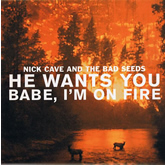
The contrast between the two tracks from Nocturama that were released together as the album’s second single couldn’t be more divergent. ‘He Wants You’ is the sort of high balladry that Nick Cave had made his own by the time of the fourteenth Bad Seeds album, a sort of more embellished and plaintive version of the introspection that had first become evident around the time of The Boatman’s Call. Only, somehow, with its filigree piano lines and quiet, romantic murmurings, it seems a more exaggerated version of that period. It really is a beautiful song, one that crams so many illustrative gestures into its verses before an elegant simplicity takes over. The song appears to describe a man who will do absolutely anything he can do to get the woman of his dreams; but this isn’t the kind of obsessed character a far wilder Cave described on something like ‘From Her To Eternity’ – this is a far gentler, resolute and upstanding man. ‘He is straight and he is true,‘ he sings and we’re left thinking the persuer is a pretty nice bloke.

The wilder side of Nick Cave and his Bad Seeds comes to the fore on the edit of ‘Babe, I’m On Fire’, cut down from its fourteen minute album version to a tidy four minutes, wherein frantic organ lines and stream-of-consciousness lyrics cover everything from terrorism, right-wing politics, agriculture and even manages a nice backslapping name check of the members of the band. ‘Babe, I’m On Fire’ is urgent, messy and a bit of a musical trainwreck that feels improvised and sprawling and doesn’t appear to want to take itself too seriously, a band letting their collective hair down at the behest of their leader.

The single was backed with two extra tracks from the Nocturama sessions. ‘Little Ghost Song’ hinges on the same chorus from the album’s ‘Right Out Of Your Hand’ but sees Cave and Conway Savage harmonising unevenly together. Previous vocal pairings of the two have always been pretty tight, but this one doesn’t gel so neatly, leaving the listener wondering whose voice they’re meant to follow. ‘Everything Must Converge’ is far better. A spare, loose reflection that fate ultimately binds us all together, ‘Everything Must Converge’ has a lovely gospel quality to it, lots of reference points from nature and a really beautiful sound. It’s bold and romantic without ever becoming over-sugared, featuring some restrained organ riffing and a fantastic wandering harmonica melody that seems to usher in a totally unexpected reggae-infused segment. Understated and remarkable.

Track listing:

10″/cd:
A1. / 1. He Wants You (Edit)
A2. / 4. Everything Must Converge
B1. / 2. Babe, I’m On Fire (Edit)
B2. / 3. Little Ghost Song

Written 2013 / published 2014

(c) 2014 Mat Smith / Documentary Evidence

Fad Gadget-inspired Licence Plate?

Image

Fad Gadget-inspired Licence Plate?

Spotted in Orlando, FL April 2012.

(c) 2012 Mat Smith / Documentary Evidence

Throbbing Gristle, Village Underground 23/10/2010

Throbbing Gristle, Village Underground 23/10/2014 - photo source unknown

‘If you’re going to come to a Throbbing Gristle gig,’ said my friend Ian, ‘you have to expect it to be loud.’ He was gesturing in the direction of the couple next to us at their gig at the Village Underground on the Shoreditch / Hackney borders, both of whom had their fingers in their ears throughout the final song of their set.

It was a common sight. There were lots of earphones and earplugs, which we felt rather defeated the purpose. The point is that this was supposed to be confrontationally loud, because that’s what TG were always all about – confrontation. It was one of many observations made through the course of almost two hours of relentless and – mostly – structured noise. Other observations included Peter ‘Sleazy’ Christopherson (in a kimono) looking a little like Harold Bishop, and Genesis Breyer P’Orridge looking like… well, we aren’t really sure what he looks like, but he’s certainly a lot shorter than I thought he’d be.

I’m writing this on a Jubilee Line Tube the day after; my ears are still ringing. But there is something about the noise of Tube trains on this particular line which provides a useful analogy for the majority of ‘songs’ last night – leaving the stations along the line the trains depart quietly until some sections of the tunnels where the noise levels rise quickly, swiftly becoming almost distressingly loud in their dense screeching and howling; like a gong softly hammered and then hit more forcefully, only put through a massive bank of distortion. Lots of the songs were like that last night – quiet, almost dark ambient at first then rising through waves of added ferocity to create a huge bed of noise that occasionally made the tendons in my neck vibrate. Beats were not eschewed, sometimes emerging as deep bassy throbs, sometimes rattling around like an old Cabaret Voltaire vintage drum machine.

New instruments were apparently being roadtested tonight. Chris Carter chimed what looked like small bells, while P’Orridge waved an iPhone about, coaxing feedback and tones from a white electric violin, at one point standing in front of it while it was resting on its stand and bowing it with two bows at the same time. Cosey Fanni Tutti played an electronic guitar, producing sparks of feedback, and switched to cornet for one track. At times the four of them were sat at their devices like online gamers. During the cacophonous final track of the main set, Christopherson put his fingers in his ears. It tells you it must have been loud if one of the band members had to block out the sound. By the end his eyes were closed and his head swaying from side to side, much as you’d expect to see someone absorbed rapturously in a piece of classical music.

The sound came to a juddering halt and they left the stage to applause marginally louder than the racket they’d just made. A few moments later Christopherson took the mic and advised that the band were ‘all feeling a little jetlagged so there’ll be no encore tonight’. This prompted boos from some quarters and half the audience departed, but, though it was delivered in an apologetic voice which hardly encapsulated rebellion, I almost saw in it the contrarian-ness, the punk spirit, of their earliest days. When they came back on, Christopherson muttering ‘Oh, go on then,’ like he was taking a proffered chocolate that he knew he probably shouldn’t take, it almost felt like baying to the pressure of the crowd, something they’d have never done back in the day. Luckily, the unashamed confrontation and aggression of ‘Discipline’ more than made up for the doubts, P’Orridge by this stage swigging from a glass of red wine and fending off a naked stagediver, taking the evening to a powerful close.

First published 2010; edited 2014

(c) 2014 Mat Smith / Documentary Evidence
Note – the source of the accompanying photo is now unknown. I am happy to attribute the credit if the photographer can be identified.

Liars – There’s Always Room On The Broom (Mute Records single, 2004)

Liars 'There's Always Room On The Broom' 10" artwork

mute records | 10″/cd mute317 | 09/02/2004

New York’s Liars made their transition from Blast First to Mute with this, their second UK single, and the first track to be taken from They Were Wrong, So We Drowned. A marked change in direction, ‘There’s Always Room On The Broom’ – albeit rather nursery rhyme-esque in it’s title – takes an influence from the paranormal, using German witchcraft mythology to provide its themes. This release comes in a very tongue in cheek sleeve that rips off Einstürzende Neubauten‘s sleeve for Strategies Against Architecture. (Just over ten years after this single was released, I found myself at a Laibach concert in London talking to a member of the Mute team, who was sporting a Neubauten t-shirt, which he said he wire to Laibach gigs just to piss off the band; we got to talking about the pastiche that was created for the sleeve of ‘There’s Always Room On The Broom’. He said that Mute approached Blixa Bargeld to ask for permission to use his original sleeve for Strategies…; apparently Blixa loved it and thought it was pretty funny.)

How to describe this music? Well, on the lead track, an exciting meeting of Neubauten and Sonic Youth wouldn’t actually be a bad starting point. Vocalist Angus Andrew bears a striking aural similarity to the Youth’s Thurston Moore in his early, naive, punked-up deadpan style. Musically, with its breakdown into fuzzy whitenoise and lo-fi percussion – cardboard box rhythms a la Moe Tucker duelling with Neubauten’s N U Unruh – this could be from almost any combination of points along indie rock’s ancestry. Some ghoulish whining reminds you of the Germanic folklore which inspired the album’s creation. Some densely-savaged organ sounds leads you to imagine Clint Boon inside a cauldron with The Lonesome Organist playing devil with a distortion pedal.

Track 2, ‘Scull And Crossbrooms’ [sic], is a miniature percussion and feedback affair, lasting just over 1.5 minutes, with some early Aphex-esque grainy synths evoking a ritualistic, covenly atmosphere. ‘Broom’ is similarly atmospheric, straight outta Bad Moon Rising, featuring some soft vocals and rolling, reverberating timpani and percussion, with which William Winant would be suitably impressed.

Despite its slightly goofy leanings, this is a pretty earnest slab of prime rump post-rock, and if you’re getting bored of that whole flavourless low-carb Strokes / nu-punk-lite nonsense, then this could be just what you need in your diet.

Track listing:

10″/cd:
A. / 1. There’s Always Room On The Broom
B1. / 2. Scull And Crossbrooms
B2. / 3. Broom

First published 2004; edited 2014

(c) 2014 Mat Smith / Documentary Evidence

Depeche Mode – Dreaming Of Me (Mute Records single, 1981)

Depeche Mode 'Dreaming Of Me' 7" artwork

mute records | 7″/cd mute13 | 20/02/1981 [cd released 1991]

‘Dreaming Of Me’ was Depeche Mode‘s first single, released by Mute Records in February 1981. Written by Vince Clarke and produced, like Speak & Spell, by the band and Daniel Miller, the track failed to dent the UK singles chart and was possibly a big disappointment for Miller, whose ambition had been to create a good-looking, radio-friendly electronic pop group. The single did, however, top the UK indie charts.

‘Dreaming Of Me’ is a simple, naive example of early electronic pop. Tinkly rhythms, thudding, bouncy drums and an aggressively phased bassline underpin a shouty, butch lead vocal by Dave Gahan that seems, like ‘Photographic’ from the Some Bizarre compilation album, to be concerned with introspection and cameras (very early Eighties). There’s a central melody on the middle eight which sounds like it was played on the same synth Miller used (as Silicon Teens) on his cover of ‘Red River Rock’, and the end section is all wordless vocal harmonies and spoken missives, almost as if the boys realised they needed a few more euphoric pop staples to make the grade. Unlike Miller’s previous works, either as producer of the likes of Missing Scientists or Fad Gadget, or with his own work as The Normal and Silicon Teens, ‘Dreaming Of Me’ has a clean sound and none of the rough edges associated with those other works.

‘Ice Machine’ signals that Depeche Mode always had a germ of darkness inside them. Imagine Metropolis’s dystopian landscape being transferred instead to the Ford plant in Dagenham and then imagine Kraftwerk providing the soundtrack; even that doesn’t come close to this almost industrial piece. There’s a stalking bassline and a fluttering, spiralling background melody that I’m sure Vince Clarke would go on to use again on Yazoo‘s Upstairs At Eric’s; clattering percussive sounds and whining, almost droning synths dominate the foreground. It is the sound of a brutal, grey production line but does seem to stretch out towards some sort of vague euphoria at the very end.

Note that I’ve not included ‘Dreaming Of Me’ as a single from the debut Depeche Mode album, Speak & Spell, which was released much later in 1981, as it wasn’t actually included there (though it did appear on the US version instead of ‘Sometimes I Wish I Was Dead’). The 1988 CD reissue of the album tacked the track (and ‘Ice Machine’) on at the end. The version included there is a slightly different mix – much more sparse low end evident underneath the phasing and a non-faded ending. That ending finds the track collapsing in on itself; it’s the type of messing ending that the fade usually rubs out, all dud notes, missed beats and vocals suggesting they’d done enough work that day.

Thanks to David McElroy for his help with this review.

Track listing:

7″/cd:
A. / 1. Dreaming Of Me
B. / 2. Ice Machine

First published 2011; edited 2014

(c) 2014 Mat Smith / Documentary Evidence
The Birthday Party – Mutiny / The Bad Seed EP (4AD EP, 1983)

Image

4ad | cd cad301cd | 1983

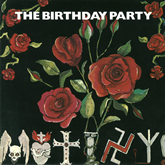
I’ve always been of the opinion that if an artist or band is going to make a final statement, then it should be well-executed and tightly-delivered. This holds true for The Birthday Party’s final two EPs, which are collected together onto this single CD by 4AD. The Bad Seed (originally released as a 12″ on the band’s UK home of many years, 4AD) and Mutiny (originally released on Mute) were both recorded at the famous Hansa Studios in Berlin and produced by the band themselves, with uncredited assistance from Einstürzende Neubauten’s Blixa Bargeld.

By now the erstwhile drummer Phil Calvert was long disposed with in favour of Mick Harvey; Rowland S. Howard became the sole guitarist and the creative dynamic had shifted toward the writing partnership of Nick Cave and Harvey (with the exception of the opener, ‘Sonny’s Burning’, the last track written by all four members of the group). The sound is raw and urgent, but well-honed and less prone to excess, while still retaining enough of the rough edge that set The Birthday Party apart from their contemporaries.

‘Wild World’ stands out as a highlight, blessed by its sludgy blues ethic and restrained vocal performance from Cave, whose vocal has become more direct and confident throughout this awesome collection. Tracy Pew’s bass is close-mic’d to allow the resonant twang of the strings to be heard. Elsewhere, Howard’s guitar is fed through numerous effects boxes, in particular deploying his famous ‘infinite reverb’ on several tracks, which allowed cycles of feedback to spiral, ebb and flow. While recorded no doubt at the height if the band’s drug abuse, the collection is markedly more controlled than Junkyard, as if recorded in a brief moment of lucidity. Nothing is more true of this approach than the final track, ‘Mutiny In Heaven’ (featuring Bargeld on guitar), which sees the band playing with studio effects with Cave’s vocal lines overlapping and multi-tracked, while the guitars are processed into ringing bells of sound. ‘If this is heaven I’m bailing out,‘ sings Cave. The Party was nearly over, and Cave thus signalled that the last guest should leave. ‘Mutiny In Heaven’ deals with the concept of euphoric God-like feelings following a hit of smack, but I’m not clear on whether it glorifies or condemns it. More extreme than the Velvet Underground’s opium hymn, ‘Heroin’, ‘Mutiny In Heaven’ has an edge that is as marvellous as it is malevolent.

Two previously-unreleased demos from the Mutiny sessions are included on the CD – ‘The Six Strings That Drew Blood’ (a totally different track from that which later appeared on Cave’s The Firstborn Is Dead) and ‘Avalanche Of Sound’, both of which are stripped and raw and perfect even as unfinished works.

Although a year away, Bargeld’s appearance on the final track heralded the approach of The Bad Seeds, the band Cave formed around Bargeld and Harvey. As final statements go, this stacks up very higly indeed, leaving you unsure as to whether it’s enough as it is or whether you’re in need of more.

Track listing:

cd:
1. Sonny’s Burning
2. Wildworld
3. Fears Of Gun
4. Deep In The Woods
5. Jennifer’s Veil
6. Six Strings That Drew Blood
7. Say A Spell
8. Swampland
9. Pleasure Avalanche
10. Mutiny In Heaven

First published 2004; edited 2012; re-edited 2014

(c) 2014 Mat Smith / Documentary Evidence