Mick Harvey – Delirium Tremens (Mute album, 2016)


I reviewed the third instalment of Mute stalwart Mick Harvey‘s project to translate the songs of Serge Gainsbourg from their native French to English, Delirium Tremens, which was released back in June.

Since this finally got published after a lengthy delay, Mute have announced details on the fourth volume, Intoxicated Woman – not bad going considering the twenty year gap between the second and third chapters.

You can read my Clash review here.

(c) 2016 Mat Smith / Documentary Evidence for Clash

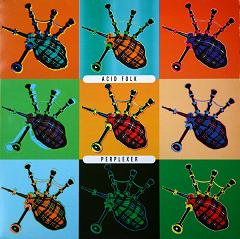
Perplexer – Acid Folk (DEF single, 1994)

perplexer_acidfolk

def | 12″/l12″/cd eef100 | 1994

A while ago a friend told me that every London map designer includes a fake road somewhere in their maps, the purpose being that it allows them to tell if anyone has copied their version illegally. One can only imagine how much of a wild goose chase you’d find yourself on if you actually tried to find that road or asked a cabbie to take you there.

I found myself thinking about that when a copy of Perplexer‘s ‘Acid Folk’ arrived through my letterbox in 2011. ‘Acid Folk’ is listed in my copy of Mute‘s Statement 2 2001 catalogue, but nothing about the CD tells you it’s a Mute release at all. No mention on the label, it doesn’t appear to be licenced, and the address for the record label is a completely different part of London from where Mute were based at the time. So I don’t know. Perhaps it’s just the version I bought, or maybe it was issued by Mute on behalf of the label (Deutsch-Englische-Fruendschaft, or DEF) without wishing to draw any attention to the Mute connection. Not much is known generally about DEF, but as they seemed principally to have been a home to Eskimos & Egypt prior to them releasing stuff on other labels, perhaps it was their own label; I’m pretty sure it was in no way connected to the management company, also known as DEF, that Moby was part of for most of his career.

But enough of the mystery. Perplexer’s public face was ‘enacted’ by Marc Olbertz. ‘Acid Folk’ was written and produced by Alexander Breuer, Andreas Schneider and Ramon Zengler; Zengler is most familiar to me as one half of the seminal Hardfloor, whose ‘Acperience’ EP was responsible for stimulating acid house’s second, enduring renaissance on dancefloors. Unsurprisingly, then, that ‘Acid Folk’ should have a lovely set of 303s running through it. However, it plays second fiddle to the bagpipe drone that dominates the track; that’s right, acid house meets traditional Scottish folk music. Just when it seemed that every possible novelty permutation of dance music had been exploited, along comes a track which mixes the sort of happy hardcore beats that used to get skinhead Dutch ravers very excited, bagpipes and acid house grooves. I used to think that you could add a 303 to anything and it would make it sound superb (see acid head Ege Bam Yasi’s How To Acid An Egg for evidence of that); that’s evidently not the case with bagpipes, or at least it doesn’t feel that way to me. I’ll be relatively upfront and say that I don’t really like ‘Acid Folk’.

The vocal mix is too fast for my liking, plus – despite some Scottish roots – I don’t really like the sound of the bagpipes anyway, so it’s sort of difficult to listen to; the Low-Speed mix is slightly slower and I would really love this mix were it not for the bagpipes, since it would just be a constant acid rush. I’m also not a fan of hardcore DJ Ellis Dee’s breakbeat-and-drone version although the rave stabs and 1992 ‘ardcore vibes are quite good.

The House mix starts with some nice sounds, a deep house beat / bassline and processes the bagpipe riff into the equivalent of the euphoric clipped sax samples that used to be a favourite of house producers back in the day. It’s my favourite mix overall, mostly because the bagpipes are treated and not too irritating; I was never a huge house fan back in the day and yet I really like this. The Pro-Gress mix is a bit all over the place for my liking, blending some ear-friendly aesthetics with some deeper sounds to create a hybrid that would probably appeal to fans of trance. Once again it’s the bagpipe drone that stops this from being better than it should be. I do find it quite strange – in 1994 remixers usually went out of their way to dispense with most of the original elements of a track yet here all the mixers keep the bagpipes in. There are other mixes available on the 12″ and limited remix 12″; I’m not that much of a Mute completist to bother with those for this release.

Perhaps I’m starting to understand why Mute didn’t properly affix their name to this after all…

My version of the CD single is now up for sale on Discogs.com under the username nominalmusics. If you’re desperate to own it, head here.

12″:
A1. Acid Folk (Low Speed Mix)
A2. Acid Folk (House Remix)
B1. Acid Folk (Vocal Mix)
B2. Acid Folk (DJ Tom & Norman Remix)

remix 12″:
A1. Acid Folk (Ellis D. Remix Edit 2)
A2. Acid Folk (Cream & Candy Remix)
B1. Acid Folk (Exit EEE Remix)
B2. Acid Folk (Pro-Gress Remix)

cd:
1. Acid Folk (Vocal Mix)
2. Acid Folk (Low Speed Mix)
3. Acid Folk (Ellis D. Remix Edit 2)
4. Acid Folk (House Remix)
5. Acid Folk (Pro-Gress Remix)

First posted 2011; edited 2016

(c) 206 Mat Smith / Documentary Evidence

Vince Clarke & Paul Hartnoll – 2Square (Very Records album, 2016)


Erasure‘s Vince Clarke has set up a record label, Very Records. His inaugural release is a collaboration with Paul Hartnoll from Orbital, an eight track album called 2Square. I reviewed the album for This Is Not Retro and my review can be read here.

While in New York a couple of weeks ago I had the great privilege of getting to interview Vince in his studio, with Paul joining us from Brighton by Skype. That interview will be included in the next issue of Electronic Sound, available through all decent UK newsagents in July.

(c) 2016 Mat Smith / Documentary Evidence for This Is Not Retro

onDeadWaves – On Dead Waves (Mute album, 2016)


onDeadWaves
is a collaboration between two Mute artists, both of whom have been at the label during the EMI years as well as the new, independent-once-more phase – Polly Scattergood and James ‘Maps’ Chapman. Their debut album, On Dead Waves is that rare example of something that is far, far, far greater than the sum of its parts.

I reviewed the album for Clash and you can read my review here.

On Dead Waves is released on May 20. The duo play a free show in London on June 7. For more information, go to the onDeadWaves Facebook page.

(c) 2016 Mat Smith / Documentary Evidence for Clash

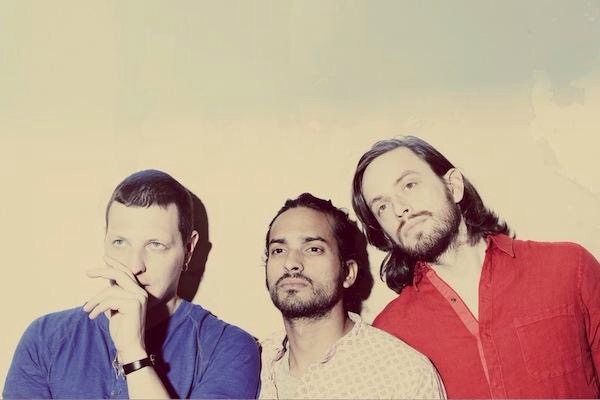
Yeasayer – Chris Keating (Clash interview, 2012)

  
This past week I’ve been listening to Amen & Goodbye, the fourth Yeasayer album due for release by Mute on April 1st, which I’ve reviewed for Electronic Sound.

Way back in 2012, I had the great privilege of getting to interview the band’s Chris Keating (above right) ahead of a second intimate show at Islington’s The Lexington to promote the upcoming release of their third album, Fragrant World.
My Clash interview can be found here. I still think of it as one of my favourites.

(c) 2016 Mat Smith / Documentary Evidence  

Various Artists – Straight To You – The Gothic Country And Blues That Inspired Nick Cave (Uncut covermount album, 2010)


Uncut put together this covermount CD of tracks that purportedly inspired Nick Cave, covering blues and country tracks by the likes of Leadbelly, Elvis Presley, Hank Williams and Johnny Cash.

I’m always a little dubious of these types of things, especially where the artist in question wasn’t actually involved, particularly since a lot of the tracks and artists here are ones that Nick Cave & The Bad Seeds covered during their career (mostly on Kicking Against The Pricks) – while it may be possible to conclude that they were therefore an influence, I’m not so sure about all of them. The one artist that Cave frequently spoke about as being a major formative influence on him was The Man In Black, Johnny Cash, who Cave would have the nerve-racking opportunity to work with during Cash’s twilight years. Cash’s nihilistic ‘I’d Rather Die Young’ is one of the tracks included here.

Certainly you can hear a certain Birthday Party-era wildness in Gene Vincent’s ‘Cat Man’, there’s the ‘grinderman’ lineage in Memphis Slim’s ‘Grinder Man Blues’ and Cave displayed a healthy interest in the mystical aura of Elvis Presley on ‘Tupelo’. Defining precisely what has influenced a person, given that life is an entire summation of experience – recognised or otherwise – is a fool’s game. When I interview an artist and feel duty-bound to ask them about their influences, it is invariably greeted with a sigh or an awkward silence. We nevertheless are obsessed with such details, on the basis that it helps us rationalise a person via certain reference points, and that will never change.

This is one for the Cave completist only. I’m not sure now whether the magazine that this came with included a feature on Cave or some sort of explanation about how these tracks had been selected, or maybe it tied in with a Bad Seeds release that month. I certainly don’t have it any longer. If you surrender the notion that this is intended as some sort of definitive listing of what made Nick Cave who he is today – ignoring the fact that to do that justice would involve everything from church choir music through to The Stooges – what you are left with is a decent album of some very important blues and country songs.

(c) 2016 Mat Smith / Documentary Evidence

Barry Adamson – Know Where To Run (Central Control album, 2016)

  
I reviewed former Mute stalwart and current Bad Seed Barry Adamson‘s new album Know Where To Run for Clash. My review can be found here.

(c) 2016 Mat Smith / Documentary Evidence

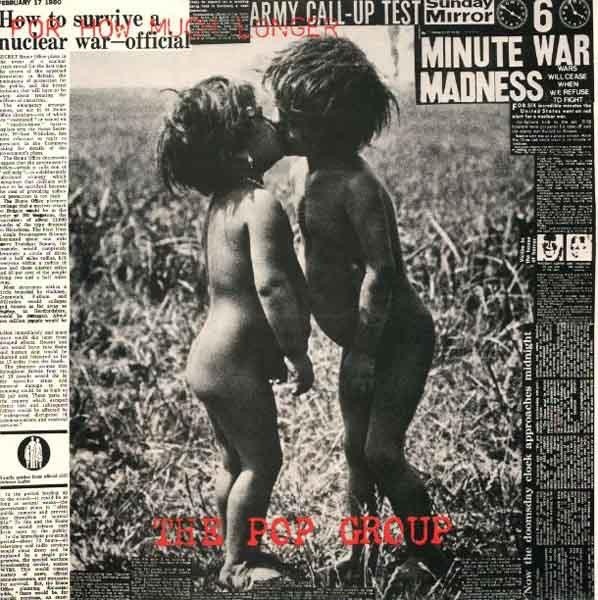
The Pop Group – For How Much Longer Do We Tolerate Mass Murder? (Y / Rough Trade album, 1980)

  
The Pop Group‘s second album has finally been given the reissue treatment. The group consisted of future Mute artist Mark Stewart (vocals), Gareth Sager (guitar and sax), Dan Catsis (bass) John Waddington (guitar) and the drummer they shared with The Slits, Bruce Smith, and For How Much Longer Do We Tolerate Mass Murder? was originally released by the group’s Y label via Rough Trade in 1980. The incendiary album has been reissued by the Freaks R Us label, who were also responsible for putting out The Pop Group’s 2015 album Citizen Zombie. For the reissue the label has also added the single ‘We Are All Prostitutes’ to the track listing. 

I reviewed the album for Clash. My review can be found here.

(c) 2016 Mat Smith / Documentary Evidence

Throbbing Gristle – Very Friendly / The First Annual Report (recorded 1975)

  
The material on what has been variously described as Very Friendly and The First Annual Report represent the first recordings that Throbbing Gristle made under that name in 1975, in the midst of their transition from the COUM Transmissions moniker in a concerted effort toward making music rather than more eclectic arty initiatives.

These so-called “wreckers of civilisation” – Genesis P-Orridge, Cosey Fanni Tutti, Chris Carter and the late Peter ‘Sleazy’ Christopherson – were no strangers to controversy when they decided to focus on what became Throbbing Gristle. COUM, while including an element of sonic exploration, was fundamentally a multi-disciplinary project, with imagery and ideologies that were often challenging, even for the liberal approach often taken toward the arts during the Seventies. Throbbing Gristle extracted the confrontational artsy angle but focussed that around sound, developing an aesthetic that was contemporary with the genesis of punk but which split itself off in a uniquely devastating counterweight to the Transatlantic feedback loop between The Ramones and The Sex Pistols.

This so-called first annual report begins with an almost twenty minute dirge of sound that recounts, in blunt, detached detail, the Moors Murders of Ian Brady and Myra Hindley. Gen’s narrative on ‘Very Friendly’ spares no detail, taking on the dispassionate delivery that Patrick Bateman would deploy over a decade later in Bret Easton Ellis’s American Psycho; no detail is spared, whether that be the detailing of various proclivities on the part of the victims or the brutal violence that Brady / Hindley wrought upon those individuals. Gen’s voice takes on a manic, almost excitable and aroused quality as the sonic backdrop begins to pick up the pace to reflect the executions, with jarring synths and fuzzed-up guitars delivering the requisite nightmarish atmosphere for the story.

By the conclusion of TG’s opening gambit, the group are dealing in mere atmospheres, Gen’s voice stuttering the words ‘there’s been a m-m-m-m-murder’ with layers of echo that almost suggests a dreamy, sedated otherworldliness, as if what just played out couldn’t possibly be true. For a lot of people the serial killer antics of Brady and Hindley were something that couldn’t be rationalised, while for others they were a numbing tragedy that cast a pall over the North of England.

The rest of the album takes the same sonic foundations – the same grainy texture and noisy, clamorous atmospheres – and skews them, sometimes finding Gen vocalising some weird lament (’10 Pence’), adding TV news reportage while guitars and freeform noise structures push the TG sound closer to The Velvet Underground’s ‘Black Angel Death Song’ (‘Whorls Of Sound’), or into intriguing synth shapes (‘Dead Bait’) that belong on a Clive Barker soundtrack.

Though nowhere near as devastatingly confrontational as the opener, the most interesting piece here is ‘Final Muzak’, which propels itself forth on a dense, churning, sub-motorik metallic groove that’s part rhythm and part bass sequence. Noises whine and drone continually over that jarring rhythm, cycling round in queasy loops that suggest this early attempt toward the disciplinarian approach that would become one of Throbbing Gristle’s signature motifs could have run on far longer than the mere five and a half minutes presented here.

Very Friendly / The First Annual Report has never officially been released, but it has been bootlegged plenty of times over the years, with the name varying according to the release. I bought a CD copy of this released by the Genetic Terrorists label, with the above sleeve image and the name Very Friendly from an HMV on Oxford Street in 1997, which lead me to believe it was perhaps more official than it actually was. The most recent release was in 2001 on the Yeaah! label. Quite why the band never saw fit to release the record officially via their own Industrial imprint is something of a mystery, but just another strange decision in the history of this most uncompromising of British groups.

(c) 2016 Mat Smith / Documentary Evidence

Diamanda Galás with John Paul Jones – The Sporting Life (Mute album, 1994)

  
I’ve maintained a healthy interest in Diamanda Galás since hearing her vocal contributions to Erasure’s Erasure album in 1995, but I’ve always found her music a little too impenetrable. I fully appreciate her dexterity and range as a vocalist, but I’ve never really ‘got’ her, though not through lack of trying.

The Sporting Life, Galás’s 1994 collaboration with Led Zeppelin’s John Paul Jones was my first real concerted effort to get to grips with her music, and as an entry point to an artist that Daniel Miller signed to Mute precisely because she was ‘challenging’, it’s not a bad place to start.

A lot of what makes The Sporting Life relatively accessible is the multi-instrumentalist Jones’s arrangements. This is a a form of blues, accented with the kind of aggressively brutal funk shapes that draw parallels with the likes of Rage Against The Machine, particularly on tracks like ‘Do You Take This Man?’ and ‘Devil’s Rodeo’, where his low-slung bass anchors the whole track in rigid, unswerving time. Rooting the music in the blues seems to encourage Galás to play down some of the histrionics for which she is known, finding her instead singing relatively ‘straight’, especially on stirring numbers like the soulful ‘Dark End Of The Street’ or ‘Tony’ which are just about the most plaintive and troubled, almost theatrically soulful, moments in Diamanda’s catalogue.

The organ-led ‘You’re Mine’, with its Louisiana gumbo of reference points is where wildness starts to creep in, descending into a cacophony of tongues that render the tail end of the track a swampy mess, with the music feeling like it constantly wants to wrap up but where Galás just wants to keep going. It’s a definitive example of why less is more.

And that again is what I have a problem with. I could listen to Galás doing gravelly blues songs like ‘Dark End Of The Street’ all day, but I run out of patience when the vocal histrionics – irrespective of how technically accomplished her range and technique might be – reach the point of complete and noisy surrender. Even the masterful Jones seems to give up somewhere on this album, and the music begins to play a very clear second fiddle to the dominance of Galás’s voice. The only time I can really get on board with it is during the closing track, ‘Hex’, and that’s mostly because of the Nitzer Ebb-esque riff that runs through most of the track.

I’m honestly not sure what it is about her voice that troubles me so much; perhaps it’s that it carries a level of base anguish and emotional openness that I’m not prepared to give in to, or perhaps it’s a specific aversion that I have to vocal improvisation. I get jazz improv, but I’ve never developed a taste for either scat singing or the wordless vocalisations of people like Phil Minton, and I’m not sure I ever will. Whatever the reason, my relatively modest Galás collection is now up for sale via Discogs.

(c) 2016 Mat Smith / Documentary Evidence