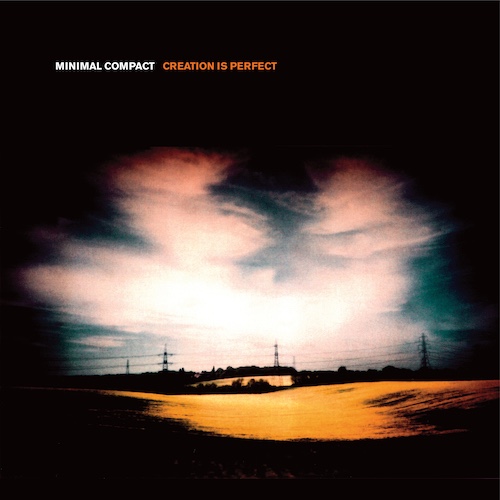
Minimal Compact – Creation Is Perfect

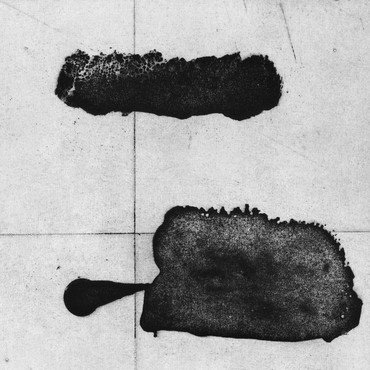
Not exactly a Best Of Minimal Compact album in the truest sense of the word, Creation Is Perfect contains seven tracks from the catalogue of this enduring post-punk quintet, each one updated and re-recorded with shiny new production nous from Wire’s Colin Newman.

Between their formation in in Amsterdam in 1980 and their cessation of activities in 1988, Minimal Compact released five albums and a live document, their approach to what issued forth from punk’s messy entrails being highly individualist, fusing the solid rhythm section of bassist / vocalist Malka Spigel and drummer Max Franken with Middle Eastern melodies and the purring vocal of Samy Birnbach. Augmented by Berry Sakharof and Rami Fortis’s guitars and electronics, Minimal Compact was a stylistic force to be reckoned with, even among an era that produced far more important groups than punk ever could.

Colin Newman is no stranger to Minimal Compact. He produced their 1985 commercially successful album Raging Souls, which yielded two of the songs included here, the emphatic and insistent title track of their third album and the hypnotic and wistful ‘My Will’. He’s also toured as a jobbing member of the group, and his marriage to Malka Spigel has also yielded many collaborations between two like-minded creatives, including the recently-reactived Immersion and the group Githead, which also included Max Franken on drums.

The genesis behind Creation Is Perfect is not dissimilar to the thought process behind Wire’s IBTABA, namely that their recorded output lacked the same sort of visceral impact as their live shows. Less about updating the back catalogue pieces for today’s ear, this album is about capturing that live energy, beginning with the urgent, gleeful and spiky punk-funk of ‘Statik Dancing’ and carrying on through other stellar moments like the chiming guitars and menacing motorik foundations of ‘Nada’. The result is an evenness, a precisely-executed delivery encased within rich, layered studio smoothness but also a certain rawness as the five musicians collide and overlap along paths which are uniquely their own.

The collection concludes with a new track,’Holy Roller’. Beginning with fairground melodies, the track characteristically progresses along a grubby, low-slung bassline offset by layers of whining synths, shimmering melodies and an emphatic, detached vocal. Slow-building and dramatic, the track is the summation of everything that Minimal Compact ever set out to achieve, its skeletal, rattling guitar interplay sounding as beautifully nihilistic as it did at the start of the 1980s.

Creation Is Perfect by Minimal Compact is released October 25 2019 by Minimal Compact.

Catref: mc01
Words: Mat Smith

(c) 2019 Documentary Evidence

Swans – Leaving Meaning

How to interpret the title of the new Swans album? Is Michael Gira – the only consistent member of the group he founded with unassailable, blistering New York No Wave urgency in 1982 – asking what the meaning of the word ‘leaving is’, in the manner of a child unwitting asking aimless questions that take on a metaphysical hue? Or is he concerned with the idea of somehow leaving a legacy? One can spend too long trying, pointlessly, trying to decode such things, but if Gira is any way concerned that Swans won’t somehow leave an enduring impression after all this time, the bold grandeur of this LP should ensure that he needn’t worry again.

We throw away adjectives in this reviewing game with careless abandon, but Leaving Meaning is unquestionably stunning and justifies the following gushing praise, and more. It is redemptive; searching; uncertain yet confident; ruminates on mortality yet is unquestionably alive; both humbled and humbling; vast yet sparse; personal yet universal; occluded throughout yet as clear as crystal; quiet yet impossibly, irrepressibly, almost violently loud. It is everything that Swans have ever proposed to be and everything Gira has ever striven toward; faithful yet original. And so on.

Perhaps the only predictable thing about Swans is Gira’s insistence on changing the band’s line-up whenever he feels like it. Leaving Meaning is the first record he’s made after dissolving the group that was Swans from 2010 to 2017 – a comparative period of stability for the band. The new line up features old friends from former iterations of Swans, as well as members of Angels Of Light, the group Gira formed when he put Swans on ice between 1999 and 2010. Gira suggests that Swans will now just consist of a “revolving cast of musicians, selected for both their musical and personal character, chosen according to what I intuit best suits the atmosphere in which I’d like to see the songs I’ve written presented.” The cast this time includes Nick Cave’s keyboard player Larry Mullins, Mick Harvey bassist Yoyo Röhm, Mute labelmate Ben Frost on synths and guitars, Swans / Angels Of Light confidante and guitarist Kristof Hahn, all three members of New Zealand’s The Necks, both members of A Hawk And A Hacksaw, Baby Dee, Anna and Maria von Hausswolff and a supporting cast that would frankly make this sentence even more obscenely long than it already is. (An accompany press photo suggests a team of 32 contributors, with Mute founder Daniel Miller occupying the lower left corner.)

The musicians and vocalists assembled for Leaving Meaning are predominantly European, with many of them living in Berlin. Consequently it’s hard not to liken this record to those pivotal albums that emerged in the early 1980s as Nick Cave and a bunch of other Aussie waifs and strays found themselves in the Kreuzberg district, fusing together punk, noise and musicianship in a way that was entirely visionary.

This is a long album, filled with several songs that effortlessly break the ten-minute mark without ever losing interest. Some of these songs are genuinely, forcibly arresting – the rest are simply brilliant. ‘The Hanging Man’ issues forth on a low-slung, unflinching groove laced with menace and vivid, uncomfortable imagery, while ‘Amnesia’ carries a strange tranquility delivered with an uncompromising, unfiltered verbal panache reminiscent of Leonard Cohen and Lou Reed at their most visceral. The title track is tranquil yet disturbing, reflecting on slipping away, its sparse, languid tonalities and gauzy fuzz akin to listening to The Doors’ ‘This Is The End’ while under the influence of heavy antidepressants. ‘The Nub’ – led by and written specifically for Baby Dee – is bewitching, theatrical and ominous as fuck, the line ‘I’m leaving by distortion’ presaging a coda of intense, heavy drone and rattling guitar and violin dissonance that the moody, haunting serenity of the the first eight or so minutes could never have anticipated.

The evocative ‘Sunfucker’ is a sort of ravaged punk blues centrepiece, like ‘Louie Louie’ recast as a pentagram for summoning all the devils of this world (and others) to cause utter, irreversible havoc. Honed yet frazzled, Gira’s voice here contains a control and even-handed resoluteness, even when the words seem turn to gibberish in his mouth.

Catref: stumm446
Words: Mat Smith

(c) 2019 Documentary Evidence

Alessandro Cortini (Clash feature, 2019)

“I was moving around Berlin a lot when I was listening to works in progress for this album. I realised that I was maxing out on the volume, and after briefly thinking about the damage that I might be causing to my ears, I also realised that I’ve never really found myself making stuff that loud before. I remember doing that as a kid – I’d push the cheap, crappy headphones against my ears to get more bass while I was listening to the version of Duran Duran’s ‘Save A Prayer’ from ‘Arena’ which I used to play over and over.”

– Alessandro Cortini (Clash interview with Mat Smith, September 2019)

VOLUME MASSIMO, the new album from Alessandro Cortini and his first for Mute, is released tomorrow.

Ahead of its release, I spoke to Alessandro for Clash about his love of vintage synths, pressing headphones against your ears to get more bass and the enduring influence of guitarist Steve Vai.

Read the interview at the Clash website here.

(c) 2019 Mat Smith / Documentary Evidence for Clash

Goldfrapp – Black Cherry

Goldfrapp’s second album finds the duo moving from the chilled ethereal ambience of Felt Mountain into a sort of robotic retro-modernism. There are moments that nod in the textural direction of their debut, such as the serene title track or the beautiful ‘Deep Honey’, but on the whole Black Cherry is a harder, more direct affair.

Black cherry was always the flavour of yoghurt that no-one else wanted from the fridge in our household, a weird vestigial throwback to 70s faux sophistication, no doubt achieved via an array of bitter E numbers; it’s one of those ‘love it or hate it’ flavours, and I guess this analogy works well regarding this album. In many ways, the disparity between Felt Mountain and this may not taste good to some who only bought their debut for its chilled vibe and its placement in the voguish late 90s chill out compilation canon. Personally, I loved black cherry, and I love Black Cherry.

Alison Goldfrapp‘s voice has always possessed a certain sensuality which has the capacity to draw you in and surround you with half-whispered temptations. That tone is best evidenced on the penultimate track, ‘Forever’, which is full of achingly seductive promise, Alison’s captivating vocal expertly accompanied by Will Gregory‘s chastened electronic textures and a sort of Beatles-y psychedelia. Elsewhere, the opener, ‘Crystalline Green’ is a hypnotic stream of words set to a jerky electro rhythm, while the prowling multiple climaxes of ‘Slippage’ that end the album edge forward with a nagging, ‘Nightclubbing’ pace and a large pinch of burlesque noir.

At times, Black Cherry is a thoroughly over-sexed, occasionally grubby affair, with the single ‘Twist’ getting as close as the duo ever dared get to the sound and imagery of Peaches. The gritty square wave-dominant sound that dominates parts of the album is both extreme and a shock to the system after their spell working the ambient torch song ephemerality of their debut. Singles like the glam-infused ‘Train’ and the deftly ubiquitous – yet utterly subversive – ‘Strict Machine’ more or less defined a new, more urgent and confrontational dimension to the Goldfrapp sound, one that allowed them to slip effortlessly – but perhaps unexpectedly – into a new and eclectic early 2000s anything-goes pop movement.

Catref: stumm196
Words: Mat Smith

Originally posted 2003; edited and re-posted 2019 to coincide with the vinyl reissue of Black Cherry.

(c) 2019 Documentary Evidence

GUO – GUO4

Daniel Blumberg could well be seen as the most sonically challenging addition to Mute’s present-day roster. His prolific release schedule highlights both a limitless improvisatory imagination and also a huge amount of trust and freedom by the label that he joined last year with his Minus opus.

In parallel to his work under his own name as de facto band leader, his output as GUO with tenor saxophonist Seymour Wright represents an ever-adaptable framework that allows the pair space to collaborate with other like-minded musicians. After previous releases with friend and muse Brady Corbet, GUO4 pitches the Blumberg/Wright duo together with drummer Crystabel Riley, accompanied by a text from Fran Edgerley. The impetus for the session was a new short film by Peter Strickland concerning itself with an altercation between two men in a locker room.

Violence, then, is to be expected from this atypical soundtrack, which is, for the most part, led by Riley’s evocative, sheet metal-esque percussion. Taken as a sympathetic and wonderfully noisy response, Wright’s atonal squalls of upper-register bleating and Blumberg’s signature guitar un-playing – ranging from low distortion rumbles to metallic splinters to an undercurrent of angry note clusters – make the single 22-minute piece both expressive and beautifully uncomfortable.

To paraphrase what another of Mute’s noisier pairings might have dubbed it, this is easy listening for the hard of hearing. Whether it acts as a portent of what we can expect from Daniel Blumberg’s next LP under his own name remains to be heard.

Catref: stumm444
Words: Mat Smith

(c) 2019 Documentary Evidence

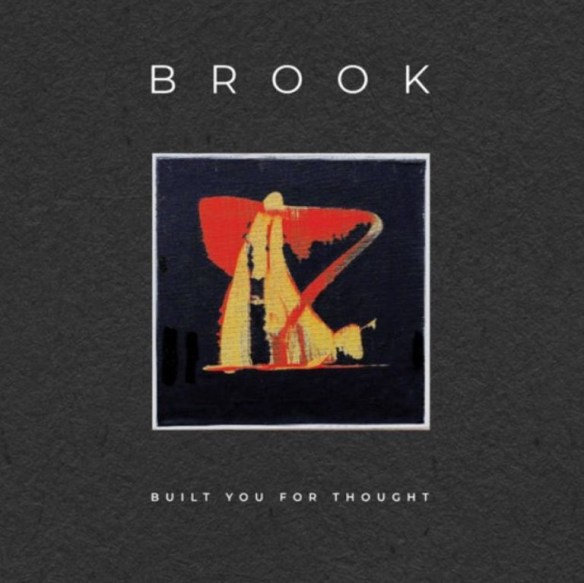
New Release on Vince Clarke’s VeryRecords: Brook – Built You For Thought

VERYRECORDS is pleased to announce the release of Built You For Thought, the debut album by UK electronic duo BROOK. The album will be released on 20th September 2019.

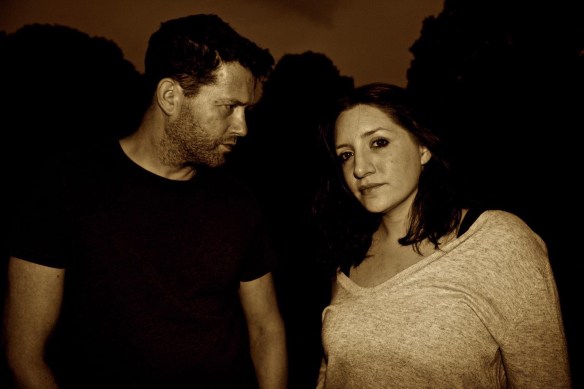
Built You For Thought, the debut album by new electronic duo Brook, combines the captivating vocals of Beth Brooks with a delicate, sensitive electronic palette from Howard Rider.

The ten highly personal songs on the album are delivered with an arresting power and a towering emotional resonance. Beth, a seasoned soul and blues vocalist from the UK’s Midlands possesses a technique unlike any other, capable of switching from quiet introspection to blistering urgency, sometimes within the same song. It’s an effect that can lead the listener to mistakenly think they are hearing a choir of many voices instead of just one.

“I was profoundly deaf until I was about four and I had to endure loads of operations,” explains Beth. “From then on, I started to try and replicate certain sounds and the way people sang, and I think that’s where all those different voices come from.”

The temptation would be for Howard’s music to follow Beth’s lead. After encouraging his brother to sell his Renault 5 to buy a drum machine when he was fifteen, Howard was weaned on a diet of dance music. Having previously released upbeat electronic music loaded with melodies, it would have been all too easy for Howard to put Beth’s vocal in a loud, similarly-intense setting. Instead, the music here is a conscious exercise in self-restraint: reflective passages and quietly turbulent, stirring juxtapositions, occasionally coalescing into sequences and arrangements laden with tension and robust rhythms, or nodding to the eclecticism of modern classical composition.

The album’s diaristic lyrics deals finds Beth in the role of observer, ruminating nostalgically on her time living in Australia (lead track ‘Diamond Days’), trying to fathom a loved one’s incomprehensible anger and mood swings (‘Rage’) and contemplating what the world would have turned out like if only Adam had bitten the apple instead of Eve (‘Applaud’).

Elsewhere, the muted electro pulse of the album’s title track finds Beth wondering why so many old buildings are ignored in favour of derivative modernity, while the standout ‘Prince’ places Brook on the sound system of a New York nightclub in the years before house music took over, its lyrics shining a bitter torch on the fairytale notion of waiting for one special person to arrive in your life.

Built You For Thought is the product of two years of work. The tracks began with Beth recording alone with an acoustic guitar before Howard began wrapping her vocals in layers of intricate synths and textures to create the ten fragile pieces here. “While we were making the record, someone said to me that we should keep it simple,” says Howard. “If this had been a solo project I’d have probably made this all sound a lot crazier, but gradually I began to realize he was correct. What we needed was a lot of space for Beth to be the central focus of these songs.”

The result is a suite of songs that are deliberately and delicately understated, presented in such a way as to put Beth’s many voices and her individual outlook on life, society and relationships at the very heart of each song; songs that cannot help but leave a mark on you and which will stay with you long after Built You For Thought has finished.

Built You For Thought will be released as a download, stream and CD.

Track listing

1. Ewes
2. Prince
3. Damage
4. Everglades
5. Trying To Forget You
6. Built You For Thought
7. Diamond Days
8. Rage
9. Wasn’t Meant To Be
10. Applaud

About VeryRecords

VeryRecords was founded in Brooklyn by Erasure’s Vince Clarke in 2016.

veryrecords.com

Press release (c) 2019 Mat Smith for VeryRecords

Suicide (Clash feature, 2019)

Suicide on the Bowery.

It was my absolute honour and privilege to talk to Martin Rev for Clash about the making of the first Suicide album. Released in 1977, Suicide was a shock to the system for anyone expecting New York’s punk music to conform to any particular mould.

The roots of Suicide go right back to a pre-punk Manhattan of the late Sixties and early Seventies, years of hard slog of playing gigs in art galleries before the likes of Max’s Kansas City and CBGB had embraced the burgeoning punk scene that Suicide were at the centre of. It is a story of friendship, pivotal decisions over how a band should be presented, Elodie Lauten’s Farfisa and a rhythm machine made by a manufacturer more used to very different industries; of chance events, label rejection, the occasionally violent reaction of fans, and an album whose status has only become more legendary in the forty years since it was originally released.

Suicide was reissued by BMG / Mute earlier in July as a special edition red vinyl LP, forming part of their Art Of The Album series.

My interview with Martin Rev, with additional contributions from the album’s producer Craig Leon, can be found here.

(c) 2019 Mat Smith / Documentary Evidence for Clash

Electronic Sound 54 – Factory Records

Issue 54 of the inestimable Electronic Sound is out now, and its major focus is on the enduring legacy of Anthony Wilson’s Factory Records.

As Mute’s artist-led focus has continued since becoming a fully independent enterprise again, the borders between the Factory back catalogue and Mute have become fuzzy; New Order now call Mute home, and A Certain Ratio‘s entire back catalogue is now looked after by Daniel Miller‘s imprint. The latest issue features interviews with ACR and Stephen Morris of New Order / Joy Division, while the accompanying double 7-inch single issued with the bundle (now sold out) features the single version of ACR’s ‘Knife Slits Water’, presented alongside tracks from Factory stalwarts The Durutti Column and Section 25, as well as the oft-overlooked Minny Pops, in a gatefold sleeve that nods reverentially in the direction of the original Factory Sampler EP.

This month I contributed a short introductory feature on Alice Hubble, the alias of Alice Hubley from Arthur & Martha. You can read a short interview with Hubley over at my Further. blog as part of a series of micro-features called 3 Questions. I also reviewed albums by Pere Ubu, Tenderlonius, sometime Jaki Liebezeit collaborator Burnt Friedman, a fine Erland Apseneth album on Hubro and a various artists record fusing the natural sounds of Michigan with intelligent sound responses.

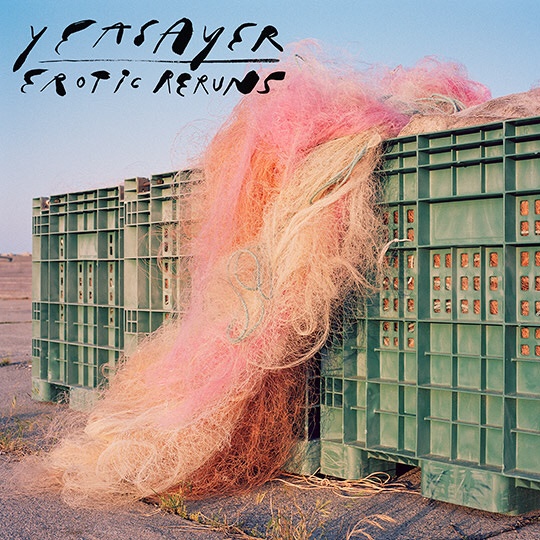
I also reviewed the excellent new Yeasayer album, Erotic Reruns. My interview with Anand Wilder from the band can be found here.

Buy Electronic Sound here.

(c) Mat Smith / Documentary Evidence for Electronic Sound

Yeasayer (Clash feature, 2019)

Yeasayer‘s fifth album, Erotic Reruns, was released today via their own Yeasayer Records. The LP saw the trio of Chris Keating, Ira Wolf Tuton and Anand Wilder returning to the live compositional style of their earliest releases, taking their inspiration from 70s MOR, personal relationships and the prevailing US political environment.

To coincide with the release, I spoke to the band’s Anand Wilder for Clash about the genesis of the album, leaving the comfort blanket of record labels behind and the necessary tensions within this enduring New York group.

Read the Clash interview here.

Buy Erotic Reruns from Yeasayer’s website.

(c) 2019 Mat Smith / Documentary Evidence for Clash.

Teho Teardo – Grief Is The Thing With Feathers (Specula album, 2019)

Blixa Bargeld and Balanescu Quartet collaborator Teho Teardo has charted a singular course through electronic, classical and industrial music since he first emerged with a self-released cassette album in 1985. His approach to works for strings and sound design can be linked back to his early days as an Italian punk, his music containing a visceral weight coupled with a blunt, almost antagonistic command of the loud-quiet-loud dynamic.

His latest work is arguably the most complete realisation of that vision. Inspired by Max Porter’s book Grief Is The Thing With Feathers and used in its subsequent stage adaptation by Enda Walsh, the eight pieces here chart the narrative of a crow and his family as he struggles to cope following the loss of his partner and the need to raise his two chicks by himself.

Here we find Teardo offering up recurring passages of staccato cello that carry the sonic attack and challenge of heavy metal guitars, blended with jangly guitars, dramatic percussion and intense violin, best exemplified by standout moments like ‘London Offered Us Possible Mothers’. Elsewhere, the interplay between processed wind instruments and modular synths on ‘Hop Sniff And Tackle’ creates a nauseating, ominous tension wherein a serene string section toward the end is just about the only relief from a darkness as intense as a crow’s feathers.

Grief Is The Thing With Feathers by Teho Teardo was released in March 2019 by Specula.

Words: Mat Smith

(c) 2019 Mat Smith / Documentary Evidence